Seventy-five new forest fires were reported from across the state in which 105.85 hectares of green cover was gutted, they said
Photo for representational purpose only
Dehradun, April 6Advertisement
IAF helicopters doused forest fires at three places in Uttarakhand on Tuesday, even as more broke out at 75 new spots, destroying 105.85 hectares of green cover in the state, officials said.
The Indian Air Force’s (IAF) MI-17 helicopters moved to the Kirti Nagar forest division of Tehri district to control the fires by spraying water collected from Shri Kot dam in buckets with a capacity of 5,000 litres, they said.
Forest fires were doused in Bariargadh and Sarkyana in Kirti Nagar range and Khirsu in Pauri district on Tuesday, Chief Conservator of Forest Garhwal S K Patnaik, under whose supervision the exercise was carried out, said.
The firefighting operation lasted three-and-a-half hours, he said.
However, in the Kumaon region, IAF helicopters could not be utilised as bad weather prevented them from taking off, the officials said.
Seventy-five new forest fires were reported from across the state in which 105.85 hectares of green cover was gutted, they said.
As many as 414 forest fires have been reported from Uttarakhand in April so far and 645.3 hectares of forests destroyed, they said.
Nainital, Almora, Tehri and Pauri districts are the worst hit by forest fires. -PTISHARE ARTICLE
Despite US disapproval, India and Russia for hi-tech weapons manufacturing
No plans for Russia-China military alliance; such ties are counterproductive: Lavrov
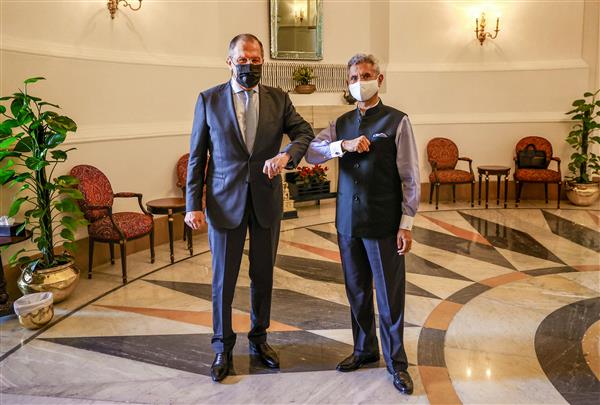
External Affairs Minister S Jaishankar and Russian Foreign Minister Sergey Lavrov before a meeting in New Delhi, on Tuesday, April 6, 2021. PTI
Sandeep Dikshit
Tribune News Service
New Delhi, April 6
Far from being dissuaded from the US threat to impose sanctions, New Delhi and Moscow discussed the additional production of Russian military equipment under PM Modi’s make-in-India initiative, said visiting Russian Foreign Minister Sergei Lavrov after meeting his counterpart S Jaishankar here on Tuesday.
Noting that Russia is the only partner that transfers cutting-edge military technology to India, Lavrov said talks touched on manufacturing of state-of-the-art weapon systems.
“In this strategically important area, Russia is a major foreign contractor for New Delhi. I am sure deepening of Russian Indian military cooperation serves the national interest of both countries,” said Lavrov.
Denying that he had said US exercises pressure on India, Lavrov said there were no discussions on statements from the US against arms trade with Russia.
In a departure from top US officials advising India to cut down on arms purchases from Russia, Lavrov said Moscow respected the right of India to diversify ties in these areas. Both sides also touched on cooperation in energy, including nuclear, peaceful exploration of space and manned programs, rocket engine building, satellite navigation, the Russian Far East and the Arctic.
Fresh from a meeting with Chinese Foreign Minister Wang Yi last month, Lavrov said though Russia-China relations at the summit-level are at their highest levels in history; there are no discussions on a military alliance. Whether it was a Russia-China military alliance or talks of a Middle East NATO or an Asian NATO, “we believe it is counterproductive. Our Indian friends have the same position,” he observed.
Lavrov hinted that in addition to an in-person summit of BRICS leaders in India next month, Moscow was also encouraging the idea of a Russia-India-China summit.
In a pre-visit interview, he said Russia was closely watching the process of normalisation at the LAC and welcomed the agreements reached after the Jaishankar-Wang Yi telephone conversation on February 25 aimed at resolution of the situation.
Afghanistan was a major area of discussions between the two Foreign Ministers as were other “thorny issues” in the neighbourhood such as Yemen, Syria and Iran. Lavrov described India as a “key player” for a peaceful settlement in Afghanistan and “definitely should be engaged in international efforts supporting Afghan national reconciliation process”.
Jaishankar, back from Heart of Asia – Istanbul Process conference in Dushanbe last week, said he stated that a durable peace would require harmonising interests of all, both within and around that country.
Jaishankar said the agenda of discussions also included UNSC issues, Myanmar, ASEAN and the Indo-Pacific. Larger backdrop of global political changes provided the context, he added.
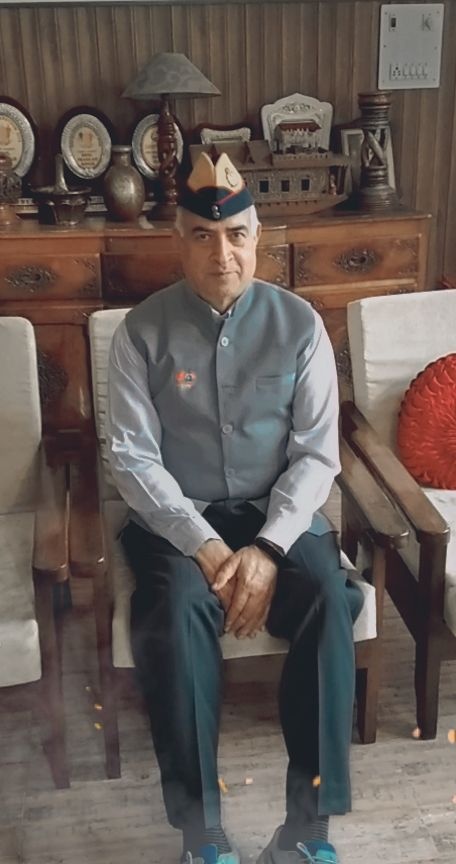
The Army always remembers and never forgets its own. Colonel GT Thampi of the 2/4 Gorkha Rifles turned 100 and the regiment sent representatives all the way from Ranchi to Thiruananthapuram to make him feel special. Colonel Thampi was friends with Sam Bahadur.
Indian Army likely to enrol JCOs directly to overcome shortage of officers
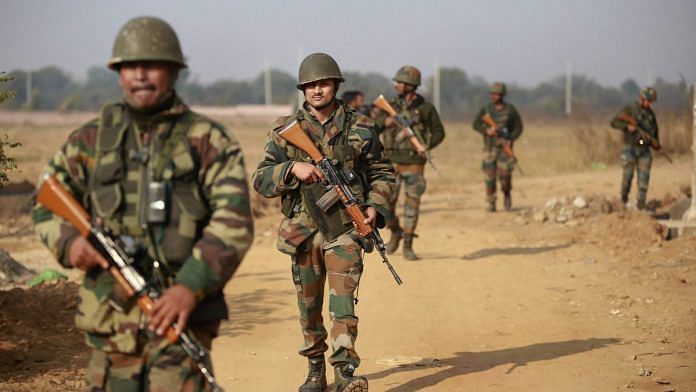
Indian Army (representational image) | PTIText Size: A- A+
New Delhi: The Indian Army is discussing a proposal to directly enrol Junior Commissioned Officers (JCOs) in all arms of the service to address the shortage of nearly 14,000 officers.
JCOs — a link between the officers and other ranks in the Indian Army — are currently enrolled as jawans and few of them get promoted to officers over a period of time based on their performance and on their ability to clear promotion examinations.
Currently, a few JCOs are directly enrolled as religious teachers and in certain technical arms such as the Corps of Engineers.
However, fighting arms of the Indian Army do not have any provision for direct enrollment of JCOs. The Army has been promoting JCOs to officers from among their own ranks.
What the proposal states
According to the proposal, the Indian Army will directly induct JCOs who have cleared the Services Selection Board (SSB) interview. The UPSC will conduct an entrance examination, which would be followed by an SSB interview and a medical examination.
Selected candidates would then be trained for one and a half year before joining the units as JCOs. Subsequently, they would be promoted to officers up to the rank of Colonels based on their length of service and qualifications.
The proposal states that four direct entry JCOs will be authorised to a unit having 14 officers, five to those with upto 19, and six to units with 20 or more officers.
The proposal is likely to be presented during the Army Commanders Conference which is likely to be held later this month.
A senior Army officer told ThePrint that the JCOs enrolled directly will be offset against officer vacancies in units and not impact the existing promotion prospects of other ranks.
Though select JCOs and other ranks have an opportunity to get promoted as officers, the numbers are inadequate, primarily due to lack of necessary qualifications, because of which many get rejected at the SSB interview conducted for aspirants.https://2641c9617fda347ac476fb8ddebca1cb.safeframe.googlesyndication.com/safeframe/1-0-38/html/container.html
The new proposal looks at directly enrolling JCOs who will subsequently be promoted to officers in a shorter time frame, thereby addressing the problem of shortage of officers to a large extent.
A second senior Army officer said that, at present, jawans usually are promoted to JCOs upto the rank of Subedar, with a select few being promoted to the rank of Subedar Major.
“The new proposal will not not impact these vacancies or the promotion prospects for jawans,” the officer said.
“The proposed direct entry JCOs would be inducted against entry level vacancies of the officer cadre,” the officer added.
The vacancies of promotion of jawans were also increased during the last Cadre review, when the number of authorised JCOs in all arms were enhanced, the officer said.
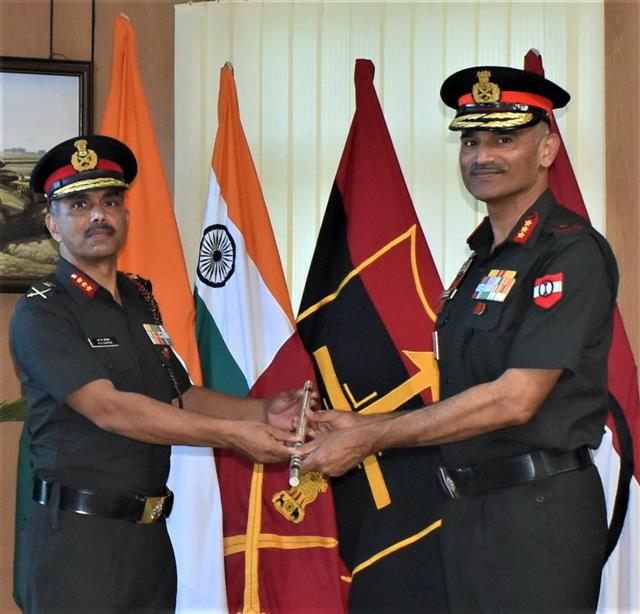
Prior to this appointment, he was posted as Director General Staff Duties at Army Headquarters
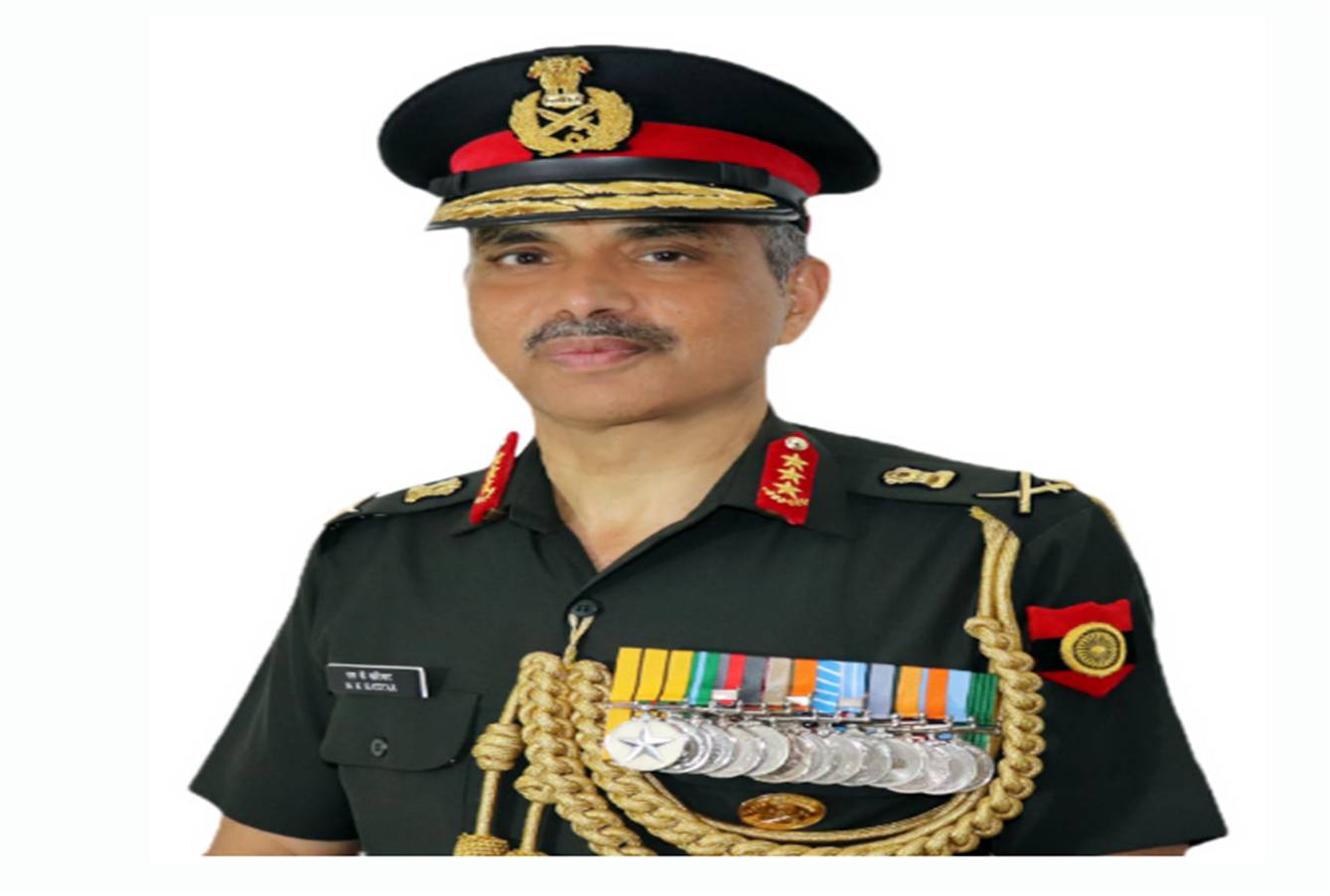
Lt Gen Manoj Kumar Katiyar (left) takes over as GOC 1 Corps.
Tribune News Service
Chandigarh, April 5
Lieutenant General Manoj Kumar Katiyar has been appointed as the General Officer Commanding of 1 Corps, a strike formation responsible for undertaking offensive operations against both Pakistan and China.
Prior to this appointment, he was posted as Director General Staff Duties at Army Headquarters. He took over from Lt Gen CP Cariappa today.
An alumnus of the National Defence Academy, Lt Gen Katiyar was commissioned in 23rd Battalion of the Rajput Regiment in June 1986, which he later commanded along the Line of Control in Jammu and Kashmir as well as in Arunachal Pradesh. He also commanded an infantry brigade along the western borders and a mountain division.
Besides attending the National Defence College, New Delhi, he is also a distinguished graduate of the National War College, USA. He served as an instructor in the Indian Military Training Team in Bhutan and at the Defence Services Staff College, Wellington.
Congress seeks probe into Rafale deal after French media claim bribes were paid
Surjewala cites the news report that alleged payment of 1.1 million euro bribes to Indian firm Defsys Solutions
Tribune News Service New Delhi, April 5
The Congress on Monday demanded an independent probe into the Rs 60,000 crore Rafale jet deal after a section of the French media citing the national anti-graft agency claimed 1 million Euro commissions in the same.
Addressing reporters here, Congress media head Randeep Surjewala also asked the government whether or not it was in order that a ban be placed on Rafale makers Dassault for paying bribes and also a case registered.
“India’s biggest defence deal of 36 Rafale fighter aircraft from France’s Dassault Aviation is a sordid saga of loss to public exchequer, squandering of national interests and violation of Defence Procurement Procedure. The devastating sensational revelations in the last evening report of French News portal Mediapart.fr have now revealed the existence of middleman, payment of commission and red flags raised by the French Anti-Corruption Agency – AFA.”
Surjewala cited the news report that alleged payment of 1.1 million euro bribes to Indian firm Defsys Solutions and said the French anti-corruption bureau had asked Dassault tough questions on the payments.
“Dassault balance sheet said the money was a gift to the client. But when confronted, Dassault told the French anti-corruption agency that it paid an Indian firm that was engaged to prepare 59 models of Rafale. No answers were forthcoming when the French officials asked Dassault why would it engage an Indian firm to make models when it was manufacturing the jet itself?”
Noting that Defsys Solutions, India, is actually a company undertaking assembly of flight simulators and optical and electronic systems, Surjewala asked the PM whether he would invoke integrity clause of the DPP to black list Rafale as provided by the rules.
“Defence Procurement Procedure as also the stated Indian government policy envisages that there will be an ‘Integrity Clause’ in every defence purchase contract. There can be no middleman or payment of commission or bribe. Any evidence of middleman or commission or bribery has serious penal consequences of banning of the supplier defence company, cancellation of contract, registration of FIR and imposition of heavy financial penalties on the defence supplier company. Will this happen now?” asked Congress.
What is this about
10th April, 2015 – Prime Minister Narendra Modi announces purchase of 36 Rafale aircraft off the shelf during his visit to France.
23rd September, 2016 – Modi government signs a formal agreement with France to buy 36 Rafale aircraft for US$ 8.7 billion or €7.8 billion, i.e., Rs 60,000 crore.
An investigation conducted by French anti-corruption agency – AFA has now revealed that after signing of the deal in 2016, Dassault, the manufacturer of Rafale has paid 1.1 million euro to a middleman Defsys Solutions, India
Amount shown as expenditure by Dassault as “gifts to clients”.
30th March, 2017: Dassault tells French anti-corruption agency that this was payment for manufacture of 50 models of Rafale.
AFA asked Dassault – (a) Why it asked an Indian company to make models of its own aircrafts and that also at €20,000 per piece?
(b) Why was this expenditure then entered as “Gifts to Clients”?
(c) Were these models ever made? If yes, where and when were they displayed?
Former minister Navjot Singh Sidhu on Sunday targeted Union Food Minister Piyush Goyal on the issue of Direct Bank Transfer (DBT) to farmers for procurement at his hometown Patiala. About the same time, Punjab CM Capt Amarinder Singh issued a statement also targeting the Centre while seeking restoration of Rural Development Fund (RDF) at 3 per cent of the MSP.
“It is not the first time that Sidhu has held a press conference on important issues. Today, his tone was conciliatory. But the timing is intriguing. It seems more like a fight for political space,” observed a senior PPCC leader. Sources say Sidhu is keen on the post of PPCC chief but his associates maintain he has never sought any position. — TNS
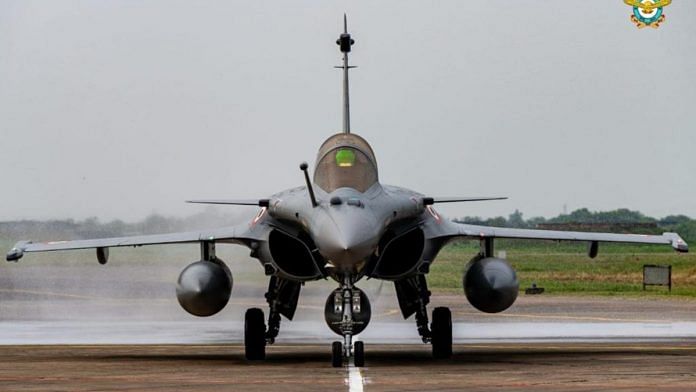
afale jet | Image by special arrangementText Size: A- A+
New Delhi: A fresh controversy seems to be building up over the 2016 Rafale deal with a French media report alleging that the country’s anti-corruption agency, the Agence Française Anticorruption (AFA), found suspicious payments made to a company owned by a middleman who was arrested by India’s Enforcement Directorate in 2019 in connection with the VVIP chopper scam.
The allegation is that the manufacturer of the Rafale aircraft, Dassault Aviation, had paid about one million Euros to Defsys Solutions for 50 models of the aircraft which were to be given as “gifts”. The category of ‘gifts’ by defence companies is treated as a serious matter in France. This resulted in the company having to explain the cost.
Models of Rafale gifted by Dassault Aviation are on display at various commands and bases of the Indian Air Force (IAF), including at the Air Headquarters. The giant model at the Air Headquarters was manufactured in France while the rest were made in India.
The report by Mediapart.fr says it “understands that during a scheduled audit of the group, the agency’s inspectors found that Dassault had agreed to pay one million euros to a middleman just after the 2016 signing of the Rafale fighter jet deal. That middleman is now accused of money laundering in India in another defence deal. The company said the money was used to pay for the manufacture of 50 large replica models of Rafale jets, even though the inspectors were given no proof that these models were made. Yet against all apparent logic, the AFA decided not to refer the matter to prosecutors”.
Industry sources said that Rafale explained the process to the French anti-corruption watchdog and the “query was settled”.
The AFA, which functions in a capacity similar to India’s Comptroller and Auditor General (CAG), was set up in 2017 with the aim of checking whether large companies implemented the anti-corruption procedures set out under Sapin 2, the French anti-corruption law. However, unlike CAG, the AFA also audits private firms.
The report said AFA auditors combing through Dassault’s 2017 accounts found an item of expenditure costing 508,925 euros entered under the heading ‘gifts to clients’.
The amount “seemed disproportionate in relation to all the other entries” under the same heading, said the subsequent confidential report of the AFA audit, which Mediapart claimed it had seen.
“The sum is indeed huge for a gift. Though French law does not set out precise limits, legal precedents suggest that giving a watch or an expensive meal costing several hundred euros can be enough to constitute corruption,” it said.
The report added that Defsys Solutions, which received the payment, belongs to the family of Sushen Gupta, who was arrested by the ED. According to the report, Gupta family members “acted as middlemen in the aeronautical and defence industries for three generations”.
It also highlighted Sushen Gupta “operated as an agent for Dassault, had worked on the Rafale contract and had allegedly obtained confidential documents from India’s Ministry of Defence”, and cited a report by CobraPost.
Defsys Solutions made models, maintains simulators
According to industry sources, Defsys is not a banned company and does business with various defence companies including Israeli ones, besides Dassault Aviation.
According to sources in the French industry, Dassault Aviation gave around 25 models to the Indian side, which are on prominent display at various locations, including at the residence of top officers. This is a historic practice.
The procurement of the models was said to have been done as part of the Make in India initiative.
Defsys is contracted to carry out maintenance of Rafale simulators at both the Ambala base and the Hasimara base where the second squadron of the Rafale will be based.
The simulators are manufactured by Sogitec Industries, a subsidiary of Dassault Aviation.
Pakistan is in a fix. The Imran-Bajwa dispensation is at a loss over the pressing priorities of the nation. Between cotton yarn (plus sugar) and Kashmir, what holds greater significance for the country, the Pakistani establishment is so puzzled to decide that it made a mockery of itself before the world making two conflicting announcements in two consecutive days. On March 31, the Imran Khan government affirmed that it would import cotton from India and admitted that the 19-month-long restrictions had affected its small and medium-sized enterprises (SMEs) adversely. Pakistan’s Finance Minister Hammad Azhar also informed that the Economic Coordination Committee (ECC) has allowed the private sector to import five lakh tonnes of sugar from India. The next day, Pakistan Prime Minister Imran Khan reversed the ECC decision saying that the current circumstances between the two countries were not conducive to trade. The new decision was announced after the Cabinet meeting in which Foreign Minister Shah Mahmood Qureshi reportedly emphasised that the resumption of trade was not possible until India restored the special status of Jammu and Kashmir. Now, what astonished everyone is — what made Pakistan take a U-turn in just 24 hours? Neither the constitutional autonomy of Kashmir was changed between 31st March and 1st April, nor the high-powered committee, ECC, was unaware that article 370 was scrapped way back in 2019. What is even more interesting that the approval document on trade was duly signed by the Pakistan Prime Minister, which rules out the option of making newly-appointed Finance Minister Hammad Azhar a fall guy for the fiasco So the question is who in Pakistan triggered the volte-face on trade with India? Was it the final call of Army chief General Qamar Javed Bajwa that forced Imran Khan from signing off the trade proposal? On the contrary, it was General Bajwa who recently in his speech at the Islamabad Security Dialogue, referring to the geo-economics of South Asia, pushed for stronger trade relations in the region, and recognising the Kashmir dispute, called for burying the past and move forward. Notably, the February 25 announcement by Pakistan to observe the 2003 ceasefire agreement at the Line of Control would not have come about without the nod of General Bajwa. Weeks before that, on 3rd February, the Pakistan army chief in a speech at Air Force academy had highlighted the need to “extend a hand of peace in all directions”. In truth, both General Bajwa and Imran Khan seem on the same page on improving trade ties with India, as a day before the Army chief’s famous speech in Islamabad, the Pakistan Prime Minister also had expressed the same sentiment. Economy in shambles but Pakistan busy in Kashmir gamble Undeniably, the reason behind the change of Pakistan’s stance is the state of its economy, which is in shambles. In 2020, the GDP of the country slipped to minus 1.5%. The country is facing sustained economic sanctions imposed by the global terror financing watchdog Financial Action Task Force (FATF) for sponsoring terrorism. From Saudi Arabia to Egypt to Turkey to Iran, Pakistan has been scurrying for financial assistance. Pakistan’s slide into misery started after the Pulwama attack, when India withdrew Most Favoured Nation (MFN) status to Pakistan, raising the customs duty on all goods exported from Pakistan to 200% with immediate effect. The formal trade between the two countries dropped to almost nil after Pakistan decided to suspend bilateral trade with India in August 2019, following the abrogation of article 370. Essentially, Imran Khan has tied himself into knots by making Kashmir a precondition for reopening the trade. Even though he knows that India won’t change its stance on Kashmir. Perhaps he is also aware that Pakistan needs India more than India needs Pakistan to strengthen its economy. One can only hope that Imran Khan stops playing to the gallery and be serious if he is keen on rebuilding ties with India. First, Pakistan should show its seriousness by dismantling the terror infrastructure on its soil and putting an end to breeding terrorists against India.
INDIA, CHINA NEED TO STRENGTHEN BORDER CBMS, SAYS ENVOY
China’s Envoy to India, Sun Weidong Lesson of last year’s border incident profound and such incident should not be repeated: Sun Weidong India and China need to strengthen confidence-building measures in border areas and avoid a repeat of last year’s border crisis, China’s envoy to India Sun Weidong has said. “Maintenance of peace and tranquillity need our joint efforts,” Mr. Sun said. “The border disputes can only be resolved through dialogue and negotiations… In case of an incident, a timely communication through military and diplomatic channels should be undertaken to avoid any action that may complicate or escalate the situation. We should strengthen confidence-building measures to jointly maintain peace and tranquillity in the border areas. The lesson of last year’s border incident is profound and such incident should not be repeated.” He made the comments in a “virtual dialogue” with columnist Sudheendra Kulkarni, the transcript of which was released on Sunday by China’s Embassy in New Delhi. On last year’s clash in the Galwan Valley which marked the worst violence on the border since 1967, Mr. Sun said: “Neither China nor India would like to see it happen. Both sides are willing to resolve issues and de-escalate tensions through dialogue and consultation.” The disengagement at Pangong Lake was “conducive to building mutual trust and further easing the situation on the ground”. He said both sides had “the political will to resolve the boundary question” and “should actively push forward boundary talks and strive to reach a fair, reasonable and mutually acceptable solution”. While the Chinese envoy called on both sides to view relations “in a comprehensive way rather than limited to one part” and said “the boundary question is not the whole story of China-India relations”, India has made clear that relations cannot continue as normal unless there is peace and tranquillity in border areas. Last year’s crisis, India has said, was triggered by China’s mobilisation of a large number of troops in forward areas and multiple transgressions across the Line of Actual Control (LAC) that went against a number of border agreements that had helped keep the peace. India last year placed curbs on Chinese investment and banned more than 200 Chinese apps, underlining that trade and investment could not proceed as normal in light of last year’s border crisis. Mr. Sun said “complete decoupling” or “selective decoupling”, in his view, “will not be realistic and harm others without benefiting oneself”. “We hope that India will treat all as equals in its opening-up and refrain from imposing restrictions on specific countries or regions, over-stretching the concept of national security to exclude companies from specific countries,” he said. Last year, two-way trade reached $87.6 billion, of which India’s exports to China were $20.8 billion, up 16%. “It shows that the Chinese market will always welcome marketable commodities,” he said. “China has been India’s largest trading partner for consecutive years and India is China’s largest trading partner in South Asia. This is the result of the market functions and enterprises’ choices,” Mr. Sun said.
State Stalwarts
DEFENCES FORCES RANKS
ARMY, NAVY, AIRFORCE RANKS
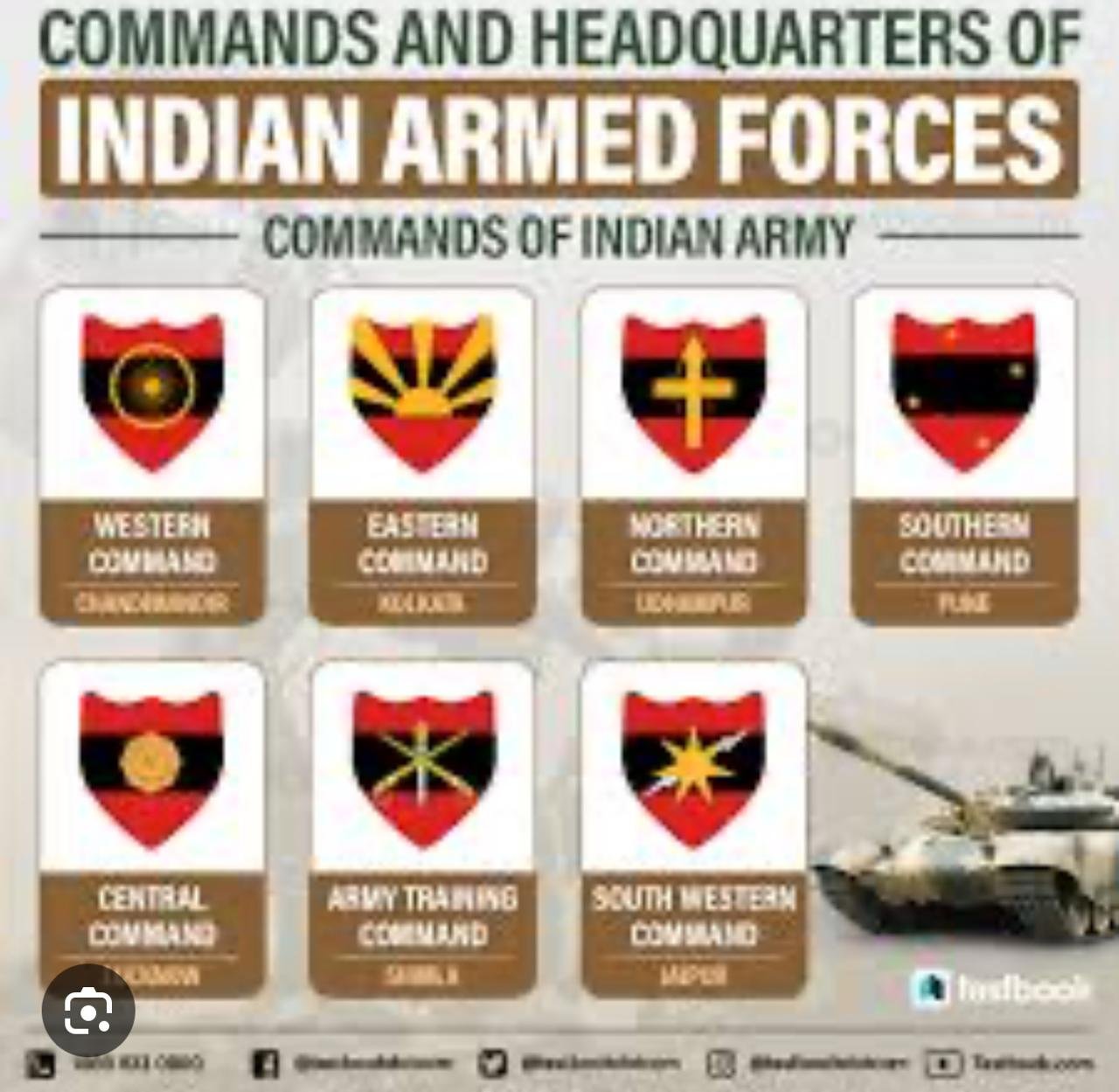
FORMATION SIGNS
FORMATION SIGNS
ALL HUMANS ARE ONE CREATED BY GOD
HINDUS,MUSLIMS,SIKHS.ISAI SAB HAI BHAI BHAI
CHIEF PATRON ALL INDIA SANJHA MORCHA
LT GEN JASBIR SINGH DHALIWAL, DOGRA
SENIOR PATRON ALL INDIA SANJHA MORCHA
MAJOR GEN HARVIJAY SINGH, SENA MEDAL ,corps of signals
.
.
PATRON ALL INDIA SANJHA MORCHA
MAJ GEN RAMINDER GORAYA , CORPS OF
sanjhamorcha303@gmail.com
PRESIDENT HARAYANA STATE CUM COORDINATOR ESM
BRIG DALJIT THUKRAL ,BENGAL SAPPERS
PRESIDENT TRICITY
COL B S BRAR (BHUPI BRAR)
PRESIDENT CHANDIGARH ZONE
COL SHANJIT SINGH BHULLAR
.
.
PRESIDENT PANCHKULA ZONE AND ZIRAKPUR
COL SWARAN SINGH
PRESIDENT SAS NAGAR (MOHALI)
COL BALBIR SINGH , ARTY
INDIAN DEFENCE FORCES
DEFENCE FORCES INTEGRATED LOGO
FORCES FLAGS
15 Th PRESIDENT OF INDIA SUPREME COMMANDER ARMED FORCES
Droupadi Murmu
DEFENCE MINISTER
Minister Rajnath Singh
CHIEF OF DEFENCE STAFF (2nd)
General Anil Chauhan PVSM UYSM AVSM SM VSM
INDIAN FORCES CHIEFS
CHIEF OF ARMY STAFF(29th)
General Upendra Dwivedi, PVSM, AVSM (30 Jun 2024 to Till Date)