An Army jawan, who lost his life due to medical complications while on duty in Ladakh, was cremated with military honours in his native village on the outskirts of Jammu city on Monday, officials said.
Northern Army Commander Lieutenant General Pratik Sharma and all ranks of the Northern Command paid homage to the braveheart. The general officer commanding (GOC), Fire and Fury Corps, along with all ranks, also saluted Lance Naik Saini.
The mortal remains of the jawan arrived from Leh to his home in Arnia Kalan village, wrapped in the national tricolour, officials mentioned. Lance Naik Saini was cremated with military honours as soldiers paid a solemn salute in his memory.
2 terrorists killed as Army foils infiltration attempt in Kupwara
A large cache of weapons and equipment recovered from the site
Two terrorists were killed after security forces foiled an infiltration attempt along the Line of Control (LoC) in north Kashmir’s Kupwara district, officials said on Tuesday. The Army stated that the identities of the slain terrorists are yet to be confirmed.
According to the Srinagar-based Chinar Corps, the operation was launched based on specific intelligence inputs provided by the Jammu and Kashmir Police, corroborated by other sources and agencies. Acting on this information, a joint operation was initiated by the Army and J&K Police in the Machil sector of Kupwara on Monday.
“As part of Operation Amar, alert troops noticed suspicious movement and challenged the infiltrators, prompting them to open indiscriminate fire,” the Army said in a statement. “Troops retaliated effectively, killing two terrorists.”
The Chinar Corps further added that a large cache of weapons and equipment was recovered from the site. A senior Army official said the operation is still ongoing in the area as search and clearance activities continue.
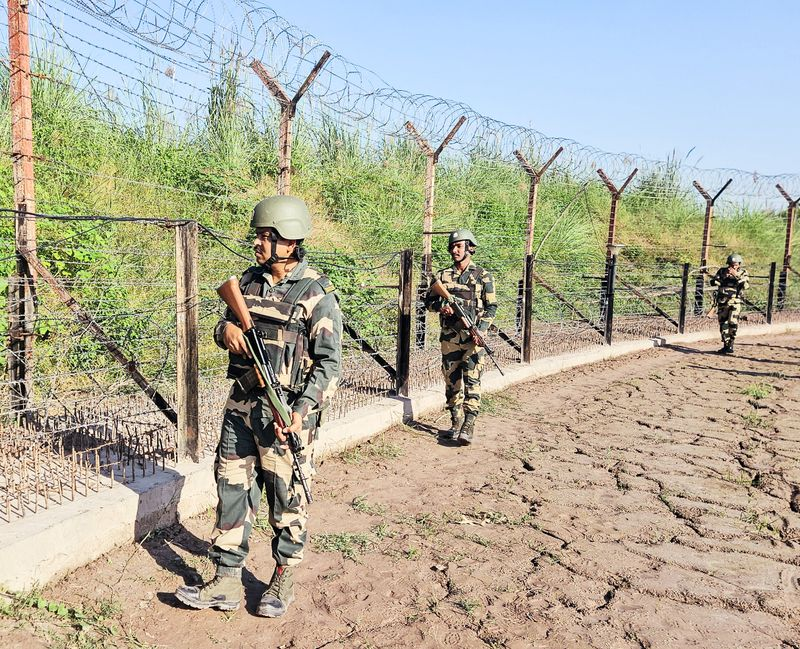
This infiltration attempt comes at a time when security forces have heightened surveillance along the LoC. Officials have expressed concerns over a possible rise in infiltration efforts before heavy snowfall closes the mountain passes commonly used by infiltrators ahead of the winters.
Just last week, Additional Director General of the BSF, Satish S Khandare, stated in Srinagar that the BSF has intensified vigil along the LoC in anticipation of winter-related infiltration.
He noted that intelligence inputs indicate that “terrorists are waiting at various launch pads across the border to infiltrate into the Valley.” While he refrained from giving specific numbers, Khandare said, “Reports suggest our neighbouring country is operating several launch pads across the border.”
Armed Forces set for major tri-service mountain drill focused on futuristic warfare
Exercise ‘Vidyut Vidhhwans’ to integrate land, air, sea, cyber, space, and cognitive operations under Northern Command
As India intensifies its focus on futuristic warfare, a tri-service, multi-domain exercise, codenamed ‘Vidyut Vidhhwans’ is being conducted later this week under the aegis of Headquarters Northern Command.
The drill, which comes a few months after Operation Sindoor where all three services were involved in carrying out precision attacks deep inside Pakistan, will bring together troops, systems, strategies and doctrines that span not just the domains of land, air and sea, but delve into space, cyber, electromagnetic and cognitive domains.
The exercise will simulate high-pressure situations, including communication breakdowns, cyber intrusions and disinformation, exercising troops and commanders with challenges of operating in an interconnected and networked environment, defence officials said.
“At its heart, this exercise is about readiness not just for war, but for unpredictability. And it began not with noise, but with a thoughtful dialogue and well-crafted strategy to shape a future ready force,” an Army spokesperson said.
The lead-up to the drill began with ‘Samwad’, a brain storming event held at Mathura earlier this month, where officers and subject matter experts exchanged ideas on modern threats and emerging technologies.
In his key note address at the event, Lt Gen Pratik Sharma, GOC-in-C, Northern Command, had said, “The boundary between kinetic and non-kinetic operations today blurs rapidly. Adversaries will attempt to paralyse a commander’s decision cycle without firing a shot, by disabling communication, disrupting satellites or creating mass confusion through disinformation. In this reality, Multi-Domain Operations are not restricted to battlefield tactics but encompasses a paradigm shift in operational art”.
‘Samwad’ focused at preparing military minds to think beyond the precincts of conventional warfare. Topics ranged from satellite vulnerabilities to information warfare, with the core message being that future wars will be fought in uncharted territories and will test the minds as much as the machines.
For Exercise ‘Vidyut Vidhhwans’, formations are readying their gear and grid incorporating niche technologies and new generation equipment which is spread over the entire Northern Command theatre.
Besides the Armed Forces, the Central Armed Police Forces that function under the Ministry of Home Affairs, and Central Government agencies are also being integrated along with the private sector players to achieve jointness, self-reliance and innovation under the ‘whole of the nation approach’.
This is not the first time that a tri-service, multi-agency military drill is being held. Last year, Exercise Poorvi Prahar, a nine-day drill in Arunachal Pradesh involved elements from the Army, Navy and Air Force for enhancing synergy and validating joint operations in rugged high-altitude terrain.
Tri-services drills have also taken place in the past in places such as Visakhapatnam on the eastern seaboard and the Andaman and Nicobar Islands, home to India’s sole Tri-service Command, though the Navy’s participation in high altitude joint exercises is a recent development.
Defence sources say that several aspects of emerging warfare transcend service line, such as cyber, intelligence, surveillance and covert missions. Besides, the Navy, which is a multi-dimensional force operation in sub-surface, surface and aerial domains, besides cyber, special operations and electronic warfare, has also been associated with operations in the mountains.
The Navy’s Marine Commando Force has been deployed in Kashmir, particularly around Wular Lake, on anti-terrorist operations for many years and during the stand-off with China in 2020, they were deployed at Pangong Tso Lake in eastern Ladakh.
The Navy’s Boeing P-8I maritime surveillance aircraft, based at Arakkonam in Tamil Nadu, and unmanned aerial vehicles also flew reconnaissance and survey missions along the Line of Actual Control AC to monitor Chinese movements. The P-8s were also reported to have been deployed along the western borders in the aftermath of the 2019 Pulwama terror attack for intelligence gathering.
In May 2023, the Defence Ministry went ahead with the move to cross-post officers to different services to give them better, hands-on understanding of their sister services’ ethos, role, nuances and operating procedures – a step towards the establishment of the much talked about integrated theatre commands. This initially involves about 150 officers at the level of Major and Lieutenant Colonel or equivalent.
Indian Army flags off four-day ‘Shaurya motorcycle rally’ in Arunachal
The riders will interact with locals and promote ‘No Drugs, No School Dropouts‘
The Indian Army on Tuesday flagged off a four-day ‘Shaurya motorcycle rally’ from Likabali Military Station in Arunachal Pradesh’s Lower Siang district to honour the heroes of the 1962 India-China War.
The rally is an initiative of the Indian Army to commemorate the indomitable spirit, courage and dedication of the soldiers who defended the nation’s frontiers under the most challenging conditions, an army official said.
The official said that 20 riders, including personnel of the Indian Army and Indo-Tibetan Border Police, and 12 civilians from Assam and Arunachal Pradesh, will cover around 900 km through the rugged terrain and remote valleys of the frontier state, retracing the historic routes taken during the 1962 war.
The riders will interact with locals and promote ‘No Drugs, No School Dropouts’, an initiative of the Arunachal Pradesh government.
They will also conduct outreach programmes at Basar (Leparada), Bora Rupak, Menga, Shere Thapa Memorial, Taksing, Daporijo (Upper Subansiri), Ziro (Lower Subansiri) and Neelam Tebi War Memorial (Keyi Panyor).
The official said that the riders will also conduct motivational interactions with students, felicitate local communities and conduct awareness campaigns promoting unity and nation-building in the border regions, with support from civil administrations.
The Trump-brokered ceasefire should be cautiously welcomed for a humanitarian reason
THE Gaza ceasefire agreement, announced on social media by US President Donald Trump, came into force on October 10. The initial phase aims to pause the hostilities in a genocidal war of retribution by the Israeli Defence Forces (IDF) that began after the Hamas terror attack on Israel on October 7, 2023.
This Trump-brokered ceasefire is to be cautiously welcomed for one overriding reason – and that is the humanitarian dimension. Two years of a relentless war and the indiscriminate, disproportionate attacks on civilians in Palestine to neutralise Hamas have killed over 67,000 Palestinians; about 2,000 Israelis, including civilians and soldiers, have lost their lives. According to UN agencies, humanitarian organisations and local authorities, around two million Palestinians (of a total of 5.5 million) have been displaced.
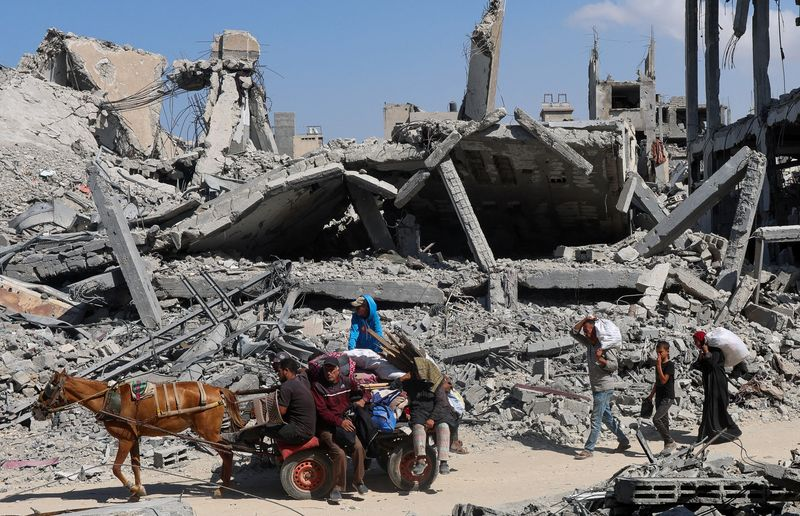
Gaza has been reduced to rubble; famine conditions prevail, with children and women bearing the brunt of the Israeli onslaught. With the ceasefire coming into effect, displaced Palestinians are returning to areas like Gaza City and Sheikh Radwan. Tens of thousands of Palestinians are trekking north along roads like Al-Rashid from southern camps such as Nuseirat and Khan Younis, carrying their meagre belongings amid a ruined landscape.
With 600 aid trucks now entering Gaza daily, the ceasefire will mitigate — to some extent — the famine declared in August and described by the UN as a “man-made catastrophe.” This surge in aid, coupled with the reopening of Rafah and other crossings, could alleviate suffering for Gaza’s almost two million residents,
80 per cent of whom are displaced.
The next phase of the ceasefire agreement — also being referred to as the Gaza peace deal — involves hostage and prisoner exchange between Israel and Hamas. It is expected that beginning today, Hamas will release 20 Israeli hostages and the mortal remains of the 28 deceased. In the reciprocal arrangement, Israel is preparing to free about 250 long-term Palestinian prisoners (serving life sentences) and around 1,700 detainees arrested in Gaza since October 7, 2023, including women and children.
If this proposed exchange takes place without any hurdles or surprises, President Trump is likely to arrive in the region to a thunderous roll of drums as the peacemaker par excellence. Norway will be alerted to look no further; next year’s “Nobel Peace Prize winner” will emerge in the land of Bethlehem, and the Magi of this century will assemble in TV studios the world over, led by Fox News and its global clones.
But alas, the reality is grim. Equitable and sustainable peace as well as socio-political justice for the Palestinians will remain elusive, while the optics of a historic breakthrough enabled by Trump will flood chanceries and media platforms.
Israeli PM Benjamin Netanyahu has been brought to the ceasefire table kicking and screaming and there have been reports of the IDF firing on returning Palestinians. Hardliners in Israel are determined to deny any concession to Palestine that will usher in peace and prosperity, as envisioned by Trump and the regional partners (Egypt, Qatar and Saudi Arabia). Once the Israeli hostages are safely back, it is probable that there would be attempts to scuttle the peace deal.
However, one must hope for the best, and a more positive scenario can unfold in this manner. If cessation of hostilities, hostage-prisoner release and troop withdrawal proceed smoothly in the initial phase, this would lay the foundation for tentative trust in the next phase — full demilitarisation and reconstruction of the wasteland that is Palestine/Gaza.
The Palestinian Authority’s potential role in governance could marginalise Hamas, thereby aligning with Israel’s long-term security goals and the US-led call for a two-state framework. But this is a long way off, for the immediate priority is clearing the rubble, finding more bodies and rebuilding Gaza. The bill for this could be upwards of $50 billion.
The most authoritative estimates for reconstructing Gaza after the war place the total cost at $53.2 billion over the next 10 years. This figure comes from the joint Interim Rapid Damage and Needs Assessment by the United Nations, European Union and World Bank, covering damages from October 2023 to October 2024. It includes physical infrastructure repair ($29.9 billion), economic and social recovery ($19.1 billion) and environmental cleanup ($1.9 billion), with $20 billion needed in the first three years alone. It is not clear at this stage as to how this money would be made available to Palestine.
The more disconcerting feature of this peace deal is that it has been framed as a US-led initiative supported by regional heavyweights — outside of the UN framework. A multinational military monitoring force including 200 US troops will be positioned in Israel to establish a coordination centre to oversee Hamas compliance from bases outside Gaza. An interim technical governance team to be led by former UK PM Tony Blair is in the pipeline and this reeks of neo-imperialism, Trump style.
With the UN Security Council in virtual paralysis, given the bitter discord between the US and the Russia-China dyad, the world is witnessing extended geopolitical dissonance. This has been exacerbated by the Trump-driven tariff turbulence. Yet Trump is to be accorded one cheer (not three) — for bringing a reluctant Netanyahu to the negotiating table.
India has supported the agreement, with PM Modi congratulating Netanyahu on the activation of the first phase. India has been invited by the US and Egypt to attend a follow-up ‘Gaza Truce Retreat’ aimed at discussing ceasefire monitoring and reconstruction.
New Delhi’s pedigree in complex peacekeeping operations (going back to the 1953 Korean War armistice and subsequent UN missions) and proven disaster relief competence can contribute to the international rebuilding efforts that Gaza desperately needs.
The ceasefire pact is tentative, fragile and prone to setbacks. This is the third major truce since the war began in October 2023 — first in November 2023 and later in January 2025 — and both collapsed. Will October 2025 be auspicious? The jury is out — the talks on demilitarisation and governance are imminent, even as Hamas has rejected ‘foreign guardianship’.
Bringing this complex ceasefire-cum-peace deal under the UN aegis would be highly desirable, but the feasibility of such a transition is very low. Trump wants peace, and “King Canute’s courtiers” will proclaim that it has indeed arrived and the Star of Bethlehem is glowing over the rubble of Gaza.
C Uday Bhaskar is Director, Society for Policy Studies.
India slams Pakistan at UN over child rights abuses, cross-border terrorism
MP Dubey says Pakistan’s forces and their its proxies have repeatedly attacked schools and health workers, besides carrying out deadly cross-border strikes that have ‘killed and maimed Afghan children’
India on Tuesday launched a sharp counterattack against Pakistan at the United Nations, accusing it of being one of the “most serious violators” of the global agenda on the protection of children in armed conflict.
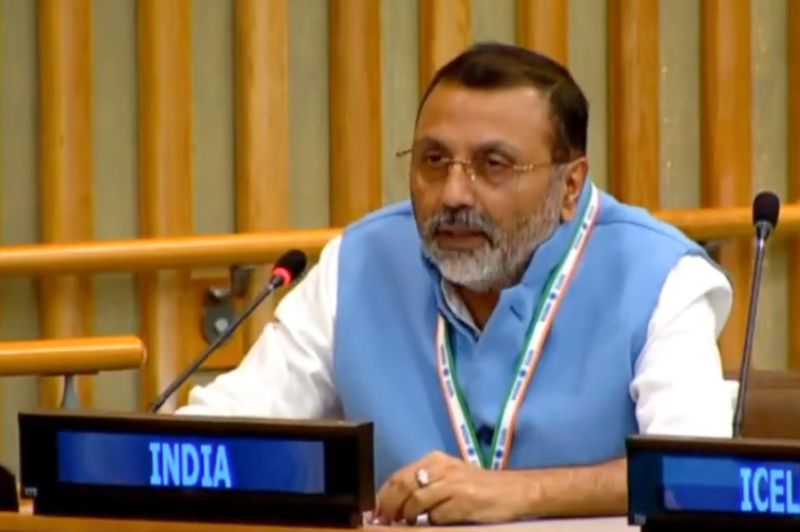
Delivering India’s statement on the Promotion and Protection of Rights of Children, MP Nishikant Dubey said Pakistan continues to exploit international platforms to deflect attention from its own shameful record of atrocities against children — both within its borders and beyond.
“Neighbouring Pakistan presents a contrasting example. It is a country that is one of the most serious violators of the CAAC (Children and Armed Conflict) agenda,” Dubey said.
The parliamentarian strongly condemned Pakistan’s attempt to divert global attention from the grave abuses against children within their borders, as evidenced by the 2005 report issued by the Secretary General on CAAC and by their ongoing cross-border terrorism.
Citing UN findings, Dubey said Pakistan’s forces and their terror proxies have repeatedly attacked schools — particularly girls’ schools — and health workers, besides carrying out deadly cross-border strikes that have “killed and maimed Afghan children”.
Drawing attention to Pakistan’s hand in the April 22 Pahalgam massacre, Dubey said, “If Operation Sindoor is to be mentioned, the international community has not forgotten the brutal targeted attacks carried out by Pakistan’s terrorists, including the killing of 26 innocent civilians in Pahalgam.”
He underlined that India’s air strikes under Operation Sindoor in May were a “considered and legitimate response” to dismantle terrorist infrastructure and bring perpetrators to justice.
“In contrast, Pakistan deliberately targeted children and civilians in our border areas,” he said, adding that Islamabad must “look at itself in the mirror, stop preaching on this platform and act for the welfare of children within its own borders”.
In another UN session, MP Rajeev Rai delivered India’s statement in the Second Committee on Sustainable Development and the Global Code of Ethics for Tourism.
He highlighted India’s leadership in leveraging information technology, science and culture to advance the Sustainable Development Goals (SDGs), while emphasising South-South cooperation with middle-income countries.
At the Sixth Committee on Crimes against Humanity, Rajya Sabha MP S Phangnon Konyak reaffirmed India’s position that states bear the “primary responsibility” for ensuring justice and accountability for grave human rights violations.
“Any legally binding treaty must respect diverse legal systems and complement existing mechanisms like the International Criminal Court,” she said, calling for a “victim-centred approach” that ensures access to justice and reparations.
She underscored that international cooperation — through mutual legal assistance, extradition and capacity-building — is essential to effectively implement global commitments.
“India remains committed to a rules-based international order, justice and accountability,” Konyak affirmed.
Security threat: Ladakh admn justifies NSA arrest of Sonam Wangchuk
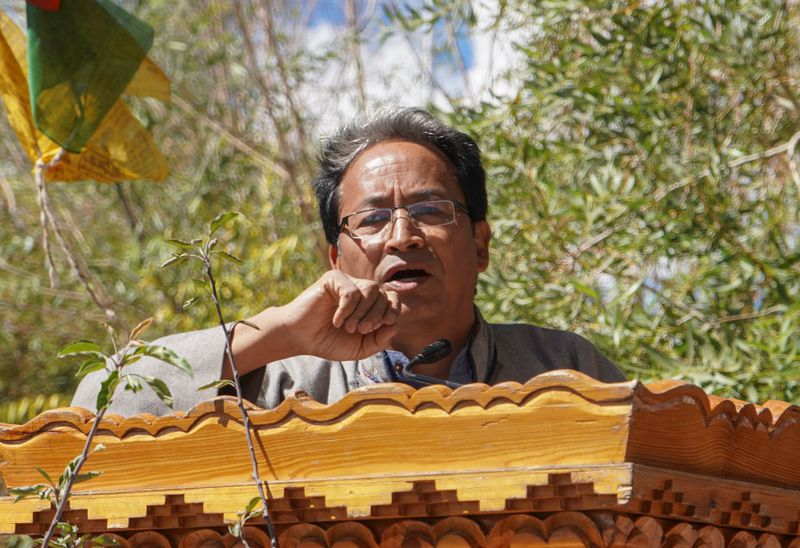
The Ladakh administration on Tuesday defended before the Supreme Court climate activist Sonam Wangchuk’s detention under the National Security Act (NSA), 1980, saying he “had been indulging in activities prejudicial to the security of the state”.
Responding to Wangchuk’s wife Gitanjali Angmo’s petition seeking his immediate release from detention, Leh District Magistrate Romil Singh Donk, who passed the September 26 detention order under the NSA, denied as “baseless” her allegation that her husband had been detained illegally and was being ill-treated during the detention.
The affidavit asserted that Wangchuk had been “lawfully detained under a lawful authority” after considering relevant material under Section 3(2) of the NSA.
“It is submitted that the above stated order of detention came to be passed by me after duly considering the material placed before me and, as mandated under the law, and after arriving at a subjective satisfaction on the circumstances that prevailed within the local limits of the jurisdiction where Wangchuk had been indulging in activities prejudicial to the security of the state, public order and services essential to the community as mentioned in the grounds of detention,” the affidavit read.
“I was satisfied and continue to be satisfied with the detention of the detenue,” Donk asserted.
A Bench of Justice Aravind Kumar and Justice NV Anjaria, which had on October 6 issued notices to the Centre, the Ladakh administration and others on Angmo’s petition seeking Wangchuk’s immediate release, on Tuesday deferred the hearing to October 15.
The activist was detained on September 26 under Section 3(2) of the NSA, two days after protests demanding Ladakh’s statehood and the Sixth Schedule status turned violent, leaving four persons dead and nearly 100 injured.
Terming the allegation of not being informed of the detention order as “completely false and misleading”, the affidavit said the detenue was categorically informed about his arrest under the NSA and his transfer to Central Jail, Jodhpur, Rajasthan, and that his wife was also immediately informed about it.
The Leh District Magistrate said Wangchuk was communicated the grounds of his detention on September 29 and his signature was taken on the receiving copy.
The affidavit stated that Wangchuk had been medically examined five times between September 26 and October 9, and “he was certified to be medically and physically fit” and that he had told the authorities that “he is not on any medication”.
It said notwithstanding the fact that nearly a fortnight had elapsed since he was detained, “no representation has been made by Wangchuk to the detaining authority against his detention.”
In a separate affidavit, Jodhpur Central Jail superintendent Pradeep Lakhawat told the top court that Wangchuk was not in solitary confinement and that he had been kept in a 20×20 ft standard barrack.
His brother Tsetan Dorje and lawyer Mustaf Haji were allowed to meet him on October 4 for one hour, Lakhawat said, adding that his wife (petitioner) and another counsel Sarvam Ritam Khare met him on October 7. At Wangchuk’s request, he was given a laptop, the affidavit stated.
Pakistan, Afghan forces clash again along Khyber Pakhtunkhwa border
Kabul says it targeted Pakistani military posts, killing 58 soldiers in retaliation for what it called violations of Afghan airspace
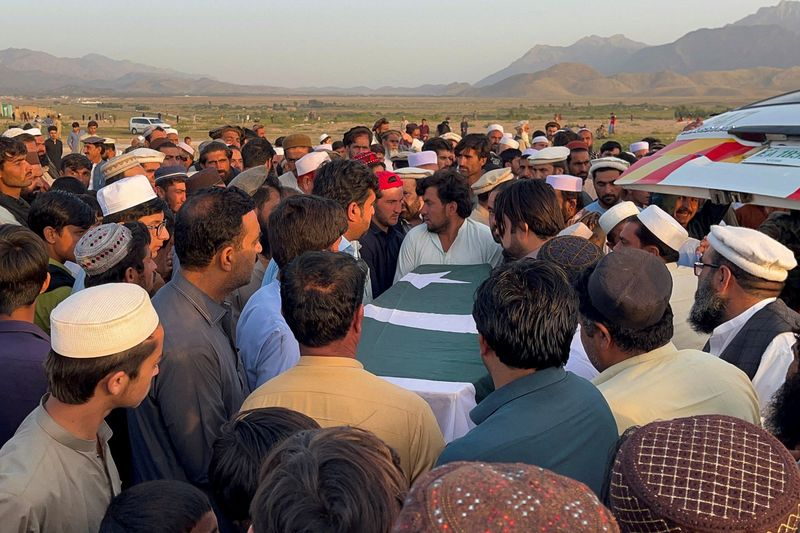
People carry a Pakistani flag-draped coffin of soldier Aslam Jadran, who died following the overnight border clashes between Pakistan and Afghanistan, during a funeral in Kurram, a tribal district of Khyber Pakhtunkhwa province in Pakistan. Reuters Phot
Clashes erupted on Tuesday between Pakistani and Afghan forces in a remote northwestern border region, with state-run media in Pakistan accusing Afghan troops of opening “unprovoked fire” that was repulsed.
Pakistani forces responded, damaging Afghan tanks and military posts, according to Pakistan TV and two security officials, who spoke on the condition of anonymity because they were not authorised to speak to the media.
Tahir Ahrar, a deputy police spokesperson in Afghanistan’s Khost province, confirmed the clashes but provided no further details.
This is the second time this week that the two sides have traded fire along their long border.
According to Pakistan’s state-run media, Afghan forces and the Pakistani Taliban jointly opened fire at a Pakistani post “without provocation”, prompting what the media described as a “strong response” from Pakistani troops in Kurram, a district in Khyber Pakhtunkhwa province.
Security officials said Pakistan’s military also destroyed a sprawling training facility of the Pakistani Taliban.
There was no immediate comment from Pakistan’s military, which has been on high alert since Saturday, when both sides traded fire across multiple border regions, resulting in dozens of casualties on each side.
Although the clashes halted on Sunday after appeals from Saudi Arabia and Qatar, all border crossings between Pakistan and Afghanistan have remained closed.
Over the weekend, Kabul said that it targeted several Pakistani military posts and killed 58 Pakistani soldiers in retaliation for what it called repeated violations of Afghan territory and airspace. Pakistan’s military reported lower figures, saying it lost 23 soldiers and killed more than 200 “Taliban and affiliated terrorists” in retaliatory fire along the frontier.
Tensions have remained high since last week, when the Taliban government accused Pakistan of carrying out airstrikes in Kabul and in an eastern market. Pakistan has not acknowledged those allegations.
But Pakistan has previously launched strikes inside Afghanistan, saying it targets hideouts of Tehreek-e-Taliban Pakistan, or TTP, which is separate from but allied to the Afghan Taliban.
Pakistan accuses Kabul of harbouring the group, which has carried out numerous deadly attacks inside Pakistan. Kabul denies the charge, saying it does not allow its territory to be used against other countries.
US-India expert Ashley Tellis arrested for retaining secret documents, links to China
The Justice Department said Tellis faces up to 10 years in prison and a fine of up to $250,000 if convicted
A leading expert on US-India relations who has advised successive US administrations has been arrested and charged with unlawful retention of national defence information, including over a thousand pages of top secret and secret documents at his home, court documents showed.
Ashley Tellis, 64, who served on the National Security Council of former Republican President George W Bush and is listed in an FBI court affidavit as an unpaid adviser to the State Department and a Pentagon contractor, was arrested on the weekend and charged on Monday, the documents seen on Tuesday showed.
Tellis is also a senior fellow at the Carnegie Endowment for International Peace, a Washington think tank.
A State Department official confirmed that Tellis was arrested on Saturday, but declined to comment further. A Pentagon official said it does not comment on ongoing litigation.
Carnegie did not immediately respond and Tellis could not immediately be reached. His lawyer was not listed in the court documents and was not immediately known.
Trump administration officials, including Director of National Intelligence Tulsi Gabbard, have vowed to prosecute individuals who mishandle classified information.
The FBI affidavit accompanying the charge document said that in September and October this year Tellis entered Defence and State Department buildings and was observed accessing and printing classified documents, including about military aircraft capabilities, and leaving by car with a leather briefcase or bag.
The affidavit said a search of Tellis’ residence in Vienna, Virginia, on Saturday uncovered over a thousand pages of classified documents with top secret and secret markings.
The affidavit also said Tellis had met Chinese government officials on multiple occasions over the past several years. The meetings included a September 15 dinner at a restaurant in Fairfax, Virginia, at which it said Tellis arrived with a manila envelope, which he did not appear to have when he left.
The affidavit said that due to his employment with the State Department and Pentagon, Tellis possessed a top secret security clearance with access to Sensitive Compartmented Information.
A Justice Department statement said that if convicted, Tellis faces up to 10 years in prison and a fine of up to $250,000.
“We are fully focused on protecting the American people from all threats, foreign and domestic,” said Lindsey Halligan, US attorney for the Eastern District of Virginia. “The charges as alleged in this case represent a grave risk to the safety and security of our citizens.”
Why Group Captain Nachiketa has ‘immense respect’ for a Pakistani Captain
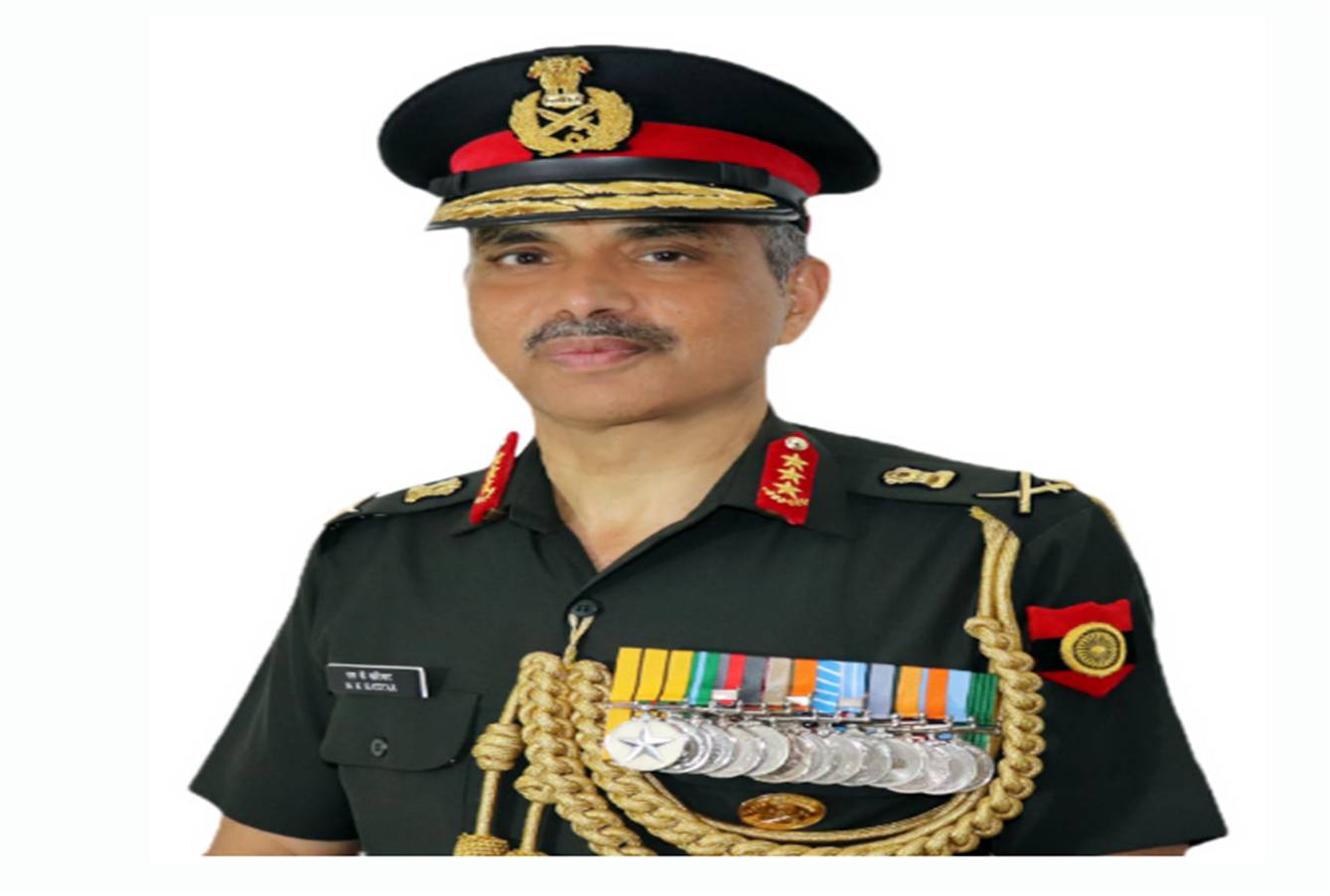
Lieutenant General Manoj Kumar Katiyar Reviews Operational Preparedness of Rising Star Corps Western Command Chief Commends Professionalism and Innovation, Urges Troops to Stay Future-Ready
15 Pak Soldiers Killed As Taliban Hits Back Hard After Kabul Airstrikes
Soldiers killed, posts captured: Why Afghanistan, Pakistan are clashing at the border
Heightened vigil at LoC ahead of winter to curb infiltration of terrorists
Nation never had ‘clear-cut policy’ to deal with J&K challenges: Dulat
SC upholds Armed Forces Tribunal’s decision to substitute General Court Martial’s finding
Northern Command GoC reviews operational preparedness in Rajouri
Rajbeer Kaur becomes first turbaned woman to join Canadian police
Army officers messed up Operation Bluestar due to poor planning: Mani Shankar Aiyar
Trump warns Russia he may send Ukraine long-range Tomahawks if Moscow doesn’t settle war soon
‘Gaza war over’: Trump declares as Israel, Hamas set for hostage, prisoner exchanges
Latest contribution List as on 11 Sep 2025
‘Op Bluestar was a mistake, Indira Gandhi paid with her life’: Chidambaram
BSF air wing gets first woman flight engineer in over 50 years
Dramatic video: Helicopter spirals out of control, crashes into palm trees at California beach; 5 injured
State Stalwarts
DEFENCES FORCES RANKS
ARMY, NAVY, AIRFORCE RANKS
FORMATION SIGNS
FORMATION SIGNS
ALL HUMANS ARE ONE CREATED BY GOD
HINDUS,MUSLIMS,SIKHS.ISAI SAB HAI BHAI BHAI
CHIEF PATRON ALL INDIA SANJHA MORCHA
LT GEN JASBIR SINGH DHALIWAL, DOGRA
SENIOR PATRON ALL INDIA SANJHA MORCHA
MAJOR GEN HARVIJAY SINGH, SENA MEDAL ,corps of signals
.
.
PATRON ALL INDIA SANJHA MORCHA
MAJ GEN RAMINDER GORAYA , CORPS OF
sanjhamorcha303@gmail.com
PRESIDENT HARAYANA STATE CUM COORDINATOR ESM
BRIG DALJIT THUKRAL ,BENGAL SAPPERS
PRESIDENT TRICITY
COL B S BRAR (BHUPI BRAR)
PRESIDENT CHANDIGARH ZONE
COL SHANJIT SINGH BHULLAR
.
.
PRESIDENT PANCHKULA ZONE AND ZIRAKPUR
COL SWARAN SINGH
PRESIDENT SAS NAGAR (MOHALI)
COL BALBIR SINGH , ARTY
INDIAN DEFENCE FORCES
DEFENCE FORCES INTEGRATED LOGO
FORCES FLAGS
15 Th PRESIDENT OF INDIA SUPREME COMMANDER ARMED FORCES
Droupadi Murmu
DEFENCE MINISTER
Minister Rajnath Singh
CHIEF OF DEFENCE STAFF (2nd)
General Anil Chauhan PVSM UYSM AVSM SM VSM
INDIAN FORCES CHIEFS
CHIEF OF ARMY STAFF(29th)
General Upendra Dwivedi, PVSM, AVSM (30 Jun 2024 to Till Date)