



Sanjha Morcha

What’s New

Click the heading to open detailed news

Current Events :

web counter

Print Media Reproduced Defence Related News

Indian Air Force Takes Part In Multinational Exercise Ocean Sky 2025 In Spain

The Indian Air Force (IAF) is currently participating in Exercise Ocean Sky 2025, a large-scale multinational air combat drill hosted by the Spanish Air Force at Gando Air Base in Spain. The exercise is being conducted from 20 to 31 October 2025, with several friendly nations taking part.

According to an IAF post on X, the primary objective of the exercise is to foster mutual learning and interoperability, enhance air combat proficiency, and strengthen defence cooperation among participating nations. The event provides a valuable opportunity for IAF pilots and personnel to train alongside their international counterparts in a complex and dynamic operational environment.

This development follows the IAF’s recent enhancement of its airlift and operational capabilities through the induction of 16 Airbus C-295 military transport aircraft. Indian Ambassador to Spain, Dinesh K Patnaik, along with senior IAF officials, had received the final aircraft at the Airbus Defence and Space facility in Seville on 3 August 2025.

The Indian Embassy in Spain confirmed that the delivery was completed two months ahead of schedule, marking a significant milestone in India’s defence modernisation efforts.

The Airbus C-295 is a versatile and robust tactical transport aircraft designed to perform a wide range of missions. Its operational roles include troop and cargo transport, maritime patrol, surveillance and reconnaissance, signals intelligence, and medical evacuation, among others.

The aircraft is also capable of armed support, VIP transport, and aerial firefighting operations. With over 300 units contracted worldwide, the C-295 has established a global reputation for reliability and multi-role performance.

India’s procurement of 56 C-295 aircraft under a USD 2.5 billion agreement with Airbus Spain represents a landmark initiative in bilateral defence cooperation. Notably, 40 of these aircraft will be manufactured in India by Tata Advanced Systems, marking the first ‘Make in India’ project in the defence aviation sector.

The first C-295 was formally handed over to the Government of India in September 2023, during a ceremony presided over by Air Chief Marshal VR Chaudhari at Seville, according to the Ministry of External Affairs. The successful completion of deliveries within schedule underscores the growing synergy between India and Spain in advanced defence manufacturing and aerospace technology.


Cochin Shipyard Delivers First Indigenous ASW Vessel INS ‘Mahe’ To The Indian Navy

Cochin Shipyard Limited (CSL) has successfully delivered Mahe, the first of eight Anti-Submarine Warfare Shallow Water Craft (ASW SWC), to the Indian Navy, marking a major stride in India’s indigenous shipbuilding drive under the Aatmanirbhar Bharat initiative.

The 78-metre-long warship, Mahe, represents a significant technological milestone as the largest Indian Naval vessel powered by a diesel engine-waterjet combination. This advanced propulsion system ensures superior manoeuvrability and reduced acoustic signature, crucial in anti-submarine operations carried out in littoral waters.

Designed for a wide range of coastal defence missions, Mahe is equipped for underwater surveillance, search and rescue duties, Low Intensity Maritime Operations (LIMO), and complex mine-laying tasks. Its compact design and high agility make it ideal for operations in shallow waters where conventional destroyers and frigates face navigational constraints.

Constructed under the stringent Classification Rules of Det Norske Veritas (DNV), the vessel meets international standards in performance, safety, and reliability. The ship’s design reflects extensive indigenous input, with over 90 percent of components sourced domestically—a major achievement in India’s self-reliance and technological maturity in naval construction.

The formal vessel acceptance was completed by Dr S. Harikrishnan, Director (Operations), Cochin Shipyard Limited, and Commander Amit Chandra Choubey, Commanding Officer (Designate) of Mahe. The ceremony was attended by senior naval officials including Rear Admiral R. Adhisrinivasan, Chief Staff Officer (Technical), Western Naval Command, and Commodore Anup Menon, Warship Production Superintendent at Kochi.

Cochin Shipyard’s spokesperson emphasised that the induction of the ASW SWC series will “significantly strengthen the Navy’s shallow water Anti-Submarine Warfare capability,” further enhancing coastal security and operational readiness. The accomplishment underscores India’s growing competence in designing and building advanced warships domestically.


Ex-IAF Chief Bhadauria Urges Shift of 97 TEJAS MK-1 Orders To More Capable MK-2 Variant

India’s fighter Jet TEJAS MK-1A completed its maiden flight in HAL-Nashik on 17th Oct, 2025

In a candid discussion on Bharat Shakti Dialogues, former Chief of Air Staff Air Chief Marshal (Retd) RKS Bhadauria with Editor-in-Chief Nitin A. Gokhale, outlined a clear, bold vision for accelerating India’s indigenous fighter aircraft development programmes, focusing on the Light Combat Aircraft (LCA) TEJAS and the upcoming Advanced Medium Combat Aircraft (AMCA). He strongly encouraged doubling down on indigenous efforts rather than relying on foreign imports.

AMCA: India’s Ambitious Fifth-Generation Fighter Project

Bhadauria praised AMCA as the most ambitious leap India has made in combat aviation—a stealth-capable, multi-role fifth-generation fighter with super-cruise capability and sophisticated avionics.

He described it as a national endeavour involving the Ministry of Defence, DRDO labs, DPSUs, and private sector players working together. Emphasising private sector participation, Bhadauria called AMCA a “top-end project” with significant strategic importance, dismissing any need to import fifth-generation fighters given the government’s firm commitment to indigenous development.

“This is an opportunity for the private sector to come up and demonstrate their ability to deliver. The AMCA has to be treated as a national project. The government, DRDO labs, DPSUs and private players must work hand-in-hand. It’s now up to the private sector to rise to the occasion,” he stressed.

TEJAS: The Foundation of Indigenous Air Power

Reaffirming the TEJAS program as the “fundamental bedrock of indigenous technology,” Bhadauria highlighted his role in securing the landmark contract for 83 MK-1 jets, which greatly strengthened the Indian Air Force’s combat fleet.

The IAF is expected to operate over 350 TEJASs across MK-1, MK-1, and MK-2 variants. The Ministry of Defence has tendered for 97 more MK-1 aircraft, valued over ₹65,000 crore, but Bhadauria suggested this order be reconsidered.

Call To Shift Orders From MK-1 To MK-2

He proposed shifting the new 97-aircraft order from the MK-1 to the MK-2 variant, which offers superior payload capacity, endurance, and compatibility with modern weaponry. He believes early placement of MK-2 orders and concurrent production would significantly improve timelines and operational capabilities.

For Bhadauria, the MK-2 is a vital stepping stone, building upon three decades of TEJAS development experience and poised to form the tactical backbone alongside AMCA.

Emphasis On Fast-Tracking Indigenous Production

Bhadauria urged innovative measures and “fast-tracking at every stage” to avoid past delays and to ensure timely induction of these fighters. He framed TEJAS and AMCA not as isolated projects but as complementary pillars within India’s broader aviation roadmap, both crucial for maintaining and elevating India’s air combat edge.

A Clear Message: Faith In Indigenous Ecosystem

The former Air Chief’s central message was unequivocal: India’s future in fighter aircraft depends on trusting and empowering its indigenous defence ecosystem. The TEJAS provides a solid, proven base, while AMCA represents the next quantum leap. Together, they mark a decisive break from dependence on foreign fifth-generation platforms and signal a confident stride toward self-reliance in combat aviation.​

Based On Bharat Shakti Report


Massive Arms Upgrade: DAC Approves ₹79,000 Crore Military Modernisation Procurement Plan For Army, Navy & IAF

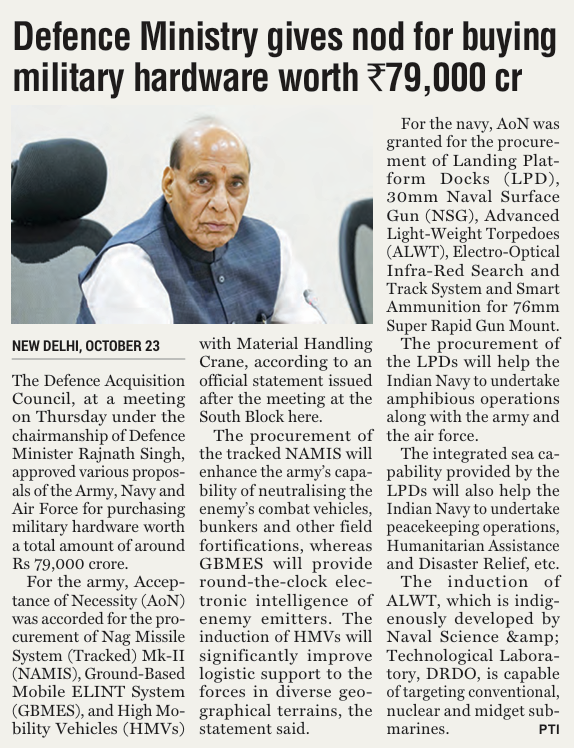
The Defence Ministry of India has sanctioned a major military modernisation plan worth around ₹79,000 crore, aligning with the government’s Aatmanirbhar Bharat initiative to boost self-reliance in defence production.

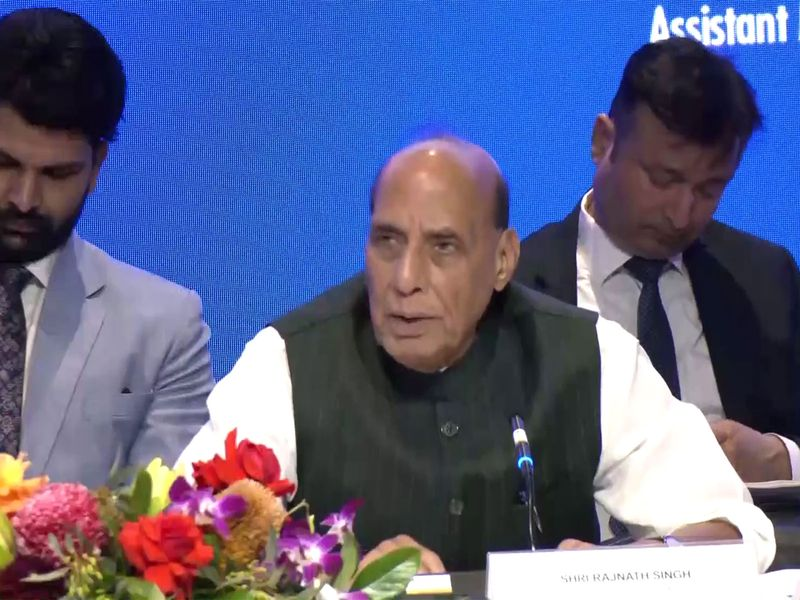
The Defence Acquisition Council (DAC), chaired by Defence Minister Rajnath Singh, approved capital acquisition proposals aimed at enhancing the operational capabilities of the Indian Army, Navy, and Air Force. The meeting, held at South Block in New Delhi, accorded Acceptance of Necessity (AoN) for key procurements across all three services.

For the Indian Army, approvals included the procurement of the Nag Missile System (Tracked) Mk-II (NAMIS). The NAMIS will strengthen the Army’s capability to neutralise enemy tanks, bunkers and field fortifications, while the GBMES will provide continuous electronic intelligence on enemy emitters. The new HMVs will enhance logistics and mobility across challenging terrains.

The Ground-Based Mobile ELINT System (GBMES) will provide continuous electronic intelligence on enemy signals, while High Mobility Vehicles (HMVs) equipped with Material Handling Cranes will improve logistics and mobility across difficult terrains.

In the Navy, AoN was granted for Landing Platform Docks (LPDs) to bolster amphibious operation capabilities and humanitarian missions in coordination with the Army and Air Force. The 30mm Naval Surface Guns (NSGs) will enhance the Navy and Coast Guard’s capacity for low-intensity maritime operations and anti-piracy roles.

The indigenously designed Advanced Lightweight Torpedoes (ALWTs), developed by DRDO’s Naval Science and Technological Laboratory, can target conventional, nuclear, and midget submarines. Additionally, Electro-Optical Infra-Red Search and Track Systems and smart ammunition for the 76mm Super Rapid Gun Mount were approved.

The induction of ALWT, which is indigenously developed by the Naval Science & Technological Laboratory, DRDO, is capable of targeting conventional, nuclear and midget submarines. The procurement of 30mm NSG will enhance the capability of the Indian Navy and Indian Coast Guard to conduct low-intensity maritime operations and anti-piracy roles.

The Indian Air Force received clearance for the Collaborative Long Range Target Saturation/Destruction System (CLRTS/DS), which features autonomous take-off, landing, navigation, and payload delivery for precision strike capabilities over long distances.

The Defence Ministry emphasised that these approvals reflect the government’s sustained commitment to modernise the armed forces through indigenously developed technologies, in line with the Aatmanirbhar Bharat vision.

This modernisation plan marks a significant step towards strengthening India’s military readiness and operational effectiveness across all three services with a strong emphasis on domestic defence manufacturing.


Centurion tank called the shots in 1965 war

Maj Gen BS Grewal retd

SIXTY years ago, Pakistan was emboldened by India’s debacle in the 1962 war against China and presumed that the time was ripe to launch a decisive offensive to annex Kashmir. The Pakistan Army was greatly strengthened by the supply of state-of-the-art military equipment from the West, whereas the Indian Army had comparatively lower-grade technology.

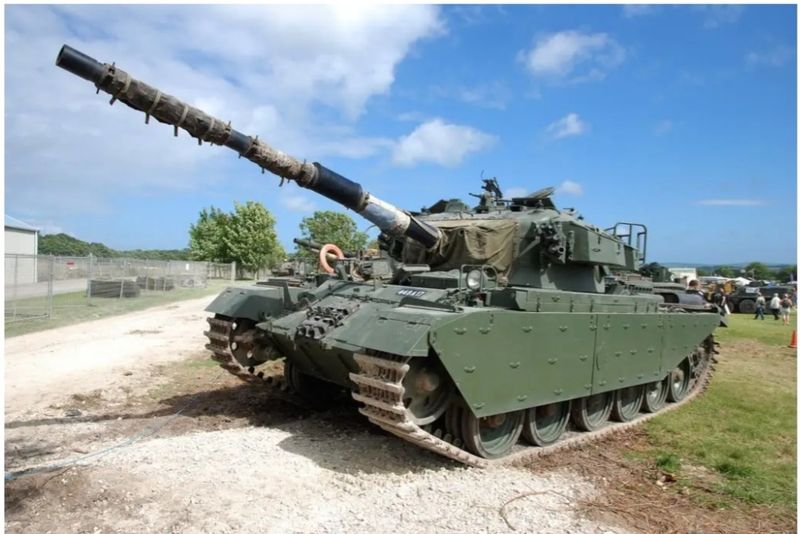
During the 1965 war, the centrepiece of the Pakistan Army was the famous Patton tank. The best tank in the Indian Army at that time was the Centurion Mk 7, which was good but in no way comparable to the Patton.

The US-origin Patton was named after the legendary Gen George S Patton. It was lighter than the Centurion and had a more powerful engine. The Patton also boasted of a stereoscopic range finder to enable the tank gunner to get a high first-round hit probability. Centurions relied on a simple shooting technique which was based on three rounds being fired in quick succession at varying ranges and at least one was assured to hit the target. The Patton had a 90-mm gun firing high-velocity armour-piercing ammunition, whereas the Centurion gun was a 20-pounder (83.4 mm). Pattons also had infra-red capability for drivers, whereas our tank gunners were rendered ‘blind’ at night.


Pakistan also enjoyed a numerical advantage over us in terms of tank regiments. How then did the Centurions succeed against the mighty Pattons is an interesting case study. The first and foremost factor was training. Our tank crews were extremely well-trained. In contrast, the Pakistanis were handling high-technology equipment which had only been recently received.

A major factor in tank-versus-tank engagements is survivability and the ability to take a hit. Here the Centurion scored well over the Patton. Some Centurions took as many as five Patton hits and lived to tell the tale. The Patton armour was more brittle and tended to shatter when struck, causing casualties among the crew. Pakistani crews tended to evacuate the tank speedily on being hit to avoid being burnt alive.

In the Battle of Asal Uttar, Pattons were bogged down in the freshly inundated fields and were quickly abandoned by Pakistani crews. This battle dealt a crushing blow to Pakistan and shattered the myth of the Patton’s invincibility. No wonder Asal Uttar became renowned as the graveyard of Pattons.

The Centurion also proved to be a reliable and rugged tank in the Battle of Phillora. Our crews were able to use this formidable fighting vehicle to defeat a qualitatively and quantitatively superior enemy.


Casteism, corruption are tainting khaki

article_Author
Julio Ribeiro

Suicide by two Haryana police officials shows that the rot runs quite deep

WHICH is the greater evil in a democracy — communalism or corruption? That was the question which concerned Indians asked themselves when they wended their way to polling booths during the 2014 Lok Sabha elections. Is casteism worse than these two? That question needs to be added.

The Haryana government is at its wits’ end over two cases of suicide by policemen — Inspector General (IG) Y Puran Kumar and Assistant Sub-Inspector (ASI) Sandeep Kumar.

Puran Kumar, an IPS officer, was a Dalit. His wife, an IAS officer, gave her consent for a post-mortem examination only after receiving an assurance that a fair probe would be conducted and action taken against ‘erring’ officials. In his ‘final note’, Puran Kumar accused eight fellow officers of caste-based discrimination, mental harassment and public humiliation. His grouse was that he was tormented by his ‘big boss’ (state DGP) and a junior officer, besides others, because he belonged to a Scheduled Caste (SC).

Just a week after this incident, ASI Sandeep Kumar shot himself in Rohtak. In a note and a video that he left behind, he levelled corruption allegations against Puran Kumar, who had served in Rohtak district. He also alleged that during Puran Kumar’s tenure, the transfers of employees posted at the IG’s office were made keeping caste into consideration. Even as both cases are being probed, any seasoned cop will conclude that corruption and casteism are intertwined in the police force.

It is true that Jats and Dalits have always had a troubled relationship in Haryana. The relations between Marathas and Dalits in Maharashtra are also strained, though not as starkly as in Haryana and other Hindi-speaking states. (This perception is based on talks with friends in the IPS).

My own experience with SC officers who served with me in Maharashtra and Punjab has been that they are no different from those from privileged castes. There are good, bad and ‘indifferent’ officers belonging to every caste. Also, there are honest and dishonest officers of every caste. The police chief has to get the best out of each of them.

A ganglord named Varadarajan Mudaliar called the shots in the bootlegging trade in Mumbai (then known as Bombay) in the late 1970s and early 1980s. When I took charge as the Commissioner of Police in 1982, I asked for an officer named YC Pawar to be posted there from the Railways. He was an SC officer, but that was certainly not the reason for my request. It was his ability and his willingness to use that ability to deal with those who ruled the underworld that influenced my decision.

Pawar did not disappoint me. He performed a Herculean task with precision and in his own inimitable way. He had a loud voice and he used it to his advantage. Some of his glory rubbed off on me and I was pleased as punch for making a correct choice.

A perennial problem that dogs the armed branch of the police is alcoholism and lack of parental control over cops’ children. Kids living in the Police Lines tend to become school dropouts because their fathers are on prolonged spells of guard duty. The pressure from the political bosses for round-the-clock protection has become so acute that personnel on duty are often not relieved for days together, leading to an extended absence of the head of the family.

I chose a young IPS officer to head the armed branch, which was considered as a “punishment posting” (I learnt later that he belonged to a Scheduled Caste). The imperative of looking after the welfare and morale of these men who felt neglected was of prime importance to me, and I explained to the officer why I had chosen him for this assignment. Again, my choice was spot-on.

The 12.5 per cent reservation (later raised to 15 per cent) for SCs in government jobs and admissions was a “mea culpa” response to centuries of injustice to which those excluded from the Varna system were subjected.

However, the extension of reservation to vacancies in the higher ranks led to widespread dissatisfaction in the police force. When young sub-inspectors trained by inspectors were promoted to the rank of inspector and further as assistant commissioner to meet the quota requirement, experienced and competent inspectors refrained from greeting their new bosses, as demanded by discipline and protocol. Much of the corruption and indiscipline can be attributed to populist measures which were not properly thought through.

Money and greed are the reigning deities in government departments of various states. Narendra Modi rode to power in 2014 on the promise of eradicating the menace of corruption. However, he has been so busy trying to win every election in this vast country that corruption remains prevalent at the cutting edge of governance. And since it is the common citizen who bears the brunt of deep-rooted graft, the remedy is the one most easily available at hand — distribute freebies from depleted coffers just before elections are announced to win over the disgruntled poor people.

Dealing with age-old societal wrongs is a burden our political leaders must learn to bear. The two suicides in Haryana will severely test the mettle of the state leadership.


India, Bhutan hold border security meet after 6 years

Officials discuss various issues like mobile signal spillover, future roadmap for integrated checkposts, maintenance of boundary pillars and cross-border movement

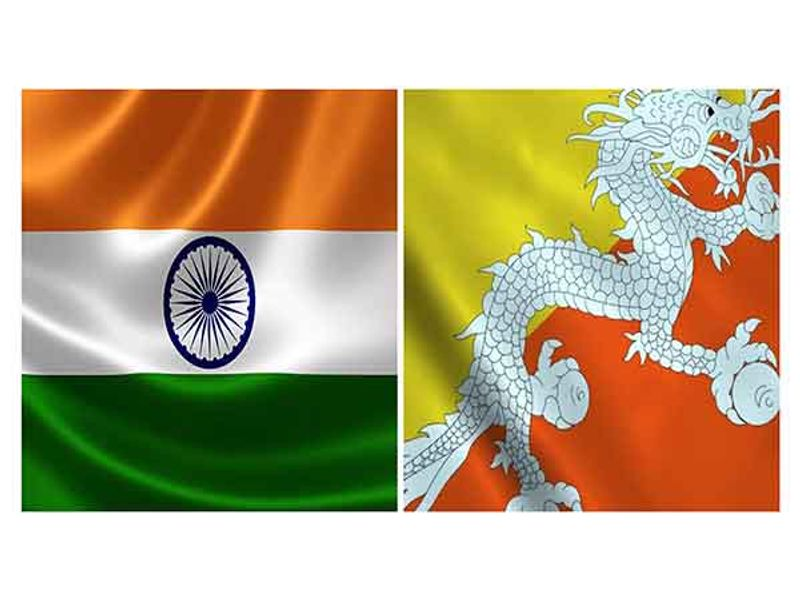
The India-Bhutan border management and security meeting was held in Thimphu last week after a period of six years. The officials discussed various issues like mobile signal spillover, future roadmap for integrated checkposts, maintenance of boundary pillars and cross-border movement.

The discussions on October 16 and 17 also covered the capacity-building programme for the Bhutan’s police, said sources. The last such meeting was held in 2019.

The Indian delegation was led by Rajendra Kumar, Secretary, Department of Border Management in the Ministry of Home Affairs. It also included officials from the Sashastra Seema Bal (SSB), Land Ports Authority of India, Department of Telecommunications, Narcotics Control Bureau, Survey of India, Customs and representatives from Assam, West Bengal, Sikkim and Arunachal Pradesh.

The Bhutanese side was headed by Sonam Wangyel, Secretary, Ministry of Home Affairs. Both delegations expressed satisfaction at the constructive discussions and reiterated their resolve to work together towards ensuring a safe, secure and prosperous border region, a statement issued by the Ministry of Home Affairs said.

Reaffirming their strong friendship, India and Bhutan committed to deepening cooperation across traditional and emerging areas.


MoD clears Rs 79K-cr proposals for drones, warships, missiles

The Defence Acquisition Council (DAC), chaired by Defence Minister Rajnath Singh, on Thursday approved proposals worth Rs 79,000 crore for acquiring a new class of warships, a drone-based attack system for the Indian Air Force (IAF), missile systems, high-mobility vehicles, naval guns and other equipment for the armed forces.

The DAC okayed Acceptance of Necessity (AoN) — the first step in the defence procurement process, the Ministry of Defence (MoD) said in a statement.

For the Navy, the DAC cleared the procurement of Landing Platform Docks (LPDs) — 30,000-tonne warships capable of amphibious operations alongside the Army and Air Force. The LPDs can land troops, tanks and vehicles directly on shore without berthing at a jetty.

To be built at Indian naval shipyards, the LPDs will be the most ambitious indigenous warships after the INS Vikrant, the 45,000-tonne aircraft carrier. They will be powered by electric propulsion systems developed in collaboration with the UK, offering stealthier, more efficient and cost-effective operations. Earlier this month, India and the UK agreed on an initial funding of £250 million (Rs 2,900 crore) to co-design and co-produce these propulsion systems.

Op Sindoor showed India’s willpower: Rajnath

New Delhi: Operation Sindoor was a symbol of India’s willpower and capability, and a message to the world that we are always ready to respond to any challenge, said Defence Minister Rajnath Singh while addressing the Naval Commanders’ Conference on Thursday. He commended the Navy for establishing a deterrent posture that forced Pakistan’s fleet to remain confined to its harbours or close to its coastline, asserting that the world had witnessed the operational readiness, professional competence, and strength of the Navy during the operation.

For the IAF, the DAC approved the Collaborative Long-Range Target Saturation and Destruction System — a drone-based weapon platform capable of autonomous takeoff, navigation, detection and strike operations. The system will employ multiple drones, including kamikaze (self-destruct) variants with ranges exceeding 1,000 km, designed to disable enemy airbases, runways, aircraft shelters, fuel depots and communication systems.

The DAC also cleared procurements of a 30-mm Naval Surface Gun (NSG) and Advanced Lightweight Torpedoes (ALWT) for the Navy. Developed indigenously by the Naval Science and Technological Laboratory (DRDO), the ALWT can target conventional, nuclear and midget submarines, while the 30-mm NSG will boost the Navy and Coast Guard’s capability in anti-piracy and low-intensity maritime operations.

For the Army, approvals were granted for the Nag missile system, ground-based mobile surveillance systems and high-mobility vehicles. The Nag missile will enhance anti-armour and bunker-busting capabilities, while the surveillance systems will provide round-the-clock electronic intelligence. The new vehicles will strengthen logistical mobility across diverse terrains.

The DAC okayed Acceptance of Necessity (AoN) — the first step in the defence procurement process


India faces threat as US sanctions 2 Russian oil firms

Cut-off date for buying crude from both companies is November 21

India’s crude oil purchase from Russia faces an imminent threat after US President Donald Trump imposed sanctions on two of the biggest Russian oil companies — Rosneft and Lukoil.

The cut-off date for buying crude from the two companies is November 21. This comes less than week after the UK imposed sanctions of these two companies.

Sources in New Delhi said after the sanctions on the two companies, there was a dilemma over sourcing Russian crude oil. The fresh sanctions pose two-pronged obstacles for India — one, how to pay these Russian companies for the oil after the cut-off date as no bank will allow payment fearing sanctions and second, India and its oil companies could face secondary sanctions from the US if the import continues.

India imports around two million barrels of crude daily from Russia and its main suppliers are Rosneft and Lukoil. The sources said an option for further import would be possible if the crude oil was offered by Russia through a company that was not sanctioned. Earlier this year, the UK and the US sanctioned Russian energy companies Gazprom Neft and Surgutneftegas.

India already faces a 50 per cent tariff on goods exported to the US. Half of this tariff is reciprocal and the other half punitive for buying crude oil from Russia. Indian oil importers could curtail imports of Russian oil to ensure they are in compliance with the US sanctions. India has become the biggest buyer of Russian oil, sold at a fixed discounted rate after western nations shunned purchases and imposed sanctions on Moscow.

Through the fresh sanctions, unveiled by Treasury Secretary Scott Bessent, the US made it clear that Washington DC stood ready to take action to stop Russia’s ability to continue with the conflict with Ukraine.

“Given President (Vladimir) Putin’s refusal to end this senseless war, the Treasury is sanctioning Russia’s two largest oil companies that fund the Kremlin’s war machine,” Bessent said in a statement. “We encourage our allies to join us and adhere to these sanctions,” he said.

Rosneft, a state-controlled company headed by Russian President Vladimir Putin’s close ally Igor Sechin, and Lukoil, a privately owned firm, account for almost 3.1 million barrels of oil exports daily.

The UK estimates that Rosneft alone is responsible for nearly half of all Russian oil production, which makes up 6 per cent of the global output.

Oil and gas are Russia’s biggest exports with Moscow’s biggest customers, including China and India, making up for most of Russia’s energy exports.


HEADLINES : 23 OCT 2025

Star javelin thrower Neeraj Chopra conferred rank of Lt Colonel

Military decoration citations tell tales of courage, tactical acumen displayed during Op Sindoor   

Sink or swim, the onus is on Punjab

Indian, Chinese troops share sweets along LAC on Diwali IAF Chief celebrates festival with personnel in Ladakh

GOC reviews operational readiness in Kathua

Assam Rifles thwarts attacks in NE

BRO constructs 70-km road along India-China border in Uttarakhand, boosting connectivity

8th Pay Commission and India’s ‘Impatient’ Middle Class: Will Diwali Bring Cheer?


In big revamp after Op Sindoor, Army to induct 4.25L carbines

Army holds medical camp for Gujjar, Bakkarwal communities at Chattergala