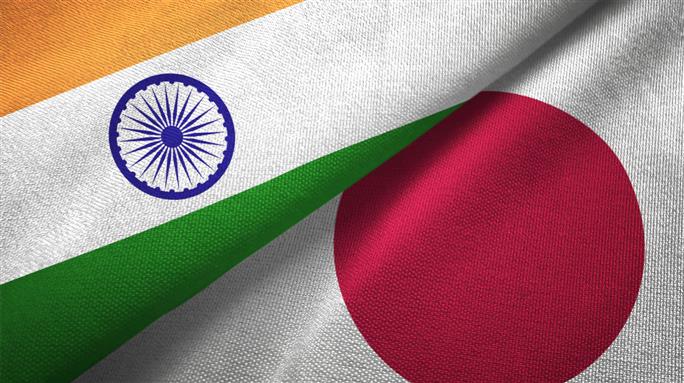
India and Japan will hold their first bilateral air exercise from January 12 to 26, in reflection of the growing defence ties amid increasing concerns over China’s military muscle flexing in the Indo-Pacific region.
The exercise ‘Veer Guardian-2023’ involving the Indian Air Force (IAF) and Japan Air Self Defence Force (JASDF) will be held at Japan’s Hyakuri air base.
The IAF said on Saturday that its deployment at the exercise will include four Su-30 MKI jets, two C-17 aircraft and one IL-78 plane.
The JASDF will be participating with four F-2 and four F-15 aircraft, it said.
“To promote Air Defence cooperation between the countries, India and Japan are all set to hold the joint air exercise, ‘Veer Guardian-2023’,” the IAF said in a statement.
India and Japan agreed to step up bilateral defence cooperation and engage in more military exercises, including holding of the first joint fighter jet drills, during the second ‘2+2 Foreign and Defence Ministerial’ dialogue in Tokyo in September.
The IAF said the upcoming exercise will be another step in deepening strategic ties and closer defence cooperation between the two countries.
“The inaugural exercise will include the conduct of various aerial combat drills between the two air forces. They will undertake multi-domain air combat missions in a complex environment and will exchange best practices,” the IAF said.
It said experts from both sides will also hold discussions to share their expertise on varied operational aspects.
“Exercise ‘Veer Guardian’ will fortify the long standing bond of friendship and enhance the avenues of defence cooperation between the two air forces,” it said.
Lauding the role of the Sikhs in the history of India, Lt Gen Syed Ata Hasnain (retd) referred to the airlift of the 1st Sikh Battalion from Delhi to Srinagar in October 1947 and said, “It was the Sikhs who pushed the invaders west of Uri (Kashmir)”.
He was speaking on the second day of the three-day Sikh History Congress at Khalsa College in Delhi University’s north campus.
Lt Gen Hasnain, who had commanded the Srinagar-based 15 Corps of the Army, went on to make references of former western Army Commander Lt Gen Harbaksh Singh, former Eastern Army Commander Jagjit Singh Aurora and Honorary Capt Bana Singh in the military history of independent India.
He termed Lt Gen Harbaksh Singh as a ‘great battle commander’. During the 1965 war with Pakistan, the Army Chief asked him to withdraw towards Jalandhar as the Pakistan buildup was bigger. The general refused to comply with the orders of the Army Chief and pressed forward and reached the outskirts of Lahore.
Honorary Capt Bana Singh climbed a wall of ice to reach the Pakistani post of Quaid at 23,000 feet on the Siachen glacier. In a hand-to-hand combat, the Pakistan troops were eliminated and the post is now held by India and renamed ‘Bana-post’.
Harbans Kaur Sagoo, Director, International Centre for Sikh Studies, established by the Delhi Sikh Gurdwara Management Committee (DSGMC), shared insights on how the places associated with Baba Banda Singh Bahadur in Delhi were identified from Persian sources.
There is a demand to deploy machines along the checkposts that can scan the trucks plying on the Jammu-Srinagar highway without physical inspection. The modus operandi of the infiltrated terrorists is to hide in truck cavities. A random search of the trucks makes detection a low probability exercise.Besides, a political class and civil society transcending the religious and ethnic ties is a prime catalyst in mounting a collective societal deterrence against terrorists in the Rajouri-Poonch area.
Luv Puri
Journalist and Author
ON February 19, 1998, just hours before then Prime Minister Atal Bihari Vajpayee was to embark on the Lahore bus journey, which was supposed to be a curtain-raiser to the Vajpayee-Sharif peace initiative, terrorists killed 20 villagers in Rajouri and neighbouring Reasi districts of J&K. The design of the terrorists was to shrink the PM’s domestic political space and sabotage the peace initiative.
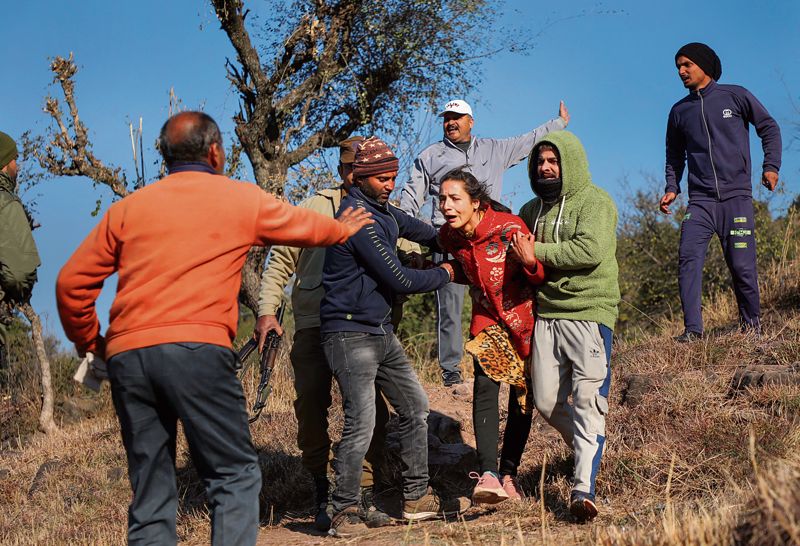
Also ReadThe recent egregious killings of six villagers in Dangri village of Rajouri district on January 1 seemingly lack any viable or sustainable grand design that could succeed. But the killings revive the blood-stained memories of equally brutal attacks and mass murders to the south of Pir Panjal that divides the Kashmir valley from Jammu. The killings defied simplistic conclusions, but that doesn’t mean past lessons cannot be invoked to buttress the state’s counter-terrorism capacity and save innocent lives.
Jammu & Kashmir’s hilly Rajouri-Poonch area in terms of geography and ethnicity is a mirror image of the areas across the Line of Control. The area largely remained free from militancy-related incidents that impacted the Valley till the mid-1990s. The reason was obvious as militants kept a low profile in the area. The heights and meadows of vast and heavily forested Pir Panjal mountain range that nestles Rajouri-Poonch provided natural hideouts and shortest route to south Kashmir after infiltration from across the Line of Control.
The reality changed as the security forces tried to nip the problem at its root and initiated sanitising operations in the hinterland. In September 1997, militants engaged the Army positions around Thana Mandi, falling in Rajouri, directly by occupying the heights of Ratan Pir and fired mortars. It took the Army a week to clear the area. In contrast to relatively religiously polarised societies in militancy-infested areas of Doda, Bhaderwah and Kishtwar, the killings in the Rajouri-Poonch belt didn’t follow any pattern.
All religious and ethnic communities were harmed by terrorists in the Rajouri-Poonch area. On July 1, 1999, nine Hindu villagers at Mendhar in Poonch district were killed. The terrorists tried to exploit conservative local resentment over an inter-religious marriage. This was preceded by killings in the Budhal area of Rajouri on September 24, 1997, in which eight Hindus were killed. This led to migration from the hills to Rajouri town. Terrorists also beheaded two Hindu priests on the Surankote-Poonch road on August 28, 2001.
The Muslim community suffered equally. The first major terrorism-related incident in Poonch was the killing of 20 members of a family in the Sailan area of Surankote. The incident was a direct response to the intra-terrorist group infighting when a terrorist of a particular ethnicity was killed by terrorists of a different ethnic group on August 3, 1998. The lone survivor of the massacre was Mohammad Shabir Sheikh, a teenager at that time. He had told the author that he escaped the massacre as he had gone out of the house to relieve himself. He hid himself in the nearby bushes as he saw his family members being killed. Sheikh told me that just two years after the massacre of his family, a group of terrorists approached him to join them so that he could take revenge. Insecurity and vengeance often drove recruitment in militant ranks in the late 1990s.
One of the unsung heroes of the local resistance in the Rajouri-Poonch belt that gave a death blow to terrorism in the area was late Haji Mohammad Qasim. He and his men fought against Lashkar terrorists in the Marrah area of Surankote in the last quarter of 2003. The area, situated in the hinterland and hard to access, was virtually controlled by terrorists. Giving up their lucrative marble business in Saudi Arabia as economic migrants, Haji and his men mobilised locals to fight the Lashkar terrorists. With arm training from the security forces, they succeeded in evicting terrorists from the area. There were acts of revenge as he lost clan members, but they held ground. In one of the many field trips to his village, Haji, who died a few years ago, told me that the entire community was aghast against the diktats of terrorists and it just needed a spark to enable the resistance
The last three decades of violence in the area imparts specific lessons. First, the recent incidents in the Rajouri-Poonch area, including a suicide attack on August 11, 2022, in which five soldiers were killed, reflect the need for a more astute knowledge of the local milieu. In the Kashmir valley, it is easy to spot Punjabi-speaking infiltrators from the local Kashmiri-speaking population and the experience of 1947, 1965 or even the last three decades bears that. In the case of the areas to the south of Pir Panjal, it is difficult to distinguish a Punjabi speaker from the locals because of the linguistic affinity.
Second, an objective review of the current fencing capabilities along the 740-km Line of Control and 190-km international border is required. Just a few days before the Rajouri killings, on December 28, 2021, a truck on the Jammu-Srinagar highway was intercepted as a result of random checking and four terrorists, who were hiding in the truck, were killed. The driver managed to escape. He had apparently picked up the terrorists after they had infiltrated from the plain India-Pakistan border.
Another instance that came to light in the police investigation was a foiled bid to target Prime Minister Narendra Modi’s rally in J&K on April 24, 2022. According to the police, a truck driver had transported two terrorists after infiltration from the Samba sector and another person had sheltered them. These incidents reflect that some terrorists are managing to sneak in from the international border.
In this connection, there is a demand to deploy machines along checkposts that could scan the trucks plying on the Jammu-Srinagar National Highway without physical inspection. The modus operandi of the infiltrated terrorists is to hide in truck cavities. A random search of the trucks makes detection a low probability exercise and enhances risk to the lives of the security personnel.
Third, apart from strengthening the counter-terrorism grid, a political class and civil society transcending the religious and ethnic ties is a prime catalyst in mounting a collective societal deterrence against terrorists in Rajouri-Poonch, an area which is vast and hilly. In the face of recent developments, a detailed review of counter-terrorism is required which factors in the new realities and also draws from the three decades of counter-terrorism experience of J&K.
Home Ministry declares PAFF, TRF as terrorist organisations as militancy spikes in Jammu province
As militancy is spreading to relatively peaceful areas of Jammu province, the Ministry of Home Affairs banned the People’s Anti-Fascist Front (PAFF) and The Resistance Front (TRF), which have been involved in major terror activities after the abrogation of Article 370 in 2019.
Home Ministry said that PAFF is a proxy outfit of Maulana Masood Azhar-led Jaish-e-Mohammed (JeM) while the TRF is the proxy outfit of the Lashkar-e-Toiba (LeT), which emerged in 2019 and targeted civilians.
“PAFF was involved in terror acts and is regularly issuing threats to Indian security forces, political leaders, civilians working in Jammu-Kashmir from other states and is involved, along with other organisations, in conspiring pro-actively physically and in social media to undertake violent terrorist acts and Jammu-Kashmir and other major cities in India,” the MHA notification said.
The TRF on Saturday warned of terror attacks on people whose names it has released on the “hit list” two days after it was declared as a banned organization by the Home Ministry
The MHA said that TRF is recruiting youth through the online medium for the furtherance of terrorist activities, recruitment of terrorists, infiltration of terrorists and smuggling of weapons and narcotics from Pakistan into Jammu and Kashmir.
The MHA also designated Pakistan-based TRF commander Sheikh Sajjad Gul as a terrorist under the Unlawful Activities Prevention Act 1967.
The government also designated Mohammed Amin alias Abu Khubaib, who belongs to Jammu and Kashmir but currently lives in Pakistan, as an individual terrorist
Khubaib is acting as the launching commander of Lashkar-e-Taiba and is playing a vital role to revive and accelerate terrorist activities of LeT in the Jammu region, the MHA said.
He has been involved in coordinating terrorist attacks, supply of arms or weapons and explosives, and terror financing in Jammu and Kashmir from across the border.
Also, Arbaz Ahmad Mir, a Lashkar-e-Tobia operative who is currently based in Pakistan, has been designated as an “individual terrorist”. The MHA said Mir was the main accused in the targeted killing of Rajni Bala, a school teacher in Kulgam in May last year.
Both TRF and PAFF have been involved in multiple attacks including the killing of Kashmiri Pandits and migrant labourers while threatening journalists after the abrogation of Articles 370 and 35-A on August 5, 2019.
After the abrogation of Article 370, militant activities and smuggling of weapons through drones have increased in Jammu province.
Six civilians including two children were killed by the militants earlier this week in a targeted attack in the Rajouri district.
a. 14 JAT b. 4/5 GR c. 8 SIKH LI d. 15 KIMAON e. 13 MECH INF f. 6 ASSAM RIF g. 18 GRENADIERS h. 4 PARA (SF) j. 5 RAJPUT k. 31 RAJPUT l. 25 PUNJAB m. 19 KUMAON n. 3 LADAKH SCOUTS o. 38 RR p. 2/5 GR q. 81 ARMD REGT r. 299 MED REGT s. 117 ENGR REGT t. 34 RR u. 50 RR v. 44 RR
COAS CERT OF APPRECIATION :- a. GUARDS REGTL CENTRE b. 1 JAK LI c. 267 ENGR REGT
IT was a picturesque and emotional drive through soldiering memories and history, my last in uniform before ‘hanging up my spurs’. The staff car carrying me was departing Srinagar’s Badami Bagh Cantt, with the Zabarwan mountains towering above it, for Yol Cantt, nestled in the snow-clad Dhauladhars in the Kangra valley. Posted as the Chief of Staff to the under-raising Rising Star Corps there, I wasn’t riding alone. My many yesterdays were riding shotgun with me, scattered over almost 39 years in uniform.
I had first entered the Valley after a tempestuous year as Rashtriya Rifles Sector Deputy in the badlands of Doda. Underdeveloped amid an oasis of excellence in erudite Bhadarwah and sapphire-encrusted Kishtwar, terrorist haven Doda was about sparse habitats perched above the Chenab. Many close encounters remain singed in memory along with touching human interest tales. RR Sector command in South Kashmir followed where the Lidder debouches the gaunt Kolahoi massif and ice floe-imbued Sheshnag Lake to meld into the Jhelum at Khanabal — Kashmiri for merging waters.
I recall briefing the stern Army Chief, Gen VP Malik, about ongoing operations. He had limited time; I was seeking his approval to retain command after a gunshot injury. His slight smile of approval after briefing remains a high because in operations, the Chief was invariably dead serious.
Later, posted in the Dagger Division, I was to brief foreign officers attending the National Defence College course on operational challenges at Baramulla. Expecting the standard graphics-heavy presentation, they were intrigued to have the GOC show them just one slide — happy children bursting out of school with flying hair and orbiting bags. ‘Gentlemen, this is my desired end-state,’ I said.
Badami Bagh followed; it’s amazing awaam steeped in seerat and soorat and exquisite taqreer (tete-e-tete) ever since Asoka the Great founded Srinagar/Pandrethan in the 3rd century BC. Pre-inauguration, I had briefed President APJ Abdul Kalam on the Ibadat-e-Shahadat Museum. The erudite President expressed his joy in finding the museum ‘focusing not just on heroism, weapons/war-like material, but also on highlighting the history, heritage and unique culture of Kashmir.’ He recalled the 14th century Kashmiri mystic poetess, Lal Ded’s vakhs (verse) on regaining paradise by reviving heritage and culture. My Corps Commander Gen Nirbhay Sharma, who anchored the project, smiled as we locked eyes.
I bade farewell to arms in Kashmir, exiting the unforgettable Valley through the Jawahar Tunnel across the Pir Panjal at Banihal on the wistful notes of ‘Auld Lang Syne’.
Rajnath reviews expansion of strategic airfield at Nicobar
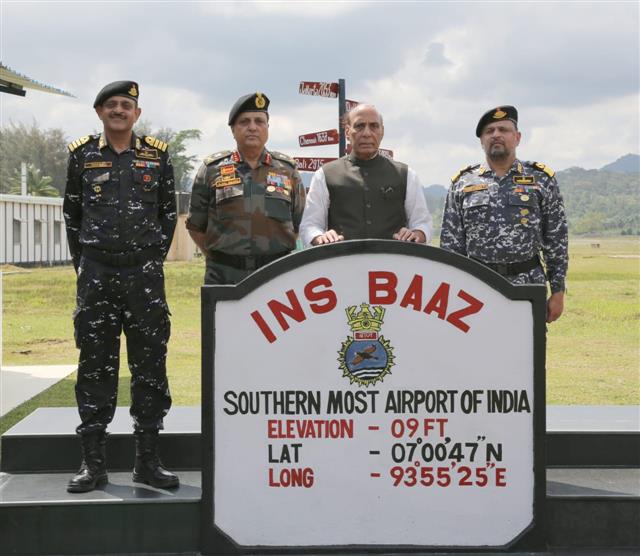
Defence Minister Rajnath Singh on Friday reviewed the expansion project of INS Baaz, Navy’s strategic airfield in Andaman and Nicobar Islands.
Located at Campbell Bay in Great Nicobar Island, INS Baaz is under the joint services Andaman and Nicobar Command of the Indian Armed Forces. It overlooks the Strait of Malacca, the sea route through which Chinese ships pass. The airfield is just 145 kms from Indonesia and overlooks the ‘Six Degree Channel’ between Great Nicobar and the Indonesian island of Sumatra.
India, in March last year, landed a special operations plane, C-130J, at INS Baaz. The plane can land and take-off from short runaways. The runaway at INS Baaz is being expanded to operate the maritime surveillance planes like Boeing P-8I and even drones.
INS Baaz, was opened in 2012 and smaller planes could operate from, there.
Rajnath Singh was familiarised with the terrain of the Nicobar Islands. He later visited Indira Point, the southernmost tip of the country.
The minister had arrived at Port Blair on Thursday to review the operational preparedness of the Andaman and Nicobar Command (ANC). In his address to the officers and jawans, he talked about the border standoff with China and lauded the bravery of Indian soldiers from Galwan in Ladakh to Yangtse in Arunachal Pradesh.
He also visited the ANC’s Joint Operations Centre (JOC), which is the nerve centre for integrated planning for surveillance and conducting operations.
Besides INS Baaz, there are plans to extend the runways at Car Nicobar and Shibpur in North Andaman.
Lieutenant General Ajai Singh, Commander-in-Chief, Andaman and Nicobar Command, accompanied the Defence Minister.
UK warship docks at Andamans
New Delhi: A UK’s warship, HMS Tamar, sailed to Andaman and Nicobar Islands on Friday as part of its permanent deployment in the Indo-Pacific. Over the next five days, the ship and its crew will undertake maritime exercises with the Indian Navy, the British High Commission said.
BRO’s ‘relentless’ efforts keeps Zojila pass open in winters despite heavy snowfall: Official
The strategic Zojila pass on the Srinagar-Leh national highway, connecting the Kashmir valley with the Ladakh region, has remained open through December and January despite heavy snowfall due to the relentless efforts of the Border Roads Organisation, a defence spokesperson said on Thursday.
BRO ‘Karmyogis’, with their relentless effort under ‘Project Beacon’, facilitated connectivity to Ladakh region by ensuring that the Zojila pass remained open despite heavy snowfall, the official said.
Zojila, which falls on Srinagar-Sonamarg-Gumri road, is located at an elevation of 11,643 feet and serves as the lifeline between the Kashmir Valley and Ladakh, the official said.
“Last year, Zojila Pass was kept open till January 3. This year once again due to the concerted efforts of Project Beacon, the Zojila Pass was kept open for the first time ever till January 6,” he said.
The spokesperson said the extended opening of Zojila pass was carried out by BRO for the first time in 2020 keeping in view the situation at the northern borders.
Since then, it has been continued in 2021 and 2022, the official said.
“Freezing temperatures of up to negative 20 degrees Celsius, insufficient oxygen, high winds and blizzards and frequent avalanches in this terrain did not deter the BRO karmyogis, who despite all odds, ensured unhindered movement of vehicles across Zojila Pass in the current winter season,” he added.
The spokesperson said more than 20 heavy duty plant equipments, including four state of the art snow cutters, were employed to keep the axis open.
The BRO has also completed successful trials of route guidance and navigation system technology for snow clearance to enhance efficiency and safety while performing such operations, the official said.
‘Project Beacon’ has ensured connectivity to strategic requirements of Indian Army and survival requirements of the local population of Ladakh, the spokesperson said.
The snowfall in last two-three days has resulted in slippery road conditions along Zojila Pass on the Srinagar – Leh highway, causing disruption to traffic movement. Detachments of ‘Project Beacon’ with pre-positioned equipments located at Gumri, Bajri Nallah, Baltal, Sonamarg and Gagangir played a key role in opening the pass despite inclement weather conditions, the official said.
“Day and night lost their relevance when six teams deployed at different locations worked 24×7 to keep the road open during extremely challenging conditions since the onset of winters in 2022. Approximately 13,500 vehicles crossed Zojila since November 25 while moving from Kashmir to Ladakh and vice versa,” the spokesperson said.
Despite closure of Zojila Pass, snow clearance operations by ‘Project Beacon’ will continue unabated in order to keep the Sonamarg Tourist Destination open throughout the winters as per requirements of Kashmir Division, he added.
NEW Year greetings inundated social media on December 31 to herald the arrival of 2023. However, given the blighted nature of 2022 that began with the feckless Russian invasion of Ukraine in February and was exacerbated by the lack of global resolve to address the climate change crisis and the lingering/mutating Covid detritus, it is unlikely that this year will be happy in any substantive manner — for the world in general, the extended southern Asian region and India in particular.
The cooperation between China and Pakistan and the contradictory, yet close, US-Pak ties apropos of Afghanistan and terrorism will pose a challenge for New Delhi.
The impact on the global economy due to the turbulence of 2022 was pithily summed up by IMF Managing Director Kristalina Georgieva, who cautioned on January 2 that 2023 will be a ‘tough year’ with almost one-third of the world’s economies expected to be in recession.
As per an earlier IMF assessment, global growth was forecast to slow down from 6 per cent in 2021 to 3.2 per cent in 2022 and 2.7 per cent in 2023. This is deemed to be the weakest growth profile since 2001 and the IMF chief noted that the three major economies — the US, the EU and China — are all slowing down simultaneously. While India has managed the economic slowdown better than most of the major economies, the overall drop in global growth will impact India’s export potential with attendant fiscal challenges — particularly in relation to fund allocation for the Defence Budget that will be finalised soon.
The global and regional geopolitical domains are fraught with many developments that augur ill for India’s composite national security in the year ahead. The Ukraine war is likely to be pursued with renewed vigour, with the use of more lethal ordnance, even as the tragic conflict is poised to enter the second year. This exigency will further enervate an already weakened Russia.
The US and its NATO allies are now firmly ranged against Russia in relation to Ukraine, and, concurrently, the US-China bilateral tension remains intractable — for now. For India, two strands impact its military security. The first is the reliability of Moscow as the primary supplier of conventional military inventory for the Indian armed forces, even while navigating the paradox that Russia has been a valuable and irreplaceable partner in enhancing Delhi’s strategic capabilities — viz underwater nuclear propulsion, joint missile production et al.
India’s security challenges emanating from an assertive and belligerent Beijing were on display in the 2020 Galwan ‘scuffle’ to the more recent Arunachal Pradesh transgression by PLA troops. This pattern is likely to simmer for the near future in the absence of a sustained political effort to arrive at a modus vivendi in a six-decade-old conflict over contested territoriality.
The regional grid is posing its distinctive security challenges. The genesis of this goes back to the Soviet invasion of Afghanistan and the concomitant rise of Islamic religious militancy and terrorism. The nurturing of Taliban ideology in the Pakistan-Afghanistan tribal belt in the 1990s, and the subsequent emergence of Taliban factions in Afghanistan (currently in power in Kabul) and the Pakistani variant (TTP) has acquired disturbing malignancy for Rawalpindi — the GHQ of the Pakistan army.
Over the last few months, the TTP has scaled up its attacks on the Pakistani army and Islamabad was subjected to a terrorist attack — the first since 2014. The TTP enjoys a degree of tacit support from the Taliban-led regime in Kabul and the New Year began with a very bitter exchange of words between Pakistan and Afghanistan. Threats by Pakistan that it would bomb TTP hideouts in Afghanistan were angrily rejected by the Taliban and a January 2 tweet sums up the state of the Pak-Afghan estrangement. Taliban spokesman Ahmad Yasir tweeted in response to the Pakistan threat: ‘This is Afghanistan, the graveyard of empires. Never think of a military attack on us, or else you may end up with the embarrassing repeat of the (post-1971 Bangladesh War) agreement with India.’
The irony for the Pakistan ISI is having to deal with an entity it created — the proverbial case of a beneficiary ‘biting the hand that feeds’ — and there is a sense of déjà vu about the TTP becoming the kind of domestic threat that it became in 2008. This was the phase whose most bloody manifestation was the 2014 terror attack on Army Public School in Peshawar.
In that period, the then US Secretary of State, Hillary Clinton, warned Pakistan (December 2011) that ‘you can’t keep snakes in your backyard and expect them only to bite your neighbours. Eventually those snakes are going to turn on whoever has them in the backyard.’
For Delhi, the possibility that these terrorist ‘snakes’ will be encouraged to target Indian assets remains a perennial security challenge and the recent uptick in violence in Jammu and Kashmir is illustrative of what lies ahead. The close cooperation between China and Pakistan and the contradictory, yet close, US-Pakistan relationship apropos of Afghanistan and terrorism will pose a complex challenge for Delhi — even as it prioritises the stewardship of the G20 in 2023.
The challenges to India’s national security are likely to become more virulent in 2023, but the higher defence management responses do not appear to have the kind of clarity and urgency that they merit — if the deliberations in Parliament are any indication. Earnest rhetoric is no substitute for substantive and sustained investment in enhancing composite military capability and professional political acumen.
State Stalwarts
DEFENCE MINISTER
Minister Rajnath Singh
ALL HUMANS ARE ONE CREATED BY GOD
HINDUS,MUSLIMS,SIKHS.ISAI SAB HAI BHAI BHAI
CHIEF PATRON ALL INDIA SANJHA MORCHA
LT GEN JASBIR SINGH DHALIWAL, DOGRA
SENIOR PATRON ALL INDIA SANJHA MORCHA
MAJOR GEN HARVIJAY SINGH, SENA MEDAL ,corps of signals
.
.
PATRON ALL INDIA SANJHA MORCHA
MAJ GEN RAMINDER GURAYA ,MADRAS REGIMENT
sanjhamorcha303@gmail.com
PRESIDENT SOUTH ALL INDIA SANJHA MORCHA
COL SS RAJAN BOMBAY SAPPERS,
PRESIDENT UTTARAKHAND ALL INDIA SANJHA MORCHA
COL B M THAPA ,BENGAL SAPPERSS
PRESIDENT HARAYANA STATE CUM COORDINATOR ESM
BRIG DALJIT THUKRAL ,BENGAL SAPPERS
PRESIDENT TRICITY
COL B S BRAR (BHUPI BRAR)
PRESIDENT CHANDIGARH ZONE
COL SHANJIT SINGH BHULLAR
.
.
PRESIDENT PANCHKULA ZONE AND ZIRAKPUR
COL SWARAN SINGH
INDIAN DEFENCE FORCES
DEFENCE FORCES INTEGRATED LOGO
INDIAN AIR FORCE
Air Officer C-in-C WESTERN AIR COMMAND
AIR MSHL S PRABHAKARAN AVSM VM
AOC-IN-C, EASTERN AIR COMMAND
Air Marshal Inderpal Singh Walia
AOC-in-C SOUTH WESTERN AIR COMMAND
Air Marshal Vikram Singh
AOC-IN-C, SOUTHERN AIR COMMAND
Air Marshal J.Chalapati
AOC-IN-C TRAINING COMMAND
AIR MARSHAL SK GHOTIA VSM
AOC-IN-C MAINTENANCE COMMAND
Air Marshal Jagdish Chandra
Flag Officer Commanding in Chief, Western Naval Command
ice Admiral R Hari Kumar, PVSM, AVSM, VSM
Flag Officer Commanding in Chief, Eastern Naval Command
Vice Admiral Sanjay Bhalla, AVSM, NM
Flag Officer Commanding in Chief, Southern Naval Command