




Sanjha Morcha

What’s New

Click the heading to open detailed news

Current Events :

web counter

Print Media Reproduced Defence Related News

New Military Base In Assam To Boost Border Security, Intelligence: Experts

The establishment of a new Indian Army base in Assam’s Dhubri district marks a major strategic development for national security in India’s north-eastern frontier. Named the Lachit Borphukan Military Station, the new facility is positioned near Bamunigaon, roughly 40 kilometres from the India–Bangladesh border.

The base will play a vital role in strengthening border surveillance, expanding intelligence capabilities, and ensuring rapid deployment in response to emerging regional threats.

Senior defence officials describe this as the first major military facility in western Assam, underlining its strategic location near the ‘chicken’s neck’ corridor or the Siliguri corridor — the narrow stretch linking the North East to mainland India.

Experts believe this move is a timely response to the evolving political and security dynamics in neighbouring Bangladesh. Since the formation of the caretaker government in Dhaka, intelligence reports indicate growing alignment between Bangladesh and Pakistan, and even tentative Chinese activity near Lalmonirhat airfield, uncomfortably close to the vital corridor.

The foundation stone for the new base was laid last week by Lieutenant General R.C. Tiwari, General Officer Commanding-in-Chief of the Eastern Command. Defence sources confirmed that the facility will fall under the Tezpur-based IV Corps and accommodate between 1,200 and 1,500 personnel. In order to achieve early operational readiness, pre-fabricated structures are being deployed, with the Assam government having expedited land transfer within a short period of time.

Defence spokesperson Lieutenant Colonel Mahendra Rawat stated that the creation of the Lachit Borphukan Military Station would “enhance the operational capabilities and infrastructure of the Indian Army”, enabling the force to monitor movement across the sensitive border zones more effectively.

He further emphasised that it would also create a safer environment for local residents who have long been affected by cross-border tension and criminal activities.

A para-commando unit will be stationed at the facility, further underscoring its offensive and reconnaissance capabilities. The military base will also serve as a regional hub for intelligence gathering, including human intelligence (HUMINT) and signal intelligence (SIGINT), both critical for countering smuggling networks, infiltration, and the possible movement of extremist groups operating across the porous border.

Brigadier Ranjit Kumar Borthakur (Retd) noted that the situation in Bangladesh requires heightened vigilance, as “the attitude of the caretaker government has tremendously hardened against India.” He also referred to recent interactions between Bangladeshi and Pakistani officials as worrisome indicators of regional polarisation.

The strategic imperative, he argued, lies in securing the Siliguri corridor from both overt and covert threats, as its disruption could severely impact communication and logistics with the entire north-eastern region.

Experts further point out that the Dhubri garrison will significantly bolster the Army’s immediate response capacity along India’s western border in Assam, complementing existing military stations in Cooch Behar and Tamulpur. This expansion not only enhances operational depth but also provides redundancy in command and control capabilities, which can be crucial in crisis situations.

Chief Minister Himanta Biswa Sarma has been closely associated with this initiative, describing Dhubri as a “sensitive district” requiring a permanent military presence. His government’s swift cooperation with the Army demonstrates effective civil–military synergy in reinforcing national security in border states.

The planned station aligns with Assam’s broader strategy to counter illegal migration, cross-border smuggling, and extremist infiltration attempts from Bangladesh.

The new military installation stands as both a tactical and symbolic step towards fortifying India’s eastern front. For the Indian Army, it signals a greater focus on intelligence-led operations and local stability.

For the people of Dhubri and surrounding districts, it promises renewed security and confidence in a region often caught between political turbulence across the border and the challenges of transnational crime.

The Lachit Borphukan Military Station not only honours one of Assam’s greatest historical warriors but also signifies a renewed commitment to territorial integrity amid shifting geopolitical currents in the subcontinent.

The base, once operational, will serve as a key pivot of India’s counter-infiltration and surveillance efforts, ensuring the north-eastern frontier remains secure and resilient in the face of any emerging threat.

Based On PTI Report


Rudra-7 FPV Drone Achieves High-Altitude Success At Leh

Gurugram-based defence technology firm DroneVerse has announced the successful completion of high-altitude trials for its Rudra-7 First-Person View (FPV) combat drone at Parma near Leh, located at an elevation of 21,000 feet above sea level. The trials mark a major milestone in high-altitude UAV performance, endurance, and stabilisation capabilities under extreme environmental conditions.

The Rudra-7 demonstrated stable flight control, target-lock precision, and sustained operational reliability despite thin air density, sub-zero temperatures, and turbulent wind patterns. The tests validated the drone’s advanced propulsion tuning and adaptive flight algorithms designed for reduced atmospheric pressure and rapid manoeuvrability.

During the trial missions, Rudra-7 successfully performed high-speed vertical climbs, precision strike simulations, and live feed transmissions in real-time, retaining consistent control latency and high-definition visual output. The Army’s team assessed its performance parameters relating to payload carriage, blast radius control, and targeting consistency.

The Indian Army officially recognised DroneVerse’s achievement by awarding an Army Commendation for Innovation and Technical Excellence. This commendation underscores the system’s potential to enhance tactical UAV operations in mountainous and high-altitude conflict environments, where legacy systems often face severe performance degradation.

DroneVerse stated that Rudra-7 has been engineered for front-line FPV assault missions and swarm compatibility, with modular payload slots for explosive warheads and situational surveillance pods. The lightweight carbon-composite airframe, combined with intelligent electronic stabilisation, makes it suitable for terrain-adaptive operations across varied battle conditions.

Engineers at DroneVerse reported that the successful Leh trials pave the way for extended endurance and autonomous navigation upgrades under the Army’s integration roadmap for new-generation FPV attack drones. Mass-production readiness and field induction under the Make in India initiative are expected to follow pending further validation tests and operational clearances.

IDN (With Agency Inputs)


Gridbots Unveils Titan Fortifier: World’s First Autonomous Anti-Tank Minelaying Robot

Ahmedabad-based defence technology company Gridbots has introduced the Titan Fortifier, a ground breaking unmanned ground system designed to autonomously deploy anti-tank mines, reported Gridbots.

This innovation marks a major milestone in India’s indigenous robotic warfare capability, positioning Gridbots among the few global firms developing fully autonomous combat engineering systems.

Developed under the Titan series of multi-utility combat robots, the Fortifier variant builds on the proven mobility and navigation suite of the Titan ground platform. It features a hybrid visual and 3D LiDAR-based SLAM navigation system, ensuring precise route planning and obstacle avoidance in all-terrain conditions—ranging from plains and deserts to high-altitude environments.

The autonomous control suite integrates multi-processor batch computing and an onboard NVIDIA GPU for AI-driven perception and operational command logic.

The Titan Fortifier is engineered for independent mine deployment operations without manual control. The system carries up to 50 anti-tank “Brick Mines,” collectively weighing approximately 600 kilograms, and can autonomously distribute them along a pre-mapped or dynamically generated route exceeding 50 kilometres in a single charge. This capability significantly reduces exposure risks for engineers and soldiers during minefield emplacement in contested zones.

The robot uses a modular carriage tray and hydraulic release mechanism to lay mines at pre-determined intervals, with adjustable spacing controlled by onboard mission software. The use of encrypted 5.8 GHz mesh radio links ensures real-time mission monitoring and secure communications between multiple units operating in formation or networked clusters, allowing field commanders to orchestrate complex autonomous minelaying patterns from safe stand-off distances.

Built on the Titan combat vehicle framework, the Fortifier retains the robust chassis fabricated in chromium steel with IP65 sealing for all-weather operation. The system sustains a maximum payload of one tonne, enabling flexibility for different mission packages—mine dispersal, logistics support, surveillance, or combat payload operations. The vehicle offers 12 hours of continuous runtime, automatic battery charging, and hot-swappable LiFePO4 power packs, optimising operational endurance.

Its AI analytics suite, augmented by panoramic 360-degree thermal and optical imaging, provides situational awareness during mine deployment. The fusion of lidar-based terrain mapping and GPS-denied navigation allows the Fortifier to perform with high accuracy under electronic warfare conditions. With a mapping precision of 20 millimetres and docking accuracy of 15 millimetres, the robot demonstrates an exceptional standard in India’s autonomous land warfare systems.

Defence experts view the Titan Fortifier as a force multiplier for combat engineering corps and border defence units, particularly in high-threat or mined terrain scenarios where manual mine emplacement exposes troops to enemy fire. The unmanned operation model enables faster, safer, and more deliberate minelaying during tactical retreats, denial operations, or terrain fortification.

The Fortifier’s introduction complements India’s growing trend in battlefield automation, aligning with the country’s doctrine of integrating robotics and artificial intelligence across land warfare domains. Gridbots’ continuous work on TITAN derivatives—such as the HITMAN autonomous weapon station and the Mine Sweeper variant—reflects its transition from heavy robotics to high-end unmanned combat systems.

Defence insiders anticipate that the Titan Fortifier may eventually be fielded in limited numbers for testing with Indian Army corps under the Combat Engineers Directorate, supporting the country’s broader indigenous unmanned systems initiative.

With such developments, India is positioning itself at the forefront of next-generation ground-based automation for defensive and offensive battlefield applications.

IDN (With Agency Inputs)


Pakistan’s Reported ICBM Ambition Raises Strategic Alarms Across Regions

Illustrative      

US intelligence agencies have reportedly identified indicators of an imminent Pakistani intercontinental ballistic missile (ICBM) test, with an estimated range exceeding 5,500 kilometres. Such a development, if confirmed, would mark a major evolution in Pakistan’s strategic deterrent architecture, placing it alongside a select group of nations with global-range missile reach.

Preliminary assessments suggest Pakistan’s current missile infrastructure, centred on the Shaheen and Ababeel series, may have undergone extensive upgrading to support longer-range propulsion stages and improved payload configurations.

Satellite imagery and telemetry analysis reportedly point to test preparations at missile complexes in Balochistan or the Sindh interior, both possessing reinforced launch infrastructure suitable for heavy-lift ballistic stages.

A range capability surpassing 5,500 km would extend Pakistan’s reach beyond South Asia to encompass West Asia, parts of Europe, and East African corridors. This expanded envelope indicates a doctrinal shift from purely regional deterrence against India to a broader strategic posture possibly influenced by emerging power alignments and technology partnerships.

Analysts note similarities in stage design concepts reportedly reminiscent of North Korean Hwasong architecture, though direct transfer linkages remain unverified.

Open-source intelligence (OSINT) reports earlier in 2025 had already highlighted Pakistan’s experimentation with extended re-entry vehicle (RV) materials and multi-stage liquid-solid propulsion hybridisation, suggesting the pursuit of intercontinental delivery potential. Such initiatives likely stem from a combination of national prestige ambitions and deterrence enhancement in light of India’s Agni-V and Agni-P deployments.

The reported U.S. intelligence assessment underscores rising concern in Washington over the South Asian nuclear balance and Islamabad’s potential collaboration networks. Sources indicate intensified monitoring by both the U.S. National Reconnaissance Office and allied European assets to establish any foreign technology inflow, particularly from China or North Korea.

This has also compelled renewed consultations within the Missile Technology Control Regime (MTCR) framework, despite Pakistan’s non-membership, to ensure export compliance vigilance among partner nations.

If the test proceeds, it would fundamentally reshape regional deterrence geometry, compelling India to recalibrate its missile readiness thresholds and prompting diplomatic reassessments by Gulf and Central Asian states. The strategic reverberations could also trigger wider U.S.–China competitive posturing, as Washington interprets Islamabad’s move as an indirect extension of Beijing’s influence in South Asian missile development.

Experts warn that the debut of a Pakistani ICBM would not only escalate security anxieties but might also accelerate multilateral debates about missile proliferation beyond conventional threat theatres. The implications for crisis stability in South Asia, already strained by sub-conventional tensions and arms modernisation cycles, are likely to be profound.

Based On OSINT Report


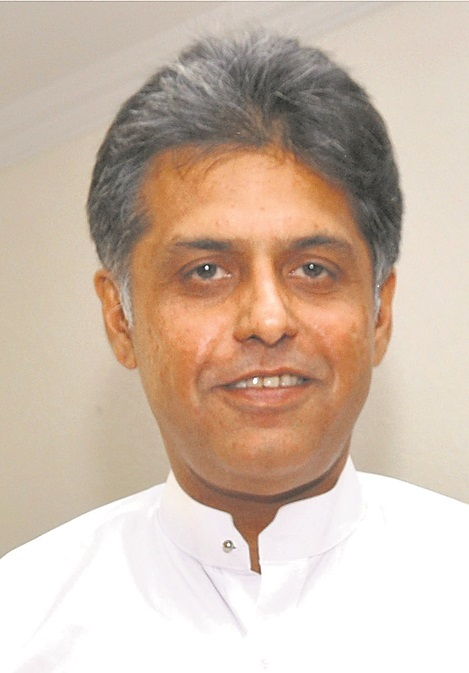
What lies beneath India-US defence pact by MP Manish Tewari

Renewal of the bilateral framework is a gambit shrouded in ambiguity

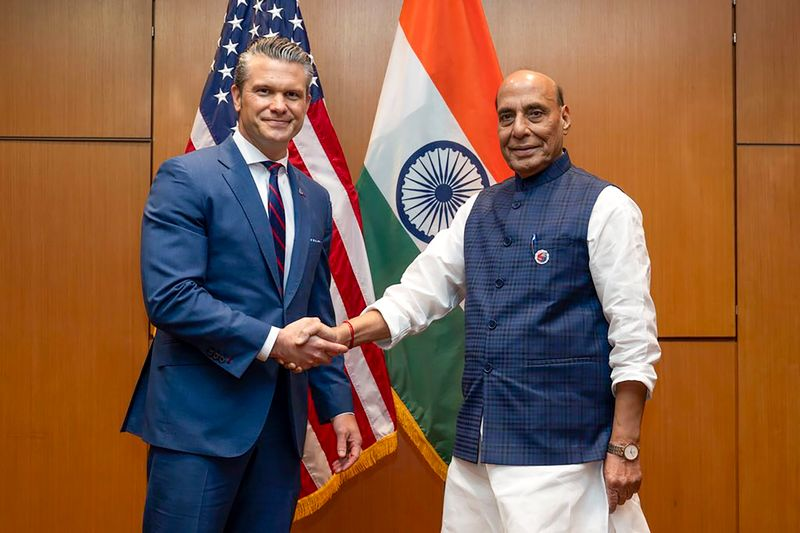
EVEN as the ink is still drying on the Major Defence Framework Agreement between the United States and India, the choice of the venue for signing this compact, on the sidelines of the 12th ASEAN Defence Ministers’ Meeting-Plus in Kuala Lumpur (Malaysia) recently, itself speaks volumes.

It very poignantly underscores the current strain in the India-US relationship. The signing was a ceremony of convenience, a ritual reaffirmation conducted on neutral ground, for neither India’s Defence Minister Rajnath Singh nor US Secretary of War Pete Hegseth found it politically expedient to travel to the other country’s capital.

This geographical nuance is the first clue to the complex and convoluted, though profoundly pragmatic, foxtrot that this agreement represents. It is not a grand alliance forged in the fires of shared ideology, but a tactical entente negotiated in the portentous shadow of shared apprehensions.

This framework had its genesis in 2005, when the US was playing to a different rhythm in the aftermath of the deadliest attack on American soil after the Pearl Harbour incident (December 7, 1941). The attack that took place on September 11, 2001, colloquially called 9/11, shook the spectre of US unipolarity to its very roots, given that a non-state actor, al-Qaeda, had carried out an unprecedented assault on American sovereignty.

In retribution for the attack, the George W Bush administration launched an all-out assault on Afghanistan in 2001 and Iraq in 2003, christening it a war on terror. This led to a fundamental restructuring of the US force posture globally, compelling it to seek partners beyond its traditional Atlantic and Asia-Pacific treaty allies.

The Congress-led UPA government in New Delhi, under the leadership of Dr Manmohan Singh, saw an opening to end India’s technological isolation and the nuclear apartheid it had been subjected to since 1974, when it carried out its first nuclear test. It used defence cooperation with the US as the key to open the doors for lifting global sanctions on India’s civil nuclear programme and inviting private participation to augment it.

Even Russia did not substantively oppose India’s overtures to the West. Though China was rising, its assertiveness was measured, its “wolf warrior” diplomacy yet unborn, and its network of military bases in the Indo-Pacific a spectre of the future.

The Indo-Pacific was a novel and nascent concept, being nurtured by the likes of former Japanese Prime Minister late Shinzo Abe. The US and its allies, ranging from Japan to Australia, saw India as a probable counterweight to a resurgent but then non-belligerent China.

Today, the context is inverted. Beijing’s global outreach and its sprawling network of military bases have made the “China threat” one of the organising principles of American defence strategy. The Quad is yet to be properly institutionalised despite its tenuous existence since 2007.

Russia, now a Union State with Belarus and an antagonist of the West, has been India’s primary source of discounted crude oil since 2022. These purchases have recently, perhaps temporarily, been moderated by Indian refiners under the threat of secondary sanctions. This creates a fundamental schism in the geo-economic postures of Washington and Delhi.

The US, under the second Trump administration, has metamorphosed from exceptionalism to transactionalism, buoyed by the Make America Great Again (MAGA) brigade. The US is again contemplating a G2 world order with China. It was first mooted in 2009 during Barack Obama’s Democratic presidency. The G2 implicitly subverts the multipolarity that India sees as its manifest destiny.

In this maelstrom, the renewal of the framework is a gambit shrouded in profound ambiguity. For India it seems to be a necessary hedge, a symbol of continuity deliberately initialled in a moment of discontinuity.

This, unfortunately, is a marriage of convenience, not a shared vision. Delhi’s political silence in the face of President Trump’s repeated assertions of US mediation, singularly misplaced as they are, to end India’s kinetic action against Pakistan in May continues to be deafening.

India’s pragmatic alignment with the Taliban on Afghan sovereignty and its continued preference for Russian energy, notwithstanding the current hiatus, are clear signals that its commitment to the US-led system is now conditional. The agreement seems to be an instrumentality for Delhi to keep the Americans engaged while trying to resolve the contentious imposition of exorbitant and unwarranted tariffs, humiliating deportations and the H-1B visa issue.

From Washington’s perspective, the renewal is at best an act of strategic retention. The Trump administration, for all its disdain for traditional alliances and its cosy overtures to Islamabad, cannot afford to let the linchpin of its Indo-Pacific strategy simply unravel. A complete estrangement from India would be a geopolitical gift to Beijing and Moscow of incalculable value.

Thus, the framework serves as a placeholder, a mechanism to keep India within the gravitational pull of American influence, even as the two nations publicly disagree on Russia and privately distrust each other’s ultimate intentions. It is an acknowledgment that, for all its frustrations with India’s independent streak, the US has no viable alternative partner in the Indian Ocean Region capable of acting as a counterweight to Chinese expansionism.

The public hyphenation of India and Pakistan by Trump may satiate some alleged business interests, but the quiet renewal of a 10-year defence pact seems to reveal a more profound and enduring calculation within the Pentagon and the wider US strategic community.

To ask, therefore, if this renewal is a sign of strategy or weakness, of wisdom or folly is an avoidable binary. It is a continuum born out of shared strategic imperatives. It is a policy commitment in its recognition of a shared, overarching challenge, yet it is an act of symbolism because the substantive policy underpinnings required to give it true meaning — a convergence on Russia, a common approach on state-sponsored terrorism emanating from Pakistan and a congruence on the contours of a future global order — are glaringly absent.

For now, the renewed defence agreement stands at best as a wager that the strategic imperative of balancing, if not containing, China continues to dictate. This outweighs even the acute divergences of the present for both the US and India. Whether this wager is a stroke of genius or a grand delusion is a question that only the unforgiving tribunal of the future would provide an answer to. For the present, the continuity in defence cooperation with the US should be welcomed.


IAF’s Sukhoi-30 MKI flies with US B-1 Lancer bomber

The exercise comes against the backdrop of recent strain in India-US ties over trade and tariff issues

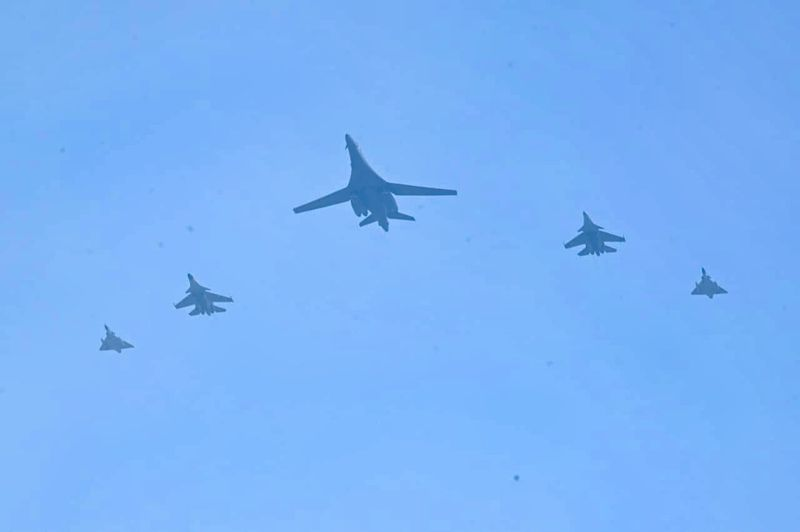
In a unique air coordination exercise, Indian Air Force (IAF) fighter jets, including the Russian-origin Sukhoi-30 MKI, are operating with the US strategic bomber “B-1 Lancer” as part of a four-day drill being held from November 10 to 13.

Though the Russian-made jet has earlier taken part in bilateral and multilateral exercises involving US platforms, this is the first time it is integrating and operating alongside a US strategic bomber — making it a first-of-its-kind engagement.

The IAF on Wednesday released pictures and details of the exercise underway in southern India. Along with the Sukhoi-30 MKI, French-origin Mirage-2000 fighters were also seen flying with the B-1 bomber in the images shared. The US Air Force has deployed only the B-1 Lancer for the exercise.

“The Indian Air Force and United States Air Force are engaged in a bilateral exercise from November 10-13, aimed at fostering mutual learning and enhancing interoperability. The US Air Force is participating with the B-1B Lancer,” the IAF posted on X.

The exercise comes against the backdrop of recent strain in India-US ties over trade and tariff issues.

The B-1 Lancer is a long-range heavy bomber used by the US for deep-strike missions. It was last seen in India during the Aero India show in Bengaluru in February this year, and had also participated in the 2023 edition of the event.

Unlike its earlier visits for the air show, this exercise marks an operational collaboration — underscoring the growing ability of the IAF and the US Air Force to coordinate and operate together.

The US has designated India as its “Major Defence Partner”.


HEADLINES : 12 OCT 2025

MILITARY AVIATION AIRPOWER

Military Literature fest Magazine :final

BATTLE OF NAMKACHU 20 – 21 Oct 1962 (Maj Gen Harvijay Singh, SM)

India ‘ultimate swing state’ in geopolitics, shift in global power balance depends on its alignment with power centres: CDS

Opinion of medical board in determining disability cannot be junked unless there is evidence to the contrary: HC

Quad navies begin ‘Malabar’ exercise

Security personnel and Naxalites exchange fire in Chhattisgarh forest

ISRO successfully tests main parachutes for Gaganyaan’s crew module

2-day air exercise in region from today

Pak issues NOTAM, puts forces on alert


BATTLE OF NAMKACHU 20 – 21 Oct 1962 (Maj Gen Harvijay Singh, SM)

In 1962, India adopted a Forward Policy against the Chinese. It was Defensive initiatives to safeguard the territorial integrity of India. To circumvent the Chinese expansion into the disputed areas, Indian Army was to “go as far as practicable … and be in eff occupation of the whole frontier”. 

In NEFA (North East Frontier Agency), Assam Rifles was tasked with setting up posts all along the McMahon Line.

Article content

Problems Faced in Implementation of the Policy: There were no roads. No modern military equipment, what little available was useless at the Himalayan heights, Army was not ready to conduct combat ops in narrow River valleys and over 7000 feet deep gorges.

By 20 July 1962 under the Forward Policy, 34 posts (8 in Kameng, 7 in Siang and 11 in Lohit Frontier were established in NEFA).

These were manned largely by Assam Rifles, incl one at Dhola, a little South of Namka Chu River on 4 Jun 1962, under the guidance of Capt Mahabir Prasad of 1 SIKH.

Article content

Slowly following Chinese recce and troops build up. Indian Army took up hurried defences along the Namka Chu River in the Tawang Sector. Ironically these troops from the 7 Infantry Brigade/4 Infantry Division were very fresh in the high-altitude area, had walked many Kms from the road H, were at lower heights than the Chinese and very close to the river. There were large gaps between the battalions. The area was thickly wooded. All to their disadvantage.

Article content
Article content

On night of 19/20 Oct, herds of Yaks crossed over Namka Chu R; the Chinese (PLA) were ascertaining the depth of water at their selected crossing places, detonating mines and breaching wire obstacles with the help of yaks.

By 5 AM on 20 Oct, PLA crossed the R on foot through gaps avoiding the guarded Bridges (narrow log bridges made by the herdsmen). Tele lines were cut. PLA contacted defenses of 7 Inf Bde units on a broad front from the defender’s rear. This was a smart and well-rehearsed tactical manoeuvre by the enemy against a thinly defended border.

Article content

Indian troops were taken by surprise when assaulted from the flanks and rear.  2 RAJPUT and 1/9 GORKHA deployed at Bridge IV, III and area between Bridge III and II fought gallantly but were soon over-powered. 

Article content

Brigadier Dalvi, the Brigade Commander and his party withdrew towards Serkhim area through the Dhola pass. Enroute, he was separated from most of the others and was finally left with only Captain Talwar of 17 Para Field Regiment and a few Other Ranks.   On 22 Oct they ran straight into a Chinese company near Serkhim and were captured. 

By AN of 20 Oct, Chinese had driven back Indian troops from Bridges I to V from Namka Chu, Tsangle, Khinzemane and Tsangdhar. Brunt of the attack was borne by RAJPUTs, GORKHAs and Assam Rifles. 4 GRENADIERs and 9 PUNJAB had not been attacked.

Deciding to pull back all troops to line Hathungla -Chutangmu just after mid-day, GOC 4 Infantry  Division spoke to COs of 4 GRENADIERs and 9 PUNJAB ordering them to withdraw to Hathungla. The battalions commenced their withdrawals but could not reach Hathungla, which was occupied by the Chinese early in the morn 21 Oct.  Realising that the Div Tac HQ at Ziminthang would soon be attacked, Gen Prasad ordered its withdrawal to Tawang. 

Units of 7 Inf Bde were overrun, giving stiff resistance to PLA. Tac HQs 4 Inf Div at Zimithang withdrew on 21 Oct to Tawang and subsequently to Dirang Dzong.