










Sanjha Morcha

What’s New

Click the heading to open detailed news

Current Events :

web counter

Print Media Reproduced Defence Related News

How Xi’s non-presence at New Delhi G20 summit will save blushes for both India and China First Post 07 Sep 2023

|  Maj Gen Harsha Kakkar |

How Xi’s non-presence at New Delhi G20 summit will save blushes for both India and China First Post 07 Sep 2023

          It is now official. Xi Jinping, the Chinese President will not be attending the G20 summit. Fareed Zakaria, a veteran journalist and geopolitical expert, stated in an interview that Xi Jinping missing the summit implies that China is ‘deliberately not trying to resolve the border issue’ with India. He added, ‘This (G2O Summit) is a big deal for Prime Minister Modi personally, and for XI to snub him that way is a very powerful thing.’ The world mistakenly believes that Xi’s primary reason for missing the summit is that China seeks to lower Indian success of its presidency. India is possibly the only country which, during its leadership, compelled the G20 to devote attention to concerns of the global south.

          The Chinese spokesperson, sidestepped questions on reasons why their President is absenting himself, by stating, ‘The Group of 20 is a major forum for international economic cooperation, and China has always attached great importance to and actively participated in relevant activities.’ He added that Xi Jinping will be represented by the Chinese premier, Li Qiang. China had earlier skipped G20 preliminary meetings in Arunachal, Kashmir and Leh, as also raised concerns on these locations, which were ignored.

Some assume that the Chinese President is preoccupied with the Chinese economy moving downhill as companies face unprecedented losses or closures resulting in increased unemployment, enhancing anger and resentment amongst the younger population. There is also a thought that he has health issues, based on his unsteady walk during the recently concluded BRICS summit in Johannesburg.

With Indo-China relations moving downhill, India is displaying its anti-China stance aggressively, something China dislikes. Delhi sent its three former service chiefs to attend the Ketagalan Forum’s 2023 Indo-Pacific Security Dialogue in Taiwan. The three even posted an image of their presence on multiple social media platforms. Admiral Karambir also participated in a panel discussion.  The Chinese foreign ministry protested with its spokesperson, Wang Wenbin, mentioning that China firmly opposes all forms of official interaction with Taiwan.  

Subsequently, General Naravane, the former army chief, shared the dais with Geshe Lobsang, representative of the Tibetan Parliament in Exile, and Umit Hamit, a noted Uyghur freedom fighter at the 6th International Rangzen (Independence) Conference in New Delhi. In his address General Naravane stated, ‘It was Tibet which was our rightful neighbour and not China. With the forceful occupation of Tibet, their rights have been suppressed.’ Both these events would have had the blessing of the government.

These sent a message to China that India can re-alter its one-China policy as also is unwilling to respect Beijing’s sentiments and redlines. India also officially backed the Philippines in its recent standoff with the Chinese coastguard in the South China Sea, an act it rarely does. These occurring close to the G20 summit displayed that India does not consider its ties with China as ‘normal,’ something Beijing would have noted.  

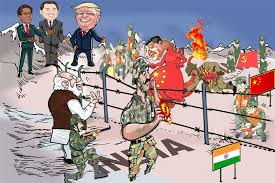
Few have considered Xi Jinping missing the summit from Beijing’s point of view. The G20 summit is in New Delhi and Indo-China relations have slid further down post the tete-a-tete on the sidelines of the BRICS summit between Indian PM Narendra Modi and Xi Jinping. Both nations gave their own versions of the discussion, with India indicating positivity in resolving the LAC standoff, hinting at a possible Xi-Modi summit in Delhi. The Chinese changed their statement a day later, re-insisting that border and diplomatic ties should not be linked, pushing away any hopes of a bilateral. Talks at the military and diplomatic level to resolve the standoff have not made much headway.

Xi, who expects to be treated as royalty wherever he visits, considering the clout of China and his position as its emperor, may be disappointed in New Delhi. PM Modi would have accorded all due protocol on reception and departure as per global norms. However, with bonhomie lacking there would be distance maintained by the host. A mandated bilateral or even a pull-aside is unlikely, making Xi feel unwelcome. This would be unacceptable to Beijing.

China realizes that this is an election year in India and all political parties would be closely watching how Modi would handle Xi. Any display of familiarity or proximity would be exploited by the opposition, and this is not something Modi would risk. He would prefer keeping a distance rather than be subjected to a barrage of accusations from the opposition. For Xi, it would be easier skipping the summit without assigning a reason, allowing speculations to run wild, with many believing that his absence is an insult to India, rather than attend and be ignored.

With Russia and China against any mention of Ukraine, the statement is likely to be watered down. Indian proposals on including its thoughts and vision of the organization would face resistance only from China. Common issues including the inclusion of the African Union may be acceptable. The joint statement is being discussed in the final Sherpa’s meeting currently under progress and would not be impacted by the absence of Xi.

The Chinese premier, Li Qiang, would read out the message which Xi was to have done. His being ignored in Delhi is acceptable to Beijing as he remains only a mouthpiece for the Chinese president with largely a ceremonial role.   

Russian President Putin spoke to PM Modi and conveyed reasons for his absence. This displayed proximity of ties. Xi cannot resort to the same as Indo-China ties are in the dumps and a conversation would result in divulging true reasons for missing the event.

India has rejected the hybrid format which includes online presence mainly to ignore the request of Ukrainian President, Zelensky, to address the summit. Hence, leaders will not have the option of speaking online. The Indian government also cannot comment on why heads of state are not attending. It is their spokespersons who justify. Thus, Jaishankar stated, ‘I would say rather than focus necessarily on which country chose to come at what level, the real issue is what position they take when they come.’

For India, Xi or no Xi, the summit will showcase efforts put forth by the country during the past year in making the G20 into an organization accountable to the world. At the end of the day, the non-presence of the Chinese leader will save blushes for himself and the Indian PM, as both would feel awkward in each other’s presence as also would hesitate to exchange even a few words as these could be twisted or misconstrued.      

THE UKRAINE WAR: ARE THERE LESSONS TO BE LEARNT

MAJOR GEN HARVIJAY SINGH, SENA MEDAL ,CORPS OF SIGNALS
+919589143386
Ukraine war: US to arm Kyiv with depleted uranium tank shells - BBC News

Nothing substantial has evolved during the ongoing Ukraine war for any lessons to be learnt…….yet.
It has, putting it simply, remained a war of reactions rather than action, and there are many negatives much like
those in a black demo:
• The start of the war by Russia was a black demo both in the strategic and tactical sense. Every ‘Principle of War’ was overlooked; ‘overlooked’ has been used out of politeness, a harsher word would make more sense.
• The Ukrainians have their black demos too. They fire artillery in massive barrages that emulate Soviet tactics;about 2 million rounds of 155mm since the war began, nearly exhausting Western stockpiles worldwide.
NATO has advised Ukrainians to be economical; Ukraine does not accept this as a sound military advice but an acknowledgement that the West cannot produce enough artillery ammunition. Which is true. Ukrainian
artillery fires 8,000 rounds daily, consuming an entire month of current US production.
• Bakhmut was no better than a World War I slog complete with slushy trenches and scorched countryside;
both sides shooed their soldiers into battle with a simple order of ‘do or die’, it was an operation with no ‘terminal objective’.
• The much-publicized Ukrainian counteroffensive never started when it was to start … and …. when it did, it rode on the back of a few dozen NATO tanks. And, while Ukraine assembled its hardware and trooped its
forces for the counteroffensive, Russia did nothing to spoil the concentration; not that it has done much during the war with its humungous Airforce.
• Russia has held the Ukrainian counteroffensive now for a couple of months based on a defence line which is an 800 km long fortification that stretches from the border with Belarus to the Dnieper delta. It consists of
multiple layers of trenches, bunkers, minefields, and anti-tank obstacles; how primitive!
• Ukraine has now reportedly penetrated the first line of the Russian defense in spots along the southern front and taken Robotyne, a hamlet in ruins. It has cost the Ukrainian army at least a full battalion, 500 men and
30 armoured vehicles of its dwindling forces; ‘do or die’ orders apparently stay. Simply dastardly.
The Americans are candidly discussing with Kyiv ‘lessons’ learnt from the slow progress of the counteroffensive. The
bottom-line assumption that they have arrived at is that this war will probably grind into next year.
The United States and its allies promise to remain steadfast in helping Ukraine keep pushing forward rather than look for a diplomatic solution. The Americans in their view can not be seen to abandon its ally. They believe strategic patience remains the best weapon against Putin; the Arms Manufacturers have ordered the cake.
In the process Ukraine continues to be a test bed for: –
• The sale (not aid, the west does have an ethos of free lunches) of End-of-Life equipment and it’s exploitation.
• New technologies/weapon systems (Not the most recent ones because NATO would not like to lose them to
the enemy) are being tested.
• Tactics of deployment of current technology in warfare and their exploitation – Drones , Anti Drone , Anti
Tank, AI , munitions etc. Conclusively, there are not enough lessons to re – write future strategies except perhaps in the Drones and Counter
Drones sphere.
What needs to be watched is Russia’s patience. Will he wear down the Ukrainian forces and then rapidly progress
through thinned out Ukrainian lines? Or, will he use a Tactical Nuclear Weapon if pushed to the sea


India, that is Bharat

Controversy over nation’s names was avoidable

India, that is Bharat

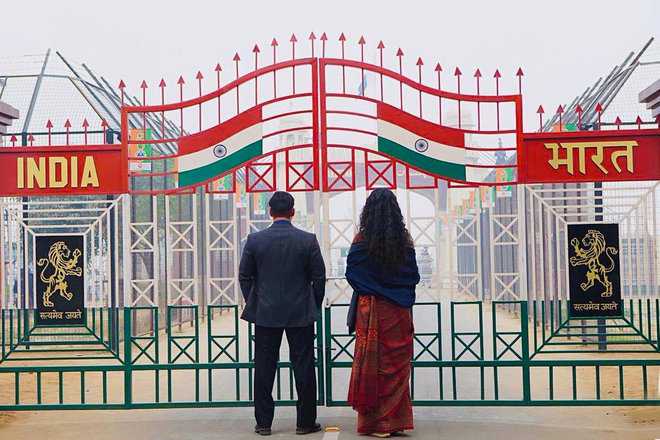
A needless controversy over the country’s names has erupted days before the G20 summit being hosted by New Delhi. Invitations for a G20 dinner described Droupadi Murmu as the ‘President of Bharat’ instead of the usual title ‘President of India’, prompting the Opposition to allege that the BJP-led Union Government had decided on ‘Bharat’ as the country’s official name and was planning to do away with ‘India’. According to a booklet titled ‘Bharat: The Mother of Democracy’, brought out for G20 delegates, ‘Bharat is the official name of the country. It is mentioned in the Constitution, as also in the discussions of 1946-48.’ BJP leaders are rooting for ‘Bharat’, while asserting that there should be no quarrel with addressing the country’s constitutional head as the ‘President of Bharat’.

Article 1 of the Constitution says: ‘India, that is Bharat, shall be a Union of States’. ‘India’ and ‘Bharat’ have coexisted for a very long time, being used interchangeably without any visible contradiction or disagreement. In a classic example, both names appear equally prominently on India’s coins of various denominations.

The government’s move is, unfortunately, seen as a knee-jerk reaction to the Opposition alliance’s ploy of naming itself INDIA. However, the Modi dispensation would be well advised not to be rattled or provoked by the tactics of a group of disparate Opposition parties presenting a united front. The ongoing war of words is a bad advertisement for a country that is all set to showcase its potential for global leadership during the G20 summit. The senseless quibbling over names does not behove the world’s fastest-growing major economy. The country, which became a republic in 1950, has been largely comfortable with its dual, bilingual identity that seamlessly blends tradition with modernity. Any attempt to impose ‘Bharat’ on Indian citizens at the expense of ‘India’ would be a regressive step, fraught with disruptive consequences. Let there be space for both, as has always been the case.


Why DRDO can’t replicate ISRO’s grand success story

Why DRDO can’t replicate ISRO’s grand success story

Lt Gen Anil Ahuja (Retd)

Former Deputy Chief, Integrated Defence Staff

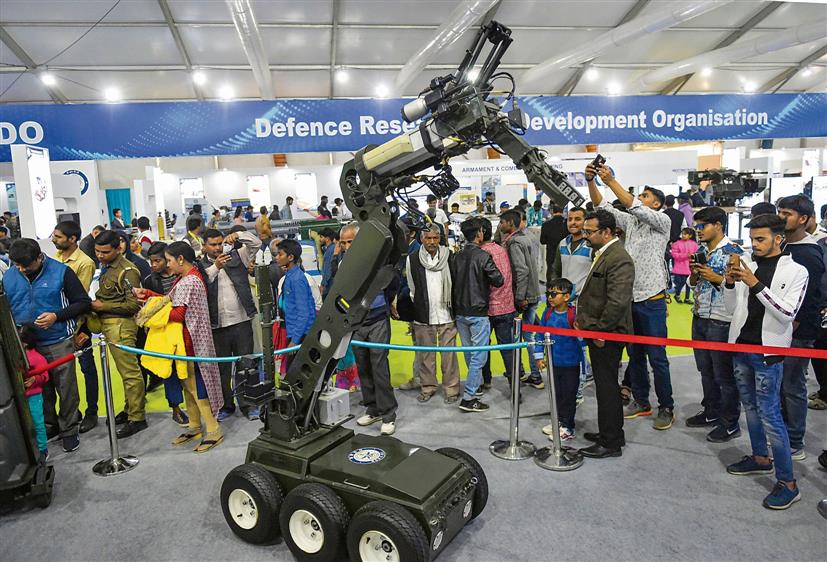
LATE last month, while the Prime Minister was profusely applauding Indian Space Research Organisation (ISRO) scientists for the success of Chandrayaan-3, a nine-member high-powered committee was set up to review the structure and role of the Defence Research and Development Organisation (DRDO). This is due to a perception that this premier defence R&D organisation is not delivering, is riddled with delays in research projects, lacks accountability and is perceived as being an ‘impediment’ (rather than a catalyst) to the capability development of the Indian armed forces. Most significantly, DRDO has not been able to rid India of the unenviable distinction of being the largest arms importer in the world.

It is often asked why DRDO fails to perform like ISRO or why it cannot deliver high-technology defence projects like the Defence Advanced Research Projects Agency (DARPA) of the US. The issues raised are fair, but they show a shallow understanding of the roles of these organisations and their functional environment. Thus, even when restructured after a review by this committee, the DRDO may still not be able to deliver unless the system of planning defence capability and atmanirbharta (indigenisation) are addressed.

ISRO came into being on August 15, 1969. Its primary objective is to harness, sustain and augment space technology for national development needs, achieved through space research and planetary exploration. Towards that end, it designs and develops launch vehicles, satellites, communication and remote-sensing programmes, navigation systems etc. In essence, ISRO progressively develops its technological base (through R&D or partnerships) and plans missions based on the threshold achieved, national needs and budgets allotted. The environment in which ISRO operates remains constant and the initiative to pace the programmes rests with it.

The DRDO was created in 1958, and at present has a network of about 50 labs researching in diverse fields. The organisation, however, operates in a nebulous environment, which is uncertain and to a large extent, externally defined. Its mission is to help India achieve self-reliance in critical defence technologies and systems, and provide support in equipping the armed forces with state-of-the-art weapon systems in accordance with the requirements laid down. The demands placed are futuristic — to keep pace with emerging and critical technologies globally — as well as current — supporting the armed forces to develop indigenous capability for their operational requirements of today. The challenge is compounded by the reality that in India, no initiative is taken to ‘define the contours of future multi-domain battlefields’ which we may be drawn into. The prerogative of shaping these contours rests with technology-pioneering global powers, one of whom is at our doorstep.

For the overall system to function, the future battlefield must be visualised, at least 10 to 15 years in advance. This should be followed by deciding the priority and weightage to be accorded to each domain, based on the defence strategy and warfighting doctrine. The services need to broadly categorise their requirements, either as ‘immediate’ (required in the next two to four years), ‘near-term’ (required in the next five to eight years) and ‘future’ (for say 10 years and beyond). The immediate requirements should largely be met from the products readily available, and near-term from the systems already designed and developed. The DRDO, the private industry/R&D organisations or innovators come into the picture for future requirements only.

The requirements, therefore, need to be identified by the services or DRDO 10-15 years beforehand. A well-established system of evolving 15-year Long-Term Integrated Perspective Plans (LTIPP) with corresponding Long-Term Technology Perspective Plans (LTTPP) of the DRDO and five-year capital acquisition plans got derailed in mid-2016 with the discontinuation of the Five-Year Plans. An alternative system of a 10-year Integrated Capability Development Plan for the services, evolved in 2020, remains a work in progress. In its absence, the functioning of DRDO and even the acquisition process remain ad hoc and emergency procurement-centric.

The challenge gets bigger due to the absence of viable strategic R&D structures outside DRDO. There are no dedicated research laboratories or scientists integral to the individual services, like the US system of Army, Air Force and Navy labs; appropriate-level research laboratories or R&D centres do not exist even in major Indian arms industries; defence and strategic orientation of the academia is at present inadequate, and funding remains modest. We are yet to evolve procedures, internally or with foreign strategic partners, to share classified technologies and information with entities outside the government.

DARPA, under the US Department of Defence, is often quoted as a model organisation that the DRDO must emulate. The former, however, works only in spheres of emerging and breakthrough technologies, in fields beyond immediate US military requirements. Also, it works only with a nucleus of about 200-plus employees and specialised programme managers, hired on short-term contracts from the academia, the government and the industry. The bulk of the work is done externally, through a network of 200 defence laboratories, R&D centres and academic institutions. For this, the organisation is funded generously. In our context, such an external environment does not exist.

The functioning of DRDO depends on a robust system of long-term planning for capability development, oriented to meet the requirements of the future battlefield. Also, a clear distinction needs to be made between acquisitions for immediate operational needs and future programmes, allowing a lead time for R&D, design and development. A robust R&D system also needs to be created outside DRDO — in private industry and academic institutions, where non-strategic programmes could be allocated. All this requires dedicated funding through a defence budget based on well-conceived guiding parameters. Without taking cognisance of these aspects, even the best recommendations from the committee may just be ‘half the job done’.


Supreme Court reserves its verdict on batch of pleas challenging abrogation of Article 370

Supreme Court reserves its verdict on batch of pleas challenging abrogation of Article 370

Satya Prakash

New Delhi, September 5

After 16 days of marathon arguments, a five-judge Bench led by Chief Justice DY Chandrachud on Tuesday reserved its verdict on petitions challenging the nullification of Article 370 and bifurcation of Jammu and Kashmir into two union territories – Jammu and Kashmir; and Ladakh.

The Bench – which also included Justice SK Kaul, Justice Sanjiv Khanna, Justice BR Gavai and Justice Surya Kant – would decide if the changes made on August 5 and August 6, 2019 that ended the special status of the erstwhile state of Jammu and Kashmir – were constitutionally valid or not.

At the close of arguments, the Bench said if any party to the case wanted to file a brief written submission/note, they could do it in the next three days.

On the concluding day, the Bench on Tuesday heard rejoinder arguments from senior advocates Kapil Sibal, Gopal Subramanium, Rajeev Dhavan, Zaffar Shah, Dushyant Dave, Gopal Sankaranarayan and others.

The petitioners have mainly challenged the abrogation of Article 370 on the ground that it was a political decision which lacked constitutional backing as the procedure provided for in the Constitution, particularly the requirement of recommendation of J&K Constituent Assembly, for abrogation of the provision was not followed.

As the J&K Constituent Assembly ceased to exist in 1957, Article 370 became permanent, Sibal argued.

On behalf of the Centre and some intervenors, Attorney General R Venkataramani, Solicitor General Tushar Mehta, senior advocates Harish Salve, Rakesh Dwivedi, V Giri and others defended the abrogation of Article 370 terming it a historic move that demolished the barriers in constitutional and emotional integration of Jammu and Kashmir with the rest of India.

The arguments were centered around, the Instrument of Accession (IoA), Jammu and Kashmir Constituent Assembly, Article 370, Article 367, Article 368, the Centre’s August 5, 2019 decision to abrogate Article 370, Jammu and Kashmir Reorganisation Act, which split the erstwhile state into two union territories, imposition of Governor’s rule in Jammu and Kashmir on June 20, 2018, followed by imposition of President’s rule in the erstwhile state on December 19, 2018 and its extension on July 3, 2019.

During the hearing, the Bench said once the Instrument of Accession (IoA) signed by Maharaja Hari Singh in 1948 got subsumed in a post-Constitution document indicating transfer of power, the IoA can’t act as a fetter on Parliament’s powers.

On August 31, the Centre told the Supreme Court that it’s ready for elections in Jammu and Kashmir anytime and now it’s for the Election Commission to take a call.

“The Central Government is ready for elections anytime now. Till date updating of the voters’ list was going on… which is substantially over. Some part is remaining that the Election Commission is doing,” the Solicitor General had said.

However, on restoration of statehood of Jammu and Kashmir, Mehta had said it’s progressing to become a state. He, however, refused to give a definite time frame, saying “We’re dealing with an extremely extraordinary situation.”

Emphasising that the overall situation has improved, the Centre had said that compared to 2018, terror attacks were down by 45% and Infiltration was reduced by 90% while tourism was showing signs of revival.

“In 2018, organised bandhs were 52- they are nil now… The terrorist initiated instances are reduced by 45.2%. I’m comparing the 2018 situation with the 2023 situation. Infiltration reduced by 90.2%… Law and order events… stone pelting etc. reduced by 97.2%… Security persons’ casualty is reduced by 65.9%. These are factors agencies would take into consideration,” Mehta had submitted.


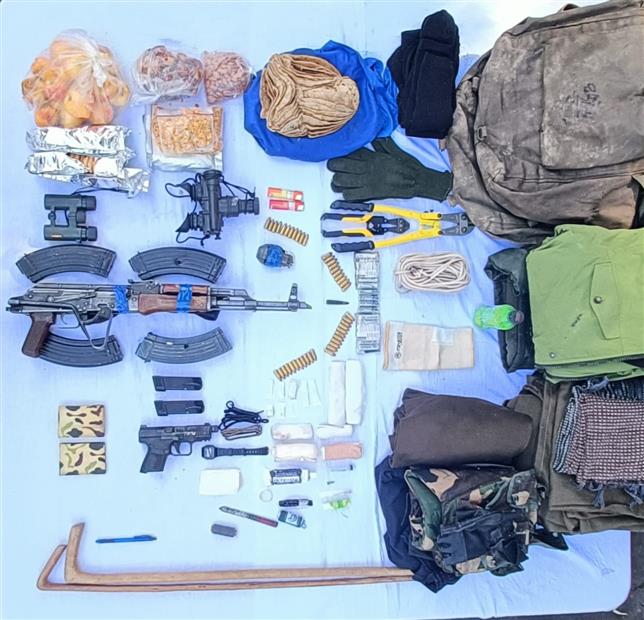
Apples, ‘chapatis’, fence cutters among recoveries from terrorists shot dead in Poonch

Apples, ‘chapatis’, fence cutters among recoveries from terrorists shot dead in Poonch

Arjun Sharma

Jammu, September 7

Army and police have recovered apples, dates, ‘chapatis’ and fence cutters along with weapons from the spot where two terrorists were shot dead during an infiltration bid on Wednesday in Poonch district.

Two terrorists were observed crossing Line of Control (LoC) on the intervening night of Tuesday and Wednesday in Mandi sub sector of Poonch district. A Joint operation was launched by Army and police immediately to intercept the terrorists.

While the ultras tried to take advantage of hostile terrain and thick vegetation in the area, soldiers laden with night vision equipment were able to eliminate the ultras. Body of one terrorist was recovered on Wednesday morning.

During a search operation which continued till Thursday, the Army recovered a cache of arms and eatables which indicate that the ultras were Pakistani and entering Indian territory for a long haul.

Sources in Army intelligence said an AK series assault rifle, a pistol along with night vision binoculars, medical kit, grenade, fence cutter, almonds, apples, dates, biscuits and batteries among others were recovered from the ultras.

“Presence of woollen gloves, clothing and walking sticks indicate that the ultras might be planning to stay in higher reaches of the UT. The presence of large quantities of eatables is an indication that they might have lived in forest areas without any local support,” said the sources.

Many terrorists have been eliminated in Rajouri, Poonch and Reasi area during the recent past even as Pakistan was trying to revive terrorism in Jammu division. Many Over Ground Workers (OGWs) have also been arrested by J&K police.


Pakistani flag attached with balloons found in Jammu and Kashmir’s Udhampur

Pakistani flag attached with balloons found in Jammu and Kashmir’s Udhampur

PTI

Udhampur/Jammu, September 7

A Pakistani flag attached with scores of balloons were found in Jammu and Kashmir’s Udhampur district, police said on Thursday.

It was found hanging from a tree in Sunetar village of Ramnagar tehsil earlier in the day, they said.

The flag was attached with posters and scores of red and green balloons.

Senior Superintendent of Police of Udhampur Vinood Kumar told PTI that it might have flown to this side with balloons.


In LAC infra push, Indian Air Force base in eastern Ladakh’s Nyoma next

In LAC infra push, Indian Air Force base in eastern Ladakh's Nyoma next

Tribune News Service

Ajay Banerjee

New Delhi, September 6

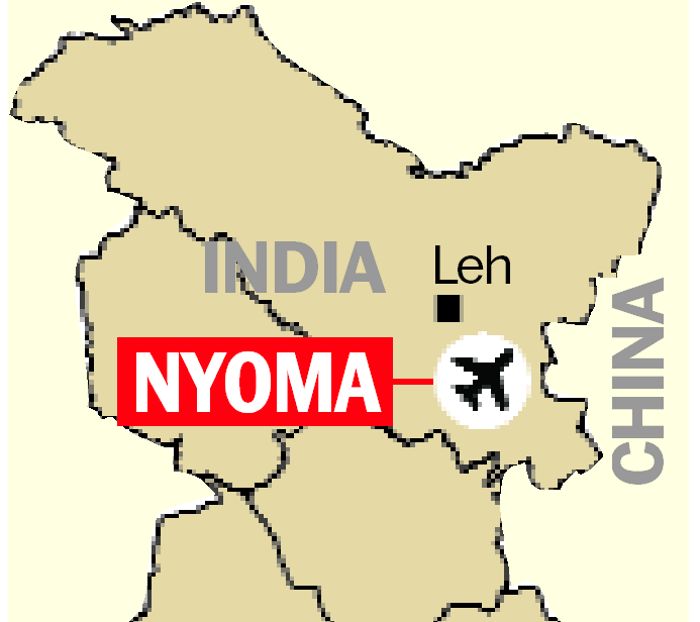
Aiming to match the Chinese infrastructure across the Line of Actual Control (LAC), Defence Minister Rajnath Singh is scheduled to lay the foundation stone for an Indian Air Force base in eastern Ladakh’s Nyoma on September 12.

The Border Roads Organisation (BRO), under the Ministry of Defence, would build the project at an estimated cost of Rs 214 crore within two years. Nyoma, located at an altitude of 13,700 feet on the banks of the Indus, is some 180 southeast of Leh. It is a naturally flat area and is being used by helicopters and special operation planes such as C-130J that can land on mud-paved runway. The aim is to have a fighter jet base that can launch and recover planes, and also carry out minor maintenance jobs.

The site is spread over 1,235 acres where a 2.7-km runway with allied military infrastructure will come up. Rajnath will, the same day, formally inaugurate the Nechiphu Tunnel on the strategically vital 329-km Tezpur-Tenga-Bomdila-Tawang route that leads to the LAC in West Kameng district of Arunachal Pradesh. Nechiphu Tunnel is at an altitude of 5,700 feet and is conceived to bypass extreme foggy conditions prevailing around Nechiphu Pass, which had been hindering the smooth flow of general traffic and military convoys for decades. The tunnel is part of a plan to rapidly deploy troops and weapons along the LAC. Apart from the Nechiphu Tunnel, two more tunnels under Sela—a 13,700-ft-high Himalayan massif—are being constructed on the same 329-km route to the LAC.

The Nyoma airbase and the Arunachal tunnel are part of the BRO’s 90 infrastructure projects that Rajnath would dedicate to the nation on September 12. The ceremony would be carried out at Devak Bridge in Jammu where the minister would inaugurate a 422-metre bridge on the Bishnah-Kolpur-Phulpur road in Jammu and Kashmir, said an official.

Rajnath will also inaugurate the reconstructed and revamped airfield at Bagdogra and Barrackpore in West Bengal. Bagdogra, in north Bengal, is the closest base to Doklam plateau on the India-Bhutan-China tri-junction. China is disputing the boundary alignment and India and China have had a military stand-off in 2017. These airfields have been reconstructed at a cost of Rs 529 crore. The minister will also inaugurate 22 roads and 63 bridges. Of these, 11 are in J&K, 26 in Ladakh, 36 in Arunachal, five in Mizoram, three in Himachal Pradesh, two each in Sikkim, Uttarakhand and West Bengal and one each in Nagaland, Rajasthan and Andaman & Nicobar Islands.