




Sanjha Morcha

What’s New

Click the heading to open detailed news

Current Events :

web counter

Print Media Reproduced Defence Related News

DESW Secretary can’t escape contempt over pension orders’: Armed Forces Tribunal

The Bench had summoned the secretary, who repeatedly insisted that his department was not concerned in the matter, for non-implementation of an order of January 2019, granting disability benefits to a soldier from the Sikh Regiment

aking a top bureaucrat in the Ministry of Defence to task for trying to wash his hands off responsibility, the Armed Forces Tribunal (AFT) has held that the Secretary, Department of Ex-servicemen Welfare (DESW), in the Ministry is responsible for implementing the Tribunal’s orders concerning pensionary benefits and that the Service Headquarters have limited powers of delegation in this regard.

Putting an end to the question of whether the Secretary, DESW, can be summoned by the AFT for contempt over non-implementation of the court’s orders, the Bench observed that the DESW has an important role to play in implementation of Court orders and in exercise of its authority to lay down policy in pensionary matters, it interferes with the delegated authority of the Service Headquarters.

“The answer to the question framed is decided against the secretary. In implementation of Court orders the Service HQs are dependent upon instructions issued by the DESW and the Secretary being its apex level authority has to be answerable for their non-implementation,” the Tribunal’s Chandigarh Bench comprising Justice Sudhir Mittal and Lt Gen Ranbir Singh ruled in their order of November 13.

The Bench had summoned the secretary, who repeatedly insisted that his department was not concerned in the matter, for non-implementation of an order of January 2019, granting disability benefits to a soldier from the Sikh Regiment. The Bench observed that the order was not implemented despite no stay on it or without any valid reason being given.

Further, the secretary violated direction to appear before the court on two separate occasions without proper justification, following which a notice for contempt was issued and the secretary as well as the Additional Director General, Personnel Service in Army Headquarters were asked to file affidavits explaining their respective stance on the powers of implementing court orders.

The Bench observed that from the affidavits and pleadings on record, Service Headquarters can implement Court orders only with the concurrence of the Principal Integrated Financial Advisor (PIFA). The powers delegated to Service Headquarters are conditional and circumscribed by concurrence of PIFA, who possesses the authority to direct them to challenge Court orders and Service Headquarters do not have the authority to overrule the recommendations of PIFA.

Pointing out that the secretary has adopted a stand of denial of responsibility only to escape consequences of contempt, the Bench said that his stand is completely contrary to the documents placed on record.

“Denial of responsibility by the apex-level authority reflects very poorly on his leadership qualities. It reveals that even a Secretary-level officer of the Government of India can stoop to the level of denial of responsibility simply to shift blame on somebody else,” the Bench observed.


Exercise ‘Trishul’ tests indigenous systems, joint warfare readiness

The objectives included improving interoperability of platforms and infrastructure, strengthening network integration across Services, and advancing jointness in operations

A tri-services exercise, ‘Trishul’, aimed at testing indigenous systems and addressing emerging threats and the evolving character of contemporary and future warfare, concluded today.

The exercise, which began on November 3, featured large-scale operations along the India-Pakistan border in Rajasthan and Gujarat, alongside maritime and amphibious operations in the North Arabian Sea near the Sir Creek area.

Conducted under the Navy’s lead, ‘Trishul’ focused on refining joint operational procedures in coordination with the Army and the Indian Air Force. The Indian Coast Guard, Border Security Force and other central agencies also participated to ensure integrated operations.

A key focus of the exercise was to enhance synergy among the armed forces and to validate and synchronise integrated operational procedures across the three Services, enabling seamless joint operations.

The objectives included improving interoperability of platforms and infrastructure, strengthening network integration across Services, and advancing jointness in operations. The exercise also validated joint intelligence, surveillance and reconnaissance (ISR) procedures, as well as electronic warfare (EW) and cyberwarfare plans. The Navy’s aircraft carrier conducted joint operations with shore-based Indian Air Force assets to facilitate the exchange of best practices and validation of air operation procedures.

Under the umbrella of ‘Trishul’, the Army and the IAF conducted their own sub-exercises. The Army hosted Exercise ‘Brahmashira’ in the Kutch region with participation from the Navy, IAF, Coast Guard and the BSF. The Army’s Southern Command carried out Exercise ‘Akhand Prahaar’ across the deserts, serving as a real-time testbed for next-generation indigenous technologies such as drones, unmanned systems, counter-drone systems and electronic warfare grids.

The Army also conducted Exercise ‘Maru Jwala’ in joint airborne operations with the IAF. The IAF, in turn, conducted Exercise ‘MahaGujRaj-25’ to validate its capability to deliver the full spectrum of air operations and campaigns, featuring real-time joint operations with the Army and Navy and validation of operational and maintenance readiness.


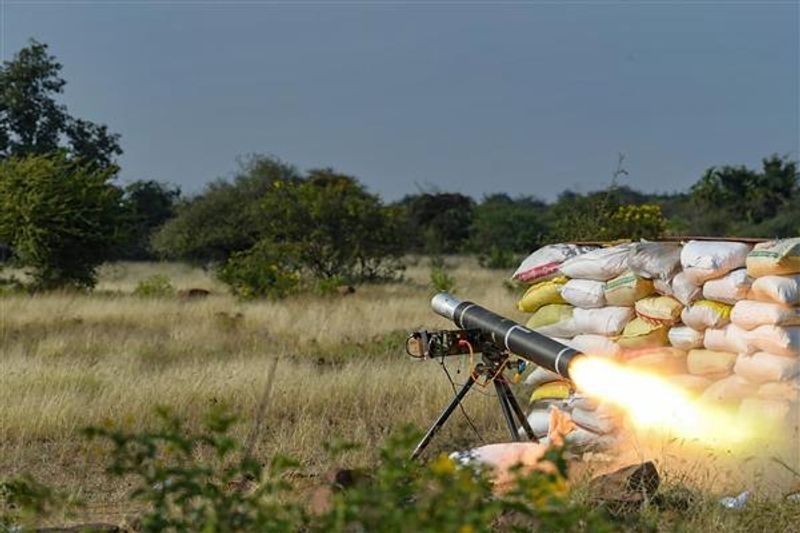
MoD inks pact with BDL for anti-tank missiles

The procurement of the INVAR anti-tank missiles enhances the firepower and lethality of T-90 tanks with the Army

The Ministry of Defence on Thursday inked a contract with public sector undertaking Bharat Dynamics Limited (BDL) for the procurement of INVAR anti-tank missiles at a cost of Rs 2,095.70 crore.

The contract was signed by senior officials of the Ministry of Defence and representatives of BDL in the presence of Defence Secretary Rajesh Kumar Singh here.

The procurement of the INVAR anti-tank missiles enhances the firepower and lethality of T-90 tanks with the Army. The tank is the mainstay of armoured regiments of the Army. The weapon system is a sophisticated laser-guided anti-tank missile with very high hit probability. It is set to transform the conduct of operations and offer operational advantage against the adversary.

The Ministry of Defence said the procurement underscores government’s efforts to meet the operational requirements of the Army by leveraging the existing expertise of defence public sector undertakings, along with development of niche technologies by domestic industries towards achieving self-reliance in defence.


Turkiye denies airspace for plane carrying three Apache copters for Army

Last month, Indian officials had skipped the Turkish National Day celebrations in New Delhi, in what was seen as a message to Ankara following its support to Pakistan during Operation

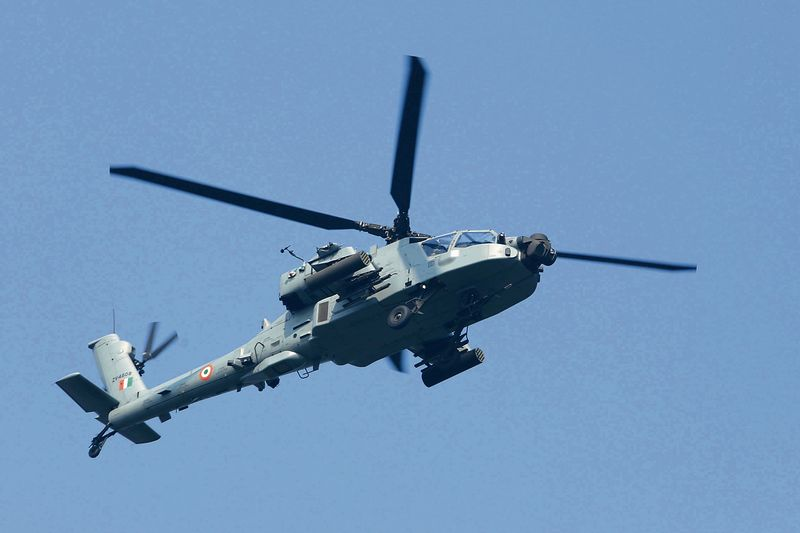
The Indian Army’s tranche of last three Apache attack helicopters to be delivered by Boeing has been delayed after Turkiye refused to allow the plane carrying the consignment use its airspace.

On November 1, a specialised cargo aircraft, Antonov AN-124, carrying the three Apache helicopters was on its way to India from Arizona (US). After the plane landed in England for refuelling, it could not undertake its further journey to India as Turkiye didn’t allow it to use its airspace. As the permission was denied for a week, the Antonov plane had to fly back to the US with the three helicopters.

“We are currently addressing logistical issues caused by external factors to complete the delivery process for the remaining helicopters,” Boeing said in a statement. It said it was “closely engaged with the US government and the Indian Army to execute the contract as expeditiously as possible to meet India’s needs and fleet requirements”.

Boeing has so far delivered 22 Apache helicopters to the Indian Air Force and three to the Army. The previous three helicopters for the Army were delivered in August and the same Antonov aircraft then flew through Turkish airspace.

Last month, Indian officials had skipped the Turkish National Day celebrations in New Delhi, in what was seen as a message to Ankara following its support to Pakistan during Operation Sindoor.


HEADLINES : 13 OCT 2025

Lt General’s car hit by VIP escort

IAF Chief inaugurates Mudh-Nyoma airbase near LAC in Ladakh

Nyoma fourth paved runways in Ladakh…

China Unveils Stealth Strike Triad: J-20 Fighter, GJ-11 Drone, And J-16D EW Jet In Coordinated SEAD Formation

CNS Admiral Tripathi Embarks On Official Visit To US To Strengthen India-US Maritime Partnership

New Military Base In Assam To Boost Border Security, Intelligence: Experts

Rudra-7 FPV Drone Achieves High-Altitude Success At Leh

Gridbots Unveils Titan Fortifier: World’s First Autonomous Anti-Tank Minelaying Robot

Pakistan’s Reported ICBM Ambition Raises Strategic Alarms Across Regions

What lies beneath India-US defence pact by MP Manish Tewari

IAF’s Sukhoi-30 MKI flies with US B-1 Lancer bomber


Lt General’s car hit by VIP escort

The Army veteran said the incident took place around 4 pm when he was travelling with his wife

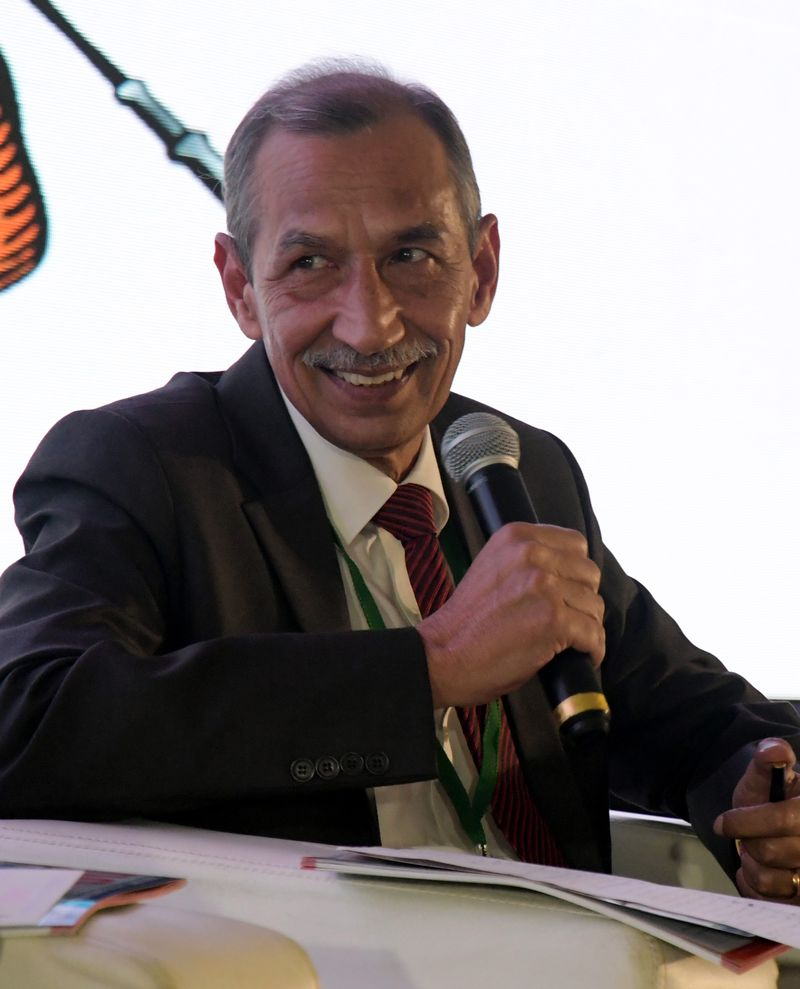
A VIP escort vehicle hit the car of Lt General DS Hooda (retd) and sped away on the flyover here today.

Sharing details about the incident on “X”, the Army veteran said the incident took place around 4 pm when he was travelling with his wife. Two Punjab Police jeeps escorting a VIP towards Ambala came from behind, with their sirens blaring. He slowed the vehicle to let the first vehicle pass, but the VIP car could not overtake him amid heavy traffic.

“Angered, the rear escort jeep, while overtaking from the left, deliberately cut sharply right, hitting the front of my car and then sped off. It was clearly a deliberate act, not only damaging the car, but with no concern of our personal safety on a very crowded road. The arrogance and impunity of someone who is supposed to be a guardian of law soils the uniform and reputation of the organisation. Hope Bhagwant Mann and DGP Punjab Police take note,” he further added.

Zirakpur Assistant Superintendent of Police Ghazalpreet Kaur said, “He has informed us about the incident telephonically and we have taken note of his social media post. The police are working on it. By tomorrow, we will have the CCTV footage and action will be taken in the matter. We have assured him.”

Hooda, 69, is the former General Officer Commanding-in-Chief of the Army’s Northern Command.

Meanwhile, Punjab DGP Gaurav Yadav replied, “We deeply regret the distress and concern caused to you and your wife due to this unfortunate incident. Such behaviour, if established, is completely unacceptable and contrary to the values of professionalism and public service that Punjab Police stands for. I have personally discussed the matter with Special DGP (Traffic) AS Rai, and directions have been issued to identify the vehicles and personnel involved. Please be assured that the matter is being taken seriously and appropriate action will be initiated to ensure accountability.”


IAF Chief inaugurates Mudh-Nyoma airbase near LAC in Ladakh

Situated at an altitude of 13,700 feet, the Nyoma airbase is a key strategic asset given its proximity to the contested frontier with China

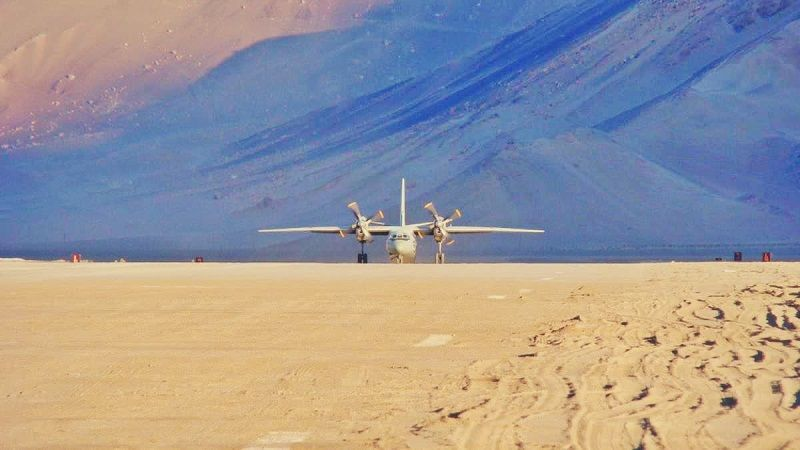
Indian Air Force Chief Air Chief Marshal AP Singh on Wednesday inaugurated the strategic airbase at Mudh-Nyoma in eastern Ladakh.

The IAF Chief arrived at Nyoma in a C-130J special operations aircraft to formally open the base — the fourth paved and operational runway in Ladakh — located just 23 km from the Line of Actual Control (LAC) with China. The other operational runways in the region are at Leh, Thoise (base for Siachen operations) and Kargil. Additionally, the IAF operates a mud-paved runway at Daulat Beg Oldie in northern Ladakh for special operations aircraft and helicopters.

As reported by The Tribune on Wednesday, the Nyoma base features a 2.7-km runway capable of handling fighter jets, transport aircraft and helicopters. The name “Mudh-Nyoma” is derived from the nearby village of Mudh, located opposite the base.

Air Chief Marshal Singh was accompanied by Western Air Command Chief Air Marshal Jeetendra Mishra. Situated at an altitude of 13,700 feet, the Mudh-Nyoma airbase is a key strategic asset given its proximity to the contested frontier with China.

Defence Minister Rajnath Singh had laid the foundation stone for the Rs 218-crore project in September 2023. The Border Roads Organisation (BRO) executed the project, which includes allied infrastructure such as hangars, an air traffic control building and hardstanding areas for aircraft parking and maintenance.

Since the military standoff with China began in April 2020, India has accelerated the development of roads, bridges, tunnels, airfields and helipads in its border regions to boost mobility and logistics support for its forces.

The Nyoma airstrip, originally a mud-paved runway, had remained unused for decades after the 1962 India-China war. It was reactivated in September 2009 when an AN-32 transport aircraft landed there for the first time.

Located on the banks of the Indus river, Nyoma lies about 180 km southeast of Leh at an altitude of 13,700 feet, where winter temperatures can plummet to minus 20°C — conditions that necessitate specialised maintenance infrastructure.

Separately, the Ministry of Defence is reviving a defunct Advanced Landing Ground (ALG) at Chushul in eastern Ladakh, close to the China border. In military terms, an ALG refers to a basic mud-paved runway near the frontlines, which can be upgraded over time to support aircraft operations, including those of helicopters and unmanned aerial vehicles.


China Unveils Stealth Strike Triad: J-20 Fighter, GJ-11 Drone, And J-16D EW Jet In Coordinated SEAD Formation

China has showcased an integrated stealth strike formation that combines its most advanced aerial platforms — the J-20 stealth fighter, the GJ-11 stealth drone, and the J-16D electronic warfare aircraft. 

This configuration, revealed through a microfilm released to commemorate the 76th founding anniversary of the People’s Liberation Army Air Force (PLAAF), underscores China’s growing focus on coordinated electronic warfare and suppression of enemy air defences (SEAD).

Titled Far-Reaching Dreams, the microfilm captures the trio in coordinated flight, symbolising the PLAAF’s ambition to develop a seamlessly networked and technologically advanced air combat structure. Experts described the combination as a “killer triad” for its potential to operate jointly in offensive operations while maintaining high survivability in contested airspaces.

The GJ-11 stealth drone, a flying-wing unmanned combat aerial vehicle (UCAV), plays a central role in this formation. Built for deep-penetration strike, electronic warfare, and reconnaissance missions, it offers both operational flexibility and risk reduction by eliminating the need for a human pilot in high-threat zones. Its low radar cross-section and internal weapons bay make it ideal for stealth operations alongside manned aircraft.

Complementing it is the J-16D, a dedicated electronic warfare and SEAD variant of the twin-seat J-16 multirole fighter. Equipped with advanced radar jamming pods and sensors for detecting, deceiving, or destroying enemy radar systems, the J-16D serves as the formation’s electronic shield. It can paralyse hostile early-warning systems, enabling other aircraft to operate undetected or unhindered within enemy defences.


At the forefront of the triad is the J-20 stealth fighter, China’s premier fifth-generation aircraft designed for air superiority and precision strike. Its internal weapons carriage, radar-absorbing materials, and advanced avionics allow it to function as both a spearhead and a command platform for controlling UCAVs like the GJ-11.

Analysts highlight that this triad represents an evolution in China’s SEAD doctrine. Instead of individual systems working independently, Beijing is integrating stealth, electronic warfare, and autonomous strike assets into a multi-layered system capable of engaging complex air defence networks. Such a capability allows for greater flexibility, adaptive mission planning, and resilience in future conflict scenarios.

Chinese military expert Song Zhongping noted that the combination is strategically potent: the J-16D can jam enemy radar, creating a window for the J-20 and GJ-11 to strike critical assets deep within adversary territory. The triad’s coordination could effectively disable integrated air defence systems by overwhelming or deceiving radar coverage before launching precision strikes.

The GJ-11 drone, according to other sources quoted by Chinese media, can also lead reconnaissance missions to scout high-risk areas ahead of manned platforms. It can act as a wingman drone — extending sensor reach, providing decoy coverage, or conducting precision strikes, depending on mission requirements.

This arrangement mirrors trends seen in Western air combat doctrines, where manned-unmanned teaming is central to next-generation warfare concepts.

The deployment of such a formation reflects China’s broader ambition to dominate the electromagnetic spectrum and enhance its strike reach. By merging stealth characteristics with electronic and autonomous warfare capabilities, the PLAAF positions itself to challenge adversary air defences with unprecedented sophistication.

This triad, if successfully operationalised, would mark a significant technological and doctrinal leap for the PLAAF, making it a formidable force in the aerial domain.

It signals China’s growing confidence in leveraging integrated airpower for long-range precision warfare, while showcasing its pursuit of a fully networked, intelligent combat ecosystem.

Based On Chinese Media


CNS Admiral Tripathi Embarks On Official Visit To US To Strengthen India-US Maritime Partnership

Chief of the Naval Staff (CNS), Admiral Dinesh K. Tripathi, has embarked on a six-day official visit to the United States from 12 to 17 November 2025, in a significant step toward reinforcing maritime cooperation and strategic alignment between the Indian Navy and the United States Navy.

The visit comes at a time when Indo-Pacific maritime dynamics are undergoing rapid transformation, underlining the importance of sustained dialogue and operational collaboration between the two navies.

During his stay, Admiral Tripathi is scheduled to engage with senior figures from the US Department of War and top naval leadership, including Admiral Samuel J Paparo, Commander of the United States Indo-Pacific Command (USINDOPACOM), and Admiral Stephen T Koehler, Commander of the United States Pacific Fleet (USPACFLT).

These meetings are expected to focus on strengthening operational linkages, refining joint procedures, and expanding mechanisms for real-time information sharing and maritime domain awareness.

The official engagements will also cover avenues for enhanced coordination across critical areas such as underwater surveillance, anti-submarine warfare, humanitarian assistance and disaster relief (HADR) operations, and strategic sealift logistics.

Both navies have maintained consistent institutional engagement frameworks, which this visit seeks to deepen in line with shared strategic objectives in the Indo-Pacific.

Admiral Tripathi is also set to visit leading American naval institutions and operational commands, where he will hold interactions centred on shared maritime concerns and capability development.

The discussions are expected to address cooperative frameworks under platforms like the Combined Maritime Forces (CMF) and regional multilateral engagements such as MILAN, which bring together like-minded maritime nations committed to rule-based order and open sea lanes.

The timing of the visit coincides with Exercise Malabar 2025, a premier Indo-Pacific multilateral naval exercise taking place in the West Pacific training area from 10 to 18 November. The ongoing exercise features naval forces from India, the United States, Japan, and Australia, building on the Quadrilateral Security Dialogue (Quad) framework to promote interoperability and collective response capabilities.

First initiated in 1992 as a bilateral exercise between India and the United States, Malabar has progressively expanded in scale and complexity, reflecting the growing convergence of strategic interests among the four participating navies.

While the Quad is not a formal military alliance, the exercise remains a flagship demonstration of cooperative intent toward maintaining stability, ensuring freedom of navigation, and preserving the maritime commons in the Indo-Pacific.

Admiral Tripathi’s engagements in the United States are expected to reinforce India’s broader maritime strategy focused on securing an open, inclusive, and rules-based regional order.

The Indian Navy views strategic bilateral cooperation with the US Navy as instrumental to achieving sustained maritime security, technological collaboration, and coordinated deterrence against emerging challenges in the region.

This high-level visit underscores the depth of the India-US strategic partnership and reflects the maturation of their defence ties, rooted in mutual trust, shared democratic values, and a common interest in safeguarding global maritime stability.

The outcomes of these discussions are anticipated to further consolidate the operational synergy between the two navies, ensuring a resilient maritime architecture for the Indo-Pacific.

Based On ANI Report