Clashes between the tribes of Alizai and Bagan in Kurram district took place following Thursday’s attack on a convoy of passenger vans in which 47 people were killed
At least 18 people were killed and 30 others injured in sectarian violence in northwest Pakistan’s restive Khyber Pakhtunkhwa province in the last 24 hours, police said.
The clashes between the tribes of Alizai and Bagan in Kurram district bordering Afghanistan took place following Thursday’s attack on a convoy of passenger vans in which 47 people were killed by militants.
Gunfire is also continuing in Balishkhel, Khar Kali, Kunj Alizai and Maqbal.
The tribes are targeting each other with heavy and automatic weapons. So far, 18 people have been killed and 30 injured in the clashes. Independent and media sources reported more than 30 deaths in the clashes.
Homes and shops have also been damaged in the fighting. People from various villages have fled to safer locations.
Due to the deteriorating situation, all educational institutions in the district remain closed on Saturday, confirmed Muhammad Hayat Hassan, chairman of the Private Education Network.
Over 50 passenger vehicles were fired upon at Bagan, Manduri, and Ochhat on Thursday.
Six vehicles were directly hit in the firing, resulting in the deaths of 47 people, including women and children, police said.
The vehicles were travelling in a convoy from Parachinar to Peshawar, the capital of Khyber Pakhtunkhwa, officials said.
Most of the victims belonged to the Shia community, they said.
MoD convenes meet on Nov 29 to speed up excision exercise
In the absence of the government’s views on excising civilian areas from the six cantonment towns of the state, the proposed move has been hanging fire since May 2022. To speed up the process, the Union Ministry of Defence has…
In the absence of the government’s views on excising civilian areas from the six cantonment towns of the state, the proposed move has been hanging fire since May 2022. To speed up the process, the Union Ministry of Defence has convened a meeting with the state government on November 29 where the Joint Secretary (Land and Works) of the ministry will participate virtually.
Joint Director of the MoD’s Quartering and Cantonment Wing has asked the state government to attend the meeting and give its inputs on the subject, as per a November 14 letter.
The letter of the Union Ministry of Defence states that broad modalities of excising civilian areas from the limits of six cantonment towns of Kasauli, Jutog, Subathu, Dalhousie, Dagshai and Bakloh were shared with the state government on May 2022.
The six cantonment towns had sent detailed proposals to the state government along with the details of areas to be excluded. The cantonment boards of Dagshai, Kasauli and Jutogh had submitted their proposals to the state government in October 2023 while the proposal from Subathu was submitted on December 6, 2023. The Dalhousie cantonment board submitted its proposal on January 9 this year. The Baklog cantonment board accomplished the task in November 2023. Initially, the MoD was to lease properties to the state while retaining the ownership rights. However, later it proposed the full transfer of rights to the state government.
Under these guidelines, civilian areas, once excised from cantonments, would be integrated with local municipalities, allowing residents to benefit from state schemes and undertake repairs without the previously rigorous approval process.
In July, the MoD had formed a seven-member committee, led by a Joint Secretary, to chalk out the modalities for excising civilian areas from six cantonment towns in Himachal Pradesh. As per the directive, the committee was to submit its report within a week, covering issues like land and asset transfers, cantonment employees, pensions, cantonment funds, civic services, movable properties, records and other logistical elements.
A ray of hope has been lit among the residents of the cantonment board about the long pending exercise finally heading towards a conclusion as the state government will present its view.
The state government is expected to ponder over the proposals received from the cantonment boards and present its stand on November 29 to pave way for the final exclusion of the civilian areas.
Three cantonments of Dagshai, Kasauli and Subathu fall in Solan district while Baklog and Dalhousie lie in Chamba and Jutog is part of Shimla district.
Army set to recruit experts for cyber, IT, information war
With the nature of warfare changing rapidly, the Army is looking to hire three-types of domain experts — to tackle cyber threats; for information technology for using ‘information’ and ‘disinformation’ as a means of war. Lt Gen Rakesh Kapoor Deputy…
With the nature of warfare changing rapidly, the Army is looking to hire three-types of domain experts — to tackle cyber threats; for information technology for using ‘information’ and ‘disinformation’ as a means of war.
Lt Gen Rakesh Kapoor Deputy Chief, Information Systems and Coordination, said modern technology is changing the character of conflict.
“We are going to recruit domain experts in cyber war, information technology and information warfare. These will be regular officers and soldiers,” he said. The Army is working out what is the level of education and skills needed for these future recruits. The programme is planned to kick off next year, the General added.
Sources said the Army is looking at post graduates in specific technologies to be recruited as officers. In case of jawans the recruitment level would be graduation in a specified sector. These recruits would dop this work only and be attached to various formations.
“Last year, a small number technical experts were recruited under the Territorial Army. They are doing a very fine job,” he added.“We are also looking to have more mandarin speakers,” he added.
The Army is looking to absorb available technologies and 16 types of technologies have been identified for indigenous development.
These include cyber, space , quantum computing , 5G and 6G communication, directed energy weapons, artificial intelligence, drones, counter drones, unmanned autonomous systems, loitering ammunitions, 3D printing and robotics benchmarks have been approved for these technologies, the Army is willing to partner with anyone from industry or the academia.
“We are evolving in real time,” said General Kapoor adding that we are re-orienting and reorganising to match technology needs.
To sustain in wars home-grown technology is needed. The Army, he said had studied the Russia-Ukraine war to see what new technology can be brought to battle.
One of the mandates of the Army is border tourism permissions are being facilitated. Roads are being made and communication networks are coming up.
Lt Gen Kapoor also mentioned how ‘boys sports companies’ and two girls sports companies have come up.
With helicopters and drones, India, Vietnam expand scope of joint exercise
Fifth edition of VINBAX-2024 concludes at Chandimandir Military Station in Panchkula
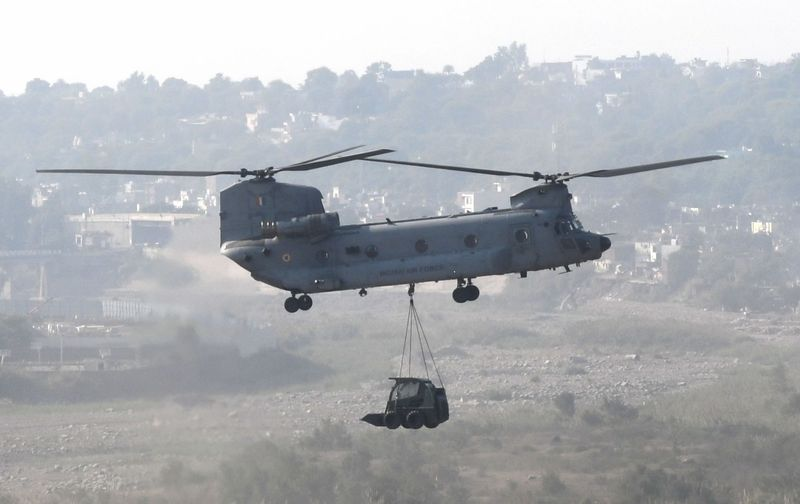
ndia and Vietnam have expanded the scope of their annual bilateral training exercise, VINBAX-2024, the fifth edition of which concluded at Chandimandir Military Station in Panchkula on Friday. Senior Colonel Dr Nguyen Ba Hung, Deputy Director of Peace Keeping Operations, Ministry of National Defence, Vietnam, said that the employment of helicopters for support during disaster relief operations, use of swarm drones for recce and surveillance, and the disposal of unexploded ordnance and improvised explosive devices were new aspects of this drill.
This bilateral exercise marks a significant milestone in strengthening the relationship between India and Vietnam, demonstrating their commitment to cooperation in disaster management and relief efforts, he added.
Stating that India-Vietnam bilateral relations have evolved into a comprehensive strategic partnership in which defence cooperation is an important pillar, Lt Gen Rajesh Pushkar, General Officer Commanding Kharga Corps, said the successful conduct of VINBAX-2024 has effectively strengthened mutual understanding and enhanced inter-operability between the two nations.
“Cooperation between the two countries, which is vital for peace and security in South Asia as their interests converge in this region, is forward looking and based on proactive engagements. As India and Vietnam continue to play important roles in the Indo-Pacific and ASEAN regions, their bilateral relationship is expected to further deepen and broaden in the coming years,” he added.
During the drill, which started on November 4 in Ambala, the Indian Army contingent comprising 47 personnel was represented by a Regiment from the Corps of Engineers along with personnel from other arms and services. The Vietnamese contingent of similar strength was represented by the troops of the Vietnam People’s Army and observers from its Air Force.The aim of VINBAX-2024 is to enhance joint military capability of both sides in employment and deployment of a company and medical teams to undertake engineering tasks as part of a United Nations contingent in peacekeeping operations as laid out in Chapter VII of the United Nations Charter.
The validation phase of VINBAX was conducted on November 19 and 20, during which the contingents showcased their ability to construct force protection assets and perform other UN-mandated tasks including rehabilitation and restoration activities by deploying engineering, medical and search and rescue teams. For the first time, helicopters from the Indian Air Force and Army Aviation Corps were used in VINBAX.
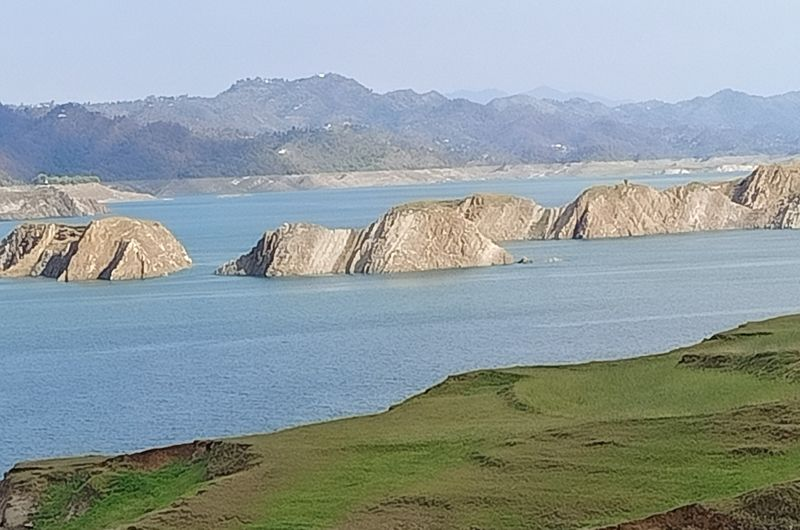
A multi-agency humanitarian assistance and disaster relief validation drill, ‘Exercise Raahat’ was also carried out at Kaushalya Dam near Panchkula on November 22. Involving elements of the Army, Air Force, national and state disaster relief forces, fire service, police and civil administration, it showcased the seamless coordination in undertaking joint disaster relief operations by incorporating new generation equipment.
India, Japan discuss reciprocal supply agreement for militaries
Defence Minister Rajnath Singh today conducted separate bilateral meetings with his counterparts from Japan and the Philippines, General Nakatani and Gilberto Teodoro, respectively. Rajnath Singh is on a three-day visit (November 20-22) to Vientiane, Laos. India and Japan deliberated on…
Defence Minister Rajnath Singh today conducted separate bilateral meetings with his counterparts from Japan and the Philippines, General Nakatani and Gilberto Teodoro, respectively.
Rajnath Singh is on a three-day visit (November 20-22) to Vientiane, Laos.
India and Japan deliberated on improving the interoperability between the militaries and reciprocal provision of supply and services agreement.
If agreed upon, it would allow Indian warships and planes to gets supplies, spares and immediate help at Japanese bases. The same facility would be available for Japanese forces at Indian bases.
India and Japan discussed participation of militaries in various bilateral and multilateral exercises. They also agreed to explore new areas of cooperation in the air domain.
The two sides reiterated the importance of defence industry and technology cooperation between the two countries. Both sides agreed for enhanced cooperation in co-production and co-development in the defence manufacturing sector.
Last week, India and Japan inked an agreement for co-development of a specialised stealth radio communication equipment used by Naval warships.
With Philippines, both sides agreed to expand and deepen cooperation in exchange of subject matter experts, defence industry, counter-terrorism, space and maritime domain.
Punjab to set up one more centre to train youth for police, armed forces
New camp to be established at Tango Shah village in Pathankot district
The Punjab government on Friday said it has given consent to establish a new Centre for Training and Employment of Punjab Youth (C-PYTE) camp in the border district of Pathankot to enable the state’s youth to get employment in the police, armed and paramilitary forces.
This decision was taken at an Executive Board meeting chaired by Aman Arora, Minister, Department of Employment Generation, Skill Development and Training.
At present, Punjab has 14 C-PYTE camps. A new camp would be established at Tango Shah village in Pathankot district and 5.5 acres of land has also been identified for it.
A total of 2,57,595 youth have been trained free of cost in these C-PYTE camps and 1,14,861 have been employed so far.
The Executive Board has also approved the introduction of National Skill Development Corporation certified security guard training into the syllabus of C-PYTE. This will be imparted through a training partner and a tie-up will be done with PESCO for placement of C-PYTE qualified youth.
Highlighting another important decision taken in the meeting, Arora said formal coaching for personality development and soft skills would also be initiated in C-PYTE camps to enable fruitful employment of the youth.
This move will help in further developing integrity, confidence, discipline and focus in the youth, besides motivating them to be better citizens and fight the drug menace.
Principal Secretary (Employment Generation, Skill Development and Training) Jaspreet Talwar apprised the Cabinet minister that C-PYTE camps have been working to instil values, including discipline, social concern and nation-building in the youth, besides training them to get employment in the police, armed and paramilitary forces.
C-PYTE Director General Major General (Retd) Rambir Singh Mann said that these decisions will have a very positive impact on the training and subsequent employment of the youth of the state.
The locals as well as Army on Friday celebrated the 77th anniversary of the historic military link-up of Poonch with the rest of the country. Poonch Link-Up Day is a major historical event in the annals of Jammu and Kashmir….
General Officer Commanding of Jammu-based White Knight Corps Lt Gen Navin Sachdeva honouring a veteran at the 77th Link-Up anniversary of Poonch on Friday. ANI
The locals as well as Army on Friday celebrated the 77th anniversary of the historic military link-up of Poonch with the rest of the country. Poonch Link-Up Day is a major historical event in the annals of Jammu and Kashmir. This day commemorates the successful military operation in 1948 during which the Indian Army linked up with the besieged Poonch after months of isolation during the first Indo-Pak war.
Lieutenant General Navin Sachdeva, General Officer Commanding, 16 Corps, remarked, “Today, we come together to honour the courage, resilience and unbreakable bond that the Awam and Indian Army have shared over the past 77 years.”
The siege of Poonch is unparalleled in the annals of military warfare. Lasting over a year, it stands out for the resilience demonstrated and the remarkable fact that no territory exchanged hands—a testament to the unwavering resolve of both the Indian Army and the people of Poonch.
On this day in 1948, the Army, under Brigadier Pritam Singh, successfully ended a gruelling 15-month siege of the border town of Poonch. Despite facing hunger, disease, and relentless attempts by the Pakistani Army to overrun the town, the indomitable spirit of the local residents and the Army prevailed.
Lt Col Suneel Bartwal, PRO Defence, said, “For the people of Poonch and the Indian Army, Poonch Day is more than a commemoration—it is a celebration of a living, breathing relationship. The district has been abuzz with activity for the past month, culminating in a series of vibrant events that reflect the festive spirit of the community”.
The celebrations were marked by enthusiastic participation in sports like football, cricket, hockey and volleyball. Villages competed passionately, showcasing remarkable talent and resilience. A bike rally was also flagged off on the occasion.
Lt Gen Navin Sachdeva interacted with the winners, lauding their determination and sportsmanship. In addition to sports, cultural events highlighted the district’s rich heritage, featuring traditional folk songs, dances, and poetry unique to Poonch, underscoring the unity and shared history of the region.
An ex-servicemen’s rally was a key highlight of the celebrations, with over 5,000 veterans in attendance. The local Army unit worked over six months to resolve pension anomalies, disbursing arrears of nearly Rs 26 lakh. New CSD and ECHS cards, scholarships, marriage grants and mobility equipment for disabled veterans were also distributed, thanks to partnerships with organizations like the War Wounded Foundation.
Water level low in dams, BBMB cautions member states
With the region experiencing deficient post-monsoon rain and snow cover in catchment areas of major dams, the Bhakra Beas Management Board (BBMB) has sounded a note of caution over water availability. “We have asked our member states to exercise caution…
With the region experiencing deficient post-monsoon rain and snow cover in catchment areas of major dams, the Bhakra Beas Management Board (BBMB) has sounded a note of caution over water availability.
“We have asked our member states to exercise caution in projecting their demand for water in the coming months given that the current storage as well as inflows are below normal for this time of the year,” a senior BBMB functionary said.
Punjab, Haryana, Himachal Pradesh, Delhi and Rajasthan are BBMB member states that draw water from Bhakra and Pong dams.
The water level recorded at the Bhakra Dam on the Sutlej in Himachal Pradesh was 1,633 feet on November 20, which is about 15 feet lower than the last year’s level. At the Pong Dam on the Beas, the water level was 1,343 feet, about 18 feet lower than that last year.
“The water level implies that that the current storage at Bhakra is about 63 per cent of its total capacity, which is 10 per cent below normal, while at Pong, the storage is 50 per cent, which is 15 per cent below normal,” the official said. Inflows into the reservoirs vary from day to day, depending on climatic conditions and environmental factors. At Bhakra, the inflow today was around 6,000 cusecs which is 10-12 per cent below normal.
Snowfall in the catchment areas of dams has also been below par. The Western Himalayas have not experienced any significant snowfall so far this season. “The region used to start getting snow by mid-October. There was a forecast of a western disturbance in mid-November, but it did not materialise. The present snow cover is estimated to be about one billion cubic metres, which is about 30 per cent less than what it should be,” the official said.
According to BBMB officials, no long-term forecasts for snowfall are issued and hence it is not feasible to determine future inflows. “Since water levels were already deficient at the end of the filling season, which ended in September, we have no choice, but to exercise caution during summer months while catering to member states for irrigation and power generation in case there is not enough precipitation during winters,” officials said.
Navy submarine hit by vessel off Goa, 2 fishermen missing
One of Indian Navy’s latest submarines was hit by a fishing boat about 120 km north west of Goa. Two of 13 fishermen on the boat are missing a search operation is going on, the Indian Navy said on Friday…
One of Indian Navy’s latest submarines was hit by a fishing boat about 120 km north west of Goa.
Two of 13 fishermen on the boat are missing a search operation is going on, the Indian Navy said on Friday adding the accident happened last night.
The Navy has ordered an investigation to ascertain the cause of the accident.
As per sources, the submarine was one of the latest Scorpene class vessels made by Mazagon Docks Shipbuilders in collaboration with French company, the Navl group. The submarine has not been damaged to that extent that its operations would be impacted. It is still sailing at sea.
At the time of accident, the submarine was just below the surface of the water and only its periscope was above the surface — possibly to run an onboard engine and that would need fresh air to operate.
MANIPUR’S unending crisis continues to torment the state, with the recent violence shattering the uneasy calm between the people of the Imphal valley and a section of the hill communities in the uplands. For a brief period, public attention shifted…
MANIPUR’S unending crisis continues to torment the state, with the recent violence shattering the uneasy calm between the people of the Imphal valley and a section of the hill communities in the uplands. For a brief period, public attention shifted to Shillong, capital of Meghalaya, where Chief Minister Conrad Sangma announced the withdrawal of his National Peoples Party’s (NPP) support to the state government.
The NPP, with seven MLAs, is the second largest group in the 60-member Assembly. The Assembly is dominated by the BJP, which holds a comfortable majority on its own with 37 MLAs and a coalition with smaller parties, including the JD(U) with six and the Naga Peoples Front with five. In a sharp denunciation of Chief Minister Biren Singh — the NPP remains in the NDA led by the BJP at the Centre — Sangma, who also heads the NPP, declared that “there was no confidence in our party in the current leadership of Biren Singh.”
Though he pledged to work for peace, the party clarified that it would rejoin the government only if Singh was removed.
However, removing Singh is easier said than done. While it has been a demand of the Kuki groups, which have felt deeply aggrieved, the latest massacre of a Meitei family of six — three women and three children — triggered angry attacks on the homes of MLAs and ministers in the Imphal valley. The majority Meitei population lives in the valley. Among the main driving forces of the Meitei campaign is the COCOMI (Coordinating Committee on Manipur Integrity), an NGO representing the valley.
While the Centre has been silent on the demand for Singh’s removal, interviews with people on both sides of the divide indicate that the main challenge before the BJP and the Centre is to find a replacement who is strong enough to handle Manipur’s complex politics. This would include not just holding the balance with allies but also controlling civil society, dealing with insurgent groups, managing the media and keeping dissident MLAs in check. Until May 2023, when the ethnic eruption began, this cash-strapped state was seen as a place of promise and growth.
If anything, Singh has been a survivor. Over the years, he has honed his skills, besting rivals and rebels several times. In 2022, he led the BJP to a majority in the Assembly elections, crushing the Congress. A few weeks ago, much noise was made about a purported letter signed by 19 party MLAs critical of the CM, but it fizzled out.
In June last year, barely two months into the internecine conflict, Singh set out for Raj Bhavan with a resignation letter in hand for the Governor. A large crowd stopped the convoy, snatched the letter and tore it up in a theatrical, well-publicised display of support.
But Singh continues to face huge internal challenges. On November 21, 10 MLAs from the Kuki tribe, including seven from the BJP, attacked the state government, accusing it of favouring the majority Meiteis.
“The CM has mismanaged the situation from the start,” said Yumnam Joykumar Singh, national vice-president of the NPP and a former deputy chief minister in Biren Singh’s first term. “He says he is protecting the territorial integrity of Manipur, but where is this integrity? We cannot even travel to Jiribam or Moreh.”
Even as talk swirls around the imposition of President’s rule without the dissolution of the state legislature, the CM is unfazed. There is also growing criticism that he has no role in the security architecture, known as the Unified Command, which coordinates the security operations in the state.
The Centre’s point person for Manipur has been Home Minister Amit Shah and New Delhi’s response to the latest spasm of violence has been to restore the draconian Armed Forces Special Powers Act (AFSPA) in areas from where it had been lifted and to fly 5,000 additional paramilitary troopers to Manipur to bolster the already substantial presence of security forces. This muscular approach to security issues has evoked mixed reactions.
When the Home Minster announced an ambitious plan earlier this year to fence the 1,643-km Indo-Myanmar border, Nagaland and Mizoram stiffly opposed it, while Tripura, Manipur and Arunachal Pradesh, all BJP-governed states, welcomed it. Singh’s government and BJP MLAs have opposed AFSPA’s reimposition. Some say that this concern stems from the fact that the sweeping law can be used against militias and vigilante groups, some of which are said to be close to the state’s leadership.
Editor Pradip Phanjoubam said in an interview that the primary challenge was the proliferation of weapons accompanied by acute lawlessness, with a growth of pro-government militias as well as armed rebels of virtually all ethnic groups. “Anybody who has a gun in his hand becomes the law,” he remarked. He described the bouts of fragile calm as an “absence of violence” in a “frozen conflict”. An undercurrent of grievances and unmet aspirations runs across the state, threatening to erupt at the slightest provocation.
The identity of the protagonist or antagonist often depends upon the perception of the viewer. In one incident, 10 Kuki men who were killed when fired upon by a CRPF unit, have been described variously as insurgents or village guards, depending on who is speaking. The precise circumstances which provoked the shooting remain unclear, as do many situations in Manipur.
A person with knowledge of the situation said that the Kukis had automatic weapons and had been trained by rebel cadres who sometimes led them there and elsewhere.
Revenge is also a factor. In the latest burst of violence in Jiribam, the ill-fated family, members of a relief camp, were walking to a market when an armed group took them captive. The group was reportedly seeking to avenge the death of a young Hmar woman allegedly killed by a Meitei vigilante group. The Hmars, while listed as a Scheduled Tribe, are part of the larger Kuki-Chin-Mizo group of tribes.
There are economic issues, too. Jiribam is a major entry point from Assam. It has a mixed population of Bengali-speaking Muslims, Meiteis and Hmars while a railhead, the earliest in Manipur, and a major highway have made it a commercial centre. Different political groups as well as competing non-state armed groups have long vied for control here. It is in such complex frameworks that the ongoing conflict needs to be understood.
The impact of Manipur’s tragedy appears limited to the Northeast. It has not become a live election or political issue across India. While warranting a few sentences in political campaigns across the country and rousing talks by opposition lawmakers in Parliament when issues conflagrate, it draws the occasional scathing editorial, commentary and news report in the media. Top officials and political leaders in Delhi remain occasionally engaged and deeply concerned, but the lack of a long-term strategy is visible.
State Stalwarts
DEFENCES FORCES RANKS
ARMY, NAVY, AIRFORCE RANKS
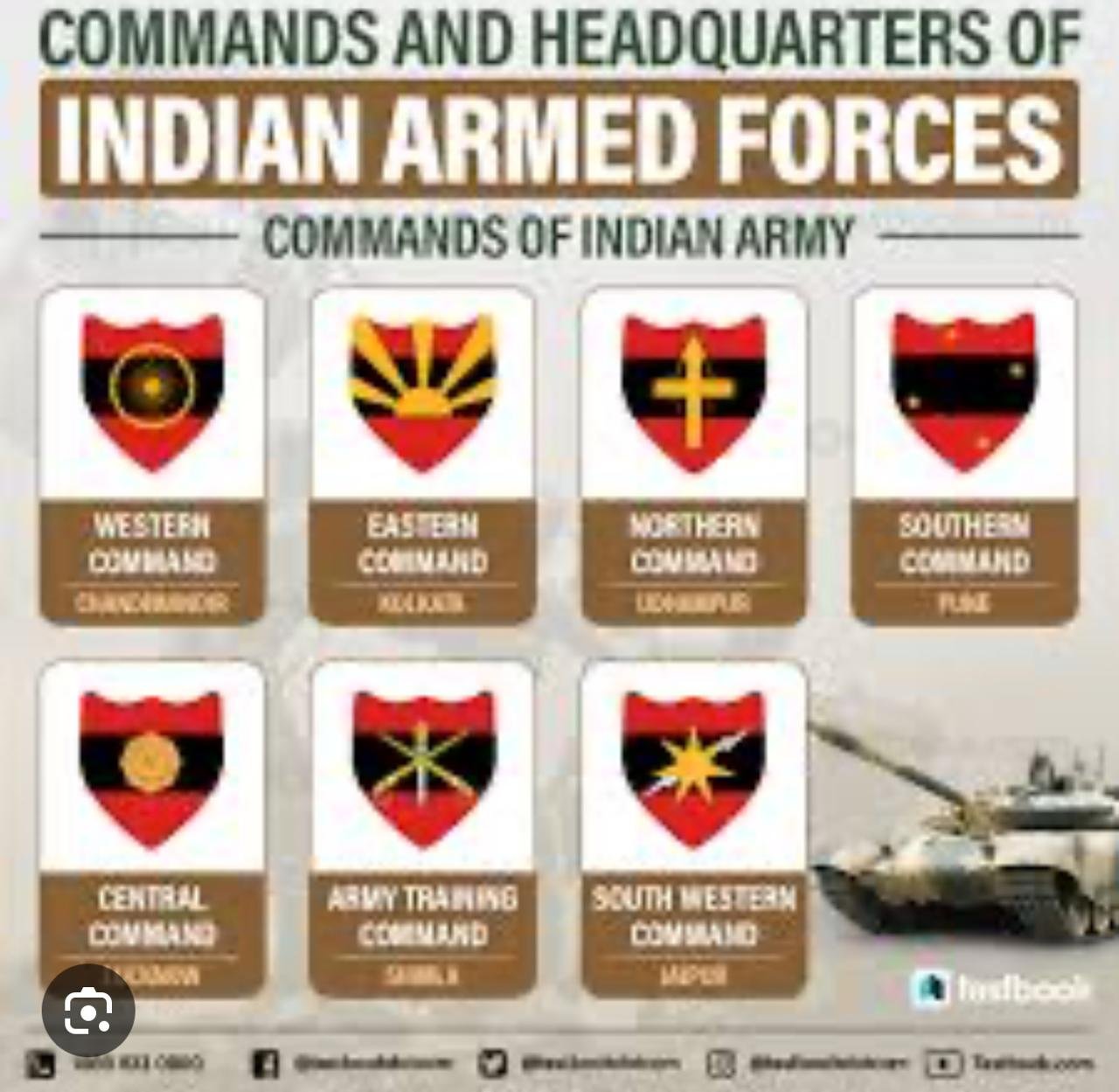
FORMATION SIGNS
FORMATION SIGNS
ALL HUMANS ARE ONE CREATED BY GOD
HINDUS,MUSLIMS,SIKHS.ISAI SAB HAI BHAI BHAI
CHIEF PATRON ALL INDIA SANJHA MORCHA
LT GEN JASBIR SINGH DHALIWAL, DOGRA
SENIOR PATRON ALL INDIA SANJHA MORCHA
MAJOR GEN HARVIJAY SINGH, SENA MEDAL ,corps of signals
.
.
PATRON ALL INDIA SANJHA MORCHA
MAJ GEN RAMINDER GORAYA , CORPS OF
sanjhamorcha303@gmail.com
PRESIDENT HARAYANA STATE CUM COORDINATOR ESM
BRIG DALJIT THUKRAL ,BENGAL SAPPERS
PRESIDENT TRICITY
COL B S BRAR (BHUPI BRAR)
PRESIDENT CHANDIGARH ZONE
COL SHANJIT SINGH BHULLAR
.
.
PRESIDENT PANCHKULA ZONE AND ZIRAKPUR
COL SWARAN SINGH
PRESIDENT SAS NAGAR (MOHALI)
COL BALBIR SINGH , ARTY
INDIAN DEFENCE FORCES
DEFENCE FORCES INTEGRATED LOGO
FORCES FLAGS
15 Th PRESIDENT OF INDIA SUPREME COMMANDER ARMED FORCES
Droupadi Murmu
DEFENCE MINISTER
Minister Rajnath Singh
CHIEF OF DEFENCE STAFF (2nd)
General Anil Chauhan PVSM UYSM AVSM SM VSM
INDIAN FORCES CHIEFS
CHIEF OF ARMY STAFF(29th)
General Upendra Dwivedi, PVSM, AVSM (30 Jun 2024 to Till Date)