



Sanjha Morcha

What’s New

Click the heading to open detailed news

Current Events :

web counter

Print Media Reproduced Defence Related News

We agree to ceasefire, but…: Putin thanks Trump, PM Modi for efforts to resolve Ukraine conflict

Reaching a ceasefire is ‘very important’, says Trump

Russian President Vladimir Putin has made his first public remarks on Ukraine’s willingness to negotiate a ceasefire, expressing gratitude to world leaders, including US President Donald Trump, Prime Minister Narendra Modi and Brazilian President Luiz Inacio Lula da Silva, for their efforts in addressing the conflict.

Speaking at a joint press conference with Belarus President Alexander Lukashenko on Thursday, Putin said Russia agrees with the proposals to cease hostilities but “proceeds from the assumption that this cessation should lead to long-term peace and eliminate the root causes of the crisis.”

When asked about Ukraine’s readiness for a ceasefire, Putin said, “As for Ukraine’s readiness for a ceasefire, I will tell you how I view it, of course. But I would like to start by thanking the President of the United States, Mr Trump, for paying so much attention to the Ukraine settlement. We all have enough of our own domestic affairs to attend to. But many leaders of states, among them the President of the People’s Republic of China, the Prime Minister of India, the Presidents of Brazil and the Republic of South Africa are addressing this issue and give it a lot of their time. We are grateful to all of them for that because this activity is aimed at achieving a noble mission — the mission of ending hostilities and loss of life.”

He further said, “We agree with the proposals to cease hostilities but proceed from the assumption that this cessation should lead to long-term peace and eliminate the root causes of this crisis.” He also referred to the recent US-Ukraine discussions in Saudi Arabia, suggesting that Ukraine’s willingness for a ceasefire was likely influenced by American pressure.

“Now, on Ukraine’s readiness to cease the hostilities. You know, on the face of it, the US-Ukraine meeting in Saudi Arabia may look like the Ukrainian side made this decision under pressure from the United States. In fact, I am absolutely convinced that the Ukrainian side should have asked the Americans for this decision most emphatically, in view of the situation evolving on the ground, as has just been mentioned here,” Putin said.

On March 11, Ukraine expressed readiness to accept the US proposal to enact an “immediate, interim 30-day ceasefire,” which can be extended by mutual agreement of the parties and is subject to Russia’s acceptance and concurrent implementation.

US President Donald Trump welcomed Ukraine’s agreement to the ceasefire after the peace talks in Jeddah, Saudi Arabia and further affirmed hope that Russia will also agree to it. Stating that soldiers of both Russia and Ukraine are being killed in this “horrible war”, Trump said reaching a ceasefire is “very important”.

Earlier in February, PM Modi welcomed Trump’s efforts to resolve the Russia-Ukraine conflict and reiterated India’s position that the conflict should be resolved on the negotiating table.

He also reiterated that India’s stance in the conflict is not neutral, but rather it is on the side of peace. The Prime Minister emphasised that he has himself met leaders of both Russia and Ukraine and also pointed to his ‘this is not an era of war’ remark that he made in the presence of Russian President Putin.

“I have always been in close contact with Russia and Ukraine. I have met the leaders of both countries. Many people are in a misconception that India is neutral, but I want to reiterate that India is not neutral; we are on a side, and that is peace,” PM Modi said in a joint presser at the White House.

He further reiterated India’s position that a solution to the conflict can’t be found on the battlefield and appreciated President Donald Trump’s efforts in this direction.

“I have said that ‘this is not a time of war’ in front of the media when President Putin was with me. Even today, my conviction is that the solutions to war cannot be found on the battlefield, and ultimately, we have to be at the table,” PM Modi said.

He added, “India believes that the solution to the war can be found only when the issue is discussed in a forum where both countries (Russia and Ukraine) will be present. The efforts made by President Trump – I support, and welcome it. I hope he succeeds as soon as possible.” In July last year, PM Modi travelled to Russia to participate in the 22nd India-Russia Bilateral Summit. He also travelled to Ukraine in August last year.

During the bilateral meeting with Ukrainian President Volodymyr Zelenskyy, PM Modi emphasised India’s position of peaceful resolution of the conflict through dialogue and diplomacy.

He said that India was ready to play an active role in the path to peace and progress. Russia and Ukraine have been engaged in war since February 2022.

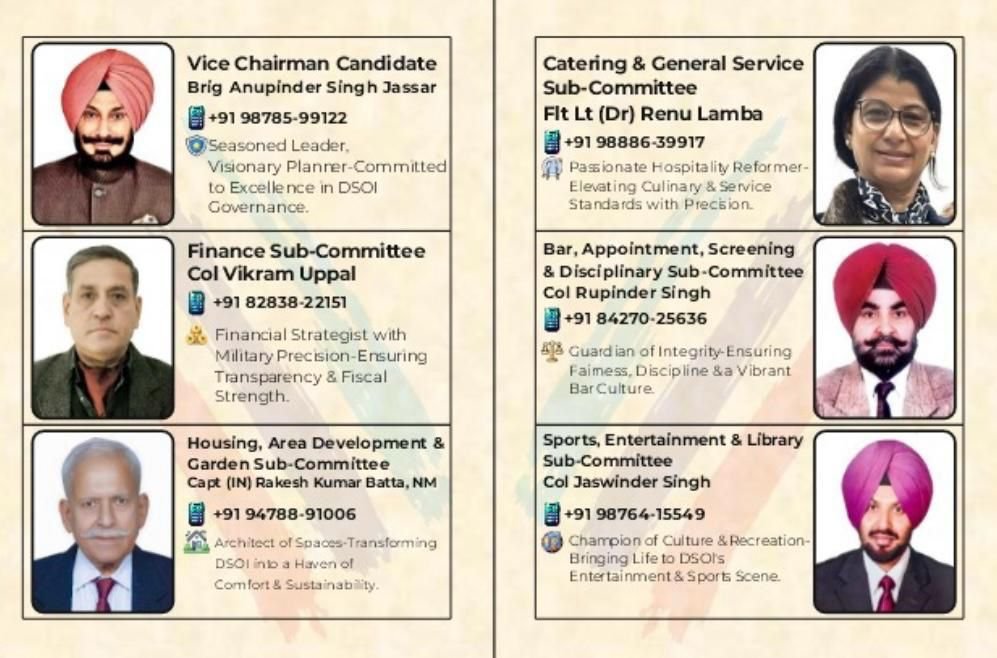
Victor Team consists of reps of all arms, Army,Navy,Air Force and a lady officer for DSOI Managing Committee Elections on 16 March 2025

DSOI CHANDIGARH
Managing Committee Elections-March 2025

Team Victor Candidates

  1. Brig AS Jassar, Rajput Regt- Vice Chairman
  2. Capt (IN) Rakesh Batta, NM- Housing & Gardens

  3. Col Rupinder Singh, GUARDS- Bar & Discipline

  4. Col Vikram Uppal, AAD- Finance
  5. Col Jaswinder Singh, ASC- Sports & Entertainment
  6. Flt Lt (Dr) Renu Lamba, IAF- Catering

China Is Mapping The Seabed To Unlock A New Edge In Warfare

China is actively engaged in mapping the seabed across vast areas, particularly in the Indian Ocean, under the guise of civilian research. This effort is part of a broader strategy to enhance its military capabilities, especially in submarine warfare.

The Center for Strategic and International Studies (CSIS) has noted that while these surveys contribute to scientific and commercial endeavours, they also provide critical data for the People’s Liberation Army (PLA) to plan potential military operations.

Chinese research vessels, such as those from the Xiang Yang Hong series, have been conducting systematic mapping of the sea floor in the Indian Ocean. These operations cover extensive areas, including strategic locations like the Ninetyeast Ridge, which could be crucial for submarine operations due to its underwater terrain.

The data collected can help submarines navigate safely and remain undetected, which is essential for effective submarine warfare.

This seabed mapping initiative is part of China’s broader naval expansion and modernization efforts. The People’s Liberation Army Navy (PLAN) has become the largest in the world and is increasingly capable of projecting power beyond its regional waters.

China’s maritime ambitions are driven by economic interests, territorial disputes, and a desire for global influence. The Indian Ocean is a key region for China’s strategic expansion, as it seeks to secure its maritime communication lines and access to resources.

China’s dual-use approach to oceanographic research—where civilian vessels also serve military objectives—raises concerns about the nature of these activities.

Over 80% of China’s active research vessels have demonstrated suspect behaviour or possess organisational links suggesting involvement in advancing Beijing’s geopolitical agenda.

This strategic mapping of the seabed is a critical component of China’s efforts to enhance its military capabilities and secure its interests in the Indo-Pacific region.


India Develops Most Powerful 300 kW Directed-Energy Laser Weapon ‘Surya’ With 20 km Range

According to information published on the Facebook account of the IADN Centre on March 9, 2025, the DRDO is developing the 300 kW Directed-Energy Weapon (DEW) laser, named Surya, which boasts a remarkable range of 20 kilometres. 

India’s Defence Research and Development Organisation (DRDO) has made significant advancements in the field of directed-energy weapons. This system boasts an operational range of 20 kilometres and is designed to neutralise aerial threats such as drones, missiles, and other airborne projectiles. The Surya laser weapon is notable for its high-power output and extended engagement distance, which enhances defence efficiency and provides a cost-effective solution compared to traditional missile-based air defence systems.

The Laser Science and Technology Centre (LASTEC), DRDO’s lead laboratory for laser technology, is spearheading the project. While DRDO has previously developed a 25-kilowatt laser capable of targeting ballistic missiles within a 5-7 km range, this new initiative represents a significant leap in power and capability.

The 300-kilowatt system aligns with global trends in directed energy weapons, such as the U.S. Army’s development of similar high-energy laser prototypes. DRDO’s efforts reflect its commitment to integrating advanced technologies into India’s defence infrastructure, although challenges remain in scaling these systems to operational readiness.

Image Courtesy: Varun Karthikeyan

Key Features of Surya:

Power Output: 300 kW, making it one of the most powerful laser systems globally.

Operational Range: 20 kilometres, allowing for effective engagement of targets at a considerable distance.

Target Capabilities: Designed to neutralise high-speed threats like UAVs, rockets, and incoming missiles.

Advantages: Offers unlimited firing capability as long as a power source is available, reducing logistical burdens and costs associated with traditional ammunition.

The Surya laser weapon system represents a significant advancement in India’s defence capabilities, particularly against modern air-based threats. While India’s Surya is still under development, it is expected to rival these advanced systems in terms of power and precision.

The global competition underscores the growing importance of laser weapons in modern warfare due to their ability to engage targets at the speed of light with minimal collateral damage.

However, challenges remain for all nations, including environmental limitations and engineering hurdles in scaling up power without compromising mobility. As countries continue to innovate, laser weapons are likely to become indispensable in addressing emerging threats such as drones and hypersonic missiles, marking a transformative shift in military strategy. India’s progress with the Surya thus highlights its determination to secure a competitive edge in this rapidly evolving domain.

With a high-power output of 300 kW, it is designed to neutralize high-speed targets such as unmanned aerial vehicles (UAVs), rockets, and incoming missiles. Its range of 20 kilometres provides substantial stand-off capability, enabling the system to engage threats at a safe distance before they reach critical assets.

These features make it highly effective in scenarios involving missile defence, drone swarms, and other airborne challenges. By leveraging the precision, speed, and adaptability of laser technology, the Surya system enhances India’s ability to counter emerging threats in modern warfare, offering a cost-effective and efficient solution with minimal collateral damage.

The development of Surya places India among a select group of countries, including the United States, China, Russia, and Israel, that are pioneering high-power laser technologies for defence applications. While other countries have developed notable systems, such as the U.S. AN/SEQ-3 Laser Weapon System and China’s Sheng-1 laser, India’s Surya stands out for its power and range.

The Surya laser weapon is expected to strengthen India’s multi-layered air defence strategy and contribute significantly to its defence capabilities against emerging threats like drone swarms and hypersonic missiles. Future advancements may include the development of even more powerful laser systems, potentially reaching the 1 MW class, to counter long-range ballistic threats.


Air Chief stresses rapid capability enhancements to counter emerging security challenges

Emphasises the need for integrated training and operational synergy among the three Services of Indian Armed Forces to enhance combat effectiveness

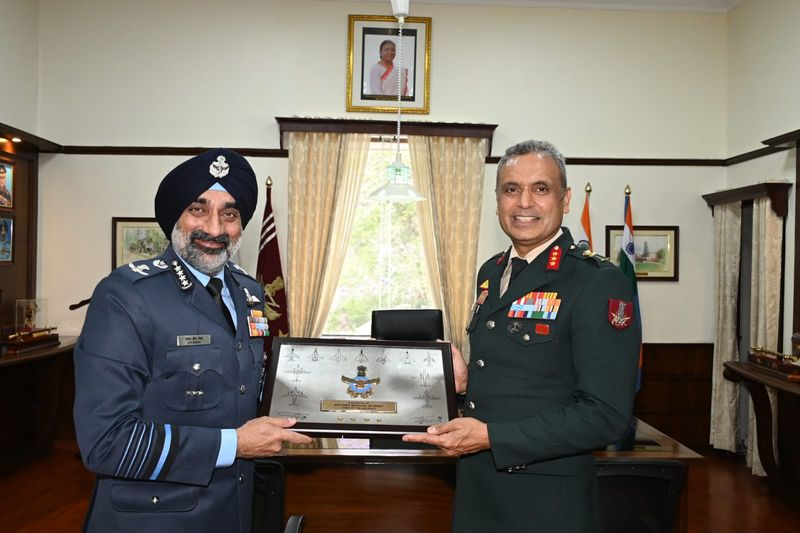
Chief of the Air Staff, Air Chief Marshal AP Singh underscored the need for rapid capability enhancements to counter emerging security challenges in the evolving geo-strategic landscape. 

Addressing the faculty and student officers from the Indian Armed Forces undergoing the 80th Staff Course at the Defence Services Staff College (DSSC), Wellington, he urged them to embrace change, critically assess evolving threats and design adaptive strategies for future conflicts.

Stressing the importance of jointmanship, he emphasised the need for integrated training and operational synergy among the three Services to enhance combat effectiveness.

In his address, the Air Chief also provided a strategic perspective on the Indian Air Force, its ongoing capability development initiatives, and the importance of unified operations in modern warfare. 

He highlighted the accomplishments, resilience and unwavering commitment of IAF personnel in safeguarding India’s national interests.

The Air Chief visited the DSSC on 11-12 March, during which he was also briefed on the institute’s training activities and its emphasis on fostering interservice synergy, a key aspect of modern military preparedness. 

Set up in 1947, the College trains officers of all three Services of the Indian Armed Forces and selected officers from the paramilitary forces and the civil services as well as officers from friendly foreign countries for command and staff appointments.


Soldier injured in firing along LoC in Rajouri

An Army personnel was injured in the Nowshera sector of Rajouri district after being hit by suspected sniper fire from across the Line of Control (LoC) early Wednesday. The soldier was manning a forward post in the Kalsiyan area when…

An Army personnel was injured in the Nowshera sector of Rajouri district after being hit by suspected sniper fire from across the Line of Control (LoC) early Wednesday. The soldier was manning a forward post in the Kalsiyan area when he was struck by a bullet from across the border.

Although there has been no official confirmation from the Army, sources indicated that the sniper fire targeted the soldier at a forward post in the Nowshera sector. He was immediately evacuated to the Army hospital in Udhampur, where he is currently undergoing treatment.

It remains unclear whether the shot was fired by the Pakistan Army or terrorists, as the incident occurred suddenly. Due to the area’s dense vegetation, maintaining a clear line of sight on all activities is challenging. Additionally, snipers across the LoC use long-range rifles, allowing them to fire without approaching the border fence.

Following the incident, a search operation was launched, as security forces suspected that terrorists might attempt to infiltrate the area after diverting the troops’ attention.


Why it is vital to document a national security policy

Former J&K Governor NN Vohra is repeatedly warning the establishment to reform and build deterrence.

article_Author
Maj Gen Ashok K Mehta (retd)

N N Vohra, a passionate advocate of defence and national security, has held important positions such as Defence Secretary and Principal Secretary to the PM. India’s National Security Challenges is the Vohra-edited seminal collection of essays which he has discussed at the India International Centre with both Chiefs of Defence Staff, the late Gen Bipin Rawat and Gen Anil Chauhan, and held several public debates.

In the latest discussion on February 28, he emphasised two issues: the absence of a national security policy; and lack of transparency in the national security discourse. He listed the litany of woes: single service approach, inadequate higher defence management, lack of cross-domain connects and failure to integrate internal security with external security challenges. He has advocated a separate ministry for internal security. Along with former Foreign Secretary Shyam Saran, he recalled that three national security policy drafts were prepared, one endorsed by NSA Shiv Shankar Menon, but none saw the light of day due to fear of accountability by the political leadership. A fourth draft is likely lying with NSA Ajit Doval, collecting dust.

During his one-on-one with General Chauhan last year, Vohra got him to admit that a national security doctrine was indeed required and “something was being written.” However, earlier, on May 29, 2024, during the release of Lt Col Gautam Das’(retd) book Indian Art of War for Future Challenges, when asked about the national security policy, General Chauhan had replied: “A written policy is not needed….We have fought wars for the last 70 years and have managed well….” Elsewhere, later that year, one of General Chauhan’s acolytes, a cerebral General, concurred with him on not codifying the doctrine, saying: “It is in our head.”

Modern statecraft is managing and safeguarding national interest predicated on written plans and contingencies for execution by different instruments of state. The security strategy should emanate from a holistic strategic defence and security review, that would lead to defence and security planning, resource allocation as a percentage of GDP, higher defence organisation and capability creation with inherent flexibility in an era of uncertainties and massive disruptions. Deterrence, diplomacy and development have to adapt to changes.

US President Trump has set the cat among the pigeons over his plan to end the Ukraine conflict. Suddenly, Europe and NATO, likely to be decoupled from the US, are scrambling to enhance defence budgets not just to 2 per cent, but 5 per cent. Russia is the enemy, but apparently not for the US. In 1991, after the dissolution of the USSR, CDS Field Marshal Lord Bramall told me that the UK no longer had an enemy. “We’re looking for one,” he said. They have found one.

Lack of long-term defence planning has led to frightening operational situations. Among many, the one staring India in the face for two decades has now exploded: IAF fighter squadrons depleting to less than 31 squadrons, when 42 squadrons are authorised. In an unprecedented admonition of the Hindustan Aeronautics Limited (HAL), Air Chief Marshal AP Singh recently said that HAL had failed to provide LCA at the promised rate of supply, adding: “I am not confident of HAL. It is not in mission mode.” While the IAF requires 35-40 jets every year, HAL has promised 24 LCA MK1A in 2025. The rest, Singh says, can be provided by the private sector. With the AON for 114 MRCA out of sight and no mention of GE414 engine in the Trump-Modi joint statement last month, the IAF will face a daunting situation that, one former IAF C-in-C told me last week, would render the IAF unable to support a two-front situation. He recalled that during his time (1986-2002), the IAF held 39 and a half squadrons, with defence spending being 3-4 per cent of the GDP.

Christopher Clary, international affairs and security expert, currently with the University of Albany, has reported that between 2014 and 2024, while China and Pakistan added 435 and 31 jets, respectively, India’s inventory depleted by 151 jets (International Institute for Strategic Studies figures).

Prime Minister Narendra Modi believes this is not an era of war and describes India as a land of Buddha, not yuddha. That is why his reliance on Agniveer. Deterrence and capacity-building cannot be developed on the assumption that there would be no war and with just 1.9 per cent of GDP for defence.

Vohra’s focus on opacity is illustrated by the wide disparity between the Chinese and Indian readouts after the October 2024 disengagement agreement in east Ladakh. The Working Mechanism for Consultation and Coordination on India–China Border Affairs (WMCC) statement of December 5, 2024, saying that all issues that emerged from 2020 had been resolved contradicted Foreign Minister Jaishankar’s statement in Parliament on December 3: “We will be discussing de-escalation (de-induction) as well as effective management of our activities in the border areas.” There is no transparency on patrolling rights, grazing and future of buffer zones. Both former Army Chiefs — General Naravane and General Pande — and COAS General Dwivedi have called for the restoration of status quo ante (May 2020), a pipedream.In January this year, Defence Minister Rajnath Singh declared 2025 as the year of reforms, though the political elite has failed to appreciate the strength of military power.

Marc Faber, military historian, has said: “India continues to be ambivalent about power; has failed to coin a strategic roadmap (national security policy) commensurate with its growing economic wealth and use military instruments in support of national interests.”

India’s complacency stems from the illusion that it is in a sweet spot. It is lack of political will that fails the government in documenting a security policy and implementing reforms that ensure there is no deterrence failure, as in Kargil, attacks on Parliament, Mumbai and Galwan. Vohra is repeatedly warning the establishment to reform and build deterrence.


2 days of clashes and revenge killings leave over 1,000 people dead in Syria

The clashes mark a major escalation in the challenge to the new government in Damascus, three months after insurgents took authority after removing Assad from power

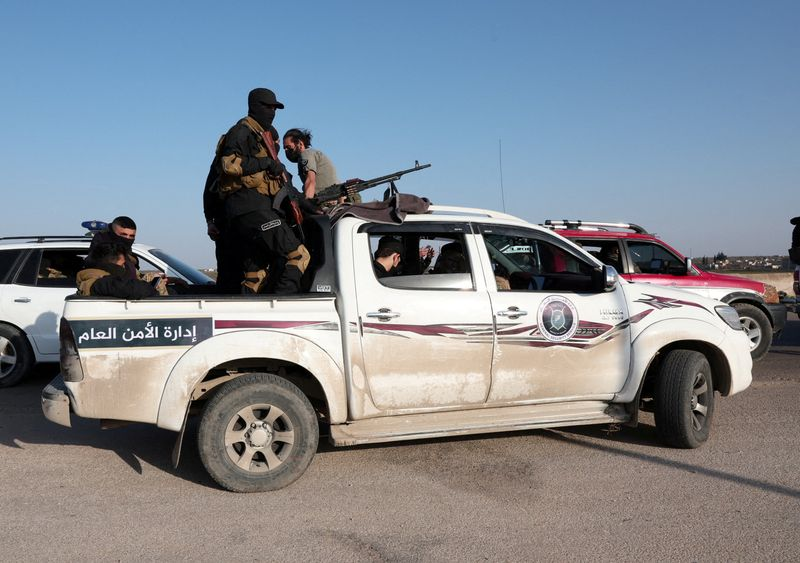
The death toll from two days of clashes between security forces and loyalists of ousted Syrian President Bashar Assad and revenge killings that followed has risen to more than 1,000, including nearly 750 civilians, a war monitoring group said Saturday, making it one of the deadliest outbreaks of violence since Syria’s conflict began 14 years ago.

The Britain-based Syrian Observatory for Human Rights said that in addition to 745 civilians, 125 members of the government security forces and 148 militants with armed groups affiliated with deposed President Bashar Assad were killed.

The observatory also said that electricity and drinking water were cut off in large areas around the coastal city of Latakia and many bakeries shut down.

The clashes, which erupted on Thursday, marked a major escalation in the challenge to the new government in Damascus, three months after insurgents took authority after removing Assad from power.

The government has said that they were responding to attacks from remnants of Assad’s forces and blamed “individual actions” for the rampant violence.

The revenge killings that started on Friday by Sunni Muslim gunmen loyal to the government against members of Assad’s minority Alawite sect are a major blow to Hayat Tahrir al-Sham, the faction that led the overthrow of the former government. Alawites made up a large part of Assad’s support base for decades.

Residents of Alawite villages and towns spoke to The Associated Press about killings during which gunmen shot Alawites, the majority of them men, in the streets or at the gates of their homes. Many homes of Alawites were looted and then set on fire in different areas, two residents of Syria’s coastal region told the AP from their hideouts.

They asked that their names not be made public out of fear of being killed by gunmen, adding that thousands of people have fled to nearby mountains for safety.

Residents of Baniyas, one of the towns worst hit by the violence, said bodies were strewn on the streets or left unburied in homes and on the roofs of buildings, and nobody was able to collect them. One resident said that the gunmen prevented residents for hours from removing the bodies of five of their neighbors killed Friday at close range.

Ali Sheha, a 57-year-old resident of Baniyas who fled with his family and neighbors hours after the violence broke out Friday, said that at least 20 of his neighbors and colleagues in one neighborhood of Baniyas where Alawites lived, were killed, some of them in their shops, or in their homes.

Sheha called the attacks “revenge killings” of the Alawite minority for the crimes committed by Assad’s government. Other residents said the gunmen included foreign fighters, and militants from neighboring villages and towns.

“It was very very bad. Bodies were on the streets,” as he was fleeing, Sheha said, speaking by phone from nearly 20 kilometers (12 miles) away from the city. He said the gunmen were gathering less than 100 meters from his apartment building, firing randomly at homes and residents and in at least one incident he knows of, asked residents for their IDs to check their religion and their sect before killing them. He said the gunmen also burned some homes and stole cars and robbed homes.

The Britain-based Syrian Observatory for Human Rights, a war monitor, said that 428 Alawites have been killed in revenge attacks in addition to 120 pro-Assad fighters and 89 from security forces. The Observatory’s chief Rami Abdurrahman said that revenge killings stopped early Saturday.

“This was one of the biggest massacres during the Syrian conflict,” Abdurrahman said about the killings of Alawite civilians.

The previous figure given by the group was more than 200 dead. No official figures have been released.

A funeral was held Saturday afternoon for four Syrian security force members in the northwestern village of Al-Janoudiya after they were killed in the clashes along Syria’s coast. Scores of people attended the funeral.

Syria’s state news agency quoted an unnamed Defense Ministry official as saying that government forces have regained control of much of the areas from Assad loyalists. It added that authorities have closed all roads leading to the coastal region “to prevent violations and gradually restore stability.”

On Saturday morning, the bodies of 31 people killed in revenge attacks the day before in the central village of Tuwaym were laid to rest in a mass grave, residents said. Those killed included nine children and four women, the residents said.

The most recent clashes started when government forces tried to detain a wanted person near the coastal city of Jableh, and were ambushed by Assad loyalists, according to the Observatory.


Protester killed as clashes erupt with security forces in Manipur

Violence after roads blocked over Centre’s bid to restore free movement in state

One person was killed and 40 others, including women, injured in clashes between protesters and security personnel as tensions escalated across Manipur on Saturday, the first day of the opening of roads and highways as directed by the Centre.

Home Minister Amit Shah had at a security review meeting on March 1 issued instructions to ensure free movement for people on all roads in the state from March 8 and deal sternly with those trying to create obstructions.

The protesters, mainly led by Kuki groups that have been opposing the Centre’s move and seeking a separate union territory status in tribal-majority areas, started blocking roads and highways in tribal-dominated Kangpokpi and Senapati districts on Saturday morning, leading to violent skirmishes with security personnel, who fired multiple rounds of teargas shells to disperse them.

Several state transport buses were blocked across Manipur by protesters, who were seen in videos raising “Meitei go back!” slogans and singing the national anthem to deter security personnel. The police and security personnel resorted to lathicharge on protesters, who included women.

Kuki-Zo Council calls for shutdown

The Kuki-Zo Council, the apex body of tribal communities in Manipur, announced an indefinite shutdown in all tribal-dominated areas from midnight of March 8. Kuki groups are seeking a separate UT status in all tribal dominated areas, but the Centre has made it clear that any such demand is non-negotiable.

One person was reportedly killed due to a bullet injury at Keithenmanbi village in Senapati district after security personnel resorted to firing during a skirmish with protesters there.

Tensions also escalated in Kangpokpi district as security forces fired multiple rounds of teargas shells to disperse protesters blocking the highway.

The demonstration, led by anti-free movement groups, disrupted traffic along the crucial National Highway-2 route.

The unrest was triggered after a mob pelted a Manipur State Transport (MST) bus with stones in Kangpokpi district’s Gamgiphai. The incident occurred shortly after inter-district bus services resumed from Imphal to the hill districts, marking the first such attempt since the ethnic violence erupted two years ago.

In December 2024, a similar effort by the state government to restart public transport services had failed when no passengers showed up at the MST station in Imphal’s Moirangkhom.

Meitei peace march stopped

A peace march by a Meitei body was stopped in Imphal West district on Saturday as it coincided with the Centre’s initiative to restore free movement of people, police said. Security forces stopped the procession by the Federation of Civil Society Organisations at Sekmai and asked the organisers to join the initiative.

With heavy security deployment, including an Assam Rifles convoy escorting MST buses, authorities were on high alert to prevent further disruptions.