

Current Events :

















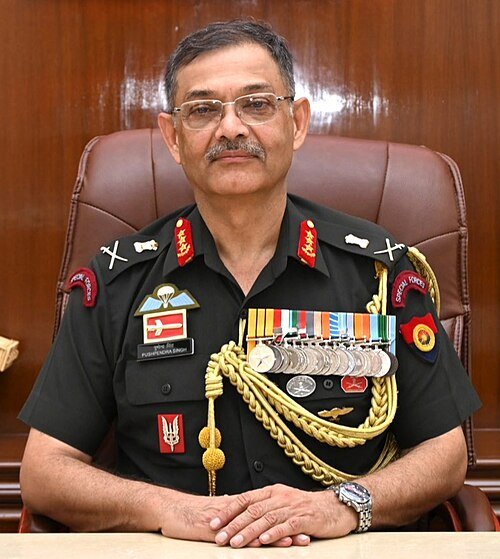





Colonel Pushpinder Bath, currently posted at army headquarters in New Delhi, claimed he was assaulted on intervening night of March 13

Two days after the Patiala police registered an FIR against unknown men for a brawl near Government Rajindra Hospital, an army officer and his wife have alleged police brutality.
Colonel Pushpinder Bath, currently posted at the army headquarters in New Delhi, claimed he was assaulted on the intervening night of March 13. He is currently undergoing treatment along with his son who was also attacked allegedly “by policemen posted in Patiala”.
While the police registered an FIR against unidentified people, the family members of the army officer have accused Punjab Police officials of assaulting the father and son. It has been learnt that the police personnel were in civil dress when the scuffle broke out and were on their way to the hospital following an encounter with kidnappers in which a 7-year-old child was rescued and an accused was shot dead.
However, one of the policemen, who was accused by the army officer of assaulting him, claimed that it was the colonel and his son who attacked him. “They were inebriated and attacked us”, he said.
Police officials say that they have registered FIR on the statement of a dhaba owner and “a probe is on”.
While addressing a press conference in Patiala, Jaswinder Bath, wife of Col Pushpinder Bath, claimed that her husband along with their son reached a dhaba near Government Rajindra Hospital.
She claimed that while they were standing outside the car and having their food, the accused police officers reached the spot and asked the Colonel to remove his car as they had to park their car. “When my husband objected to their language, one of them punched him. Later, all the police personnel thrashed my husband and my son leaving them injured,” said Jaswinder. “Police is playing a partisan role despite CCTV footage and the accused cops identified by us”, she said.
“We are looking into the matter and action would be taken”, said a senior police official.
German historian Kiessling’s book nearly confirms the first official admission by a former ISI chief that Pakistan was deeply connected with terrorism against India.


There are two reasons why we should study Lt Gen Ahmed Sharif Chaudhry’ s (ISI) March 14, 2025, allegation that India was the “mastermind” of the March 11 train hijack by the Baloch Liberation Army (BLA) together with German historian Hein G Kiessling’s 2016 book, “Faith, Unity, Discipline: The ISI of Pakistan“.
The first reason is because Kiessling’s book is considered to be an “authorised” history of the ISI or “approved” by it since the author had to include in his book eight pages sent by the ISI. These pages comprise the two appendices titled “Realities Vs Misperceptions — Balochistan” and “Indian/RAW’s involvement in Pakistan”.
The second reason is that the book nearly confirms the first official admission by Hamid Gul, the then ISI chief, that Pakistan was deeply connected with terrorism against India.
This admission was made in 1988 during the secret Track-II meetings between Hamid Gul and his Indian counterpart, the late AK Verma, held in Amman and Geneva on the suggestion of the then Jordanian Crown Prince Hasan bin Talal. The meetings were approved by the top-level leaderships of both India and Pakistan. The purpose was to improve bilateral relations and reduce tensions. The topics discussed were Khalistan and Siachen.
I could reveal more on the Gul-Verma meetings, as I was Verma’s Chief Staff Officer at that time. Although I did not attend those meetings, Verma had briefed me fully to draft his reports. He said that he was quite startled when Gul dramatically admitted, at the very first meeting, that they (ISI) were behind the violent Khalistan activities in India.
Gul further said that Pakistan was “scared” of India and its military strength as it was a much larger country and the only way it could defend itself was through ‘non-state actors’. He offered to stop the activity if India reciprocated and instilled confidence that it had no territorial ambitions on Pakistan. This included the festering dispute over Siachen.
After putting the onus of creating a favourable atmosphere entirely on India, Gul offered, as a measure of goodwill, to release some Sikh regiment deserters who had taken refuge in Pakistan. He carried out the promise — some deserters were pushed back into India.
However, the talks fizzled out since the military leaderships of both countries did not accept Gul’s plan of settling the Siachen dispute.
Kiessling also confirms in his book that Gul released four Sikh soldiers “to carry the talks forward.” These soldier deserters came from the Indian army, had sought refuge in Pakistan and were in ISI custody.
Now, let’s come back to the present situation. Appendix 2 “Indian/RAW’s involvement in Pakistan” in Kiessling’s book, authored by the ISI, uses the same language as Lt Gen Ahmed Sharif Chaudhry has now used in his allegation — that India was the “mastermind” in fomenting “instability in Pakistan”.
But the Appendix adds that this was in collusion with Afghan National Directorate of Security (NDS) by providing financial support, training and weapons to Balochistan sub-nationalists and others.
The Appendix criticised PM Narendra Modi and senior Indian officials for following the policy of “offensive defence” and a challenge “you do another 26/11, you lose Balochistan.” It quoted former US Defense Secretary Chuck Hagel, while he was a senator, that “India was financing problems in Pakistan.” It also referred to American writer Christine Fair’s claim that Indian consulates in Afghanistan were “pumping money into Balochistan.”
In 1993 and 1994, I had led the Indian intelligence teams for our annual dialogue with the US counterparts on terrorism facing both countries. I had then pointed out to my interlocutors about the danger of neglecting terrorism emanating from Pakistan and treating it as a human rights problem, as some unregistered lobbyists like Ghulam Nabi Fai and Gurmeet Singh Aulakh had been saying.
However, it was only in 2011 that Fai was arrested by the FBI for concealing a receipt of $3.5 million from the ISI, while pretending to be a lobbyist.
Also, America used to follow, especially prior to 9/11, a peculiar policy on terrorism originating from Pakistan. Its annual reports on terrorism (“Patterns of Global Terrorism”) released by the US Coordinator for Counter Terrorism, which were then the most comprehensive compendium of terrorist organisations in the world, used to have a preamble (1996 Amendment to the Export Administration Act of 1979) listing the countries that had cooperated with the US government in apprehending, convicting and punishing terrorists responsible for attacking US citizens and interests.
That this stipulation used to cloud their final judgment on certain countries supporting terrorism was borne out by the report for 2000 in which Pakistan, which was criticised for supporting Kashmiri militants and the Taliban, earned high marks for its cooperation with the US to “enhance security for US facilities and personnel”.
Thus, over the years, Pakistan found an easy way to please America and escape the adverse list. The first was the arrest in Pakistan in 1997 of Pakistani national Mir Aimal Kansi, who had fired at and killed two CIA employees on January 25, 1993 outside the CIA headquarters in Langley and escaped to Pakistan.
The second was Ramzi Yousef of al-Qaida, who was responsible for the February 26, 1993 New York World Trade Center basement truck bombing which had killed six and injured 1,042. He was arrested by the ISI in Islamabad in 1995.
In December 2018, President Donald Trump requested the then Pakistan Prime Minister Imran Khan to give logistic help to US Special Representative Zalmay Khalilzad for the Afghan peace talks, warning that Islamabad’s assistance was “fundamental” to the health of the two countries’ strained relationship.
Similarly, on March 4, 2025, President Trump lauded Pakistan’s help in capturing Mohammad Sharifullah, the top Afghan Islamic State terrorist responsible for the August 2021 bombing at Kabul airport which had killed several American soldiers. Pakistan Prime Minister Shehbaz Sharif thanked Trump for “appreciating Pakistan’s role and support in counterterrorism efforts across the region.”
Views are personal
The Army Veterans of the SS-15 Batch from Officers Training School, Madras, had a heartwarming get-together over lunch at KOI, bringing together nine officers and their lady wives (total 17 attendees) from the Tricity region.
For many, it was an emotional reunion, reconnecting with comrades after 52 long years. The afternoon was filled with introductions, reminiscing about our training days, and sharing updates about our families. The camaraderie, laughter, and shared memories made the gathering truly special.
As we parted ways, a unanimous promise was made—to meet every quarter and continue strengthening the bonds forged over five decades ago.
Long live the camaraderie and friendship of SS-15 Course Veterans!
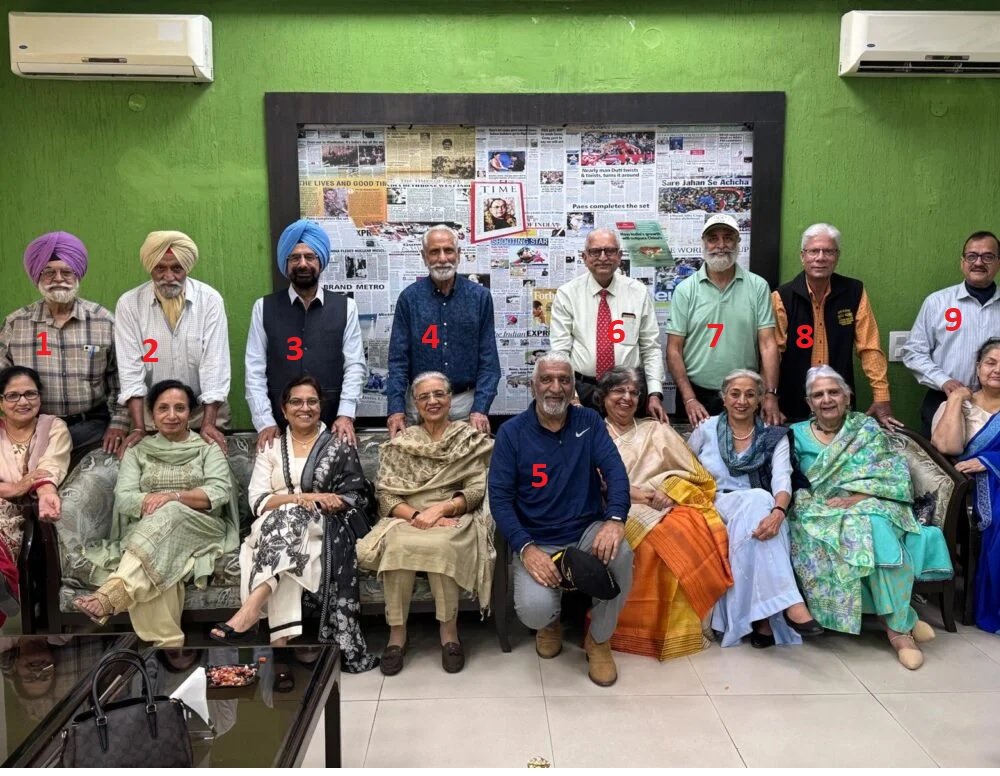
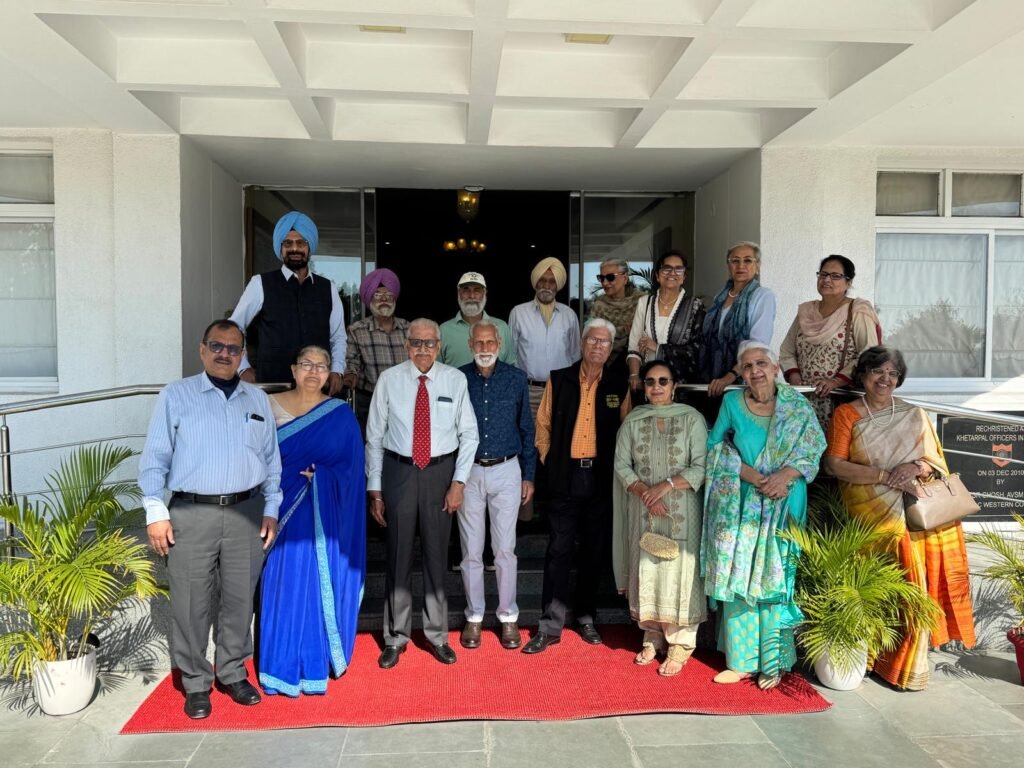
ON WAY OUT FROM KOI CHNADIMANDIR :AFTER GOOD LAUGHTERS AND SHARING OLD DAYS

In the early hours of March 14, a senior Army officer, Pushpinder Singh Bath, and his son, Angad SIngh, were allegedly assaulted by three Punjab Police inspectors in Patiala for around 45 minutes. The attack left the officer with a fractured arm, while his son suffered head injuries. Both are currently undergoing treatment at Rajendra Hospital in Patiala. Following the family’s repeated complaints, a total of 12 police officials were suspendeD
An Indian Army officer of Colonel rank and his son were allegedly brutally thrashed by Punjab Police personnel over a parking dispute in Patiala district last week.
The incident occurred on March 13 outside a roadside eatery near Government Rajindra Hospital in Patiala and was caught on CCTV.
The video of the incident has since gone viral on social media platforms.
The altercation reportedly began when police personnel, dressed in civilian clothes, asked Colonel Bath to move his vehicle, leading to a heated exchange between them.
The situation quickly escalated, resulting in the policemen allegedly kicking and punching Colonel Bath and using baseball bats to thrash him and his son.
The victim has been identified as Colonel Pushpinder Bath, currently posted at the Indian Army Headquarters in New Delhi.

The Patiala senior superintendent of police (SSP) Monday suspended 12 police personnel between the ranks of inspector and constable for assaulting a serving Army officer and his son on the intervening night of March 13 and 14.
There had been widespread uproar among serving and retired defence fraternity after CCTV footage of the thrashing meted out to the Army officer and his son went viral on social media. Initially, the Patiala police appeared to be protecting its personnel as the FIR was registered against unknown persons even though the complainant had named three inspectors posted.
Addressing the media in Patiala on Monday, SSP Dr Nanak Singh said a departmental inquiry was ordered against all suspended officers and the probe would be completed within 45 days. “We apologise for the incident involving the Army officer and extend our full respect to him. We have the highest respect for Army personnel,” said SSP. He added that at the time of the incident, neither the Colonel nor the police personnel were in uniform.
Meanwhile, the headquarters of the Western Command and that of the 1 Armoured Division in Patiala are learnt to have taken up the issue of the attack on the Colonel with the Punjab government and police.
A statement issued by the Western Command HQs said, “There was an altercation and scuffle between an Army officer on leave in Patiala and policemen post midnight March 13- 14.
“Issue is being handled with due alacrity both at state government and Local level by the Command HQs and lower formations. FIR has been lodged. Strict action against errant policemen assured by Police authorities soonest along with a time-bound inquiry.”
“The officer was shifted to Military Hospital (MH) and all possible help is being extended. Local civilian administration and Police authorities have also met the officer in hospital to give necessary assurances.”
On the night of March 13-14, 2025, Colonel Pushpinder Singh Batth, a serving Indian Army officer currently posted at the Army Headquarters in New Delhi, and his son were assaulted in Patiala, Punjab, over a car parking dispute. The incident occurred near a dhaba close to Rajindra Hospital.
According to Jaswinder Batth, the Colonel’s wife, the family was eating outside their car when several Punjab Police officers, including three identified as Inspectors Harjinder Dhillon, Harry Boparai, and Rauni Singh, demanded they move their vehicle to accommodate the police officials’ car. When the Colonel objected to their language, a physical altercation ensued.
Jaswinder Baath claimed that the officers and their team attacked her husband and son with baseball bats and sharp-edged weapons, resulting in severe injuries: the Colonel suffered a broken arm, and his son sustained a deep cut on his head. Both were hospitalised and are receiving treatment. She further alleged that despite repeated requests, the authorities delayed recording the victims’ statements, and no FIR was initially filed.







































































