Sanjha Morcha

What’s New

Click the heading to open detailed news

Current Events :

web counter

Print Media Reproduced Defence Related News

Doubt SOP properly followed: Parrikar on Pampore attack

Doubt SOP properly followed: Parrikar on Pampore attack
on Sunday expressed doubt if the Standard Operating Procedure (SOP) was

Bhubaneswar, June 26

Defence Minister Manohar Parrikar on Sunday expressed doubt if the Standard Operating Procedure (SOP) was followed properly by the bus-borne CRPF personnel at Pampore in Jammu and Kashmir who were attacked by terrorists leading to eight jawans being killed.

He said he “doubted if the SOP was followed properly” while noting that the clear picture will emerge after the inquiry.

(Follow The Tribune on Facebook and Twitter @thetribunechd)

“We will only get to know the exact reason after the inquiry,” Parrikar told reporters here.

The minister termed the killing of CRPF personnel at Pampore as an act of “frustration” on part of Pakistani terrorists several of whom were killed by Indian forces in past one year.

“In last one year, we have eliminated over 25 terrorist from Pakistan who had infiltrated into our country. It was an act of frustration,” he said.

Eight Central Reserve Police Force (CRPF) personnel were killed and 21 others wounded when terrorists rained bullets on the bus carrying them in Pulwama district yesterday. — PTI


Pak’s N-programme has increased risk of conflict with India: US report

Pak’s N-programme has increased risk of conflict with India: US report
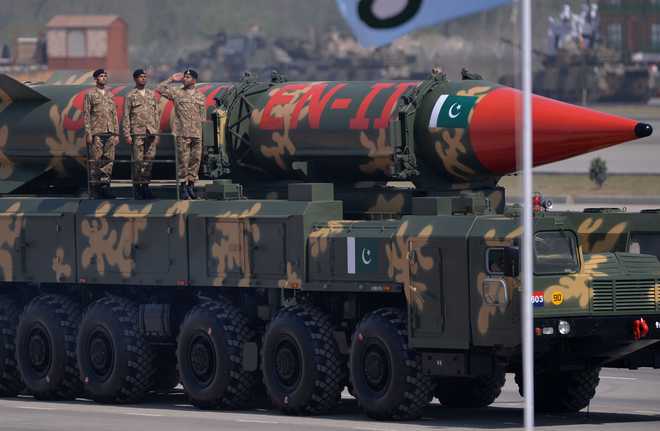
Pakistani military personnel stand beside the long-range ballistic Shaheen-II missile during the Pakistan Day military parade in Islamabad on March 23, 2015. — AFP file photo

Washington, June 17

Pakistan’s “full spectrum deterrence” nuclear doctrine and increasing fissile production capability have increased the risk of a nuclear conflict with India, a Congressional report has said amid Pakistan’s efforts to drum up support for its NSG membership bid.

“Islamabad’s expansion of its nuclear arsenal, development of new types of nuclear weapons, and adoption of a doctrine called ‘full spectrum deterrence’ have led some observers to express concern about an increased risk  of nuclear conflict between Pakistan and India, which also continues to expand its nuclear arsenal,” the bipartisan Congressional Research Service (CRS) said in its latest report.

Pakistan’s nuclear arsenal probably consists of approximately 110-130 nuclear warheads, although it could have more, said the report ‘Pakistan’s Nuclear Weapons’, authored by Paul K. Kerr, analyst in non-proliferation, and Mary Beth Nikitin, specialist in non-proliferation.

According to the copy of the report dated June 14, which was obtained by PTI, Pakistan’s nuclear arsenal is widely regarded as designed to dissuade India from taking military action against it.

CRS is the independent research wing of the US Congress, which periodically prepares reports on issues of interest to American lawmakers for information purpose only and does not represent the official position of the US Congress.

Running into 30 pages, the report comes in the wake of Pakistan lobbying at the Capitol Hill and before the US government in support of its membership to the 48-nation Nuclear Suppliers Group.

Though noting that Pakistan in recent years has taken a number of steps to increase international confidence in the security of its nuclear arsenal, the CRS report observed that instability in Pakistan has called the extent and durability of these reforms into question.

“Some observers fear radical takeover of the Pakistani government or diversion of material or technology by personnel within Pakistan’s nuclear complex. While US and Pakistani officials continue to express confidence in controls over Pakistan’s nuclear weapons, continued instability in the country could impact these safeguards,” CRS said in its report meant for the lawmakers to take an informed decision.

CRS said the current status of Pakistan’s nuclear export network is unclear, although most official US reports indicate that, at the least, it has been damaged considerably.

Referring to Pakistan’s NSG membership application, the CRS said according to US law, the Obama Administration could apparently back Islamabad’s NSG membership without congressional approval.

In the past few weeks, top Pakistani leadership, including its Ambassador to the US, has been writing letters to lawmakers and meeting government officials to push for its NSG bid. — PTI


VVIP CHOPPER DEAL ED files second charge sheet, names Michel

ED files second charge sheet, names Michel

New Delhi, June 15

The Enforcement Directorate (ED) has filed a second charge sheet in the Rs 3,600-crore VVIP chopper deal naming British national and alleged middleman Christian Michel James, his two Indian associates and an Indian company for the first time in connection with its money-laundering probe.The 1,300-page prosecution complaint (ED’s equivalent for charge sheet) was placed before a special Prevention of Money Laundering Act (PMLA) court last week.It said the agency’s investigation into the case had found that Michel allegedly received Euro 30 million (about Rs 225 crore) from AgustaWestland that was nothing but “kickbacks” paid by the firm to execute the deal for sale of 12 helicopters to India in favour of the firm in the “guise of” of genuine transactions for performing multiple work contracts in the country.The court is expected to take cognisance of the supplementary charge sheet soon, sources said.Apart from Michel, the agency has also named Media Exim Private Limited and its directors, RK Nanda and JB Subramaniyam in the charge sheet. The firm was created by Michel along with the two individuals.Michel is one of the three middlemen being probed in the case, apart from Guido Haschke and Carlo Gerosa, by the ED and the CBI. Both agencies have also notified an Interpol Red Corner Notice (RCN) or the global arrest warrant against him after the court issued non-bailable warrants against him.Michel was extensively interviewed by Indian media in Dubai recently and the agencies want him to join the probe.The second charge sheet delves into the detailed role of Michel in the deal, his multiple visits to India and his transactions. The first charge sheet in the case was filed in November 2014. — PTI

Agusta: ED files second charge sheet; names middleman Michel

Prove you are Indian, Ministry tells RTI activist

Agusta: ED files second charge sheet; names middleman Michel
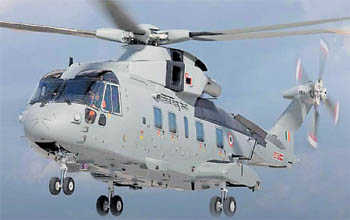
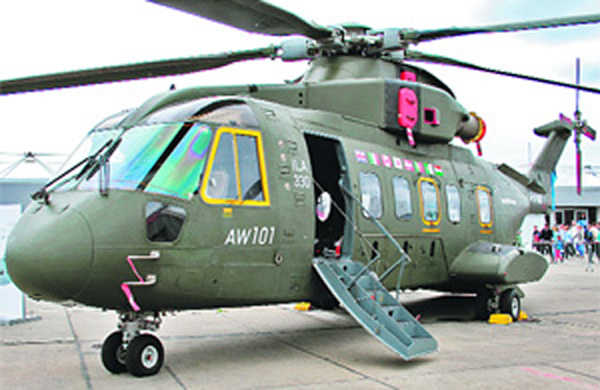
File photo of AW101 helicopter

New Delhi, June 15

The Enforcement Directorate has submitted another charge sheet accusing British national Christian Michel James, a suspected middleman of the deal — and his few Indian associates in connection with its money laundering investigations in the Rs 3,600 crore VVIP chopper deal.The over 1,300 page prosecution complaint (the ED’s equivalent of charge sheet) has been placed before a special Prevention of Money Laundering Act (PMLA) court early this week and it has said that agency’s investigation into the case has found that Michel received Euro 30 million (about Rs 225 crore) from AgustaWestland, which it claims were “kickbacks” paid by the firm to execute the 12 helicopter deal in favour of the firm in the “guise of” of genuine transactions for performing multiple work contracts in the country.(Follow The Tribune on Facebook and Twitter @thetribunechd)The court is expected to take cognisance of the supplementary charge sheet soon, agency sources said.Michel is one of the three middlemen being probed in the case, apart from Guido Haschke and Carlo Gerosa, by the Enforcement Directorate and the Central Bureau of Investigations. Both agencies asked the Interpol for a red notice after court issued a non-bailable warrant against him.A red notice, also known as ‘Wanted notices’, are issued for offenders wanted at international level. The notice may either ask that the subject be arrested or extradited to the country where he is wanted. Michel was extensively interviewed by Indian media in Dubai recently.This is the second charge sheet filed in the case by ED that goes into the detailed role of Michel in the deal, his multiple visits to India and his transactions. The first charge sheet was filed by the agency in the case in November 2014.It is understood that filing a charge sheet against Michel was necessary as ED has sought his extradition from the UK and hence such a court complaint against an accused is necessary in order to execute the treaty between the two countries.The agency has also brought on record, in the charge sheet, that the three middlemen “managed to” make inroads into the Indian Air Force in order to influence and subvert the stand of the air force regarding reducing the service ceiling of the helicopters from 6,000-meters to 4,500 meters in 2005 after which AgustaWestland became eligible to supply the dozen helicopters for VVIP flying duties.ED investigations have found that remittances made by Michel through his Dubai-based firm Ms Global Services, FZE to a media firm he floated in Delhi, along with two Indians, were made from the funds that he got from AgustaWestland SpA through “criminal activity” and corruption being done in the chopper deal that led to the subsequent generation of proceeds of crime.The PMLA probe found that AgustaWestland CEO Bruno Spagnolini was paying “kickbacks” to Michel and the two other middlemen, which they are suspected to have passed off numerous “consultancy contracts”. Michel is suspected of having received Euro 30 million in his Dubai company accounts and others under this arrangement.Investiations into the deal have gathered steam after an Italian court Italian defence and aerospace major Finmeccanica’s former chief Giuseppe Orsi and Spagnolini on corruption charges in the sale of these helicopters to India.The Milan court order also mentions former IAF chief SP Tyagi several times.On January 1, 2014, India cancelled a contract with Finmeccanica’s British subsidiary AgustaWestland for supplying 12 AW-101 VVIP choppers to the IAF over suspected breach of contractual obligations and charges of paying kickbacks to the tune of Rs 423 crore for the deal. — PTI


Internal security operations: The rub::::::::::::::::: Lt Gen RS Sujlana (retd)

When the Army is called to aid the civil authorities, the operations are extremely sensitive. Patience and deliberation are of utmost importance. Minimum force and minimum collateral at the risk of own casualties is the thumb rule.

Internal security operations: The rub
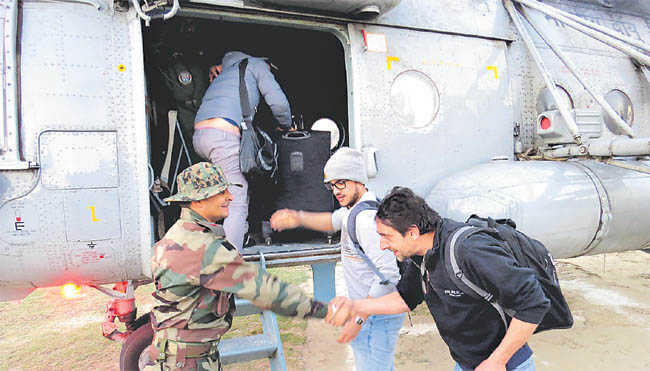
A tightrope walk: The Army had to proceed with caution and avoid collateral damage. Foreigners being airlifted from Rohtak, during the Jat agitation. Tribune Photo

The Jat Agitation in Haryana in February and the followup Prakash Singh report has brought to the fore key issues related to deployment of the Army in aid of the civil government. Both have received widespread coverage and discussion in the media, specially on the social media. The issue needs to be placed in perspective. It is necessary to understand the functioning and psyche of the Army in internal security operations; be it to aid civil authorities during natural calamities, rioting and unrest etc. or the more professional task in counter-terrorist operations. The Army always means business and therefore terms these as operations, however by nature these are offensive only while countering armed terrorists/ insurgents. Otherwise they have nothing to do with muscle and firepower. On the contrary, these operations are extremely sensitive, where patience and deliberation rule and there is no scope of instigating the population or getting carried away by any provocation by nefarious elements. The conduct has to be rational, minimum force and minimum collateral at the risk of own casualties is the thumb rule.The Army started its learning process in dealing with populations in a hostile environment in the North-East during the early years of countering insurgency in Nagaland (starting in late 1950s) and later in Mizoram. Lessons were there to learn from similar operations the world over but there were no copy-book solutions. One lesson was clear, that every insurgency had peculiarities and required ingenuity in handling. Strategy and tactics to be adopted also depended on whether operations were conducted in a foreign land against an alien people; or, within your country to handle misguided population. While in the former situation, strong-arm tactics to kill, collateral or imposing disliked measures like grouping of villages to isolate the insurgents were of no concern to the security forces but in the latter, strong-arm tactics are unacceptable and no contentious methods can be undertaken. Thus, over decades of operations in insurgency/terrorist-affected areas the Army evolved the concept of an “iron fist in a velvet glove,” while the iron fist is to counter the terrorists or other anti-national elements but more importantly was the velvet glove to deal with the majority peace-loving population. Collateral is a red herring and has immediate adverse affects; it is exploited by the terrorists/ insurgents/ rioters and their ilk to ignite the people which adversely affects operations. A hostile populace is a sure recipe for unsuccessful operations. Therefore, winning the confidence and goodwill of the local population is a must. Towards this the Army evolved the concept of a velvet glove or “Winning the Hearts and Minds (WHAM)” of people. WHAM is a well-articulated policy that has evolved and matured over years of experience and learning. It drives home the goodwill of the Army, and drives home that for a peaceful environment  is conducive for progress and prosperity. Once the confidence of the majority population is won it becomes that much easier to initially isolate and finally bring back the hostile elements back to the mainstream. WHAM activities by their very nature are carried out in close liaison with the civil administration and the involvement of the population who identify their wants and join hands with the Army. This policy has been successful in gaining the confidence of the locals; from initial small-scale projects like constructing playfields, minor water projects, road building, medical camps, veterinary camps etc. to major commercial, educational and technological spheres under Operation “Samaritan” in the North-East and Operation “Sadhbhavna” in the North. Cultural visits by schoolchildren and elders to places of interest have increased people-to-people contact countrywide, showcasing the progress of the nation and enhancing integration. However, in this entire well-meaning and humanitarian effort, the goodwill gained can be lost in a matter of hours. Collateral damage of any dimension, true or false, is a flashpoint and erupts without warning. It is often is a figment of imagination, created by anti-national elements or rioters etc. to up the ante and place the security forces on the defensive. Despite best efforts and repeatedly taking avoidable casualties to minimise collateral, a spark can always be created. For example, take  the recent alleged molestation case in Handwara, Kashmir, where a mountain was made even where there was no molehill.  It is against this backdrop that the conduct of the Army has to be seen when involved in any internal security action; the last thing that one would want is a hostile population to handle.The Army was called out during the Jat agitation. It was later construed that the presence of the Army had no effect. Did anyone rationalise the options available to the Army columns? Under no circumstance did the Army columns have the option of blasting their way through with tanks; infantry combat vehicles (which by the way are located in large numbers close at hand), heavy fire or even resorting to any violence. Despite incitement from the rioters, there was only one option to adopt a peaceful method and ensure no or minimal collateral and that is exactly what they did. To avoid any clashes or an adverse situation, troops were flown in by helicopters to begin with. As the situation improved, columns on foot moved forward to complete their allotted tasks.The Prakash Singh report mainly concluded a long-known fact that the Army should be used in internal security only as a last resort; and that repeated exposure of the Army in such operations will only reduce its effectiveness in internal security situations. However, the question here is whether or not the deployment of the Army in the agitation was a right step to bring the violent situation under control? Taking that the civil administration, the state police and the Central Police Forces abdicated their respective duties, leading to an “administrative paralysis,” with clear indications of internecine communal riots erupting, calling the Army in was possibly the right decision. This saved the situation from developing into another anti-Sikh mayhem as it happened in Delhi, where the Army arrived only when the damage was done. The report also goes on to add that the Additional Chief Secretary (Home) who evidently was sitting “dormant” at Chandigarh but had no hesitation in saying that the agitators were not daunted by the Army and that it is a matter of concern that the presence of the Army had “limited effect”. Strangely forgotten was the fact that 2,000 men of the Army effectively brought the situation under control where tens of thousands of the police/ CPOs failed.The Prakash Singh report seems to have ruffled some feathers and may finally not achieve its aim as is gradually becoming evident. The bureaucrats named are shouting blue murder, comments on an MP have been withdrawn, the role of the state police / CPOs seems to have been softpedalled, it reeks of an anti-Army bias. But the complete silence on appropriating any blame on the political leadership is indeed jarring. 

The writer is a former Commandant, IMA & ex-Chairman, PPSC.


Army… a way of life

The other day while golfing at the nearby army golf course, a notice put up at the 15th tee caught my fancy, “In case of a bee attack, first-aid kit is available with the starter.” God forbid, if the bees do strike, reaching the starter, a good kilometer away, may be painfully arduous. Having experienced such kooky situations during my wonderful days in the army, I was least bit surprised at this veiled suggestion, ‘Taste their bites and get acclimatised for life or make own arrangements (the latter for the less brave)’.

It was a warm summer afternoon during 1979, when our train reached the deserted rail station at Dehradun. Selected to be future officers of the great Indian Army, without worry and hurry we waited for some one to rush towards us, salute us , pick our luggage, escort us to the car, which would then drive us with fanfare to the Indian Military Academy (IMA). Instead, there was peace and inactivity. We de-boarded and started looking around. Our misplaced optimism was disrupted with a deep scruffy banter, “Hey you dandies! Are you here for a rock concert?” (an obvious reference to our flowing manes). Now don’t stand there like morons… get moving”, and the young captain assigned with the duty of receiving us trooped off.

The railway station seemed bereft of porters, forcing us to lug the huge iron box and an overstuffed bedroll to the waiting army truck, which doubled as a means of transport for the luggage and the newly arrived trainees.

The first stop was the IMA barber shop. Our pleas of having had a hair cut before leaving home went unheard. A subtle message that a crew cut is the beginning and end of life. All else is secondary.

We had heard of an activity called the ‘Mussourie nights’, imagining it an excursion picnic to the beautiful hill station in the vicinity of Dehradun. Well this is how it unfolded. December night chill at Dehradun is not lost on most. A ‘fall in’ in PT (physical training) rig (shorts and vests) was ordered by our seniors. Once at the PT grounds, we were asked to go and take a clothed shower and get back. When back, all were asked to make a 100-metre sprint.

The procedure was repeated half a dozen times till the chill did not matter. Back to our cabins at midnight, I wondered how many of us would report sick next morning. Surprisingly, none did. Like most, I suspect, a feeling of blocked nose and a heavy head did surface, but kept it to themselves for the fear of being labeled a weakling. The ‘endurance boost’ surely made a life time impact. Even now during peak winters, a recollection of Mussourie nights makes us feel warm and snuggy.

I reported at my unit after getting commissioned and was escorted to the senior subaltern (senior most lieutenant in-charge of grooming the newly posted officer). Lieutenant Sidhu, without exchanging unnecessary pleasantries, asked me in his Sainik School dialect, “What do they call you?… Ok doesn’t matter! Do you drink?” “Occasionally sir,” was my genuine response.

I don’t remember thereafter till I was woken up the next morning by my soldier buddy. Supporting blood shot eyes and a breath reeking of alcohol, I was guided to the Adjutant’s (officer incharge of discipline) office, who counseled me, “A way to avoid hangover and drunkenness is to consume butter before drinking. The smooth buttery layer avoids absorption of alcohol thus increasing your apparent capacity to consume more and remain fresh the next morning.”

His words of wisdom keep me in good stead even today, though my wife often wonders why Captain Udawat, the adjutant never gave a simple two word advice, “Stop drinking” instead!



P’kula-based broker has nexus in Delhi and beyond

Sandeep Rana

Tribune News Service

Panchkula, June 11

Panchkula-based real estate broker Manav Malhotra, who duped many, including serving Indian Army Colonels and Shimla MP’s brother in the tricity, of their hard-earned money, has his nexus spread in Delhi,NCR and beyond.Following a news item by Chandigarh Tribune about the cheating case yesterday, it came to light that 15 more persons were allegedly duped by him from Gurgaon and nearby areas on the promise of providing them 2 BHK flats at Bhiwadi in Rajasthan.“He showed us property at Bhiwadi with the project named Carbe India Buildtech, the property belonged to somebody else, but he claimed he was a partner in the property. The flat was priced at Rs 25 lakh and he got the money ranging between Rs 5 and 16 lakh, initially. However, he later failed to give the property or refund the money taken. To some customers, he issued cheques but they bounced,” shares Gurgaon resident Rahul Kaushik.Rahul’s father Rattan  Kumar Kaushik was allegedly duped of Rs 16.5 lakh, while his brother-in-law Sunil Sharma of Rs 12.5 lakh. Also, Gurgaon-based advocate Ritu paid around Rs six lakh and Dilreet Grewal Rs four lakh as earnest money, but have got nothing in return. They all paid the money in 2013 but have been fighting cases in courts to get their money back ever since. Malhotra showed the property in Bhiwadi to all of them. The affected parties have even approached the Commissioner of Gurgaon. However, the accused has been on the run. In one of the cases here, his bail application has also been rejected by the Punjab and Haryana High Court.   His wife Neetu Malhotra said he was innocent.


Naval Academy passout honoured

Tribune News Service

Amritsar, June 11

Baba Sewa Singh Kar Sewa Wale of Khadoor Sahib honoured Kirpa Singh, a student of one of the educational institutes run by their sect on completion of his course as Assistant Commandant in Indian Coast Guard here today.Kirpa, a resident of village near Khadoor Sahib, cleared the exam for entry into Indian Coast Guard recently. He was studying at a college run by Baba Sewa Singh.While congratulating Kirpa Singh for his achievement, Baba Sewa Singh said he was a role model for other children in this rural belt.“Kirpa Singh is one of the very few children from this area, who despite lack of educational opportunities, has managed to find a place for himself. We hope that other students will be inspired by his achievement,” he said.College Principal, Dr Surinder Bangar, said Kirpa had completed his training at Indian Naval Academy, Kerala, recently. He said educational institutions run under the Kar Sewa prepare rural children for various competitive exams. He said the sect had started an institute to prepare students for civil services examinations recently.


Malabar Exercise kicks off close to South China Sea

Malabar Exercise kicks off close to South China Sea
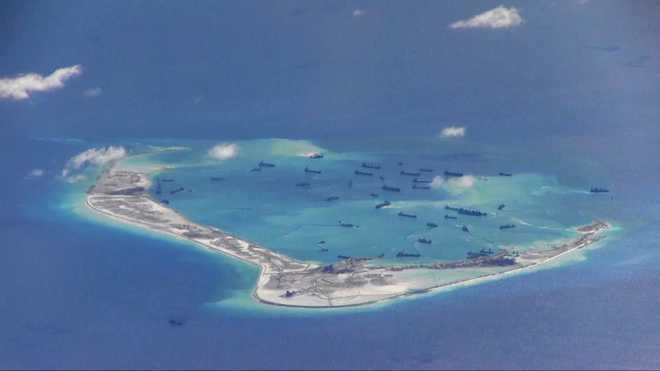
File photo of Chinese vessels around Mischief Reef in the Spratly Islands of the South China Sea. —Reuters

New Delhi, June 10

India, Japan and the US on Friday kicked off their marine war games, ‘Malabar Exercise’, near the troubled waters of the East China Sea that will see in action over 100 aircraft and 22 naval ships, including a nuclear submarine.

The exercise assumes significance as it is being conducted close to the East China Sea at a time when Chinese assertiveness in the region is a raging issue.

It aims to achieve deeper military ties and greater interoperability amid rising tensions in the region.

The exercise is being held close to the uninhabited isles in the East China Sea called Senkaku by Japan, which controls them. However, they are aggressively claimed by China as its Diaoyu islands.

The Indian Navy said that their four ships are participating in the 20th edition of the naval exercise in consonance with India’s ‘Act East Policy’ and growing ties among the three countries.

The exercise will support maritime security in the Indo-Pacific region and benefit the global maritime community, the navy said.

India and the US have regularly conducted the annual exercise since 1992. Since 2007, Malabar has been held alternatively off India and in the Western Pacific. Last year, it was conducted off Chennai and included participation of Japan.

While the harbour phase of the exercise started today at Sasebo, the sea phase in the Pacific Ocean will be held from June 14 to 17.

Indian ships participating in the exercise are from the Eastern Fleet and include INS Sahyadri and INS Satpura, indigenously built guided missile stealth frigates, INS Shakti, a modern fleet tanker and support ship, and INS Kirch, an indigenous guided missile corvette.

The US Navy will be represented by aircraft carrier USS John C Stennis (CVN 74), that holds 90 fighter aircraft and helicopters besides Ticonderoga class Cruiser USS Mobile Bay and Arleigh Burke class destroyers USS Stockdale and USS Chung Hoon, all carrying helicopters.

In addition, one nuclear-powered submarine, carrier wing aircraft and long-range maritime patrol aircraft will also participate in the exercise.

Japan will be represented by Hyuga, a helicopter carrier with SH 60 K integral choppers and long-range maritime patrol aircraft, besides 9 other advanced warships for specific parts of the exercise.

Additionally, the Special Forces (SF) of the three navies will also interact during the exercise. — PTI


ISIS leader Abu Bakr al-Baghdadi injured in air strike, say reports

ISIS leader Abu Bakr al-Baghdadi injured in air strike, say reports
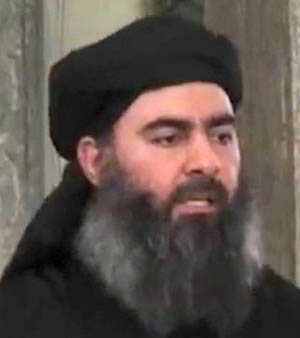
Abu Bakr al-Baghdadi

London, June 10

Islamic State’s dreaded chief Abu Bakr al-Baghdadi has been wounded in an air strike by coalition forces on one of the outfit’s command headquarters close to the Syrian border in Iraq, media reports said on Friday.

Iraqi news channel Al Sumariya TV claimed local sources in Iraq’s Nineveh province had confirmed that Baghdadi and other leaders in the Islamist group were wounded yesterday in the coalition bombing raid.

“The planes of the international coalition yesterday bombed a location where there is a base of Isis members along the border area between Iraq and Syria, 65 kilometres west of Nineveh,” Express UK quoted an Iraqi source as saying.

According to reports, Baghdadi was injured along with some members of the organisation who were gathered at that meeting.

“The attack was carried out on the basis of precise intelligence information that led to strike its own that site,” the paper quoted the source as saying.

The area is one of the group’s strongholds, the source said, adding that “Baghdadi and the other ISIS leaders arrived in Iraq from Syria with a convoy of cars”.

A spokesman for the US-led coalition said that he had seen the reports but had “nothing to confirm this at this time”, the report said.

In recent years there have been a number of reports of Baghdadi’s injury, and even death, but none have been confirmed.

Baghdadi was seriously wounded by an airstrike on March 18, 2015, that killed the three other men he was travelling with. He was said to be receiving treatment for spinal injuries after being wounded in that strike.

The injury left the terror chief incapacitated, with some claiming at the time that his injuries meant he would never again resume command.

In 2011 the US State Department named Baghdadi as a terrorist and offered up to USD 10 million for information leading to his capture or death.

Baghdadi became the leader of the militant group in 2010 but it was only in 2014 that ISIS declared the establishment of a “caliphate” – a successor of past Islamic empires – in its territory in Syria and Iraq. — PTI


Not without Pak, China builds wall Most NSG members positive to India entry; Beijing spoiler

Not without Pak, China builds wall
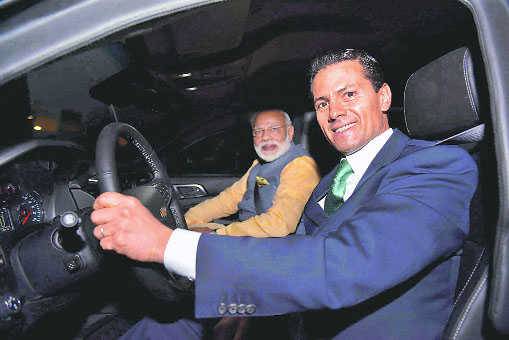
Mexican President Enrique Pena Nieto drives Prime Minister Narendra Modi to a restaurant in Mexico City on Wednesday. PTI

Vienna, June 9

China is leading opposition to a push by the United States and other major powers for India to join the main club of countries controlling access to sensitive nuclear technology, diplomats said on Thursday as the group discussed India’s membership bid.Other countries opposing Indian membership of the Nuclear Suppliers Group (NSG) include New Zealand, Ireland, Turkey, South Africa and Austria, diplomats said.The 48-nation NSG aims to prevent the proliferation of nuclear weapons by restricting the sale of items that can be used to make those arms.India already enjoys most of the benefits of membership under a 2008 exemption to NSG rules granted to support its nuclear cooperation deal with Washington, even though India has developed atomic weapons and never signed the nuclear Non-Proliferation Treaty (NPT), the main global arms control pact.Opponents argue that granting it membership would further undermine efforts to prevent proliferation. It would also infuriate Pakistan, which responded to India’s membership bid with one of its own and has the backing of close ally China.“Bringing India on board is a slap on the face of the entire non-proliferation regime,” a diplomatic source from one of a handful of countries resisting India’s push said on condition of anonymity.A decision on the Indian membership is not expected before an NSG plenary meeting in Seoul on June 20, but diplomats said Washington had been pressuring hold-outs, and Thursday’s closed-door meeting was a chance to see how strong the opposition is. US Secretary of State John Kerry wrote to members asking them “not to block consensus on Indian admission to the NSG”.China, however, showed no sign of backing down from its opposition to India joining unless Pakistan becomes a member. That would be unacceptable to many, given Pakistan’s track record — the father of its nuclear weapons programme sold nuclear secrets to countries, including North Korea and Iran.Most of the hold-outs oppose the idea of admitting a non-NPT state such as India and argue that if it is to be admitted, it should be under criteria that apply equally to all states rather than under a “tailor-made” solution for a US ally.  

India still positive

“It’s an ongoing process but most countries appear positive,” said diplomatic sources in New Delhi. India has asserted that being a signatory to the NPT was not essential for joining the NSG, citing the precedent of France. The NSG works under the principle of consensus and even one country’s vote against India will scuttle its bid.  — Reuters/PTIMexico, meanwhile, too backs India’s bidNEW DELHI: In what is likely to strengthen India’s case for an entry into the Nuclear Suppliers Group, Mexico on Thursday said it would support India’s membership into the elite grouping. The statement of support was made by Mexican President Enrique Pena Nieto during the visit of Prime Minister Narendra Modi to the country.The PM’s five-nation tour, which concluded with Mexico, saw the NSG agenda on top, with Modi pushing for support as India’s application comes up for consideration. Switzerland and the United States have already committed to supporting India. Mexico and Switzerland were initially not a part of the PM’s itinerary but were added specifically for the NSG agenda. TNS

clip

clip