Sanjha Morcha

What’s New

Click the heading to open detailed news

Current Events :

web counter

Print Media Reproduced Defence Related News

headlines 23March 2017

breakl line

NO COMPLAINTS BY TROOPS ON QUALITY OF RATIONS, SURVEY OF OVER 50,000 FOUND: DEFENCE MINISTRY

WHY SOLDIERS ARE EMOTIONAL ABOUT THEIR RANKS

WHAT IS ISIS UP TO? BE WATCHFUL…BY LT GEN SYED ATA HASNAIN

PAK-INDIA TALKS

BAILABLE WARRANTS AGAINST ENGINEER-IN-CHIEF OF MOD

THE CHINESE WAY

INDO-RUSSIA KAMOV COPTER DEAL HITS HURDLE

BBC ONE – THE STORY OF THE TURBAN

FARM DEBT: CAPT CALLS ON PM, PRESSES FOR SPECIAL PACKAGE

CAPT AMARINDER PICKS FIVE AS OSDS

Cable operators lock Fastway offices

STATE PRUNES SECURITY OF 46 LEADERS, AIDES

JAITLEY ASSURES AMARINDER OF CCL FOR WHEAT PROCUREMENT

PARLIAMENTARIANS’ PENSION: SC ISSUES NOTICE TO CENTRE, EC

‘MANTRI PATI’ DOES IT ALL: FROM CHAIRING MEETS TO PERUSING FILES

breakl line


Retd Colonel who shot SAD leader still at large

Tribune News Service

Gurdaspur, March 21

A week after killing SAD (Gurdaspur unit) vice-president and senior leader Gurbachan Singh Khalsa (79), Col Surjit Singh (retd) is yet to be arrested.Residents of Pherochichi village and its adjoining areas fear that the former Army officer may surface anytime to take revenge from villagers who are on his hit list. Khalsa’s bhog is scheduled to be held in the village tomorrow.Bhupinder Singh Virk, SSP, said the investigating teams had some clues pertaining to the whereabouts of the accused. Officers say the accused had switched on his mobile phone for a while following which the police were able to trace his location.The Colonel’s house in the village has been sealed and all his relatives are absconding. The weapon, a semi-automatic 9 mm pistol, is yet to be recovered.Questions are being raised as to how the Colonel was allowed to keep a weapon when the police had asked residents to deposit their arms in view the Assembly elections.


Capt: Will seek legal opinion on Sidhu’s TV show

Capt: Will seek legal opinion on Sidhu’s TV show
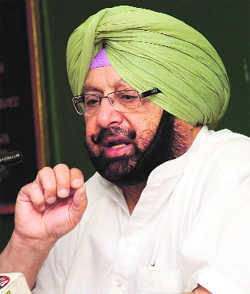
Capt Amarinder Singh, Chief Minister

Rajmeet Singh

Tribune News Service

Chandigarh, March 20

Chief Minister Capt Amarinder Singh today said he would seek the opinion of Advocate-General, Punjab, on his Cabinet colleague Navjot Singh Sidhu appearing on a TV show. The entertainment industry comes under the Tourism and Culture Ministry. Sidhu is Local Bodies, Tourism  and Culture Minister, Punjab. In an interview with a TV channel, Amarinder Singh said he had cordial ties with Sidhu, but his association with the entertainment industry would have to be looked into as Sidhu was a minister now.(Follow The Tribune on Facebook; and Twitter @thetribunechd)Sidhu had told the media earlier he would continue to appear in the entertainment show, but would ensure it did not create any hindrance to his work as minister.

Halqa in-charge system goes

Shift officers ‘favoured’ by Akali govt, say Punjab Cong leaders

Halqa in-charge system goes
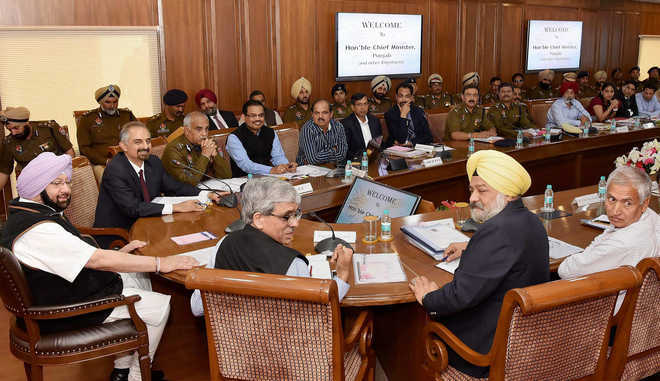
Punjab CM Capt Amarinder Singh holding a meeting with DCs and SSPs in Chandigarh on Monday. PTI

Jupinderjit Singh

Tribune News Service

Chandigarh, March 20

Dismantling the police structure put in place by the SAD-BJP government, the Capt Amarinder Singh-led Congress government in Punjab today ordered the end of the controversial “halqa in-charge system” that had enabled Akali leaders to influence police functioning in their Assembly constituencies.

Edit: Well begun

At a meeting with senior officers here, Amarinder said the DCs, SSPs, SDMs and area SHOs would be held accountable for any failure to check drugs, corruption and mafia in their jurisdictions. Making clear that he meant business, Amarinder said he was aware of complaints of corruption against field officers holding various ranks, including that of DSP and SHO.These directions come amid growing disquiet among Congress leaders who want police officials who were favoured by the earlier SAD-BJP dispensation to be  shifted. These leaders have reportedly met the CM against the officers posted in Jalandhar, Ludhiana, Khanna and Patiala. “An IG-rank official, known as ‘Jathedar IG’, continues to hold an important posting,” pointed out one of them.(Follow The Tribune on Facebook; and Twitter @thetribunechd)Also, officers who had “manhandled” Congress leaders in Ludhiana during a “Chitta Ravana” protest, have been posted back in the district. Two officers, known to be close to the Akalis, are heading the district police as SSP.  Sources said the CM was yet to take a call on the matter, adding that he usually stood by his decisions. Already, the CM has shown faith in the DGP, Suresh Arora, who was appointed to the post by the earlier government, disregarding the fact that the husband of one of his party MLAs was a candidate for the post.


Named in citrus council scam, Himmat boss again Karan Avtar Singh named Chief Secy, Tejveer Singh Principal Secy

Ruchika M Khanna

Tribune News Service

Chandigarh, March 16

A major administrative shake-up was affected by the Amarinder government on the day one in office. The senior-most IAS officer in Punjab, Himmat Singh, who was named in the infamous Punjab Citrus Council scam that rocked the state in the previous Congress regime, has been rehabilitated. He is, however, learnt to have got a favourable judgment from CAT, discharging him of any wrong doing.Having been sidelined in the previous Akali-BJP regime, Himmat Singh has been appointed Additional Chief Secretary, Horticulture Department. Recent orders of CAT had asked the SAD-led government to give him a posting in accordance with his rank and seniority. He is a long-time faithful of Capt Amarinder Singh.The CM, meanwhile, appointed Tejveer Singh as his Principal Secretary and Karan Avtar Singh as Chief Secretary. He has relieved Sarvesh Kaushal, who has been appointed as the Director General of the Mahatama Gandhi Institute of Public Administration (MGSIPA). Gurkirat Kirpal Singh has been appointed Special Principal Secretary to CM and Amrit Kaur Gill Deputy PS.The government appointed Anurag Aggarwal as Financial Commissioner, Taxation, and Vivek Pratap Singh as Excise and Taxation Commissioner. The new excise policy has to be prepared and notified before the end of this month.In another surprise, Additional Chief Secretary KBS Sidhu, who was vying for the post of Chief Secretary or Incharge, Home Affairs, will be retaining the charge of just Revenue Department. The Home Affairs Department has been given to Additional Chief Secretary NS Kalsi, who also retains the charge of the Agriculture Department.In all, 12 officers have been transferred. Satish Chandra, though relieved of the taxation charge, will continue to serve as Additional Chief Secretary, Finance. The Budget exercise is going on and the government might not change him at this juncture.SK Sandhu, who was Principal Secretary to the previous CM, will now go to the Social Security Department. Raji P Srivastava too has been relieved of her charge in Personnel Department and shifted to the MGSIPA. Krishan Kumar, Secretary, Expenditure, has been given the additional charge as secretary personnel.


Major administrative shake-up

In all, 12 officers have been transferred. Tejveer Singh has been appointed Principal Secretary; Karan Avtar Singh Chief Secretary; Anurag Aggarwal Financial Commissioner, Taxation; and Vivek Pratap Singh Excise and Taxation Commissioner. The Home Affairs Department has been given to Additional Chief Secretary NS Kalsi, who also retains the charge of the Agriculture Department.Vidhan Sabha session from March 24The first session of the newly constituted 15th Vidhan Sabha would begin on March 24, government sources said. A formal decision in this regard would be announced on Saturday after a meeting of the Cabinet of Ministers. The Cabinet will also decide on the duration of the session. Apart from administering the oath of office to the MLAs, the session will pass a vote on account for running the expenses of the government till the Budget proposal is moved in the Assembly.


Amarinder Singh’s journey to being Punjab’s Captain a second time

Amarinder Singh’s journey to being Punjab's Captain a second time
Capt Amarinder Singh. Tribune file

Chandigarh, March 16

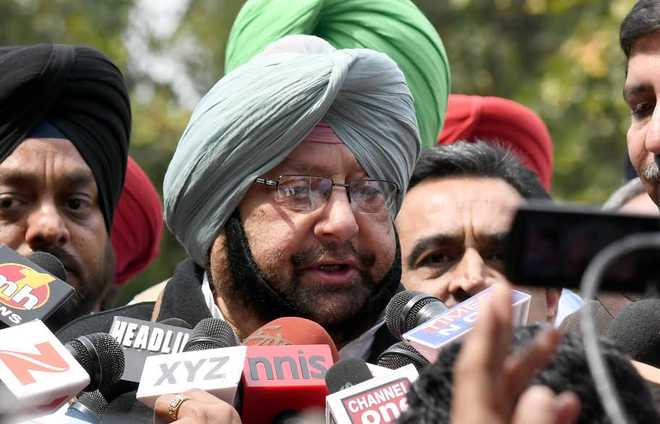
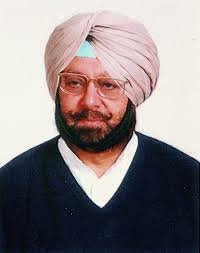
One of the strongest regional satraps of the Congress, Capt Amarinder Singh, put the party back in the saddle in Punjab after the “father of all battles” that decimated the SAD and crushed the AAP’s dream of expanding its footprint beyond Delhi.The 75-year-old Amarinder, a widely respected and popular leader, steered the Congress to a landslide victory winning 77 seats in the 117-member Assembly to occupy the Chief Minister’s post for the second time.

(Follow The Tribune on Facebook; and Twitter @thetribunechd)

The Maharaja’s win in Punjab after 10 years has also rekindled the hopes for the revival of the grand old party.Belonging to a very rare breed of politicians who have seen action in the Indo-Pak war, Singh this time tasted success after Akali Dal supremo Parkash Singh Badal foiled his previous attempts to become Chief Minister in 2007 and 2012.Once a leader of the Akali Dal, the ‘scion of Patiala’ fought in the 1965 war after he rejoined the army a few months after his resignation. He again resigned from the Services as a decorated soldier at the conclusion of the war.The Punjab Congress chief and husband of Patiala MP Preneet Kaur was born to late Maharaja Yadavindra Singh of Patiala.After his initial schooling at Lawrence School, Sanawar, and Doon School in Dehradun, he joined the National Defence Academy, Kharagwasla, in July 1959 and graduated from there in December 1963.Commissioned in the Indian Army in 1963, he was posted in 2nd Bn Sikh Regiment (both his father and grandfather had served the battalion), served in Field Area–Indo Tibetan border for two years and was appointed Aide-de-Camp to Lt Gen Harbaksh Singh, GOC-in-C, Western Command.His army career was shortlived as he resigned in early 1965 after his father was appointed Ambassador to Italy and his services were required at home.But he joined the army again immediately after hostilities broke out with Pakistan and took part in operations in the war only to resign again in early 1966 after the war was over.His political career began in January 1980 when he was elected MP. But he resigned from the Congress and the Lok Sabha in protest against the entry of the army into the Golden Temple during Operation Bluestar in 1984.After joining the Akali Dal in August 1985, Singh got elected to the Punjab Assembly on an Akali Dal (Longowal) ticket in the 1995 elections. He was Agriculture Minister in the Surjit Singh Barnala government.However, Singh resigned from the cabinet in protest against the entry of paramilitary forces into the Golden Temple on May 5, 1996. He then floated the Panthic Akali Dal, which later merged with the Congress in 1997.Singh unsuccessfully fought the parliamentary elections on a Congress ticket from Patiala in 1998.He then served as Punjab Congress chief from 1999-2002 before becoming the chief minister in 2002 and continuing till 2007.In September 2008, he was expelled by a state assembly panel on allegations of irregularities in a land transfer case. In 2010, Singh got relief from the Supreme Court which held his expulsion unconstitutional.He then went on to head the state Congress again till 2013.Singh, a permanent invitee to the Congress Working Committee since 2013, fought the 2014 Lok Sabha elections from Amritsar and defeated senior BJP leader Arun Jaitley by a margin of more than one lakh votes.He then resigned in November as MP after the Supreme Court termed Punjab’s 2004 Act terminating the Sutlej-Yamuna Link (SYL) canal agreement as unconstitutional.A few days later, he was appointed president of the Punjab Congress again in the run-up to the polls.A widely travelled person, Singh has penned several books, including his memoirs of the 1965 Indo-Pak war. PTI


Capt’s 2nd innings New norms, new expectations

Amrinder-Singh-3
Capt Amarinder Singh takes the oath today as Chief Minister of Punjab. If he wants to leave a legacy different from that of Parkash Singh Badal — who will always be remembered, among other things, for financially bankrupting Punjab — he may want to avoid mistakes the Fakhr-e-Qaum and he in his previous term made. For 10 years the Captain was kept out of power because he had followed Akali-BJP policies and provided own coterie-driven governance. Once again he gets a chance for a makeover and to leave Punjab a better place to live than what he has inherited. He owes it to his voters.Judiciously spending the state’s limited resources ought to be his priority number one. A government exists for delivering services to people, and not for personal enrichment and comforts. A lean, mean administration can help cut the burden on the exchequer. There will be a temptation to beat the constitutional limit on the size of the ministry by raising a separate force of OSDs with ministerial perks or a battalion of chief parliamentary secretaries that serves no purpose and the state high court has ruled against such appointments. There will be pulls and pressures from party colleagues for sharing the spoils of office and it will be keenly watched how far the Captain allows himself to bend. While campaigning he had tried to mollycoddle disappointed ticket-seekers by promising posts in boards and corporations. Well, these state entities do not exist for adjustment of disgruntled political workers. Nor are these rent-seeking propositions. The electoral issue of job creation was for ordinary youth and not for party workers.  The Congress manifesto, prepared by an idealist, Manpreet Badal, binds the party MLAs to a life without the VIP culture. The Congress has to re-establish its credentials as a party committed to serving the citizen. Its new government in Punjab has an opportunity to turn a page. As the tallest leader in Punjab, Capt Amarinder Singh need not put up with shabby demands of shoddy “leaders”, in and outside the legislature. The Amarinder Singh who takes the oath today as Chief Minister is a much wiser and sober man; and he will do well — for himself and the state — if he can sidestep the trap of cronyism. The battle against favouritism and nepotism should begin on the very first day.

Ageing mine-sweepers leave navy vulnerable

The observation by a parliamentary panel that the Indian Navy (IN) will soon reach a point of near zero mine-sweeping capability when the existing six vessels are de-commissioned by end 2018 is yet another reminder – if such were needed – about the dysfunctional state of higher-defence management in the country.

Mines at sea, whether floating or laid on the seabed, have a high index of lethality and can cause unacceptable levels of damage to a warship at very low cost. Thus mine warfare and mine counter measures are integral to naval capability and port/harbour defence; and most major navies have ensured adequate capability for keeping their vital harbours open for men of war as well as merchant shipping traffic.

Technology has improved both the destructive potential of the mine as also the countermeasure technology and the use of mines as part of covert warfare in the maritime domain is very much the emerging challenge.

The cost of a mine — which can be a few hundred dollars — and the damage it can cause to a navy or the sea-borne trading efficacy of a nation are inversely proportional and even the most powerful navies are vulnerable.

It may be recalled that towards the end of the Cold War (1988) and in early 1991 when the US had embarked upon Operation Desert Storm (the War for Kuwait), helicopter carrier Tripoli and the guided-missile cruiser Princeton, front-line warships of the US Navy were severely damaged by floating mines in the Persian Gulf. This experience served as a wake-up call and most navies invested in the mine protection domain that had lain dormant since the end of World War II.

The IN was cognizant of the need to acquire appropriate mine counter measure capability and 12 vessels were acquired from the former USSR in the period 1978 to 1988. It is instructive that despite the Navy having prioritized this platform as an operational imperative, no new mine-sweeping vessel was inducted since 1988. Bureaucratic delays and the inability of the higher-defence management matrix to comprehend the strategic salience of the issue (the dysfunctional trait ) resulted in a situation where it took almost 15 years years for the government of the day to initiate a new acquisition from a South Korean entity. This was the NDA I period.

Desultory attempts were made to have a tie-up with a credible foreign supplier and the process that began in 2008 concluded the price negotiations in 2011. A South Korean firm was identified but in keeping with the Indian penchant to cancel or freeze any defence deal if there is a whiff of fiscal transgression, a charge levied by an Italian competitor saw the entire acquisition project being referred to the CVC (Central Vigilance Commission). The BJP then in opposition went for the Congress jugular and in short, India’s zero-sum electoral rivalry laid the perfect ‘political’ mine for the IN’s mine-sweeper acquisition plans to remain stillborn. It is now 2017 and the navy has a shrinking mine-sweeping capability and there is no light at the end of the tunnel. Buying these platforms outright from a foreign supplier or building them in India with a foreign supplier are time-consuming and as the Parliament panel pointed out, the earliest induction is a good five years away. Till then the ships that enter and leave Indian ports including front-line naval ships will be vulnerable to the lethal mine. The navy needs a minimum of 30 such vessels for the major ports and the grim reality is that it will soon have none.

An immediate option is to explore the possibility of leasing these vessels from navies that have excess capability – and both the USA and Japan could be potential suppliers. India has recently concluded substantive defence cooperation agreements with these countries and some innovative fast-track agreements need to be initiated on a war-footing. The parliamentary committee has alerted the executive and the citizen. India’s vulnerability in the mine counter measure capability should not go down the Bofors route.


Indians targeted in US Time for Modi to speak up

FOR a Prime Minister who wears his love for every expatriate Indian on his sleeve, Narendra Modi may have been slow in reacting to the targeting of Indians in the US. Perhaps, his foreign policy advisers do not think the three recent attacks on Indian-origin people in different parts of the US add up to a broader trend that needs New Delhi’s intervention. It may well be the case of three semi-literate, bigoted people tanked up on Donald Trump’s racist demagogy having a go at three vulnerable Indians. But there has been an uneasy feeling ever since Trump won the US presidential elections that his fiery hate speeches would spill over into real life. Trump’s uncomfortable rhetoric against recent immigrants, most of whom don’t share the skin pigmentation of the first lot of arrivals from Europe, was waiting to be ignited in America that, as it is, is a violent society. These are anxious times for the 30 million people of Indian origin in the US. The state of mental siege after the three assaults may be worse for the Sikh community. Bigots pay more attention to the Sikhs because their headgear and beards lead to a resemblance with people from West Asia — another ethnic group that Trump, during and after his election, had taught his followers to hate. Denied a honeymoon period, Trump will be disinclined to tone down his inflammatory logic to keep his flock together against relentless attacks from the liberals. The US badly needs a new conversation to stem this rising tide of racism. With the White House politically not well placed to take the initiative, the situation requires Prime Minister Narendra Modi to speak up. His mediation may be the trigger that the US civil society needs to focus on the rising bigotry against the browns. The US civil society has frequently triumphed in cultural wars against the right wing. It has stood up, fought back and won the battle against black discrimination. If South Block provides the urging, the American civil society is vigorous enough to beat back the latest example of intolerance.


IAF C-130 damaged while taxiing at Thoise

Chandigarh: A C-130J Super Hercules transport aircraft of the Air Force has been reportedly damaged after it hit some structures while taxiing at the Thoise airfield in Ladakh recently. It is learnt that the aircraft, flown by the unit’s commanding officer, was on a night flying mission to Thoise, located at an altitude of about 10,000 near the Siachen Glacier. It veered off the taxi track, damaging a wing and an engine. The IAF has convened a court of inquiry to investigate the incident. This is the second incident to hit the C-130 fleet, bringing down the strength from the original six to four. In 2014, the IAF lost a C-130   after it crashed near Gwalior during a low-level training exercise, killing all five crew members onboard. TNS



The terror Frankenstein by G Parthasarathy

The terror Frankenstein
Playing ostrich: Pakistan will have to wake up to reality: it is in the firing line.

Pakistan’s founder Muhammad Ali Jinnah, an Ismaili Shia by birth, proudly proclaimed, just prior to Pakistan’s independence, that the country he founded on the basis of religion would not discriminate against any of its citizens on the basis of religion. While the eastern half of his country was divided on the basis of ethnicity in 1971, what remains of what he initially called a “moth-eaten” Pakistan, is now finding that religion could indeed tear the country apart. Born into a Shia family, Jinnah could well be regarded as a “kaffir” by many in today’s Pakistan. Extremist Wahhabi- oriented groups, who since the days of Gen Zia-ul-Haq have received extensive support from the army, regularly target and kill those who are Shias, or even Sunnis, who are Sufi in orientation.The most revered Sufi shrine in Pakistan, where thousands of people of all sects and religions congregate and worship, is the shrine of Lal Shahbaz Qalandar at Sehwan, in northern Sindh. The shrine, built in 1356, was established in memory of the 13th century Sufi, Saint Syed Usman Marwandi, popularly known as Lal Shahbaz Qalandar, whose ancestors were devotees of the Imam Hussein, the Prophet’s grandson. Reza Shah Pahlavi, the last Shah of Iran, donated the shrine’s gold-plated main gate. For today’s jihadis in Pakistan, especially from groups like the Jaish-e-Mohammed, the Lashkar-e-Jhangvi and the Tehrik-e-Taliban Pakistan (TTP), that have received, or continue to receive ISI support, Sufi shrines are heretical, with its worshipers fit targets for elimination. This is precisely what happened on February 16, when a fanatical suicide bomber entered the shrine in the midst of prayers and triggered explosives, killing 88 devotees and wounding over 250.Not surprisingly, Pakistan reacted by passing the blame to others for its incredible follies in strengthening “militant Islam”, ever since the days of the anti-Soviet jihad. This policy was followed by its backing of the Taliban in Afghanistan and the use of its “non-state actors” for its jihad in J&K and elsewhere in India. The TTP was a tool of the ISI used to wage jihad against the Americans and pro-government forces in Afghanistan, post 9/11. The situation in Pakistan changed when the army, led by the ubiquitous Gen Raheel Sharif, saw the TTP establishing a presence over large areas beyond its traditional habitat and launched large-scale operations against it. This was done without General Sharif’s bothering to secure parliamentary approval. These operations led to escalating violence and displacement of nearly a million Pashtuns from their tribal homes, with many seeking refuge in Afghanistan. Thus, while the ISI continues to back the Afghan Taliban, the army is bogged down in a continuing conflict with the TTP, some of whose cadres operate across the disputed Durand Line, separating Pakistan and Afghanistan.The fact that Pakistan is still living in a world of delusion was evident from the reaction both by the government and the army chief, Gen Qamar Javed Bajwa, to the Sehwan attack. In an effort to establish that no Pakistani groups were involved, the ISIS and then an allegedly Afghanistan-based group — Jamat-ul-Ahrar — were blamed by Pakistan for the outrage. Indiscriminate attacks against alleged terrorist locations in Punjab, Sindh and Balochistan immediately followed the attack. Over 100 alleged “terrorists” were killed within hours, with the army also mounting attacks on alleged terrorist “hideouts” along the border. Officials from the Afghan embassy in Islamabad were summoned to the army’s GHQ and given a list of 76 “terrorists” said to be living in Afghanistan. General Bajwa also called the American commander in Afghanistan, Gen John Nicholson, warning that continuing attacks across the border were testing Pakistan’s policy of “cross-border restraint”. PM Nawaz Sharif’s adviser, Sartaj Aziz, spoke in similar terms to Afghanistan’s National Security Adviser Hanif Atmar. A logical question would be whether Pakistan has done anything to prevent its jihadis, including the Taliban, LeT and the Jaish-e-Mohammed, crossing the Durand Line, the LoC in Kashmir, or the International Border with India? Is it not a fact that groups once nurtured by the ISI are executing terrorist attacks within Pakistan?With Pakistan on the back foot, the time has come for New Delhi to make use of the aversion for jihadi groups in Pakistan over the Sehwan outrage. A carefully crafted approach to relations with Pakistan needs to be adopted. New Delhi should remain firm on issues of terrorism by reiterating that there can be no question of reverting to business as usual till our concerns on Pakistan-sponsored terrorism in India and Afghanistan are addressed. The cross-LoC strikes in September last year have set the precedent for India to appropriately respond to attacks on its soil by crossing established borders. Pakistan should be left in no doubt that it can no longer take Indian forbearance for granted.The recent invitations to India and Iran from Russia to attend talks in Moscow, along with China, Pakistan and Afghanistan, on promoting political reconciliation in Afghanistan suggest that there is growing realisation that appeasing Pakistan on any proposed “Afghan led” peace process is counterproductive. India would do well to use these developments for stepping up economic and military assistance to Afghanistan and expediting the operationalisation of the Chabahar Port. Moreover, it would only be logical for adequate time to be given to the Trump administration to evolve its policies on dealing with Pakistan-sponsored terrorism in Afghanistan and India. Pakistan should be reminded that it has not fulfilled its commitment made by PM Sharif at Ufa for talks between DGMOs of the two armies to address issues of cross-border terrorism. The growing sentiments in Pakistan against the attack on its most revered Sufi shrine should be taken note of. The existing agreements with Pakistan on group tourism and visits to shrines could be utilised to promote visits of Pakistani pilgrims to Sufi shrines in India, together with visits by musical troupes devoted to Sufi music. New Delhi has done well to facilitate participation by Indian writers in the Karachi Literary Festival. Reaching out to people getting disillusioned with Wahhabi extremism and violence in Pakistan, while standing firm on terrorism, enhances our credibility internationally.