Sanjha Morcha

What’s New

Click the heading to open detailed news

Current Events :

web counter

Print Media Reproduced Defence Related News

2 Army jawans killed, 4 injured in militant attack on convoy in J&K

2 Army jawans killed, 4 injured in militant attack on convoy in J&K
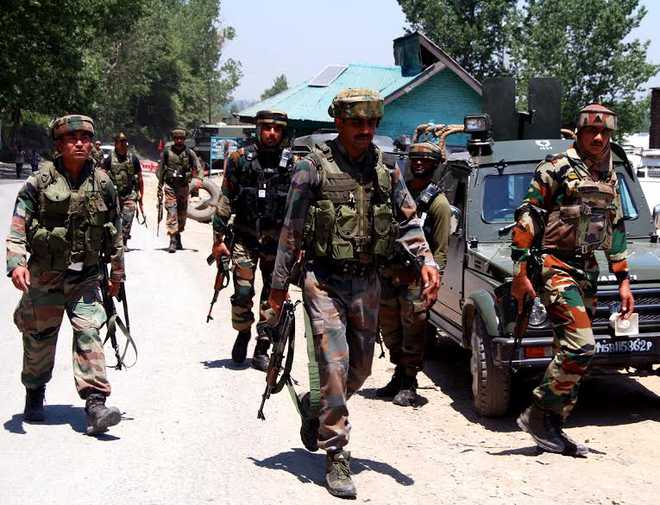
The army at the attack site. Tribune photo: Amin War

Suhail A Shah

Anantnag, June 3

Two army jawans were killed and four others were injured as militants opened fire on their convoy in Qazigund area in Kulgam district on Saturday.The attack took place around 11 am along the Srinagar-Jammu national highway.Initial reports say the convoy was moving from Srinagar to Jammu when militants struck near Wuzur village along the highway.

(Follow The Tribune on Facebook; and Twitter @thetribunechd)

Army sources confirmed the number of injured.“The injured have been shifted to hospital,” sources said.The area, meanwhile, has been cordoned off by police and army and efforts are on to nab the attackers.


Maj Gen (retd) on pan-India bicycle tour

Maj Gen (retd) on pan-India bicycle tour

Una, April 7

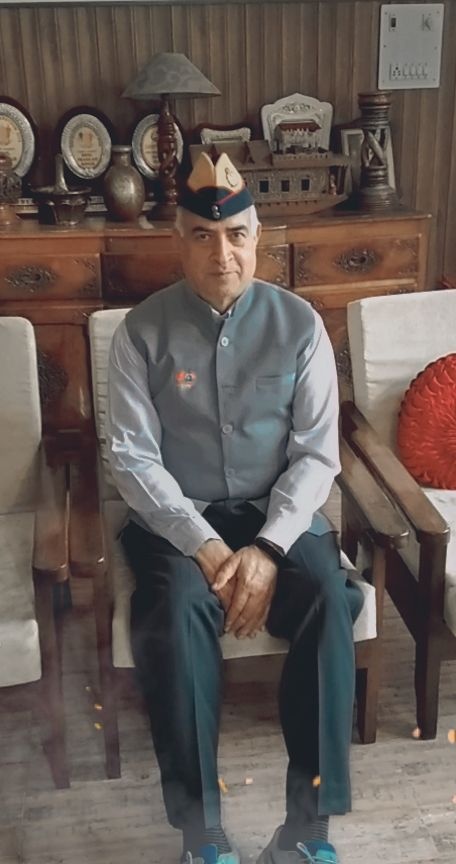
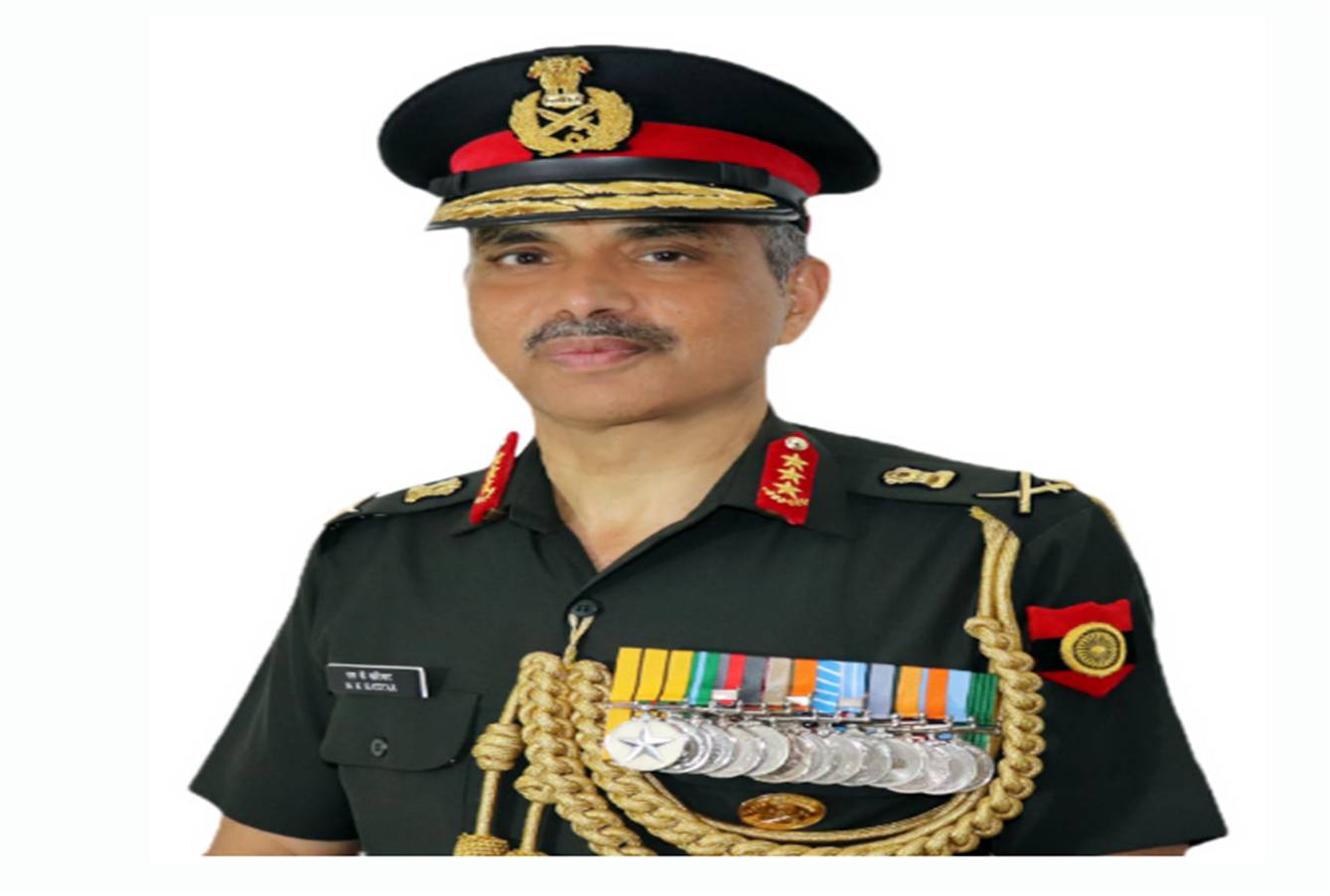
Maj Gen (retd) Somnath Jha and his wife Chitra Jha were given a warm reception at the District Sainik Welfare Office on their arrival from Hamirpur. Jha is traversing the country on his bicycle to pay homage to the martyrs who made the supreme sacrifice for the country.Maj (Retd) Raghbir Singh, Deputy Director of the District Sainik Welfare Office, along with hundreds of ex-servicemen and their family members, welcomed Jha.Speaking on the occasion, Jha said after his retirement in September 2016, he decided to tour the nation to pay homage to martyrs and on October 19, 2016, he began his journey. He said during his tour, he had interacted with families of martyrs living in 21 states. —OC


Collector rates reduced in Mohali

Akash Ghai

Tribune News Service

Mohali, April 6

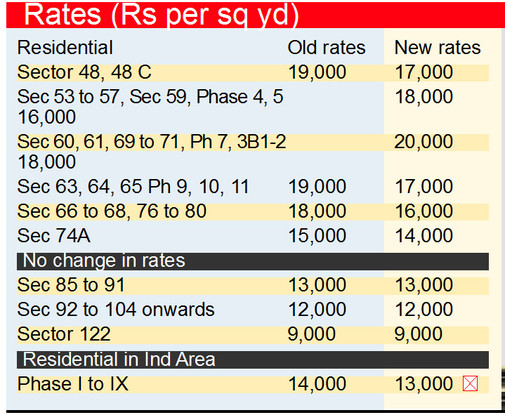
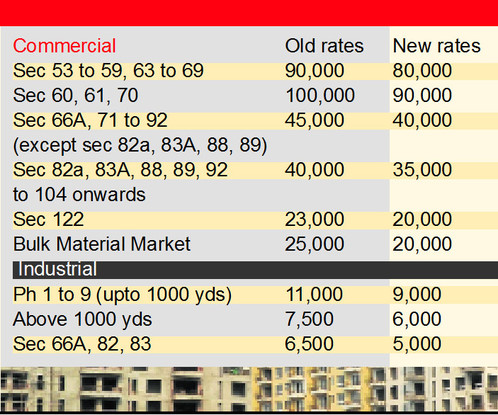
Bringing cheer to the local people, the Mohali administration today reduced the collector rates by 10 to 15 per cent on residential, commercial and industrial properties, here .However, there will be no change in the rate of agricultural land. The new rates have come into force with immediate effect.Under the new scenario, the residential properties in certain sectors have been cut by Rs 2,000 per sq yd while no change in the rates is being witnessed in developing sectors, including Sector 85 to Sector 122.The main old parts of the town saw a marginal reduction of Rs 1,000 per sq yd in the rates.The commercial property too witnessed reduction in the rates by Rs 1,500 per sq yd to Rs 10,000 per sq yd at different locations.Similarly, the industrial area too saw a cut in the rate from Rs 1500 per sq yd to 2000 per sq yd in different parts.In the residential sector, now the highest rates (Rs 18000) are in Sector 60, Phase VII (Sector 61), 3B1, 3B2 and Sector 69 to Sector 71. Earlier, the rates in these parts were Rs 20,000 per sq yd. There is no change in the rates at Ivory Tower (Sector 70), Pancham Society (Sector 68), Mohali Cooperative Society (Sector 68), Army flats (Sector 67, 68), Darshan Vihar (Sector 68), Mundi Cooperative Society (Sector 70), Golden Towers (Sector 68), Multi-Tech Towers Group Housing-2 (Sectors 90, 91) The rates in these housing complexes still remain Rs 1,600 per sq yd except the Golden Towers, where the rates remain at Rs 1,500 per sq yd.The lowest rates (Rs 9,000) are in the residential sector. In Sector 122, no change in the rates has taken place.In commercial arena, Sectors 60, 61 and 70 are on the top of the list, with rates of Rs 90,000 per sq yd. The Bulk Material Market and Sector 122 have the lowest rates — Rs 20,000 per sq yd.Phase 1 to IX in the Industrial Area saw the highest rates (Rs 9,000 per sq yd) while three industrial sectors— 66A, 82 and 83 have the lowest rates — Rs 5,000 per sq yd.When contacted, Mohali Deputy Commissioner Gurpreet Kaur Sapra said the rates had been reduced as per the conditions on the ground. “Our teams study the conditions here and then fix the new rates,” said the Deputy Commissioner.Mohali SDM Anuprita Johal said the new rates had come into force with immediate effect.Welcoming the reduction in rates, Shailender Anand, former chairman of the Mohali Property Consultants’ Association said the development would give some relief to consumers and the real estate sector. “The government should also reduce the registration charges (total 11 per cent) now to boost the real estate market in the state,” said Anand.


STATECRAFT Revolution, three years later b y Harish Khare

Revolution, three years later
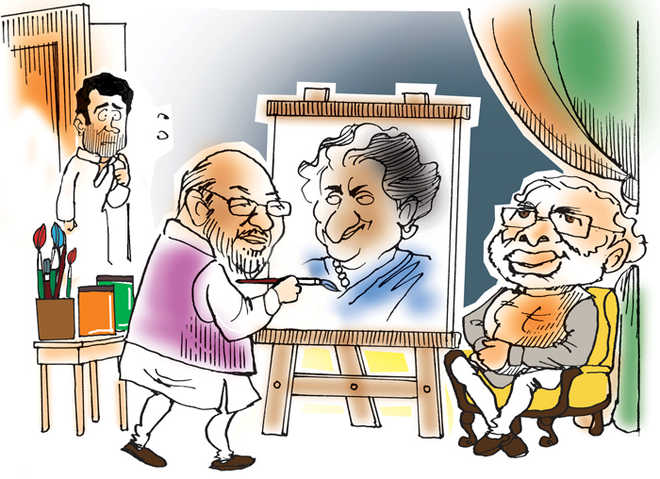
Illustration by Sandeep Joshi

A revolution was deemed to have been ushered in on May 26, 2014, in the forecourt of Rashtrapati Bhavan. Three years later, it is all too obvious that the meretricious cult has not been allowed to go stale; nor, have the “revolutionaries” lost their swagger. If anything, the revolution and its high priests seem inexhaustible and unstoppable. The Prime Minister’s reputation as the greatest demagogue of our times stands undiminished; he has been blessed with, to use Tiruvallavar’s words, “the gift of the gifted tongue.” As a nation, we remain seduced. Our anxieties and animosities are kept bubbling; and, we are all comfortable with #hashtag ill-liberalism. We have been induced to believe that we are being governed by less corrupt and more effective rulers than we were during the days of the parasitic Gandhis; we are unceasingly bombarded with facts and fiction, all intended to convey a sense of competence and accomplishment. Indeed, we are not allowed to catch our breath; we are being constantly transported from one crisis to another — and, a sense of relief that there is someone out there who is willing to use violence against those who threaten us with violence. There is no denying that the new revolution continues to demonstrate untiring political energy and populist verve; perhaps its greatest — uniquely unprecedented — strength remains its ability to control the national narrative, what we think or are allowed to say in public domain. It has mastered the new communication techniques and technology. The result is a bit of national incongruity. The same media that only a few years ago thought its primary institutional responsibility — rather its very raison d’etre — was to ask uncomfortable questions, to show a mirror to power, to speak up to authority, has been enlisted, unresistingly and self-consciously, as a government surrogate. Night after night, dissent and disagreements are shouted down in television studios; those in disagreement with the government are simply told to “stop cribbing.” This has been one of the most remarkable achievements, that too without seemingly any recourse to the coercive instruments available to any government. The media has been seduced to redefine its role: run the Opposition out of town. No other government since Independence has had the media so eagerly eating out of its hand, not even during the infamous Emergency. Yet, three years later, the character and direction of the revolution stand changed. It can be argued, admittedly with a bit of exaggeration, that the “revolution” has been reduced to a fight over Indira Gandhi’s legacy between her biological grandson (Rahul Gandhi) and a putative political grandson (Narendra Modi). The revolution changed direction once the Bihar electorate in the late 2015 put an end to the emerging Modi presidency; and, suddenly, the man who was widely hailed to be an Indian Deng Xiaoping, dexterously changed the course. After the Bihar voter settled Modi’s hash, the reformist platform was pushed on the back-burner (even though the FICCI and the ASSOCHAM continue to sing paeans, perhaps out of habit.) Let us make no mistake. Three years after the revolution, the Indian State is back with a bang — back with all the Stalinist impulses of the Indira Gandhi era. The State and its authorised functionaries breathe down the citizen’s neck, in the most intrusive and demanding manner. At least, three elements of the Indira Gandhi State stand restored as functioning mantras of the new revolution. First, the poor have been discovered, circa 1969. The grand disruption that went by the demonetisation was dressed up in pro-poor rhetoric in a manner that would have earned a nod of approval from Indira Gandhi. All those who thought that the corporate imagination and the market innovation would be relied upon to find answers to our problems of economic stagnation and unemployment, have watched in silence as the State was now charged with the responsibility to ameliorate the poor’s plight. Shades of Garibi Hatao. All the Indira Gandhi acolytes have noted with satisfaction that the 2014 revolution has not meant the withering away of the welfare State. Second, the inspector and his stick are back. In the name of unearthing black money, the raid raj has been brought back. Not since the brief period of VP Singh’s tenure as Finance Minister has the country been invited to celebrate the daily visits from the CBI or the Enforcement Directorate. It is being harshly demanded that taxes be paid up; otherwise be prepared for a visit from the income-tax man. Rather than the citizen being asked to live up to his obligations to the State, a collectivist mindset appears to be at work. And, where the legal functionaries are unable to be persuasive, there is the lynch mob, out to enforce and impose new prejudices and preferences. The State has asserted its right to oversee all spheres of cultural and social activity. The State is more muscular, more muzzling, and more manipulative than at any other time in recent decades. And, the third Indira Gandhi mantra at work is invocation of nationalism and its unremitting demands on our emotions and loyalties. Our nationalism has been reoriented as an anti-Pakistan mantra. Stupid and shallow men in Islamabad and Rawalpindi continue to fuel our sense of righteous indignation. Indira Gandhi remains the historic role model. Our present leaders cannot be faulted for remembering that Indira Gandhi enjoys the status of being the only “Hindu” ruler in our history to have inflicted a crushing defeat on a “Muslim” adversary. Even Atal Behari Vajpayee had to hail her as Durga. History carries its own allurements for the current saviours. And, just as it was Indira Gandhi’s wont, these mantras are being pressed to good use for a single-minded pursuit of personal political dominance and hegemony. The pursuit of personal political hegemony has, necessarily, to be non-ideological, practical, pragmatic and tactically ambiguous. The purists can keep on bemoaning the ideological flakiness and the absence of a Margaret Thatcher-like clarity and conviction, the hegemon has no doubts about his aims and direction: maximalist power as a personal entitlement, as a necessary requisite for orderly and stable governance. A political leader defines himself as much in terms of what his regime stands for as in terms of who he chooses to designate as his putative enemy. The Modi revolution continues to position itself as the anti-thesis of the Gandhis, and to appropriate for itself a moral and spiritual superiority — a very Indira Gandhian ruse, as it seeks to lay its own claim to the historical legacy of Indira Gandhi. In this quest lie the seeds of the revolution’s own disintegration. 


Punjab government declares holiday on Guru Nabha Das’s birthday on April 8

Punjab government declares holiday on Guru Nabha Das’s birthday on April 8
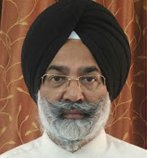
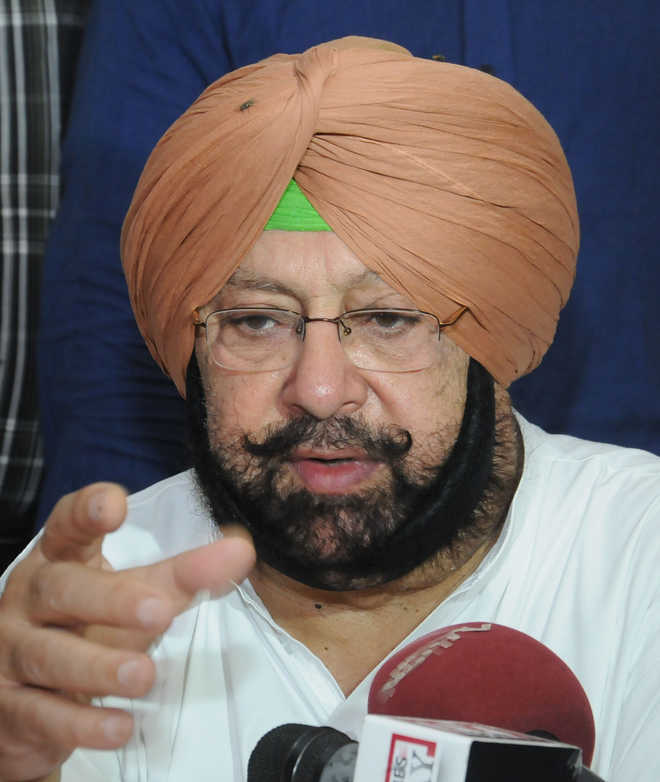
Capt Amarinder Singh. File photo

Tribune News Service

Chandigarh, April 6

The Punjab Government has declared a public holiday on April 8, Saturday, in all its offices, educational institutes and boards/corporations on account of the birth anniversary of Guru Nabha Das.
An official spokesperson announced this here on Thursday.Girdawari to assess damage to wheat due to hailstorm, rainChief Minister Capt Amarinder Singh has ordered a special girdawari (survey) to assess the damage caused to the wheat crop due to hailstorm and unseasonal rain across the state.

(Follow The Tribune on Facebook; and Twitter @thetribunechd)

A Punjab government spokesperson said the Chief Minister had directed all deputy commissioners to get the losses incurred by the farmers ascertained immediately to ensure adequate and timely compensation to them.The DCs have been instructed to initiate the assessment process, especially in regions from where reports of damage to the rabi wheat crop have been received.The state government is fully committed to adequately compensating the farmers for any losses suffered due to vagaries of the weather, said the spokesperson.


Lt Gen Anbu stresses relentless ops

Tribune News Service

Srinagar, May 25

Northern Command chief Lt Gen Devraj Anbu today emphasised the need for relentless intelligence-based operations to sustain pressure on the militant organisations.Lt General Anbu said this with interacting with troops on the ground in north and south Kashmir.An Army spokesman said Lt Gen Devraj Anbu today visited the formations and units in north and south Kashmir to review the prevailing security situation.“The Northern Command chief interacted with troops on the ground and emphasised the need for undertaking relentless intelligence-based operations to sustain pressure on the terrorist organisations,” the spokesman said.Commending the troops for their dedication to duty and high standards of professionalism, the General Officer Commanding-in-Chief of the Northern Command asked them to continue strict vigil to thwart any nefarious designs of inimical elements, he said.Lt General Anbu also reinforced the need for synergy among all security agencies to effectively meet any emerging security challenges and maintain a safe, secure and peaceful environment for the people.During the visit, Lt General Anbu was accompanied by Chinar Corps Commander Lt Gen JS Sandhu.


Airport arrest: Custody of jawan given to Army

Ishfaq Tantry

Tribune News Service

Srinagar, April 4

A court in Kashmir on Tuesday handed over the custody of a jawan, who was arrested with two live grenades at Srinagar International Airport on Monday, to the Army.The Commanding Officer of the accused jawan told the court that he would be dealt with and proceeded against under the Army Act.JAK Rifles’ Bhupal Mukhia, a West Bengal resident, currently posted on the Line of Control in the Uri sector of Baramulla district in north Kashmir, was to board a Delhi-bound flight on Monday morning when two live grenades were recovered from his luggage during screening at the main gate of the airport. He was immediately taken into custody by the anti-hijacking squad of the police and an FIR was registered.In the application moved by the Commanding Officer of the jawan before the Court of Special Mobile Magistrate, in Budgam district today, it was pleaded that the custody of Bhupal be handed over to the Army as it was investigating the matter on its own and wanted to proceed against him under its own laws.“Because he is a serving member of the armed forces, he will be dealt with and proceeded against as per the Army Act,” the counsel representing the Army argued before the court today while praying that his custody be handed over to the Army.While granting the plea of the Commanding Officer, the court also granted interim bail to the jawan before handing over his custody to the Army.The court has fixed next hearing on April 6 when both police and Army are expected to report to it.


Defence gets its aim right, but still far from hitting reforms target

HIGHLIGHTS

  • Defence ministry has witnessed a faster decision-making process
  • The functioning of the defence ministry has been scam-free so far
  • However, no major ‘Make in India’ defence project has actually taken off till now

NEW DELHI: Well begun, it is said, is half done. There has been a flurry of new initiatives and policy decisions on several fronts in the gigantic defence ministry, with all its national security imperatives and complexities, since the Modi government assumed office three years ago.

However, while marking a decisive shift from the status quoist era under the risk-averse A K Antony’s eight-year stint as defence minister, good beginnings are yet to largely translate into concrete realities on the ground. Yes, the government has fulfilled its promise to implement the long-pending one rank, one-pension scheme for over 21 lakh veterans, notwithstanding some disgruntlement over its final form.

The Army also carried out surgical strikes against terror launch pads in Pakistan-occupied Kashmir, a departure from the past. The functioning of the defence ministry has been scam-free so far. But, from the crucial chief of defence staff post and tri-Service commands to handle space, cyberspace and special operations, to bold measures required to invigorate India’s moribund defence-industrial base, the “radical systemic changes” promised by the 2014 BJP manifesto are still missing in action.

No major ‘Make in India’ defence project, for instance, has actually taken off till now. The proposed National Maritime Authority is nowhere on the horizon. Far-reaching measures like the “strategic partnership” policy to boost the private sector’s role in defence production, finally approved by the defence ministry last week, will take at least another year to be rolled out.

The planned defence procurement organisation, in turn, will take another two years to take shape. Yes, the government has cut through the stupefying red-tape and long-winded arms procurement procedures to push through deals like the ones for 36 Rafale fighters, 145 M-777 ultra-light howitzers, and 22 Apache attack and 15 Chinook heavy-lift helicopters.

It also creditably empowered the beleaguered armed forces to buy emergency stocks of ammunition and spares to ensure they could undertake at least 10 days of “intense fighting” if matters come to a head with hostile neighbours. But the armed forces still continue to battle critical deficiencies in areas ranging from submarines and fighters to multi-role helicopters and night-fighting capabilities.

The direct acquisition of 36 Rafales, ordered from France for Rs 59,000 crore last September after scrapping the deadlocked MMRCA (medium multi-role combat aircraft) project for 126 fighters, for instance, will in itself not do.

The IAF is making do with just 33 fighter squadrons (each with 18 jets) when at least 44 are needed to tackle the “collusive threat” from China and Pakistan.

The Rafale deal, unlike the original 126-jet project, also has no technology transfer involved. Not having a full-time Raksha Mantri has been a glaring problem.

First, Arun Jaitley held dual charge for almost six months in 2014, with the finance ministry obviously his first priority. Then, there was Manohar Parrikar for a little over two years, whose heart was set on returning to Goa as chief minister. Now, we are back to square one, with Jaitley again playing the dual-hatted role.

ARTIFICIAL RIPENING Beware! Your fruit could harm you

Ramkrishan Upadhyay

Tribune News Service

Chandigarh, May 21

With the Health Department tightening the noose around traders to curb the use of calcium carbide for artificial ripening of fruits at the fruit  and vegetable  market in Sector 26, the traders have replaced it with the Chinese ethylene powder.The market is full of sachets of the Chinese ethylene powder, lying scattered all over the place after being thrown out of cartons used to transport mangoes.These sachets expose visitors to emissions of the hazardous chemical.Experts say exposure  to the chemical can cause the same ill-effects as caused by calcium  carbide. The packets are also dangerous to cows and other animals at the market that survive on vegetable  waste. While the traders claim the use of the Chinese ethylene powder is allowed, officers of the Health Department are waiting for a report of the Food Safety and Standards Authority of India on it. The Department of Food  Safety has served notices on all 111 fruit traders warning  them of stern action, including termination of the licence, in case they are found using the banned calcium carbide for ripening of fruits.Sukhvinder Singh, designated officer, Food and Safety Department, said samples of ethylene powder collected  from mango cartons had been sent to the Food Safety and Standards Authority of India to check for artificial ripening chemicals beyond the permissible limit. “This ethylene is in the form of a starchy powder, which slowly releases ethylene gas that causes mangoes and other fruits to ripen. Sources said besides the Chinese sachets, the use of calcium carbide had not stopped completely in the  market despite thes crackdown.While checks are being carried out at the mandi, there  is no check in apni mandis  where “masala’ is mainly used for ripening of mangoes, bananas and papaya, and sometimes also for cheeku and tomatoes.” They said while the actual process required five to six days for repining of fruits, “with the use of calcium carbide, it takes a few hours to ripen these”.

Papaya gets costlier

Raids conducted by the department has increased the rates of papaya by two times. Papaya was available for Rs 40 a kg on Sunday, the highest this season. A trader said the supply of papaya had decreased by over 50 per cent  after the  raids, which had led to the increase in its prices.Over 3 tonnes of fruits  destroyed so farThe Department of Food Safety has destroyed over three tonnes of mangoes and papaya ripened by using calcium carbide in five raids  conducted in the past one  month.How to identify  artificially ripened mangoesExperts say an artificially ripened mango will have green patches. These patches are clearly distinguishable from the yellow and unlike a naturally ripened mango, it will not have a uniform blend of yellow and green. Artificially ripened mango  will also have an unnaturally bright yellow colour when compared to a naturally ripened mango. The artificially ripened mango causes slight burning in the mouth.



‘Have ordered regular checks’

“I have already issued directions to officers of the Department of Food Safety to carry out regular checks to curb the use of calcium  carbide  for ripening of fruits. The use of calcium carbide is dangerous for human beings.”Dr  Rakesh  Kashyap, Director,  Health Services Traders want an alternative    “The Administration has stopped the  use of calcium  carbide without  providing the traders any alternative. The Chinese sachets for   ripening of fruits are also not available in the  city,  causing a huge  loss to the  traders.”  Brij  Mohan, VP, Fruit & Vegetable Market Assn