



Sanjha Morcha

What’s New

Click the heading to open detailed news

Current Events :

web counter

Print Media Reproduced Defence Related News

Countdown to military clash begins: Beijing daily

Countdown to military clash begins: Beijing daily
AFP file

Beijing, August 9

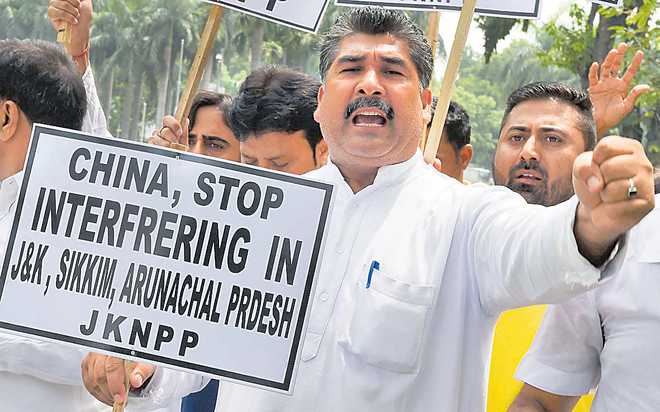
The countdown to a military conflict between India and China has begun and New Delhi should come to senses and withdraw troops from Doklam before it’s too late, a Chinese daily said on Wednesday.An editorial in the state-run China Daily told India that the “clock is ticking away”. The piece was latest addition to the hostile commentaries in the Chinese media. The newspaper said “India will only have itself to blame” if it didn’t withdraw troops from Doklam where its troops are locked in a stand-off with the Chinese Army since mid-June.(Follow The Tribune on Facebook; and Twitter @thetribunechd)“The countdown to a clash between the two forces has begun, and the clock is ticking away the time to what seems to be an inevitable conclusion,” it said.“As the standoff … enters its seventh week, the window for a peaceful solution is closing.” China has warned India of serious consequences if Indian troops were not pulled back from Doklam, which Beijing calls Donglang and claims is its territory.India has proposed to China to simultaneously pull back from Doklam, which India and Bhutan say belongs to Thimpu. Beijing has refused. The newspaper said India had ignored China’s stern warnings. “Anyone with eyes to see and ears to hear will have got the message. Yet New Delhi refuses to come to its senses and pull its troops back to its own side of the border.” — IANS

Army recruitment camp

Amritsar: As many as 46,988 youngsters from the Majha region comprising Pathankot, Gurdaspur, Tarn Taran and Amritsar have applied to take part in a fortnight-long Army recruitment camp to be held at Khasa cantonment from October 4. Col (retd) Amarbir Singh Chahal, District Defence Services Welfare Officer, said candidates would appear for physical and written tests for various posts like soldier general duty, soldier technical and soldier clerk. He said the admit cards of all candidates had been mailed and according to them, they have to appear for tests on the given date, time and venue. He said they must bring a hard copy of the admit cards along with them. tns


Tidings from Doklam by M. K. Bhadrakumar

Tidings from Doklam
MESSAGE: The Doklam standoff with China conveys a disturbing message

M. K. Bhadrakumar

IF you don’t fund the State Department fully, then I need to buy more ammunition ultimately. So I think it’s a cost-benefit ratio.” These are words by James Mattis, US Secretary of Defence. It is a powerful statement about the no-man’s land where diplomacy and military power intersect in a country’s foreign policy. The point is, it is never easy to judge the measured activism with which military power is used in support of foreign policy. The preference for hard power may have seductive appeal — and diplomacy may look an elusive idea — but, historically, it is not without containing some irony. Bismarck’s “blood and iron” didn’t turn out to be the solution to the German question. It led instead to the ruin of Germany. Suffice to say, the so-called Doklam standoff with China conveys a stark and disturbing message. The government had a choice to resort to diplomacy or use military force. It chose the latter. According to the Chinese Foreign Ministry spokesman, “China had notified the Indian side in advance out of goodwill… on May 18 and June 8 respectively and the Indian side didn’t make any response.” Instead, when the Chinese began building the road on June 16, within forty-eight hours Indian troops intervened to stop the work. From all appearances, India didn’t blunder into the standoff. It was a political decision to project military power across the international border. The Indian troops simply crossed the Sikkim-China boundary to get across to the Bhutan-China border. Delhi claims that it is safeguarding Bhutan’s interests. Bhutan has not endorsed the Indian intervention publicly, but that causes no embarrassment to Delhi. The Indian commentators laud the government for showing exemplary restraint in the face of strident Chinese statements. But in reality the government owes no explanation to anyone for its action. The nearest analogy would be the “surgical strikes” against Pakistan — an unapologetic display of “muscular diplomacy”. Prime Minister Modi’s remarks on June 26 in Washington during his visit to the US regarding the “surgical strikes” put things in perspective. He said no country in the world questioned India’s action. Thereupon, he went on to say that India, while following international laws and norms, is also capable of taking “the toughest of steps for our sovereignty, security, peace, our people, and progress. Whenever the need arises we have done it and the world will never be able to stop us.” When he said this, Modi had known — although we hadn’t at that point in time — that the Indian forces had crossed the international border into Doklam, and there was a standoff, which was already into the second week. Therefore, it is futile to measure the standoff with coffee spoons on a daily basis in terms of a mutual “Doklam thaw”. Perhaps, the most significant remark that External Affairs Minister Sushma Swaraj made in her speech in the Rajya Sabha on Thursday was that the Doklam standoff is not a stand-alone issue. The minister was quoted as saying, “We are not negotiating only on Doklam, we are talking about bilateral relations in entirety. And a solution will also emerge from it.” Clearly, our pundits have let their imagination run berserk by analysing the Doklam standoff in terms of India “calling the Chinese bluff”; India “standing up to China’s bullying”; or India “giving China a bloody nose.” Such puerile thesis misses the point that this is a profoundly serious standoff, which India got into with great deliberation, stemming from a hugely consequential political decision. The Chinese statements have duly assessed that India did not blunder into this standoff, but acted with a purpose. What objective(s) would the government have had? Conceivably, there are four dimensions. One, Delhi would have hoped to send a message to Beijing on the lines Modi spoke in Washington – and, that he spoke from American soil carried its own resonance. Two, India hoped to bring forward from the backburner the issue of the “trijunction” where the borders of Sikkim, Bhutan and China meet. There are differences in interpretation, which have security implications. Three, succinctly put, India regarded itself to be a stakeholder in the China-Bhutan border negotiations and assertively sought a say in the two countries’ discourse. Four, importantly, India hoped that the Doklam standoff would lead to an enhanced strategic communication regarding each side’s core interests and vital concerns.    However, the border issue also devolves upon the fact that there has been no consultation since the Special Representatives in December 2012 agreed on the so-called Common Understanding to the effect that “There is mutual agreement on the basis of the alignment of the India-China boundary in the Sikkim sector as provided by the convention between China and Great Britain relating to Tibet and Sikkim signed in 1890.”  India hopes to negotiate from a position of strategic advantage insofar as its military presence in Sikkim is discernibly superior to China’s on its side of the border — and India’s “muscular diplomacy” over Doklam testified to it. Basically, India keeps an ambivalent stance with regard to the 1890 treaty — neither disavowing it nor acknowledging the delimitation of the India-China border in the Sikkim sector as established in the treaty, which China keeps emphasising as sacrosanct. How far India’s “muscular diplomacy” impressed the Chinese will only be known in the fullness of time. A partial Indian drawdown may have taken place, but China sticks to its unequivocal stance that there is no room for negotiation so long as Indian troops remained in Doklam. The chances of China retreating from this red line appear remote. There are facile assumptions being voiced that India can leverage China’s interest in the Indian market. But then, China’s exposure in the Indian market is miniscule in comparison with its profound interdependency vis-à-vis the United States — and yet Beijing asserts its core interests in the South China Sea. An $11.2 trillion economy with $3685 billion foreign trade (2016 figures) does not critically depend on the Indian market where China’s cumulative FDI flow is a paltry $1.63 billion and trade turnover stands at $71.48 billion.  A Xinhua commentary on Friday (the day after Sushma Swaraj spoke in Parliament) all but ruled out any “face-saving” formula. It hinted at Beijing’s grit to blunt India’s “muscular diplomacy”, lest it became precedent-setting in future. Equally, Beijing intends to pursue its future relations with Bhutan as a truly sovereign, independent state and seems confident that Thimpu shares this interest. All in all, September could be the month to watch — unless there is a complete Indian withdrawal by then. Meanwhile, storm clouds are gathering.— The writer is a former ambassador


Man with ‘ISI links’ arrested for blackmailing woman colonel

Man with 'ISI links' arrested for blackmailing woman colonel
A woman colonel filed a police complaint in Dwarka, alleging that she had been receiving morphed and obscene pictures through WhatsApp from two unknown numbers.

New Delhi, September 19A man suspected of having links with Pakistani spy agency ISI was arrested here for allegedly threatening to upload morphed pictures of a woman colonel on the internet, the police said.The accused, Mohd Parvez, who is in his early 30s, was arrested on September 13 by the local police but after it was found that he had visited Pakistan a few times, the matter was transferred to the Special Cell for probe, they said.A woman colonel filed a police complaint in Dwarka, alleging that she had been receiving morphed and obscene pictures through WhatsApp from two unknown numbers.

(Follow The Tribune on Facebook; and Twitter @thetribunechd)

She was threatened that if she did not speak to the sender of the messages, the pictures would be circulated on the internet, the police said.After she blocked the two numbers, the woman colonel’s daughter started receiving morphed pictures and messages from the Facebook profile of a woman, they said.The person sending the pictures and messages asked the woman’s daughter to speak to the sender and threatened her with uploading the pictures on social media.The woman colonel approached the police and a case was registered. On the basis of the information gained through the Facebook profile and the records of the two numbers, Parvez was detained.During his interrogation, it emerged that he had visited Pakistan and had made SIM cards available to some Pakistani nationals. It was suspected that he is linked with the Inter-Services Intelligence (ISI), the police said.He was found to have suspicious antecedents and is being questioned by the Special Cell sleuths in connection with the matter, they said.It is suspected that he was threatening the woman colonel since he wanted to extract sensitive information from her, an angle that is currently being probed. PTI


Inflicted more casualties across border, says Jaitley Claims increasing attempts by Pakistan to push in terrorists

Inflicted more casualties across border, says Jaitley

Tribune News Service

New Delhi, August 4

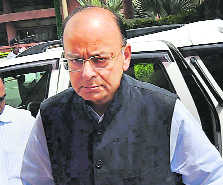
Amid increased attempts by Pakistan to push terrorists across the border, India’s dominance on its western border — Line of Control (LOC) and International Border (IB) — has led to an increase in the number of causalities on the other side, Defence Minister Arun Jaitley informed the Lok Sabha today.Noting that with increased “domination and impact” on the western border, the Army has been able to check infiltration, though “Pakistan has increased efforts of infiltration”, Jaitley said during question hour.The minister said 285 incidents of ceasefire violation had taken place along the LoC so far this year, compared to 228 in 2016 in which eight people had lost their lives. He said there were 221 ceasefire violations along the IB, which is guarded by both the Border Security Force and the Army.The minister said the Army had constructed an anti-infiltration obstacle system (AIOS) in areas under its operational control along the LoC and IB in Jammu and Kashmir. Radars, sensors and thermal imagers along with surveillance have been incorporated on this fence to detect and intercept infiltration by terrorists.The AIOS is further strengthened by deployment of troops and construction of defence works based on threat perception for an effective multi-tier counter-infiltration grid. Jaitley said the government regularly reviewed the threat perception to secure the borders and protect national interests.The minister said the government was taking measures to ensure modernisation of defence forces to keep them in a state of readiness to meet operational and security challenges.Replying to another question, Jaitley said the government had enhanced special allowances given to defence personnel serving in difficult areas such as Siachen, which are even more than what the 7th Pay Commission had recommended.


Spirit of the legendary Marshal lives on

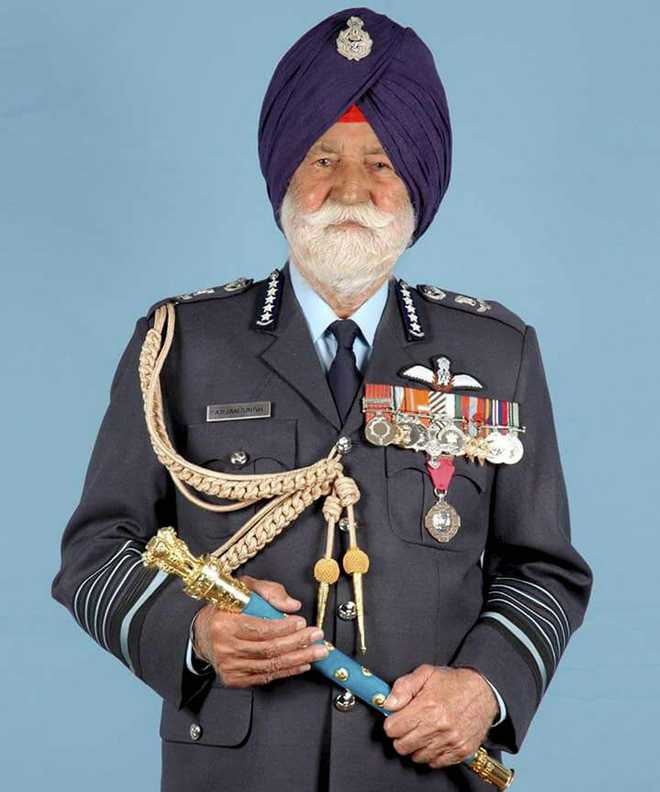
God doesn’t make many like him anymore! Marshal of the Indian Air Force Arjan Singh straddled the aviation scene in the country literally from its inception.

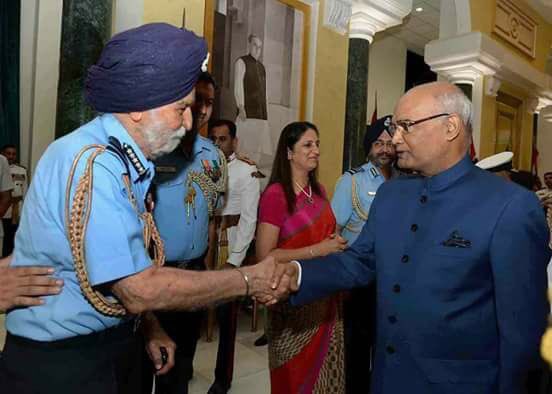
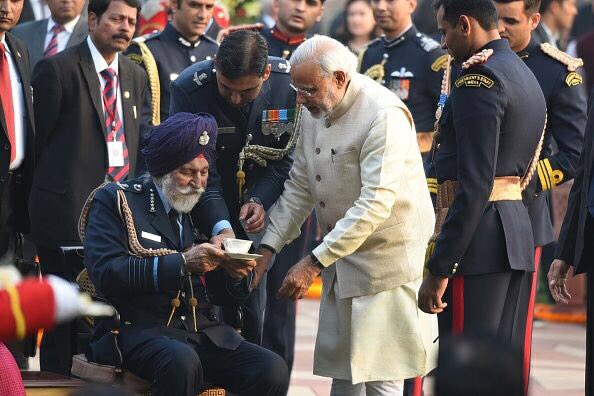
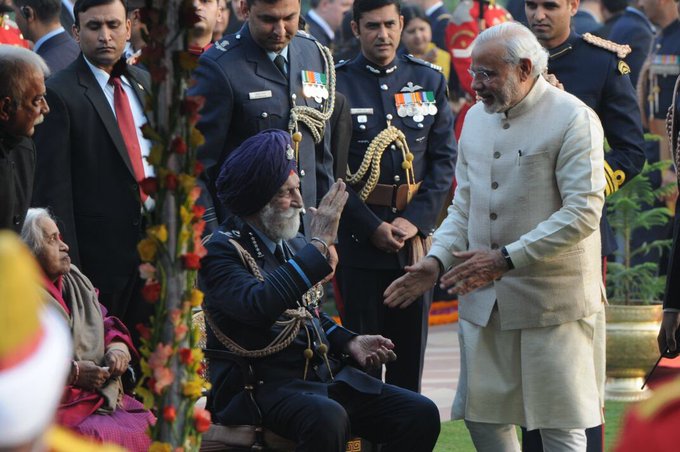
Prime Minister Narendra Modi with Marshal Arjan Singh during the At Home at the President’s house in New Delhi on January 26, 2016.Earning his spurs in the Arakan campaign in the World War II, where he was awarded the Distinguished Flying Cross, he was part of the pioneers who nurtured the fledgling Air Force of India through the turmoil of partition in 1947.

As the IAF grew in stature so did its responsibilities, which unfortunately, were not tested in the 1962 war. But then came the redemption of our armed forces in the 1965 Indo-Pak conflict.

Spearheading the aerial campaign under Arjan Singh’s stewardship, the IAF came out with flying colours. Then Air Chief Marshal Arjan Singh was just 45 years of age but what he did was much more than victories and kills that his aviators scored – the Indian Air Force had been set on a path of professionalism, the results of which we are seeing today with modern aircraft and top notch professionals flying them.

This writer, who was a Class V kid during the 1965 war, remembers how Arjan Singh was a household name during those heady days.

After retiring in 1969, Arjan Singh went on to serve India in more ways than one, from philanthropic acts to political and diplomatic assignments.

Very few people outside the Air Force know that he started, with his own money, a special fund for the wards of non-combatants of the IAF.

He was a senior colleague, patron and a father figure to all men and women in blue – and he was so ably supported by his wife Teji.

One always remembered the Marshal for his ramrod straight gait.

The annual IAF Day parade on October 8 was graced by the sight of a ninety year old serving IAF officer walking smartly at Air Force Station Hindan and moving on to the dais to take the salute – not a stumble, not a waiver and woe betide anyone who tried to give him a helping hand, thinking he was old!

After the parade, he was the cynosure of all eyes as he mixed with one and all and obliged everyone with a photograph.

The last three years saw time take its toll on his physical health, but his memory was as sharp as ever.

Just a year back, despite medical issues, the Marshal came to release a book in which were listed all who had died in Air Force flying accidents.

When asked how he had mustered the strength, he said that was the least he could do for those who had laid down their lives for India. That was the spirit of the Marshal that will live on for ever.


President Kovind, PM Modi condole death of Marshal Arjan Singh

President Kovind, PM Modi condole death of Marshal Arjan Singh
File photo of Arjan Singh, Marshal of the Indian Air Force. — PTI

New Delhi, September 16President Ram Nath Kovind and Prime Minister Narendra Modi on Saturday mourned the death of Marshal Arjan Singh and hailed his excellent leadership in the 1965 India-Pakistan war when the Indian Air Force saw substantial action.”Sad at demise of a great air warrior & Marshal of the Air Force Arjan Singh. Condolences to his family & IAF community.

President Ram Nath Kovind and Prime Minister Narendra Modi on Saturday mourned the death of Marshal Arjan Singh and hailed his excellent leadership in the 1965 India-Pakistan war when the Indian Air Force saw substantial action.”Sad at demise of a great air warrior & Marshal of the Air Force Arjan Singh. Condolences to his family & IAF community.

View image on Twitter

Sad at demise of a great air warrior & Marshal of the Air Force Arjan Singh. Condolences to his family & IAF community  privacy

 “Marshal of the IAF Arjan Singh was a WW II hero & won our nation’s gratitude for his military leadership in 1965 war,” Kovind said in a series of tweets.“India mourns the unfortunate demise of Marshal of the Indian Air Force Arjan Singh. We remember his outstanding service to the nation,” PM Modi tweeted.

View image on TwitterView image on TwitterView image on Twitter

India mourns the unfortunate demise of Marshal of the Indian Air Force Arjan Singh. We remember his outstanding service to the nation.

Modi said the determined focus of Singh, who was promoted to the five-star rank of Marshal of the Air Force in 2002, on capacity building in the IAF added great strength to India’s defence capabilities.”India will never forget the excellent leadership of Arjan Singh in 1965, when the IAF saw substantial action,” the prime minister said in a series of tweets.

India will never forget the excellent leadership of Marshal of the IAF Arjan Singh in 1965, when the IAF saw substantial action.


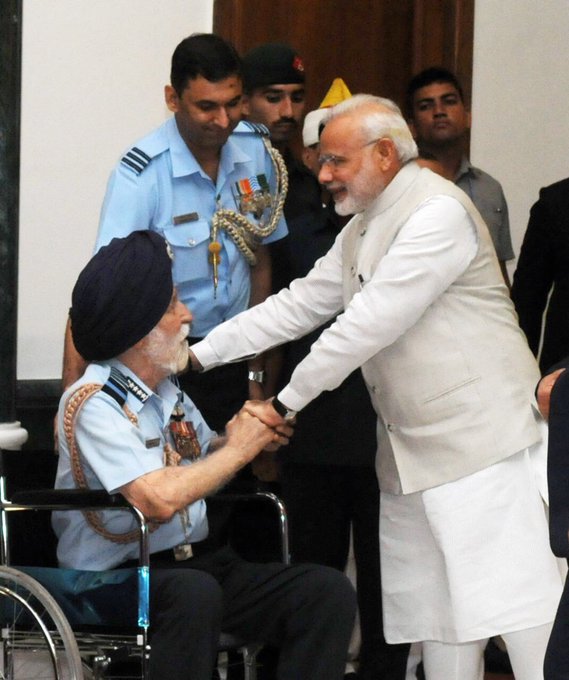
Modi recalled how the ageing war hero stood up to salute him despite his ill health.”Sometime back I met him, who despite his ill health tried to get up to salute even though I said no. Such was his soldier discipline,” he said.

My thoughts are with his family & those mourning the demise of a distinguished air warrior & fine human, Marshal of the IAF Arjan Singh. RIP

He said his thoughts were with Singh’s family and those mourning the demise of the distinguished air warrior and a fine human being,” the prime minister added. PTI


Pervez Musharraf considered using nukes against India in 2002: report

Pakistan’s former military dictator Gen Pervez Musharraf says he considered the use of nuclear weapons against India amid tensions following the 2001 terror attack on the Indian Parliament, but decided against doing so out of fear of retaliation, according to a media report.

Musharraf, 73, also recalled that he had many sleepless nights, asking himself whether he would or could deploy nuclear weapons, the Japanese daily ‘Mainichi Shimbun’ said.

The former president disclosed that amid tensions between India and Pakistan following the 2001 terrorist attack on the Indian Parliament, he contemplated the use of nuclear weapons, but decided against doing so out of fear of retaliation.

When tensions were high in 2002, there was a “danger when (the) nuclear threshold could have been crossed,” the paper quoted Musharraf as saying.

At the time, Musharraf had publicly said that he would not rule out the possibility of using nuclear weapons.

Musharraf also said, however, that at the time, neither India nor Pakistan had nuclear warheads on their missiles, so it would have taken one to two days to make them launch-ready.

Asked whether he had ordered that missiles be equipped with nuclear warheads and put into firing position, he said, “We didn’t do that and we don’t think India also did that, thank God” — pointing, perhaps, to a fear of retaliation, the paper reported.

The two countries subsequently avoided an all-out clash and tensions subsided.

The then army chief Musharraf ousted the then Prime Minister Nawaz Sharif in a coup in October 1999. The army general served as president from 2001 to 2008.

Musharraf has been living in Dubai since last year when he was allowed to leave Pakistan on pretext of medical treatment. He has been charged with involvement in the murder of the former two-time prime minister Benazir Bhutto in 2007.


Anglo-Sikh war pistols missing since 2006

Anglo-Sikh war pistols missing since 2006
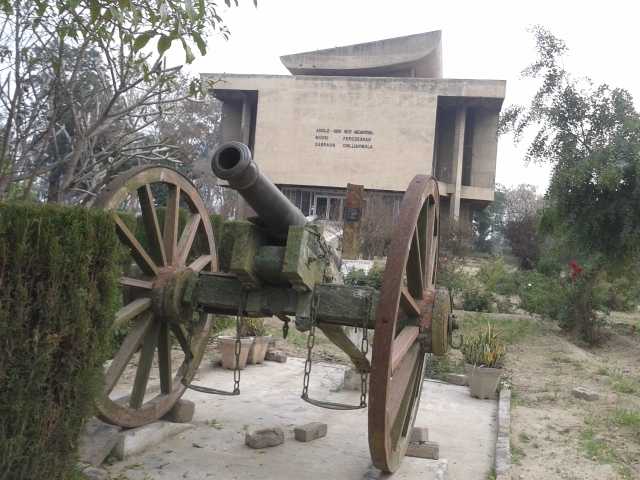
A cannon outside the Anglo-Sikh War Museum in Ferozepur.

Anirudh Gupta

Ferozepur, September 9

Two pistols dating back to the Anglo-Sikh wars of 1845-46, stolen more than a decade ago from a museum here, are yet to be recovered.Earlier, swords, firearms and other weapons from these wars had been put on display at the Anglo-Sikh War Museum at the time of its inauguration in 1976. It was constructed in memory of the Sikh soldiers who had attained martyrdom while fighting the British forces.However, much to the dismay of historians and local residents, these historical weapons have been junked or got stolen.On the complaint of the then Director, Cultural Affairs, the Ferozepur police had registered a criminal case against two persons at Ghall Khurd police station in June 2006 in connection with the theft, but no follow-up action was taken.“It seems successive state governments deserted this monument the way the generals betrayed their brave soldiers during the Anglo-Sikh wars,” said Harish Monga, a local resident.Paucity of funds, manpower and resources at this sprawling complex are cited among the reasons for its neglect. The iron tripod bearing plaques of the Anglo-Sikh wars have rusted beyond recognition. The collection of murals and wall paintings depicting battle scenes and portraits by renowned painters such as Kirpal Singh and Jaswant Singh have been damaged. The condition of portraits of Maharani Jindan, Sham Singh Attariwala, Diwan Mool Chand and Lord Dalhousie is equally bad.“Instead of setting up more memorials, the state government should first improve the condition of the existing ones,” said Lt Gen OP Nandrajog, a former Army commander.“One wonders if the state officials or ministers have ever had the inclination to visit these memorials,” he added.Meanwhile, Army officers from Britain will visit the Saragarhi memorial here on Tuesday to pay tributes to martyrs of the 1897 battle. The Congress government is hosting a state-level function to mark the occasion. Chief Minister Capt Amarinder Singh, who is on a private visit to the UK, has authored a book on the subject.