Sanjha Morcha

What’s New

Click the heading to open detailed news

Current Events :

web counter

Print Media Reproduced Defence Related News

Time hasn’t come for AFSPA rethink: Rawat

Time hasn’t come for AFSPA rethink: Rawat
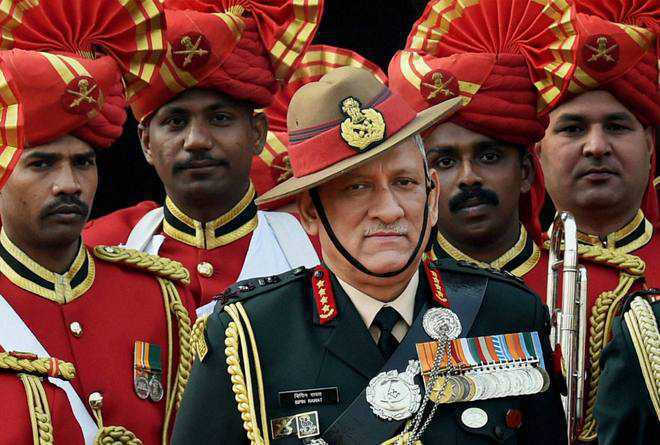
Army Chief General Bipin Rawat. — File photo

New Delhi, January 28

Time has not come for any rethink on AFSPA or making some of its provisions milder, Army Chief Gen Bipin Rawat has said, asserting that the Army has been taking adequate precautions in protecting human rights while operating in disturbed areas like Jammu and Kashmir.His remarks come against the backdrop of reports that several rounds of high-level discussions have taken place between the defence and home ministries on the “need to remove or dilute at least some provisions” of the Armed Forces Special Powers Act (AFSPA).(Follow The Tribune on Facebook; and Twitter @thetribunechd)


The Act gives the security forces special rights and immunity in carrying out operations in disturbed areas. There has been a long-standing demand from various quarters in J&K and the North-East to withdraw it.“We have never been strong in applying the force the way it could be applied (under AFSPA). We are very concerned about human rights. We are absolutely concerned about collateral damage. So do not get too much concerned because we are taking adequate measures and precautions,” he said. “The AFSPA is an enabling provision which allows the Army in particular to operate in difficult areas and let me assure you that the Army has got quite a good human rights record,” Gen Rawat added. — PTI


Sikh battalion Subedar’s advice saved Valley in ’47

Sikh battalion Subedar’s advice saved Valley in ’47
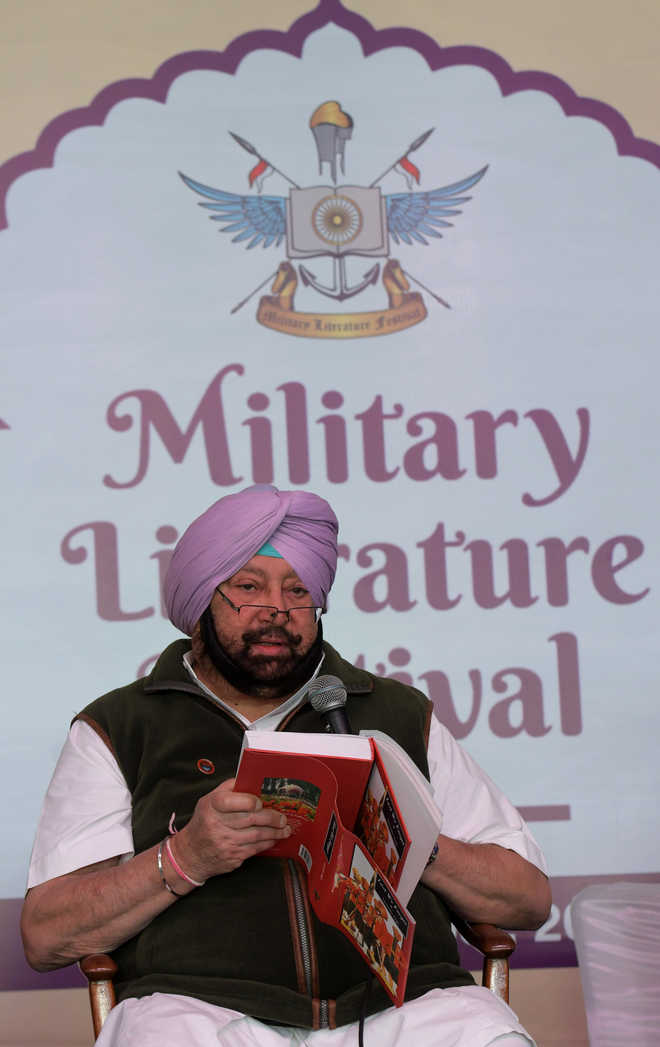
Punjab Chief Minister Capt Amarinder Singh speaks at Military Literature Festival in Chandigarh on Friday. TRIBUNE PHOTO: RAVI KUMAR

IAF attack at Longewala was massive

  • The IAF attack on Pakistan army tank column at Longewala during the 1971 war was important as it destroyed a large number of tanks, recollected Air Marshal Vinod Patney (retd). In the audience sat Brig Kuldip Singh Chandpuri (retd), who as a Major led a company of the 23 Punjab Battalion, to prevent tanks from coming. The IAF had taken over at first light and destroyed 28 tanks. “There were a large number of tanks and we had only four hunter aircraft that launched an attack in streams. Twenty-eight tanks were hit,” said Air Marshal Patney, speaking at a session “Use of air power in 1971 war”. This was done using atechnique last used in the World War-II (1939-45), he said

Ajay Banerjee

Tribune News Service

Chandigarh, December 8

The Kashmir valley was saved in 1947 due to military action stemming from a strong advice given by a Subedar of the 1st Sikh battalion of the Indian Army to his officer.On realising that it was impossible to defend just the Srinagar airfield from the Pakistan army-backed armed raiders, the Subedar suggested to his boss Lt Col Dewan Ranjit Rai: “Sahib let’s go find the enemy rather than wait for them to arrive.”Punjab Chief Minister Capt Amarinder Singh, a noted historian, narrated this anecdote at a session on the first Indo-Pak war (1947-48) on the opening day of the Military Literature Festival here this morning.Col Rai heeded the advice and moved his troops towards Baramulla, some 34 miles north-west of Srinagar. That, Capt Amarinder said, changed the course of the fight. In all, 462 marauders were killed. In the meantime, the troops of the 1st Patiala moved up to Zoji La and held onto the pass for the six months, stopping the ingress of the raiders from the eastern flank. The two — 1st Sikh and 1st Patiala (now rechristened 15 Punjab) — secured a total of 27 gallantry awards among themselves, including 1 PVC, the highest war-time gallantry award.Capt Amarinder said on October 25, when VP Menon, the then secretary of states, led a delegation to Srinagar, “there was panic”.Dr Harish Khare, Editor-in-Chief of The Tribune Group of Newspapers, said: “Who did what to whom remains a matter of subjective interpretation even after 70 years. We have an Indian version, a Pakistan version and rather mischievous British version.”“Many questions remain unanswered. What was the role of British leadership? Could things be different had an Indian General been given command of the Army (a British was the commander then). Could there have been a better timing for accepting a ceasefire? Many of the present narratives flow from the mistakes we made, not made, or presumed to be made,” said Dr Khare.Lt Gen AK Mukherjee (retd) narrated how a company of 13 Field Regiment wore the uniform of 1st Sikh and when artillery guns arrived they reverted to being gunners (their original role). They fought a very decisive battle to save Uri.Brig IS Gakhal (retd), who is from the Sikh Regiment, narrated interesting anecdotes on role of the 1st Sikh. Brig MS Gill (retd) listed the surprise caused by tanks at Zoji La that led to the advance towards Drass and Kargil. Maj Gen Shivdev Singh (retd) suggested that the battles of Jammu, Kashmir and Ladakh could not be seen in isolation when studying the war.


PATHETIC CASE OF CAPT VIJENDRA SINGH GURUNG ,3 ASSAM RIFLES:::T SEWA COMES TO RESCUE

IMG-20180125-WA0069 IMG-20180125-WA0070
Dear Sir,
1.   The pathetic case of Capt Vijendra Singh Gurung, 3 ASSAM was brought to notice of T SEWA. He is a short service commissioned officer. Had his schooling in King George’s Military School, Chail, HP. He was an excellent sportsman and got commission as Short Service Commissioned Officer.
2.   He was commissioned into 3 ASSAM. His battalion was deployed in Akhnoor Sector prior to 1971 War. Due to poor leadership of GOC 10 Inf Div, we lost Chamb in the Chamb Jaurian sector of J&K in the Indo –Pak 1971 war. He was taken as Prisoner when pakis overran our defences in Chamb sector on the very first night of 03 Dec 1971 along with many others. As was expected he was tortured for more than one year in Paki jails. He was lucky in that he was repatriated back to India in 1973 due to intervention of World Red Cross unlike 54 PWs who are still languishing in Paki jails till date. If you see the list of those 54 PWs most of them are captured either in Hussainiwala of Punjab or in Chamb in J & K.
3.       Due to inhuman torture, Capt Vijendra Singh Gurugng became a mental wreck. What happened thereafter is very heart wrenching. He for what reason was not given psychiatric treatment in the MHs or Command Hospitals and was not granted permanent commission. This is how our system works.
4.       He now leads a pathetic life in Dehradun. Brig RS Rawat, President T SEWA Uttarakhand, Lt Col Anil Joshi his Chail School mate and others gave details about the way this SS Officer livestoday. He works as a labourer and lives in a hut of 8 ft x 6 ft. He cooks his own food by burning firewood he collects from here and there. I do not know why he does not get medical treatment as discharged SS officer in MH.
5.       The Nation has forgotten him, the Army has forgotten him and painfully his own ASSAM Regt has forgotten this brave officer. But T SEWA has not forgotten this war hero. We in T SEWA will help him as much as we can. We cannot allow even our worst enemy to undergo the kind of life Capt Vijendra Singh Gurung is undergoing as on today. T SEWA will do whatever it can. But every one of us have to chip in our bit and see this officer lives a decent life till his last days. I have recommended to National Executive Committee of T SEWA to sanction Rs 10,000 per month to this officer for life.
6.       Brig RS Rawat has met him and saw for himself what kind of hut he is living and how he is surviving. I do not think even street children live like this. It is a shame for our Ex-Servicemen community to let our own brother to live like this. Let the Nation forget him. Let the Army which earns crores forget him. But T SEWA, you and I cannot forget Capt Vijendra Singh Gurung.
7.       My humble request to all of you to pledge a small amount of Rs 100 to be sent to T SEWA for helping Capt Vijendra Gurung. Whatever you send specifically for him will be sent to Brig RS Rawat who will further hand over the amount to him. Let me see how many of us will come to help this unfortunate officer. Your donation may be sent to T SEWA –Corpus. When you send the money either by cheque or NEFT or standing instructions to your bank to remit the money every month to T SEWA, kindly in your letter or e-mail mention that it is specifically for Capt Vijendra Singh Gurung.
Warm regards,
Brig CS Vidyasagar (Rtd)
President, T SEWA
94931981380

Military and its glory in focus at fest by the lake

Besides interactions with war veterans and winners of gallantry awards, the festival will have a book exhibition, handicrafts stalls, armament display and live painting corner

From page 01 CHANDIGARH:City Beautiful is geared up to experience an amalgamation of war stories, experience, and defence literature under a single roof with the twoday Military Literature Festival starting at the Lake Club, on Friday.

ANIL DAYAL/HT PHOTOSIn the final countdown to India’s first Military Literature Festival, the motorcycle display team of the Indian Army left scores of Chandigarh residents awestruck with their performance at Uttar Marg, near Sukhna Lake on Thursday.The event is a joint initiative of the Punjab government and the Chandigarh administration, and is being supported by the western command of the Indian Army.

The festival aims to create awareness among people, especially the children, about military history and accomplishments of our forces. The event is open to all and has free entries. The registration for it can be done at www.militaryliteraturefestival.com.

Besides interactions with veterans, the festival will have a book exhibition, handicrafts stalls, armament display, live painting corner, magic shows for children, selfie with war heros, among others.

The festival will also host a performance by Punjabi sufi singer Satinder Sartaaj at the Capitol Complex, whereas Gorkha soldiers will stage the famous khukri dance at the lake club.

Adequate parking facilities have been made and shuttle service will be provided for the last-mile connectivity.

WAR VETERANS TO INTERACT WITH SCHOOLCHILDREN

To provide schoolchildren an opportunity to interact with war veterans, the festival is organising a ‘Children’s Samwad’. These veterans include heros from the Sino-India war of 1962, the Indo-Pak war of 1965, the Bangladesh liberation war of 1971 and the Kargil war.

Honorary Captain Bana Singh (retd), a Param Vir Chakra (PVC) winner— India’s highest wartime military honour— will share his experience with the children.

Besides him, Brigadier Kuldip Singh Chandpuri (retd), a Maha Vir Chakra winner, best known for his heroics in the Battle of Longewala when he was successful in holding the Pakistani forces for a full night with just 120 soldiers, during the Bangladesh liberation war of 1971, is also participating in the festival.

Naib Subedar Sanjay Kumar, who was awarded the Param Vir Chakra for capturing Area Flat Top, despite being grievously injured, during the Kargil War, and Subedar Yogendra Singh Yadav, the youngest person to be awarded the Param Vir Chakra, will also interact with the children. Other decorated officers like Col Balwan Singh and Brigadier Sukhjit Singh, Maha Vir Chakra winners, will also interact with the schoolchildren.

‘WILL BE A LEARNING EXPERIENCE FOR YOUTH’

Talking about the significance of the festival, Major General BS Grewal (retd), director of Maharaja Ranjit Singh Armed Forces Preparatory Institute, Mohali, said, “Cadets at our institute are looking forward to the festival with great enthusiasm. The experience will be very beneficial for them because they will get an opportunity to meet and interact with many veterans.”

Shubhdeep Singh Aulakh, a student at the institute, said, “These events should be organised more often so that aspirants like us get to know how we can best serve the country. Interacting with the veterans and knowing their experience will be a lifetime opportunity.”


An assessment of military leadership

In my last column, I had said that while the fundamentals of leadership have remained constant, these have to be applied keeping in view the leadership challenges of the 21st century. Our crisis in leadership stems from the fact that on the one hand we have compromised with these fundamentals due to leadership development programmes not having kept pace with the times and on the other hand, we have failed to bridge the gap between the omnipresent individual and organisational failings and idealistic requirements of military leadership by strict application of rules, regulations and military law.
The Indian officer corps has acquitted itself creditably both in peace and war. Our officers and men are held in high esteem by the society. The officers have led from the front and performed exceptionally in war, and are the envy of all armies. The high causality ratio of officers to soldiers signifies their courage and bravery, though ironically it also reflects poorly on the leadership in not empowering their subordinates. So, what I am going to say is relative. Over a period of time, a lot of shortcomings have set in that impinge upon the performance of our leadership. As Major General Wingate would often say in respect of military leadership — ” Good but not good enough!”
The directive of the Chiefs of Staff Committee to the Commandant of the National Defence Academy (NDA) is simple – you shall develop leadership qualities in the cadets. What then is the problem?
The leadership development programme at the NDA is inspired by the principles evolved by the British Army a century ago. If not in concept then in application it is based on breaking the will through subjugation to ensure discipline, uniformity and adherence. Apart from the rigid unimaginative leadership development programme, a large part of the “leadership development” is done in the barracks by senior cadets where bullying and illegal punishments amounting to physical abuse are rampant. A practice done away by all modern armies.
Individual creativity and initiative are killed. A curious form of initiative focused on avoiding the draconian system is developed. A trait that impinges on the organisational mission in later years. The academic programme at the NDA lacks imagination and is based on a standard BA/BSc degree rather than on militarily relevant academic subjects like man management, military history, military psychology, aeronautical/naval science, space science, weapon technology, nuclear physics and so on.
Instead of producing self-actualised and creative leaders driven by military ideals, we end up with “adherent under supervision” leaders whose inherent and acquired shortcomings due to the flawed environment remain latent and come to the fore when they get higher independent commands. The situation in other service academies is no different.
The in-service leadership development is done through self-actualisation and organisational support in terms of self-study, mentors, appraisal system, counselling by superiors, unit/army ethos and application of rules, regulations, and law. There are no further formal leadership development programmes and only a limited time is devoted during courses. Critique of military academies notwithstanding, the young officer still comes out with a reasonable degree of idealism. This gets shattered when he faces the reality of unit life. He is faced with below par duplicitous mentors/superiors, a flawed appraisal system and an environment where mediocracy rules the roost. He ends up either flowing with the tide or becoming a cynic. Of late there has been a tendency to give short shrift to the application of rules regulations and military law. The reason for this is the compromised leadership, particularly in higher ranks, which lacks moral courage. This has had the most serious impact on leadership standards as this was the final check that works when everything else fails.
Of course, the issue is relative. Military leadership probably still stands out as compared to other institutions. But I repeat that our leadership is “good but not good enough” as the military profession deals with life and death. An honest assessment of leadership standards vis the military ideals shows that 50 % of the officers measure up only to the average standard, 30 % are high average, 10 % are above average and outstanding and the remaining 10 % are below average. Yet so flawed is the appraisal system that 80-90 % of the officers are assessed as above average and outstanding making no difference between the good bad and the ugly. This not only stymies reform but also leads to a flawed selection system and further dilution of leadership standards in higher commanders.
Due to compromises with leadership traits and principles, most leaders do not qualify as role models for their subordinates. This has a cascading effect on the junior leadership. Integrity, morals and ethics, particularly among senior officers have become suspect. Abuse of privileges is rampant and cases of moral turpitude are on the increase. That two Army Chiefs and one Naval Chief by inquiry and admission were part of the Adarsh Scam and by implication involved in perpetration and cover-up, tells the whole story.
Intellectual military education deals with the “why” of matters military and involves a wider study of the theory of war and military history. Training deals with “how” of matters military. Our army neglects military education leaving it to the individual and primarily focusses on training. Without the former, the latter hangs in mid-air. We were shocked when one Chief removed the military history paper from the Defence Services Staff College (DSSC) entrance exam. With great difficulty, it was reintroduced a decade later. The performance of the officers in DSSC entrance examination has been pathetic. Out of 1000 officers who appear the number passing remains in double digits against 250 vacancies. For the balance vacancies, the best are selected from the worse. The performance in promotion examinations is no better. The assessment has been diluted to avoid embarrassment and loss of seniority. In a nut shell, the intellectual military education of the officers is high on emotions and low in substance. The armed forces have been brushing this issue under the carpet.
What is most disturbing is that the first requirement of military character -bearing and fitness – have been given short shrift. 50 % officers and JCOs cannot pass their physical fitness tests. A large number of officers, Colonels and above are a public embarrassment because poor bearing due to bring oversight.
Moral courage to stand up for what is right has been diluted to the extent that we have become an army of “yes men”. The current sorry state of civil military relationship where rather than apprise the political leadership of the real state of the armed forces to force reforms, the hierarchy has simple joined them to fool the nation.
Will and initiative are the hallmark of creative leadership. What is left of these fundamentals after the military academies is killed by the autocratic rigid and “no mistake” approach of the commanders. A non-creative leadership can only produce average results.
Non empowerment of junior leadership is probably the biggest shortcoming of the army. Consequently, there is a call for more and more officers. Whereas the JCOs and NCOs should be the mainstay in the grassroots battle, in our army the officers have to fill the void.
There is an urgent need for the armed forces to revamp their leadership development programmes both in the military academies and in service. Rules, regulations and law must be strictly applied to prevent dilution of the fundamentals and bridge the gap between military ideals and individual failings. The appraisal and selection system must be overhauled to select the best for higher command as the rot begins with the head.
DISCLAIMER : Views expressed above are the author’s own.
Author
Lt General H S Panag
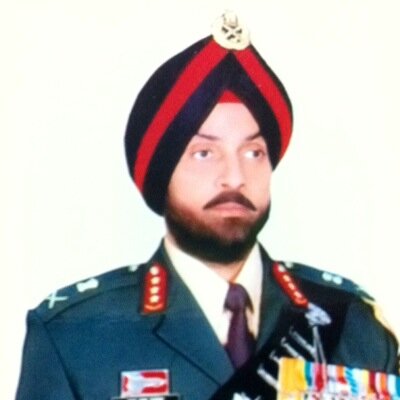
Image result for lt gen hs panag
Lt Gen H S Panag was General Officer Commanding in Chief (GOC in C) of Army’s Northern Command and Central Command. After retiring in December 2008, the Gen. . .


A FITTING TRIBUTE TO BRAVADO::::Nostalgia marks braveheart’s statue­unveiling at his school

DS Sandhu and Jaikanta Sandhu, parents of late Rajeev Sandhu, second lieutenant of the Assam regiment, whose statue was unveiled at his alma mater, St John’s High School, in Sector 26, Chandigarh, on Wednesday.

Second Lt Rajeev Sandhu was killed in peace operation in Sri Lanka

From page 01 CHANDIGARH : For parents who could not even see the body of their only son, Wednesday was a day that will always remain etched in the memories of DS Sandhu and Jaikanta Sandhu, parents of late Rajeev Sandhu, second lieutenant of the Assam regiment, whose statue was unveiled at his alma mater, St John’s High School in Sector 26.

HT PHOTO(From left) Lt Col PK Jaitley, Rajiv Chandgothia, Col Michael James, Sanjeev K Sharma, Varun Khurana, Akhil Mehta and Rajesh Bansal, who were Sandhu’s batchmates at St John’s High School.It was an emotional moment for his batch mates, members of the regiment and young students.

Second Lieutenant Rajeev Sandhu had served in the Indian Army for only four months when he lost his life fighting against the LTTE during a peacekeeping operation in Sri Lanka in 1988.

At 21, he became the youngest officer to receive Maha Vir Chakra (MVC), the second highest gallantry award of the country after Param Vir Chakra. He was commissioned in the army on March 5, 1988, and gave supreme sacrifice on July 19, 1988. Seen as an effort to highlight his achievements and motivate students to join the forces and serve their country, principal Kavita C Das shared how the officer embodied the motto of the school— For God and Country.

The highlight of the day, however, was when the martyrs’ batch mates who turned up in large numbers broke into tears as Justice GS Sandhawalia took the podium and recollected the memories of his friend and class fellow Rajeev Sandhu.

FUN-LOVING AND COMPETITIVE Unanimously referred to as a loyal friend, a disciplinarian with a competitive spirit, Sandhu’s class fellows were effusive in their praise for their friend. “He was always sure that he wanted to join the army,” said Lt Colonel PK Jaitley, his batch mate, complimenting his never say die spirit.

His class fellow Akhil Mehta, a consultant, said he owes his roller skating skills to Sandhu who was a national champion in the sport.

While another alumni Col Michael James (retd), Sanjeev Sharma and Rajeev Bansal added how Sandhu’s fun-loving avatar came out every now and then, be it while going for gehri to Sector 9 near Carmel Convent School back in the 80s or while planning trips to Kasauli and Pinjore airfield.

Many credit his parents for imbibing this spirit in him from a young age, the soldier’s father, a former para-trainer, and his mother, who was the first woman SP in the Punjab cadre during her time.

However, the humble parents believe they are best known as the ‘proud parents of the bravest soldier.’

The beauty of the event was how it brought together people who even though had never met the army officer, but had heard of his valour all their lives.

Brig Jashi Bawa (retd) from the same battalion in the Assam regiment shared how Rajeev Sandhu is remembered to date and became a source of inspiration for everyone there.

The function was concluded on a serene note by the students of the school who presented the national anthem in sign language throwing light on the concept of equality for all.

Besides the Para Olympic soldiers and boys of the school, the audience comprised bureaucrats and other dignitaries from the city, including Congress leader Manish Tiwari and judges of the Punjab and Haryana high court, members of the Assam Regiment. Subedar Major KB Chettri of 7 Assam Regiment, Col Mridul Verma, CO of Assam Regiment, BrigChaudhry on behalf of the veterans, were also present.


Soon, BrahMos to pass 800km range

MUSCLING UP India is laying ground to test the high­range missile

NEW DELHI: India is laying the groundwork to test a high-range BrahMos supersonic cruise missile, capable of striking targets more than 800 km away, a person familiar with the programme said.

HT FILEBrahMos missile’s variants can be launched from land, air, sea and under water.

The missile is likely to be tested by the year-end.

India has already extended the range of the three-tonne missile from 290 km to 400 km and successfully test-fired the variant in March 2017. Increasing the missile’s range to 400 km — and now 800km — became possible after India’s induction into the Missile Technology Control Regime in June 2016.

Prior to that, India was bound by restrictions that limited the range of the missile, which is an Indo-Russian joint venture, to less than 300 km.

“It will be a significant leap forward for the BrahMos project. Air force fighters will be able to attack targets from increased standoff ranges,” said another official tracking the project.

The Defence Research and Development Organisation had announced in February 2017 that a missile variant with a strike range of 800km was under development.

The configuration of the existing missile is being tweaked to enhance its range to 800 km, he said.

BrahMos variants can be launched from land, air, sea and under water. India successfully launched the world’s fastest supersonic cruise missile from a Sukhoi-30 warplane for the first time against a target in the Bay of Bengal in November 2017.

“The Sukhoi has a range of 3,600 km. Arming it with an 800-km range missile will increase its reach tremendously, and even more, considering the option of mid-air refuelling,” the official said.

The missile’s land and naval variants are already in service. At least two Su-30 squadrons with 20 planes each are likely to be equipped with the air-launch variant BrahMos missile, 500 kg lighter than the land/naval variants.

Two Su-30 jets have been modified by the Nasik division of the Hindustan Aeronautics Limited to carry the 2.5-tonne missile that flies at nearly three times the speed of sound.


HEADLINES :::27 NOV 2017

  • REGISTER YOURSELF FOR INDIA’S FIRST MILITARY LITERATURE FESTIVAL IN CHANDIGARH —-28TH&29 NOV 2017::

  • LET’S NOT PLAY WITH INDIA’S HERITAGE INSTEAD OF RESPECTING THE SANCTITY OF OUR PAST, WHY ARE WE BENT ON DESTROYING IT?

    CHINA’S OROB HITS ROADBUMPS BY VBN RAM, FREELANCE JOURNALIST

    ROHTANG TUNNEL TO BE ACCESSIBLE TO TRIBALS DURING MEDICAL EMERGENCIES

    MANALI-KEYLONG HIGHWAY SHUT DUE TO HARSH WEATHER

    KASHMIR: IT IS A BUMPY RIDE FOR THE ARMY

    MI-17 TO GET ADVANCED NAVIGATION SYSTEM

    KHUDA HAFIZ ISLAMABAD AT IT AGAIN, ABETTING TERROR

    A LOT LIKE A DAMP SQUIB BY MK BHADRAKUMAR

    MILITANTS KILL TERRITORIAL ARMY JAWAN, BULLET-RIDDLED BODY FOUND

    SECURITY AUDIT OF 227 NON-MAJOR SEAPORTS CONDUCTED; SOPS ISSUED

    PAKISTAN’S WEAPONS PROGRAMME SUREST ROUTE TO NUKE-LEVEL WAR: REPORT


Modi, Sushma misled nation on Doklam standoff: Congress

Modi, Sushma misled nation on Doklam standoff: Congress
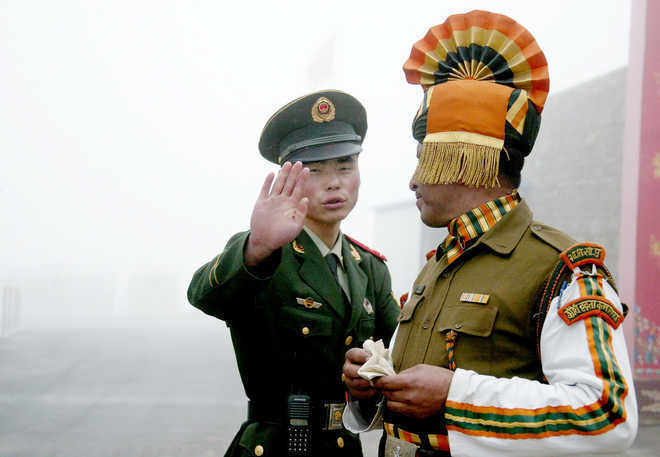
Indian and Chinese troops were engaged in a face-off at Doklam for over three months last year. AFP file

New Delhi, January 18

The Congress on Thursday accused Prime Minister Narendra Modi and External Affairs Minister Sushma Swaraj of misleading the nation over Chinese troops occupying Doklam plateau, saying Indian security and strategic interests have been compromised.

(Follow The Tribune on Facebook; and Twitter @thetribunechd)

“The satellite imagery and media reports suggest that China has established military establishments in Doklam near Indian borders which indicates that India’s security and strategic interests have been compromised,” Congress spokesperson Randeep Singh Surhewala told the media here.

Surjewala said: “It seems that the government was snoozing while the Chinese troops occupied the Doklam plateau as suggested by satellite images. And it seems China is planning Doklam 2.0 like retreat near the Indian borders.”

Accusing Modi of mastering the art of rhetoric, the Congress spokesperson said: “The Prime Minister has mastered the art of electoral rhetoric as he has failed miserably to ensure the protection of our borders.”

Showing the satellite images, Surjewala said China had constructed a two-storey watch tower, seven helipads and several military establishments in Doklam. “What is the government doing as China has occupied the entire Doklam plateau? Is the government, Prime Minister, Defence Minister, aware about these constructions?”

Slamming Sushma Swaraj, Surjewala said the Ministry of External Affairs issued a statement then, saying the troops of both the countries were doing expeditious disengagement.

“Even Sushma Swarajji said (this) in Parliament. And when we asked about the details, she said the troops of both countries were returning to their posts. At that point, there was no reason to question her statement,” he said.

He said after the tensions at Doklam were resolved, the Chinese Foreign Ministry had said that while it had withdrawn the troops, it shall keep on patrolling the area.

The Congress leader demanded to know how the issue of tri-junction at Doklam would be decided in future when the China had occupied the entire plateau.

Surjewala said: “In October, Modiji announced at a public rally that Doklam issue as a victory. However, the satellite imagery released in media reports suggest that Chinese troops have constructed military establishments.

Indian and Chinese troops were engaged in a face-off at Doklam for over three months last year. — IANS


Tearful adieu

Tearful adieu

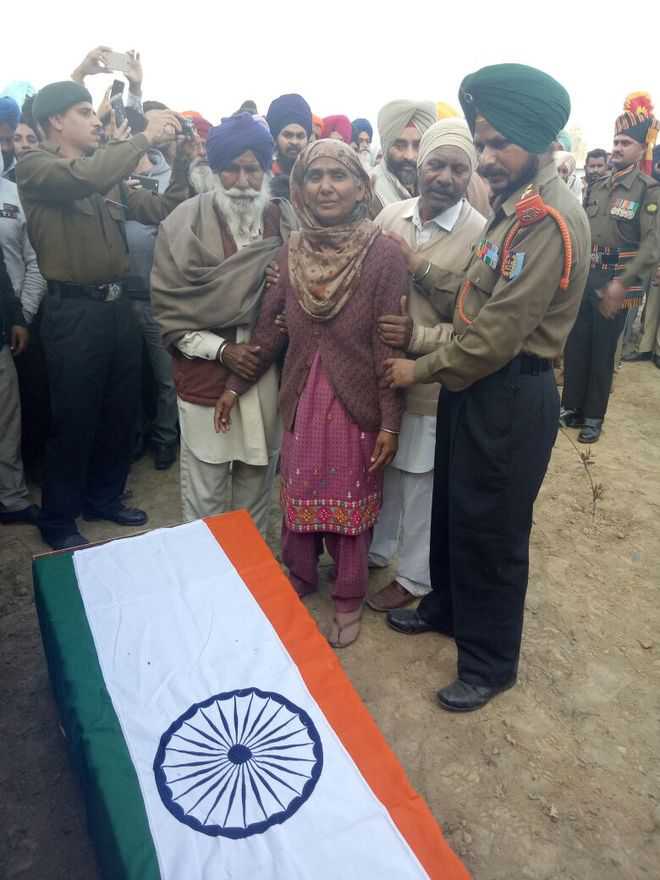
Parents of Sepoy Mandeep Singh, who was killed while fighting infiltrators in Kupwara district of Jammu and Kashmir on Wednesday, at his cremation at Chahal Khurd village in Batala on Thursday. Senior Army officers and officials of the Gurdaspur district administration were present. The martyr’s father, Prem Singh, and mother Bhajan Kaur were inconsolable. Tribune photo