Sanjha Morcha

What’s New

Click the heading to open detailed news

Current Events :

web counter

Print Media Reproduced Defence Related News

The helpless RBI Need to strengthen the regulator

The helpless RBI

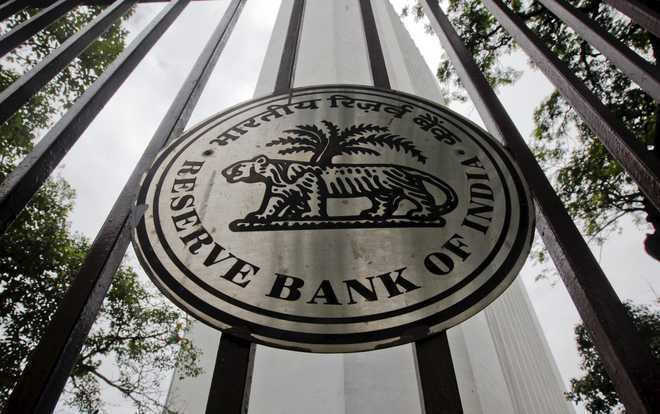
It seems no one is culpable for the Rs 13,600-crore PNB scam. After Finance Minister Arun Jaitley quipped that the RBI should have kept its “third eye” open, RBI Governor Urjit Patel has struck back with an invocation of Lord Shiva. To save the banking sector, he says, he is prepared to be the “Neelakantha” who did not hesitate to drink poison to save gods in their war against with demons. The fact is that both the FM and the RBI Governor want to disown the baby. The government, which owns more than 57 per cent of PNB, runs the bank and the Finance Minister is the administrative ministry of all government-promoted banks. The Finance Minister is assisted by an elaborate bureaucratic system. On the other hand, the PNB board has adequate representation from RBI, the banking sector regulator. Therefore the ownership and responsibility of both Jaitley and Patel is evident and they need to join hands to strengthen the system to avoid such lapses in future.The Governor’s delayed response that RBI “also feels the anger, hurt and pain”, was disheartening. Instead of an emotional outburst, the country, expects the regulator to take definitive actions against errant officials. Recently, former RBI Governor YV Reddy had said that “excessive exposure to specific industries, relaxed limits on group exposure, over-leverage of corporates, delayed recognition of NPAs and corruption” are part of the regulatory failures. Auditors as the extended arm of the RBI are expected to detect these lapses. needs to immediately review their roles and responsibilities. Governor Patel also tried to justify the RBI’s lapses by citing seven systemic obstacles. He holds a position, which is lofty enough to persuade the government to amend existing laws to strengthen the banking system. It is surprising that the Governor finds it expedient to regulate private banks as compared to the public sector banks (PSBs). That should not be the excuse to privatise PSBs. Instead, the government should make necessary amendments to the existing Acts and create a level-playing field for both public and private sector banks.


India takes nuclear non-proliferation very seriously: Sitharaman

India takes nuclear non-proliferation very seriously: Sitharaman
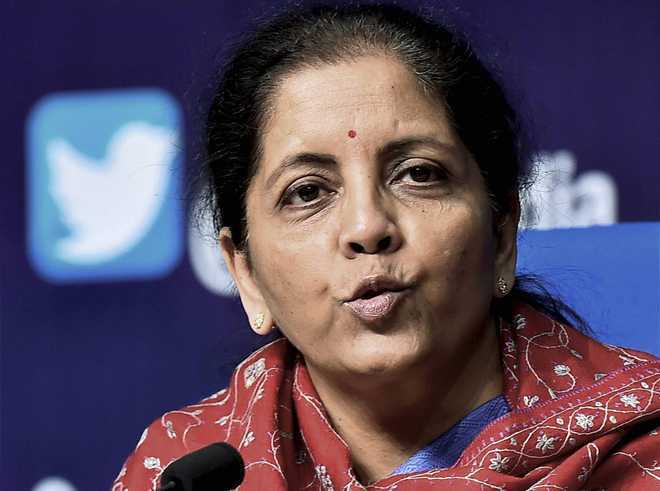
Nirmala Sitharaman. File photo

New Delhi, March 16India takes nuclear non-proliferation very seriously and unlike some of its neighbours, it does not believe in “dirty bombs”, Defence Minister Nirmala Sitharaman has said, in an oblique reference to Pakistan.Sitharaman, while speaking at a book release function here on Thursday, said India is complying with nuclear non-proliferation regulations despite not being a signatory to the non-proliferation treaty (NPT).“We are signing nuclear treaties as a commitment to non-proliferation and are not supportive of illegal spread,” she said.“Unlike some of our neighbours, India does not believe in dirty bombs, we take non-proliferation very seriously,” she said.Sitharaman also said infiltration bids from across the border with Pakistan had “not come down”.“We are remaining alert, we will not entertain infiltration,” she said.On the issue of rising militancy-related incidents in Kashmir, the minister said the government is working with the state government to deal with the issue.“Efforts are going on and government is engaged,” she said, referring to the visits of the Centre’s interlocutor who has been engaging with different sections of people in the state.She said India did not want an escalation in tensions, but it is for Pakistan to prove that their territory is not being used for terrorism. PTI


Prakriti to be first ITBP woman combat officer Border force joins ranks of other CAPFs

Prakriti to be first ITBP woman combat officer
Prakriti

New Delhi, March 7

In another first for women, 25-year-old Prakriti has been inducted as the first direct-entry combat officer in the Indo-Tibetan Border Police.The ITBP is the last of the Central Armed Police Forces (CAPFs) to induct women officers in combat roles after the government first allowed it to enrol them in 2016.(Follow The Tribune on Facebook; and Twitter @thetribunechd)Prakriti had cleared the UPSC exam for officers’ recruitment in CAPFs in her first attempt. “I always had a desire to don the uniform. My father, who is in the Air Force, has always been an inspiration. I opted for ITBP as my first choice,” she said.Prakriti, who hails from Bihar’s Samastipur, has completed her BE and is currently based in an ITBP unit at Uttarakhand’s Pithoragarh. She will soon join the Officers’ Training Academy of the force in Dehradun.“She is expected to be commissioned as an Assistant Commandant next year after she completes her training,” a senior ITBP officer said. The force already has women in combat roles but only in the constable rank.Prakriti, who says her parents gave her a surname-less identity in a caste-ridden society, said she never faced discrimination at home. “I urge other parents that when their children make career choices, they should only see it as their child taking up a challenge, not their son or daughter,” she said.The CRPF and CISF had allowed women to apply as direct-entry officers a long time ago.  BSF and SSB did so in 2013 and 2014. — PTI


Fazilka soldier dies in Assam terror attack

Our Correspondent

Fazilka, March 6

Amarsir Singh (30), a resident of Jorki Andhewali village of Fazilka district who was posted in 13 Sikh Light Infantry Regiment in Assam, was killed in a terrorist attack while performing his duty yesterday.As per information received here he sustained bullet injuries and died.His body will be airlifted to Delhi and reach Fazilka on March 8.Martyr’s father Sukhmander Singh, a poor shepherd, said he received a call from the Army officials on Monday that his son had made supreme sacrifice for the country.Amarsir is survived by two daughters — Gurnoor Kaur (4) and three-month-old Gurbir Kaur — besides his wife.His family was inconsolable. Amarsir had talked to them two days ago on the fourth birthday of his daughter Gurnoor. He had also come to the village three months ago.The family members were dependent on Amarsir’s salary as his elder brother had died due to illness a decade ago.Fazilka Tehsildar Darshan Singh said his postmortem examination was conducted there and his body would reach here on Thursday.


Sunjwan Army camp attack: Search operation under way

Jammu, February 12

The Army said on Monday that the search operation was under way in its Sunjwan camp, which was attacked by a group of suspected JeM terrorists, killing six people, including five soldiers.Three suspected Jaish-e-Mohammad terrorists involved in the attack were killed in the retaliatory action by the Army inside the camp and a large quantity of arms and ammunition was seized from them.“The search operation is still on (at the camp),” Jammu-based Army public relations officer Lt Col Devender Anand told PTI.A group of heavily armed men struck the sprawling camp of the 36 brigade of the Jammu and Kashmir Light Infantry before dawn on February 10. Five Army men, including two Junior Commissioned Officers (JCOs), were killed in the attack.Several blasts were heard inside the camp on Sunday evening, breaking a lull after the initial exchange of fire, but the Army said the blasts were the result of sanitisation operation and there was no fresh contact with terrorists.Parliamentary Affairs minister Abdul Rehman Veeri told the Assembly that the operation was in the final stages.He said the injured Army personnel included a Lieutenant Colonel and a Major. PTI


Military Ethical Leadership Deteriorating by Col RC Patiyal

Col RC Patiyal | Date:07 Mar , 2016 0 Comments

Col RC Patiyal

is a veteran who served in the NTRO as Chief Editor OSINT & Dy Director NTRO Training Centre and the NSCS as a Senior Defence Specialist.

The safety, honour and welfare of the country come first, always and every time.
The honour, welfare and comfort of the men you command came next.
Your own ease, comfort and safety come last always and every time.

Indian military leadership over the period has matured into  ..
Read more at:
http://www.indiandefencereview.com/military-ethical-leadership-deteriorating/


Capt hails SC order on SIT

Capt hails SC order on SIT
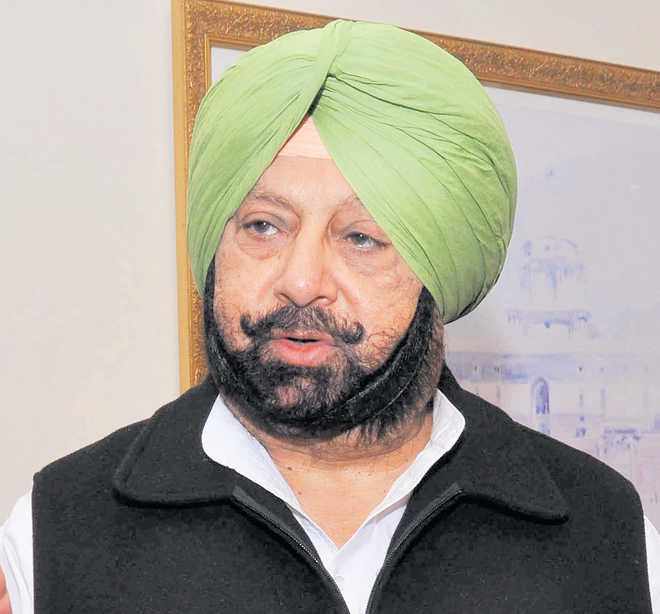
Capt Amarinder Singh, CM

Tribune News Service

Chandigarh, January 11

Chief Minister Capt Amarinder Singh has welcomed the Supreme Court decision to order a fresh probe, by a new SIT, into 186 cases of the anti-Sikh riots of 1984, with a hope that justice would finally be meted out to the innocent victims.The Chief Minister said more than 30 years had passed since the gory violence, which claimed many lives and left many others homeless, justice continued to elude the victims. Several names had cropped up in connection with the riots and it was now up to the SIT to verify the allegations and bring the investigation to its logical conclusion, he added.It was high time that justice be provided in these cases, said Capt Amarinder, who himself had quit as MP in protest against the violence.


Given by US to fight Taliban, Pak uses missile to target India at LoC

Given by US to fight Taliban, Pak uses missile to target India at LoC

Ajay Banerjee

Tribune News Service

New Delhi, February 10

In what could further change the course of the India-US relations, India has flagged its concerns to the US, with evidence, that Pakistan was using US weapons, given to fight Taliban, against the Indian Army.The recent attacks by Pakistan on Indian Army bunkers along the Line of Control and also on civilian population were carried out using the US-made TOW-2A anti-tank guided missiles given to Pakistan for use against Taliban.(Follow The Tribune on Facebook; and Twitter @thetribunechd)
At least nine Indian soldiers have died in 2018 due to Pakistani fire assaults directed against Indian Army positions along the LoC. In 2007, the US Congress approved the sale of 2,000 pieces of ‘TOW-2A’ anti-tank missiles for Pakistan purportedly for ‘self-defence’ and to support US operations against terrorists in Afghanistan.In 2015, India and the US renewed a 10-year defence framework agreement. A year later, US designated India as a major defence partner. Subsequently, the US Congress voted to bring India on a par with its other NATO (North Atlantic Treaty Organisation) allies for sale of defence equipment and technology transfer.The ‘misuse’ of the missiles by the Pakistan Army was flagged at appropriate levels in the US government. Remnants of TOW-2A missile recovered after a fire assault were collected and shifted to New Delhi as proof and were shown to US representatives. Flagging the misuse of the missiles is India’s policy to isolate Pakistan in global arena.US President Donald Trump, in the recent past, has accused Pakistan of deceiving the United States. He said Pakistan was harboring terrorists even as the US poured billions of dollars in foreign aid.“The US has foolishly given Pakistan more than 33 billion dollars in aid over the last 15 years, and they have given us nothing but lies and deceit. They give safe haven to the terrorists we hunt in Afghanistan, with little help. No more!” Trump said on January 1.Proof submitted 

  • The ‘misuse’ of missiles by the Pakistan Army was flagged at appropriate levels in the US government
  • Remnants of TOW-2A missile recovered after a fire assault were collected and shifted to New Delhi as proof and were shown to US representatives

LOST LIVES ARE NOT MERELY NUMBERS

Each person in the world has a unique life and a special role to play in this magnum opus that is the never­ending global human drama; it’s time to value life

When we, the people, read the news in the morning or watch it all day long on various screens, we tend to be cold to the number of persons killed in mishaps. We gaze transiently at a headline such as “32 killed as bus driven by 16-year-old conductor plunges into river”. Then, though we feel low, we move on to the entertainment section.

HT FILE■ Every woman who loses her husband to needless violence knows a level of pain that the rest of us cannot imagine.Is it our fault, though, that we feign concern but are actually impervious to death? Every day brings up at least one gruesome story. And the mood is made more sullen by sundry other items from here and there that add to society’s daily burden of crime.

Human beings tend to be unruffled by tragedies which happen remotely or in other lands. They are more impacted by those that occur at close quarters.

Yet, and this is but natural, each tragedy is soon forgotten along with yesterday’s newspaper. Only those who have to directly bear the brunt of the calamity actually feel the resultant pain.

The result is that the global milieu, particularly communities in developing countries, become jaded by the talk of death and very little is done to control such incidents.

A 16-year-old driving a bus is an indicator of lawlessness. An unqualified electrician doing a shoddy job of repairing a local power wrangle is another such sign. An untrained attendant administering an injection to a patient is yet another untenable ‘adjustment’.

Any or all of these can lead to death and destruction but our system allows, with impunity, such digressions from propriety. And we who are armchair critics and morning-walk analysts, look the other way.

Agreed that most of us cannot do much about such systemic flaws, and even those in position and power have to really exert themselves in order to rectify the ‘chalta hai’ malaise that afflicts almost all of us. But can we not resolve to create awareness among those who are more prone and susceptible to such nonsense that they should not permit it?

STANDING UP TO CALLOUS ATTITUDE

The passengers in the aforementioned ill-fated bus clearly knew that the young lad was underage but they were loath to stop him from playing with their lives. When we notice an illconnected, dangerously dangling, piece of electrical wiring, or a rag-tagbobtail arrangement for looking after patients at a public hospital, should we be looking the other way?

Can we do something at least? In my view, various stakeholders could attempt the following: the government must be stricter and more rigid in preventing flouting of laws, the media can be more insightful in studying the lacunae that create such dreadful situations, and the common man can refuse to take things lying down when he must raise his voice.

It is by persistent knocking at the door of collectively callous attitude that a dent can be made and perhaps some lives can be saved.

But what of organised crime and suicides, which also result in unnatural and avoidable deaths? Such transgressions against civilised living have never been missing from the world, but as Yuval Noah Harari notes in his admirable book, Homo Deus, wars have been virtually eliminated by mankind. Can we hope that crime might also be minimised in the years to come?

Unemployment is one major factor which is responsible both for crime and self- inflicted harm. Focussed economic development with more meaningful governmental efforts can increase the number of jobs and reduce both these abhorrent ills.

Each person in the world has a unique life and a special role to play in this magnum opus that is the never-ending global human drama. We cannot allow a mother or wife to grieve forever at the loss of a life which could have been saved.

Our soldiers and paramilitary personnel who die at the border are gallant icons of humanity who mock at death for their country. Every woman who loses her husband to needless violence knows a level of pain, which the rest of us cannot imagine.

It’s time to value more the lives of fellow citizens and ensure that we don’t lose human beings whom we should still rightfully have in our midst.