Sanjha Morcha

What’s New

Click the heading to open detailed news

Current Events :

web counter

Print Media Reproduced Defence Related News

Two militants killed in encounter in J&K’s Pulwama

Two militants killed in encounter in J&K's Pulwama

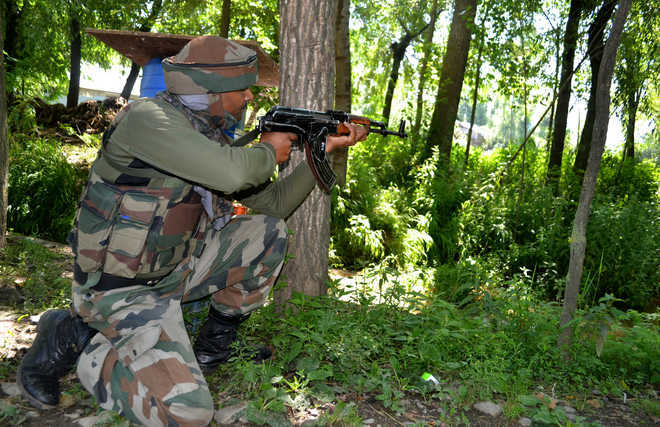
Photo for representation only.

Tribune News Service
Srinagar, February 1

Two militants were killed in a late night encounter with security forces in Drubgam area of Pulwama district of Jammu and Kashmir.

Security forces launched a cordon and search operation in Pulwama following information about presence of militants in the area, a police official said.

He said a gun battle ensued as the militants opened fire at the security forces.

Two militants were gunned down, the official said, adding that their identities and group affiliation were being ascertained. With PTI inputs


India’s response to Pak’s proposal on Kartarpur agreement ‘childish’: FO

India’s response to Pak’s proposal on Kartarpur agreement ‘childish’: FO

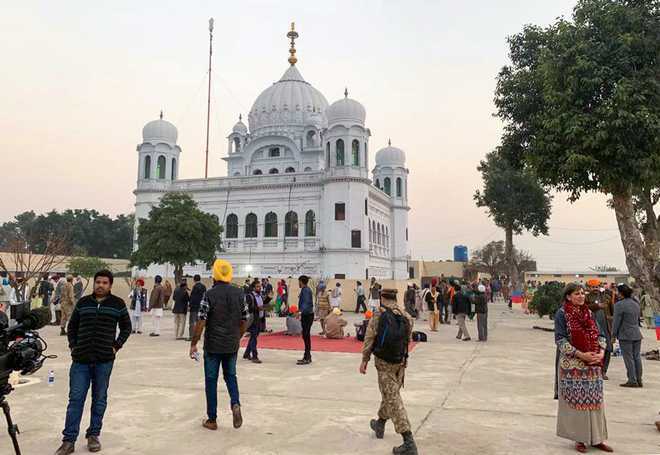
The Kartarpur Sahib gurdwara. File photo

Islamabad, January 24

Pakistan on Thursday described India’s response to its proposal to finalise an agreement on the opening of the Kartarpur corridor as “childish”, saying that Islamabad’s reply will be “mature”.

Foreign Office Spokesperson Muhammad Faisal said Pakistan shared a detailed proposal along with a draft agreement with the Indian authorities and invited them to Pakistan to discuss and finalise modalities for the pact.

He said that concerned departments of Pakistan did extensive work in the preparation of the draft agreement on the Kartarpur corridor, which was shared with India on January 21.

Instead of responding to Pakistan’s initiative, India asked a Pakistani delegation to visit New Delhi and suggested two possible dates — February 26 and March 7 — for the meeting, Faisal told the media here.

“India has regrettably behaved in a childish manner, as far as its response is concerned. We have seen similar reply from India in the past, in September 2018, in response to the letter from Prime Minster Imran Khan,” Faisal said.

“Pakistan, unlike India, would come out with a very mature and well considered response on this highly important matter and respond to the Indian move very soon,” he added.

The much-awaited corridor will connect Darbar Sahib in Pakistan’s Kartarpur—the final resting place of Sikh faith’s founder Guru Nanak Dev—with Dera Baba Nanak shrine in India’s Gurdaspur district.

It will enable Sikh devotees to offer prayers at the historic shrine where Guru Nanak had spent his last 18 years.

Faisal alleged that India committed 2,300 ceasefire violations last year and these violations are still on the surge.

Pakistan is responding in a befitting manner to the “unprovoked Indian firing” on the Line of Control, he said, adding that Pakistan would respond to India in the same coin.

“If it (India) speaks the language of peace, we will respond peacefully and if it speaks the language of bullet, we will respond with the bullet,” he said.

Faisal also rejected the Indian claim about sinking of their fishing boat in Pakistani waters on 17th of this month.

He, however, alleged that poaching in Pakistani exclusive economic zones is a frequent activity by the Indian fishing boats.

He said Pakistan Maritime Security Agency (PMSA) conducts anti-poaching operations as per the laws and international regulations and the relevant UN convention.

To a question about not allowing the use of airspace for cargo planes to Afghanistan, Faisal said that “our position on overflight cargo planes from India remain unchanged. However, passenger flights from India are operating as per the laid down SoPs.” — PTI


India to come up with Defence Cyber Agency; Army, Navy and IAF personnel to be inducted

India to come up with Defence Cyber Agency; Army, Navy and IAF personnel to be inducted

Defence Cyber Agency will have close to 200-strong staff from the tri-services – Indian Army, Indian Navy and the Indian Air Force.

With the threat perception changing from land, sea and air into the cyber world, India’s Defence Cyber Agency has started taking shape.

Initial proposal of the Defence Cyber Agency will have close to 200-strong staff from the tri-services – Indian Army, Indian Navy and the Indian Air Force, to be headed by the Headquarter of Integrated Defence Staff (IDS). They will serve under the command of the Chairman, Chief of Staff Committee and work closely with the National Cyber Security Advisor.

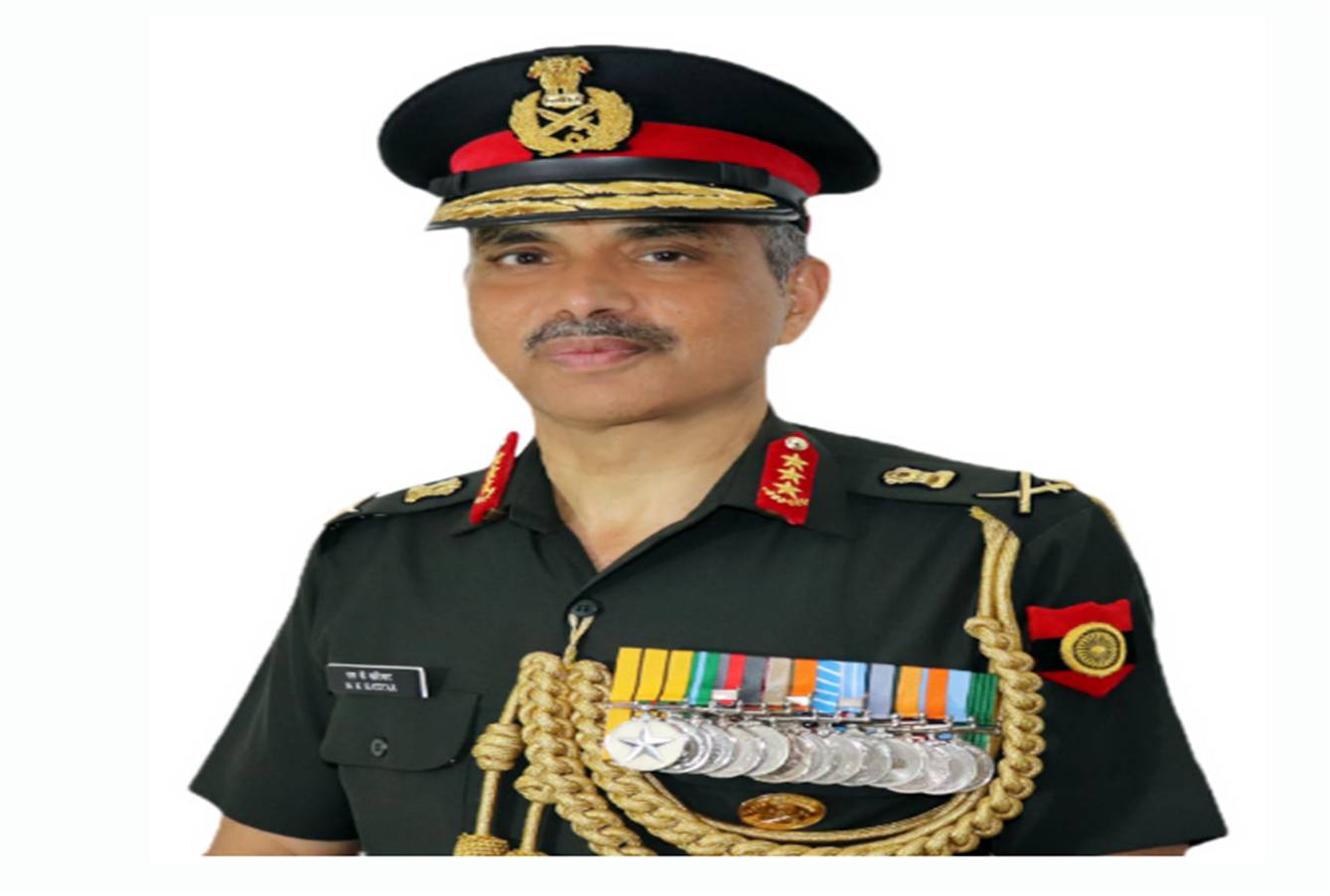
“We are alive to the threat on cyber front. To that end we are thinking of making a cyber agency. It would not be a quite full fledged command as we have in the army. As conscious of the fact that the threat exists, we are going in for the cyber agency. It will be headed by a two star rank officer. It will be an inter-service agency, not purely army, functioning under the Integrated Defence Staff. They will be looking after the threats in the cyber domain,” said Lt Gen MM Naravane, GOC-in-C, Army Eastern Command.

To begin with, the Defence Cyber Agency will be based out of the IDS Headquarters and later dedicated units will come up with the Army commands.

“The entire proposal is still under the formulation. Of course units will be spread all over the country. One person sitting in Delhi cannot be expected to do all these jobs. There will be units in every Headquarters with dedicated officers to deal with the cyber security,” added Naravane.

Last year, the Cabinet Committee on Security had cleared the formation of three agencies – Defence Cyber Agency is one of them, the two others are – Defence Space Agency and Special Operations Division.


“Hearing Many Good Things”: Defence Minister Meets Uri Cast And Crew

Defence Minister Nirmala Sitharaman tweeted to congratulate the team of “Uri: The Surgical Strike“, about which she said she has been “hearing many good things”

'Hearing Many Good Things': Defence Minister Meets Uri Cast And Crew

Nirmala Sitharaman meets with cast and crew of “Uri: The Surgical Strike

NEW DELHI: 

Defence Minister Nirmala Sitharaman met the cast and crew of “Uri: The Surgical Strike” on the occasion of Army Day on Tuesday. Actors Vicky Kaushal and Yami Gautam, director Aditya Dhar and producer Ronnie Screwvala were part of the meeting that took place at General Bipin Rawat’s “at home” function.

Ms Sitharaman took to Twitter to congratulate the film’s team about which she said she has been “hearing many good things”.

“At COAS Bipin Rawat’s ‘at home’, with the team of the film ‘Uri: The Surgical Strike‘. Yet to watch it, but hearing many good things. Kudos, Ronnie Screwvala, Aditya Dhar Films, Vicky Kaushal, Yami Gautam for a slick war movie on the spirit of our heroes,” the defence minister tweeted, along with some photos from the event.

The actors said they were honoured to meet the defence minister.

“It was an honour meeting you Ma’am,” Mr Kaushal replied to Ms Sitharaman’s tweet.

“We are honoured to meet you Ma’am… and thanks so much for your encouraging words. What you do for the nation is incomparable,” tweeted Ms Gautam.

 The film is based on the surgical strikes by the Army on terror launch pads across the Line of Control in September 2016, in retaliation to an attack in Jammu and Kashmir’s Uri that killed 17 Army personnel.

Also featuring Paresh Rawal and Mohit Raina, the film was released on January 11.

Uri: The Surgical Strike” box office performance remained stable on weekdays as the film crossed Rs. 50 crore mark on the fifth day of its release. Trade analyst Taran Adarsh shared the updated box office report, and wrote: “Uri: The Surgical Strike is winning praises, getting applause, ovation and (it is) amassing massive numbers at the box office. East, west, north and south, it’s Uri wave right now.”

11 COMMENTS

The film collected Rs. 9.57 crore on Tuesday, bringing the grand total to Rs. 55.81 crore.


US discusses potential missile defence cooperation with India

US discusses potential missile defence cooperation with India

The report, which identifies missile development projects by Russia and China as major threats to the US, did not give any further details about its potential missile defence cooperation with India.

Washington, January 18

The Trump administration has discussed a potential missile defence cooperation with India as part of its effort to deepen the bilateral strategic partnership, the Pentagon has said, asserting that New Delhi is a “key element” in America’s Indo-Pacific strategy.

The Pentagon’s announcement in the 81-page ‘Missile Defence Review’ report released by President Donald Trump gains significance in view of India placing a USD 5 billion order to purchase S-400 air defence system from Russia, for which the US has publicly expressed its displeasure.

Noting that the threats posed by offensive missile capabilities are no longer limited to a few regions around the world, the Pentagon in its report said there were now a number of states in South Asia that are developing an advanced and diverse range of ballistic and cruise missile capabilities.

“Within this context, the United States has discussed potential missile defence cooperation with India. This is a natural outgrowth of India’s status as a Major Defence Partner and key element of our Indo-Pacific Strategy,” said the Pentagon report on Thursday.

The report, which identifies missile development projects by Russia and China as major threats to the US, did not give any further details about its potential missile defence cooperation with India.

The US has shown reluctance to offer its missile defense system to India.

Given the tough neighbourhood that India is in, New Delhi several years ago had approached the US and expressed its desire to acquire a missile defence system from it, particularly the Terminal High Altitude Area Defence system popular as THAAD.

The previous Obama administration was not very forthcoming in sharing its advance missile defence system with India, following which New Delhi went ahead to procure it from Russia.

As part of its Indo-Pacific strategy, the Trump administration now seems to be more than inclined to let India procure its missile defence system with talks between the two countries having already started.

“We will deepen our strategic partnership with India and support its leadership role in Indian Ocean security and throughout the broader region,” said the 2017 National Security Strategy of the US, which has been mentioned in the Pentagon report.

The Missile Defence Review report said the cornerstone of US’ security and diplomacy in the Indo-Pacific region is its strong bilateral alliances with Japan, South Korea and Australia, and emerging security relationships with others such as India.

Japan and South Korea are working with the US to build missile defence systems that are increasingly interoperable with American defences and increasingly capable against regional offensive missile threats and coercion.

This cooperation includes bilateral missile defence training exercises with the US.

Australia participates in a trilateral discussion on missile defence with the US and Japan. The US and Australia meet annually to discuss bilateral missile defence cooperation. New areas of focus include joint examination of the challenges posed by advanced missile threats, it said. PTI



Army pays tributes to Major Nair He always wanted to join armed forces, says officer’s friend

Army pays tributes to Major Nair

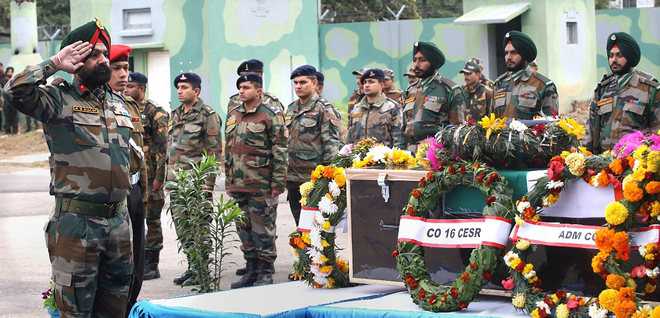
Army men pay tributes to Major Shashi Dharan V Nair on Saturday. He was killed in an IED blast in Rajouri on Friday. Tribune photo

Tribune News Service

Jammu/Pune, January 12

The Army today bid a tearful adieu to Major Shashi Dharan V Nair, who was killed along the Line of Control (LoC), in the Nowshera sector on Friday.

Major Nair was killed when an improvised explosive device (IED) exploded. The IED was planted by the Border Action Team of the Pakistan army with the help of militants on the LoC.

The Army paid tributes to the valiant officer and remembered his sacrifice for the nation.

At Rajouri, General Officer Commanding, Ace of Space Division, Major General H Dharmarajan paid homage to the officer. At Technical Airport, Jammu, Inspector General of Police, Jammu, MK Sinha; Station Commander, Jammu; Chief Security Officer, 16 Corps; Station Commander, Air Force Station, Jammu, and others paid tributes to the Army officer.

Major Nair hailed from Khadagwasla, Pune, and is survived by his wife Trupti Shashidharan Nair. Born on July 30, 1985, Major Nair had joined the Army 11 years ago.

The Army officer’s mortal remains were transported in a service aircraft from Jammu to Pune on Saturday.

In Pune, Harish Kasarkhod, his childhood friend, said having graduated from the famous Fergusson College, Nair could have got a comfortable job elsewhere, but his passion was the armed forces.

A pall of gloom descended on the area after the news came. Friends and relatives thronged the family’s house.

Meanwhile, another soldier Rifleman Jivan Gurung was killed in an IED attack along the LoC in the Nowshera sector of Rajouri. He was from Lamahatta village, Darjeeling, West Bengal.

He is survived by his mother Poonam Gurung. The soldier’s mortal remains are expected to be taken to his native village on Sunday. He was born on April 11, 1994.

Soldier commits suicide in south Kashmir

Anantnag: A soldier committed suicide by shooting himself with his service rifle on Friday night in Kulgam district of south Kashmir. The deceased soldier has been identified as Abishekh Roy Kumar. He worked as a wireless operator in the Army’s 34 Rashtriya Rifles camp at the Behibagh area of Kulgam district. Confirming the incident, an Army officer said, “Abishekh died on the spot after shooting himself.” He, however, said the reasons behind the suicide were not known. oc


China’s unconventional war is inflicting greater damage on India

Beijing is abusing current rules to pursue unfair trade and undercut Delhi’s manufacturing base

China is emphasising public diplomacy to soften Indian public opinion and mute Indian concerns over an increasingly asymmetrical trade relationship. Foreign Minister Wang Yi said the new people-to-people mechanism will “help consolidate the public-opinion foundation” for bilateral ties. China’s diplomacy aims to underpin its “win-win” policy toward India — engagement with containment.

New Delhi, however inadvertently, is lending a helping hand to Beijing’s strategy of engagement as a façade for containment. India has done little more than implore China to rein in its spiralling trade surplus. The lopsided trade relationship makes India essentially a colonial-style raw-material appendage of the state-led Chinese economy, which increasingly dumps manufactured goods there. Worse still, New Delhi effectively is funding China’s India containment strategy. India’s defence budget for the current financial year, at ~2,95,512 crore ($42.2 billion), is 65% less than China’s estimated trade surplus of $65.1 billion in the calendar year 2018. This means India practically is underwriting Beijing’s hostile actions against it — from its military build-up in Tibet and growing Indian Ocean encroachments to the China-Pakistan Economic Corridor (CPEC).

Pakistan recently revealed to the International Monetary Fund (IMF) that China’s CPEC investments will total $26.5 billion. From just one year’s trade surplus with India, Beijing can fully fund two CPEC-type multiyear projects and still have billions of dollars for other activities to contain India.

In the list of countries with which China has the highest trade surpluses, India now ranks No. 2 behind the US. China’s surplus with the US is massive. But as a percentage of total bilateral trade, India’s trade deficit with China is greater than America’s. And in terms of its exports to and imports from China, India is little different from any African economy.

Consider another troubling fact: Total Chinese foreign direct investment in India remains insignificant. Cumulatively aggregating to $1.9 billion, it is just a fraction of China’s yearly trade surplus. India’s 2015 removal of China as a “country of concern”, instead of encouraging major Chinese FDI flow, has only spurred greater dumping.

Consequently, China’s trade surplus has spiralled from less than $2.5 billion a month when Modi took office to over $5 billion a month since more than a year. China’s trade malfeasance is undermining Indian manufacturing, with the result that Modi’s “Make in India” initiative has yet to seriously take off. Many firms in India have turned from manufacturers to traders by marketing low-end products from China — from tube lights to fans — under their brand names. Is it thus any surprise that manufacturing’s share of India’s GDP has actually contracted? Instead of “Make in India”, “Made in China” has gained a stronger foothold in India.

India’s China problem will only exacerbate when the planned 16-nation Regional Comprehensive Economic Partnership (RCEP) accord takes effect, thereby creating a freetrade zone between the world’s two most-populous countries. Unlike the other states negotiating RCEP, India is not an export-driven economy; rather it is an import-dependent economy whose growth is largely driven by domestic consumption.

RCEP’s main impact on India will come from China, which Harvard’s Graham Allison has called “the most protectionist, mercantilist and predatory major economy in the world”. China, while exploiting India’s rule of law for dumping, keeps whole sectors of its economy off-limits to Indian businesses. It has dragged its feet on dismantling regulatory barriers to the import of Indian agricultural and pharmaceutical products and IT services.

External affairs minister Sushma Swaraj rightly reminded Wang that “a solution to the continuously increasing trade deficit” is a must. Seeking to rebalance trade is not a dollar-for-dollar matter. Rather, it is about ensuring fair trade and fair competition. China rose through fair access to world markets that it now denies India. Indeed, Beijing is abusing trade rules to pursue unfair trade and undercut India’s manufacturing base.

What stops India from taking a leaf out of US President Donald Trump’s playbook and giving China a taste of its own bad medicine? WTO rules permit punitive tariffs on foreign subsidised goods that harm domestic industries. India can also emulate Beijing’s non-tariff barriers and other market restrictions.

India focuses on Pakistan’s unconventional war by terror but forgets that China is also waging an unconventional war, though by economic means. China’s economic war is inflicting greater damage, including by killing Indian manufacturing and fostering rising joblessness among the Indian youth.

Just as the British — as American historian Will Durant noted — financed their colonisation of India with Indian wealth, the Chinese are financing their encirclement of India with the profits from their predatory trade with it.


China building four warships for Pak’

BEIJING: China is building the first of four “most advanced” naval warships for its all-weather ally Pakistan as part of a major bilateral arms deal to ensure among other things “balance of power” in the strategic Indian Ocean, state media reported.

Equipped with modern detection and weapon systems, the ship will be capable of anti-ship, anti-submarine and air-defence operations, China Daily quoted state-owned defence contractor China State Shipbuilding Corporation (CSSC) as saying.

The under-construction ship is a version of the Chinese Navy’s most advanced guided missile frigate, it said. The CSSC did not specify the ship’s type but said it is being constructed at its Hudong-Zhonghua shipyard in Shanghai.

China is the largest supplier of weapon systems to Pakistan. Both the countries also jointly manufacture JF-Thunder, a single engine multi-role combat aircraft. The ship’s class is Type 054AP, which means it is based on the Type 054A of the People’s Liberation Army (PLA) Navy, the report quoted the Pakistani Navy as saying. The Pakistani Navy previously said four such ships had been ordered, according to the report.

Once constructed, the warship “will be one of the largest and technologically advanced platforms of the Pakistani Navy and strengthen the country’s capability to respond to future challenges, maintain peace and stability and the balance of power in the Indian Ocean region,” the report said.

It will also support the Pakistani Navy’s initiative of securing sea lanes for international shipping by patrolling distant waters, the daily quoted the CSSC as saying. The mention of the Indian Ocean is significant as China, which has already taken over Pakistan’s strategic Gwadar port under the multi-billion ChinaPakistan Economic Corridor, looks to assist the Pakistani Navy to restore the balance of power in India’s backyard. China recently denied a New York Times report that it finalised a plan to build advanced fighter aircraft under the CPEC in Pakistan, adding a military dimension to it.


Mixing up reforms & management by Pravin Sawhney

Pravin Sawhney

Army’s reorganisation should be a tri-service endeavour
Mixing up reforms & management
CLUTCHING AT STRAWS: India hasn’t begun the defining journey to revolutionise warfare.

Pravin Sawhney
Strategic Affairs Expert

THE Army Chief, Gen Bipin Rawat, is under pressure from the government to cut his Army to size. Reason: with the bulk of annual defence allocations being spent on the pay and allowances of the 13-lakh Army, there is little money for modernisation of the three defence services.

We now have the third report from the single-member Lt Gen DS Hooda (retd) committee, in addition to the four study groups set up by the Army Chief, and the Shekatkar committee which submitted its report in December 2016. The committee had recommended the cutting of 57,000 troops over three years; the saved finances were proposed to be utilised for new verticals like electronic and cyber warfare and so on.

The Army Chief’s study groups have promised to slash one lakh troops over two to three years to meet the challenges of modern war. According to General Rawat, the Army needs three things for modern war: technology infusion; restructuring of the Army from the present bloated formations to agile integrated brigade groups; and most importantly, to be the lead service in war (with the IAF in support role).The Lt Gen Hooda committee has reportedly made three key recommendations: reduce the standing Army and create a reserve force that can be called upon in war; make Special Forces (SF) a strategic force; and create a three-star post to recommend new technologies like Artificial Intelligence (AI) and robotics and so on for military use. This committee has proposed reducing 20 per cent of the Army strength.

Of the three committees, only the Shekatkar recommendations make sense because of its modest aim of simply reducing the Army strength. This committee, unlike the other two committees, did not propose preparing the Army for modern war; it restricts itself to internal management rather than reforms.

The Army Chief groups and Lt Gen Hooda’s recommendations have issues in their implementation for six reasons. One, modern war requires military reforms (involving the three services). Talking of Army reforms alone negates the basis of modern war — joint-ness — the prerequisite for swift, intense and result-oriented warfare. Two, given the infusion of cutting-edge military technology like precision standoff weapons with China and its increased interoperability (ability to fight together on common mission) with the Pakistan military, the IAF, and not the Army, should be the lead in modern war. Three, the Army cannot give primacy to hybrid warfare (with focus on counter-terror and psychological operations) and yet hope to be the lead in a modern war. The two — hybrid and modern war — are as different as chalk and cheese.

Four, the Lt Gen Hooda recommendation of raising an SF brigade under the Army Headquarters for strategic tasks without credible counter-offensive capabilities to meet enemy’s retaliation serves little purpose. The Army has not had these capabilities since 1990, when counter-insurgency (CI) assumed priority. For this reason, during the so-called 2016 surgical strikes, the then Director-General Military Operations, Lt Gen Ranbir Singh, had informed Pakistan within hours that the mission was over and no further strikes were planned. This was done to ensure that Pakistan did not retaliate. India was simply not prepared for an escalation. Given this, how can the Army have SF for strategic task (like demolition of Marala headquarters) when fearing escalation, it could not use it for tactical task of CI operations along the Line of Control? Moreover, the government has already cleared the raising of a tri-service SF division (which might be upgraded to command), which is in addition to the SF with all three services.

Five, when the committee says that the reserve units should be optimised for capabilities for desired outcome, it makes little sense. For one, the lessons of Rashtriya Rifles (RR) raisings should be recalled. The RR concept with 50 per cent retired soldiers was mooted in 1990 by Gen K Sundarji. Since few retired soldiers were willing to come back to combat in J&K, the then Army Chief, Gen BC Joshi, was compelled to alter the concept by having all serving troops serve in RR; which remains a regular Army by another name. Given this, where would reserve soldiers, who would come voluntarily and get paid for three months in a year to fight CI operations come from? Seeking human fodder to fight faceless terrorists would be impossible. Besides, how would the Army ensure desired capabilities (equipment and training) for reserve units, when the regular units are woefully short of war-withal?

And six, why does the committee need the post of a DG for identifying new-age technologies for the military when two high-powered discussions on this subject are already under way? Since these technologies comprising AI, partially autonomous systems, robotics and human-machine interface are more in the commercial than in the military domain, NITI Aayog had last year released a discussion paper on ‘National Strategy for Artificial Intelligence’. The committee should read this paper to know how the government proposes to set up centres of excellence by private-public partnerships. Simply put, India has not even begun this defining journey that would revolutionise warfare. Moreover, the Defence Ministry had also set up a task force in 2017 to identify AI technologies for military purposes.


Given all this, the Army should stop confusing its internal management with military reforms. Once this is done, it would not be difficult for it to reduce its manpower. If it starts to look at progressively reducing the five divisions and three brigades it raised since 2009, when it started the two-front war capability building plan, a beginning could be made.