Sanjha Morcha

What’s New

Click the heading to open detailed news

Current Events :

web counter

Print Media Reproduced Defence Related News

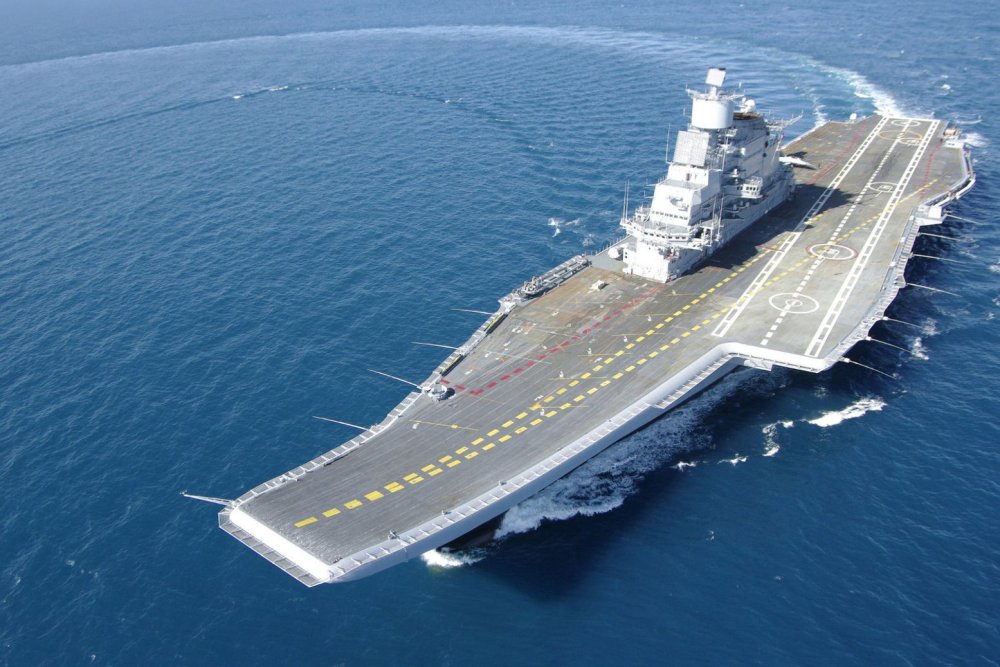
India Really Regrets Buying This Aircraft Carrier from Russia

by Kyle Mizokami
Key point: The Admiral Gorshkov is a terrible ship, but beggars can’t be choosers.

SPONSORED CONTENT
Recommended by
If You Have Gutters You Have To Try This To Avoid Cleaning Gutters For Life!
leaffilterguards.com
Ontario Seniors May Be Eligible For Invisible Hearing Aids
www.besthearingaids.ca
[Photos] Russia Designed One Of The Most Useless Planes Of All Time
[Photos] Russia Designed One Of The Most Useless Planes Of All Time
Money Pop
[Gallery] What Sam Elliott Really Did in The Army is Incredible
[Gallery] What Sam Elliott Really Did in The Army is Incredible
Direct Expose
Like a lot of countries, India wants the best weapons it can afford. But ideological and financial concerns mean there are a lot of things it won’t buy from the United States or Europe. That pretty much leaves, well, Russia.

India has been a big buyer of Russian weapons for 50 years. Those haven’t been easy years for New Delhi. India’s defense contracts with Russia have consistently suffered delays and cost overruns. And the resulting hardware doesn’t always work.

Of all India’s Russian procurement woes, none speak more to the dysfunctional relationship between the two countries than the saga of INS Vikramaditya. In the early 2000s, India went shopping for a new aircraft carrier. What followed was a military-industrial nightmare.

Wanted—one new(ish) carrier
In 1988, the Soviet Union commissioned the aircraft carrier Baku. She and her four sisters of the Kiev class represented a unique Soviet design. The front third resembled a heavy cruiser, with 12 giant SS-N-12 anti-ship missiles, up to 192 surface-to-air missiles and two 100-millimeter deck guns. The remaining two-thirds of the ship was basically an aircraft carrier, with an angled flight deck and a hangar.
Do You Know What Happened Today In History?
Baku briefly served in the Soviet navy until the USSR dissolved in 1991. Russia inherited the vessel, renamed her Admiral Gorshkov and kept her on the rolls of the new Russian navy until 1996. After a boiler room explosion, likely due to a lack of maintenance, Admiral Gorshkov went into mothballs.

In the early 2000s, India faced a dilemma. The Indian navy’s only carrier INS Viraat was set to retire in 2007. Carriers help India assert influence over the Indian Ocean—not to mention, they’re status symbols. New Delhi needed to replace Viraat, and fast.

India’s options were limited. The only countries building carriers at the time—the United States, France and Italy—were building ships too big for India’s checkbook. In 2004, India and Russia struck a deal in which India would receive Admiral Gorshkov. The ship herself would be free, but India would pay $974 million dollars to Russia to upgrade her.

It was an ambitious project. At 44,500 tons, Admiral Gorshkov was a huge ship. Already more than a decade old, she had spent eight years languishing in mothballs. Indifference and Russia’s harsh winters are unkind to idle ships.
Russia would transform the vessel from a helicopter carrier with a partial flight deck to an aircraft carrier with a launch ramp and a flight deck just over 900 feet long. She would be capable of supporting 24 MiG-29K fighters and up to 10 Kamov helicopters.

She would have new radars, new boilers for propulsion, new arrester wires for catching landing aircraft and new deck elevators. All 2,700 rooms and compartments—spread out over 22 decks—would be refurbished and new wiring would be laid throughout the ship. The “new” carrier would be named Vikramaditya, after an ancient Indian king.
A real aircraft carrier for less than a billion dollars sounds almost too good to be true. And Report Advertisement
In 2007, just a year before delivery, it became clear that Russia’s Sevmash shipyard couldn’t meet the ambitious deadline. Even worse, the yard demanded more than twice as much money—$2.9 billion in total—to complete the job.

The cost of sea trials alone, originally $27 million, ballooned to a fantastic $550 million.

 
A year later, with the project still in disarray, Sevmash estimated the carrier to be only 49-percent complete. Even more galling, one Sevmash executive suggested that India should pay an additional $2 billion, citing a “market price” of a brand-new carrier at “between $3 billion and $4 billion.”

Sevmash specialized in submarine construction and had never worked on an aircraft carrier before. The ship had been originally built at the Nikolayev Shipyards, which after the breakup of the Soviet Union became part of the Ukraine. The tooling and specialized equipment used to build Admiral Gorshkov was thousands of miles away and now in a foreign country.

Like many contractors, defense or otherwise, Sevmash had its unhappy employer over a barrel. With the job halfway done, and having already dropped $974 million, India could not afford to walk away from the deal. Russia knew it, and was blunt about India’s options. “If India does not pay up, we will keep the aircraft carrier,” one defense ministry official told RIA-Novosti.

‘There will be grave consequences’

By 2009, the project was deadlocked and word was starting to get around the defense industry. Russian arms exports for 2009 totaled $8 billion, and Sevmash’s delays and extortionary tactics weren’t good for the Russian defense industry as a whole.

In July 2009, Russia’s then-president Dmitri Medvedev made a high-profile visit to the Sevmash shipyard. Indian news reported that the carrier was still half-done, meaning that the yard had done virtually no work on the ship for two years as it held out for more money.

Medvedev publicly scolded Sevmash officials. “You need to complete [Vikramaditya] and hand it over our partners,” the visibly irritated president told Sevmash general director Nikolai Kalistratov.
In 2010, the Indian government agreed to more than double the budget for the carrier to $2.2 billion. This was less than the $2.9 billion Sevmash demanded, and much less than Sevmash’s suggested “market price” of $4 billion.

Suddenly, Sevmash magically started working harder—actually, twice as hard—and finished the other half of the upgrades in only three years. Vikramaditya finally entered sea trials in August 2012 and commissioned into the Indian navy in November 2013.

At the commissioning ceremony, Indian Defense Minister AK Anthony expressed relief that the ordeal was over, telling the press that there was a time “when we thought we would never get her.”

Now that Vikramaditya is finally in service, India’s problems are over, right? Not by a long shot. Incredibly, India has chosen Sevmash to do out-of-warranty work on the ship for the next 20 years.

Keeping Vikramaditya supplied with spare parts will be a major task in itself. Ten Indian contractors helped to build the carrier, but so did more than 200 other contractors in Russia, Croatia, Denmark, Germany, Italy, Japan, Finland, France, Norway, Poland, Sweden and the U.K. Some countries, particularly Japan, were likely unaware they were exporting parts for a foreign weapons system.

The ship’s boilers, which provide Vikramaditya with power and propulsion, are a long-term concern. All eight boilers are new. But yard workers discovered defects in them. During her trip from Russia to India, the flattop suffered a boiler breakdown, which Sevmash chalked up to poor-quality Chinese firebricks.

China denied ever exporting the firebricks.

Finally, Vikramaditya lacks active air defenses. The ship has chaff and flare systems to lure away anti-ship missiles, but she doesn’t have any close-in weapons systems like the American Phalanx.

India could install local versions of the Russian AK-630 gun system, but missiles will have to wait until the ship is in drydock again—and that could be up to three years from now. In the meantime, Vikramaditya will have to rely on the new Indian air-defense destroyer INS Kolkata for protection from aircraft and missiles.

As for Sevmash? After the Vikramaditya fiasco, the yard is strangely upbeat about building more carriers … and has identified Brazil as a possible buyer. “Sevmash wants to build aircraft carriers,” said Sergey Novoselov, the yard’s deputy general director.

This article by Kyle Mizokami originally appeared back in 2014.

Image: Wikimedia.

Ahead of Xi’s visit, China says Kashmir issue should be resolved bilaterally

Ahead of Xi's visit, China says Kashmir issue should be resolved bilaterally

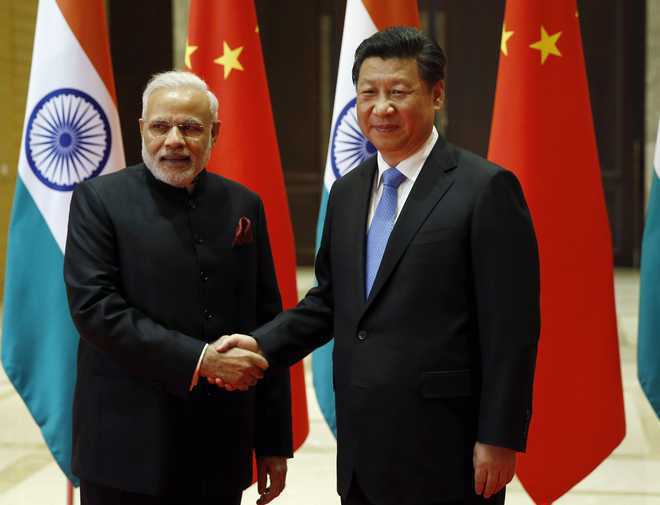
Prime Minister Narendra Modi (left) and Chinese President Xi Jinping. PTI file photo
Beijing, October 8 
As Pakistan Prime Minister Imran Khan arrived here on Tuesday for talks with Xi Jinping ahead of the Chinese President’s important visit to India, China said the Kashmir issue should be resolved between New Delhi and Islamabad, significantly omitting its recent references to the UN and UN Security Council resolutions.
Foreign Ministry spokesman Geng Shuang during his media briefing here on Tuesday did not make any official announcement about Xi’s visit to India.

However, Chinese officials informally said an announcement would be made simultaneously in Beijing and New Delhi on Wednesday.
The Foreign Ministry has also called for a special media briefing on Wednesday on “Chinese leader’s outbound visit”.
“India and China have a tradition of high-level exchanges. Both sides have communication exchange over high-level Visit. Any new information will be released soon,” Geng said in response to questions on Xi’s visit to India.
Both India and China are major developing countries of the world and major emerging markets, he said.
“Since the Wuhan informal summit (last year), our bilateral relations have gathered good momentum,” he said.
“We have been advancing our cooperation and properly managing our differences. We have a tradition of high level exchange and our two sides are maintaining communication on high level exchange in the next phase. We should make good atmosphere and environment for this,” he said.
When asked about Khan’s visit to Beijing ahead of Xi’s trip to India and whether the Kashmir issue will figure in his talks with the Chinese leaders, Geng said that China’s stand is that the Kashmir issue should be resolved between India and Pakistan.
“And so you are paying attention to the Kashmir issue, right? China’s position on Kashmir issue is clear and consistent”, he said.
“We call on India and Pakistan to engage in dialogue and consultation on all issues including Kashmir issue and consolidate mutual trust. This is in line with interest of both countries and common aspiration of the world,” he said.
His comments marked a significant shift on what China has been saying on Kashmir in recent weeks in the aftermath of India’s move to revoke Article 370 of the Constitution removing the special status to Kashmir.
In its first reaction on August 6, the Chinese foreign ministry issued two separate statements.
In one statement, China also expressed its opposition to India’s move to create a separate Union Territory of Ladakh highlighting Beijing’s territorial claims in the area.

The second statement said: “We call on both India and Pakistan to peacefully resolve the relevant disputes through dialogue and consultation and safeguard peace and stability in the region”.

But China added UN and UNSC resolutions on Kashmir when Pakistan Foreign Minister Shah Mahmood Qureshi visited Beijing few days later and met his Chinese counterpart Wang Yi.
“It (Kashmir issue) should be properly and peacefully resolved based on the UN Charter, relevant UN Security Council resolutions and bilateral agreement,” Wang had said.
A closed-door meeting of the UNSC on Kashmir where China maintained the same stand ended without any outcome or statement, in a snub to Beijing and Islamabad.
Later, Wang repeated it in a UN General Assembly speech,drawing protests from India.
Geng’s comments on Tuesday marks China’s return to its original stand that Kashmir issue should be resolved bilaterally.
Observers say it is significant shift ahead of Xi’s visit to India for his 2nd informal summit with Prime Minister Narendra Modi.
On Khan’s visit, Geng said China attaches “great importance” his trip.
Khan arrived here on a two-day official visit to China during which he would meet the country’s top leadership including President Xi and discuss issues of regional and bilateral significance.
Significantly, Pakistan Army chief Gen Qamar Javed Bajwa arrived here ahead of Khan on Monday night, according to the Pakistan army’s media wing – the Inter-Services Public Relations ISPR).
Gen Bajwa would also attend Khan’s key meetings with Xi and Premier Li Keqiang, highlighting his powerful position in Pakistan’s power structure.
“COAS arrived China on official visit. COAS will meet Chinese mil leadership including PLA Army Commander, Vice Chairman of the Central Military Commission & Commander Southern Theater Command. COAS will also join PM for meeting with Chinese PM and President,” the ISPR tweeted.
Their visits came ahead of Xi’s planned visit to India.
“China and Pakistan are all weather strategic cooperation partners. We have good tradition of close exchange and communication. We have strategic mutual trust and advancing practical cooperation. Our cooperation in CPEC is bringing more outcomes to our peoples,” he said.
Geng, however, did not respond to question about Gen Bajwa’s visit. PTI

Army plans to buy 350 helicopters over 10 years to modernise its Aviation Corps

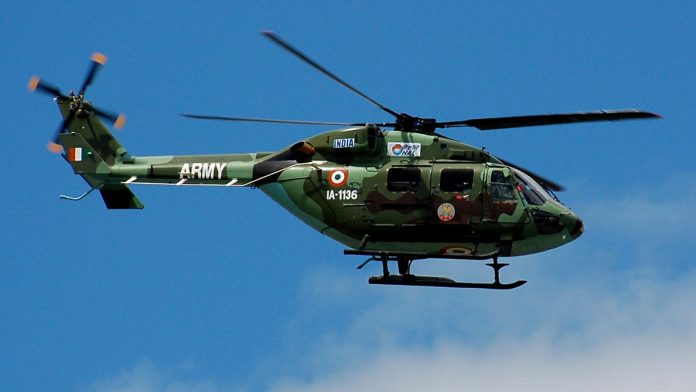
The Advanced Light Helicopter 'Dhruv' was inducted in the Indian Army in 2001

New Delhi: The Army is working on a 10-year modernisation plan for its Aviation Corps and aims to induct at least 350 helicopters, including the indigenous Light Combat Helicopter and the battle-proven Apache.

The long-pending plan includes increasing the surveillance features of the choppers already in the Aviation Corps’ inventory, with the induction of the Remotely Piloted Aircraft System (RPAS).


Also read: This is how more Army jawans can become officers under new Bipin Rawat plan


What does Army plan to buy?

The Army plans to induct two kinds of utility choppers and three combat helicopters. This will include squadrons of Rudra (the armed version of the Advanced Light Helicopter ‘Dhruv’), which will have 20mm guns and 70mm cannons and are to be inducted within one year.

The LCH squadrons are to be inducted within seven to 10 years, while 200 Kamov Ka-226s, which are for reconnaissance and observation, are expected to be procured within 10 years through an inter-government agreement.

By 2021, the Army also expects to procure six Apache choppers and an additional squadron of ALH Dhruv, to add to what is already functional. Dhruv can fly over all terrains in India, including high altitudes.


Also read: Bipin Rawat’s plan to train jawans for officer role is Army admitting staff shortage, quality


What will the new choppers replace?

The Aviation Corps currently operates Chetak and Cheetah choppers, the ALH Dhruv since 2001, and its armed variant Rudra since 2013.

Each squadron of the Aviation Corps is supposed to have three ‘flights’ and each ‘flight’ is supposed to feature five aircraft each. However, in the current scenario, all squadrons have only two ‘flights’ of five aircraft each.

The inductions will replace the Army’s ageing Chetak and Cheetah helicopter fleet at a time when a Cheetah crash recently killed the Indian Army’s Lt Col. Rajneesh Parmar and Captain Kalzang Wangdi of the Royal Bhutan Army, raising questions about the choppers’ flight-worthiness and bringing the focus back on their long-pending replacement with the Light Utility Helicopter.

Also read: Indian Army tanks now have sharper night vision equipment developed by DRDO


Probable advantages

Army sources said the plans would be a game-changer in future conflicts, and expressed confidence that they would be put into action in a time-bound manner.

“More emphasis is being put on prioritisation, rationalisation and economy of expenditure. Greater value for money is being achieved by encouraging procurements from indigenous sources in support of the government’s Make in India initiative,” an Army source said.

Army officers further said that the transfer of the RPAS to the Aviation Corps would ensure a comprehensive surveillance picture, utilising both manned and unmanned platforms, while sharing support infrastructure.

“The operation of these assets under the common umbrella of Army Aviation Corps and a common aviation adviser to the ground forces commander will help achieve battlefield transparency,” the source added.


lso read: Army says two-front war a real risk, need funds to counter China & Pak modernisation


Why Do So Many NDA Cadets Leave Training? The Reality Will Shock You

A disturbing 16-20 per cent drop rate per course!

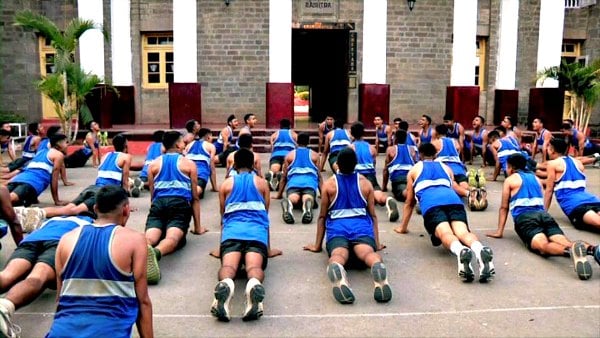
As of 2018, over 1,200 cadets of the premier tri-services college, the National defence academy have quit, in the middle of their three-year training curriculum in the past ten years. The average washout rate of cadets is at an alarming 16 to 20 per cent of the overall course intake. Both former cadets and several alumni of the elite military institution have cited ragda (a concept which some of those interviewed for this article have constituted to ragging), corporal punishment and unsanctioned training practices. Other key reasons for such a staggering drop out rate have been a lack of physical fitness on the part of cadets, being boarded out on medical grounds, indiscipline, homesickness and, on certain instances realising that the reality of serving in the forces is not the same as they had envisioned.

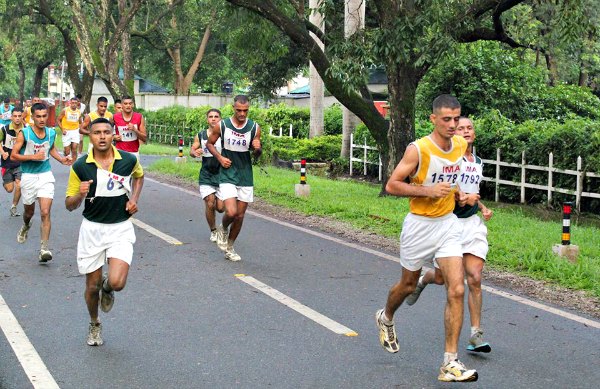
Cadets running cross country
Ragda, being a key factor for the staggeringly high dropout rate, has been hotly debated amongst Ex-NDA’s
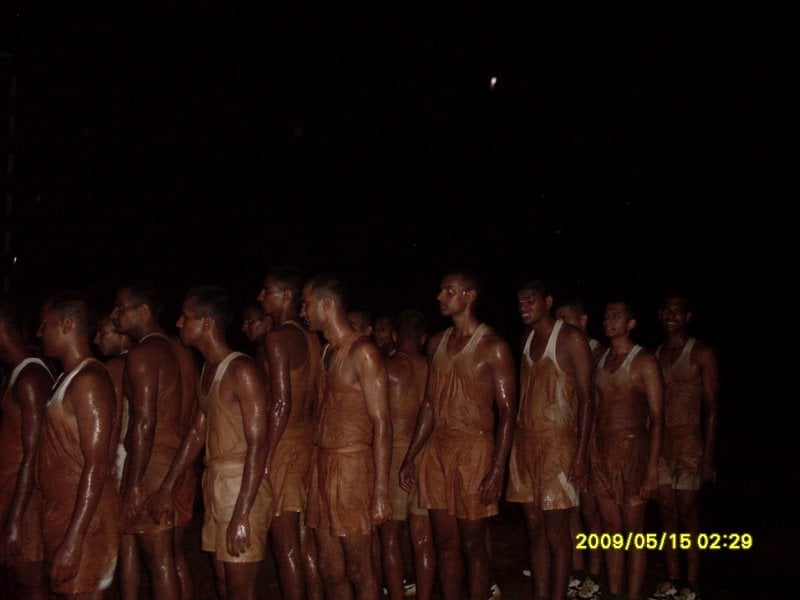
NDA cadets after a ragda session in the middle of the night

The verdict on whether such use of punishment is justified has been hotly debated within military circles and among ex-NDA’s themselves.
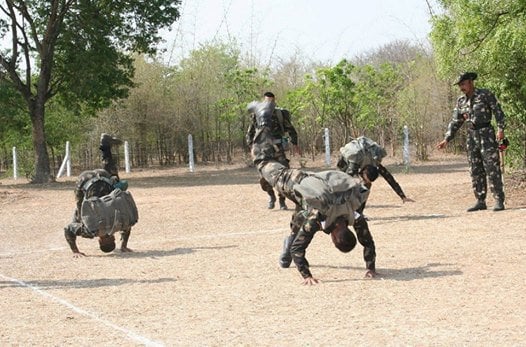
In a report by outlook magazine, retired Colonel PK Royal Mehrishi, an NDA alumnus, told the Asia Times that the fifth and sixth term cadets ordered the first and second term cadets to roll down the staircase of three-story buildings, vault over wooden horses, do backflips, handsprings among a host of other activities without the supervision of a qualified instructor. The report quoted the retired Colonel saying that “Senior cadets believe they’re toughening them for war or better performance in the hard-fought inter squadron competitions.”

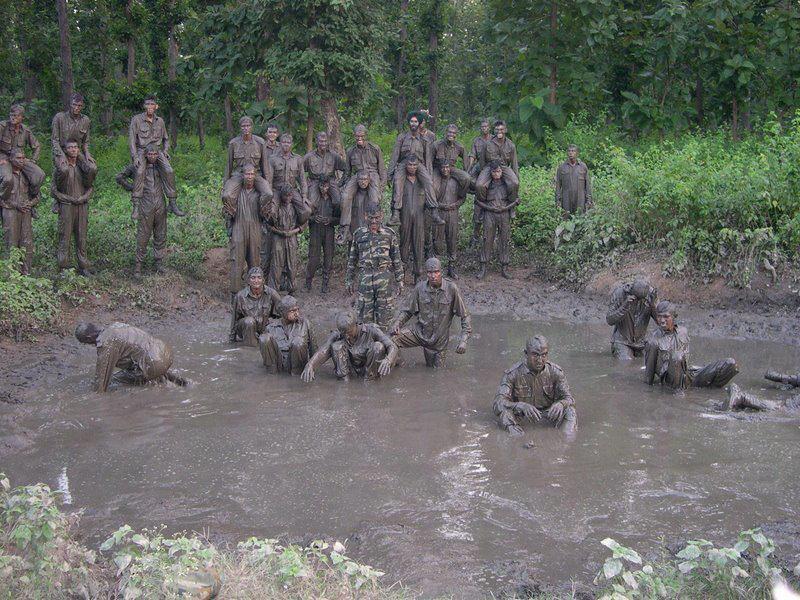
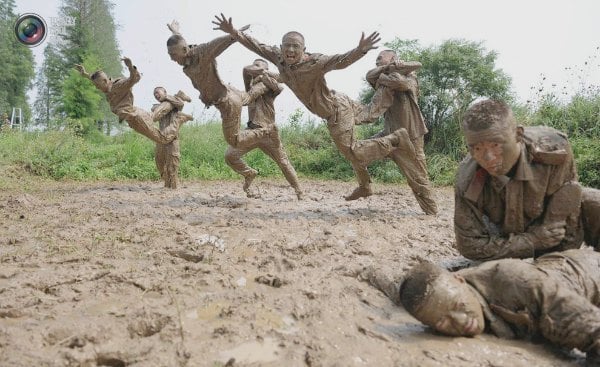
GC’s rolling in the muck

This belief has been echoed by several service personnel who have reached great heights in their military careers. Distinguished officers with exceptional operational records have sworn by these methods, despite being on the receiving end of ragda themselves. Defence services officers have over the years have provided compelling arguments justifying the military necessity of such informal punishments. According to a retired army officer who does not wish to be identified, “The Army wants to make you tough, more mentally than physically. Ragda is there to make you know your physical and mental limits and then cross the same.” The operative phrase in training is “Jitna ragda utna tagda!” meaning “the harder the punishment the tougher you get!”\

“Jitna ragda utna tagda” But what is ragda?

‘Ragda’ the according to a Quora post by Kiran Raul, who is a battle-hardened infantry officer, has described ragda with a pinch of crude humour, writing, “Ragda in a physical sense or practical sense means you are going to spend the next few hours, depending on the severity of your misdemeanour, or outrage felt by the executor of the ragda, is doing a lot of funny but painful or tiring actions, including but not limited to rolling with or without a shirt on your back, on surfaces ranging from a cement floor, gravel to hot tarmac.”

Pushups till fatigue

He goes on further describing ragda as “A lot of push-ups, carrying around your heaviest coursemate on your shoulders, running a lot under the hot sun, drinking a lot of water until you puke, if you don’t puke easily, a front roll and a back roll will help speed that up.”

front rolling is also known as Gulati in the academy

The retired infantry officer goes on to split the anatomy of the vaguely defined military training terminology, writing “crawling on gravel roads and any other hard surface that hurt, standing for a long time carrying weights, pouring buckets of water on your head on a cold winter night.” The aforementioned he explains is only the “tip of the iceberg,” Raul writes rather humorously.

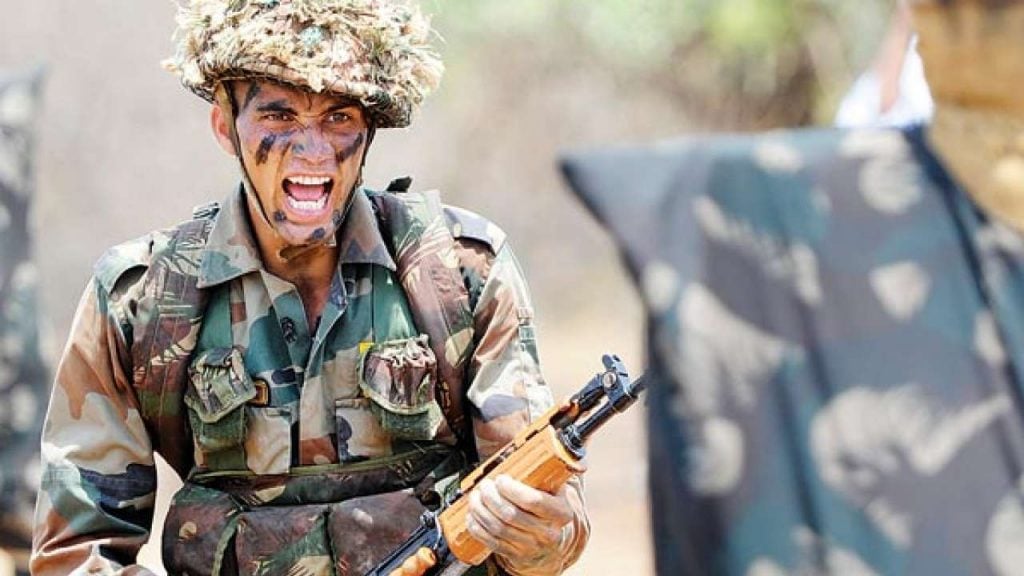
Cadet channelising his aggression on the training dummy

“The procedures are only limited by the imagination.” From green chillies being fed to cadets found sleeping in class to backbreaking exercise after which you will be unable to sleep, everything that is not a part of the formal training curriculum is included in ragda. Raul further writes in his post that “Some innovative, enterprising and sincere candidates have honed ragda into an art form!”

creative punishments are designed by the senior term cadets

Many Ex-Servicemen have stood by the effectiveness of ragda, in forging a cadet into a warrior

The officer in question and a dozen other officers who were interviewed for the background of this article have staunchly advocated the effectiveness of ragda, and now fondly recollect their own experiences. These officers maintain that soldiering is not an ordinary job and there is no civilian equivalent. Soldiers are required to operate in some of the most barbaric, amoral and geographically austere environments in the country. These deployments often involve serving in sub-zero temperatures or in the scorching hot deserts of Rajasthan.

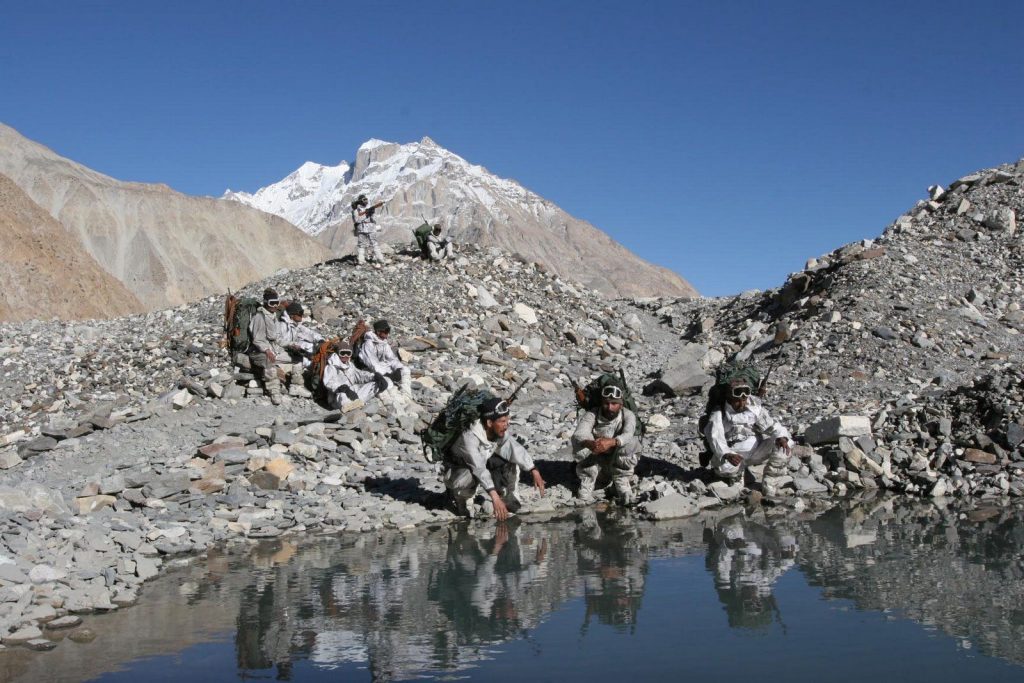
Soldiers serving in the freezing landscape of Siachen
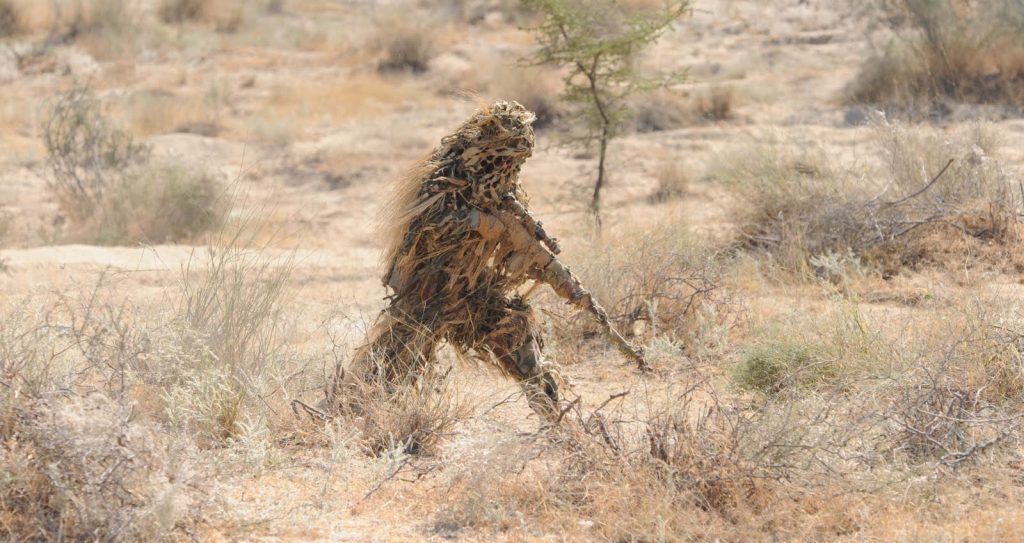
Indian army sniper taking part in a desert exercise

The punishing geography coupled with the thought of ones own mortality is enough to break the will of even the most resilient men and women. Ragda ensures that only the toughest make through the ranks. If they cannot hack it, they certainly will not survive combat. Even many cadets share the same belief, with one cadet who does not wish to be identified saying “Ragda gives you spontaneous pain, but the ustaads are preparing you for a bright future, where you can face the enemy


Would be great if Modi, Khan can ‘work out something’ on Kashmir: Trump

http://

New York, September 24

US President Donald Trump distanced himself from any attempts to mediate between India and Pakistan on Tuesday, saying it would be great if Prime Minister Narendra Modi and his Pakistani counterpart Imran Khan could “work out something” on Kashmir.

Trump made the remarks as he met Prime Minister Modi on the sidelines of the United Nations General Assembly session here.

“It will be great if they can work out something on Kashmir,” Trump said in response to a question, a day after he met Khan on Monday and once again offered to mediate between Pakistan and India on the Kashmir issue if both sides agree.

When asked about tackling militant groups that operate in Pakistan and what he would like to tell the country, Trump told the press gathered there that he was sure Modi would be “able to handle that situation”.

“It isn’t a message for me to give. It is a message from Prime Minister Modi to give. And I think he’s made that loud and clear the other day,” he said.

This was their fourth meeting. The two leaders earlier met on Sunday in Houston and shared the stage at ‘Howdy, Modi’ gala event where they displayed a close friendship and a common vision on fighting terrorism.

Tensions between India and Pakistan spiked after India abrogated provisions of Article 370 of the Constitution to revoke the special status of Jammu and Kashmir.

India’s action evoked strong reactions from Pakistan which downgraded diplomatic ties with New Delhi and expelled the Indian Ambassador.

Pakistan has been trying to internationalise the Kashmir issue but India has asserted that the abrogation of Article 370 was its “internal matter”. New Delhi has also asked Islamabad to accept the reality and stop its anti-India rhetoric.

Reuters quoted Trump as saying that he expected a trade deal with India soon.
“I think very soon we’ll have a trade deal. We’ll have the larger deal down the road a little bit, but we will have a trade deal very soon,” Trump told reporters.
‘Father of India’

He called Modi a rockstar and ‘father of India’, and said he was “like Elvis”. He was referring to the American rock and roll legend, Elvis Presley.

“He is a great gentleman & a great leader. I remember India before was very torn. There was a lot of dissention,fighting and he brought it all together. Like a father would bring it together. Maybe he is the Father of India. We’ll call him the Father of India,” he said.

Modi, on his part, said that the trade ties between India and US would reach 60 billion.

He also said the relationship between India and the US was based on “shared values”.

“America is a very dear friend. Our friendship is based on shared values,” he said.

Prime Minister Narendra Modi sad at the meeting that he was “thankful to Trump that he came to Houston”.

“He is my friend but he is also a great friend of India’s,” he said at the meeting.

The meeting comes after Trump’s address to the UN General Debate from the iconic General Assembly hall.

Indian officials refused to give details about the agenda of the meeting, saying one should wait for the meeting. Agencies


Hope Kartarpur Corridor construction remains on track: Capt Amarinder

Hope Kartarpur Corridor construction remains on track: Capt Amarinder

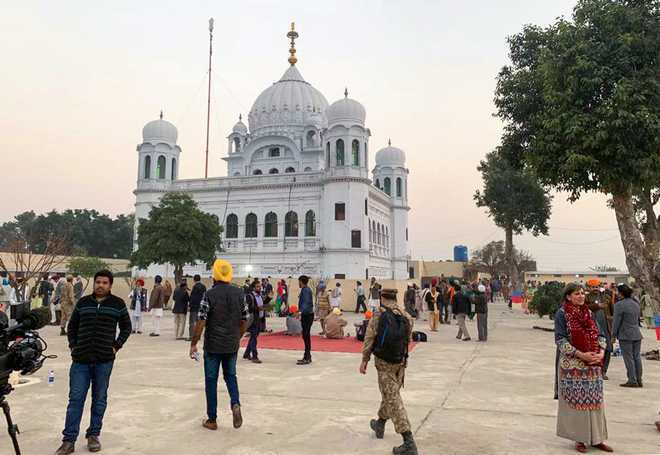
The Kartarpur Gurdwara in Pakistan. File photo

Tribune News Service
Chandigarh, August 7

Punjab Chief Minister Capt Amarinder Singh on Wednesday expressed concern over Pakistan’s decision to downgrade diplomatic ties with India but hoped the move would not adversely impact the construction of the Kartarpur Corridor.

Reacting to reports of Pakistan’s decision to expel the Indian High Commissioner in Islamabad and to review ‘bilateral agreements’ with New Delhi, the chief minister described Islamabad’s reaction as knee-jerk and uncalled for.

Kashmir was an internal matter of India, which was in its rights to take any decision with regard to the region, he said, adding that Islamabad should not have used this as an excuse to undermine its diplomatic relations with India.

Pakistan’s decision was not in the interest of regional security, he said, warning that any such move to destabilise the fragile peace of the South-East Asian region would make the neighbouring country itself vulnerable.

At the same time, Capt Amarinder hoped these developments would not affect the Kartarpur Corridor and Pakistan would not hurt Sikh sentiments by putting the much-awaited corridor on hold.

The decision to build the corridor to mark the historic occasion of the 550th birth anniversary of Sri Guru Nanak Dev ji had been welcomed by Sikhs all over the world and any move now to scuttle the project would leave millions of devotees disappointed.

Political considerations should not be allowed to overshadow the religious feelings of the Sikhs, for whom Kartapur Gurdwara stands out as a symbol of reverence, said the chief minister.

Capt Amarinder urged the Indian government also to take up the matter with Islamabad on priority and ensure that the development of the Kartarpur Corridor remains on track, notwithstanding the diplomatic and other developments between the two nations in the wake of the revocation of Article 370 in Kashmir.

Both countries could take adequate steps to ensure that the corridor’s progress and security is not jeopardised in the light of Pakistan’s decision to scale down diplomatic relations and suspend trade ties with India, said the chief minister.

Kartarpur had nothing to do with Kashmir or any other issue of concern for the two countries, he said, adding that the 550th Prakash Purb was a momentous event with enormous importance for the people of India, especially the Sikhs.

Pak move on ties shouldn’t affect corridor: CM

Tribune news service

Chandigarh, August 7

Chief Minister Captain Amarinder Singh has expressed concern over Pakistan’s decision to downgrade diplomatic ties with India, but hoped the move would not adversely impact the construction of Kartarpur corridor.

Reacting to reports of Pakistan’s decision to expel the Indian High Commissioner in Islamabad and to review bilateral agreements with New Delhi, the Chief Minister described Islamabad’s reaction as “knee-jerk and uncalled for”. Kashmir was an internal matter for India, which was in its rights to take any decision with regard to the region, he said, adding that Islamabad should not have used this as an excuse to undermine its diplomatic relations with India.

Pakistan’s decision was not in the interest of regional security, he said, warning that any such move to destabilise the fragile peace of the South-East Asian region would make the neighbouring country itself vulnerable.

At the same time, Captain Amarinder hoped these developments would not affect the corridor and Pakistan would not hurt Sikh sentiments by putting the much-awaited project on hold. The decision to build the corridor to mark the historic occasion of the 550th birth anniversary of Guru Nanak Dev had been welcomed by Sikhs all over the world and any move now to scuttle the project would leave millions of devotees disappointed.

Political considerations should not be allowed to overshadow the religious feelings of the Sikhs, for whom Kartapur Gurdwara stands out as a symbol of reverence, said the CM.


OROP

Dear Sir,
1. It appears CGDA spring some surprise or the other with sole aim to convince Min of Def (ESW) to abolish OROP altogether by showing that anomalies creep in and some retired post – OROP 2013 get lesser pension than those benefited by OROP-2013.
2. Thanks to Air Mshl SY Savur (Retd) who fights for us by getting useful information through RTI Act, the information furnished by CGDA to Min of Def on anomaly of Officers retired in the period Jul 2014 to Dec 2015 getting less pension than those got benefited by OROP – 2013. The details given by CGDA is as under:-
(a) 94.3% of Lt Cols retired in the period Jul 2014 and Dec 2015 draw less pension than OROP – 2013 retirees.
(b) 78.02% of Lt Cols retired in the period Post – 2016 draw less pension than OROP – 2013 retirees.
(c) 8.25% of Brigadiers retired in the period Jul 2014 and Dec 2015 draw less pension than OROP – 2013 retirees.
(d) 0.42% of Brigadiers retired in the period Post – 2016 draw less pension than OROP – 2013 retirees
3. I have received details of pension by these two ranked officers retired Post – Jul 2014. I contest the figures of CGDA that large percentage of Lt Cols retired post – OROP 2013 draw less pension than OROP – 2013 beneficiaries. The facts I collected from retired officers state otherwise. Very few Lt Cols retired in the period Post – Jul 2014 receive less pension. Only 2 out of 10 Lt Cols in my database retired in the period Jul 2014 to Dec 2015 got lesser pension. Details of such Lt Cols and Brigadiers are put in TSEWA Blog at www.tsewa.org.
4. Regarding Brigadiers none got lesser pension than those benefited by OROP – 2013. Even CGDA refer the number of such Brigadiers who draw less pension is very few. My data is shown below and you will notice not even one Brigadier / Commodore / Air Cmde drew less pension: –
Request
5. The aim of CGDA is to deny OROP – 2018 showing as if OROP gives less pension to those who are out of OROP benefit i.e. Post – Jul 2014 retirees who are not benefited by OROP – 2013. In any scheme of things some will gain and some will lose. CGDA should have brought this anomaly of Post Jul 2014 pensioners getting less pension and advised Min of Def (ESW) to issue instructions to make their pension equal to that in OROP – 2013. The aim of OROP is to bridge gap between pensioners retired in varying time periods.
6. I need more PPOs / E-PPOs of Lt Cols and Brigadiers retired in the period Jul 2014 and Jun 2019 (five years) to prove claim of CGDA at para 2 is wrong.
7. Min of Def (ESW) may be convinced with the argument of CGDA and may recommend to the Union Cabinet to abolish OROP altogether. We need to confront CGDA and Min of Def (ESW) with facts.
8. I therefore request Lt Cols and Brigadiers who retired from Jul 2014 to Jun 2019 to scan and send me your PPOs to my e-mail id : csvidyasagar@gmail.com as CGDA may ask for authentication. PPOs / E-PPOs are the authentication. Sometimes due to poor scanning, PPOs are illegible. In that case kindly give me the following information: –
(a) Service No.
(b) Rank.
© Name as given in PPO.
(d) Qualifying Service as given in PPO.
(e) Date of Commission.
(f) Date of Retirement.
(g) Basic Pay at the time of Retirement as given in PPO.
(h) Pension sanctioned at the time of retirement as given in PPO.
(j) PPO No.
9. Kindly give this mail utmost importance to this issue. Unless we act with alacrity, we may lose OROP for which countless veteran waged relentless battle. Your immediate action is humbly requested. Also may I request you to circulate this mail to all your friends in other mail groups for faster dissemination and urge the Lt Col and Brigadiers retired in the period Jul 2014 and Jun 2019 (five years) to send me their E-PPOs or PPOs immediately to my e-mail id: csvidyasagar@gmail.com. I need some time to collect this information, collate yearwise and then send it. We have very little time as the Committee headed by CGDA constituted on 14 Jun 2019 to work out modality of OROP may recommend to abolish it altogether if we do not present our data.
Warm regards,
Brig CS Vidyasagar (Retd)
040-48540895
9493191380

Guns will lead to grave: Gen Rawat Warns militants and Pak of ‘bloodier nose’

http://

Azhar Qadri

Tribune News Service

Drass (Kargil), July 26

Confident that the scourge of terrorism would be rooted out from Jammu and Kashmir, Army Chief Gen Bipin Rawat on Friday said the only way forward for the militants was to give up arms and join the mainstream.

Editorial:  20 years after Kargil

Addressing the media on the 20th anniversary of the Kargil war victory here, the Army Chief also said Pakistan would get “bloodier nose” if it tried another Kargil. He said they were reaching out to people through social media and other programmes to shun weapons and come overground. “Any local militant picking up a gun against the security forces will no longer be a militant. The gun and the man will be separated. The man will go to the grave and gun will be with us. But this is not the end of everything. We are trying to approach the civilian society (to encourage youths to give up violence),” he said. Gen Rawat said the government approach to ensure that everybody acted together was paying good dividends and the Army would claim victory over terrorism in Jammu and Kashmir.

The Army Chief said India had complete right over the state of Jammu and Kashmir, including the areas under Pakistan’s control. “It is a political decision how to control (complete state). Whether it has to be done diplomatically or through other means, it will be done according to the decision,” he said.

Gen Rawat said the Army was compelled to undertake the 1999 war to throw back Pakistani intruders who had undertaken the “misadventure” of occupying the heights in the Kargil region. “We have gathered here to pay tribute to the gallant soldiers who brought us victory in these very months 20 years ago.”

Kovind’s drass visit cancelled due to bad weather

  • President Ram Nath Kovind’s visit to Drass on the 20th anniversary of Kargil Vijay Diwas was cancelled on Friday due to bad weather
  • The visit was part of the commemoration of the 20th anniversary of the 1999 Kargil war victory and the Army had hosted a series of events

Reading Pak gestures carefully after Jadhav verdict

India needs to thoroughly explore Pakistan’s recent behavioural pattern against the backof its extraordinary victory in the four-decades-old Afghan civil war that is finally sailing into view — after so much of trials and tribulations, risking Pakistan’s internal stability.

Reading Pak gestures carefully after Jadhav verdict

Shock and awe in the world of politics work in unpredictable ways. They could have disastrous consequences or could have a salutary effect on the protagonists involved and have a chastening influence, leading to something good.

The shock and awe that the then US President George W Bush hoped to administer to Iraq by invading that country destroyed that country and led to mayhem.

In comparison, the shock and awe that the then Soviet leader Nikita Khrushchev gave to his American counterpart John Kennedy in 1962 by dispatching radars and missiles to Cuba had the desired effect. Khrushchev prevailed upon the US to remove the nuclear missiles deployed in Turkey as a reciprocal step for his willingness to not press ahead with the planned deployment of the Soviet missiles on the Caribbean island-state.

The invocation of such poignant slices of modern history helps to underscore that the shock and awe of the imminent spectre of the return of the Taliban to the mainstream political life in Afghanistan — and Pakistan’s success in bringing it about — need not necessarily be taken as defeat from the Indian point of view.

Henry Ford, the great American industrialist who founded the iconic motor company, once said, “Failure is simply the opportunity to begin again, this time more intelligently.”

The clue almost always lies in humility, which keeps out hubris. There was no rationale for waging a proxy war with Pakistan on the tragic Afghan turf, since no matter how anyone tried, Pakistan wouldn’t have caved in, given the high stakes involved. If nothing else, the 2,200-kilometre long open border with Afghanistan alone could have motivated Islamabad to seek a friendly government in Kabul that is receptive to its core concerns and vital interests of national security.

A former Director General of Pakistan’s Inter-Services Intelligence (ISI) once told this writer that if an Afghan had a toothache, he got it fixed by a dentist in Peshawar.

India can and should learn to live with the emerging reality in our region — Taliban’s ascendancy to power in Kabul, Pakistan’s reasonable success in ensuring that the future power brokers on the northern side of the Durand Line are friendly and cooperative, and, third, Afghanistan’s inexorable transformation as a regional hub of China’s Belt and Road Initiative.

The time has come to address India-Pakistan tensions, which is fundamental to regional security and stability. Signs are looking good that Pakistan is in the least interested in triumphalism. Three most recent trends must be noted. One, the guns have fallen silent on the border and incidents of infiltration sharply declined. Two, Pakistan bowed to make concessions on the Kartarpur Sahib pilgrimage. And, three, Pakistan has unceremoniously reopened its airspace, bringing much relief to Indian travellers.

What lends enchantment to the view is that these nascent trends appeared as the countdown began for the verdict by the International Court of Justice (ICJ) at The Hague in the case of Kulbhushan Jadhav, who is on death row in a Pakistani jail.

A consensus ICJ ruling is usually arrived at through candid discussions, which the plaintiff and the defendant are privy to, informally. Quite obviously, such a fair denouement may provide the exit door for both Islamabad and New Delhi to move on, and it is entirely conceivable that both countries are in a chastened mood today over an a priori history that is best laid to rest.

Surely, this is where the most recent ‘goodwill gesture’ by Pakistan over the Kartarpur Sahib pilgrimage assumes particular significance. The differences between the two countries dramatically narrowed once Pakistan assured India without caveats that it will not allow pro-Khalistan activists to use the ‘Peace Corridor’ to indulge in anti-India activities. Indeed, very little time is left before the 550th birth anniversary of Guru Nanak in November.

It is often the case in life that others may open the doors, but you must enter by yourself. To be sure, India needs to thoroughly explore Pakistan’s recent behavioural pattern against the backdrop of its extraordinary victory in the four-decades-old Afghan civil war that is finally sailing into view — after so much of trials and tribulations and after committing such massive resources in men and material, risking Pakistan’s own internal stability.

The recent Pakistani stance vis-a-vis India is devoid of any traces of triumphalism. The time has come for the Indian leadership to take a big leap forward to begin a serious conversation with Pakistan. The heart of the matter is that a rare opportunity may be at hand for the two countries to discuss the rites of passage to a new era based on a moratorium on asymmetrical or proxy wars. This needs to be done at the leadership level.

An improvement in the India-Pakistan relationship will provide an open sesame to the emerging regional security scenario to turn it into an opportunity for India’s development. It will require that India jettisons its notions of the Taliban being a creature of darkness and a reset of regional policies that puts in perspective the tumultuous period that followed the Saur Revolution in 1978, which is breaking loose and drifting into history books. Importantly, the normalisation of the India-Pakistan ties — and making them predictable — is the sine qua non for a steady enhancement of India’s partnership with China to make it strategic, which Prime Minister Narendra Modi has set his eyes upon as a historic legacy of his leadership.