Sanjha Morcha

What’s New

Click the heading to open detailed news

Current Events :

web counter

Print Media Reproduced Defence Related News

Hammer Of Authority

One  way to understand our current military justice system is to read the sections in the Army Act of 1950 dealing with “offences in relation to the enemy and punishable with death” relating to warlike situations. Samples: “shamefully” abandoning a garrison or a defence position, casting away arms, cowardice, assisting the enemy, putting up the white flag of surrender, spreading rumours that may create alarm, a sentry who “sleeps upon his post or is intoxicated” in times of war.

Independent India has got no soldier execu­ted; that does not mean we have not had cowardice or desertion in times of war, or sentries who fell asleep. All it does is to tell us how antiquated the law is. The colonial ring of its language, and some provisions, date many of its provisions to the 1911 Indian Army Act.

There is something inherently authoritarian about the military justice system because the military is a kind of dictatorship functioning within a democracy. Given the requirements of military discipline and the preservation of good order, the system has felt a need to create an authoritarian regime where authority flows from the top to the bottom. Also, questioning an order, or not following the draconian rules, can lead to punishment that would be considered severe by the regular laws of the country.

Good order and discipline are not just about war time, but relate to the daily life of an army man requ­ired to keep the military’s fighting edge keen at all times. For this, there are summary procedures for commanding officers of units to punish jawans up to the rank of a hawaldar. Death sentence may not visit you if you desert, mutiny, steal, strike or threaten superiors in peace time, but you can still get 14 years RI and be cashiered, which means no retirement benefits.

There are other problematic provisions, such as “unbecoming” or “disgraceful conduct” of officers and junior commissioned officers, not too clearly defined, but venture into areas that go against the moral ethos of the armed forces and their sense of honour. Actually, unlike the police or other state instruments, army personnel can be punished for cruelty to civilians, defiling religious places and even infidelity.

The aim of the system is to provide a quick, but fair procedure. Safeguards are built in, but the very nature of the system raises questions. The military courts, or the courts martial, comprise benches of five or three officers with no legal training—even the prosecutor and defence councils are line officers. General courts martial usually have a judge advocate who is supposed to advise the court on the finer points of the law.

It was to tackle issues in the system that the Armed Forces Tribunals were formed in ’07. However, a systemic flaw is checking its intended aim.

In essence, the military is its own police, forensic dep­artment, judge and jury, and this is the biggest weakness of the system. While the summary court-martial is a useful means of maintaining good order, when it comes to more serious crimes, collecting evidence, its presentation and consideration by a non-specialist group can be problematic. The idea that peers are the best judges goes back to the European notion of a jury trial. In India, the system was abolished after a jury acquitted a naval commander of a 1959 murder of a businessman. The Bombay High Court overturned the verdict and tried and convicted him through a bench.

Over time, the infirmities of the system have been app­arent, especially since it has no built-in right to appeal and, given its draconian nature, bears instances of its misuse. To deal with this, the government established the Armed Forces Tribunals (AFTs) in 2007. The members here are mixed—senior retired judges and senior retired military officers.

The big problem, however, is that the AFTs come under the ministry of defence, instead of the law ministry. So the appeals system is run by the very outfit against whom the appeals are usually entered. The key powers to have their judgements and orders impl­emented have been withheld from the Tribunals, and their rulings are simply ignored, if found inconvenient.

Separating the military from society has often been seen as a means of enhancing the military effectiveness of the forces. The Army Act was a manifestation of this. But times have changed, and so have the very nature of warfare and the context of the old rules. Getting soldiers to follow orders must be accompanied by a culture where not only illegal orders are challenged, but instead draconian discipline to get them to follow orders, the officers depend on their self-esteem as professionals and their sense of being part of a team.

There are reports saying the government intends to provide the legal teeth to the tribunals. The MoD and the three services are not very happy about this, but the time has come to bring the military justice system in line with the mores of contemporary society.


(The writer is a Distinguished Fellow, Observer Re


Indian Defence Needs Urgent Attention by Lt GENERAL P.C.KATOCH

NEW DELHI: 2016 has seen an expanding China-Pakistan nexus resulting in a heightening proxy war against India.

China has made strategic lodgment in POK’s Gilgit-Baltistan and in Pakistan with the China-Pakistan Economic Corridor (CPEC) and Gwadar port.

China openly supports Pakistani radicals at the UN and the NASA photograph of Chinese nuclear attack submarine docked at Karachi during May 2016 indicates the growing China-Pakistan collaboration at sea. China has announced her naval vessels and submarines will be guarding Gwadar port.

China plans to bring its railway inside Nepal and is stoking the fires in Shan State of Myamnar through her proxies, while making major investments in Sri Lanka and Bangladesh. Chinese media says India’s actions in Kashmir can stir up Muslim organization in northeast, even as Pakistani terror attacks in Pathankot, Gurdaspur, Pampore, Uri, Nagrota, Samba drew no comments from China.

Three defence-related news items of recent past are significant. First, new Army Chief, General Bipin Rawat while telling the media that a two-front war is possible, lamented that of the 73 all-weather roads along the border with China and 14 strategic railways needed along the two-fronts, railway lines exist on paper and only 22 of the 73 roads have been completed over a decade after they were identified;

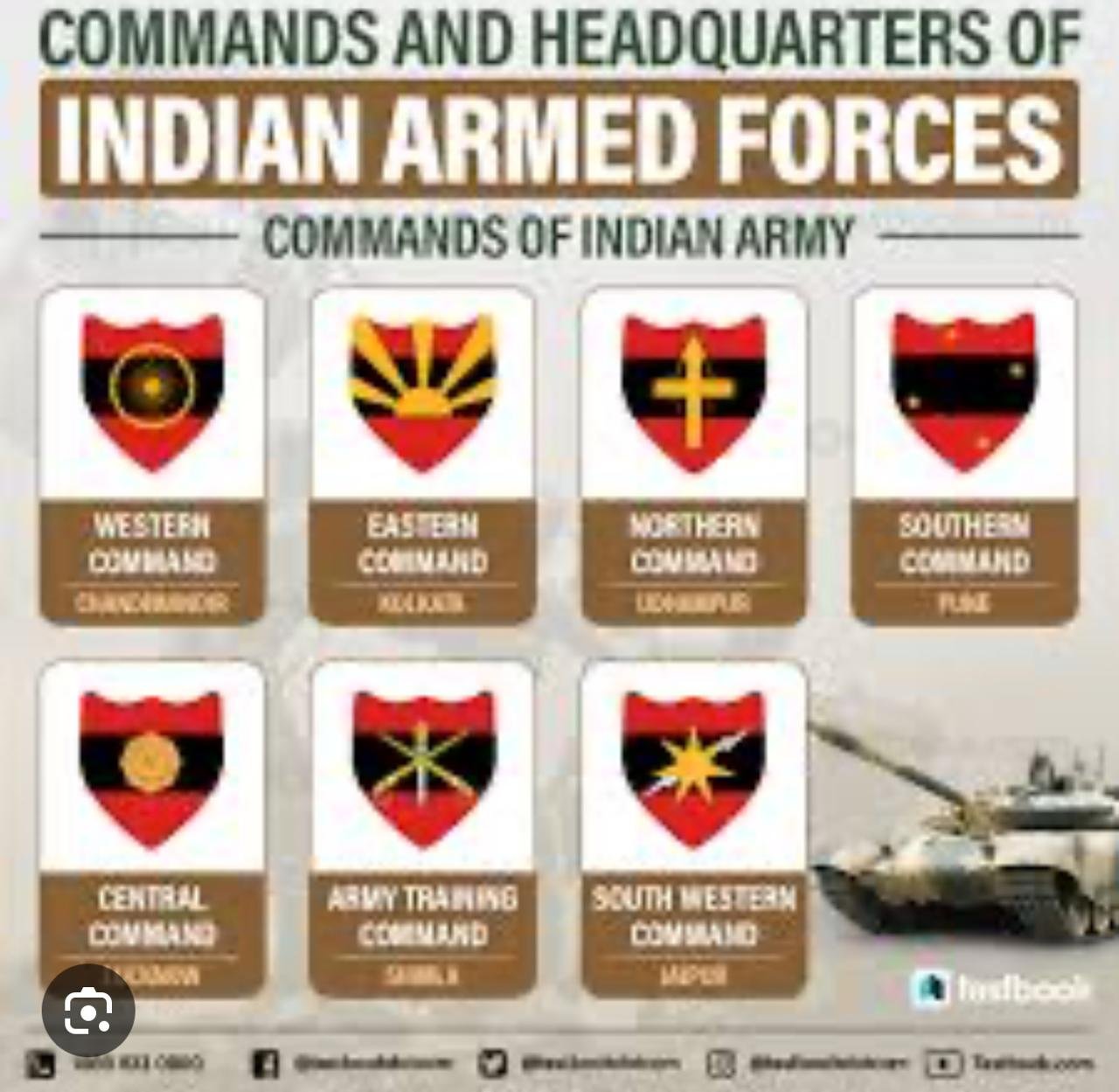
Second, the government has deferred the long pending demand of the armed forces to create three new commands (Cyber, Space and Special Forces) while asking them to first create capabilities and structures for such operations before going for such expansion, and;

Third, through the Shekatkhar Panel report,the government plans for reforms to turn the Army into one of the finest fighting units in the world with infrastructure and manpower to match. Initiatives include outsourcing few major services to private sector in order to cut costs and use the money better. Major reforms are expected to apply to all levels of the forces. The initiative is also expected to tackle perpetual shortage of manpower, especially in higher ranks.

With respect to border infrastructure, the state remains pathetic, for which the Ministry of Defence can’t absolve itself of blame. Last year saw protests with the Indian Army objecting to alignment of the 2,000-kilometer long road approved along the McMohan Line connecting Mago-Thingbu in Tawang (western extremity of Arunachal Pradesh), to Vijaynagar in the eastern extremity of the state.

The Army’s concern was to link this proposed strategic road to existing road heads south of it. In May 2015, then Minister of State (Defence) had stated that MoD has set itself a deadline of 2017 to complete infrastructure projects in Sikkim and Arunachal Pradesh, and by 2018 put the infrastructure in Arunachal Pradesh and the Northeast in place. But not much has progressed.

The logic to defer creation of the Cyber, Space and Special Forces Commands on grounds of “first create capabilities and structures for such operations before going for such expansion” is weird to say the least. If capabilities and structures already existed, these commands would not be required.


The least the pundits of MoD could do is learn how the Chinese military is being re-organized. To refer to these commands as “long-standing demand of armed forces” alone is fooling the public as their establishment was strongly recommended by the Naresh Chandra Committee appointed by GoI.


From public utterances of the political hierarchy, the belief that we have not fought a war since long and are not likely to be fight one is quite apparent. This shows complete misunderstanding of the fact that we are at war and will continue to be so, considering that conventional wars have been overtaken by hybrid warfare, in which cyber, aerospace and special operations have vital roles.

There is urgent need to establish a special forces command under the Prime Minister if we are to bridge the gaping strategic asymmetry vis-à-vis China and Pakistan in terms of sub-conventional capability.

As regards the Shekatkhar Panel, when and how the recommendations will be recommended are anyone’s guess. Suffice to stay for now that there have been umpteen studies in the past that have addressed teeth to tail ratio, cutting army manpower and outsourcing major services to private sector.

Where the hierarchy has always failed is implementation of these studies. In this context, the biggest failing of the government, as all previous governments, is not reorganizing higher defence structures, appointing a Chief of Defence Staff and replacing MoD bureaucrats with military professionals.

Both the K Subrahmanyam headed Kargil Review Committee and the follow up Group of Ministers headed by the then Deputy Prime Minister and Home Minister LK Advani strongly recommended appointing a CDS and reorganizing higher defence structures.

HQ Integrated Defence Staff (IDS) did come up because of one such recommendation but not as part of MoD (as was intended) but as separate HQ. The indications now are that should the CDS or Permanent Chairman of Chiefs of Staff Committee come up, he would be without operational powers; implying another puppet appointment for the bureaucracy to play around with.

Sure the ‘surgical strikes’ were executed and may be repeated too. But they are no panacea for subduing the aggressive China-Pakistan strategic nexus unless sustained covert operations are launched at strategic level.

Aside from bridging gaping strategic voids in equipping, major effort has to be made towards ensuring the security of our installations. Findings of the study post the terror attack on IAF’s Pathankot base will need urgent follow up.

The army post at Uri had just a cattle fence and no thermal imager when attacked. There is plenty of noise about ‘Make in India’ but in terms of actual equipping and modernization of the military not much has happened on ground.

In 1995, a Review Committee headed by Dr APJ Abdul Kalam had set the goal of 70% self reliance in defence sector by 2005 but in 2014 (19 years later) the state was: only 30% self reliant; as per CAG, indigenous defence equipment was either sub-standard or overpriced; defence equipment held by military was 50% obsolete; proportion of state-of-the-art equipment needed to grow from current level of 15% to 30%, and current cycle including acquisitions drafted under LTIPP) was expected to include procurements worth US$ 100 billion by 2022.

With this backdrop, the fresh goal stated by the government of attaining 70% self-sufficiency in defence requirements by 2027 is more of utopia.

The anti-military constituency has prospered, even hitting consistently at the prestige and emoluments of soldiers, adverse effects of which on national security will emerge in due course.

Unfortunately the government remains intransigent to such issues. The bureaucracy remains all powerful, yet unaccountable; under British era Rules of Business of the government, the defence secretary, not the defence minister, is tasked with the defence of India and the services headquarters continue as “attached offices”.

MoD has no institutionalized set up for strategic thinking and policy formulation. Resultantly, we are without a National Security Strategy which should be the basis of a Comprehensive Defence Review.

It is these two essentials on which our defence procurement in short, medium and long term should be based.

The lack of required focus on R&D, military modernization, management of border defence, poor border defence infrastructure, poor defence-industrial complex and most importantly the un-strategic culture are apparent.

Government would do well to address these issues, to include:

-appoint CDS with full operational powers;

-induct military professionals in MoD and the defence-industrial complex;

-define National Security Strategy and undertake Comprehensive Defence Review headed by the CDS, and;

-CDS to oversee and implement such Revolution in Military Affairs under directions of the Prime Minister, initiation of which may need enactment of an Act of Parliament on lines of the Goldwater Nichols Act and the Berlin Decree that transformed the US and German defence forces respectively.

(Lt General P.C.Katoch (retired) is a veteran officer of the Special Forces)


Amid growing Russia-Pak ties, India gets invite for Afghan meet

Simran Sodhi

Tribune News Service

New Delhi, February 10India will attend the next meet on Afghanistan to be held in Moscow in mid-February. Both Russia and India have confirmed the invitation and the subsequent acceptance to attend the Afghan conference.In December last year, Russia hosted China and Pakistan for a trilateral conference to discuss the future of Afghanistan. Both India and Afghanistan were not invited to the dialogue which was to discuss the future course of action for war-torn Afghanistan.This change in heart is welcome news to India which feared a growing Russia-Pakistan alliance to counter the growing India-Afghanistan relationship. The fact that Iran has also been invited this time is another welcome sign. India and Afghanistan, in the last year, have been very critical of Pakistan’s role in Afghanistan and have pointed to the role of the ISI and the Pakistan Army in fomenting trouble in the country.In December, the Afghans had been quick and blunt to dismiss that trilateral conference stating without the presence of Afghanistan, the future of the country could be decided. Ahmad Shekib Mostaghni, a spokesman for the Afghan Foreign Ministry, had said, “Even if such talks are organised with goodwill, it cannot yield any substantial result because no one from the Afghan side is there to brief the participants about the latest ground realities.”India conveyed its concerns directly to the Russians when National Security Adviser (NSA) Ajit Doval travelled to Moscow on January 30-31. The Russia-China-Pak trilateral meet also generated concerns in the strategic community that this was an anti-US alliance.


Raise war memorial in Mandi, demand ex-servicemen

Tribune News Service

Mandi, February 9

Ex-servicemen of the district have urged the state government to raise a war memorial in Mandi, which has been pending for a long time.Ex-servicemen held a meeting under the leadership of Brig Khushal Thakur (retd) in the town to discuss the issue and pressurise the state government to look into their long-pending demands.Talking to The Tribune here today, Brigadier Thakur said the ex-servicemen were demanding the setting up of a war memorial in the town but there was no progress in this direction so far.“The Union Health Minister had approved Rs 50 lakh for this project but the state government is silent over the utilisation of funds and even a detailed project report (DPR) was not shared with them,” he remarked.“There was a proposal of sainik sadan at Palace Colony but till now even the DPR of this project was not prepared by the state government for the purpose,” he said.He said there was an acute shortage of staff at district soldier board, Mandi, and the post of deputy director was lying vacant for the past few months, due to which ex-servicemen or their widows were suffering a lot.“Ex-servicemen were feeling dismayed because of the apathy of the state government towards their demands and we urge Chief Minister Virbhadra Singh to look into the issue,” he added.


Gen who fought 3 wars with Pak passes away

Gen who fought 3 wars with Pak passes away
Maj Gen Kulip Singh Bajwa

Tribune News Service

Chandigarh, February 9

Maj Gen Kulip Singh Bajwa (retd), who fought three wars with Pakistan and held important command assignments in 1965 and 1971, passed away at the Command Hospital, Chandimandir, this morning.Commissioned in December 1946 with the 1st Post-War Regular Course of the Indian Military Academy, Dehradun, he initially served with the Bombay Sappers and took part in the 1947-48 Kashmir operations. He was transferred to the Regiment of Artillery where he served with 13 Field Regiment, 51 Mountain Regiment (Pack) and 161 Field Regiment. Later, he raised 85 Light Regiment and took it into action in the prelude to the 1965 war, directing the fire support to successful attacks, which resulted in the capture of the Kargil heights.As a Brigadier, he commanded the largest artillery force in the history of the Indian Army in the Shakargarh sector during the 1971 war. After the war, while commanding 54 Infantry Brigade, he defended Amritsar and organised the repatriation of Pakistani prisoners of war.Thereafter, he commanded 54 Infantry Division at Secunderabad and pioneered new tactics of assaulting fixed defences and helped in the formulation of the strategy for employment of strike formations post-1971. He also served in counter-insurgency operations in the North-East.


War memorial gets three more galleries

War memorial gets three more galleries
The Punjab War Heroes’ Memorial-cum-Museum in Amritsar. Photo: Vishal Kumar

GS Paul

Tribune News Service

Amritsar, February 8

The state-of-the-art Punjab State War Heroes’ Memorial-cum-Museum (PSWHMM) has expanded its horizon with the addition of three galleries.With this, the memorial has eight galleries that showcase the era of Alexander, rise of the Sikh Empire (Maharaja Ranjit Singh), Anglo-Sikh Wars, Jammu and Kashmir operations and India-Pakistan wars.The PSWHMM authorities have engaged eight guides, who tell visitors about the significance and history of each aspect in detail.The memorial has a 7-D theatre, where audience can feel environmental effects such as smoke, storm, wind, rain, snow and fire. A visitor from Sangrur said, “It was the live experience of war and being present on the battlefield.”Another viewer Barjinder Singh said, “One climbs the impossible heights of the Himalayas. And you can sense the wind as a bullet whizzes past you. You feel the chill of snow and ice, and howling winds.”One of galleries documents the history of Mohenjo-Daro and Harappa. It touches upon the dynamic land, mountains, rivers, people, their daily lives, art, craft, cultural ceremonies, followed by the invasion of Alexander, the change in the form of Bhakti Movement by Guru Nanak Dev and formation of Sikhism. This is followed by the depiction of the Sikh Empire under Maharaja Ranjit Singh. Another gallery relates to the first India-Pakistan war (1947-48).Col HP Singh, general manager of the project, said that one more youth-friendly segment was under progress, christened “Out of Area Operations, Proxy War and Motivation”. “As the name suggests, it will motivate the youth to fulfil their ambition of joining the armed forces. It spells out the details of eligibility conditions, selection process, pay, perks and privileges,” he said.A few months ago, ‘The Saragarhi Panel’ on a wall 80 ft by 15 ft was made. Apart from the brief on the Saragarhi battle, the soldiers’ names were engraved on the mural.


China’s DF-16 missile can reach India

BEIJING: China’s newly formed Rocket Force has showcased an advancedballistic missile with a range of more than 1,000 km that canhittargetsinIndia, Japanand Taiwan.

AP FILEDF­16 short­range ballistic missiles pass Tiananmen Gate during a military parade in Beijing.

A video from the People’s Liberation Army showed its Rocket Force personnelshowcasing the DF-16 medium-range ballistic missile at an unknown location.

Thevideowasreleasedwithin a day of US defence chief James Mattis visiting Tokyo. On Monday, Japan said Chinese coast guardvesselssailedinsideitsterritorial waters around the disputedDiaoyuislands(Senkakuin Japanese) in the East China Sea, soon after Mattis said the US would defend Tokyo’s control over them. “Three ships entered thewaterssurroundingtheuninhabited chain,” the Japan Coast Guard said in a statement. The islands are controlled by Japan.

hina’s state media issued a veiled warning to neighbours, especiallyJapan, aboutthecapabilities of the DF-16 missile, whichwasfirstrevealedatamilitaryparadeinBeijinginSeptember 2015.

“ExpertssaidtheDF-16posesa challenge to foreign military installationsalongthefirstisland chain, whichiswhattheChinese militarycallstheseriesofislands that stretch from Japan in the north to China’s Taiwan and the Philippines to the south,” staterun China Daily reported.

Quoting a retired major general, thereportsaidtheDF-16has a strike range of more than 1,000 km, “filling the gap that previouslyexistedwiththeabsenceof amedium-rangeballisticmissile in the PLA’s arsenal”.

clip

clip

a06997c5-f739-4ca8-915e-40157e2a3fd1


Gallantry awards for surgical strike heroes R-Day honours for 19 men of 4, 9 Para

New Delhi, January 25

Nineteen soldiers of the 4 and 9 Para, the special forces’ units which undertook the daring cross-border surgical strike across LoC, have been awarded gallantry medals, including a Kirti Chakra, while their commanding officers have been given Yudh Sewa Medal.Major Rohit Suri of 4 Para, who led one of the teams across the LoC targeting terrorists’ launch pads, was awarded the Kirti Chakra, the second highest peacetime gallantry award, on the eve of the Republic Day.(Follow The Tribune on Facebook; and Twitter @thetribunechd)Havildar Prem Bahadur Resmi Magar of the Gorkha Rifles got the Kirti Chakra posthumously.Col Kapil Yadav, commanding officer of 9 Para, and Col Harpreet Sandhu, Commanding Officer of 4 Para, were awarded the Yudh Sewa Medal, awarded to mark a high degree of distinguished service in an operational content. The award is the wartime equivalent of the Vishisht Seva Medal, which is a decoration for peacetime distinguished service.Five personnel from the two para units also got Shaurya Chakra, while 13 got Sena Medal (Gallantry).The Army conducted surgical strikes on terrorist launchpads across the Line of Control in September last year, after a terrorist attack on an Army camp in Uri claimed the lives of 19 jawans.Those who have been awarded posthumously included Naik Gawade Pandurang Mahadev, who has been given Shaurya Chakra.Lt Col Ranjit Singh Pawar, Maj Krishnan Manoj Kumar, Maj Amit Deswal, Naik Ran Singh, Naik Vijaykumar S, Sepoy Ram Chander of DSC, Sepoy Satya Prakash Singh and Sepoy Satish of DSC along with Signalman Ajay Singh Choudhary were awarded Sena Medal (Gallantry) posthumously.The President has approved award of 398 gallantry and other defence decorations to armed forces personnel and others. — PTI/TNS


Havildar Hangpan Dada posthumously awarded Ashok Chakra

Havildar Hangpan Dada posthumously awarded Ashok Chakra
Chasen Lowang Dada, the widow of martyr Hav Hangpan Dada, receiving Ashoka Chakra from President Pranab Mukherjee on behalf of her husband on the occasion of the 68th Republic Day Parade at Rajpath in New Delhi on Thursday. PTI

New Delhi, January 26President Pranab Mukherjee on Thursday posthumously conferred the Ashok Chakra on Havildar Hangpan Dada of the Rashtiya Rifles, who laid down his life after single-handedly killing three terrorists in Jammu and Kashmir last year.

(Follow The Tribune on Facebook; and Twitter @thetribunechd)

The highest peacetime gallantry award for valour and courageous action was accepted by Dada’s widow Chasen Lowang, who struggled to hold back tears while receiving the honour.In a firefight in Naugam sector on May 26, when his section was pinned down by heavy and accurate fire, the soldier closed in towards terrorists hiding behind rocks and boulders, saving the lives of his comrades.With scant regard for his life, he displayed exemplary courage and presence of mind and killed two terrorists at close quarters. In the exchange, he was grievously injured.Undeterred, he went after the remaining terrorists.”In the process, he came face to face with the third terrorist whom he killed in hand-to-hand combat before making the supreme sacrifice. His action led to elimination of the fourth terrorist,” the citation said. — PTI