Sanjha Morcha

What’s New

Click the heading to open detailed news

Current Events :

web counter

Print Media Reproduced Defence Related News

Four Lashkar militants gunned down in Pulwama encounter

Four Lashkar militants gunned down in Pulwama encounter

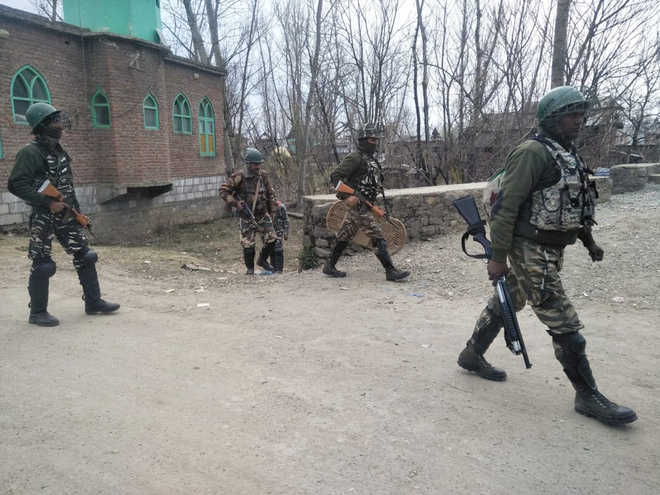
Army men at an encounter site in the Valley. Tribune File Photo

Suhail A Shah

Anantnag, April 1

Four local Lashkar-e-Toiba (LeT) militants were killed and four security forces personnel, including three Army men, were injured in a gunfight between security forces and militants at Lassipora in Pulwama district on Monday morning.

The injured personnel are all out of danger and are undergoing treatment at the Army’s base hospital in Srinagar.

The slain militants have been identified as Zaffar Ahmad Paul of Dangerpora in Shopian, Aqib and Kumar of Imam Sahib in Shopian, Muhammad Shafi Bhat of Sedow in Shopian and Towseef Aziz Yattoo of Lassipora in Pulwama.

Yattoo was a category ‘A’ militant and was active since 2016. The other three had joined militant ranks in late 2018 or earlier this year. Before joining the Lashkar, Kumar was part of the Al-Qaida offshoot Ansar Ghazwat-ul-Hind.

A senior police officer said the operation was launched about 3 am following inputs about a militant hideout in the area.

“While the area was being cordoned off, the militants, who were hiding, opened indiscriminate fire, triggering a gunfight. The fire was duly retaliated,” the police officer said.

The officer said three Army men and a policeman were injured in the initial burst of fire by the militants. “They were evacuated to a hospital and are stable,” he said.

The gunfight continued for at least three hours before the militants were eliminated. The police have called the operation a clean one. They said there was no collateral damage. After identification and medico-legal formalities, the bodies of the militants were handed over to the families later in the day.

Despite curbs on civilian movement and an internet shutdown in both Pulwama and Shopian districts, thousands of people reached the villages of the militants to offer funeral prayers. A spontaneous shutdown was observed in the two districts.

Clean operation, says police

  • The gunfight at Lassipora in Pulwama district on Monday morning continued for at least three hours before the four militants were eliminated
  • The police have called the operation a clean one. They said there was no collateral damage


The Unsung Tale of Indian Army’s ‘Cartoos Sahib’ Who Chopped Off His Own Leg During Battle!

We salute “Cartoos Sahib,’ whose fearlessness and commitment to duty is not just legendary but also unparalleled in the history of the Indian armed forces.

Several extraordinary war tales have undoubtedly emerged from the battle of Sylhet; from both the Indian and Bangladeshi fronts. However, nothing will come close to the bravado of Major General Ian Cardozo, who amputated his own leg after stepping on a landmine.

The year was 1971 and India was waging war with Pakistan to help expedite the liberation of Bangladesh. While his battalion, the 4/5 Gorkha Rifles was deployed in what was then East Pakistan, Major General Cardozo (who was a Major at that time) was enrolled in a course at the Defence Services Staff College in Wellington, Tamil Nadu.

Following the death of the officer who was the second-in-command of the battalion, an immediate replacement was to be found, and the concerned officials zeroed in on Major Cardozo. His posting was cancelled, and he was ordered to leave immediately.

His timely arrival was of immense help to the battalion, which was severely short on manpower. Through a swift military offensive that lasted only 13 days, India successfully defeated Pakistan and liberated Bangladesh.

It was during this time that the Major earned the nickname ‘Cartoos Sahib,’ as the soldiers in his battalion couldn’t pronounce his name!

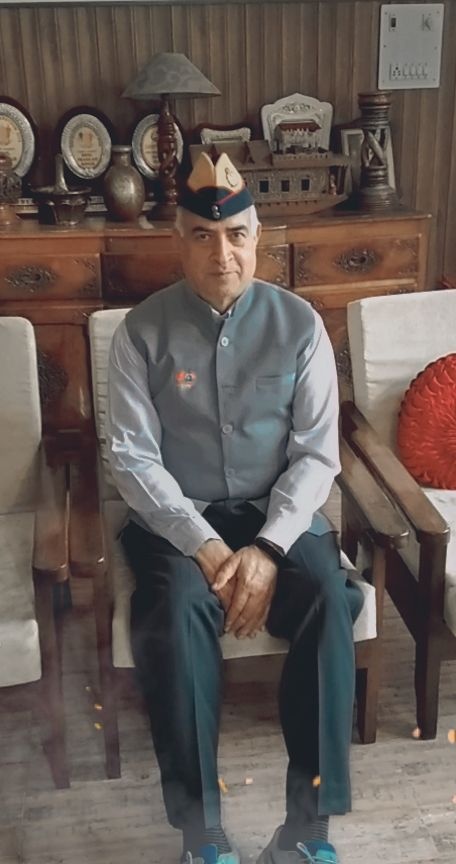
Cardozo in his heydays. Source: Facebook.

This was also the war that witnessed Indian Army’s first-ever heliborne operation. In fact, the battalion of only 480 men charted history when they accepted the surrender of about 1,500 men that included three Brigadiers, a full Colonel, 107 officers, 219 Junior Commissioned Officers (JCO), and 7,000 troops from the Pakistan Army!

After the fall of Dhaka, when the Indian Army was rounding up the prisoners of war (POWs), Major Cardozo, who had gone to help the BSF commander in charge of the count, met with an accident that would change his life forever—he stepped on a landmine, and lost most of his leg in the resulting blast.

A part of his leg which had remained attached to his body, could not be amputated surgically because due to the extensive war wreckage, no form of medical anaesthesia or surgical equipment was available.

There was no time to waste, so he asked the doctor on duty to cut off the leg. Due to the lack of equipment, the doctor refused to perform the task, which prompted the Major to order his sahayak (orderly) to amputate his leg with his own khukri

When he too refused, Cardozo cut it off himself and dispassionately said, “Now go and bury it.”

An old image of Cardozo. Source: Facebook.

It was Major Mohammad Basheer, a captured Pakistani Army Surgeon, who operated on Cardozo.

This incident would have meant the end of field duty for any other officer, but Major Cardozo was not going to be demoted to staff duty, and allow the impairment take control of his life. He valiantly fought for the commander’s position and even surpassed the ‘two-legged’ officers during the intense physical fitness examination.

History was created when he went to become the first war-disabled Army officer to command not just a battalion but also a brigade. For the uninitiated, a brigade in the army is typically composed of three to six battalions plus supporting elements.

And it wasn’t a cakewalk. Despite acing the fitness test, the medical officers didn’t clear Major Cardozo, so he took his case to General Tapishwar Raina, the then Chief of Army Staff. Impressed by Cardozo’s resilience, the General asked him to accompany him to Ladakh.

Upon observing that Major Cardozo could easily walk through the sturdy mountains with the snow hardly affecting him, the General personally recommended that the Major command a battalion. The incident repeated itself when Major Cardozo motioned for the brigade commander’s position, and emerged victorious once again. He reasoned that if he was capable of commanding a battalion, so should he be capable of commanding a brigade.

Thanks to Major General Cardozo, three other army officers later went to become army commanders. In fact, one of the officers, who was a double amputee, went on to become the Vice Chief.

Cartoos Sahib. Source: WTPI The View.

After retirement, Major General Cardozo served as the Chairman of Rehabilitation Council of India from 2005 to 2011. A recipient of military decorations like the Ati Vishisht Seva Medal (AVSM) and the Sena Medal (SM), the 81-year-old currently resides in New Delhi with his wife, Priscilla and has three sons.


You may also like: #ForgottenHeroes: An Ode To The Only UN Peacekeeper Awarded The Param Vir Chakra!


We salute “Cartoos Sahib,’ the 1971 war veteran, whose fearlessness and commitment to duty is not just legendary but also unparalleled in the history of the Indian armed forces.


BJP is using armed forces in polls but Modi govt fighting them in Supreme Court over money by Lt Gen H S Panag PVSM, AVSM (R)

Most of Modi government’s arguments to deny non-functional upgrade to the armed forces won’t stand a layman’s scrutiny let alone legal scrutiny.
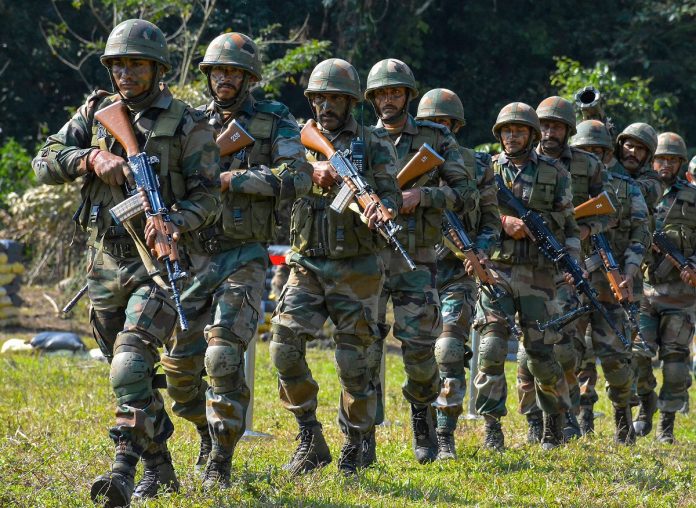
Indian army

The irony is hard to miss. While India celebrates the performance of the armed forces in the recent, short-lived conflict with Pakistan in Balakot and the political class exploits them for electoral gains, the military personnel continue to fight a battle with the government in the Supreme Court.

The case pertains to not granting non-functional upgradation (NFU) to the officers of the armed forces that members of some other central services enjoy. The government has been delaying and dithering on financially compensating India’s armed forces that lack adequate promotional avenues.

What is NFU? How does it work?

Civil services are classified into All India Services – Indian Administrative Service (IAS), Indian Police Service (IPS) and Indian Forest Service (IFS) – and Central Civil Services (CCS) – Group A and Group B. Based on cadre review, the CCS Group A have been further sub-divided into Organised (constituted by the Cadre Controlling Authority) and Non-Organised.

Keeping in view the stagnation in promotion of CCS Group A officers, the Sixth Central Pay Commission recommended NFU, linking their pay scales with those of their batch officers in the IAS. So, two years after the IAS officers are promoted, their batchmates in these services are automatically upgraded to the same level on a non-functional basis, irrespective of whether they are actually promoted or not. The usual system of promotion, meanwhile, continues. This upgrading is applicable for all ranks of officers up to the rank of Additional Secretary.

Non-grant of NFU to certain services

The government had initially granted NFU to only CCS Group A (Organised) even though the pay commission made no such distinction. In 2008 it was extended to the All India Services — IPS and IFS. The IAS as such is not entitled to NFU but its promotions are used as a benchmark as these are much faster than the other services.

The officers of the armed forces face maximum stagnation due to the conical pyramidical structure. An IAS officer gets promoted to the rank of Joint Secretary, equivalent to a Major General, after 18 to 20 years in service. An army officer becomes due for promotion to the rank of Major General with 32 to 33 years in service. Most army officers retire in the rank of Colonel at age of 54 years, while all IAS officers retire as Additional Secretary and above, which is equivalent to Lt Gen and above.


Also read: Good intentions, bad HR practice: Inducting civil service aspirants into the armed forces


The government’s stand in not extending the NFU to the armed forces and the Central Armed Police Forces (CAPF) was that these two forces do not meet the criteria of being ‘Organised’ as per the policy laid down.

A bitter battle has ensued over the last decade between the CAPF and the Ministry of Home Affairs, and between the armed forces and the Ministry of Defence. The CAPF’s case went to the Supreme Court, which upheld the judgment  of the Delhi High Court on 5 February 2019, which granted them NFU.

Case of the armed forces

The armed forces, on the other hand, found hurdle in a government unwilling to extend the NFU to them. Years after first taking up the matter in 2008, the armed forces strongly presented its case before the Seventh Central Pay Commission. While its chairman supportedtheir inclusion in the NFU system, the other two members found the NFU concept flawed. They said it was unmeritorious and must be done away with for all services. The government took advantage of this ambiguity and summarily rejected the case, causing a lot of resentment among both the serving and the retired officers.

After dilly-dallying by the government at subsequent hearings, the case was finally heard on 12 March 2019. The judgement stands reserved.

Government’s arguments – and counter-arguments

Most of the arguments presented by the government would not withstand a layman’s scrutiny let alone legal scrutiny. For instance:

Policy making is government’s exclusive domain.Yes, it is indeed, but all our pay commissions have correlated the pay and allowances of all services, including the armed forces, and tried to maintain parity. The government should be responsible enough to ensure that its policies are on an equal basis and not selective and biased against the armed forces.

Constitutional right to equality enshrined in Article 14 and 16 is not applicable to armed forces.This is untenable. While Article 33 of theConstitution empowers Parliament to restrict or abrogate somefundamental rights of the armed forces, to misinterpret it to include right to equality in salary and status goes against the very spirit of theConstitution.


Also read: Central Armed Police Forces to finally get pay parity with their IPS counterparts


NFU to armed forces will have adverse effect on status, command and control, discipline, efficiency and morale, and reduce the desire to aspire for higher ranks. If anything, the NFU will only provide a greater degree of motivation to super ceded officers. The armed forces have enough safeguards in form of rules, regulations, law and the appraisal system to deal with errant, non-motivated and non performing officers.

NFU will result in additional financial burden on government.On 12 March 2019 the government for the first time gave out the details of the financial burden – ₹1,065 crore for arrears and ₹269 crore as annual recurring cost. If the financial burden is unbearable, then NFU should be scrapped for all services. The arrears can be given in instalments and Rs 269 crore is hardly a burden on the government.

Armed forces enjoy various prerequisites and amenities that are not available to the civil services.Most of the ‘subsidised’ amenities are available at par to the other services in one form or the other. Apart from these, the other facilities are from the armed forces private funds built up over the years through contributions by all ranks. This argument only reflects on the petty mind of the bureaucrats.

The armed forces are entitled to Military Service Pay (MSP).The MSP is based on the erstwhile Special Disturbance Allowance. It is meant to address the intangible constraints and disadvantages unique to military personnel. It is certainly not a compensation for financial loss due to stagnation which is the basis for the NFU.


Also read: If India continues to politicise military, we may not look very different from Pakistan


Either due to ignorance or guided by inappropriate advice, the governments since Independence have discriminated against the armed forces in the matter of pay and allowance. Anomalies of pay commissions are only resolved through prolonged litigation stretching over 10-15 years.

The government should be responsible enough to ensure that its policies are on an equal basis and not selective and biased against the armed forces.

The armed forces are in the hearts and minds of the public and the political parties hope to win elections by exploiting the soldiers, and yet the government is fighting them tooth and nail in courts for a mere Rs 269 crore.

Lt Gen H S Panag PVSM, AVSM (R) served in the Indian Army for 40 years. He was GOC in C Northern Command and Central Command. Post retirement, he was Member of Armed Forces Tribunal.

Separate fact from fiction, the real from the fake going viral on social media, on HoaXposed .

Email 

Dear Col Raghbir,
1. Col Mukul Dev, the lone fighter for NFU, just now called me up at 1840 hrs on 21 Mar 2019 and spoke to me for a long time. He gave me chronological sequence of events of his legal case which I have to explain to you and other members of TSEWA, so that we all are in same grid / wavelength /page.
2. Col Mukul Dev also spoke to me some time back (may be two years) and informed me that he has filed a case for grant of NFU to Armed Forces Officers. I offered him financial support from TSEWA . I visualized at that time itself, that even if he wins the case in AFT Delhi, Min of Def will drag him to Hon’ble Supreme Court as per their SOP. But he politely refused my offer for any financial support. I promised full support of TSEWA for a cause he is fighting for all Armed Forces Officers. Since OROP was sanctioned, I felt all the Pre – 2013 Officers retired will definitely get benefit in OROP – 2018 (even if we do not get benefit in OROP – 2013). 
3. What Col Mukul Dev told me today is that he alone filed a case in 2015 in Hon’ble AFT Delhi praying for grant of NFU to Armed Forces Officers and the same was admitted sometime in early 2016. After he filed the case slowly 259 other officers (serving and retired) also filed individual cases in AFT Delhi. That means the cases are not Class Action Suits. Col Mukul Dev was given OA No and so are the other 259 officers.  AFT Delhi as per their procedure clubbed all the OAs and delivered on 23 Dec 2016 one common judgment granting NFU not only to those petitioners but to other officers who are not petitioners in AFT Delhi. That means all officers serving and retired will get benefit of NFU from Dec 2013 and they will be paid arrears on account of NFU from 23 Dec 2013 to 23 Dec 2016. You can work out arrears of three years between pay of Lt Col and Maj Gen for three years. 
4.      The Min of Def went on appeal against judgment of AFT Delhi for granting NFU to Armed Forces Officers whether they were petitioners or not in 2018. Hon’ble Supreme Court then clubbed the 259 other officers tand also clubbed the case of Col Mukul Dev. Arguments are completed on 12 Mar 2019 and judgment is reserved. 
5. Col Mukul Dev has nothing do with those 259 officers out of whom he said two have already passed away. In the remaining 257, some of them are serving officers and some are retired officers. The Registry of Hon’ble Supreme Court found that Min of Def have not served notices on those 58 out of 257 officers who are respondents. Col Mukul Dev is also one of the respondents. The Hon’ble Supreme Court directed that Min of Def should in next two weeks serve notices on those 58 officers as per the court procedure. Since the Min of Def is the appellant it is mandatory to issue notice to 257 + Col Mukul Dev of their intention of appealing against the judgment of AFT Delhi delivered on 23 Dec 2016 granting NFU to Armed Forces Officers. 
7. What I could understand from Col Mukul Dev’s talks, now the responsibility of serving notices on 58 respondent officers is that of Min of Def and Col Mukul Dev is in no way connected with them. However, to ensure the Govt of India does not ask for adjournment on some pretext of serving notices to those 58 officers, he has taken upon himself the responsibility of contacting those 58 officers who it was found did not submit vakalatnamas to their respective advocates. I understand all those 259 officers filed individual appeals in AFT Delhi in 2016 therefore might have employed few advocates to argue their case in AFT Delhi. 
8. I also told him that TSEWA has also requested its members to approach those 58 officers less those who passed away to submit vakalatnamas.
9. Col Mukul Dev informed me that when contacted some of the respondents out of 58 have said they are not interested in the case and some have flatly refused to pay pittance of Rs 5,000 as legal fees to the advocate on record. He further assured those kanjoos officers to submit the vakalatnamas without any legal fees. Col Mukul Dev informed me that 30 officers have already submitted their vakalatnamas.
10. Now the position is bit clearer to me. Whether others submit vakalatnamas or not the case will be finally disposed of either by end of Apr 2019 or middle of May 2019.
11. I also read in Whatsapp the observation of Justice Joseph who heard the argument of ld AG for not sanctioning NFU. The hon’ble justice  reported to have told the learned AG “ Yesterday you were requesting in very humble way not to order any enquiry against Rafale case due to National security but today you are arguing forcefully why Govt of India should not grant NFU to Armed Forces who are defenders of National Security”. This indicates how the winds are blowing.
12. Therefore TSEWA members also should try to contact these 58 officers or 56 ( as I am told two officers have passed away) to immediately submit their vakalatnams to their respective advocates or to one lady who is advocate on record even without Rs 5,000.
13. I told Col Mukul Dev that I became little aware of what is NFU after going over his table as to when IAS officers get empaneled to Jt Secy and Addl Secy and how Lt Cols to Maj Gens will get pay of Maj Gen and Lt Gen after 19 and 31 years of service respectively and how even retired officers will get benefit of OROP – 2013, benefit of higher pension as on 01 Jan 2016 and how much arrears we all will get. 
14. Again, I offered all support of TSEWA to Col Mukul Dev and told him that we all stand behind him solidly and he just has to ask us to do and it will done without demur.
15. Hopefully once the judgment of Hon’ble Supreme Court sanctions NFU to Armed Forces Officers, there is no need for any agitation for OROP etc. 
Warm regards, 
Brig CS Vidyasagar (Retd)
040-48540895



Indian Army plans to buy over 3,000 anti-tank guided missiles from France

Indian Army plans to buy over 3,000 anti-tank guided missiles from France

It is expected that the deal would be worth over Rs 1,000 crore.

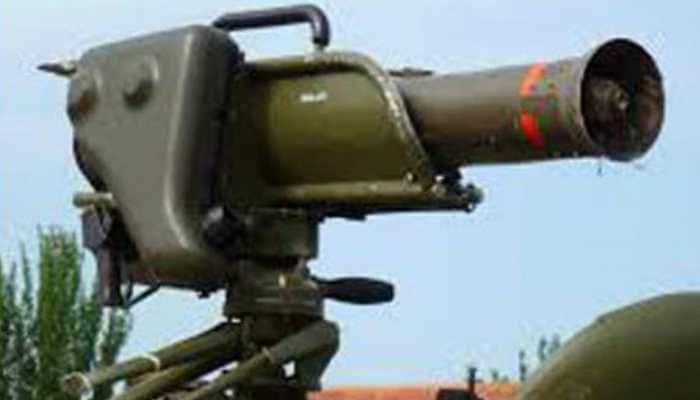
NEW DELHI: In an apparent effort to bolster its infantry units against the tank regiments of the enemy nations, the Indian Army is planning to buy more than 3,000 Milan 2T anti-tank guided missiles from France.

It is expected that the deal would be worth over Rs 1,000 crore.

“An Army proposal in this regard would come up for discussion at a high-level meeting of the Defence Ministry for buying more than 3,000 of the second-generation Milan 2T ATGMs which are license-produced by the Bharat Dynamics Limited (BDL) in partnership with a French firm,” sources in the Defence Ministry told ANI.

ndian Army requires around 70,000 anti-tank guided missiles (ATGM) of various types and around 850 launchers of different types. The Indian Army is planning to procure third-generation ATGMs with a longer range than that of its existing Milan-2T and Konkurs ATGMs.

Sources told ANI that the Army’s decision to procure Milan 2T ATGMs should be seen as a stopgap arrangement as the Army is more focused on including its homegrown third-generation ATGM in its arsenal. It is to be noted that the third-generation ATGM is currently undergoing trials.

Last year, the government had decided to scrap a programme to buy the Spike ATGM from Israel keeping in mind the development made by Defence Research and Development Organization (DRDO) in this regard. The DRDO has already conducted two successful trials of the man-portable ATGMs.


Rafale deal reports: Is the media finally doing its job?

Rafale fighter jet

When a government can boast, years into its rule, that none of its ministers has had to face a corruption case, it can mean one of two things: that the country is led by an exemplarily incorruptible set of politicians; or that the country is populated by inept journalists.

Good investigative journalism should dig out information that the government hopes to hide.When The Hindu accessed government documents and published a series of stories that suggested the Rafale deal was not quite all it was cracked up to be, written by the group’s chairperson N Ram, the Centre initially dismissed the reports.Now, the government has accused The Hindu of “stealing” documents from the Ministry of Defence and has warned that it could use the Official Secret Act, 1923, against the newspaper.The arguments presented by the government to the Supreme Court – which is currently hearing a series of review petitions regarding its December 2018 verdict that there was no need for a Central Bureau of Investigation inquiry into the Rafale deal – appear to acknowledge three things: one, that the report is authentic; two, that it has failed to protect at least one “official secret”; three, that it is willing to use an act enforced by a paranoid colonial power under threat of losing its dominion, in order to gag the press.N Ram has contended that Article 19 (1) of the Constitution, which grants citizens the right to freedom of expression, and Sections 8 (1) and (2) of the Right to Information Act, protect his publication.One would think the reports had endangered the security of the country.What they have in fact pointed out in the series, with evidence, in that the government bypassed mandated procedures, causing a 41 per cent hike in the price; that the government did away with bank guarantees and waived anti-corruption clauses; that parallel negotiations conducted by the prime minister’s office in 2015 and by the national security advisor Ajit Doval in 2016 had prompted the Ministry of Defence to object, citing that this would weaken the position of the Indian Negotiating Team; that the Indian side’s acceptance of pricing based on an escalation formula instead of a fixed benchmark price cost the exchequer 55.6 per cent more; that the delivery schedules were not met, among other things.Does the government believe, then, that it is an “official secret” that taxpayers’ money is being unnecessarily lost?If this is the case, does the government not worry that it couldn’t guard this “secret”, even knowing that there have been demands for information on the deal both from the Parliament and the public?The petitioners have charged that government officials supplied erroneous facts during the Supreme Court’s hearing of the initial case – an extremely serious accusation.A report by the Comptroller and Auditor General was tabled several years after the deal was signed, and its findings have been challenged by the petitioners, based on the reports published by The Hindu.Can the government’s response actually be that the evidence is inadmissible because it was “stolen”?The bench will resume its hearing on March 14.At a time when the public has been growing increasingly disillusioned with the apparatus that constitutes a democracy, the three branches of governance, has the “fourth estate” finally stepped up?For too long, we have been watching talking heads on prime time television shows, debating issues in a manner that makes no real difference except to viewership ratings and in turn advertising revenue.Where were the good, solid investigative stories that have traditionally brought corrupt governments to book? Could it be possible that a government which breaks the promise printed on every bank note and turns currency to paper overnight could actually be corruption-free?There has been the occasional murmur about suspicious business dealings, about the use of political influence for personal gain, but no report has been substantiated indisputably with evidence.The media organisations which have tried to take on the government are fighting a series of defamation cases. When a government that has so far relied on claims of defamation now accuses a publication of breaching a law that was enacted to combat espionage, we know the media is doing something right.With elections round the corner, and unrest along the national borders, this would be a good time to get rid of jingoism in the press.It would be something of a delicious irony if the name “Ram” were to lose some of its resonance among the current lot of government groupies.


Hybrid warfare by Pakistan causing more damage to Islamabad than India

Terming hybrid warfare — using non-state actors against an adversary nation — as “not the best option”, Indian Army chief General Bipin Rawat on Wednesday said this tactic was causing more damage to Pakistan than to India.

“Any nation that has attempted hybrid warfare against an adversary has finally been the sufferer. Today, Pakistan is facing that brunt,” Rawat said while delivering a lecture on “Challenges of hybrid conflict in 21st century”.

“They (Pakistan) supported something in Afghanistan but after the imbroglio was over, what happened to those people (the jihadis)? This hybrid warfare launched by them (Pakistan) has actually started affecting them more than it is affecting us,” Rawat said.

However, he warned that the proxy war by Pakistan is there to stay despite all the things and despite India’s effective tackling of it.

Responding to a query as to why India, even after suffering for decades, does not launch offensive hybrid warfare against Pakistan, Rawat said it is not the best option for India, and emphasised that India is satisfactorily countering this warfare directed against it. “Paying the other fellow exactly in the same coin may not be the best option. A stone that is thrown in the air comes back to your head.

“Before we launch the hybrid warfare in the offensive-defensive domain, we should be prepared to see what will happen to those people once the objective is achieved. What you do with those people?” he said.

While he underlined that India does have the capability to launch an offensive hybrid warfare or even “strike across” at those perpetrating the hybrid offensive against it, the army chief said for that the Indian leadership must be clear as to how far the country can go if an escalation happens.

“India will have to carefully work on the escalation matrix as to how far it was willing to go if escalation happens,” he added.

He said to counter such operations by Pakistan, which include a propaganda on the social media, various Indian forces and agencies need to work together in close coordination.

Rawat said India can utilise its soft power with friendly nations to isolate the terror-exporting nation and offered that the Indian Army can help the country expand its soft power in many ways.

Speaking on the Kashmir situation, Rawat said that sustained pressure is needed to tire out the militants instead of wrongly believing after a peaceful year in the Valley that lasting peace has returned.

“When things become comfortable, we would go into this limbo thinking that peace has returned, not knowing that every time the peace returns, the nexus has utilised this period to rebuild their capacities and strength. And therefore sustained pressure is required,” Rawat said.

“What I am trying to highlight is that you get one successful year and you say let’s give peace a chance. That is I think a fault that you have been committing.

“If you think that just after having one successful year you should give peace a chance, that may not be the best option. You should have repeated successes and then think of giving peace a chance. And that is what we are doing now. Let us look at tiring the other side,” he added.

He also rued that the army faces flak even for taking a tough action against those pelting stones at it.


After 8 years at top, India drops to No 2 in arms import Saudi Arabia takes over as the leader; Russia India’s lead supplier

After 8 years at top, India drops to No 2 in arms import

Saudi Arabia is now the largest weapons importer. File photo

Ajay Banerjee
Tribune News Service
New Delhi, March 11

After having cut down on imports of weapons and military equipment, India has dropped down to be the second largest importer of weapons. For more than eight years, New Delhi had held the dubious position of being the largest importer of weapons and has been among the top five importers for decades.

Saudi Arabia is now the largest weapons importer.

These trends have emerged from an annual report released on Monday by the Sweden-based think-tank Stockholm International Peace Research Institute (SIPRI). The assessment was done for a five-year period (2014-2018).

Titled ‘Trends in International Arms Transfers-2018’, it says, “India was the world’s second largest importer of major arms in 2014-18 and accounted for 9.5 per cent of the global total.”

Last year (for the period 2013-17), India accounted for 13 per cent of all imports and was the world’s largest importer.

According to the latest report, Russia accounted for 58 per cent of Indian arms imports in 2014-18, said the report, adding that Israel and the US are the other two big suppliers having provided 15 and 12 per cent of supplies, respectively, to India.

SIRPI explains the lowering of imports by India as delayed deliveries. It says “Imports decreased by 24 per cent between 2009-13 and 2014-18 (two five-year blocks), partly due to delays in deliveries of arms produced under licence from foreign suppliers, such as combat aircraft ordered from Russia in 2001 and submarines ordered from France in 2008.”

During the period studied by SIPRI, India procured Mi-17-V5 helicopters from Russia; maritime surveillance planes, the Boeing P8-I from the US, and UAVs and radars from Israel.

The five biggest exporters in five-year block period 2011-2015 were the US, Russia, France, Germany and China. The US and Russia remain by far the largest exporters, accounting for 36 per cent and 21 per cent, respectively, of all global trade.

The China story

The bigger story is, however, China, which, in a sign of an omnipresent threat, has been helping Pakistan and Bangladesh in ramping up military prowess. China is now the fifth largest exporter of weapons ahead of traditional manufacturers like the UK and Israel. Its biggest benefactors are Pakistan and Bangladesh, both sharing a boundary with India and could potentially cause trouble for New Delhi. The two countries accounted for 53 per cent of Beijing’s exports from 2014-2018.

New Delhi sees China’s exports to countries around India as a part of its long-term strategy of having a ‘string of pearls’, a kind of military toe-hold in countries around India.

On the other hand, Beijing is also an importer. “Despite the rapid development of its indigenous arms-producing capabilities in recent years, China was the world’s sixth largest arms importer in 2014-18 and accounted for 4.2 per cent of the global total,” the SIPRI report said. Russia accounted for 70 per cent of Chinese arms imports in 2014-18. China remains reliant on imports for certain arms technologies such as engines for combat aircraft and large ships as well as long-range air and missile defence systems. Its own arms industry has yet to develop the technological capability to match Russian suppliers in these fields.


Civilian injured in Pak firing along LoC in J-K’s Rajouri

Civilian injured in Pak firing along LoC in J-K's Rajouri

Photo for representation.

Jammu, January 17

A civilian was injured on Thursday when Pakistani troops violated ceasefire and resorted to firing and mortar shelling along the Line of Control in Jammu and Kashmir’s Rajouri district, officials said.

Northern Command chief Lt Gen Ranbir Singh said the Army is replying befittingly to the Pakistani aggression.

Pakistan troops resorted to firing and mortar shelling on forward posts and civilian areas along the LoC in Nowshera sector, the officials said.

The ceasefire violation resulted in injuries to a civilian who has been hospitalised, they said.

The year 2018 had witnessed the highest number — 2,936 — of ceasefire violations by Pakistani troops in the last 15 years along the Indo-Pak border.

The continuous Pakistani shelling and firing targeting villages has set in fear psychosis among the border dwellers.

Pakistan troops resorted to firing and shelling along the LoC in Poonch district of the state for 12 days of this month.

On Monday, Border Security Force (BSF) Assistant Commandant Vinay Prasad was killed in a sniper firing by Pakistani rangers along the International Border (IB) in Hiranagar-Samba sector of Kathua district.

On the same day in another incident, Pakistani troops resorted to firing and shelling along the LoC in Sunderbani sector of Rajouri district.

On Sunday, an Army jawan was injured in ceasefire violation along the LoC in Keri sector of Rajouri.

On Friday, an Army porter was killed when Pakistani troops resorted to firing in Nowshera sector ofRajouri district.

On the same day, an Army Major and a soldier were killed in an IED blast on the LoC in Laam sub-sector of Rajouri. – PTI


Militarism strikes at the root of democracy by Swami Agnivesh

There is no doubt that the services of our armed forces should be duly recognised and celebrated. However, no constituent of a democratic republic has the right to rob citizens of their fundamental right to think and speak for themselves. Militarism suppresses this right. Militarism is incompatible with the working principles of democracy and its republican ideals.

Militarism strikes at the root of democracy

Counterpoint: Citizens need to rebuff stratagems aimed at vitiating the spirit and integrity of the forthcoming elections.

Swami Agnivesh
Arya Samaj scholar and social activist

HYPE is the order of the day. Hype is created to suppress rational and factual thinking. Without thinking, there is no meaningful exercise of freedom of choice. Without such an exercise of choice, ‘the will of the people’ gets distorted and the temple of democracy is desecrated.

Beginning with the electorally overused ‘surgical strike’ in 2016 to the Pulwama attack and its aftermath, the improvisation of a sinister situation has been in the offing. It is described best as militarism, which involves the projection of the Army as a national cult. Militarism is not merely a matter of having a large Army, armed to the teeth and ready to function as a chillingly efficient killing machine. Militarism implies the fetishisation of the Army — a dogmatic object of worship — that makes it an anti-national offence to not concur readily with what the Army states. It disallows citizens and political parties from examining the factual merits of the versions given to them, which are required to be taken on trust. Pushed to the extreme, this makes the Army, not the will of the people, the decisive element in national affairs.

There is no doubt that the services of our armed forces should be duly recognised and celebrated. However, no constituent of a democratic republic — neither the State nor the Army, neither the judiciary nor Parliament — has the right to rob citizens of their fundamental right to think and speak for themselves. Militarism suppresses this right. Militarism is, therefore, incompatible with the working principles of democracy and its republican ideals. 

The foremost casualty in militarism is ‘equality of opportunity’ that political parties are entitled to in a democracy. In this scenario, spiced up by hysterical patriotism and nationalism, the armed forces cease to be a neutral organ. The forces come to be identified in popular perception with the ruling dispensation. Attempts are made to project this deception. The morale and bravery of the armed forces are attributed to the Prime Minister who, in his own words, is a chowkidar (watchman) who always remains chowkanna (alert). The Army is projected as an extension of the heroic will of the Prime Minister, who is increasingly perceived as its Supreme Commander. That there is the President of the republic who is meant to be seen in this role is forgotten.

In this ambience of militarism, the ruling party enjoys a huge advantage. It is free to craft or project military actions to further its electoral interests. No room is left for neutral citizens or opposition parties to question either the narrative or its partisan intent. Everything is required to be taken on trust, no questions asked. Even asking for evidence — which is the basic right of those who are required to believe what is dished out to them — is decried and stigmatised as ‘insulting the Army’ and as a ‘crime against the nation’, expressed picturesquely as ‘bringing a smile on the face of Pakistan.’ 

It is a cause for concern that the grave peril this holds out to our democratic culture goes unnoticed. In a democracy, the public sphere is envisaged necessarily as a domain of freedom and equality. Configuring the democratic space to favour one player and handicap the rest distorts and undermines democracy. If this is not avoided zealously, democracy could degenerate into dictatorship. The hallmark of dictatorship is that the ‘official version’ is the last word on everything. No dissent or deviation is tolerated.

Democracy mandates that if and when anything is introduced into the public sphere — such as putting out a version of the bombing of terrorist camps in Balakot — citizens and parties are free to examine the reported version factually and rationally, and come to their own conclusions. You cannot project a version of any event into the democratic space and intimidate citizens that unwillingness to lap it up is ‘anti-national’. Yet, this is exactly what the Prime Minister and his war strategists are doing. It is imperative that we recognise the threat this ploy poses to the very survival of democracy.

If something is so sacrosanct that it should not be exposed to the irreverence and raucousness of public discussion, the right thing to do is to withhold it from the public space. This principle is zealously followed vis-a-vis various aspects, say, of the Rafale deal. If is, of course, hard to understand why the price of these fighter jets bought with the taxpayers’ money should be kept a secret from them. It is an insult to democracy to suppress inconvenient questions about the issue.

Ironically, such an ambience is conjured and heightened on the eve of the General Election. It is too much of a coincidence to seem innocently accidental. The Election Commission — if it is to conduct meaningfully a ‘free and fair’ election later this year — needs to take note of this sinister distortion of the democratic space. Even more importantly, the citizens of India need to see through and rebuff such stratagems aimed at vitiating the spirit and integrity of the forthcoming elections. They will let Indian democracy down if, drugged by propaganda psychedelics, they reward those who cozen them into voting in ways that they would not have done otherwise.


Russia offers India to jointly design, build submarines

India has received a joint submarine design and construction proposal from Russia to build on the technology transfer acquired while building the nuclear fleet, and promises to drastically reduce the cost of Navy’s next-generation vessel plan.

The proposal, believed to have been discussed at the top level during the Sochi summit in May, offers an alternative to an upcoming $10 b P 75I tender for six new diesel electric submarines that the Navy requires. These are to be fitted with an Air Independent Propulsion (AIP) system that significantly increases their ability to stay underwater.

“The Russian side has offered a transfer of all intellectual property for the design and prototype construction. This will mean that there are also no limits to the number of submarines that can be built under the project…,” officials familiar with the details told ET.

While the current plan is to go in for a global competitive process that will involve companies from Russia, France, Germany and Sweden, the official proposal from Moscow is for a government-to-government deal for joint design with the Advanced Technology Vessel Project (ATVP). This is the project that gave India its first nuclear armed submarine, the INS Arihant, which was constructed in Vizag with considerable assistance from Russia.

A line of nuclear armed and nuclear powered submarines will be rolled out under the project which has completed the Indian nuclear triad — the ability to launch warheads from air, land and underwater.

Sources told ET that the proposal is for joint design and building of a prototype, following which the technical knowhow and papers would be transferred to the selected Indian shipyard for construction. The design consultancy for the project is pegged at under $200 million, something that could result in savings of immediate payments for the Navy for its next-generation submarines.

Under the competitive process, an initial payment of over $ 2 billion (20% of total cost) might be necessary, which given the Navy’s current budget projections, seems difficult. The proposal seeks to design the submarine to meet Indian requirements, including installation of the Brahmos missiles on board, as well as a jointly developed AIP system with the Defence Research and Development Organisation.

Sources involved in the Indian nuclear submarine project said that the proposal can build on the technology that has already been transferred to India but has to be scrutinized carefully to ensure that critical knowhow is not held back. Several parts required under the proposal are already being produced in India, including high strength steel for submarine hulls.