Sanjha Morcha

What’s New

Click the heading to open detailed news

Current Events :

web counter

Print Media Reproduced Defence Related News

Nirmala Sitharaman posts army headquaters

nirmala-sitharaman-agencies

NEW DELHI: Finance minister Nirmala Sitharaman on Wednesday tweeted a letter from Army Headquarters that appeared to justify unexpected withdrawal of tax exemption for disabled veterans. The letter claims that some retired personnel are ‘exploiting’ the system.

A recent notification by the Central Board of Direct Taxation reversed a decades-old privilege given to disabled soldiers that exempted them from income tax. This created an uproar among veterans, forcing the finance ministry to release the letter, suggesting that the recommendation came from the Army HQ itself.

The unsigned letter, shared on the Twitter account of Sitharaman, blames some “unscrupulous personnel” for exploiting the system for personal gain and justifies the change in policy. Disability is granted to personnel who are disabled in combat or during peace time and their disability is attributable to service conditions. The latter have somehow explanted the weakness in the mechanism for grant of disability pension and along with the tax exemption,” the letter states.

Veterans have termed the letter “unprofessional” and “shocking”, pointing out that the power to grant disability pension lies with the Army itself and if needed, a crackdown should be conducted against those faking disability, instead of punishing the entire community for the wrongs of a few.

The Army HQ letter says that there has been a rise in personnel being awarded disability pension even for lifestyle diseases, which it considers a “cause for worry.”

graph

Read more at:
//economictimes.indiatimes.com/articleshow/70050493.cms?from=mdr&utm_source=contentofinterest&utm_medium=text&utm_campaign=cppst

After 33 Years Of Service IAF Last MiG-29 Makes Final Flight

After 33 Years Of Service IAF Last MiG-29 Makes Final Flight

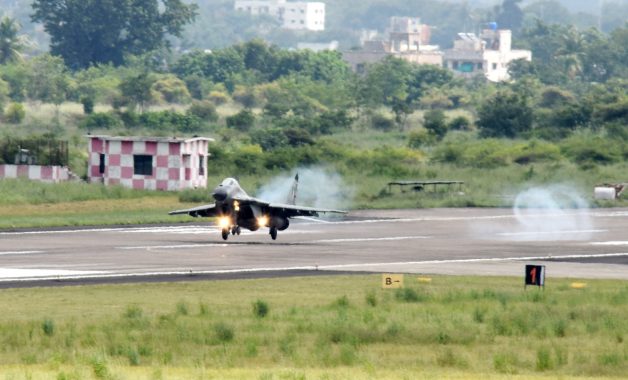
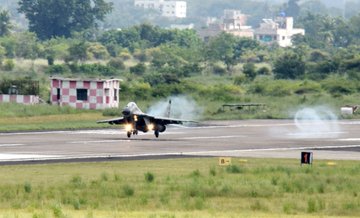
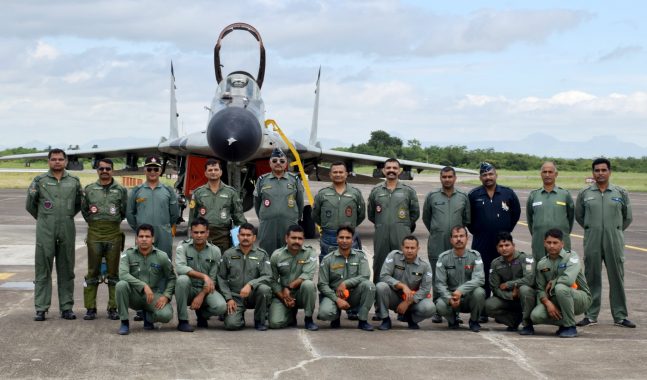
On Saturday, the tarmac of the 28 Squadron (“The First Supersonics”) in Gujarat’s Jamnagar buzzed with the roar of the MiG-29 legacy jets, popularly known as “Baaz” (eagle), as they took off for Ojhar in Maharashtra, where the IAF’s ’11 Base Repair Depot’ (BRD) is located. The ’11 BRD’ that was set up in 1975 is the only fighter aircraft depot of the IAF.

The two jets flew in a formation and carried out a flypast over the Ojhar airfield, marking the end to an impressive era when this aircraft proved its mettle in operations.

The aircraft flown by commanding officer group captain JS Patel carried out a flypast at the overhead of Ojhar Airfield.

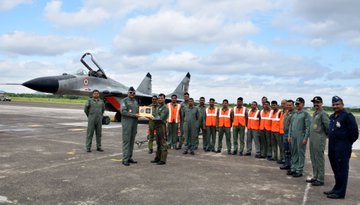
28 Sep, 28 Sqn tarmac buzzed with roars of last 02 Legacy Mig29.A/c tookoff& carried out flypast over Ojhar to mark end of an era. A/c were received at 11BRD for upgrade& OH. To mark the historic event, Air Cmde SV Borade AOC handed over the souvenir plaque to CO.@IAF_MCC

View image on TwitterView image on TwitterView image on TwitterView image on Twitter
131 people are talking about this

It landed and was received by the 11 BRD officials where it will be overhauled.

Air Commodore Samir V Borade, the Commanding Officer of 11 BRD, handed over the souvenir plaque to the Commanding Officer of the squadron to mark the event.

After 33 Years Of Service IAF Last MiG-29 Makes Final Flight

The Indian Navy operates some 45 new MiG-29K onboard the aircraft carrier INS Vikramaditya. The fighter jets will also operate from the deck of the new carrier, INS Vikrant, being built in Kochi. The new MiG-29Ks whose wings can be folded are a very different aircraft from the legacy MiG-29s as the naval version has been optimized for landing on aircraft carriers and for maritime operations.

Since 1975, the ’11 BRD’ has upgraded over 500 fighter jets including Sukhoi-7, MiG-23, and Sukhoi-30MKI. It started overhauling MiG-29s in 1996.

Several variants of the MiG-29s – as also the MiG-21s – have served with the air forces of nations friendly with the former Soviet Union and later Russia and have seen action in multiple conflicts.


Contentious Article 370 Shah, Madhav reignite national debate on viability

SEEKING the extension of President’s rule in Jammu and Kashmir, Union Home Minister Amit Shah told the Lok Sabha on Friday that Article 370 — which grants special status to the state — is ‘temporary’. He was quoting from the Constitution, wherein the term ‘temporary’ has been used with the Article. This provision has triggered several controversies regarding its merit and the circumstances under which it was inserted into the Constitution when J&K faced aggression from Pakistan’s tribesmen; this had led the last Dogra king of the state, Maharaja Hari Singh, to accede to India for getting the military’s help to repel the invaders. The negotiations for this provision were held between the Centre and the representatives of J&K, led by Kashmir’s towering leader Sheikh Mohammad Abdullah.

Over the past few decades, this Article, which entitles the state to have its own constitution, flag and legislature that can pass its own laws — and the Central laws cannot apply to J&K without its concurrence — is deemed as permanent. Some rulings of the Supreme Court have maintained this position. The Kashmiri Muslim community regards the Article as an iconic symbol of its distinct political identity and a matter of collective dignity. Some voices, including that of former CM Omar Abdullah, have said that “If Article 370 goes, the accession of the state into India also collapses.”

The Home Minister has held India’s first PM, Jawaharlal Nehru, responsible for the discrepancy in the Constitution in the form of Article 370. Shah also suggested that the current conflict was an offshoot of this constitutional provision and the ‘fake’ elections held in the 1950s and 1960s. When he reminded the House that it was a temporary provision, the implication was that the Article would go sooner or later as the BJP, which has been demanding its abrogation, has stuck to its stand on the issue. His words were given a supplementary explanation by BJP’s national general secretary in charge of J&K, Ram Madhav, who said on Saturday that “Article 370 will have to go lock, stock and barrel” after fulfilling certain procedures. This has reignited a debate on whether the Article should stay or not, and will bring diverse political outfits in Kashmir under one umbrella to, as they claim, fight for safeguarding the state’s special status.


21-year-old bomber joined JeM last year

21-year-old bomber joined JeM last year

Lethpora (Pulwama), Feb 14

The local militant, Adil Dar (21), who rammed his car into the CRPF convoy had joined the Jaish-e-Mohammad (JeM) in April last year, police sources said.

Dar is the second Kashmiri militant to have been involved in a suicide bomb attack on troops. In 2000, a JeM militant from Srinagar, Aafaq Shah, had blown up an explosive-laden vehicle outside the Army’s 15 Corps headquarters.

A JeM spokesperson later claimed responsibility for Thursday’s attack and identifed the suicide bomber as Adil Ahmad, alias Waqas Commando, of Pulwama. Before the attack, the militant recorded a video statement, which was later released on the social media.

Police sources said Dar, a Class X passout, was listed as a ‘category C’ militant. “He used to work as a band saw machine operator before joining militancy,” a police officer said. Dar’s family claimed he had left home last year.

“We have had no contact with him ever since,” said Aarif, his younger brother.

Jaish has been declared a terrorist organisation by the UN Security Council.

However, the India-led proposal to put a ban on Jaish supremo Masood Azhar continues to be blocked by veto-wielding China.  Sources say a fresh attempt at moving the proposal is unlikely. — TNS

Explosion was heard 10 km away

The explosive used in the attack was so strong that the blast was heard 10-12 km away, locals said. Some of the bodies were so badly blown up that officials feel it may take some time to identity them. This was the first suicide car bomb strike in Kashmir since the 2001 attack on the Assembly that left 41 persons, including three suicide attackers, dead.


Pakistani soldier killed in cross-LoC firing by Indian Army: ISPR

A Pakistani soldier was killed and two women were injured on Thursday in an alleged cross-border shelling by Indian security forces along the Line of Control (LoC), the Pakistan Army said.

The shelling occurred in Baroh and Chirikot sector, the Inter-Services Public Relations, the army’s media wing, said in a statement.

In response, Pakistan troops targeted Indian Army posts which were “substantially damaged” and there was also reports of casualties of Indian troops, the statement said.
Pakistan has frequently summoned Indian envoys over the human losses in the firing across the LoC.

On October 8, Foreign Office summoned Deputy High Commissioner Gaurav Ahluwalia to record a strong protest against the killing of woman in “unprovoked ceasefire violations” by Indian forces on October 6 and 7.

Ties between India and Pakistan came under severe strain after New Delhi’s decision to revoke Jammu and Kashmir’s special status on August 5. Pakistan reacted angrily to the move and expelled the Indian envoy. Since then, Pakistan has been trying to rally international support against India on the issue.

India has been maintaining that the Kashmir issue is a bilateral matter between India and Pakistan and there is no scope for third-party mediation.


Soldier, Pakistan militant Naveed Jutt’s aide killed

Soldier, Pakistan militant Naveed Jutt’s aide killed

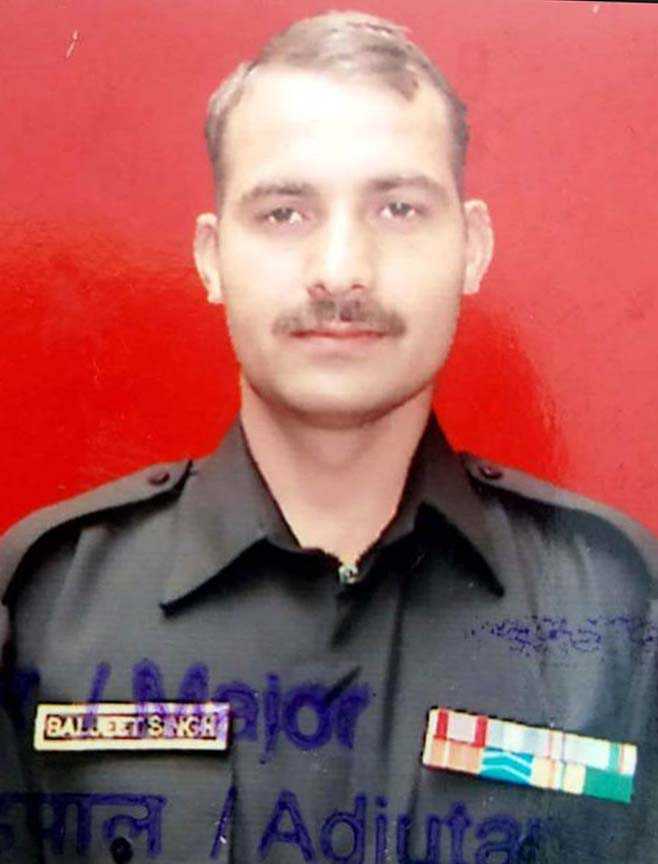
Havildar Baljeet Singh

Suhail A Shah
Anantnag, February 12

A soldier along with a local militant — who helped LeT commander Naveed Jutt flee a Srinagar hospital — was killed in a gunfight in Pulwama district of south Kashmir today. Two Army men were injured.

An Army officer identified the slain soldier as Havildar Baljeet Singh, 35, a resident of Karnal district of Haryana. Singh had joined the force in 2002.

The two injured personnel were taken to the Base Hospital, Srinagar, where they are undergoing treatment.The militant, Hilal Ahmad Rather, a resident of Begum Bagh area of Pulwama, was associated with the Hizb-ul-Mujahideen.

“He had helped Pakistan terrorist Naveed Jutt escape police custody at the SMHS hospital in Srinagar on February 6 last year. Two policemen were killed in the incident,” said a senior police official. Jutt was killed in an encounter on November 28, last year.The gunfight started around 3.30 am in Ratnipora when security forces were cordoning off the area following inputs of militants’ presence.

Later, clashes erupted prompting the security forces to use tear smoke shells and pellet guns to disperse youths.


Ranjit Singh — The pioneer geostrategic ruler

Abhijit Bhattacharyya

Abhijit Bhattacharyya

On the death anniversary of Maharaja Ranjit Singh — June 27 — it’s time to look afresh and recall some of the unprecedented achievements of a mighty Indian Maharaja, checkmating the mightier Englishmen, steam-rolling their Indian opponents with ease, one after another.
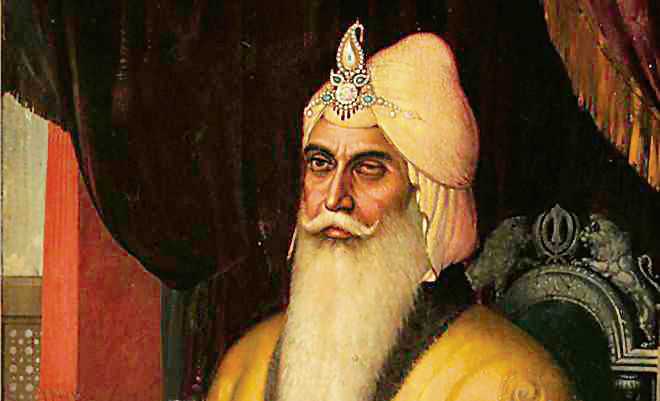
Ranjit Singh — The pioneer geostrategic ruler

Ranjit Singh: A brilliant commander and warrior par excellence.

Abhijit Bhattacharyya
Commentator and Author

When Rabindranath Tagore wrote the immortal stanza on Sikhs: “Pancha nadir tire, beni pakaiya shire; dekhite dekhite gurur mantre jagiya uthichhe Sikh; nirmomo nirbhik” (on the banks of the five rivers, tying their hair and braids, the Sikhs responded to the clarion call of their Gurus to wake up from torpor to transform themselves as valiant fighters for their honour), one is not sure whether the poet had Maharaja Ranjit Singh in mind or not.

Nevertheless, the well-known fact is that Tagore wrote at least six poems on Sikh heroism and martyrdom owing to the indelible impression it left on his psyche. Thus, he wrote two poems in 1888, three in 1898, and one in 1935. Of them, three were on Guru Gobind Singh, one each on Banda Bahadur and Bhai Taru Singh, and one on the boy, Nehal Singh.

Be that as it may, if we re-focus from the spiritual to the statecraft of the Sikhs led by Ranjit Singh, what re-surfaces today is the mind-boggling action and thought process of the first geo-strategic thinker-cum-ruler of modern Indian history who knew how to call a spade a spade with the rapacious and roving British, notwithstanding his multi-front disadvantages. 

On the death anniversary of Maharaja Ranjit Singh, who passed away on June 27, 1839, at Lahore, the capital of his empire, it’s time to look afresh and recall some of the unprecedented achievements of a mighty Indian Maharaja, checkmating the mightier Englishmen, steam-rolling their Indian opponents with ease, one after another. In a matter of days. Battle after battle. State after state. The London juggernaut across South Asian terrain appeared endless, and unstoppable.

When Ranjit was born (originally named Buddh Singh) on November 13, 1780, and growing, it was an era of perennial turbulence and anarchy in India. The Marathas (aspiring to be the Mughals’ successor on the Delhi throne) had already been brutally battered by Afghan chief Ahmad Shah Abdali (aka Durrani) in the third battle of Panipat (January 1761). Soon thereafter, the English (under Warren Hastings), too, fought the Marathas and ended with the treaty of Salbai (May 1782), thereby giving another rude jolt to the Indian dream of establishing ‘Hindu Pada Padashahi’ (the Great Hindu Kingdom). 

Thus, when (minor) Ranjit, as the chief of Sukarchakia Sikh Misl, since April 1792, ascended the throne in April 1801 (at 20-plus), who would foresee the man reigning a long 38 years, till 1839? Perhaps, the ruler Ranjit himself also could not have had seen the future valour, achievement and foresight of his own self!

No wonder, Ranjit’s sixth sense-cum-vision told him to contain the British in the south through sweet words of diplomacy and curb the congenitally habitual invaders of India (since time immemorial) with the sword-wielding cavalry combatants to the north and north-west. Thus was concluded one of the rare, landmark treaties: the Treaty of Amritsar on April 25, 1809, between the British Government and the State of Lahore.

As many as 210 years have gone post the Amritsar Treaty, yet every Indian would be proud to peruse its semantics: “Both parties being anxious to maintain the relations of perfect amity and concord” were the opening words. The British want “perfect amity and concord” with an Indian ruler! How often has it happened during 19th-century Indian history? The treaty was concluded “by Rajah Ranjeet Singh on his own part, and by the agency of Charles Theophilus Metcalfe, on the part of the British Government.” Ranjit’s best bet came as a sort of guarantee by the British: “The British Government will have no concern with the territories and subjects of the Rajah” (Ranjeet Singh) “to the northward of the Sutlej”.

The strategic vision of Ranjit assured avoidance of ‘war on two fronts’. The British, too, having thus far arrived from their tiny island, were more than aware of their vulnerability owing to the real possibility of a Maratha revival in the heartland and the prospect of growing resentment in the periphery turning into a multi-front revolt across the Indian terrain. Both the British and the Punjab king secured their respective fronts.

Assured of stability and security, Ranjit had the north, north-west, and west to move his military; which he did. Successfully. With ‘one at a time’ policy. With a professional band of fortune-seeking, able commanders transcending borders and barriers of caste, language and religion, thereby putting Ranjit Singh way ahead of his times, compatriots, foes and friends alike. His sentence ‘Ek din sab lal ho jayega’ (One day everything will turn red) after seeing several red-colour territories on the map of South Asia (red denoting the British-conquered or -occupied Indian kingdoms and principalities) was prophetic. Ranjit Singh certainly was no prophet. He was an able ruler. A king. Far from pretentious. He had his plus points. He also had fault lines and share of failure.

He was a brilliant commander and himself a warrior par excellence without doubt. However, it was the misfortune of Punjab, and hence the history of India, that so great a visionary and geostrategic ruler like him would leave behind an empire destined to be doomed so fast and furious.

It’s of course no fault of Ranjit Singh that his was an essentially land power owing to Punjab (for that matter all territories which he conquered), Kashmir, Afghanistan and the fringe areas of Central Asia being landlocked. Hence, when the ‘great game’ began for the possession of land as buffer by the British and access to the Indian Ocean warm water port by Moscow (through the territories of South Asia) to break out of its land-fixative strategy, the importance of Ranjit Singh as the best buffer emerged for London and Moscow. His stability and ability were undoubtedly far superior, and preferable, to the eternal turbulence of Afghanistan which the British realised soon after his demise.

The British made the fatal mistake to fight the Afghans directly, in March 1839; but came back battered and shattered in 1842. There was no Ranjit Singh to give the British shelter, safety and security from/of/for the north-west frontier, to expand across other zones. The strong man of Punjab, Afghanistan, Kashmir and Central Asia was gone. And as it so often happens, an ‘over-strong’ predecessor is invariably succeeded by spineless, squabbling successors. Ashoka, Aurangzeb and Hitler: all were strong. Their states just capitulated after them. One is reminded of the old saying about the strong father’s weak son: “His sceptre was the bow of Ulysses which could not be drawn by a weaker hand.”



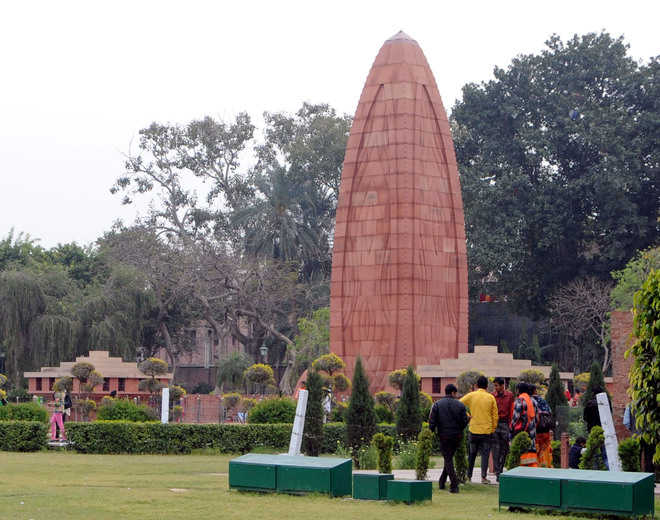
Jallianwala was ‘calculated move to strike terror’ New book says the 1919 massacre in Amritsar was in continuity of the British policy since 1857

Jallianwala was ‘calculated move to strike terror’

Jallianwala Bagh in Amritsar

Vishav Bharti
Tribune News Service
Chandigarh, February 10

The 1919 Jallianwala Bagh massacre in Amritsar was not an isolated incident or the outcome of a brutal mindset, but a “calculated move to strike terror” among the masses, says a new book by a British historian.

To be released on Tuesday, Jallianwala Bagh: An Empire of Fear and The Making of A Massacre by Kim A Wagner argues that demonstrations of violence were intrinsic to the colonial encounter not just in British India, but also Asia, Africa and the Middle East.

The book is based on a range of material from diaries and letters to court testimonies. Wagner observes that the story of Jallianwala Bagh is also the story of a particular colonial mindset haunted by the spectre of the ‘Mutiny’ or the First War of Independence.

“After 1857, the British in India did not respond to local unrest as much as to what they imagined that unrest was or could become — hence the consistent disproportionality of violence on the part of the colonial regime. The Amritsar massacre was accordingly both retributive and pre-emptive: Dyer took revenge for the attacks on Europeans, including Miss Sherwood [a missionary teacher attacked in Amritsar], during the riots three days earlier, but he also acted to prevent a much bigger outbreak that he believed to be imminent.”

He writes that at Amritsar, Dyer had simply followed the example of so many colonial officials before him, including Frederick Henry Cooper, Amritsar DC during the 1857 rebellion, or L Cowan, who ordered Kukas to be blown from guns in 1872.

Both had resorted to “exemplary and indiscriminate violence when faced with rebellion and anti-colonial unrest”. Wagner says that rather than an exceptional episode, “in singular and sinister isolation”, the Amritsar massacre revealed the inner workings, and the imagined vulnerability, of the British colonial rule in India.

Colonial punishment, Wagner observes, had little to do with justice, and that the suppression of the unrest in Punjab in 1919 exposes the fundamental lie about the pre-eminence of the rule of law in British India in the most glaring fashion.

“A week after the massacre at Jallianwala Bagh, on 21 April 1919, Lieutenant Governor Michael O’Dwyer made a remarkable statement when defending Dyer’s actions to Viceroy Chelmsford: ‘The Amritsar business cleared the air, and if there was to be a holocaust anywhere, and one regrets that there should be, it was best at Amritsar. O’Dwyer was here using the word ‘holocaust’ in its literal sense of a ‘burnt offering’ – as a sacrifice. The crowd at Jallianwala Bagh, in other words, had to be sacrificed to produce the necessary effect, ‘clearing the air’, and preventing a second ‘Mutiny’.”

The book finds that Amritsar massacre was just in continuity of what the British were doing to the local populations, variously described as ‘tribal’, ‘savage’ or ‘fanatic’, on the North-West Frontier in Afghanistan, in Sudan or throughout parts of Africa and elsewhere.

They routinely massacred locals with machine guns, drove off cattle and burned villages in demonstrative displays of power. “What became known as ‘savage warfare’ was not simply shaped by the tactical necessities of asymmetric fighting against irregular enemies, but was based on deeply encoded assumptions concerning the inherent difference of local opponents.”



Son of brick kiln worker commissioned in army

DEHRADUN: It was like the end of hardships for 29-year-old Gole Kiran, who passed out as newly commissioned Indian army officer from IMA on Saturday.

VINAY S KUMAR/HT■ Newly commissioned officer Gole Kiran with his mother and sisters at IMA on Saturday.A resident of Pune, he lost his father at the age of four. His mother then worked as a labourer in a local brick kiln and farming fields to support the family. A brother of two younger sisters, Kiran too, used to work in a local gas agency while pursuing his school and college studies.

“I lost my father when I was a toddler and had barely learnt to speak. He used to work at a cloth shop in Mumbai while we used to live in Pune. After his death the world turned upside down for my mother who took up every possible challenge just to feed us three siblings,” he said.

“As she was illiterate she worked as a labourer in a local brick kiln and sometimes in farming fields. But she made sure to provide us education to be able to stand on our own feet,” he said adding “After completing education till class 10 I started working in a gas agency to support my family.”

He continued working till the completion of his graduation. “I used to work after the classes were over.”

After completing graduation, Kiran joined army as a Sepoy in 2009 where he served for about six years.

“When I got into the army, I felt glad that I was serving the country and was also able to support my family better. However, I didn’t stop there and wanted to progress after which I decided to prepare for the Army Cadet College (ACC) test,” he said.

ACC course is required for the non-officers in the armed forces to get into IMA.

“Though I was preparing I served as a sepoy at the same time. I used to serve my duty hours and then study during my free time. I spent many sleepless nights just to see this day and bring smile on my mother’s face,” he said.

He joined ACC in 2015 where after completing the three years course he joined IMA from where he passed out on Saturday.

Giving all the credit of his success to his mother, he said, “It was all because of her that I am here. She was the source of my motivation and whenever I used to feel depressed or worried about achieving my dreams, she would push and encourage me.”

Gole Lata, his mother was all smiles and tears while seeing her son in an army officer uniform. She said, “I am proud of what my son has achieved. I am now feeling that all the hardships I faced earlier has now reaped me fruits. Almighty sees everything.”


Indian Air Force’s Latest Innovation: To Integrate British AASRAM Missile System With Russian Su-30 MKI Jets

Indian Air Force’s Latest Innovation: To Integrate British AASRAM Missile System With Russian Su-30 MKI Jets

The Indian Air Force is all set to deploy ASRAAM heat seeking close combat air-to-air missile in its Sukhoi Su-30 MKI Fighters, Livefist has reported. The IAF is currently in the final stages of the programme to mate the British missile system with Russian-origin Sukhoi fighter jets.

A pair of HAL-built Su-30 MKI jets have gone through required modifications in software to deploy the MBDA ASRAAM missile, top IAF sources were cited in the report as saying.

The move comes after IAF successfully integrated the missile system with its Jaguar deep penetration strike jets. The ASRAAM integrated Jaguars are part of IAF’s £250 million contract with United Kingdom’s MBDA in July 2014. The modified Jaguars are to be declared operation ready this year.

According to the report, the IAF is intending to fully replace the Su-30 MKI’s current close combat missile, Russian Vympel R-73, with the ASRAAM in a phased manner.

The ASRAAM-armed Su-30 would be reportedly declared ready around the same time as the Jaguars, and will make use of the same test cycle.

National Aerospace Laboratory (NAL) was tasked with the checking the stability of the ASRAAM on the Su-30 airframe at its Bengaluru wind-tunnel.