Sanjha Morcha

What’s New

Click the heading to open detailed news

Current Events :

web counter

Print Media Reproduced Defence Related News

The battle for the skiesBY MK Bhadrakumar

The battle for the skies

Mission space: Russia can build a lone lunar station, but funds are a challenge.

MK Bhadrakumar
Former Ambassador

Us space agency NASA has abruptly called off a planned visit to the US in February by the head of the Russian state space corporation, Roscosmos Dmitry Rogozin. NASA made the announcement on January 4 following criticism by the US media and lawmakers who demanded cancellation of the visit. The snub to Moscow presages sudden death of the historic Russian-American collaboration in exploring the ‘last frontier’ for mankind. It becomes an inflection point.

Rogozin is a close political associate of President Vladimir Putin. He has been subjected to the Western sanctions over Moscow’s annexation of Ukraine’s Crimean Peninsula in 2014. US Senator Jeanne Shaheen, who is a leading critic of Russia’s alleged meddling in the 2016 US presidential election, threatened that the Congress will be ‘forced to act’ unless NASA withdrew the invitation to Rogozin. Shaheen called Rogozin ‘one of the leading architects of the Kremlin’s campaign of aggression towards its neighbours’ and said the invitation ‘undercuts our message and undermines the US’ core national security objectives’.

The big question is whether the curtain is coming down on the space cooperation between the US and Russia. It is a poignant moment since the two countries have had a long history of working together in space ever since the joint Apollo-Soyuz mission in 1975, and more so, in the past two decades. Within the ambit of cooperation, the two countries have shared training, communications, operational capabilities and expenses in support of the International Space Station (ISS). In particular, following the cancellation of the US Space Shuttle Program in 2011, the US began relying on Russia’s Soyuz capsules for transport to the ISS. Russia receives an average of $81 million per seat on the Soyuz. In a joint statement in 2017, the two countries even projected the idea of collaborating on deep space exploration, including the construction of the Lunar Orbital Platform-Gateway, a research-focused space station orbiting the moon. (Rogozin’s visit aimed at fleshing out the tantalising idea.) Both countries saw clear benefits, given the high price tag for solo space exploration.
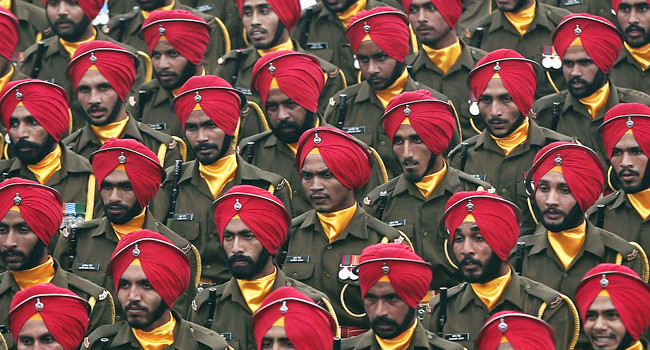
However, times have changed. Russia and the US are flaunting today their capability to destroy each other in a thermonuclear war, something unheard of even at the height of the Cold War. Space has become a new domain of warfare. If the 2018 US National Defense Strategy characterised ‘space and cyberspace as war-fighting domains’, Russia’s 2010 military doctrine explicitly stated that ensuring superiority in space would be a ‘decisive factor’ in achieving its strategic goals. In this tense security environment, the need arises to protect space assets (satellites, etc.) with space-based weapons. Suffice to say, the scope for sharing sensitive technology or capabilities in space partnerships has dramatically shrunk due to the growing hostility between the US and Russia.

Secondly, a private sector space industry has appeared in the US and it has spawned commercial interests. The development of advanced technologies by private companies means NASA has new options to choose from and to reduce the dependence on Russia. In fact, NASA is already in a position to use Boeing and SpaceX capsules for human spaceflight beginning in 2020 and even has the option to phase out the procurement of Russian RD-180 rocket engines by 2022. With President Trump ordering the establishment of a sixth branch of the military (‘Space Force’), the dominant aerospace companies in the US — Boeing, Lockheed Martin, Northrop Grumman, Raytheon and BAE Systems — are eyeing the new frontier. 

Russia’s preference has always been to press on with a space programme entwined with the US’s. But in a scenario where NASA turns its back on Roscosmos, Russia may have to turn to China or India for partnership. Recently, Rogozin openly hinted at this. In his words, ‘China is offering many initiatives for cooperation, is asking us to help them develop, though they have already achieved a good level of development. They are suggesting creating a joint station.’ Rogozin even floated the idea of a ‘BRICS station’. Of course, Russia is technologically capable of building a lone Russian lunar station. But then, as the director of the Institute of Space Policy in Moscow, Ivan M Moiseyev, told the New York Times recently, ‘The technical capability exists, but the finances don’t.’
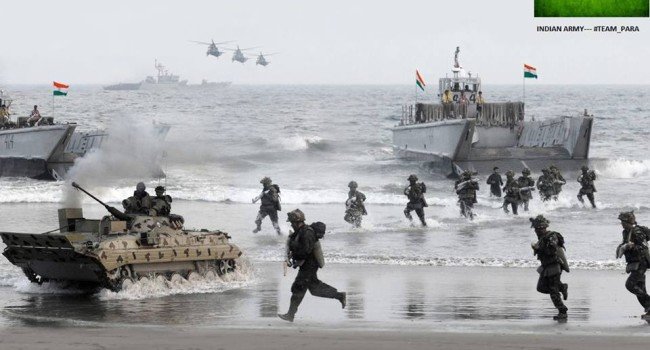
Quite obviously, considering that space efforts are inextricably connected to military plans, Russia needs to take a leap of faith to form an alliance with China. On the one hand, the scientific space-related endeavours have immense commercial potentials, while on the other, they signify the ultimate ‘eye in the sky’ through a combination of satellites and unmanned aerial reconnaissance vehicles that would give unmatched insight into positions of enemies (as well as allies). They will phenomenally improve military logistics, facilitate ‘orbital strikes’ at enemy targets as well as open up new lucrative trade and travel routes.

India is far better placed than China can ever be to align with Russia’s space programme, as there are no contradictions in the relations between the two countries. China is a competitor for Russia — as much as for the US — in space. Commenting on the recent landing of a Chinese scientific probe on the far side of the moon, Mary Dejevsky at the Guardian newspaper, a veteran Russia hand, wrote, ‘The response in political and military quarters in Washington, as in Moscow… is likely to reflect trepidation.’ It cannot be otherwise in New Delhi also. All factors taken into consideration, therefore, a tapering off in the NASA-Roscosmos cooperation, which is on cards in a near-term scenario, can be to India’s advantage. Delhi should seize the opportunity.


Martyr’s daughter gets helping hand from MP Chopra’s wife

Martyr’s daughter gets helping hand from MP Chopra’s wife

Karnal MP Ashwani Chopra’s wife Kiran meets Baljeet Singh’s kin at his residence at Dinger Majra on Wednesday. Tribune photo

Tribune News Service

Karnal, February 21

Karnal MP Ashwini Chopra’s wife Kiran Chopra will bear the expenses of the daughter of Baljeet Singh (35) of Dinger Majra, killed in a recent gunfight between security forces and militants in the Ratnipora area of Pulwama district.

She handed over a cheque for Rs 1 lakh to the martyr’s family on Wednesday. She announced Rs 2,000 per month for the education of the martyr’s daughter. She promised to bear the expenses of the wedding of the martyr’s daughter.

“Being a citizen, it is our duty to extend support to the family of every martyr who sacrifices his life for the country. My contribution is nothing compared to his sacrifice,” Kiran said.

“I will bear the educational expenses and transfer Rs 2,000 a month into her mother’s account till she passes Class XII. I will bear the expenses of her graduation or any other course. I will also take care of her wedding,” she said.


4 militants killed in gunfight in Shopian district of J&K

4 militants killed in gunfight in Shopian district of J&K

The operation is still under way. Tribune file

Majid Jahangir

Tribune News Service

Srinagar, November 25

Four militants were killed in a gunfight in south Kashmir’s Shopian district on Sunday, officials said.

The gunfight broke at Kapran village of Shopian around 1.30 am when a joint team of the police, Army and CRPF were carrying a cordon and search operation after a specific input about the presence of militants in the area.

“As the forces zeroed in on the suspected area, the militants opened fire, triggering a gunfight. In the gunfight that followed, four militants have been killed so far,” a police officer said. The toll may mount as the operation is still under way.

While identity and the group affiliation of militants is being established by police, sources said the slain include top commanders of Hizbul Mujahideen and Lashkar-e-Toiba

This is the second major encounter in south Kashmir since Friday. On November 23, six local militants, including a top Lashkar-e-Toiba commander accused of murdering top journalist Shujaat Bukhari in June this year, were killed in a gunfight in Bijbehara area of Anantnag district.


Fresh SOPs on convoy movement in J&K soon

Chandigarh, February 21

Following a suicide terrorist attack that killed over 40 CRPF personnel in Jammu and Kashmir last week, fresh standard operating procedures (SOPs) on the movement of security forces’ convoys in the troubled state will be issued shortly.

CRPF Inspector General from Jammu Zone, RK Yadav, said the SOPs are being modified and some rules, including restricting civilian traffic on the route, are being revised. “These would be implemented in a phased manner, but if civilians face problems due to this, we can consider other measures,” he said. Pointing out that such an attack had never been executed in the past, Yadav said there was no specific intelligence on the likely time, place or manner of attack or the type of materials to be used, available prior to the incident, though routine advisories kept coming in. “The force is introspecting on any possible lapses in following SOPs or security drills and will take remedial steps accordingly,” he said.

Yadav, who is also holding additional charge as the IG North-West Sector, was here to attend a memorial ceremony organised by the Para Military Forces Retired Officers Association to pay homage to the slain personnel. Besides CRPF officers and personnel, a large number of retired officers from all CAPFs attended the event.

The association’s president, AS Sidhu, a former IG with the CAPF said: “A number of demands pertaining to the welfare of serving and retired CAPFs are pending with the government. This includes grant of one rank-one pension.” — TNS


Major restructuring in the offing, India may soon have thousand-General Army

Indian Army Major Generals

Restructuring is a tri-service matter and Navy and Air Force also have to approve it. If the number of Major Generals go up, the number of Rear Admirals and Air Vice Marshals would also increase.

File image  |  Photo Credit: PTI

New Delhi: The Indian Army could soon have over a thousand Generals amongst its ranks if a proposal given by it is cleared by the government and also agreed to by the Air Force and the Navy. The Army currently has about 42,000 officers and if the planned move is cleared, the force would see the biggest one-time jump (700) in the number of Major Generals since Independence.

The top Army leadership has been open to a recent idea of the officers bypassing the Brigadier rank. As part of the proposal, some 1,000 Colonels are to be promoted as Major Generals bypassing the Brigadier rank.

In the present system, about 1000 colonels are promoted to Brigadier rank and then, 300 of them become Major Generals.

It may be noted that the proposal does not envisage the abolition of the Brigadier rank. Officers in charge of brigades will serve as Brigadiers for the time they are in command. And as their tenure comes to an end, the officers will automatically get promoted to Major General rank.

​At present, there are some 300 Major Generals, nearly 90 Lieutenant Generals, and one General — the Chief of Army Staff – in the Indian Army. The restructuring would not put any financial burden on the Indian Army, sources said.

It may be noted that the restructuring issue is a tri-service matter and the Navy and Air Force also have to approve it. If the number of Major Generals go up in the Army, the number of Rear Admirals and Air Vice Marshals would also increase.

Once all three wings of the Indian armed forces are on the same page, the proposal would be placed before the government.

The Army believes the proposal would help streamline the structure of the force and also make the armed forces a better career option.

UNSC strongly condemns ‘heinous and cowardly’ Pulwama attack

UNSC strongly condemns ‘heinous and cowardly’ Pulwama attack

Forty CRPF personnel were killed in Pulwama. PTI file

United Nations, February 22

The powerful UN Security Council has strongly condemned the “heinous and cowardly” Pulwama terror attack by Pakistan-based Jaish-e-Mohammed and underlined the need to hold perpetrators of these “reprehensible acts” of terrorism accountable and bring them to justice.

Forty Central Reserve Police Force personnel were killed in a suicide attack by JeM in Jammu and Kashmir’s Pulwama district on February 14, sparking outrage in the country.

“The members of the Security Council condemned in the strongest terms the heinous and cowardly suicide bombing in Jammu and Kashmir, which left 40 Indian paramilitary forces dead and dozens wounded on February 14, 2019, for which Jaish-e-Mohammed has claimed responsibility,” the UN Security Council said in a statement on the ‘Suicide Bombing in Jammu and Kashmir’ on Thursday.

The powerful UN organ, which includes five permanent members China, France, Russia, the UK and the US, “underlined the need to hold perpetrators, organisers, financiers and sponsors of these reprehensible acts of terrorism accountable and bring them to justice”, it said.

The top UN body urged all states, in accordance with their obligations under international law and relevant Security Council resolutions, to cooperate actively with the Government of India and all other relevant authorities.

The press statement is highly significant as China, a permanent member of the Council, has in the past repeatedly blocked India’s bids in the Security Council Sanctions Committee to designate JeM chief Masood Azhar as a global terrorist.

“A statement with many firsts takes more time than expected. In complex diplomatic situations, however, it is better to be late than never,” India’s permanent representative to the UN Syed Akbaruddin tweeted on the UNSC statement.

On whether China raised any objections to the statement, sources told PTI here that drafting the statement was a “prolonged process” and was issued after “prolonged discussions”.

The members of the Security Council also expressed their deepest sympathy and condolences to the families of the victims, as well as to the Indian people and the Government of India, and wished a speedy and full recovery to those who were injured.

“The members of the Security Council reaffirmed that terrorism in all its forms and manifestations constituted one of the most serious threats to international peace and security,” it said.

The Council also reiterated that “any acts of terrorism are criminal and unjustifiable, regardless of their motivation, wherever, whenever and by whomsoever committed”.

The UNSC reaffirmed the need for all states to combat by all means, in accordance with the Charter of the United Nations and other obligations under international law, threats to international peace and security caused by terrorist acts, it said.

The condemnation by the UN organ comes a day after Pakistan’s Permanent Representative to the UN Maleeha Lodhi met top UN leaders, including Secretary-General Antonio Guterres and the Security Council president Anatolio Ndong Mba of Equatorial Guinea, briefing them about the escalating tensions in the region in the wake of the Pulwama attack.

In a major boost to India’s efforts to get Azhar on the list of global terrorists, France is expected to soon move a proposal in the Sanctions Committee to ban the head of the UN-proscribed group.

The proposal, when moved, will be fourth such bid at the UN in past 10 years.

In 2009, India moved by itself a proposal to designate Azhar. This was followed in 2016 when India moved the proposal with the P3–the US, the UK and France–in the UN’s 1267 Sanctions Committee to ban Azhar, also the mastermind of attack on the air base in Pathankot in January 2016.

In 2017, the P3 nations moved a similar proposal again. However, China always blocked the proposal from being adopted by the UN.

Guterres, too, had strongly condemned the terror attack and called for those behind the attack to be brought to justice.

On Wednesday, he again reiterated his strong condemnation of the terrorist attack, stressing that it is essential that there be accountability under international law and perpetrators of terrorist acts be brought swiftly to justice.

“The Secretary-General has been following with great concern the situation in South Asia. He reiterates his strong condemnation of the terrorist attack against Indian security forces in Pulwama,” a statement issued by his spokesperson Stephane Dujarric had said.

At the same time, the Secretary-General “urgently” appealed to the Governments of both India and Pakistan to exercise maximum restraint to ensure the situation did not further deteriorate.

“It is the belief of the Secretary-General that all difficult challenges can be resolved peacefully and satisfactorily through meaningful mutual engagement,” it said.

UN High Commissioner for Human Rights Michelle Bachelet had also strongly condemned the attack and called on authorities to bring those responsible to justice.

“The High Commissioner strongly condemns the suicide bomb attack against Indian security forces in Pulwama district of Jammu and Kashmir on February 14 and calls on authorities to bring those responsible to justice,” Spokesperson for the Office of the High Commissioner for Human Rights (OHCHR) Rupert Colville had said in Geneva on Tuesday. PTI


SAD-BJP purposely delaying Kartarpur corridor issue, says Cong leader Nimisha

SAD-BJP purposely delaying Kartarpur corridor issue, says Cong leader Nimisha

Nimisha Mehta, Cong leader

Tribune News Service

Jalandhar, September 18

Attacking the BJP-led Central Government and the SAD, Congress leader Nimisha Mehta questioned the “will” of the two parties to have the Kartarpur corridor open for Sikh devotees.

Nimisha said Union Minister Harsimrat Kaur Badal had all the time to point fingers at the conversation between External Affairs Minister Sushma Swaraj and Punjab Minister Navjot Singh Sidhu but it was sad that she had not realised that her dear NDA government ministers were awaiting a proposal from Pakistan for opening the corridor.

“It is strange that it is the need of Sikh devotees of India to open the corridor and the Central Government, of which Harsimrat Badal herself is a part, and the Centre is expecting a proposal from Pakistan itself. How is it possible? If Indians are being affected, of course the Indian Government will have to put in a request and take an initiative keeping in view the faith of people,” said Nimisha.

But the statements of Union MoS VK Singh that they expect a proposal from Pakistan itself clarifies that it was a sheer delay tactic and a deep-rooted conspiracy of the SAD.

“How can we expect Pakistan to initiate things on its own when we need it the most here as devotees of our country want to visit Pakistan and not Pakistanis want to come here,” she said.

Nimisha said if Sidhu had gone to Pakistan, at least he raised the issue pertaining to millions of Sikh devotees whereas when the Badal family visited Pakistan they returned with buffaloes as a gift in 2012.

She added that the SAD was making tall claims of building the corridor now, whereas its leaders never accompanied the party’s then sidelined leader Kuldip Singh Wadala, who passed away months ago, even for a single prayer for opening of the corridor.


Major, Jaish commander among 9 killed in Pulwama encounter Brigadier, DIG injured in gunfight

Majid Jahangir & Suhail A Shah
Tribune News Service
Srinagar/Pulwama, February 18

Four days after the suicide bombing that killed 40 CRPF personnel, security forces dealt a major blow to Jaish-e-Mohammad (JeM) when they gunned down three of its top commanders in a fierce gun battle in Pulwama district.

Five security personnel, including a Major, were killed while seven others, including a Brigadier, Deputy Inspector General of Police and a Lieutenant Colonel, were injured in the 18-hour-long gunfight. A civilian too died during the encounter.

The police say one of the killed Jaish commanders, Kamran, a Pakistani national, was heading the outfit in Kashmir and his role in Thursday’s suicide bombing was being probed.

The gunfight broke out at 12.45 am at populated Pinglena village when joint teams of forces were preparing for a search operation following an input about the presence of Jaish militants in the area. As the cordon was being laid, the Quick Action Team of the Army came under intense fire resulting in injuries to five soldiers, including the Major who was leading the team.

“The officer and three other jawans later succumbed to their injuries,” a defence official said. The four slain soldiers are Major Vibhuti Shankar Dhoundiyal, 33, of Dehradun, Uttarakhand; Havildar Sheo Ram, 36, of Jhunjhunu, Rajasthan; Sepoy Hari Singh, 26, of Rewari, Haryana and Sepoy Ajay Kumar, 27, of Meerut, Uttar Pradesh. Later, a policeman, Head Constable Abdul Rasheed, was also killed.

The killed civilian was identified as Mushtaq Ahmed.  The forces engaged the militants who were shuttling from one house to another and killed two of them. When the security forces tried to close in on the third, he fired burst injuring three officers. He was cornered towards the evening and killed after the forces launched the final assault.

“It was his firing that left a policeman dead and six others, including Brigadier, 12 Sector Rashtriya Rifles, Harbir Singh, DIG (south Kashmir) Amit Kumar and a Lt Col injured,” a police official said.

Vijay Kumar, adviser to J&K Governor, said two of the slain militants were Pakistani nationals. “Kamran and a local militant, Hilal, were killed. The identity of the third is being verified, though initially probe suggests he is Rashid Bahi alias Gazi Umar, also a Pakistani,” he said.

Police said Kamran had taken over as operational commander of JeM after his predecessor Mufti Waqas was killed in an encounter in February last year.

J&K DGP Dilbag Singh the slain militants had a role in the recent terror bombing. “Details are awaited, but there are fair indications the trio was in one way or the other involved in the attack,” Singh said. The DGP said he had nothing to say about Kamran being an Afghan war veteran.

However, senior security officials in Srinagar suspect that Kamran was involved in planning the terror attack. “For sure, he has some role in the attack as Adil (suicide bomber) was part of his module,” said the police officer.

Soon after the suicide bombing, security agencies had formed multiple teams to track the Jaish members who were involved in planning the attack. A senior police official from Pulwama said many over-ground workers of militants were rounded up. “The questioning of those detained led us to Pinglena village where the militants were hiding,” he said.

Plea in SC seeking judicial probe into Uri, Pulwama terror attacks 

New Delhi: A lawyer has moved the Supreme Court seeking a judicial probe into Uri and Pulwama terror attacks. While 19 soldiers had died in the September 18, 2016, Uri attack, 40 CRPF men lost their lives in the Pulwama attack. Advocate Vineet Dhanda has sought a freeze on bank accounts of Hurriyat and its leaders, besides an action taken report by government. TNS


Emulate China to reverse brain drain: Nobel laureate Says need to focus on scientific innovation through experimental work

Emulate China to reverse brain drain: Nobel laureate

Nobel laureates Frederick Duncan M Haldane (second from left) and Avram Hershko (second from right) with the time capsule on the LPU campus in Phagwara. Tribune Photo: Malkiat Singh

Aparna Banerji

Tribune News Service

Phagwara, January 4

Nobel Prize winner in physics Ferderick Duncan Michael Haldane on Friday said India needs to emulate China to reverse brain drain.The physicist, who bagged the 2016 Nobel Prize along with David J Thouless and John Michael Kosterlitz, said while science could only warn about global warming, it was only the politicians who could play a part in solving it.

Asking the young to be “numerically literate”, he said India needed an environment where scientific innovation was encouraged through experimental work — an area where China was leading the way.He said, “India has to be a part of the technological developments of the future and China is investing a lot of money in this… That’s what Prime Minister Narendra Modi was also talking about. He wanted to encourage the state universities. I think you also need to prevent researchers going out. You want to keep funding top institutions and make it possible for productive people to stay, you need to think experimental. What China has done is, it has put a lot of money into experimental physics and material science. They have been quite successful in reversing the brain drain.”

Asked whether India needs to follow the example of China, he said, “It has to. The key is to identify excellent people. And setting up world-class centres of excellence for a better scientific culture.”

Questioned whether science was disturbing nature, he said, “Scientists or science is not disturbing nature. It’s the technologists. We need to reverse some of the bad effects of our technological advances too.”

Responding to a query on the failure of recent climate change summits in resolving the global warming crisis and whether scientists could find a solution to it, he said, “Through science, we are trying to learn about global warming. In some countries it has been paid heed to. I think we have a duty to tell the facts like they are. In science things are not really a matter of opinion. Scientists could just tell it like it is, but the politicians are the people who run society. We can’t make them do something.”
Meanwhile, Union Textiles Minister Smriti Irani and Law and Justice Minister Ravi Shankar Prasad will visit the Lovely Professional University campus on the third day of the Science Congress on Saturday.

Time capsule buried for posterity

  • To remind the future generation about scientific advancements and civilisation progress, a time capsule with 100 items representing a cross-section of contemporary technology and country’s scientific prowess was buried at Lovely Professional University by two visiting Nobel laureates on the occasion of the 106th Indian Science Congress
  • Israeli biochemist Avram Hershko and American physicist F Duncan M Haldane along with the Chancellor of the institute buried it at the university. The capsule was buried at a depth of 10 feet

Objects in container

  • Objects which were kept in the five-side concrete and one-side glass-encased module included landline telephone, smart phone, weighing machine, water pump, stop watch, headphones, handy cam and pen drive
  • The capsule will also preserve several scientific equipment like rheostat and double microscope

Martyr cremated with full state honours

Martyr cremated with full state honours

Relatives and CRPF personnel shoulder the coffin of martyr Tilak Raj at his native village Dewa in Kangra. Kamaljeet

Our Correspondent

Nurpur, February 16

The mortal remains of CRPF jawan Tilak Raj reached his native village in Jawali on Saturday morning. Heart-wrenching scenes were witnessed as relatives and neighbours were unable to console the devastated family.

The mortal remains were received by Transport Minister Kishan Kapoor, Nurpur MLA Rakesh Pathania and Jawali MLA Arjun Singh at the Pathankot Air Force station last night and kept at the PWD rest house in Nurpur.

Chief Minister Jai Ram Thakur laid the wreath on the coffin carrying the remains of the jawan draped in the Tricolour.

The martyr’s three-year-old son, Varun, had no idea what was happening, but seeing others cry, he too started crying.

“The family has lost its bread-winner,” a relative said. Tilak Raj had called his wife Savitri Devi on Thursday morning, just six hours before he was martyred, to tell her that the CRPF convoy had started from Jammu and was on its way to Srinagar. He asked her to take care of his parents and the newborn.
Little did Savitri know that her world would come crashing down in a few hours. The braveheart was cremated with full state honours in the presence of thousands of people, who had gathered there to pay their last respects to the martyr. Slogans against Pakistan were raised. While consoling the martyr’s father, Layak Ram, mother Bimla Devi, wife and other family members, the Chief Minister said Tilak Raj had laid down his life for the nation and in this hour of grief, the state government would extend all possible assistance to the bereaved family.

Baldev Singh, the elder brother of Tilak Raj, lit the pyre. Those present raised solgans “Tilak Raj amar rahe”.

Pulwama attack: Funeral held for Kangra martyr

http://

Tribune News Service
Shimla, February 16

Mortal remains of 30-year-old Tilak Raj, a CRPF trooper who was killed in the Pulwama attack, consigned to flames at his native village in Kangra’s Jawali on Saturday.

Thousands gathered to say their last goodbyes to the martyr as Chief Minister Jai Ram Thakur and Union Health Minister JP Nadda paid their respects. People anger was palpable in the anti-Pakistan slogans they shouted.

The trooper left a wife Savitri Devi and two very young sons—aged 3 and a month-old infant. His brother lit the funeral pyre.

Thakur said the nation shared the family’s grief and was proud of the trooper’s sacrifice. He promised a job to the martyr’s wife as well as possible assistance.