Sanjha Morcha

What’s New

Click the heading to open detailed news

Current Events :

web counter

Print Media Reproduced Defence Related News

OFFICERS’ MESSES in Defence Forces

“A letter written some three decades earlier on Officers Messes, in the  Armed Forces.. Observations which are ever more, relevant today..
OFFICERS’ MESSES
General
1.  The Officer’s Mess is the institution around  which an officer’s social activity in the Army revolves, for the better part of his life.  Its role and importance in moulding the life styles of officers and their families is substantial. I would like to suggest ways to optimise the gains from this institution.
Upkeep of the Mess
2.  A mess which is unkempt is a sorry reflection of the state of the unit.  Peeling plaster, faded colour on the walls, cobwebs, paintings hanging askew, a line-up of uncared for mementoes on crude stands, unpolished and unrepaired silver (particularly much used and transported cigarette boxes), broken electrical fittings and naked wires – all convey much to the visitor about the sense of pride of the officers as also their attention to detail.  Mess toilets also leave a lot to be desired especially in the choice of towels which actually wipe.  To top it all, if the mess toilet also has a nude pin-up  or a    pornographic    verse, the officers’ priorities can well be judged. Would the officers accept a pin-up in the men’s living accommodation?  And what does this do to men’s perception of officers’ tastes?
3.   Some people categorize messes into three types.  The first is TWR (They Were Rich).  Such messes live in the past – as do our erstwhile royalty.  Everything is faded, forlorn and better forgotten.  The second variety is NR (Noveau Riche).  Everything is loud, garish and costly but all in bad taste, reminding one of the probable living style of a lottery winning pan-wallah.  The third, and desirable, type is the COR (Civilised, Officerlike and Restrained).
4.   The standard of the mess staff needs no elaboration.  Their personal hygiene and livery need to be an example of what officers should expect.  Needless to say, behaviour of staff towards ladies is of utmost importance.
Pride in the Unit Mess
5.  Care lavished on the mess, its property and fitment reflects the pride of officers in their mess. Officers must know the background, vintage and significance of trophies and mementoes.  The knowledge of officers’ wives is non-existent at present – this too is an important aspect.
6.   An officers’ mess is a place where we walk down memory lane, in the company of units and officers who served with the unit, and who are represented in the trophies and mementoes.  The tradition of holding and upkeep of mess trophies and mementoes is necessary to continually remind officers of past achievements and associations and thereby inspire them.  I, and other visitors may not say anything when we notice what is amiss, out of courtesy – but we are left in no doubt about the care that has gone into making the mess a respectable and `officer like’ place.
Food and Beverages
7.   The Officers’ Mess differs from a hotel in the dignity and decorum with which food and drinks are served and eaten.  The very idea of people pouring drinks, unsolicited, into each others’ glasses is anathema to me.  As for food, we should   endeavour   to  ensure   that everyone can sit and eat.  The buffet has destroyed our dining graces.  It is sad to see ladies eating standing up, with `pallus’ and `dupattas’ out of control, food dripping off the plate and soiled hands.  It is even more tragic to see officers and ladies licking food off their fingers while keeping their eyes open for the next bowl of chicken or pudding – and finally disposing of the used plate under a convenient table.  A young bride joining her husband in the battalion has to wait till she is the second in command’s or commanding officer’s wife to be seated at a dining table.  This should change.
8.   Civilised eating is done sitting down.  The phrase `sitting for a meal’ has a lot of meaning.  No mother or wife would allow her child or husband to eat standing up in her house.  Why accept it in a mess?
9.   Food must also be served on time – even on Raising Days.  Dancing, games, further drinking etc can go on after the meal, but food must be served on time.  No civilised home serves lunch at 1600 h  or dinner at 0100 h – why should a mess?  Not only is delay discourteous to invited guests, it is hard on the young mother as well as the mess staff.
3
Socialising
10.  Within the Unit.  The purpose of socialising must remain the building of relations based on mutual respect and trust between officers and their families.  The code of conduct of setting aside personal preferences and differences in the officer’s mess has to be revived.  This applies equally to ladies and children.
11.  Children in the Mess.  Having said that the mess is the home of the officer, I would hasten to add that children do have a place there, but in proportion and in a controlled atmosphere. Suffice it to say that formal occasions, whether within the unit or when guests are invited, are not for children.  Furthermore the control on the proper behaviour of children – of all ages – is the responsibilty of the parents.  If parents cannot control their child, they must be courteously told what is expected and controlled behaviour ensured.
12.  Socialising with Guests.  The best honour one can give another is to ask him over for a meal with the family.  We do this by  inviting  guests  to our  house the mess. But the honour should not be confined only to the ritual of drinks and a meal.  The process of getting to know the guests, letting them meet all officers and ladies must be instituted. I generally find, on social occasions, that I have to make the effort to move around, detaching officers and ladies from their respective huddles to get them to talk.  All guests should be done the honour of being able to meet and converse with every one of the hosts – as well as other guests.  Photographic cover, if deemed necessary, should stop with a couple of informal snaps.  Civilian photographers, in their unique and inimitable dress, clicking away with abandon should not be allowed.
Bands and Dances
13.  `Jazz’ Bands.  Many units now are going in for a Jazz Band. Unfortunately the net result is a low quality pop music rendition of the latest film hits. My recommendation is, if going in for a light band with modern instruments, do so in a very organised manner and ensure that proper dance music with good rhythm and balanced melodies are played.  A ‘crooner’ to add to the show really becomes comical, especially  when the singer has no idea of either the proper pronunciation or the meaning of the lyrics.
4
14.  Pipes & Brass Band.  Less and less knowledge about military tunes, regimental songs and marches and ceremonial numbers is being displayed.  Please encourage officers and bandsmen to recognise tunes, expect and produce high quality music and show appreciation.  The band should be so placed that their music does not drown out all conversation.  You should resort to the procurement of cassettes and compact discs in order to know how these numbers should be played.
15.  Dancing.  Particularly with the advent of ‘Jazz’ bands, dancing is now being organised more often.  All to the good.  But please remember that dancing with your partner is a very private activity and is not a ‘tamasha’ organised for the ogling benefit of drivers, masalchis, mess staff – or even for non dancing members of that occasion.  The correct way would be to have the dance floor enclosed aesthetically, or placed on a side, announce the dance, strike up the music and let the dancers alone.  A spirited exhortation to join in with everyone  turning  their  chairs  around to watch, should be taboo.  I have had the misfortune of being chided by an officer on the mike to come on the floor in the name of regimental spirit.  I wish that officer had been struck down by lightning.  Dancing is an elegant and musically rhythmic form of expressing appreciation and confidence between the partners – wedded or otherwise.  Do not turn it into street dancing of the ‘baraat’ variety.  Ideally a dance session can precede dinner for 30 to 45 minutes, after which the meal should be served.  Further sessions, after the meal, may be programmed.
The Last Word
16.  The Officers’ Mess should be an institution where prompt, courteous and quality service is the norm.  Civilians pay enormous amounts to gain admittance to such institutions which they call clubs. The mess is more than a board and lodging place – it must become a place where officers and families can re-charge their psychological batteries.  Maintain the serenity and decorum of your mess.  The social and mental well-being of your officers and families depend upon it.“`⚓

Naga students visit Chandimandir

Naga students visit Chandimandir
Lt Gen GS Dhillon, Chief of Staff, Western Command, felicitates a student from Nagaland at Chandimandir on Tuesday. A Tribune photograph

Chandigarh, October 10

As part of a national integration tour, a group of 20 students and two teachers from Peren district of Nagaland visited Chandigarh and the Chandimandir Military Station today. The contingent was flagged off from Jalukie in the far east on October 5.The aim of the tour is to provide students from Nagaland exposure to the varied cultures and development in other parts of the country as well as an opportunity to interact with dignitaries and the local populace.At Chandimandir, they were provided an insight into the activities of the Army. Lt Gen GS Dhillon, Chief of Staff, Western Command, interacted and felicitated the students and they shared their experience with Army officers here. In Chandigarh, they visited places of tourist interest. — TNS


ROAD RAGE CASE Colonel not charged with murder

Colonel not charged with murder
Col Manveer Bains

Ishrat S Banwait

Tribune News Service

Chandigarh, October 10

Initially accused of murder in an incident of road rage, Col Manveer Bains has not been charged with murder in the chargesheet filed by the police. It includes Section 304 (II) of the IPC, which is culpable homicide not amounting to murder.Praveen Yadav, a Sector 37 resident, had died on the spot after a spat with Colonel Bains last month. The next hearing in the case is scheduled for October 13.The nearly 500-page chargesheet was filed in the court by the police today. It includes a list of 27 witnesses. The FIR registered by the police included Section 302 of the IPC (murder) after kin of the deceased claimed that he was “beaten to death” by the Colonel in a fit of rage. However, the medical report from the GMCH, Sector 32, said Yadav’s death had occurred due to a heart attack and there were no injury marks on his body.Revision petition for B class facilities in jail rejectedColonel Bains has been denied bail by the court and has been in custody for over five weeks. He had submitted an application for better facilities in jail, which was rejected by the court. He later submitted a revision petition against the order, which was also rejected by the court today.The Colonel was denied bail by the court and the order had observed that Colonel Bains had committed a serious offence. It also said that “he (Bains) knew of the consequences of his actions” as Colonel Bains slapped Yadav, who was brought dead, thus indicating that he died on the spot.The 48-year-old Mohali resident was held on September 2 and booked for murder.


Pak warns India against surgical strikes on its soil

Pak warns India against surgical strikes on its soil
Pakistan’s Foreign Minister Khawaja Asif. File photo

Washington, October 5

Pakistan’s Foreign Minister Khawaja Asif today warned India against carrying out surgical strike or targeting its nuclear installations, saying if that happens nobody should expect restraint from his country.Referring to the statement of India’s Air Chief Marshal B S Dhanoa that the Indian armed forces are ready for a full spectrum operation, Asif said Pakistan wants to live in peace and harmony with its neighbours.But if India carries out any surgical strike in Pakistan or strikes at its nuclear installations “nobody should expect restraint from us”, he warned.Speaking at the US Institute of Peace, a Washington-based think-tank, Asif said the “relationship with India is at a lowest ebb at the moment”.Responding to a question on India, he said, “sadly India did not respond” to Pakistani efforts to improve relationship.”What is going on in Kashmir is the biggest roadblock to normalisation to talks,” Asif said.The Pakistani Foreign Minister asked the US not to treat his country as a “whipping boy” and said Washington has already lost the war in Afghanistan and is only trying to salvage the situation in the war-torn nation.Asif, who is here as part of efforts to rebuild bilateral ties frayed after President Donald Trump accused Pakistan of sheltering terror groups, said his meetings with Secretary of State Rex Tillerson and National Security Advisor H R McMaster were good. “Was not bad,” Asif quipped, giving a sense of his talks with top leadership of the Trump administration, which has been seeking accountability from Islamabad in the war against terrorism including continued presence of terror safe havens in Pakistan.Asif in a way acknowledged that the madrasas were training ground for terrorists.”These madrasas were nurseries for American jihad in Afghanistan. People who took those decisions will burn to hell. We are actually living in hell because of that decision,” he said, adding that Pakistan is paying the price of such a decision.”The meeting went well with Tillerson and McMaster (meeting) was good. (It) was not bad,” Asif said, noting that the two countries need to pursue contacts with each other.He favoured adopting an approach of talks and exchange of views more vigorously.The US, he said, is focusing solely on safe haven allegations or blaming Pakistan for what they have not achieved in Afghanistan.”There are many more dimension of what is going on in Afghanistan,” he said.”A corrupt government in Kabul, increasing narcotics trade, the Afghan Army selling arms to the Taliban, losing terrorist and bringing Daesh (ISIS) to Afghanistan,” he said.”Let’s see this conflict in its entirety, in totality. Do not treat Pakistan like a whipping boy. That’s not acceptable.We want to cooperate with the US. We are the direct beneficiary of peace and stability in Afghanistan,” he said.Standing by his remarks on some of the terrorist groups and terrorist leaders at the Asia Society in New York last week, Asif said they are a liability.”We will find ways and means to wrapping up this business. This is a liability. (but) this cannot be wrapped up overnight,” he said.Responding to a question, Asif said there are problems in US-Pakistan ties.”We do have problems with the US. We have deficit of trust. We are trying to mend those deficits,” he said.Pakistan, he said, sees more role for Russia and China in the region.Relationship with Russia has improved in recent years.”We need and have proposed any peace solution in Afghanistan should be backed by regional powers which includes the Russian federation,” he said in response to a question.”Madrassas, whether we accept or agree with them or not, are the biggest NGO in Pakistan…There are over 20,000 madrasas. Out of these huge number, a very low number of them are infected. Possibly they number around 300-400. The government is managing these madrasas,” he said. — PTI


Downside of Valley’s war through bombs, guns: Youth high on drugs

Cases of drug abuse and psychological problems in J&K have increased by a staggering 130% in 2 years, aligned with the growing turmoil in the state marred by violence

SRINAGAR : Rahim Ahmad was just 12 years old when he fell in love with a girl from his neighbourhood. But the affair did not last and a heartbroken Rahim, then a Class 7 student, took to cannabis.

WASEEM ANDRABI/HTData from Srinagar’s Shri Maharaja Hari Singh Hospital shows an 85% increase in the number of drug and substance abuse cases.His school grades started falling and he dropped out in Class 10; his parents brought him to a de-addiction centre recently.

“I was a bit depressed after the failed relationship and friends introduced me to it (cannabis)…but soon I became addicted and used to spend ₹120-₹400 daily,” he told HT, a cocky youngster with haggard looks.

Years of conflict, marked by bomb blasts and gun battles, have shrouded one of Kashmir’s biggest problems: rising drug abuse among the Valley’s youth.

Data from Srinagar’s Shri Maharaja Hari Singh (SMHS) Hospital – one of the biggest in the state – show an 85% increase in the number of drug and substance abuse cases, from 410 in 2014 to 759 in 2016.

Combined cases of drug abuse and related psychological issues also went up from more than 14,500 cases in 2014 to 33,222 in 2016, a staggering 130% increase in two years. This year till April alone, this number is 13,352.

A United Nations International Drug Control Programme survey in 2008 estimated 70,000 addicts in Kashmir — 4,000 of these were women.

Though recent statewide numbers are not available, the data shows the growing problem in a state where militancy has killed thousands of people – including civilians and security personnel – over the years.

Experts say the geographical location of Jammu and Kashmir helps in easy availability of drugs in the state; police say mostly from Pakistan.

The ongoing turmoil has also played a huge role in pushing many youngsters to the drugs, which most of them see as a means to escape the pain of the never-ending war.

“Stress and the overall turmoil naturally play a role but other factors like peer pressure, unemployment, easy availability (of the drugs) and the fact that no one wants to talk about the issue are areas of concern, too,” said Arshad Hussain, a leading psychiatrist and a professor, who has been practising for 17 years at the SMHS Hospital.

But despite the problem, there are only two operational de-addiction centres in Srinagar — one run by the police at Batamaloo and the other at the SMHS Hospital.

Talking about the issue is still considered a taboo — the de-addiction centre at SMHS hospital is called a ‘community centre’. Officials said this has been done to ensure that those seeking help don’t face social stigma.

From cannabis to medicinal opioids to inhalants such as glue and paint thinner, the youth of Kashmir are getting hooked to different substances, officials said.

But it is cannabis that is most commonly used, largely due to its easy availability.

Rahim Ahmad from Anantnag in South Kashmir, who was first introduced to cannabis by his neighbourhood friends, said even cleaners and sanitation staff sell it by the roadside to make quick money.

Cannabis is considered a gateway drug, a common medical parlance used to describe substances that supposedly lead users on to more addictive or dangerous drugs.

Professor Hussain said between 2000 and 2008, substance abuse was seen mostly in the age group of 18-35.

“It was limited to the use of medicinal opioids. However, currently the addiction has reached among those as young as 10-year-olds who get into solvent abuse. It’s in schools they get introduced to cannabis now,” he said.

He also pointed to a correlation between mental illness and the use of cannabis.

“In most of the cases of psychiatry problems, we found that 70% tested positive for cannabis, especially in the case of men.”

“The stigma has to be removed. It is still considered a taboo subject. Naturally, those who want help will think twice before coming forward.

The government needs to ensure that school authorities counsel students at the young age itself,” Hussain added.

Education minister Syed Altaf Bukhari acknowledged that drug abuse is a problem among school children but played down the situation.

“The problem is there but it is minuscule as far as schools are concerned. It is certainly not alarming. Young students get influenced in this age especially due to the peer pressure. There is also a huge disconnect between the parents and children these days.

The environment in the Valley also plays a part. We have asked schools to ensure there is proper counselling provided to students,” he added.

Most of the patients admitted to the hospital are between the age group of 15 an 35 years and of these 90% are between 15 and 25, officials said.

Patients from Srinagar, Anantnag, Pulwama, Torda among others come from far-flung areas to get help, they said.

“I dropped out of college because of this habit. I was brought to the hospital five days back. My mother is aware but I haven’t told my father. Once I am fine I will move out of Srinagar. It’s a little depressing here so will move out of the state and stay with my sister,” said Rehmat, another youth undergoing rehabilitation.

According to home department data, between October 2014- 2016, more than 3800 people were treated for de-addiction in Jammu, Srinagar, Anantnag and Baramulla.

The highest number of cases came from Srinagar (2,260), followed by Jammu (610), Anantnag (603) and Baramulla (391).

Last week, state director general of police SP Vaid sent out a tweet from the official account of Jammu and Kashmir Police.


3 jawans injured after Pak army opens fire in Poonch


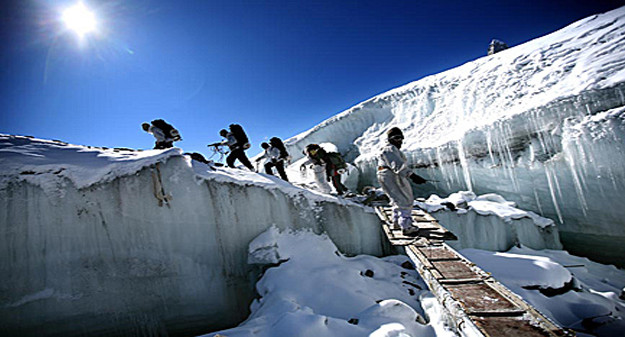
JAMMU: At least three Indian soldiers were injured critically on Wednesday after the Pakistan army opened heavy fire and shot mortars on Indian posts and forward villages along the Line of Control (LoC) in twin border districts of Poonch and Rajouri, south of Pir Panjal range.

The injured soldiers have been identified as Naik Ripal MPA, Sepoy Kiyaka Zhmiou and Lance Naik Lithanthung of 2 Naga Regiment. The Indian army retaliated in equal measure. “A day after killing an Indian soldier in sniper fire, the Pakistan army on Wednesday resorted to heavy fire on Indian posts and forward villages along the LoC in Degwar and Gulpur areas of Balakote sector in Poonch and in Kalsian of Nowshera sector in Rajouri district,” said a police officer. The injured soldiers were evacuated to a garrison hospital in Poonch, he added. The latest ceasefire violation was the fifth in the past 12 hours. “On Wednesday, the Pakistan army opened fire with automatic weapons at 5:30 am in Degwar and Gulpur areas for some time and then the guns fell silent. But at around 8:30 am, the Pakistan army opened heavy fire and heavy exchanges between the two sides lasted till 12:30 pm,” said the officer. In the neighbouring Rajouri district, the Pakistan army shot around 12 mortars at Kalsian in Nowshera sector prompting India to retaliate in equal measure. “There were no adverse reports from Kalsian but over 4,000 villagers continue to put up in six relief camps set up at Nowshera town since May this year. They fled their homes in first week of May following heavy shelling by Pakistan,” he said.
All the government and private schools remained closed on Wednesday as well in Degwar and Gulpur areas as a precautionary measure.

On Tuesday, the Pakistan army had killed an Indian soldier Naik Mahendra Chemjung of Nepal in a sniper fire in Poonch and on October 2, the Pakstan army had fired two sniper shots at Indian post which hit the Border Security Force (BSF) constable S Ramachari on his right forearm and also brushed his abdomen in Rajouri district.

The same day in the morning, the Pakistan army had killed two minor children and injured 12 villagers when it rained mortars on Indian villages along the LoC in Poonch. Baffled by Indian army’s “operation all out”, Pakistan has upped the ante against India and has been resorting to intense firing and shelling on the borders. The rogue country is also adopting all ploys in the form of transborder tunnels, terror attacks, sniper fire and attacks by border action teams, said an army officer. BORDER VILLAGERS FLAG THEIR GRIEVANCES TO POLICE JAMMU: Keeping in view the continual ceasefire violations by Pakistan due to which the people of border areas had to be shifted to safer places, the Samba police on Wednesday held a meeting with the villagers and heard their grievances to streamline their evacuation at the time of contingency. A number of people of Samba border sector besides the sarpanches of the panchayats of Halqa Mawa, Katholi, Rajpura, Kangwala Paloora, Glhar, Supwal, Sanoora, Madhoon and Sarthian participated.

The main issues which were highlighted by the people included provision of adequate bullet proof vehicles for safe evacuation of the border people during ceasefire violations besides availability of adequate number of ambulances equipped with all life supporting system to avert causalities, issuance of gun licences to all the residents of the border belt for safeguarding themselves against the militants, provision of individual bunkers near residential houses (community wise) to rule out intercommunity clashes, provision of dependable vehicles to the Rajpura police post for quick response and arrangements for round-theclock power supply.

Fidayeen determined, can’t stop attacks in J&K: BSF

SRINAGAR: The chief of Border Security Force (BSF) KK Sharma said Wednesday it’s difficult to stop suicide attacks in Jammu and Kashmir as the militants come “wearing shrouds” and the only way to deal with them was the troops’ alertness, a day after the paramilitary force’s camp was infiltrated near the Srinagar airport.

BSF soldiers carrying the coffin of assistant sub­inspector Brij Kishore Yadav during a wreath­laying ceremony near Srinagar on Wednesday.

“The fidayeen are determined. We can’t stop their attacks.

They will always manage to come but it is the response which is important,” Sharma said after participating in the wreath-laying ceremony for assistant sub-inspector of BSF BK Yadav in Humhama.

Yadav died fighting one of the three militants who entered the highly fortified 182 battalion camp near the Srinagar airport early on Tuesday.

All three were killed in the gunfight that lasted for hours.

Three others security personnel also sustained injuries in the attack, claimed by the Pakistanbased outfit Jaish-e-Mohammed (JeM), which is blamed for similar strikes at Indian security bases including at Uri in September 2016 that killed 19 soldiers.

The paramilitary force’s chief, without naming Pakistan, said attacks would continue until people across the border don’t stop. “So long our friendly neighbour does not behave, I think we will expect we will have many more (such attacks),” Sharma said.

He added that the response of BSF was “highly professional” and the moment the militants entered they were “spotted and challenged, and were neutralised” without causing any collateral damage or “much harm”. “You are aware of the number of fidayeen attacks in the past and the damage they have caused. In comparison, the BSF has acquitted itself very well, and I am proud of the boys,” he said.

Sharma said that two of the three militants were wearing Central Reserve Police Force battle uniform while the third was wearing a Pathani kurta.

“We think that the fidayeen were targeting the weapons of the quarter guard but an alert quarter guard detected the terrorists and he challenged them,” he said.

Sharma said “this timely detection” prevented a major catastrophe. He said the three militants dispersed and one went towards the canteen where he was immediately killed. Of the remaining, while one entered the subordinate officers’ mess, another barged into the administrative block.

Deputy chief minister Nirmal Singh said such attacks were “proxy war” and state and Centre were fighting this “demon”.

clip


Pakistan violates ceasefire in Poonch district of J&K

Pakistan violates ceasefire in Poonch district of J&K
The Pakistan Army initiated unprovoked and indiscriminate firing post midnight. PTI file

Poonch, October 5

Pakistan on Thursday resorted to unprovoked firing along the Line of Control (LoC) in Digwar sector of Poonch district in Jammu and Kashmir.The Pakistan Army initiated unprovoked and indiscriminate firing post midnight.Digwar district was a witness to another ceasefire violation from Pakistan on Wednesday.

(Follow The Tribune on Facebook; and Twitter @thetribunechd)

Earlier on Monday, two minors were reportedly killed and five other civilians got injured as Pakistani troops resorted to mortar shelling, besides small and automatic weapons fire at various places along the LoC in Poonch district.Pakistan has violated ceasefire a number of times in the past few months.Last week, Pakistani troops had opened fire in the Poonch and Bhimbher Gali sectors.On Tuesday, a Border Security Force (BSF) Camp near Srinagar Airport was attacked by three terrorists.The terrorists were gunned down during an encounter with the 182nd Battalion of the BSF, located near the Airport and Air Force Station, Gogoland. ANI


Choices for Raj Bhavans Gravitas missing, mostly

Choices for Raj Bhavans

The only thing that recommends itself about the Centre’s choice of six new gubernatorial faces is that the Home Ministry at last could attend to this critical task of filling vacancies in various Raj Bhavans. It is, at best, a mixed bag. It is perhaps too late in the day to lament that every regime at the Centre ends up using the Raj Bhavans and Raj Niwases as parking space for redundant political figures. There is not much to write home about choices, belatedly, made. There is one significant omission in the Saturday’s announcement: the Srinagar Raj Bhavan remains undisturbed. For too long there have been unhealthy and unbecoming speculations – mostly emanating from the ruling party quarters in Delhi and Jammu—that a new Governor would be arriving shortly in Srinagar. Jammu and Kashmir is too sensitive a state to be subjected to such uncertainties and doubts. All said and done, the Jammu and Kashmir Governor is the Centre’s emissary and representative, as well as New Delhi’s eyes and ears besides being constitutionally obliged to be a watchful guardian of the state’s well-being. Given the state’s troubled circumstances, at no time there should be any doubt about the Centre’s confidence and trust in the Governor of the day. NN Vohra’s presence has had a stabilising and salutary effect in these times of considerable confusion atop the Raisina Hills.And, there is a significant inclusion—Brigadier (retd) BD Mishra as Governor for Arunachal Pradesh. While it has been customary for some time now to trawl the retired armed forces leadership for potential gubernatorial choices in the North-East, it is the first time that a Brigadier-level official has been tapped on the shoulder. Arunachal Pradesh is a state where the Army has considerable voice in guaranteeing its security and stability. A retired Brigadier in the Itanagar Raj Bhavan would make a strange interlocutor for the Army brass, wedded as it is to the discipline of hierarchy and protocol. Brigadier Mishra’s only claim to fame is that he has been associated with the BJP’s ex-servicemen cell and was actively involved in mobilising the fauji constituency during the 2014 Lok Sabha elections. This choice is fraught with implications, mostly unhealthy.  



IAF trainer crashes, pilot safe

IAF trainer crashes, pilot safe
The mangled remains of an Indian Air Force trainee aircraft in Keesara, Hyderabad, on Thursday. PTI

Hyderabad, September 28

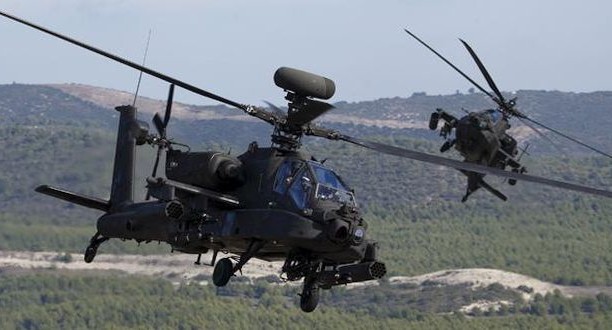
An Indian Air Force (IAF) training aircraft on a routine flight today crashed in a secluded area of Telangana’s Medchal district before bursting into flames. The pilot, however, escaped unhurt, the police said.The crash occurred around 11.45 am at Ankireddypalli village, 30 km from the Telangana capital, but the pilot ejected safely. The Kiran trainer aircraft had taken off from the Air Force Station at Hakimpet here, ACP (Kushaiguda Division) Syed Rafeeq said.“The pilot, Aman Pandey, ejected safely. The aircraft crashed around 2 km from the point where the pilot ejected. It crashed at an isolated place near an agricultural field and burst into flames,” said Rafeeq, after visiting the crash site.The officer said there was no damage on the ground as there were no houses or people at the crash scene.The ACP cited a villager who had spotted the aircraft flying low and later heard a loud explosion. “According to the villager, soon after crashing the aircraft burst into flames,” Rafeeq said.Rachakonda Police Commissioner Mahesh Bhagwat said IAF officials visited the scene of the mishap and took the pilot along. “Two fire tenders were rushed to the spot to douse the blaze,” he said.“The pilot is safe. A CoI (Court of Inquiry) will ascertain the cause of the accident,” an IAF statement said. On March 3, 2010, two pilots were killed after a Kiran MK-II plane, part of the “Sagar Pawan” aerobatic team participating at the India Aviation Show, crashed into a building here. — PTI