Sanjha Morcha

What’s New

Click the heading to open detailed news

Current Events :

web counter

Print Media Reproduced Defence Related News

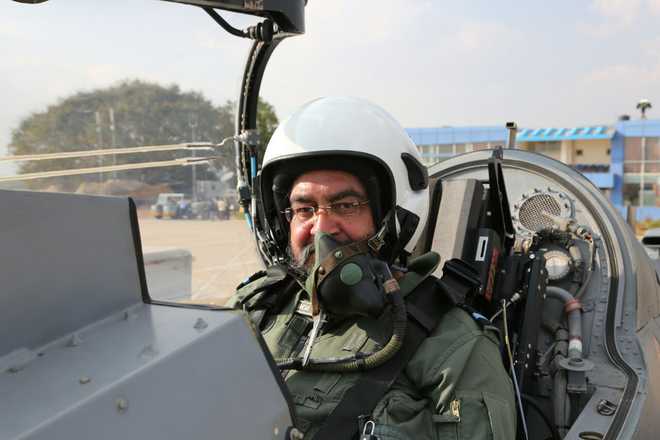
Rafale Deal: Political Slugfest Over Critical Defence Equipment Should Be Avoided

Generic, unsubstantiated allegations over critical equipment vitiate the defence procurement process and put decision-makers on the defensive

Rafale Deal: Political Slugfest Over Critical Defence Equipment Should Be Avoided

The pre-election political slugfest between the two major political parties on the Rafale aircraft deal inv­olves a cacophony of narratives being sold to the less-informed prospective voters, even as the truth is getting buried. A good weapon platform, bought after a gruelling and technically sound selection process followed by both the UPA and the NDA governments, is being sullied at the cost of national pride and honour. It is time for professionals to step in and put things in the correct perspective. It is important to understand the differences between the deal the UPA was pursuing but could not complete, and what the NDA has signed.

It was in 2001 that the Indian Air Force (IAF) first app­roached the government for 126 fighters to fill the gap bet­ween the Light Combat Aircraft (LCA) and the Su-30 MKI. When the procurement process for Medium Multi-Role Combat Aircraft (MMRCA) got rolling in 2007, it was stated that 18 aircraft will be bought outright and 108 will be built by the Hindustan Aeronautics Ltd (HAL). The six contenders were Boeing F-18 and Lockheed F-16 from the US, the French Dassault Rafale, the Eurofighter Typhoon, the Russian Mikoyan MiG-35 and the Swedish Saab JAS 39 Gripen. After meeting the technical parameters at extensive field evaluation trials, Rafale and Typhoon were shortlisted in April 2011. In January 2012, Rafale was announced the winner, based on lower life-cycle cost. Then began the final negotiations with the French company.

The deal, however, got stalled on two counts. Firstly, Dassault was unwilling to take responsibility for the quality control of aircraft produced by HAL due to reservations about the latter’s ability to accommodate the complex manufacturing technology, and also because it could not exercise any control over an Indian state-run company. It was perhaps an error to have made such a stipulation in the Request for Proposal because no one can ensure quality unless it has direct control over the organisation. Secondly, production man-hours indicated by HAL were 2.7 times more, which would greatly increase the cost and upset the calculations that had led to the initial choice of the lowest bidder. Given this background, it was legally untenable to go through with the MMRCA contract.

Interestingly, WikiLeaks exposed a confidential report by former US ambassador to India Timothy Roemer to the US Administration, in which it was said that “HAL was not competent to be a partner” of the American companies in the race for the MMRCA contract.

Dassault was not willing to be responsible for the quality ­control of the aircraft produced by HAL.

The deal for 126 aircraft was never signed. The cost estimates in the public domain in 2014 were anywhere between US$ 20-30 billion. The Ministry of Defence (MoD) under the NDA government that took over that year continued the process of negotiations with Dassault on the same lines as the UPA. By early 2015, it was clear that the deal was heading for a dead-end. Since the Defence Procurement Procedure (DPP) does not permit negotiations with the next lowest bidder (Eurofighter), the choices were limited. In view of the urgent need of fighter jets for the IAF due to depleting strength, in April that year, it was decided to go for a Government-to-Government (G2G) deal and increase the number of French-assembled aircraft to be bought to 36. The 126 aircraft tender was officially withdrawn on July 30, 2015, while the negotiations for the price of 36 aircraft stretched till September 2016.

The contract was finally signed for Euro 7.8 billion (US$ 9.1 billion). This reportedly includes weapons, training, rep­air facilities and spares package, among other things. Dassault is now contractually committed to provide performance-­based logistic support for five years to two squadrons against the earlier proposal to support only one. Further, it is committed to ensuring that a minimum of 75 per cent of the IAF fleet remains operationally available.

It is being alleged that the deal price is too high. Any cost comparisons must be for the total package—and in the ­absence of any earlier deal, it can only be conjecture. Egypt and Qatar ordered the Rafale around the same time. For 24 fighters each, Egypt paid Euro 5.2 billion and Qatar Euro 6.3 billion. Though the deals are quite different in terms of the overall package, but the ballpark figures are similar—in fact, cheaper for India.

“The approximate acquisition cost of the Rafale aircraft has already been provided to Parliament,” the MoD has clarified through a written reply to the Lok Sabha. “Provision of exact item-wise cost and other information will reveal, inter alia, details regarding the various customisations and weapons systems specially designed to augment the effectiveness and lethality of the assets, impact our military preparedness and compromise our national security.” Concerned with the controversy surrounding the purchase of a desperately needed fighter, the IAF chief had to go public and stress that the G2G deal was not only operationally better, but also cheaper.

The French government’s foreign affairs spo­ke­sman said, “France and India concluded in 2008 a sec­urity agreement, which legally binds the two states to protect the classified inf­ormation provided by the partner that could imp­act security and operational capabilities of the defence equipment of India or France.” Thus, these provisions naturally apply to the IGA (Inter Governmental Agreement) for 36 Rafale concluded on September 23, 2016. The 2008 agreement (signed during the UPA regime) must be honoured.

Worried about traditionally good diplomatic relations bet­ween the two countries, French President Emmanuel Macron had to immediately make a public statement about the secrecy clause. The good thing is that no one has questioned the due process having been followed.

Deals have often been mired in controversy. Wonder why such ruckus is rare in deals with Russia and the US.

India has signed G2G weapon deals with Soviet Union and Russia for decades. Similarly, the P-8I, C-17, C-130J, Chinook and Apache helicopters from US companies are all under Foreign Military Sales (FMS) route, which is in some ways akin to G2G. Such deals get sovereign backing of the government and are invariably cheaper.

Then there is the ‘offsets’ clause in the contract. To promote indigenisation, a robust offsets clause has been there in the DPP since the UPA days. The offsets were to ensure that for every dollar that went to a foreign arms supplier, 30-50 per cent got infused back into India for a defence-related investment or activity. The aim was to leverage capital acquisitions to develop the Indian defence industry, improve defence research and encourage the development of synergistic sectors such as civil aerospace and internal security. Defence offsets have been part of regulations of many countries, including the major arms suppliers.

In the Rafale deal, Dassault has to invest 50 per cent of the deal amount in any defence-related industry in India. For this, Dassault has to select Indian partners. The government has nothing to do with this selection as its role is limited to monitoring that offsets are as per the DPP. There was an offsets clause in the Pilatus PC-7 contract also, and they chose their Indian partners on their own.

Many defence deals such as Bofors and AgustaWestland got mired in controversies related to irregularities. One wonders why such ruckus is rare in deals with Russia and the US. The DPP is well laid out. All contingencies are clearly spelt out and expected to be followed by the book. The Comptroller and Auditor General oversees all irregularities and, if they exist, they can be handled as per the law of the land. In the Rafale deal, allegations appear to be generic and not substantiated. It is unfortunate that even after open tendering, painstaking technical evaluation, and endless negotiations, often in the public domain (though they should normally have been strictly confidential), such a spectacle is conjured midway through the contract execution.

Unsubstantiated political slugfest over critical defence equipment should be avoided as it not only shames the country internationally, it also vitiates the entire defence procurement process and puts decision-makers on the defensive. It also deprives the defence forces of critically required operational capability, impacting national security and even their morale.


(The writer is a test pilot)


Martyr cremated, govt job promised to kin

Our Correspondent

UNA, October 27

The mortal remains of Lance Naik Brajesh Kumar were consigned to flames in his native Nanavin village in Bangana of the district with full military and state honours.

The soldier, deployed with the 22 Rashtriya Rifles, had made the supreme sacrifice in Sopore, Jammu and Kashmir, two days ago during a militant attack.

An Army helicopter, carrying the body of the soldier from Jalandhar, landed at the playground of Government Senior Secondary School, Thanakalan, this morning. The martyr had studied in the school and used to play here. He had also participated in the state school kho-kho tournaments.

Teachers and students lined up on both sides of the road to pay their respects. The coffin, draped in the National Flag, was taken to his house for the last rites to be performed by family members and relatives. Brajesh’s wife Shweta and his mother almost fainted when the body reached home. They were consoled by relatives and locals. Brajesh also leaves behind a six-year-old daughter.

Amid slogans of “Amar Shaheed Brajesh and Vande Mataram”, Army officers carried the body for the last journey to the cremation ground where soldiers gave a gun salute. Local MLA and Rural Development Minister Virender Kanwar, BJP state president Satpal Singh Satti and DC Rakesh Prajapati laid wreaths on behalf of the state government and the district administration.

Recruited into the Army’s 14 Punjab Regiment in 2003, Brajesh was known to be a braveheart. He had returned to Jammu and Kashmir about 20 days ago for duty after spending some time with the family here.

Virender Kanwar later handed over a cheque for Rs 5 lakh on behalf of the state government to the soldier’s widow.

He said the state government had decided to give government job to one member of the family, besides bearing the entire expenditure of the martyr’s daughter education. He said a gate in memory of the soldier would be install at the entrance of the village, adding that a village link road would also be named after him.


Punjab’s relation to Panjab University Pritam Singh

The harm caused to Haryana for not having its own capital city, where Haryanvi culture could be valued and developed, has been deep. A new capital can have a new university suited to the needs of Haryana and resolve the PU status row.Punjab’s relation to Panjab University

Pritam Singh

Professor, Oxford Brookes University, Oxford, UKIn the context of the Haryana Chief Minister recently urging the Centre for restoration of Haryana’s share in Panjab University, Chandigarh, and its rebuttal by the Punjab CM, it is important to grasp the historical background. Panjab University, Chandigarh, is an inter-state body with hundreds of colleges in Punjab affiliated to it along with many regional centres of the university in different parts of Punjab. These colleges and regional centres are crucial to its functioning — administratively, academically and financially. They are at the core of the identity of PU. The funding of the university is shared between the Punjab government and the Central government, with a major part coming from the latter as the university is situated in Chandigarh which, unfortunately, is a Central government-controlled union territory since the flawed linguistic reorganisation of Punjab in 1966. Chandigarh is overwhelmingly a Punjabi-speaking city. This is an unquestionable social reality. To satisfy the conditions for empirically-based conclusions, the late Prof VN Tiwari had established the Punjabi-speaking character of Chandigarh through a survey of languages spoken by Chandigarh residents. He had published a book titled The Language of Chandigarh in 1967 based on that survey. The majority of Chandigarh residents are from the upper caste Punjabi Hindu background. While demarcating the boundaries of Punjab and Haryana during the linguistic reorganisation of pre-1966 Punjab, if the Central government had stuck to the linguistic principle, as it should have, Chandigarh would have been in Punjab. Had that been done, PU would have been in Punjab.Unfortunately, the religious/communal criterion was given prominence over the linguistic criterion and Chandigarh was allotted originally to Haryana. But sensing an explosive backlash in Punjab at this blatant discrimination, the city’s status was converted into a union territory. The glaring nature of the injustice to Punjab is clear from the fact that in the history of linguistic reorganisation of states in India, Punjab is the only state which upon such reorganisation was not allowed to keep its capital. On the face of it, a somewhat genuine attempt at undoing this injustice was made with the Rajiv-Longowal Accord in 1985 which stipulated that the first major step in implementing the Accord for peace in Punjab would be giving Chandigarh back to Punjab on January 26, 1986. That was not done under pressure of anti-Punjab lobbies within the Congress party which succeeded in influencing the Rajiv government that giving Chandigarh to Punjab would alienate Hindu voters in Haryana, with a cascading effect on Hindu voters in the neighbouring states in the Hindi belt. The communal/sectarian considerations again triumphed as they had in 1966. The Accord was dead that day and Punjab went into over a decade of further turmoil and violent conflict. The limbo status of Chandigarh as a UT and a joint capital city of Punjab and Haryana, apart from perpetuating injustice to Punjab, is not in the interests of educational and cultural development of Haryana. One of the ugly aspects of the regional dimensions of the Centrally-directed development path followed in post-1947 India that had implications for Punjab and Haryana was that the Punjabi elite that ruled Punjab from 1947 to 1966 treated Haryana almost as a colony for governance and took hardly any interest in the cultural, artistic and intellectual development of the Haryana people. Once freed from the shackles of Punjabi dominance in 1966, Haryana made impressive achievements in agriculture and industry. Where it did not do as well  were the cultural, artistic and intellectual domains. One glaring institutional gap in the new state for its cultural development was the absence of a state capital. A capital is not merely a set of buildings and administrative offices. It is supposed to be the nerve centre of the culture and life of the people of the state where people belonging to different zones of the state come together with a common identity. The capital city is a space of cultural identity and flowering of that identity. It is a creative venue for collective exploration and celebration of the songs, dances, paintings, sculptures, architectural experiments, theatre, films, museums, the collection of memory of the people through historical narratives — all relating to the people of the state and their relationship to the wider world. Chandigarh has the administrative offices as the capital of Haryana, but the city has no organic link with the people and culture of Haryana. The people of Haryana, their language and culture are viewed with contempt by the Punjabi-hegemonic culture of Chandigarh. Chandigarh may not be de jure capital of Punjab but culturally, it is de facto the capital city of Punjab. For the cultural renaissance of Haryana, having a capital city of its own, perhaps a new one, in an area of Haryanvi culture is of critical importance. One intellectual, DR Chaudhry, has had the wisdom to articulate this position once in these words: “Haryana badly needs a capital of its own and Chandigarh is the least suited for this purpose. It is a dead albatross around its neck. The earlier it is shed, the better it will be for Haryanvis.” Such a capital city can have a new university suited specifically to the cultural and educational needs of Haryana.A rationally arrived decision between the Centre, Punjab and Haryana to develop a new capital city for Haryana and giving Chandigarh back to Punjab would be of critical importance in reversing the damage done both to Punjab and Haryana. Such a solution will automatically resolve the question of the status of Panjab University.


FATF dissatisfied over Pak’s efforts to combat terror financing: Report

FATF dissatisfied over Pak’s efforts to combat terror financing: Report

In June, Pakistan had made a high-level political commitment to work with the FATF to address its strategic counter-terrorist financing-related deficiencies. File photo

Islamabad, October 20

Expressing dissatisfaction over Pakistan’s efforts to combat terror financing, a delegation of the Financial Action Task Force (FATF) has asked the country to take robust steps to strengthen its legal framework if it wants to avoid being blacklisted by the anti-money laundering watchdog, according to a media report on Saturday.

Currently placed on the FATF’s ‘grey list’, Pakistan has been scrambling in recent months to avoid being added to a list of countries deemed non-compliant with anti-money laundering and terrorist financing regulations by the Paris-based watchdog, a measure that officials here fear could further hurt its economy.

A nine-member team of the FATF’s Asia-Pacific Group (APG), which visited Pakistan from October 8 to October 19 to review the progress made by it on an action plan agreed in June to address global concerns, has finalised a report with 40 recommendations for de-listing Islamabad from its ‘grey list’ from September 2019.

However, the APG delegation has expre­ss­ed dissatisfaction over Pakistan’s progress to comply with international best practices against money laundering and counter-terror financing, the Dawn reported.

Quoting sources, it said the APG delegation, which shared its final findings with the authorities, has highlighted shortcomings on anti-money laundering front, control and monitoring of non-profit organisations and counter-terror financing mechanism as various institutions suffered poor interface of information sharing and action to combat these deficiencies.

Even in areas where legal framework was robust, the APG found the implementation as too weak, the report said.

Highlighting deficiencies in law, regulations and mechanisms and weaknesses of various institutions, the delegation said with this pace, Pakistan was unlikely to get out of the grey list.

The authorities, according to sources, were told in clear terms that Pakistan would have to make robust and significant progress from now onwards and before the next on-site review in March-April if it want to move out of the grey list or else would fall into the blacklist having serious consequences.

Officials of the ministries of interior, finance, foreign affairs and law besides the State Bank of Pakistan, the Securities and Exchange Commission of Pakistan, the National Counter-Terrorism Authority, the FIA, the Federal Board of Revenue, the National Accountability Bureau, the Anti-Narcotics Force, the FMU, the Central Directorate of National Savings and provincial counter-terrorism departments attended the briefings and explanations.

The APG would submit its draft report to the Pakistani authorities by November 19. The country was asked to submit its response to the findings within 15 days after the receipt of the report on the basis of which the APG would submit its interim report to the FATF in Paris.

The APG delegation will visit Pakistan again in March-April next year for another ‘on-site mutual evaluation’ whose report will be made public in July 2019.

The delegation also informed Finance Minister Asad Umar that the relevant agencies during their interactions with the APG were either ill-prepared or ill-informed or were unwilling to share information.

The visiting team included Ian Collins of the United Kingdom’s Scotland Yard, James Prussing of the United States Department of the Treasury, Ashraf Abdullah of the Financial Intelligence Unit of the Maldives, Bobby Wahyu Hernawan of the Indonesian Ministry of Finance, Gong Jingyan of the Peoples Bank of China and Mustafa Necmeddin Oztop of the Turkish Ministry of Justice.

The three members of the APG secretariat include Executive Secretary Gor­don Hook, Deputy Dire­ctors Mohammad Al-Rashdan and Shannon Ruther­ford.

In June, Pakistan had made a high-level political commitment to work with the FATF to address its strategic counter-terrorist financing-related deficiencies by implementing a 10-point action plan. The successful implementation of the action plan and its physical verification by the FATF will get Pakistan out of the ‘grey list’ from September 2019.

By January next year, Pakistan will have to identify and assess domestic and international terror financing risks to and from its system to strengthen investigations and improve inter-agency — FIA, SBP, SECP, banks, home and interior departments and associated agencies — coordination, as well as federal and provincial coordination to combat these risks.

The government will also have to complete the profiling of terror groups or suspected terrorists and their financial assets and strengths, besides their members and their family backgrounds, and make them accessible at the inter-agency level.

Besides, Pakistan will also have to complete investigation into the widest range of terror financing activities, including appeals and calls for donations and collection of funds, and their movements and uses. The outcome will have to be published at least twice before sep2019


Govt okays 3-fold increase in area for ex-servicemen clinics

Vijay Mohan

Tribune News Service

Chandigarh, July 21

Even as the Ex-servicemen Contributory Health Scheme (ECHS) struggles with budgetary constraints and functional issues, the Ministry of Defence (MoD) has accorded approval to enhance the land and plinth area for housing ECHS polyclincs by about three times of the existing norms.The move, which has serious financial implications, has been initiated to cater to the growing number of ECHS beneficiaries, especially in large cities, and also to improve the existing infrastructural environment and provide greater convenience to visitors.Depending on the footfall, ECHS has five types of polyclinics, categorised as A, B, C, D and E. The first four require a minimum dependency of 20,000, 10,000, 5,000 and 2,500, respectively, while E is a mobile polyclinic for area where the footfall is less than 2,500. The sanctioned number of polyclinics is 426, out of which 424 are operational.According to orders issued by the Adjutant General’s Branch in June, the built up area of A category has been increased from 5,000 to 14,440 square feet. For B and C categories, the area has been revised from 4,000 and 2,500 square feet, respectively, to 11,350 and 7,800 square feet, respectively. The area for D category has been hiked from 2,000 to 6,650 square feet.At present, the ECHS has a clientele of 52 lakh, including ex-servicemen and dependants, and this number is increasing consistently. Inadequate funding, shortage of medical staff, non-availability of medicines and unethical practices by some empanelled hospitals are among issues plaguing the scheme. Parliament’s standing committee on defence observed earlier this year that for long ECHS has not been getting adequate funds. For 2018-19, ECHS projected for Rs 4,686 crore under revenue head, but only Rs 3,226.76 crore has been provided.An internal MoD note pointed out that the “quantum jump” in area authorisation is estimated to cost Rs 200 crore for land alone, while the construction cost would be much more. The note suggests that in view of the financial constraints, expansion may be taken up on a case-to-case basis, depending on merit, urgency and actual load rather than across the board blanket approval for all polyclinics.

the rise in numbers

Types of Footfall  Past built-up Revised built-up polyclinics dependency area areaA 20,000 5,000 sq ft 14,440 sq ftB 10,000 4,000 sq ft 11,350 sq ftC 5,000 2,500 sq ft 7,800 sq ftD 2,500 2,000 sq ft 6,650 sq ft


Security situation ‘fragile’ along LoC : Army

There has been no change in terror infrastructure across the Line of Control after Imran Khan took charge as Pakistan prime minister, the Indian Army said on Wednesday and termed as “fragile” the security situation along the LoC due to continuous attempts by Pakistan to push infiltrators into Jammu and Kashmir.

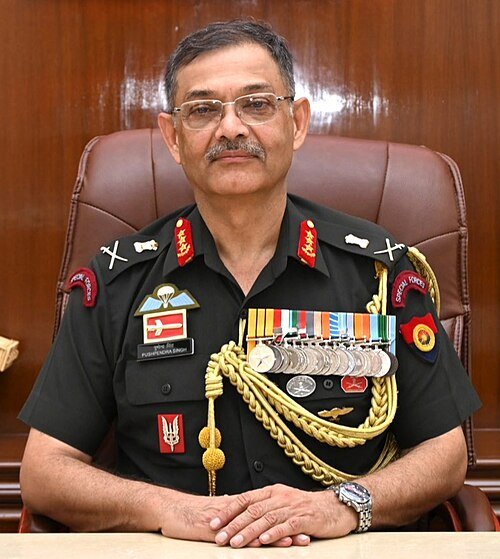
General Officer commanding in chief (GoC-in-C), Northern Command, Lt Gen Ranbir Singh also said that a winter strategy will be put in place along the LoC and other areas in J-K t ..

Read more at:
//economictimes.indiatimes.com/articleshow/66264616.cms?utm_source=contentofinterest&utm_medium=text&utm_campaign=cppst


Hear all states, UTs on power of police to register FIR against Army men: J&K to SC

Hear all states, UTs on power of police to register FIR against Army men: J&K to SC

The Bench said it would take up the matter on July 30. File photo

Satya Prakash
Tribune News Service
New Delhi, July 16
At loggerheads with the Centre on the Shopian firing incident, the Jammu and Kashmir Government on Monday requested the Supreme Court to hear all states and union territories to decide whether a state police can register an FIR against an Army man without prior sanction of the central government.In an interim application filed in the Supreme Court, the Jammu and Kashmir Government asserted that in terms of a 2014 Constitution Bench ruling police were obliged to register an FIR in incidents of cognisable nature and Army men could not be exempted from it. “Since the Union of India has taken a stand that is in conflict with the view taken by the Constitution Bench of this court and the Union de facto seeks to exclude the application of the judgment in the case of a specific class of persons (Army personnel in this regard), it is imperative that all State Governments in the Union of India be hard before the matter is decided,” the application filed through its standing counsel M Shoeb Alam stated.Since law and order was a state subject, accepting the Centre’s plea would directly affect the statutory powers of the police in all states across India with regard to registration of FIRs against Army personnel involved in cognisable offences, senior counsel Shekhar Naphade told a Bench headed by Chief Justice of India Dipak Misra behalf of the state.The Bench said it would take up the matter on July 30.“The CrPC (Criminal Procedure Code) mandates compulsory registration of FIR in a case where a cognizable offence is disclosed. No person-specific or class-specific exception is carved out in this principle to exclude any individual or class of persons against whom FIR should not be registered in a case where information of a cognizable offence is prima facie disclosed. The police officer concerned is duty-bound to register the FIR,” the application read.Contradicting New Delhi’s stand on Shopian firing, the State of Jammu and Kashmir has maintained that there was no need for sanction from the central government to register a criminal case against Army personnel.“Even under the AFSPA, The Army Act or under any other law in force, there is no prohibition of registration of FIR against an army personnel”, the Jammu and Kashmir Police had said in its affidavit filed last week. The affidavit was filed in response to a petition by Lt Colonel Karamveer Singh, father of Major Aditya Kumar of 10 Garhwal Rifles, for quashing of an FIR registered against the latter in connection with the death of three civilians in alleged army firing in Shopian on January 27. It had said sanction would be required only at the stage of taking cognisance by a court. Three civilians were killed on January 27 when Army personnel fired at a stone-pelting mob in Ganovpora village in Shopian, prompting the chief minister to order an inquiry into the incident.  An FIR was registered against the personnel of 10, Garhwal unit of the Army, including Major Kumar, under the Sections 302 (murder) and 307 (attempt to murder) of the Ranbir Penal Code. The affidavit, however, said the FIR “does not arraign” Major Aditya “as an accused”. Clarifying that “he is also not mentioned in the column of accused persons, it said no specific role had been attributed to Major Aditya in the FIR”.The Supreme Court had earlier stayed all proceedings against Major Aditya and said: “He is an army officer and not an ordinary criminal”.The affidavit was at variance with the stand of the Centre as Attorney General KK Venugopal had in March supported the petitioner and criticised the state of Jammu and Kashmir for registering a criminal case against a serving Army officer without sanction from the central government.


If need arises, we will go for surgical strikes again’

DHARAMSHALA: “Indian Army is capable of meeting any contingency or challenge along the borders,” said Lt Gen Ranbir Singh, General Officer Commandingin-Chief, Northern Command, on Wednesday.

“If need arises, the army can carry out surgical strikes again,” said Lt Gen Singh during the concluding ceremony of the first Inter-Services Paragliding Accuracy Championship held at Bir-Billing in Baijnath of Kangra district. “Who says what doesn’t affect army’s capabilities to carry out such operations. Let there be no doubt that Army remains committed and fully capable and whenever required any challenging task will be taken,” said Lt Gen Singh on a query about politics on surgical strikes.

Reacting to director general of Pakistan’s Inter Services Public Relations (ISPR) Maj Gen Asif Gafoor’s warning of carrying out 10 surgical strikes if India dared one, Lt Gen Singh said, “Indian Army is committed. We have resolve and whenever required we are capable to exhibit our capability. It doesn’t really matter what statements are being made from which quarter. It is important for us to retain our capability, refine our capability and to be prepared for any contingency at all times.”

On terror infrastructure in Pakistan, infiltration attempts vis-à-vis need of another surgical strike, he said, “Indian Army is prepared for a range of options. I want to assure that anytime when situation warrants, we will be able to take action which is deemed appropriate at that time. Surgical strike is only one of those options over wide spectrum of options available to the Army.”

On glorification of killing of Hizbul commander Manan Wani, he said, “We don’t get perturbed with poiticising or nonpoliticising of issues as long as we remain focused. We do not get carried away by politics behind any incident. That is where strength of armed forces lies.”


Fazilka soldier dies in Chhattisgarh Naxal ambush

Fazilka soldier dies in Chhattisgarh Naxal ambush

Mukhtiar Singh

Our Correspondent

Fazilka, July 15

A pall of gloom descended on Fattuwala village in Jalalabad subdivision of the district as its native Mukhtiar Singh (36), a constable with the BSF, was killed in an ambush by Naxalites in Chhattisgarh’s Kanker district on Sunday.Constable Lokender Singh of Rajasthan was also killed, while constable Sandeep Dey sustained injuries in the gunfight.The gunfight took place in a forest near Mahla camp of the BSF when a team of BSF’s 114th battalion was returning after carrying out an anti-Maoist operation. The injured jawan was airlifted to Raipur for treatment.Family members said Mukhtiar Singh had joined the BSF as a constable in 2002.Mukhtiar Singh’s relative Subeg Singh said Mukhtiar Singh’s leave was sanctioned and he was to come to his village on a holiday in a few days. Now, his body would reach the village on Monday. Sources said the body has been airlifted to Delhi. Subeg Singh said Mukhtiar’s cremation would be held in the village on Monday evening.He is survived by a 13-year-old son and a 10-year-old daughter, besides wife.


Adani Group betting big on its 1st Military UAV manufacturing facility in India

The Adani Group is betting big on the export market with its first military facility to manufacture Unmanned Aerial Vehicles (UAVs) set to become operational in Hyderabad this month.

The group which made a measured entry into the defence manufacturing business in 2015 will initially make the Hermes 900 UAV for an order from the Israeli defence forces and is looking for further options for exports in the global market.

The Russian government was earlier in talks with the company to potentially partner for manufacturing AK 103 assault rifles, though the Centre has now nominated state-run Ordnance Factory Board for the contract.

Top company executives told ET that the company plans to not limit the Hyderabad facility to UAVs and would upgrade it to manufacturing high-end helicopter gears by next year and is looking at India as a manufacturing hub for orders from across the globe.

“We got our internal approvals in December and will have the facility operational in October, in less than ten months that included land acquisition and construction,” Adani Defence and Aerospace head Ashish Rajvanshi told ET.

The company is looking to execute its first order for 12 UAVs through Adani Elbit Advanced Systems India Ltd (AEASIL), a joint venture, and will manufacture the entire fuselage of the Herme 900 UAV which will be exported to Israel for fitment of sensors and avionics. The joint venture is also hopeful to execute another order from a South East Asian nation shortly.

“This is not part of any offsets and is not dependent on any Indian order. We are proving our capability to be a part of the global supply chain. A capability that is not just India specific but one that is globally competitive,” Rajvanshi says.

The Adani Group is setting up a 20-acre facility near the Hyderabad international airport as its hub for manufacturing UAVs and other military products and has already sent over 40 engineers for training in Israel to run the plant.

After a subtle entry into the defence business in 2015, the Adani group has secured several licenses for manufacturing military products but formally announced its plans in September 2017 for collaboration with Swedish firm Saab that will compete for an order to supply fighter jets for the Indian Air Force.

ET has reported that the Adani’s joint venture company had responded to a request for information by the Indian defence ministry for a new fleet of medium weight unmanned aerial vehicles. While the procurement process has not progressed, India requires close to 200 new UAVs for the three services to meet an increasing demand for surveillance platforms.