Year ender: Drone sightings, blackout drills and waterlogging left Jalandhar residents coping with daily challenges
The year 2025 will be remembered as a time when the distant idea of war abruptly entered everyday conversations, homes and classrooms. For residents of Jalandhar district, tension between India and Pakistan, transformed routine life into days and nights marked by fear and uncertainty. The residents spent sleepless nights listening to loud explosions, suspected drone attacks and emergency alerts echoing across the city.
For two to three consecutive nights, panic gripped Jalandhar as residents reported hearing booming sounds overhead. Children, who had never experienced such an atmosphere, were visibly frightened, while adults struggled to reassure their families amid rapidly changing developments.
As anxiety spread, its impact became visible on the streets and inside markets. Supermarkets and grocery stores witnessed panic buying, with long queues forming as early as opening hours. People stood with loaded carts, waiting to stock up on essentials. Wheat flour, rice, pulses, cooking oil and other daily-use items were purchased in bulk, as families prepared to survive for weeks indoors if the situation escalated further. Store owners reported an unusual surge in demand. The fear was not limited to supplies. Migrant workers and families living away from their native places began leaving the city, hoping to find safety in their hometowns.
The Jalandhar Commissionerate Police had also rolled out strict security measures to prevent any untoward incident. Police Commissioner issued a series of directives aimed at tightening surveillance across the city. Hotels, motels, guest houses and inns were instructed not to accommodate any individual without verified identity documents. “All guests must submit a self-attested copy of a valid government-issued photo ID, and their mobile numbers must be verified by the establishment,” the Commissioner said, underlining the need for vigilance during the tense period.
The announcement of a one-hour mock drill involving a complete blackout further told about the gravity of the situation. When the drill was conducted for the first time, near-total compliance was observed, especially in Jalandhar Cantonment, where lights went out promptly. Streets fell silent, windows were darkened and residents followed instructions with discipline, aware that preparedness could save lives in a real emergency.
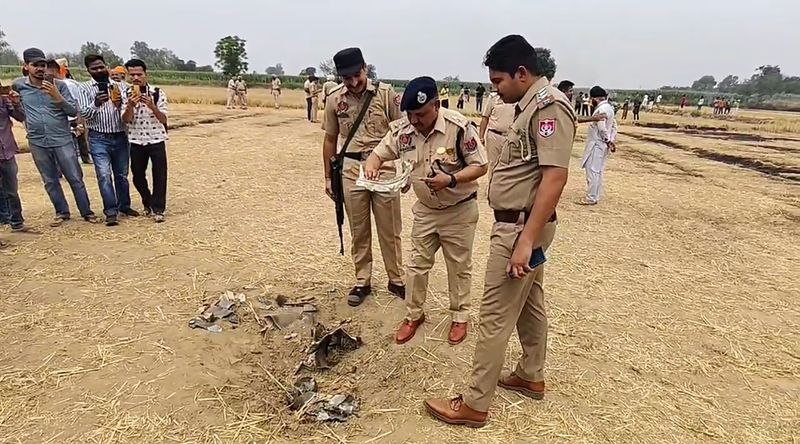
The most alarming episode unfolded on the night of May 9–10, when multiple drone sightings and missile-related incidents were reported. Intermittent explosions were heard across parts of Jalandhar, intensifying panic. In Kangniwal village near Adampur, residents were jolted awake around 1.30 am by a loud blast. Villagers who stepped outside later discovered missile debris scattered nearby.
Soon after, the district administration imposed an immediate blackout at 1.30 am, which remained in force until 6 am. Officials urged residents to stay indoors and avoid spreading rumours. Missile debris was also reported from Mand Maur village near Kartarpur and Rampur Khalian village near Phagwara.
Issuing an official statement, the Deputy Commissioner confirmed that Jalandhar was on red alert, adding that “many objects were seen and were neutralised by the armed forces.” Citizens were repeatedly advised to remain calm and limit outdoor movement. In response to the evolving situation, the Punjab government ordered the closure of all educational institutions for three days, prioritising student safety amid the escalating border tensions.
As calm gradually returned, 2025 left behind more than just memories of fear. For Jalandhar, Operation Sindoor was not just a military operation, it was a moment when war felt uncomfortably close to home.
In 2025, the city also witnessed continuous rainfall lasting for several days, bringing normal life to a standstill across Jalandhar. The persistent downpour flooded major roads, submerged key intersections, and caused severe traffic disruptions, leaving commuters struggling to navigate waterlogged streets. Several residential areas were also affected as rainwater entered homes and low-lying localities.
According to a preliminary assessment conducted by the district administration, more than 300 houses in Jalandhar district suffered full or partial damage due to the heavy rainfall. In view of the worsening situation, the Punjab state government had also announced an eight-day closure of schools across the city due to flooding and safety concerns. The rains also resulted as a setback to students’ academic schedules.
Owing to the incessant rains and forecasts of more downpours, Deputy Commissioner Jalandhar, Dr Himanshu Aggarwal, also ordered that all private and government, elementary and secondary schools in the district remain closed. He said the decision was taken as students and teachers were facing significant difficulties in commuting amid flooded roads and adverse weather conditions.
Frozen passes, unyielding resolve: The saga of Ladakh’s defenders
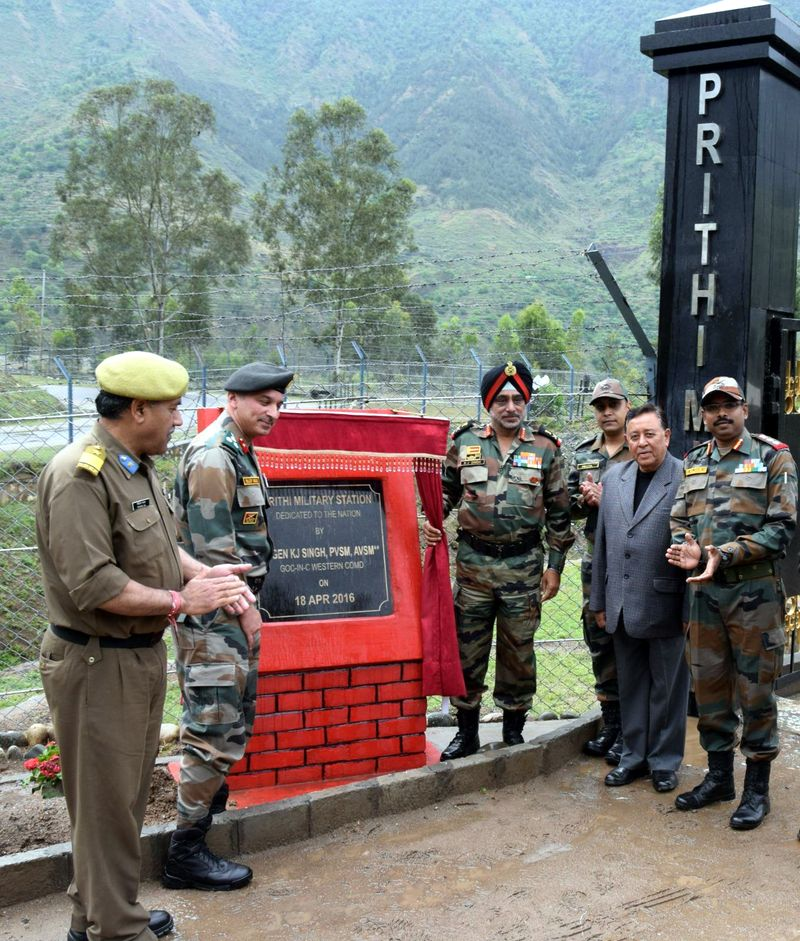
Fearless Tales: Major Thakur Prithi Chand volunteered to lead a small band of just 18 soldiers | Awarded Maha Vir Chakra on August 15, 1948
In the frozen heights of Ladakh during the Indo-Pakistan War of 1947–48, one of independent India’s most inspiring military epics unfolded under the leadership of Major Thakur Prithi Chand of the 2nd Dogra Battalion. At a time when Ladakh stood isolated, vulnerable and under imminent threat from advancing Pakistani forces, Prithi Chand’s actions proved decisive in safeguarding this strategically vital region for India.
Brothers in arms: Major Thakur Prithi Chand and Major Thakur Khushal Chand at Naushehra railway station in February 1947.
Between mid-February and early March 1948, under some of the harshest winter conditions imaginable, Major Prithi Chand volunteered to lead a small band of just 18 soldiers into Ladakh. The force consisted largely of Lahauli Buddhists serving in 2nd Dogra Battalion, the men accustomed to hardship, but unprepared for the extremes that lay ahead.
Accompanied by his younger cousin Major Kushal Chand and their uncle Subedar Thakur Bhim Chand, Prithi Chand led this group across the treacherous Zoji La pass — 11,000 feet high and buried under more than 20 feet of snow — without specialised winter equipment. This perilous march alone stands as a remarkable feat of endurance and determination.
Commander in Chief’s congratulatory letter to Col Thakur Prithi Chand on receiving the Maha Vir Chakra.
On reaching Leh, the trio immediately set about organising the defence of Ladakh. Major Prithi Chand took command of two platoons of Jammu and Kashmir State Forces and rapidly raised and trained nearly 200 local militia. By May 1948, the situation had deteriorated sharply. Pakistani forces had overrun much of Baltistan, captured Kargil, and were advancing towards Leh through the Indus and Nubra valleys. With minimal resources, scant ammunition, and a vast front stretching across hundreds of miles, Major Prithi Chand adopted innovative guerrilla tactics to stall the enemy advance.
Displaying extraordinary mobility and leadership, he personally led raids and ambushes, often appearing in one valley one day and another many mile away the next. Living largely on sattu and enduring extreme physical strain, Prithi Chand and his men succeeded in holding the enemy at bay until reinforcements could be flown in. Their efforts not only delayed the invasion, but preserved Ladakh for India at a critical moment in the conflict.
Col Thakur Prithi Chand with his wife Rukmani Devi.
For his exceptional courage, leadership, and indomitable spirit, Major Thakur Prithi Chand was awarded the Maha Vir Chakra on August 15, 1948. Major Thakur Kushal Chand also received the Maha Vir Chakra, while Subedar Bhim Chand was honoured with the Vir Chakra and bar. In fact, Bhim Chand was the first in the country to get two Vir Chakras. Together, their actions in Ladakh remain a timeless testament to sacrifice and heroism, etched permanently into the annals of Indian military history.
Upon his promotion to the rank of Lieutenant Colonel in 1950, Chand was given the command of the 3rd Battalion of the 11th Gorkha Infantry Regiment. He retired as a Colonel in 1962.
Born in the village of Khangsar Khar in Lahaul, Col Thakur Prithi Chand hailed from the distinguished house of Kolong, which governed the remote region of Lahaul during the British era. He was the third son of Thakur Amar Chand, the Wazir of Lahaul and a World War I veteran who served in Mesopotamia and was honoured with the title of Rai Bahadur.
Deep historical ties bound the Thakurs of Lahaul to Ladakh through marriage, shared culture, language, and faith—connections that later shaped Col Thakur Prithi Chand’s commitment to the region.
Educated at Kullu High School and Shri Pratap College, Srinagar, Prithi Chand was compelled to leave his studies unfinished to shoulder family responsibilities following his elder brother’s illness. This early assumption of duty foreshadowed a life defined by service.
Married to Rukmani Devi, the couple had no issue. Presently, Shamsher Thakur and Milap are carrying the legacy of this brave heart who dedicated his life for the sake of his beloved motherland.
A devout Buddhist, Col Thakur Prithi Chand remained committed to social and cultural causes after retirement, serving as president of the Himalayan Buddhist Society in Manali. His life remains a powerful testament to sacrifice, resilience and unwavering devotion to the nation.
Army, J&K Police intensify vigil in Chenab valley to thwart terror threat
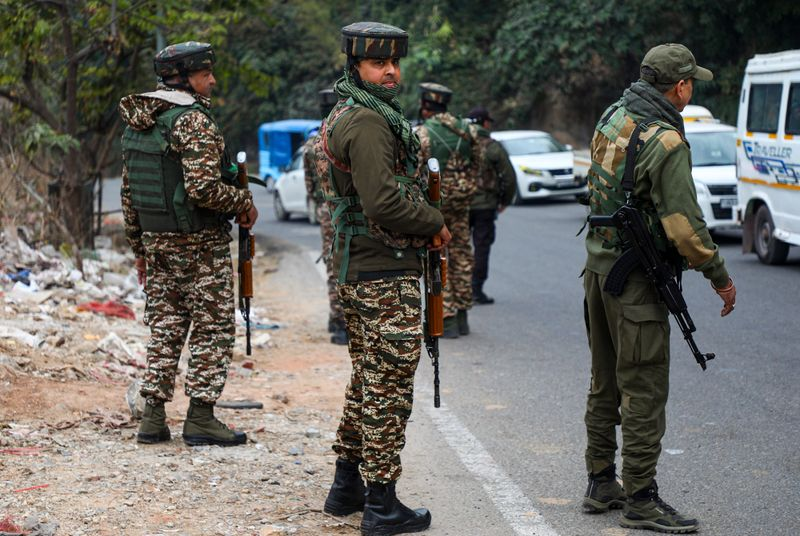
Braving sub-zero temperatures, the Army and the Special Operations Group (SOG) of Jammu and Kashmir Police have intensified their vigil in the high altitude areas of Chenab valley district to counter any attempt by terrorists to disrupt New Year celebrations, officials said on Wednesday.
A massive counter-terrorist operation has been underway since last week in the upper reaches of Doda, Kishtwar and Ramban districts of Chenab valley, including the snow-bound areas and adjoining Udhampur, Reasi and Kathua districts, besides Rajouri and Poonch districts.
According to intelligence assessments, around 30 to 35 Pakistani terrorists are currently active in the forests of the Jammu region, and the operation to flush them out intensified after the recent snowfall in the higher reaches. The security forces are expecting the terrorists to shift to lower areas close to human habitat before the complete closure of the mountain passes.
“Intelligence inputs suggested terrorist groups active in Doda, Kishtwar and parts of Udhampur district bordering Bhaderwah since the last two years could attempt to disrupt New Year celebrations by exploiting dense fog, extreme cold and difficult terrain,” a police officer said.
He said the anti-terrorist operations are focused on the higher, middle and upper mountainous areas where the terrorists are believed to be hiding away from the populated areas.
The intensified operations by troops of the Rashtriya Rifles and the SOG have also extended to Bhalessa bordering the Chamba district of neighbouring Himachal Pradesh, officials said.
BJP leader and Bhaderwah MLA Daleep Singh Parihar lauded the forces for the ongoing operations and said this is a testament to the continuous sacrifices made by the armed forces to safeguard the nation and the people of the country.
“We salute the security personnel who spend holidays away from their families to protect not only the national borders but also the scattered population residing in the vast mountains vulnerable to terrorist attacks,” he said.
Hailing from Bhalessa, Parihar said the Army is present everywhere in the hills to counter the terror threats. “If we are living in a peaceful atmosphere here and celebrating New Year like elsewhere in the world, it is only because we have faith that the Army is here to protect us,” Parihar said.
Commending the personnel of the Rashtriya Rifles and the SOG for maintaining tight vigil despite testing circumstances like harsh winters and treacherous hilly terrain, the local residents of Bhallesa said they have complete faith in the Army.
“When the entire world is welcoming 2026, our brave Army and J&K Police in Doda and Kishtwar districts are spending these harsh winter days in relentless anti-terror operations in the dense forests and tough mountainous terrain,” Firdous Khanday, a local from Gandoh Bhalessa, said.
Despite sub-zero temperatures and severe weather challenges, and difficult terrain, he said the forces remain fully committed to neutralising the threats posed by terrorists and maintaining peace in the region.
“Their resolve to counter terrorists stands as a symbol of courage. We live in safety only because of the unmatched dedication and bravery of our forces,” Khanday said.
Air Marshal Nagesh Kapoor takes charge as Vice Chief of Air Staff
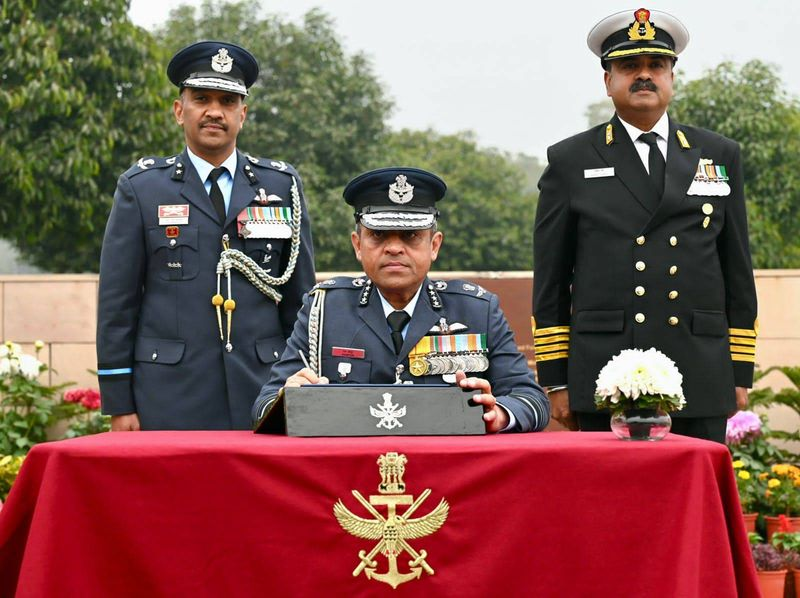
Air Marshal Nagesh Kapoor on Thursday took charge as the IAF’s Vice Chief of the Air Staff.
Prior to this appointment, he served as the Air Officer Commanding-in-Chief of the South Western Air Command (SWAC).He succeeds Air Marshal Narmdeshwar Tiwari, who retired on Wednesday after four decades of illustrious service to the nation.
“Air Marshal Nagesh Kapoor assumed the appointment of Vice Chief of the Air Staff, IAF on 01 Jan 26. Commissioned into the Flying Branch of IAF in Dec 1986, he has a rich experience of flying on various fighter and trainer aircraft of the IAF,” the Indian Air Force (IAF) said in a post on X.
He took charge as the Vice Chief of the Air Staff at the Vayu Bhawan here. Air Marshal Kapoor was accorded a Guard of Honour.The air officer also laid a wreath at the National War Memorial here and paid tribute to the bravehearts.
India, Pakistan exchange list of nuclear installations
Continuing an over three-decade practice, India and Pakistan on Thursday exchanged a list of their nuclear installations under a bilateral pact that prohibits the two sides from attacking each other’s atomic facilities.
The exchange of the list came even as the ties between the two countries remain under deep freeze following four-day military hostilities last May.
The list exchange took place under the provisions of an agreement on the prohibition of attack against nuclear installations and facilities, the Ministry of External Affairs (MEA) said.
It was done simultaneously through diplomatic channels in New Delhi and Islamabad.
“India and Pakistan today exchanged, through diplomatic channels, simultaneously at New Delhi and Islamabad, the list of nuclear installations and facilities, covered under the agreement on the prohibition of attack against nuclear installations and facilities between India and Pakistan,” the MEA said.
The agreement was signed on December 31, 1988, and came into force on January 27 1991.
The pact mandates the two countries to inform each other of nuclear installations and facilities to be covered under the agreement on the first of January of every calendar year.
“This is the 35th consecutive exchange of such lists between the two countries, the first one having taken place on 1 January 1992,” the MEA said in a brief statement.
No China role in truce with Pak, says India as Opposition targets govt
Ceasefire with Pak was negotiated through DGMO-level talks, reiterates New Delhi
A day after China claimed credit for mediating between India and Pakistan during the brief but intense military confrontation in May, New Delhi on Wednesday firmly rejected the assertion.
Sources within the Indian establishment dismissed the claim outright, maintaining that the ceasefire was a strictly bilateral military arrangement. “The ceasefire between India and Pakistan was directly negotiated through the DGMO channel. India has already responded to such claims multiple times in the past and put them to rest,” a senior official said.
Earlier, speaking at the Symposium on the International Situation and China’s Foreign Relations, Chinese Foreign Minister Wang Yi said Beijing had played a role in easing “the tensions between Pakistan and India,” projecting China as a responsible global actor guided by “fairness and justice”.
“Following this Chinese approach to settling hotspot issues, we mediated in northern Myanmar, the Iranian nuclear issue, the tensions between Pakistan and India, the issues between Palestine and Israel, and the recent conflict between Cambodia and Thailand,” Wang said.
Notably, US President Donald Trump has also, on multiple occasions in the past, sparked diplomatic rows by claiming that he had personally intervened to stop a war between India and Pakistan, publicly stating that he used trade leverage to pressure both sides into de-escalation.
India has consistently and categorically denied any third-party role — whether by Washington or Beijing. New Delhi maintains that the ceasefire followed a request from Pakistan and was concluded through established military-to-military channels. External Affairs Minister S Jaishankar has earlier told Parliament that India does not accept mediation in bilateral matters and that decisions on national security are taken independently and in accordance with sovereign interests.
China’s latest remarks, seen in New Delhi as part of its broader effort to project itself as a global peacemaker, add another layer to competing international narratives over the brief but consequential India-Pakistan standoff.
Meanwhile, Congress general secretary and MP Jairam Ramesh questioned the government, seeking clarity on China’s alleged role in the ceasefire decision. In a post on X, Ramesh said Trump had claimed on at least 65 occasions, across multiple countries, that he personally intervened to stop Operation Sindoor, while PM Narendra Modi had remained silent on the assertions.
He said the issue had gained fresh relevance after the Chinese foreign minister also claimed that Beijing had mediated between India and Pakistan. Ramesh recalled that on July 4, 2025, Deputy Chief of Army Staff Lt Gen Rahul Singh had publicly stated that India was effectively confronting China during Operation Sindoor, underlining that Beijing was decisively aligned with Pakistan at the time.
Against this backdrop, he said Chinese claims of mediation were troubling and raised serious concerns about how the operation was brought to an abrupt end. Ramesh warned that such assertions contradicted what Indians had been told about the operation and risked weakening the credibility of India’s national security narrative. He also linked the issue to the broader state of India-China relations, alleging that New Delhi’s re-engagement with Beijing had taken place largely on Chinese terms, and cited the Prime Minister’s June 2020 statement following the eastern Ladakh standoff as having weakened India’s negotiating position.
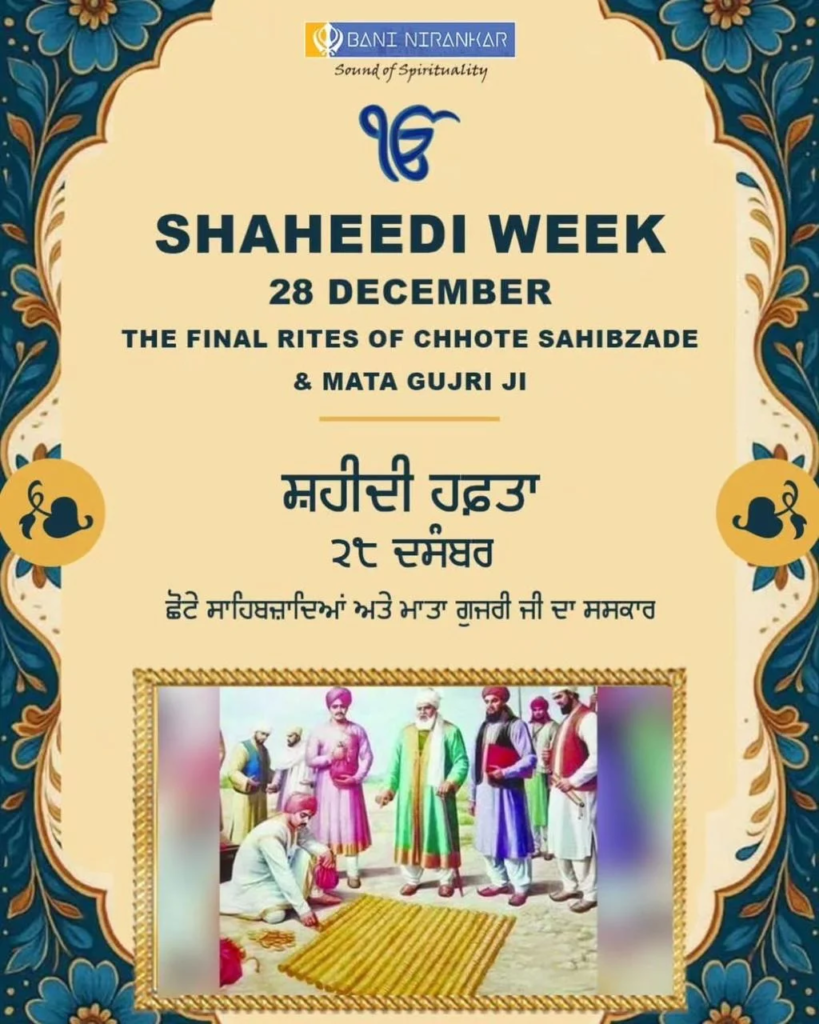
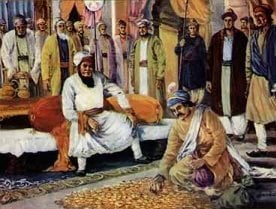
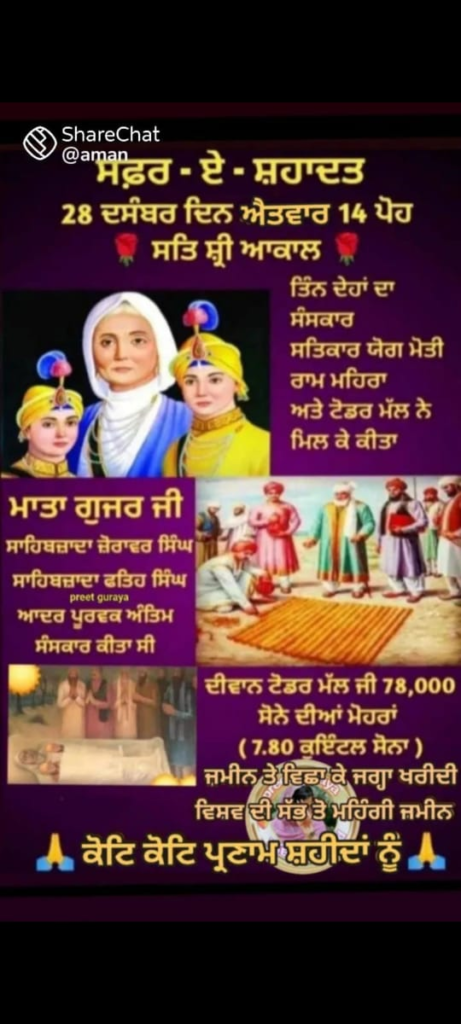
n Sikh history, he is remembered for buying a small piece of land at a very huge price, reputed to be the world’s costliest land ever bought, for the cremation of the dead bodies of Mata Gujri, the mother and Sahibzada Zorawar Singh and Baba Fateh Singh, the two younger sons of 10th Sikh Guru, Guru Gobind Singh in 1704 A.D, by paying an exorbitant price to the Wazir Khan ‘Governor Of Sirhind’. He had to cover the whole piece of land with gold coins (ashrafis) in a vertical position, as he was asked to vertically place gold coins on the land and only that much land was given to him which he could cover with gold coins. He later also made arrangements for their cremation.[4] But, according to Harjinder Singh Dilgeer, the bodies of all the three were cremated by the descendants of Todar Mall Shahjahani because the latter had already died in 1665–66.[5]
Todar Mal, however had to bear the brunt of Wazir Khan’s wrath, and he and his family had to abandon the haveli soon after, and themselves faded into oblivion, with dilapidated building being their only reminder. In the coming years, the haveli fell into rapid disrepair, and collapsed at many place. Though it survived ransacking of Sirhind by Banda Bahadur and during the reign of The Sikh Confederacy, the haveli was left untouched out of respect for Diwan Todar Mal.[6][7]
Legacy
Today, Gurdwara Jyoti Sarup stands where these three martyrs were cremated and the road connecting the two Gurdwaras is known as Dewan Todar Mal Marg. Even today Diwan Todar Mal is deeply respected by the Sikhs and a Diwan Todar Mal Memorial Hall, congregation hall has been constructed at historic GurudwaraFatehgarh Sahib by SGPC.[8][9]
This incident occurred after the Sahibzade had been executed by the Mughal authorities on the 12 December 1705 for not renouncing their faith and the death from shock of their grandmother at the news of the sudden and despicable execution of the innocent youngsters. This wealthy merchant had to cover the required ground for cremation with gold coins to get the release of the three bodies.
The Compassionate Sikh
Diwan Todar Mal Gate in Sirhind
The compassionate Sikh trader of Sirhind, according to tradition, performed the last rites for the two younger sons of Guru Gobind Singh Ji martyred on the orders of Wazir Khan, faujdar of Sirhind, and of Mata Gujari, the Guru’s mother. It is said that landowners around the Sirhind Fort would not permit him to hold the cremation in their fields, until one Chaudhari Atta agreed to sell him a plot.
The administrator’s stipulation was that the buyer (Todar Mall) will take only as much of the space as he could cover with gold mohars (gold coins), that he would lay out for the purchase. The diwan produced the coins and bought the piece of land he needed for the cremation. It is estimated (see below) that at least 7,800 gold coins were required to buy the required land.
History tells us the Seth ji raised the required number of coins and that he cremated the three bodies and putting the ashes in an urn which he buried in the land he had bought. The site is now marked by Gurdwara Jyoti Saroop at Fatehgarh Sahib, near Sirhind.
Dewan Todarmal Marg
Modern historians have tried to identify Seth Todar Mall as a son or later descendant of Raja Todar Mall, of Sirhind, who won renown as an administrator under the Mughal emperors, Shah Jahan and Aurangzeb, and who, according to Shah Nawaz Khan, Ma’asir ulUmara, lived up to 1076 AH/AD 1666. To perpetuate the memory of the noble-minded Seth, a road in Sirhind town and a hall in Gurdwara Fatehgarh Sahib have now been named after him.
The Haveli Todar Mal also known as Jahaz Haveli is situated on the eastern side of Sirhind-Ropar Railway Line just 1 kilometre away from Fatehgarh Sahib. These are the remains of the Haveli of Devan Todar Mal, and a fine building it must have been in its hay day. Todar Mal was a true Sikh of Guru Gobind Singh Ji. In the dark days when Guru Sahib made his way through the jungles of Machhiwara, and his younger sons were put on trial by Zikharia Khan many Sikhs betrayed the Guru.
As the tenth Guru made his way from Machhiwara through to Talwandi Sabo many so called devotees asked Guru to leave their premises as they were in fear that if the authorities were to hear of it then they would be persecuted. But not Todar Mal, he did not shirk his responsibilities, he put the Guru’s needs before everything.
With Mata Gujri and the younger sons of the Guru – Baba Zorawar Singh and Baba Fateh Singh – shaheed (martyred) at the tender ages of 9 and 6 the despicable Mughal authorities refused their funeral rites on government land, it was decreed that there funeral rites could only be performed on land bought from Chaudhari Atta. Not only this, but the land could only be bought by laying gold coins (ashrifs) on the required area, possibly vertically.
Todar Mal did not shun his responsibility and laid down the required coins and made arrangements for the cremations.
Let us look at this in a little detail, say that a gold coin has a diameter of around 3cm and would take up an area of (3 x 3 ) 9cm squared. The land required for the martyred children would be approximately 2.0m by 2.0m a total area of 40,000 cm squared if laid next to each other. Add to this the area required for Mata Ji (2.0m by 1.5m) if the coins were laid horizontally then to cover this area would require around 7800 gold coins. Now, if the coins had to be stacked vertically then possibly 10 coins would be needed to cover the 9cm squared area, so vertically 7800 x 10 coins would be required, or 78,000. That is an awful lot of gold coins today, one can only imagine how much they were worth three hundred years ago. It is safe to say it was probably his life’s savings. Maybe he had to beg and borrow to raise the total amount, who knows, but the fact remains this was truly a noble deed. Todar Mal forsake everything for his love of Guru Gobind Singh Ji, which is the reason why Sikhs hold Dewan Todar Mal in such high esteem.
A splended Gurdwara, Gurdwara Jyoti Saroop, now stands at the place where these three martyrs were cremated. This Gurdwara is at a distance of about a mile to the east of the main Gurdwara at Fatehgarh Sahib and the road connecting the two Gurdwaras is known as Diwan Todar Mal Marg and a commemorative gate called the Diwan Todar Mal commemorative gate has also been built on this connecting road. A spacious congregation hall has been constructed by the sikhs at Fatehgarh Sahib to commemorate his noble service which is a symbol of the great respect the sikhs have for the Dewan.
Since all historic sites have now been destroyed and covered by such beautiful slabs of marble it is hard to envisage the type of Havali that Guru Gobind Singh Ji and his 40 Sikhs took over at Chamkaur Sahib. By looking at the above images of Devan Todar Mals’ haveli one can get an idea of the types of structure they were. This sweeps away the notion that a haveli was some sort of ramshackle building or wooden stables, rather they were solid buildings which could be defended against a potential siege situation, which is exactly what happened at Chamkaur Sahib. It is now easier to see how Guru Ji and 40 Singhs held out in such a building while around them the enemy hordes laid siege.
Diwan Todar Mal Jain of Sirhind, a local businessman, was an ardent follower of the Sikh Gurus. His richness could be gauged from his lavish haveli “Jahaz Mahal”. Constructed just outside the Mughal Governor Nawab Wazir Khan’s palace, Diwan Todar Mal’s haveli boasts of a grand reception area to receive and entertain guests and a well laid-out ground complete with a pool and fountains.
Little did he know that fate would bring him to a point where he would have to choose between his faith and fortune. And he sacrificed fortune at the alter of faith. At the end of 1704 A.D. the young Sahibzadas of Guru Gobind Singh Ji,Baba Zorawar Singh and Baba Fateh Singh, were captured and bricked alive by Nawab Wazir Khan of Sirhind. When nobody had the courage to cremate the Sahibzadas, Diwan Todar Mal risked his life and took possession of the bodies.
Todar Mal covers the ground with gold coins to get release of the bodies of the Sahibzade and Mata Gujari
Immediately a royal order was issued, stating that the last rites could not be preformed on Mughal land. The Diwan had to buy land for cremating the Sahibzadas. He ensured that the last rites of the two were performed with full respect. But for this he had lose the peace and prosperity for his own family. Bankrupt and a victim of Nawab Wazir Khan’s wrath the family fled their beautiful home and eventually faded into oblivion.
The only palpable testimony to their existence is the haveli, which stands forlorn. Diwan Todar Mal gained immortality with this act and became a legend. The haveli has withstood the ransacking and destruction of Sirhind by Banda Singh Bahadur. The Sikh Confederacy left the haveli untouched out of great respect for Diwan Todar Mal. Unfortunately, the respect did not endure down the ages and unscrupulous people occupied its gardens and started taking away wood and bricks, causing the fall of certain portions. Nature too left its mark on the beautiful haveli in the absence of any caretaker. Successive governments too could not find time, effort or money to spare on the historical building.
Now Punjab Virasat Charitable Trust under Mr S.K. Ahluwalia, Deputy Commissioner, has formed a charitable association to acquire and restore the haveli to its former glory and to acquaint the people about the sacrifice and selflessness behind it.
TODAR MAL SACRICED HIS WEALTH AND FAMILY TO BUY LAND FOR CREMATION OF SHAIBZADAS AND MATA GUJRI