Sanjha Morcha

What’s New

Click the heading to open detailed news

Current Events :

web counter

Print Media Reproduced Defence Related News

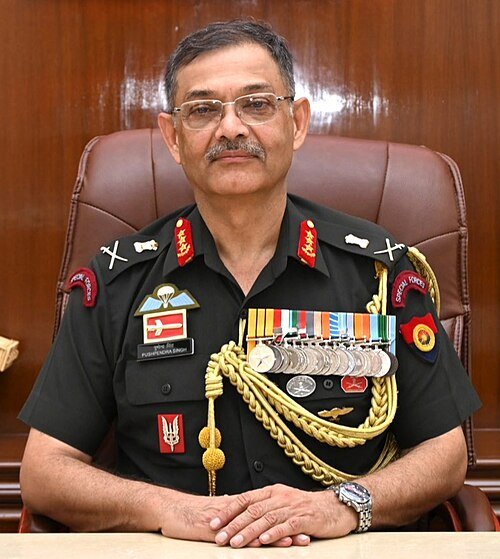
Lt Gen Anbu reviews security situation in north Kashmir

Tribune News Service

Srinagar, January 1

General Officer Commanding-in-Chief of the Northern Command Lt Gen D Anbu on Monday visited the Army units in north Kashmir to review the prevailing security situation, a spokesman said.During the visit, Lt General Anbu was briefed about the winter preparedness and measures taken to meet the challenges posed by weather.“The Northern COmmand chief interacted with the troops on the ground and conveyed New Year greetings to them. He complimented them for their determination and alertness in counter-terrorist and Line of Control operations in 2017,” the spokesman added.Lt General Anbu asked the soldiers to continue to face new challenges with utmost professionalism.


MEMORIES FLOW AS CAPT. AMARINDER HOSTS NDA BATCH MATES FOR A REUNION AFTER 58 YEARS

Captain hosts NDA batchmates

Captain hosts NDA batchmates
CM Capt Amarinder Singh with his NDA peers during a reunion in Chandigarh on Sunday. Tribune photo

Tribune News Service

Chandigarh, December 25

Chief Minister Capt Amarinder Singh hosted his batchmates from the National Defence Academy (NDA) for a dinner on Sunday evening.An official press release said here today that 57 batchmates of the Khadakwasla-based academy shared six-decade-old memories and experiences of their days of training and service.Having grown up seeing the uniform and enamoured with arms since his childhood, the Chief Minister said joining the Army and serving the country was the only life he had dreamt of.His batchmates remembered Amarinder as a distinguished cadet, who captained the riding and polo team at NDA. The CM had served in the 2nd Battalion of the Sikh Regiment – a battalion in which his father and grandfather had served with distinction before him.On the occasion, the CM released a book “Tryst with Perfidy”, authored by Lt Gen Kamal Davar, former Chief of Defence Intelligence Agency.Those present on the occasion included retired officers Lt Gen GS Sihota, Lt Gen BM Kapur, Lt Gen Natarajan, Lt Gen Kamal Dawar, Maj Gen MS Parmar, Lt Gen Prakash Suri, Lt Gen Naryain Chatterjee and Maj Gen Gurjeet Singh Randhawa.

Capt Amarinder hosts NDA batchmates for reunion after 58 yrs

CHANDIGARH: In a reunion which revived ties that go back nearly 58 years, Punjab chief minister Captain Amarinder Singh on Sunday night hosted his batchmates from the National Defence Academy (NDA) for a rare dinner.

Amarinder’s 57 batchmates from NDA Khadakwasla near Pune came together to recall shared memories and experiences of their days of training for the defence services and the years gone by. The reunion also gave the men an opportunity to catch up with each other’s lives since they last met, as they went on a spree of discovery about their years post their service stints, according to an official release.

The CM said that joining the army and serving the country was the only life he had dreamt and fantasised about. Nearly six decades seemed to disappear as they talked animatedly about those days of stringent tests followed by some tough training, before they could don their uniforms. Amarinder distinctly remembered the moment when, in July 1959, he joined the George (now Delta) Squadron at the NDA, located on the banks of the serene Lake Khadakwasla.

His batchmates remembered Amarinder as a distinguished cadet, who captained the riding and polo team at the NDA, according to the release.

On the occasion, Captain Amarinder released a book “Tryst with Perfidy”, authored written by Lt Gen Kamal Davar, former chief of Defence Intelligence Agency.

Among those who joined the get-together were Lt Gen GS Sihota, Lt Gen BM Kapur, Lt Gen Natarajan, Lt Gen Kamal Dawar, Air Vice Marshal Sisodia, Maj Gen MS Parmar, Lt Gen Prakash Suri, Lt Gen Naryain Chatterjee, Commodore Nath and Maj Gen Gurjeet Singh Randhawa.

MEMORIES FLOW AS CAPT. AMARINDER HOSTS NDA BATCH MATES FOR A REUNION AFTER 58 YEARS

In a reunion that revived ties that went back nearly 58 years, Punjab Chief Minister Captain Amarinder Singh on Sunday night hosted his batch mates from the National Defence Academy (NDA) for a rare dinner.
Shedding distance and time, the 57 batch mates of the Chief Minister from NDA Khadakwasla came together to recall shared memories and experiences of their days of training for the defence services and the years gone by.
The reunion also gave the men an opportunity to catch up with each other’s lives since they last met, as they went on a spree of discovery about their years post their service stints.
For a few hours, the men, who later went on to join different wings of the Indian defence forces, were back to being the young boys who had committed themselves to the service of their motherland. It was evident that their love for the defence services, and for their country, still remained as strong as ever.
Having grown up seeing the uniform, and enamoured with arms since his childhood, the Chief Minister said that joining the army and serving the country was the only life he had dreamt and fantasized about. It was a sentiment that every single of his batch mates seemed to share, as was evident from their memories of their defence life. Nearly six decades seemed to disappear as the 58 men talked animatedly about those days of stringent tests followed by some tough training, before they could don their uniforms. 
Captain Amarinder, who chose to wear the olive green, distinctly remembered the moment when, in July 1959, he joined the George (now Delta) Squadron at NDA, located on the banks of the serene Lake Khadakwasla. As many of his batch mates pointed out, Captain Amarinder’s love for the Army had stood the test of time and remained at the heart of his fondest memories.
His batch mates remembered Captain Amarinder as a distinguished cadet, who captained the riding and polo team at NDA. Capt Amarinder Singh was commissioned into the Indian Army in 1963 and was posted to the 2nd Battalion, the Sikh Regiment – a battalion in which his father and grandfather had served with distinction before him.
For the Army man turned politician, as for his batch mates, this reunion was a moment they would always cherish. Coming together like this after 40 years was like a dream come true for the men, who hoped this reunion would be a precursor to many more in the coming years.
The Chief Minister said he would treasure the memory of this day for the rest of their life. It was, for all of them, another experience to regale their grandchildren, or even their great grandchildren, he added.
On the occasion, Captain Amarinder released a book “Tryst with Perfidy”, authored written by Lt Gen Kamal Davar, Former Chief of Defence Intelligence Agency.
Among those who joined the get-together were Lt Gen GS Sihota, Lt Gen BM Kapur, Lt Gen Natarajan, Lt Gen Kamal Dawar, Air Vice Marshal Sisodia, Maj Gen MS Parmar, Lt Gen Prakash Suri, Lt Gen Naryain Chatterjee, Commodore Nath and Maj Gen Gurjeet Singh Randhawa.
 

clip

Chandigarh, December 25

Sikh war heroes’ portraits at Golden Temple museum: ‘Wars different from Op Bluestar’

AMRITSAR: Portraits of late Lt Gen Harbaksh Singh, Lt Gen Jagjit Singh Arora and Marshal of Indian Air Force Arjan Singh were put up at the Central Sikh museum in the Golden Temple on Tuesday.

HT PHOTO■ SGPC chief Kirpal Singh Badungar (third from right) and others unveiling portraits of Lt Gen Harbaksh Singh (left) and Lt Gen Jagjit Singh Arora at a museum at Golden Temple, Amritsar, on Tuesday.

› Point is that the Sikhs have always fought against atrocities. During the 1965 and 1971 wars, the role of army was different from one it played during Operation Bluestar. KIRPAL SINGH BADUNGAR, SGPC president

Golden Temple head granthi Giani Jagtar Singh, along with Shiromani Gurdwara Parbandhak Committee (SGPC) president Kirpal Singh Badungar and general secretary Amarjit Singh Chawla unveiled the portraits.

Prior to this, a brief religious function was also organised in the museum.

Relatives and other accomplices of the Sikh war heroes, who were present on the occasion, were given ‘siropas’ (robes of honour).

The museum houses portraits of some radical leaders as well, including Jarnail Singh Bhindranwale who was killed by the army during Operation Bluestar.

Badungar said the SGPC has installed the portraits Sikh war heroes who fought wars against Pakistan.

“My point is that the Sikhs have always fought against the atrocities. During the 1965 and 1971 wars, the role of army was different from one it played during Operation Bluestar. All these three Sikh officers played a key role in defeating Pakistan,” he said, addressing the reported irony.

“The Sikhs are biggest patriots of this country, who sacrificed their lives for it,” he said, adding, “However, this is quite unfortunate that they have been denied the status to which they deserved for. They were suppressed time to time and deprived of Punjabi suba for long time.”


Indian Army’s show of strength near Pakistan border

army-rifle-rep-reuters

Army carries out ‘Hamesh Vijayee’ drill in Rajasthan deserts

Over 200 tanks with 40,000 troops from the Strike Corps of the Indian Army are flexing their muscles a few kilometers from the Pakistan border in the deserts of the Rajasthan. The aim of the massive drill is to evaluate the capability to strike deep into enemy territory, according to Army.

Calling it a significant show of strength, formations of the Souther Command are carrying out drills called ‘Hamesh Vijayee’ (always victorious) from December 16 to 22 December. And for the first time, Bhopal based Strike Corps 21 is participating the military exercise.

Military establishment believes that neighbouring Pakistan is closely monitoring the movement of the Indian troops, especially a day after Pakistan army chief General Qamar Javed Bajwa came out with a statement saying that he will support any initiative of the civilian government to resolve issues with India through talks. Bajwa’s statement came as a surprise to the Indian military establishment because Pakistan army has violated ceasefire along the International Border and the Line of Control in Jammu and Kashmir more than 720 times this year, the highest in past seven years.

The ongoing military war game by the Indian Army, right on the border, is  seen as a strong message to the Pakistan.

According to Indian Army sources, on Thursday, para-battalions were landed at the ground, similar to September 29 Surgical Strike.

After extensive training of two months to hone their skills and tactics, a large number of troops along with tanks and other armoured vehicles duly supported by overwhelming land and air based firepower has commenced conducting fully integrated operational manoeuvres to validate their operational plans.

Army claims that the exercise, being conducted in battle like conditions, aims at fine tuning surveillance and destruction mechanisms to support precision strikes and manoeuvres by network enabled forces.

“With emphasis on joint operations, the exercise would test robust sensor to shooter grids by employing a vast array of surveillance and air assets networked with land based strategic and tactical vectors,” Army said, while adding that besides conventional warfare, troops will also be rehearsed to operate in the back drop of chemical and nuclear contingencies.

The exercise showcasing a high degree of synergy between the Army and Air Force along with new generation aviation assets of the Army will be reviewed by a large number of senior officers of both the Services to obtain inputs for further refinement of operational procedures, according to Army officials.

Army maintained that it undertakes such exercises at regular intervals to ensure a high degree of battle readiness as well as validation of operational plans using modern weapons and equipment.

TOPICS : #Army | #India-Pak

Will Narendra Modi Win 2019? by Vivek Kaul

ebook

I am writing this on Sunday, October 22, 2017. The prime minister Narendra Modi will visit Gujarat the third time this month. In the run-up to the state assembly elections, he will inaugurate and lay the foundation stones to a number of projects.

The prime minister’s multiple visits to Gujarat have led to the question-is the BJP on a weak wicket in Gujarat? A strong anti- Bhartiya Janata Party (BJP) front seems to be emerging in the state. The leader of the other backward classes (OBCs) Alpesh Thakor is expected to join the Congress on October 23, 2017.

Hardik Patel, the leader of the Patidar Patels, through his tweets seems to have indicated his preference for the Congress, though some of his aides have joined the BJP. Also, Patel currently is not old enough to fight elections.


On the flip side, Gujarat (unlike many other Indian states) has always been a two-horse race between the BJP and the Congress. And in this race, the Congress has gone nowhere in the recent decades. Its vote share has moved between 33-38 per cent of the votes polled and hence, India’s grand old party has not managed to displace the BJP. The extra 5 per cent votes that the Congress needs to give tough competition to the BJP, has never really come.

How will things turn out this time around? Honestly, I am not a political analyst and don’t know the answer to this. But what I do know is that the BJP has built a formidable election management system under its president, Amit Shah.

Prashant Jha in his new book How the BJP Wins-Inside India’s Greatest Election Machine describes this election management system in detail. And after reading this book I can say with reasonable confidence that displacing BJP at the state level (in the various assembly elections scheduled up to 2019) and in the Lok Sabha elections scheduled in 2019, will be no cakewalk.

This, despite the fact, that the Modi government has managed to screw up the economy big time through the disastrous decision to demonetise Rs 500 and Rs 1,000 notes, and a terrible implementation of the Goods and Services Tax.

I will not get into the details of the election management system of the BJP that Jha writes about in his book, given that a single Letter cannot do justice to it. Hence, dear reader, if you do have the time and the inclination, do check out the book.

Nevertheless, in this Letter I will talk about the factors that go in favour of the BJP and Modi, and the factors that go against them, when they fight an election in the days to come and this includes the Lok Sabha elections of 2019. Let’s look at these factors one by one.

Let’s start with the performance on the economic front. The promised acche din are nowhere in sight. In fact, the informal part of the economy which forms around 40 per cent of the GDP and employs more than three-fourths of the labour force, has collapsed. Economic growth has collapsed from more than 9 per cent to now less than six per cent. As far as the non-government part of the economy is concerned, which forms close to 90 per cent of the economy, it is now growing at just 4.3 per cent. So, there clearly are issues on the economic front. Having said that the government has time up until 2019 to set it right.

Also, more importantly does economic performance of the nation, really matter to the core supporters of Modi and the BJP. Or are they simply happy with the stand that the government is taking on the Ram temple in Ayodhya and all the rhetoric that surrounds the protection of the cow.

This will be a really important factor in any election. It remains difficult to figure out to what portion of the voters are these issues important. Not surprisingly, a narrative is already being built around these issues, for the core support base. And as May 2019 approaches, things could get murkier on this front.

As Evan Davis writes in Post Truth-Why We Have Reached Peak Bullshit and What We Can Do About It: “Like-minded groups of individuals share a narrative about many things… These narratives are sometimes true, sometimes not, but they are often like stereotypes… Once embedded in our minds though, they can easily gain excessive traction and trample over truth as willing believers put too much weight on propositions that conform to their narrative without looking for evidence in support of them.”

Further, it is worth asking whether voters vote based on the economic policy being practiced by the government. As Davis writes: [THE] argument that who you are matters more than the substantive point you are making is especially true about politicians. Voters focus on character rather than policy partly because they are better able to judge character and are relatively uninformed on policy… So, for a politician, having a good reputation is worth a hundred quick victories in specific arguments.

Modi’s personal brand still remains strong, though it may have been battered a bit. Over and above this, his brand will always be compared to those he is competing against and on that Modi wins hands down.

Expanding on the third point, the question is who will be the leader of the opposition parties. Will it be Rahul Gandhi? Or will it be a leader like Mamata Banerjee? As Jha writes in How the BJP Wins: “Will Rahul Gandhi accept a regional leader? Will a powerful regional leader like Mamata Banerjee accept a Rahul Gandhi?”

It will be imperative for the united opposition (if anything like that emerges) to have a consensus candidate and fight their elections under him, because a presidential style contest is likely to emerge, in the fight against Modi.

Other than choosing the right candidate, the opposition parties will have to build a credible narrative around him and what they have to offer. The narrative will be necessary to expand the core base. Just saying that we are there to displace Modi is unlikely to work. As Jha writes: “If ‘remove Modi’ is the only message, and the glue that binds them together, then they have a problem. Modi will project it, much like Indira Gandhi did, as a battle between him – a man committed to removing India’s poverty, man committed to India’s vikas – against a conglomeration of small, scattered, disparate units – united only by their hatred for him.”

Also, do these parties have the organisational muscle to take on the organisational muscle of the BJP and the Rashtriya Swayemsevak Sangh (RSS). The BJP always had access to the organisational muscle of the RSS, but the Sangh in the past, has not always deployed those resources totally, to help the BJP. That has changed now because of the personal relationship that Modi shares with the Sangh boss Mohan Bhagwat.

Narendra Modi was practically brought up in the RSS. And as Jha writes: “To top it all, Modi’s mentor in the Sangh happened to be Bhagwat’s father.” How do you tackle an equation like this?

In many states, like Gujarat, Rajasthan, Madhya Pradesh, Chhattisgarh and Karnataka, any election will be a direct contest between the Congress and the BJP. Does the Congress have the organisational strength to take on BJP and the RSS?

The bigger problem for the Congress is that it does not have full time politicians at the top. Narendra Modi and Amit Shah are full time politicians. They don’t have any other interests in life. The same cannot be said about the Congress leadership. Whatever people might say about the recent revival of Rahul Gandhi, he just doesn’t inspire enough confidence. I am just waiting for him to take his next holiday at a point of time, when he should be in the country.

The Congress Party for the last many years has always been led by a Gandhi. The Gandhis brought in the votes. But now that is no longer the case. So, the question that is being asked can a non-Gandhi lead the Congress. For a moment, let’s assume that the Gandhis take a backseat. Will the other leaders of the Congress be ready to work under the leadership of a non-Gandhi? I don’t think so. Without, the Gandhis at the top, the glue that holds the party together, the party is likely to break up and if not that the factionalism is bound to increase dramatically.

A big advantage that the Modi government has, and which the opposition doesn’t, is that it can use the official machinery in its favour. Recently, the Election Commission announced the election dates for the assembly elections in Himachal Pradesh, but did not do so for the assembly elections in Gujarat and offered a very flimsy reason for it. This gave Modi and the BJP more time to launch more new projects in the state and offer more sops to the voters, something they wouldn’t have been able to do, if the election dates would have been announced.

Over and above this, the government (like the previous governments) can continue using taxpayers’ money to keep building their brand. They can also announce waive offs closer to the election date. I have a feeling that sometime in late 2018, early 2019, a big Mudra loan waive off is on its way. More than 9 crore Mudra loans have been distributed till date. And any waive off of these loans, will give a huge push to the electoral chances of the BJP in 2010, given that it will impact 45 crore individuals in total (assuming a family of 5 per household).

Up until now, I have offered reasons which go for the BJP. Now that doesn’t mean that all is well with the BJP. The section of the population is clearly not happy with the economy not doing well. A million youth are entering the workforce every month and the job scene continues to remain bad. The trouble is that the government is simply unwilling to recognise this problem and keeps talking about self-employment opportunities that it has created. These claims are rarely based on any data. The problem with trying to be too clever all the time is that ultimately you get found out. This something that the BJP leaders need to seriously think about.

So, it remains to be seen whether this issue emerges as a strong political issue. It further remains to be seen whether the opposition parties are able to tap into the frustration of the youth who are entering the workforce and not been able to find decent jobs.

Many land owning communities like Marathas, Jats, Patidar Patels and Kapus, have launched protests in the recent past, demanding reservations in government jobs. This remains a tricky issue to handle.

In states like Uttar Pradesh, where the BJP has done well, it has built a broad coalition of castes. In Uttar Pradesh, along with the support of upper castes, the BJP was able to reach out to backwards particularly those who did not like the rise of the Yadavs under the previous regime, and the Dalits, particularly those who did not like the rise of the Jatavs under Mayawati. The trouble is that the any government has only so many resources to share and distribute.

As Jha writes: “Caste groups end up competing with each other for state patronage, resources, access to power. There are limited opportunities available and so certain caste groups and, within the caste groups, certain individuals end up cornering more than their share of positions… A road is constructed or schemes are more effectively implemented depending on whether the constituents of that village are supporters of the regime in power. Given weak institutions, access to political power often determines if a person of a specific caste has access to the local police station.”

If sabka saath sabka vikaas has to become a reality, then the current governance structures will have to be changed. Local police officials need to respond to various complaints, irrespective of the caste of the individual making the complaint. This remains very difficult to implement.

Already, in Uttar Pradesh there are accusations of Thakurs, the caste to which chief minister Yogi Adityanath belongs to, taking over the police administration.

For a very long time, the BJP was a party supported by the upper castes and the business castes. Under Modi and Shah, the support base of the party has expanded and includes a large section of the poor as well.

While, this has benefitted the party tremendously, the party organisation hasn’t changed to reflect this new reality. As a top BJP leader told Jha: “The party organisation has still not transformed itself. At the moment the party’s character and the PM’s support base may slowly diverge. You cannot have an SUV driving rich contractor as your district president if your target is the poor voter.”

This can lead to a situation where the party’s political messaging is neither here nor there.

To conclude, these are the factors which will matter in the runup to the 2019 elections. While, BJP is on weaker wicket in comparison to 2014, a small industry seems to have emerged in writing off the electoral chances of Modi and the BJP in 2019, on the basis of a few recent losses in assembly, Lok Sabha, and a few other smallish elections. But they are really jumping the gun, on the basis of very little evidence.

The BJP’s election machinery is very strong, and it can take on these defeats in its stride.

Comments on this edition of Vivek Kaul’s Diary: Post a comment | Read comments

Vivek Kaul is the Editor of the Diary and The Vivek Kaul’ Letter. He is the author of the Easy Money trilogy. The books were bestsellers on Amazon. His latest book is India’s Big Government – The Intrusive State and How It is Hurting Us.


Pakistani troops target posts in Nowshera

Rajouri, December 21

The Pakistan army today resorted to unprovoked mortar shelling and firing on Indian forward posts in the Nowshera subdivision in Rajouri district.Sources said the Pakistan army besides opening firing onIndian forward posts, also fired 5-10 mortar shells on Thursday evening that fell in uninhabited areas of Numb and Kharali in the Bhawani sector. There was no loss to life or property.The Indian Army retaliated effectively, said the sources.“Immediately after the information of ceasefire violation, chowkidars and lambardars concerned were contacted by the Bhawani police post in charge and an alert was sounded in the area. The firing and shelling stopped after about 30 minutes,” said Abdul Sattar, SDM, Nowshera.In case of any emergency, a contingency plan was ready to evacuate people to safer places, he said. — OC


BONUS ARMY

The Bonus Army was the name applied a group over 17,000 U.S  WW1veterans who marched on Washington, D.C. during the summer of 1932 demanding immediate cash payment of the service bonuses promised to them by Congress eight years earlier.
WHY THE BONUS ARMY MARCHED
Most of the veterans marched on the Capitol in 1932 to protest against the World War Adjusted Compensation Act of 1924 promised to them, but not until 1945 — a full 27 years after the end of the war they had fought in. Something like the OROP and downgrading of the military protocol being junked by successive Indian Govts. False promises.
The World War Adjusted Compensation Act was passed by Congress as sort of a 20-year insurance policy  redeemable “Adjusted Service Certificate” worth a certain amount not  redeemable until their individual birthdays in 1945.
On May 15, 1924, President Calvin Coolidge had, veetoed the bill providing for the bonuses stating, “Patriotism, bought and paid for, is not patriotism.” Congress, however, overrode his veto a few days later.
While the veterans might have been happy to wait for their bonuses and so called promises, they had immediate needs for the money and for feeding themselves and their families.
THE BONUS ARMY VETERANS OCCUPY D.C.
The Bonus March actually began in May 1932 as some 15,000 veterans assembled in makeshift camps scattered around Washington, D.C.
where they planned to demand and wait for the immediate payment of their bonuses peacefully like Indian veteran soldiers at Jantar Mantar
The largest of the veterans’ camp was at Hooverville and housed about 10,000 veterans and their families in ramshackle shelters built from old lumber, packing boxes, and scrapped tin from a nearby junk pile. Including the veterans, their families, and other supporters, the crowd of protesters eventually grew to nearly 45,000 people.
Veterans maintained order in the camps, built military-style sanitation facilities, and held orderly daily protest parades.
THE D.C. POLICE ATTACK THE VETERANS
On June 15, 1932, the US House of Representatives passed the Wright Patman Bonus Bill to move up the payment date of the veterans’ bonuses. However, the Senate defeated the bill. The veterans protested peacefully. On June 17 the D.C. police reacted violently, resulting in the deaths of two veterans and two police officers.
THE U.S. ARMY ATTACKS THE VETERANS
On the morning of July 28, 1932, President Hoover, in his capacity as commander in chief of the military, ordered his Secretary of War Patrick J. Hurley to clear the Bonus Army camps and disperse the protesters. At 4:45 p.m., U.S. Army infantry and cavalry regiments supported by six M1917 light tanks assembled on Pennsylvania Avenue to carry out President Hoover’s orders. This was the biggest mistake of his life.
With sabers, fixed bayonets, tear gas, and a mounted machine gun, the infantry and the cavalry charged the veterans, forcibly evicting them and their families from the smaller camps on the Capitol Building side of the Anacostia River. When the veterans retreated back across the river to the Hooverville camp, President Hoover ordered the troops to stand down until the next day.
 By the end, 55 veterans had been injured and 135 arrested.
THE AFTERMATH OF THE BONUS ARMY PROTEST
In the 1932 presidential election, Roosevelt defeated Hoover by a landslide vote. Hoover’s militaristic treatment of the Bonus Army veterans had contributed to his defeat, Roosevelt had also opposed the veterans’ demands during the 1932 campaign. However, when the veterans held a similar protest in May 1933, he provided them with meals and a secure campsite.
On January 22, 1936, both houses of Congress passed the Adjusted Compensation Payment Act in 1936, appropriating $2 billion for the immediate payment of all World War I veterans’ bonuses. 
Ultimately, the events of the Bonus Army veterans’ march on Washington contributed to the enactment in 1944 of the GI Bill, which has since assisted thousands of veterans make the often difficult transition to civilian life and in some small way pay back the debt owed to those who risk their lives for their country.

How Army PRO aided ’71 victory

How Army PRO aided ’71 victory
A picture of the ‘Tangail Airdrop’, an airborne operation launched on December 11, 1971, released by the PRO of the Defence Ministry.

Shubhadeep Choudhury

THE military treats its media interface as part of the information warfare (IW) package. A fine example of IW — perhaps the most successful in the history of the Indian Army to date — was revealed during the “Vijay Diwas” celebrations by the Army’s Eastern Command here.The Tangail Airdrop was an airborne operation launched on December 11, 1971 by the 2nd battalion of the Indian Army’s Parachute Regiment during the 1971 war with Pakistan.The airdrop and the subsequent capture of the Poongli Bridge gave the advancing Indian Army the manoeuvrability to side-step the strongly held Tongi-Dhaka Road to take the undefended Manikganj-Dhaka Road right up to the Mirpur Bridge at the gates of Dacca.Maj Gen Inder Singh Gill was the Colonel of the Para Regiment at that time. He met the Ministry of Defence PRO in Delhi before the airdrop, and asked him to ensure good publicity for the airdrop. This was critical for building up pressure on the East Pakistani military establishment. As the Army had no prior access to Tangail, photographs of the airdrop could not have been arranged. The PRO, Lt Col Ramamohan Rao, was not one to get dissuaded owing to such trifles. Rao had been to Agra a year earlier to cover an exercise by the 50th Independent Para Brigade. He fished out one of those pictures, and had it released with the caption that troops of the Indian Para Brigade were airdropped over East Pakistan in the morning of December 12.The 2nd Para Battalion, which was actually airdropped, could not have consisted more than 700 odd soldiers. A brigade, on the other hand, can have around 4,000-5,000 men. Rao had turned his constraint into an advantage!The next day international media carried the picture with the news that an entire para brigade was on its merry way to Dhaka. The rest, as the saying goes, is history. Gen AAK Niazi, the Pakistani military commander in the East caved in and surrendered with over 90,000 of his men. When asked later regarding the reason for his surrender, Niazi pointed to a copy of the Times London, on his desk, carrying the doctored picture of the “Tangail Para drop”.RN Kao, the founder of the external espionage agency Research & Analysis Wing (RAW) was impressed by Rao’s pyro techniques. He complimented Rao and the latter soon became a “kaoboy” as the spooks in the RAW were then called.

Didi’s cartoon blanked out

A leading English daily recently blanked out a cartoon on West Bengal Chief Minister Mamata Banerjee from its Kolkata edition.The decision drew flak from none other than Taslima Nasreen, the exiled Bangladeshi writer who occupied a central place in the cartoon.“The cartoon is about Kolkata and it’s CM. But this has not been published in Kolkata edition,” Nasreen, who had to leave Kolkata following violent protests by Muslim fanatics, tweeted.In the cartoon (published in all major editions of the paper, including Delhi and Mumbai), a caricature of Mamata is seen having a telephonic conversation with another woman who complains against curbing of her creative freedom by some patriarchal characters who enjoy the backing of the state. Mamata, touched by caller’s plight, addresses her as “Padmavati” (of the controversial movie of the same name) and says she is welcome to Bengal. The caller at the other end then says she is Taslima Nasreen, not “Padmavati”. Mamata, shocked, drops the receiver from her hand.Nasreen, who has earned the wrath of Islamic zealots because of her branding of the Islam as a misogynist religion, is in exile since 1994. She spent three years in Kolkata in the last decade. She left the city in 2007 following riotous protests by Muslim fanatics. The so-called secular Left Front government, which was in power in Bengal then, did not do anything to give her protection.Mamata Banerjee, who succeeded the communists, has also made it clear that Taslima is not welcome in Bengal. “She (Mamata Banerjee) thinks she will lose Muslim votes if she allows me to enter West Bengal”, Taslima (55), who has a fatwa on her head and now lives in the US, recently said in an interview.Mamata, even though she likes to appear as a staunch defender of the freedom of expression, does not take kindly to criticism. In the past, action had been taken against people for drawing her caricature and posting it on the Facebook.





Three militants, woman killed in Jammu and Kashmir encounter

Three militants, woman killed in Jammu and Kashmir encounter
Security forces launched a cordon and search operation. Tribune file

Srinagar, December 11

Three militants and a woman were killed during an encounter with security forces in Handwara area of north Kashmir on Monday, police said here.Director General of Police SP Vaid said the slain militants were apparently Pakistanis.Security forces launched a cordon and search operation in the early hours at Unisoo village of Handwara following intelligence inputs about the presence of militants in the area, a police official said.He said the search operation turned into an encounter as the hiding militants fired upon the forces conducting the searches.During the gunfight, three militants were killed, the official said, adding that the slain militants were most probably affiliated with the Lashkar-e-Toiba.

(Follow The Tribune on Facebook; and Twitter @thetribunechd)

He said their bodies, along with three weapons, were recovered from the encounter site.One woman was also killed in the exchange of fire, the official said.Vaid said on Twitter, “In Unisoo Handwara all three terrorists apparently Pakistanis have been neutralised by joint team of J&K Police, RR & CRPF. It has been raining whole night & boys were out there in the cold.” PTI