



Sanjha Morcha

What’s New

Click the heading to open detailed news

Current Events :

web counter

Print Media Reproduced Defence Related News

Terrorists change tactics to target more civilians

JAMMU/NEW DELHI: The death of two para commando officers in an encounter with terrorists has raised disturbing questions over defence forces’ new counterinsurgency tactics, especially in urban areas. A section of the army believes that instead of playing a waiting game, a pattern of conducting quick operations has emerged because of which casualties are rising.

WASEEM ANDRABI/HT PHOTOSmoke emanates from the building where militants hid in Pampore on Monday.

“There could definitely be some pressure from the very top to complete the operation within the minimum possible time. Here (in Pampore), they (terrorists) were holed up in a building and couldn’t have run away, so why the rush to send paras in the first place, when we could have got them anyway?” a senior army official said, wishing not to be named. Last year, two colonels fell to the bullets of terrorists in J&K, prompting defence minister Manohar Parrikar to direct the army to ensure it took no casualties “as far as possible”.

Army officials say one reason why the casualties have risen is that terrorists have refined their tactics and are striking targets where they can cause a high number of casualties, hold out for a long time against the security forces and create media hype.

“We can easily blow up a building and kill the terrorists but what about the collateral damage? So we have to strike a delicate balance and are willing to suffer casualties to save civilians,” Lieutenant General BS Jaswal, a former northern army commander, said.

China almost doubles arms exports, Pak biggest buyer

Islamabad bought 35% of weapons; India remains largest importer

BEIJING: China has become the world’s third largest weapons exporters with Pakistan emerging as the top recipient of its arms, according to a report from a leading think tank on Monday.

Communist China, which has the world’s largest military, nearly doubled its arms exports in the past 10 years, said the report on global arms trade by the Stockholm International Peace Research Institute (SIPRI). Beijing is now capable of producing advanced weapons and is less dependent on imports.

With its 5.9% share of the global arms market, China is still dwarfed by the US and Russia but Beijing’s clout is clearly increasing and Islamabad is making the most of it.

“Pakistan was the main recipient of Chinese exports, accounting for 35%, followed by Bangladesh and Myanmar, accounting for 20% and 16% respectively (all three states are neighbours of India, the leading importer of arms in the region),” the report said.

China is scheduled to transfer eight submarines to Pakistan and two more to Bangladesh, the report said. Beijing and Islamabad are key allies who describe themselves as “allweather friends”, and the SIPRI report indicates a further strengthening of their military ties. China, reports say, has aided Pakistan to set up its nuclear and ballistic missiles programmes, besides supplying conventional arms. The report further said India continued to be the largest importer of major arms in 2011-15, accounting for 14% of the global total. “In 201115 India’s imports were three times greater than those of either of its regional rivals: China and Pakistan,” it said.

Unlike India, which has failed to produce “competitive indigenously designed weapons”, China has become increasingly capable of producing advanced hardware, the report said. China imported 25% less arms between 2006-10 and 2011-15.

“While in the early-2000s China was by far the largest importer, it dropped to third place in 2011-15,” the report said.

It added: “However, China remains partly dependent on imports for some key weapons and components, including large transport aircraft and helicopters, and engines for aircraft, vehicles and ships.”

In 2015, China signed orders for air defence systems and 24 combat jets from Russia, indicating that it is “not yet self-sufficient in those categories”. China’s largest supplier was Russia, which accounted for 59% of the imports, followed by France with 15% and Ukraine with 14%.

LARGEST EXPORTERS, IMPORTERS OF ARMS

China’s military budget in 2015 was over 886 billion Yuan, 10% more than the year before

AFPWeapons deals 2011-2015 Export Import % of market United States 33 / 2.9 Germany Netherlands Britain 4.5 France 5.6 2.0 Spain 3.5 4.7 Italy 2.7 Ukraine 2.6 Turkey 3.4 Pakistan UAE 4.6 Saudi Arabia 7.0 3.3 India 14 Vietnam 2.9 Russia 25 China 5.9 / Australia 3.6 South Korea 2.6 4.7 SOURCE : STOCKHOLM INTERNATIONAL PEACE RESEARCH INSTITUTE


Unlearn fast to fight Kashmir’s new battle

It is high time that the counter-terrorism strategy in J&K. is reviewed to factor in militancy’s changing face. The terrorists, equipped with the latest techniques, are now prepared for the long haul.Old tactics cannot work.

Unlearn fast to fight Kashmir’s new battle
Smoke billowing out of the JKEDI building, where militants reportedly took refuge after launching an attack on a CRPF convoy at Sempora Pampore, near Srinagar. PTI

The encounter at the multi-storey building at Sempora, just a kilometre outside Srinagar, which lasted for more than 48 hours from Saturday to Monday afternoon, (from February 20 to 22) is a perfect lesson on how not to conduct an anti-terrorism operation in Kashmir. The sanitisation of the massive building with 44 rooms was still on as the security forces disposed of unexploded explosives and searched for the booby traps left by the slain trio.Over the years, lulled by the obsolete battalion approach, the Army has not devised any new strategy to deal with new threats. It has also ignored the growing challenges on the ground in a self-delusion that its “Sadhbhavana” or goodwill operations, granting computers to schools or sponsoring all-India tours of children and the aged, have generated new sources of information and the pro-militancy sentiment has retreated. Contrary to that, the fact is that the situation on the ground has worsened. If there were any doubts, the Saturday to Monday gun battle offered ample proof of the worsening situation.Acute complacency about the situation, despite claims to the contrary, and declining interaction  between the top Army leadership and the men in the field, is  hampering the emergence of new counter-terrorism strategies. Rather than devoting adequate time at map-reading in operation rooms, much time is consumed in projecting themselves before the cameras. Much has changed since 1990, the calendar year of the start of the armed rebellion  in  Kashmir. The Army has taken certain things for granted  and taken its eyes and ears off the ground, where Kashmiris have developed a psyche of drawing a vicarious pleasure from the prolonged exploits of militants in their fight against the security forces.The Sempora encounter, which started with an ambush of the CRPF convoy, in which two troopers were killed and nine injured on Saturday afternoon, had multiple inbuilt challenges. After the ambush, the militants deviated from the hit-and-run option, a familiar strategy they would adopt during the 1990s. Instead, they walked into the Entrepreneurship Development Institute building, where they asked the civilians to flee. They forced those who were reluctant and scared to run by firing in the air. Major-General Avinder Dutta, General officer Commanding, Victor Force, based in Awantipore in south Kashmir,  made an apt observation: “Militants had sought to provoke the forces and cause collateral damage.”  However, the unanswered question is where was the quick-reaction team that is supposed to follow the convoys? The fact that raises a pertinent question is that at this very place a similar attempt had been made to ambush the same convoy two months ago and yet it did not ring alarm bells.The CRPF team entered the premises but had to withdraw because of the intense assault by the fully armed and equipped militants. Then the Army adopted a flip-flop strategy, losing two Captains and one Lance Naik. It was a much heavier price in terms of the  ratio of 1:4, before it pounded the building with rockets. What needs to be asked is: Could not what the Army did in the end have been done in the beginning? Perhaps what has not been factored in is that a prolonged encounter etches an image of macho terrorists who die fighting a much larger number of soldiers. Undoubtedly, they were in an extremely advantageous position, hiding in a building that is more than 60 feet, with many windows and nooks and crannies. Why had the Army never calculated such a scenario in its counter-insurgency strategies. That something happens for the first time is no logic. Fidayeen attacks are nearly a 17-year-old phenomenon in Kashmir now.The reliance on the past practices, when the Army  would conduct cordon-and-search operations for hours together in extreme weather conditions and the people would bear them, is not a good strategy, to put it mildly.What has been seen is that the locals of the areas, whether after being instigated or voluntarily, march toward the encounter sites. At times, they even provide the militants a human shield to escape, while at other times, like at Sempora, a message of solidarity is broadcast  through pro-militant slogans and anti-India exhortations.It is the time to review the counter-terrorism strategy against the backdrop of the changing face of  militancy in the state battered by militants  for the past nearly three decades. Counter-terrorism experts need to come out of their drawingroom mindset and study the field situation afresh in Kashmir. At the same time, it becomes incumbent upon the Army commanders posted in this sensitive, terrorism-hit state to interact more with their men rather than showcasing themselves as messiahs pedalling goodwill missions which  burden the taxpayer.Old tactics cannot and should not be applied in the changed situations where terrorists adopt new techniques and are equipped with a new mindset to fight for  days together. In the 1990s, when the Army used to cordon off areas and go in for anti-terrorist operations, it would overwhelm militants with  its numerical strength. The soldiers would use that advantage to neutralise militants after a brief spell of gunfighting. This was followed by a phase when militants would take shelter in mosques as part of their hit-and-run tactics. The public disapproved of this strategy of the militants. Elders would act as intermediaries  to get  mosques vacated. There was always a next time for the soldiers to take on the militants. The Fidayeen cult, the signature style of Lashkar-e-Toiba, which came into vogue after the Kargil War in 1999, is continuing. The basic training to deal with such battles where militants create an imminent death-like situation has not been worked out for the past nearly 17 years. Raising boundary walls and seeking safety in the rolling out of concertina wires has not served as a deterrent. That was obvious in Pathankot as well.Another tactic adopted by the militants was to storm civilian buildings, hotels and then attract the security forces to surround them. It was patience and intelligence that paid dividends, not knee-jerk reactions. That time, the public did not come out and no attempt was made to reach the site of the encounter to create a law-and-order situation. Now the youth, armed with stones, often reach the site where the gun battle is underway. The delay in concluding  operations can create other disturbing situations. Again, this eventuality has not been taken into consideration. Complete coordination between the police, paramilitary and the Army in such an eventuality is a delusion. The ground situation is an altogether different story.What have been recorded as the “peak years of militancy” in Kashmir, now appear like its infancy as compared to the level and intensity of the new terror attacks. Die-hard elements among militants, who want to go down fighting instead of offering to surrender to a higher number of military personnel, reveals a hardened mindset.  Earlier, picking up the gun was a romance. It was believed that merely carrying a gun, or firing bullets on security pickets or patrols or hitting and running after hurling grenades was enough to show commitment to the “cause of the liberation of Kashmir” or earn the aura of a “martyr”.  At one stage, their death was treated merely like that of militants and not martyrs. This is no longer the case now. The battle at Sempora has proved it beyond any doubt.

ajoshi57@gmail.com


Trains cancelled, buses off road

Nitish Sharma &Suman Bhatnagar.Tribune News Service.,Ambala February 20

Several trains were cancelled and many buses remained off road today due to the Jat agitation.  The disruption in traffic inconvenienced thousands of people, especially the aged, infants and women.While buses on the roads were packed to capacity with people hanging out, the situation was no better at the Ambala Cantonment railway station, where people jostled to board the trains on the Saharanpur route. Only a few Uttar Pradesh bound trains arrived following the agitation.As many as 87 trains, including Shatabdi Express, Shan-e-Punjab Express, Heerakund Express, Rajdhani Express, Jhelum Express, Himalayan Queen, Sampark Kranti Express, Dadar Express, Jan Shatabdi Express and Howrah Express remained cancelled today. Some of the trains coming from Punjab were terminated at Ambala Cantt.Some of Bihar and UP-bound migrant passengers have been waiting for the trains for last 24 hours. The Railway officials were not able not give accurate information about when the service would be restored. Station master Hans Raj said a family of Ambala, who had reserved 25 seats for February 21 for Mumbai a few months ago for celebrating the marriage of their daughter there has to cancel the seats on Friday as none of the Mumbai bound train was available at Railway station. Some of the passengers bound to Panipat and Delhi hired taxis to reach their destination for which they have to pay two to three times the charges of train fare. Daily passengers faced difficulties to reach their offices in time. Sham Singh (50), a resident of Etawah, said: “We are nine persons, including four children, who had boarded Toofan Express on Thursday from Etawah for Abohar (Punjab). However, when we reached Delhi we were told that the train will not go further. From Delhi, we reached Sonepat on a passenger train and had to spend night there.”



Rohtak watches as buildings burn

Sunit Dhawan,Tribune News Service,Rohtak, February 20

Jat protesters today set ablaze more than 10 buildings, ransacked and looted showrooms despite curfew and shoot-at-sight orders.Group clashes were reported from several areas in which one person was killed and over 100 were injured.The Vita milk plant on the Gohana road near the Sukhpura chowk was also set ablaze. Following this, ammonia gas leaked from the plant and the residents of the Vita colony were moved to safer locations.In view of the situation, Army troops were airdropped at the Rohtak Police Lines. From there, they started a joint flag march with BSF and police personnel. However, in view of a massive assembly of protesters near the MDU gate number 2 on the Delhi road, they were directed to take a U-turn, so as to avert a clash.Later, the Jat protesters went on the rampage and set the BJP’s office, Meham police station, several hotels, restaurants, a petrol station, a shopping mall, showrooms, shops and other commercial establishments on fire. Several vehicles were also torched.Police personnel, who had vanished from the spots of violence yesterday, abandoned their police posts today and locked stations.A number of Punjabi and non-Jat businessmen, traders and shopkeepers alleged their showrooms and other establishments had been specifically targeted. Jat youths allegedly threatened members of the Punjabi and other non-Jat communities of raiding their houses during the nightOn the other hand, Jat residents of Sector 3 alleged threats of attack by members of Saini, Gujjar and Balmiki communities.The Principal Secretary to CM, RK Khullar, said he had noted the details and action would be taken. He, however, had no reply to the question why the Army had been unable to check the rioters. 

Agitation peaceful in YamunanagarYamunanagar: Jat agitators on Saturday blocked roads at several places in the district, but the protest passed off peacefully. The agitators blocked the road at Kail village, Chhachhrauli, Bilaspur, Sadhaura and Radaur towns. The blockades in Sadhaura and Radaur towns were lifted with intervention of Deputy Commissioner SS Phulia and Superintendent of Police Arun Singh. The protesters did not stop any ambulance or other emergency vehicles. The district administration had made arrangements to divert the traffic and as a result. The DC said the situation was under control in the district. — TNS

Two Roadways buses torched Bhiwani: Unidentified protesters torched two roadways buses parked at the Charkhi Dadri depot in the wee hours today after they threw crude petrol bombs. Fire engines were pressed into service and saved other buses from catching fire. Naresh Kumar, bus depot chowkidar, said nearly 10 youths barged into the bus depot on motorcycles and started pelting stones. Later, they threw crude petrol bombs on buses, he said. Vijaypal Singh, workshop mechanic, said the staff ran away after the youths created ruckus.   — TNS

Bhiwani remains shut; shops vandalisedNew Delhi: The Congress on Saturday adopted a twin stance on Haryana, with some state leaders appealing for restoration of peace and social harmony and others accusing the BJP-RSS of conspiring to divide the society on caste lines. Former Chief Minister Bhupinder Singh Hooda sought to adopt a statesman-like approach, suggesting the state government to find a solution on Jat reservation and not indulge in “petty politics”. Congress spokesperson Randeep Singh Surejwala said he was pained that the BJP-RSS was dividing Haryana on caste lines. — TNS

Anarchy prevails

  • Clashes reported for several areas. One killed
  • BJP office, shopping mall, police station, petrol station, markets gutted
  • Army troops airdropped at the Rohtak police lines
  • Flag march taken out by the Amry, BSF and state police personnel
  • Essential services such as ambulance and fire engines hit


27517 59169


Women in combat A major signal towards gender parity

President Pranab Mukherjee has announced the government’s intention to induct women in all military combat roles. Since time immemorial, men have apportioned to themselves the leading role in fighting and hunting. It has stayed that way with a variety of arguments and customs barring women entry into the armed forces of nation states. The main arrow in the quiver is the primordial fear of the enemy ‘violating’ captured women warriors. The other argument is of a modern make and makes the point that India is not culturally as advanced as the Nordic countries to have mixed dormitories and common toilets.Both fears against the entry of women in combat roles, one old and another of recent make, ignore the history of their participation in modern warfare. Lyudmila Pavlichenko was one of the deadliest snipers in World War II with 309 confirmed hits. Armies of the post-revolution Soviet Union, China and Cuba have accommodated women in combat roles. And women guerrillas have taken on men-only armies in Sri Lanka, Nepal and Colombia. Recently, women fighters of the Kurdish Peshmerga and the Syrian YPJ successfully took on the ISIS known for press ganging captured women into sex slavery.The third argument is that men are genetically programmed to kill and women balk at shedding blood. As women guerrillas and soldiers have shown, this is a misplaced notion.  Candidates are selected after a gruelling psychological examination for aptitude and the ones falling short are winnowed. Though women have been inducted into the fighter stream of the Indian Air Force, this was an easier decision. Air force bases are family stations and pilots operate from the cockpit where issues of cohesion, etc. are absent. It will be tough to create space in infantry and combat units or on warships. If the example of other countries is an indication, the number of women in combat units will be miniscule. This means the costs of additional facilities will not be much but the President’s declaration has succeeded in sending a clear signal that India will embark on the path of full gender parity in the armed forces.


Two jawans, five terrorists killed in fierce Kupwara encounter

Tribune News Service,Srinagar/Kupwara, February 13

2016_2$largeimg14_Sunday_2016_014346681gallery 2016_2$largeimg14_Sunday_2016_014347949gallery

Two soldiers of the Army’s elite counter-insurgency unit and five militants were killed today in a 20-hour encounter in North Kashmir’s frontier district of Kupwara. Two Army personnel, including a Major-rank officer, were injured in the gunfight in snowbound Marsarri Chowkibal, 115 km from Srinagar. The slain militants, attired in white, carried a snow axe and rucksacks, indicating they may have infiltrated recently, said sources.On Friday, a joint operation was launched by the 41 Rashtriya Rifles, 16 Grenadiers, 19 Maratha Regiment and the elite 4 Para, along with the Special Operations Group of the J&K Police and the CRPF, following intelligence inputs on the presence of militants in the area. “The terrorists were entrenched in an abandoned house. The encounter continued through the night and ended this noon. Five terrorists hiding in the house were eliminated,” said Brigadier SP Singh of Trehgam Brigade, under whose command the operation was carried out. “We lost Naik Shankar Chandrabhan Shinde (34) of Nasik, Maharashtra, and gunner Maruti Sahadev (26) of Bijapur, Karnataka. Two other Army men, one of them an officer, were injured. Their condition is stable.” Shinde is survived by his wife and two children. Sahadev, who was engaged, was to go on leave in a week.

63231 58821


Siachen hero loses battle for life

Siachen hero loses battle for life
Service chiefs pay tribute to Lance Naik Hanumanthappa Koppad in New Delhi on Thursday. PTI

Tribune News Service

New Delhi, February 11

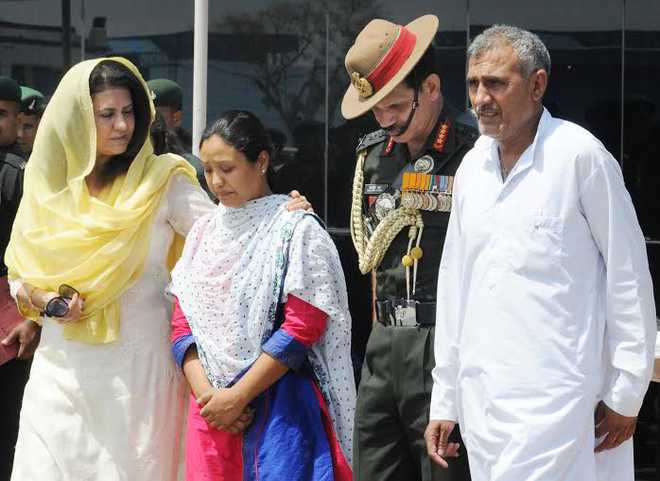
Siachen braveheart Lance Naik Hanumanthappa passed away at the Army’s Research and Referral Hospital here today because of multiple-organ dysfunction after a three-day battle for life. He was rescued from the avalanche-hit Siachen glacier on February 8.“Lance Naik Hanumanthappa is no more. He breathed his last at 11.45 am,” a senior Army official said. The cremation will take place at Hubli in Karnataka tomorrow. The 33-year-old soldier of the 19th Battalion of Madras Regiment is survived by his wife Mahadevi Ashok Bilebal and a two-year-old daughter, Netra Koppad. A resident of Betadur village in Dharwad district of Karnataka, he had joined the Army 13 years ago. Hanumanthappa along with nine other Armymen, none of whom survived, were buried under the avalanche that hit the 19,600-ft high Sonam Post on February 3. He was found alive, but with serious complications on February 8. In Delhi, Prime Minister Narendra Modi, Defence Minister Manohar Parrikar, Army Chief General Dalbir Singh Suhag and Congress vice-president Rahul Gandhi were among those who paid homage to the soldier. “He leaves us sad & devastated. RIP Lance Naik Hanumanthappa. The soldier in you remains immortal. Proud that martyrs like you served India,” the Prime Minister tweeted.“In his life and his passing, Lance Naik Hanumanthappa has shown the world the meaning of perseverance & courage,” wrote Rahul Gandhi on Twitter.Dubbed ‘miracle man’, Hanamanthappa’s condition had deteriorated yesterday. “His circulatory shock is now refractory to all drugs in maximum permissible doses and his kidneys remained non-functional,” a health bulletin released by the Army earlier in the day had said. His pneumonia had worsened and the blood-clotting disorder showed no signs of reversal despite blood component support. 

ਸੂਰਬੀਰ ਹਨਮਨਥੱਪਾ ਮੌਤ ਤੋਂ ਜੰਗ ਹਾਰਿਆ

Posted On February – 11 – 2016

ਸਿਆਚਿਨ ਵਿੱਚ ਸੰਘਰਸ਼ ਦੀ ਗਾਥਾ ਦਾ ਉਦਾਸ ਅੰਤ

ਨਵੀਂ ਦਿੱਲੀ, 11 ਫਰਵਰੀ
ਸਿਆਚਿਨ ’ਚ ਬਰਫ਼ ਹੇਠਾਂ ਛੇ ਦਿਨਾਂ ਤਕ ਦਬੇ ਰਹੇ ਸੂਰਬੀਰ ਲਾਂਸ ਨਾਇਕ ਹਨਮਨਥੱਪਾ ਕੋਪਾਡ (33) ਦਾ ਅੱਜ ਦੇਹਾਂਤ ਹੋ ਗਿਆ। ਸਿਆਚਿਨ ਗਲੇਸ਼ੀਅਰ ’ਚ 19,600 ਫੁੱਟ ਦੀ ਉਚਾਈ ’ਤੇ ਬਣੀ ਚੌਕੀ ਬਰਫ਼ੀਲੇ ਤੂਫ਼ਾਨ ’ਚ ਤਬਾਹ ਹੋ ਗਈ ਸੀ ਅਤੇ ਉਸ ਸਮੇਤ 10 ਜਵਾਨ ਕਈ ਫੁੱਟ ਹੇਠਾਂ ਬਰਫ਼ ’ਚ ਦਬ ਗਏ ਸਨ। ਲਾਂਸ ਨਾਇਕ ਹਨਮਨਥੱਪਾ ਨੂੰ ਛੇ ਦਿਨਾਂ ਬਾਅਦ ਜਿਉਂਦਾ ਕੱਢ ਲਿਆ ਗਿਆ ਸੀ ਪਰ ਉਹ ਬੇਸੁਰਤ ਸੀ ਅਤੇ ਉਸ ਦੇ ਅੰਗਾਂ ਨੇ ਕੰਮ ਕਰਨਾ ਬੰਦ ਕਰ ਦਿੱਤਾ ਸੀ। ਸੈਨਾ ਦੇ ਸੀਨੀਅਰ ਅਧਿਕਾਰੀ ਨੇ ਕਿਹਾ ਕਿ ਲਾਂਸ ਨਾਇਕ ਹਨਮਨਥੱਪਾ ਨੇ ਅੱਜ ਸਵੇਰੇ ਪੌਣੇ 12 ਵਜੇ ਅੰਤਮ ਸਾਹ ਲਏ। ਆਰਮੀ ਰਿਸਰਚ ਐਂਡ ਰੈਫਰਲ ਹਸਪਤਾਲ ’ਚ ਜੀਵਨ ਲਈ ਸੰਘਰਸ਼ ਕਰ ਰਹੇ ਹਨਮਨਥੱਪਾ ਦੀ ਸਿਹਤਯਾਬੀ ਲਈ ਦੁਆਵਾਂ ਮੰਗੀਆਂ ਜਾ ਰਹੀਆਂ ਸਨ।
ਲਾਂਸ ਨਾਇਕ ਹਨਮਨਥੱਪਾ ਕੋਪਾਡ ਮਦਰਾਸ ਰੈਜੀਮੈਂਟ ਦੀ 19ਵੀ ਬਟਾਲੀਅਨ ’ਚ ਤਾਇਨਾਤ ਸੀ। ਪਰਿਵਾਰ ’ਚ ਪਤਨੀ ਮਹਾਦੇਵੀ ਅਸ਼ੋਕ ਬਿਲੇਬਲ ਅਤੇ ਦੋ ਸਾਲ ਦੀ ਬੱਚੀ ਨੇਤਰਾ ਕੋਪਾਡ ਰਹਿ ਗਏ ਹਨ। ਕਰਨਾਟਕ ਦੇ ਧਾਰਵਾਡ਼ ਜ਼ਿਲ੍ਹੇ ਦੇ ਪਿੰਡ ਬੇਤਾਦੂਰ ਦਾ ਵਸਨੀਕ ਕੋਪਾਡ 13 ਸਾਲ ਪਹਿਲਾਂ ਫ਼ੌਜ ’ਚ ਸ਼ਾਮਲ ਹੋਇਆ ਸੀ।
ਉਸ ਦੇ ਦੇਹਾਂਤ ਦੀ ਖ਼ਬਰ ਜਿਵੇਂ ਹੀ ਆਈ ਤਾਂ ਪੂਰੇ ਮੁਲਕ ’ਚ ਸੋਗ ਦਾ ਮਾਹੌਲ ਬਣ ਗਿਆ। ਉਸ ਦੇ ਪਿੰਡ ’ਚ ਲੋਕ ਸਡ਼ਕਾਂ ’ਤੇ ਆ ਗਏ ਅਤੇ ਭੁੱਬਾਂ ਮਾਰ ਕੇ ਰੋ ਪਏ। ਪ੍ਰਧਾਨ ਮੰਤਰੀ ਨਰਿੰਦਰ ਮੋਦੀ ਅਤੇ ਰਾਸ਼ਟਰਪਤੀ ਪ੍ਰਣਬ ਮੁਖਰਜੀ, ਰੱਖਿਅਾ ਮੰਤਰੀ ਮਨੋਹਰ ਪਰੀਕਰ ਅਤੇ ਥਲ ਸੈਨਾ ਮੁਖੀ ਜਨਰਲ ਦਲਬੀਰ ਸੁਹਾਗ ਸਮੇਤ ਹੋਰ ਆਗੂਆਂ ਨੇ ਲਾਂਸ ਨਾਇਕ ਦੇ ਦੇਹਾਂਤ ’ਤੇ ਡੂੰਘੇ ਅਫ਼ਸੋਸ ਦਾ ਪ੍ਰਗਟਾਵਾ ਕੀਤਾ ਹੈ। ਸ੍ਰੀ ਮੋਦੀ ਨੇ ਕਿਹਾ ਕਿ ਉਸ ਅੰਦਰਲਾ ਜਵਾਨ ਹਮੇਸ਼ਾ ਅਮਰ ਰਹੇਗਾ। ਉਨ੍ਹਾਂ ਟਵੀਟ ਕਰ ਕੇ ਕਿਹਾ ਕਿ ਸਾਨੂੰ ਮਾਣ ਹੈ ਕਿ ਤੁਹਾਡੇ ਵਰਗੇ ਸ਼ਹੀਦਾਂ ਨੇ ਭਾਰਤ ਦੀ ਸੇਵਾ ਕੀਤੀ। ਕਰਨਾਟਕ ਦੇ ਮੁੱਖ ਮੰਤਰੀ ਸਿੱਧਾਰਮਈਆ ਨੇ ਚੋਣ ਰੈਲੀ ਦੌਰਾਨ ਦੋ ਮਿੰਟ ਦਾ ਮੌਣ ਰੱਖ ਕੇ ਬਹਾਦਰ ਜਵਾਨ ਨੂੰ ਸ਼ਰਧਾਂਜਲੀ ਭੇਟ ਕੀਤੀ। ਉਨ੍ਹਾਂ ਦਿੱਲੀ ’ਚ ਕਰਨਾਟਕ ਭਵਨ ਦੇ ਅਧਿਕਾਰੀਆਂ ਨੂੰ ਕਿਹਾ ਕਿ ਉਹ ਹਨਮਨਥੱਪਾ ਦੇ ਪਰਿਵਾਰ ਨੂੰ ਹਰਸੰਭਵ ਸਹਾਇਤਾ ਮੁਹੱਈਆ ਕਰਾਏ ਅਤੇ ਉਨ੍ਹਾਂ ਨੂੰ ਸੂਬੇ ’ਚ ਲਿਆਉਣ ਲਈ ਵਿਸ਼ੇਸ਼ ਉਡਾਣ ਦੇ ਪ੍ਰਬੰਧ ਕੀਤੇ ਜਾਣ।
-ਪੀਟੀਆਈ

ਜੱਦੀ ਪਿੰਡ ਵਿੱਚ ਅੱਜ ਹੋਏਗਾ ਸਸਕਾਰ

ਬੰਗਲੌਰ: ਲਾਂਸ ਨਾਇਕ ਹਨਮਨਥੱਪਾ ਕੋਪਾਡ ਦਾ ਅੰਤਮ ਸਸਕਾਰ ਉਸ ਦੇ ਜੱਦੀ ਪਿੰਡ ਬੇਤਾਦੂਰ ’ਚ ਸ਼ੁੱਕਰਵਾਰ ਨੂੰ ਪੂਰੇ ਸਰਕਾਰੀ ਸਨਮਾਨਾਂ ਨਾਲ ਕੀਤਾ ਜਾਏਗਾ। ਉਸ ਦੀ ਦੇਹ ਨੂੰ ਸਵੇਰੇ 7 ਵਜੇ ਤੋਂ 10 ਵਜੇ ਤਕ ਨਹਿਰੂ ਗਰਾੳੂਂਡ ’ਚ ਆਮ ਲੋਕਾਂ ਦੇ ਦਰਸ਼ਨਾਂ ਲਈ ਰੱਖਿਆ ਜਾਵੇਗਾ। ਬਾਅਦ ’ਚ ਦੁਪਹਿਰ ਵੇਲੇ ਅੰਤਮ ਸਸਕਾਰ ਕੀਤਾ ਜਾਏਗਾ।
-ਪੀਟੀਆਈ

ਪਾਕਿਸਤਾਨ ਵੱਲੋਂ ਸਿਆਚਿਨ ਤੋਂ ਫ਼ੌਜਾਂ ਪਿੱਛੇ ਹਟਾਉਣ ਦਾ ਸੱਦਾ

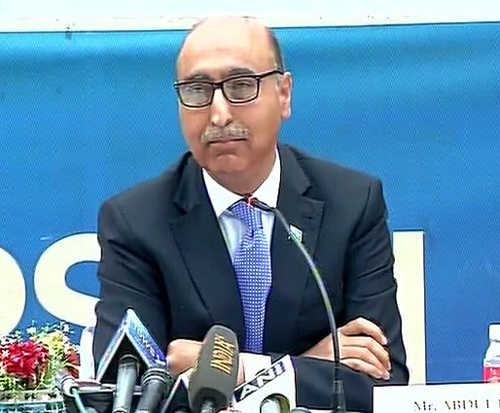
ਨਵੀਂ ਦਿੱਲੀ: ਲਾਂਸ ਨਾਇਕ ਹਨਮਨਥੱਪਾ ਕੋਪਾਡ ਦੇ ਦੇਹਾਂਤ ਤੋਂ ਬਾਅਦ ਪਾਕਿਸਤਾਨ ਦੇ ਹਾਈ ਕਮਿਸ਼ਨਰ ਅਬਦੁੱਲ ਬਾਸਿਤ ਨੇ ਅੱਜ ਕਿਹਾ ਹੈ ਕਿ ਸਿਆਚਿਨ ਮੁੱਦੇ ’ਤੇ ਫ਼ੌਰੀ ਮਤਾ ਲਿਆ ਕੇ ਭਾਰਤ ਅਤੇ ਪਾਕਿਸਤਾਨ ਉਥੋਂ ਫ਼ੌਜਾਂ ਹਟਾਉਣ ਲਈ ਕੋਈ ਫ਼ੈਸਲਾ ਲੈਣ ਤਾਂ ਜੋ ਬਰਫ਼ੀਲੀ ਚੋਟੀ ’ਤੇ ਹੋਰ ਜਾਨਾਂ ਅਜਾਈਂ ਨਾ ਜਾਣ। ਉਨ੍ਹਾਂ ਕਿਹਾ ਕਿ ਇਸ ਮਸਲੇ ਨੂੰ ਗੱਲਬਾਤ ਕਰ ਕੇ ਸ਼ਾਂਤੀ ਨਾਲ ਵਿਚਾਰਿਆ ਜਾਣਾ ਚਾਹੀਦਾ ਹੈ।


Siachen tragedy: Soldier’s condition deteriorates

2016_2$largeimg10_Wednesday_2016_191831383
Lance Naik Hanamanthappa Koppad. — File photo

New Delhi, February 10

The condition of Lance Naik Hanamanthappa Koppad, the soldier who was pulled out from under 25 feet of snow in Siachen, has deteriorated, the Army said on Wednesday as doctors continue to make efforts to save him.

His condition remains fragile, with CT scans showing oxygen deprivation to his brain, a medical bulletin issued in the evening said.

His lungs also showed evidence of pneumonia.

“His multi-organ dysfunction state continues unabated. His condition has deteriorated despite aggressive therapy and supportive care,” the bulletin said.

Citical care specialists, HoD Dept of Medicine, senior nephrologist and senior neurologist from Army Hospital and team of experts from AIIMS, New Delhi continue to make efforts to save him.

“The entire team was in agreement with the management (of medical problems) that the patient had undergone till now, and concurred with the future plan of management for him,” the Bulletin said.

Hanamanthappa was among the Madras Regiment personnel who were buried under an avalanche that hit their outpost on Siachen glacier on February 3.

He was taken to Delhi by an IAF aircraft.

Woman offers kidney to soldier

A housewife today offered to donate a kidney to Lance Naik Koppad, who is battling for life.

Nidhi Pandey, who lives in Padaria Tula village, about 50 km away from Lakhimpur Kheri, UP, said she was sad to know about the soldier’s condition.

“It was being broadcast in the news channels that his condition is extremely critical as his liver and kidneys are not functioning properly,” she said, adding that she felt that something more should be done for the soldier apart from prayers.

She said that is the reason why she decided to donate her kidney, if required.

“With my husband’s consent, I expressed my wish to a news channel through its helpline number that flashed on the screen,” Pandey said.

She said she has taken the decision as it could benefit the soldier serving the nation. — PTI


SOLDIER FOUND ALIVE UNDER SIACHEN GLACIER AFTER 6 DAYS

JAMMU: An army jawan who was buried under 25 ft of snow following an avalanche in the Siachen glacier was on Monday miraculously found alive in a critical condition after six days of rescue efforts.

“It was a miraculous rescue, all efforts are being made to evacuate Lance Naik Hanaman Thapa to hospital,” Lt Gen DS Hooda, Norther n Army Commander, told PTI.

He said, “Five bodies have been recovered so far and four have been identified. All other soldiers are regrettably no more with us.”

A junior commissioned officer (JCO) and nine others of the Madras Regiment were buried after their post was hit by the avalanche at an altitude of 19,600 ft close to the Line of Control (LoC), where the temperature was minus 45 degrees Celsius.

Siachen miracle: Jawan found alive after 6 days

Jammu, February 8An Army jawan who was buried under 25 feet of snow following an avalanche in the Siachen glacier was today miraculously found alive in critical condition after six days of rescue efforts.”It was a miraculous rescue, all efforts are being made to evacuate Lance Naik Hanaman Thappa to the RR hospital in the morning,” Lt Gen D S Hooda, Northern Army Commander, told PTI.He said, “Five bodies have been recovered so far and four bodies have been identified. All other soldiers are regrettably no more with us.”He hoped that another miracle continues with Thappa, who hails from Karnataka.A Junior Commissioned Officer (JCO) and nine other ranks of Madras Regiment were buried after their post was hit by the avalanche at the altitude of 19,600 feet close to the Line of Control (LoC) with Pakistan where the tempreature was minus 45° Celsius. Siachen is the world’s highest active battlefield, contested by India and Pakistan since 1984 when India launched Operation Meghdoot. — Agencies

One Army Jawan found miraculously alive under snow


Joint drill by Indian, Chinese troops

JAMMU: In a significant sign of increasing co-ordination between Indian and Chinese armies, the two held a first ever joint exercise at Chushul, in eastern Ladakh, where they had a face-off in the past.

PTI PHOTOIndian and Chinese army personnel during a joint exercise in Ladakh on Saturday.“The border troops of the two armies had the first joint tactical exercise at Chushul-Moldo on February 6. It is a part of ongoing initiatives to ensure greater interaction between troops stationed along the line-of actual-control (LAC) to ensure peace and tranquility on the border,” defence spokesperson Colonel SD Goswami said.

The two armies had decided to hold joint hand-to-hand exercises after Lt Gen DS Hooda, head of northern command, paid a threeday visit to China last December. The first exercise as part of the series was held in Sikkim.

“Holding joint exercise at Chushul is quite significant, reflecting that China intends to keep peace along the LAC and cooperate with the Indian army,” said a senior army official on condition of anonymity.

The two armies had a fierce engagement at Chushul in the 1962 Indo-China war. There have been many instances of Chinese incursion in this area in the past as well.

Army spokesperson said the Indian army team of thirty personnel was led by colonel Ritesh Chandra Singh while the Chinese delegation was led by Colonel Qu Yi. The day-long joint exercise was about co-ordination between the two armies in the event of a natural disaster.

Sources during Lt Gen Hooda’s visit said the two armies had agreed to have four more border-personnel -meeting (BPM) points, two in Ladakh and two in Arunachal Pradesh.

60794

A first: Chinese, Indian troops meet for disaster mgmt drill

A first: Chinese, Indian troops meet for disaster mgmt drill
The first joint Indo-China tactical exercise between border troops of both countries was conducted in the Chushul-Moldo area. Tribune Photo

Sumit Hakhoo,Tribune News Service

Jammu, February 7

The Line of Actual Control (LAC) in Eastern Ladakh, often in news for standoff between Indian and Chinese soldiers, saw the first-ever joint tactical exercise between the two armies to tackle natural disasters.The day-long humanitarian relief exercise conducted in sub-zero temperature in the remote Chushul-Moldo area of Jammu and Kashmir saw soldiers jointly conducting rescue missions, casualty evacuation and providing humanitarian aid in a situation of calamity striking areas close to the LAC.At the height of 4,360 m, Chushul is prone to cold and snow-related disasters. The exercise assumes significance in the backdrop of recent avalanche in Siachen. Soldiers guard remote outposts in the area and several small nomadic settlements are present on both sides of the LAC.The Indian team of 30 Army personnel was led by Colonel Ritesh Chandra Singh, while the Chinese team was led by Colonel Qu Yi.Chushul is one of the four officially agreed BPM (border personnel meeting) points for regular interaction between the two armies to defuse tension.“The joint exercise was based on a situation of a national disaster occurring on the border and the subsequent coordination for a rescue mission by joint teams of both countries. As previously agreed, the exercise focused on actions to be coordinated to provide humanitarian aid and disaster relief,” said a defence spokesperson.India shares 3,488-km de facto border with China and is divided into three sectors—western sector (between Ladakh and Aksai Chin plateau); central sector (between Uttarakhand and Tibet) and the eastern sector (covering Sikkim and Arunachal Pradesh). Jammu and Kashmir has seen frequent transgressions over the past few years.The joint exercise, Sino-India Cooperation 2016, complements the Hand-in-Hand series of India-China joint exercises and the recently conducted border troops’ joint exercise in Sikkim.

Border bonhomie

  • The day-long humanitarian relief exercise was conducted in sub-zero temperature in the Chushul-Moldo area of J&K
  • Thirty soldiers each from the People’s Liberation Army and the Indian Army took part in the exercise
  • The exercise was based on a situation of a national disaster and the subsequent coordination for a rescue mission, said a defence spokesperson


Modi’s Quest to Achieve India’s Great Power Status

Indian Prime Minister Modi invited French President Hollande to be the guest of honor at India’s Republic Day Celebrations in New Delhi last month. The seat is generally reserved for, and used by the office of the Prime Minister as, a signal of close and important state ties. Last year President Obama was Modi’s guest, which served as the start for a banner year of U.S.-India cooperation, on a broad range of economic, climate, and defense issues. Among others, Washington and New Delhi signed agreements aimed at developing India’s next generation aircraft carrier — an overt signal of joint concern about China’s emerging power in the Indian Ocean and, by extension, the South China Sea. Hollande’s presence is expected to have a similar result, particularly given that it is the world’s fourth largest arms exporter.

India has demonstrated that it has partners in multiple international camps. Some observers expected this year’s guest to be either Pakistan’s Prime Minister Sharif or perhaps even President Putin, to re-emphasize India’s historical orientation toward non-alignment. Thus far, Modi has signaled that India will remained non-aligned, but with the world’s most important arms exporters. In choosing Hollande this year, India may be shedding the strategic ambiguity that has long characterized its foreign policy, and starting to take steps that will ultimately result in it becoming a greater power in our G-Zero world.

As the second-most populous country in the world and its largest democracy, and having a young, energetic and impatient population that yearns to join the ranks of the world’s leading economies, India has all the basic prerequisites to become a Great Power, at least in its own region. Yet, for decades it has failed to live up to its potential, the result of a sclerotic government bureaucracy and extremely diverse ethnic, religious and linguistic composition. Having been founded on an anti-colonial platform, its founders’ distaste for imperial misadventures led to its membership in the Non-Aligned Movement, and modern India has historically been more interested in scolding Great Powers for hubris or exploitation than joining their ranks. Further, its post-independence poverty and self-defeating statist bureaucracy made it impossible for India to project power beyond its immediate periphery. For decades, the Indian political and military class have remained obsessed (to the point of paranoia) about threats from Pakistan, twisting its entire geo-strategic architecture towards its northwest neighbor, hobbling any inclination to look elsewhere for geopolitical opportunities.

Though the Indian government had made small overtures aimed at opening up to the world since the 1990s, its strategic reorientation has accelerated dramatically since the election of Narendra Modi in 2014. New Delhi had, over time, become unnerved by a substantially more powerful and assertive China, which did not share India’s democratic values and was eager to make its presence strongly felt in India’s backyard. The Indian government began to more fully appreciate its relative lack of strategic options, brought on by years of neglect. Modi swiftly began to patch up relations with India’s immediate neighbors, notably Sri Lanka, with Modi becoming the first Indian Prime Minister to visit the island in 28 years. He has been acting with remarkable calm and resolve to improve ties with Pakistan, recently making an unannounced stopover in the country on the occasion of Sharif’s birthday. Modi has also made his presence known in Myanmar, where he has made clear India’s interest in being ‘in the room’ as the new democracy evolves.

This has all afforded Modi the diplomatic space to begin to look farther afield for partnerships with other powers who support the idea of a more regionally-powerful India, and he has done so with enthusiasm. Obama’s presence at the Republic Day Parade was the start of a year of intense Indo-U.S. friendship, which saw a reciprocal visit by Modi to the U.S., a renewal of a nuclear agreement between the two states, and a visit by U.S. Defense Secretary Ash Carter to New Delhi, during which the U.S. indicated a willingness to transfer sensitive aircraft carrier technology to the Indian naval program. Coming on the heels of the Bush Administration’s 123 Agreement, which enhanced India’s civil nuclear program, Indian/U.S. relations have never been stronger.

At the same time, India began strengthening regional ties with Australia and Japan, who share India’s concern about China’s regional ambitions, and formalized procedures for joining them in recurring naval exercises in the Indian and Pacific Oceans, along with the U.S. Think tanks in New Delhi now write openly and regularly of the need to counter China’s growing presence, and the threat posed to Indian interests by Beijing. That said, India clearly still desires to keep more options open than closed.

It should be remembered that Modi also visited Russia and China last year, which, along with all his other travels, has already made him the most-traveled Indian Prime Minister in history. There was a good deal of speculation that Xi Jinping or Vladimir Putin might be Modi’s honored guest this year, making clear to the world that India was still a swing player, not beholden to any single camp. Modi is hedging his bets, however — in essence extending hands of friendship to a wide variety of potential partners while keeping a clenched fist behind his back. India’s historical political, economic and military ties to Russia remain firmly intact. Its growing defense budget continues to source a good deal of materiel from Russia, and the two countries have ambitions to achieve a trade relationship worth $30 billion by 2025.

Modi used Hollande’s visit to very publicly sign a deal for 36 Rafale fighter jets for the Indian Air Force (beating a Russian proposal for Sukhoi jets), as well as extend a 2006 defense cooperation agreement, and, in a historic first, invited a French contingent to march with Indian troops in the event. The message was not ambiguous. So while India’s strategic architecture remains small for a country of its size, the task of transitioning to Great Power status remains enormous, and the possibility for its derailment remains real. Much remains to be done.

Modi has, however, made clear by his repeated overtures to a series of strategic potential allies, that India is and wants to remain at the table. India’s new strategic thinking is coming into focus. For the first time, it is reasonable to imagine that a contingent of the Indian Brigade of the Guards could march down the Champs Elysees during Bastille Day. Modi’s message is clear: the days of strategic ambiguity will remain, but there is no ambiguity about its long-term economic, political, and military ambitions. While India is not Russia or the U.S. in terms of its global reach or strength, it is, apart from China, the emerging country with the most potential to achieve Great Power status this century. It will take a great deal of concerted reform, persistent effort, and devoted financial and military resources to achieve that, but Modi has set India on that path.

*Peter Marino is an international political analyst specializing in Northeast Asian affairs and international political economy. He produces and hosts the global politics web series Globalogues. Daniel Wagner is CEO of Country Risk Solutions and co-author of the forthcoming book “Global Risk Agility and Decision Making” (Macmillan, May 2016).