Sanjha Morcha

What’s New

Click the heading to open detailed news

Current Events :

web counter

Print Media Reproduced Defence Related News

Rohtak lad Adarsh Hooda commissioned as flying officer

ROHTAK: City lad Adarsh Hooda has been awarded with President’s Plaque and the Chief of the Air Staff ‘Sword of Honour’ for bagging first position in the pilot course.

HT PHOTOFlying officer Adarsh Hooda with his parents at the Air Force Academy in Hyderabad.

Defence minister Manohar Parrikar presented the award to Hooda during the Combined Graduation Parade at Air Force Academy, Dundigal in Hyderabad on June 18.

Rohtak native Hooda did his schooling from Pathania Public School. Always wanting to join the Indian Air Force, Hooda tried his luck in NDA after Class 12, but couldn’t pass the SSB. He went on to pursue BSc in chemistry honours from Kirori Mal College, Delhi University, and then a Masters in Chemistry from Hindu College.

Talking to HT, Hooda said, “Since childhood I wanted to join the Air Force. So after my masters, I took the Air Force Common Admission Test (AFCAT) in 2014. I joined the Air Force Academy in January, 2015, and was now commissioned as a flying officer.”

“The whole journey was challenging. It requires a lot of motivation and positive attitude, for which I’m grateful to my batchmates and instructors,” he added.

An All India university-level basketball player, Hooda represented Delhi University’s basketball team as captain in 2013. In his free time, he likes to paint and recite poetry.


*How to Maintain Safe Distance from Income Tax Department ?*

How to Maintain Safe Distance from Income Tax Department ?*
Do you want to keep an Arm’s Length Distance from the Income Tax Department?
Obviously the Answer is YES!!! But the question here is HOW???

*Here are a list of expenses/ investments, which at any point of time performed by you may invite undue attention from the Income tax Personnel ?*
1) Depositing Cash aggregating to Rs.10 Lacs p.a. in your Savings Bank Account.
2) Making Credit Card Payments of more than Rs.2 Lacs p.a.
3) Investment in Mutual Fund Units worth more than Rs. 2 Lacs.
4) Investment in Debentures/ Bonds, amounting more than Rs. 5 Lacs
5) Investment in Shares worth more than Rs. 1 Lakh.
6) Investment in Gold ETF worth more than Rs. 1 Lakh.
7) Investment in RBI Bonds worth more than Rs. 5 Lacs.
8) Purchase / Sale of any Immovable Property exceeding Rs.30 Lacs.
9) Receipt of Cash Payment exceeding Rs.2 Lacs for sale of any goods/ services.
10) Cash deposits or withdrawals aggregating to Rs 50 lakh or more in a financial year in one or more Current Account.
The Next question which may strike us, is

*How does the Income tax Personnel get to know about all these activities ?*
To keep an eye on such high value transactions of the tax payers, the IT Department has developed a statement of financial transactions called Annual Information Report (AIR).
On the basis of this AIR, the department shortlists their targets and further sends them a notice.

*What do you mean by a Annual Information Report ?*
Annual Information Return (AIR) of ‘high value financial transactions’ is required to be furnished under section 285 BA of the Income-tax Act, 1961 by ‘specified persons’ in respect of ‘specified transactions’ registered or recorded by them during the financial year.

*Who provides the high value transaction information to prepare the AIR ?*
☆ Banks
☆ Mutual Fund Companies
☆ Companies Issuing Bonds/ Debentures
☆ Companies issuing shares
☆ Credit Card Companies
☆ Sub- registrar offices on real estate deals.

*How can I trace my High Value Transactions reported under AIR ?*
The assesse can trace his/ her high value transactions reported under AIR, in their 26AS Report under AIR section. Any transaction of the assesse which has been categorized as a High Value Transaction, will be reflected therein.

In the end, one last question which everyone might have.
*How to avoid receiving a notice from the IT department ?*
The most important step is to file your Income Tax returns on time and file them correctly.
Always re-check your Tax Credit with the 26AS statement.
Disclose all your Taxable as well as Exempt income under the right head.


The many shades of violence::::::Lt Gen (retd) Syed Ata Hasnain

Despite the influence of radical Islam and the antipathy of the Kashmiri youth towards everything Indian, a positive that remains is that radical religious fervour has not travelled the full distance. It is existent, yet is different from that of the Taliban, TTP or Daesh variety.

The many shades of violence
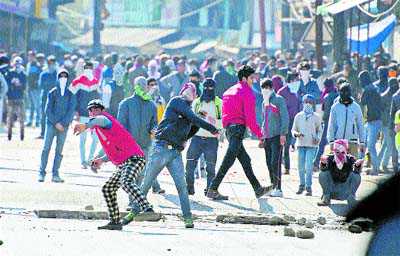
Sub-conventional conlict: Security personnel after an encounter with militants, at Raj Bagh Police station in Jammu. Low-intensity conflict is peculiar to regions. PTI

A recent media report revealed that a Jaish-e-Mohammad “suicide bomber” has been apprehended in Baramula in Jammu and Kashmir. In the 26 years of violence in Jammu and Kashmir, suicide bombing has been a rarity.  I do recall that we had one or perhaps two attempts at suicide bombing at the Batwara gate of Badami Bagh Cantonment, Srinagar. In one such event in 2001, a young Kashmiri student studying abroad blew himself up in a Maruti 800 while attempting to ram the double-gate security system.There is much difference between a “suicide bomber” and a “suicide attacker”. Most people confuse the two and treat them as synonymous. A suicide bomber comes strapped with explosives or drives a vehicle laden with explosives to take on a specific target or a gathering and cause maximum casualties. The suicide attacker is one who is armed to the teeth, takes hostages but isn’t wired and geared to blow himself. He targets individuals and groups at random and is prepared to die in the response of the security forces (SF), without making any serious effort to escape. The regretful assassination of Rajiv Gandhi was a rare case of suicide bombing in India. The kind of security measures you need to take against threats of that kind can actually paralyse societies. Ask the Pakistanis, Afghans and Iraqis; no one knows better than them. India has been fortunate in this regard despite a clutch of internal security threats. It is the Improvised Explosive Device or IED which has been the usual weapon here, for many years.The IED was truly introduced as a military weapon in our context by the LTTE in Sri Lanka in 1987. Our troops used to the conventional anti-personal mines thought that we could use detection methods to unearth the IEDs and mines but the LTTE’s Johnny mine, was virtually non-detectable. The LTTE employed more IEDs than mines. Those were the days when remote control and mobile- initiated IEDs had not come into being. When I mentioned the role of IEDs in military operations at a talk to the US Marines in Hawaii in 2000, I received blank stares. Two years later, the Marines were battling IEDs in Afghanistan and then in Iraq. The Hollywood film Hurt Locker captured the threat of IEDs most graphically. The US came up with various counter-IED concepts but could never achieve supremacy over the car bomb in particular.India has been free from car bombs quite unlike our neighbours, Pakistan and to an extent even Sri Lanka. There is hardly a counter measure available against them and methods of prior detection or controlled detonation haven’t fully succeeded. The last time a major car-bomb incident took place was in 2004, when an Army bus was targeted by terrorists near Pattan using  a Maruti wired and laden with explosives. It only killed the driver. Another attempt at Udhampur in 2011 did not succeed. The last time a major IED was successfully detonated in Kashmir was on July 20, 2008, on the Srinagar-Baramula highway. Nine brave Army soldiers travelling home were killed. Does seven years of absence of such terror activity indicate a transformation of conflict?Conflict undergoes transformation for various reasons. Among them is the availability of resources, both human and material. Good intelligence ensured targeting of “IED doctors” who are essential for the fabrication of IEDs. There is no dearth of explosive available within Kashmir, mostly for quarrying and none of it is under security control; detonators are also available but it was the cleaning out of IED doctors which did the trick. IEDs in Manipur still appear to be more frequent, particularly on rural roads but in Naxal areas the frequency is even higher.One of the ways of preventing IED attacks is to minimise movement. The security forces in Naxal areas need to open roads just once or maximum twice a month with all light logistics maintenance being done by helicopters. This was the model the Indian Army adopted in Sri Lanka. It dramatically reduced IED incidents and, therefore, casualties. The CRPF badly needs aviation support which can enable this.Focusing on suicide attacks, often referred to as Fidayeen attacks, we can see that  1999-2003 was the period in Jammu and Kashmir when these were at the highest pitch. Very few locals were ever involved. These terrorists were sometimes death-row convicts from Pakistani jails and even a few HIV patients motivated for the afterlife.  Against these, a high level of alert and physical security measures were required which forced out-of-proportion deployment. We have not seen too many of these type of attacks in the North-East or the Naxal areas, where it is usually ambushes on which insurgents depend.In 1999, almost in conjunction with the operations in Kargil, there was a sudden surge in these sneak suicide attacks against military garrisons. It was a phase immediately after the virtual drying up of the presence of foreign (other than Pakistani) terrorists in Jammu and Kashmir. The security forces had to expend much of their budgets to raise masonry walls and wire obstacles, besides establishing double gates and execution of domination of their perimeters. Suicide attacks of the 26/11 variety are similar operations on a larger scale. Attempts to infiltrate the Srinagar airport in November 2000 and the recent events at Pathankot are also examples at varying levels. In today’s environment, the vulnerability of North Punjab and the Jammu-Kathua sector is higher for such suicide attacks because of the ease of infiltration and availability of potential high-value targets in the vicinity of the border. Pakistan-based terror groups, backed by ISI, have a supply chain of potential suicide attackers and even bombers, psyched and motivated with religious fervour. Currently in Kashmir it isn’t easy to carry out such attacks, unless it is by home- grown renegades. Despite the influence of radical Islam and the antipathy of the Kashmiri youth towards everything Indian, a positive that remains is that radical religious fervour has not travelled the full distance. It is existent, yet is different from the Taliban, TTP or Daesh variety. Which is why, the hope holds out that given suitable psychological conditioning and a positive outreach the situation can still be recovered. The recently experienced tactics of mob-based obstruction of Army and Police at encounter sites in Kashmir is considered by some as virtual suicide tactics. This is rare in the sheer volume of turnout but not something unseen in other areas where there is low-intensity conflict. It is a dangerous trend which is emboldening resistance, just as stone throwing did in 2008-10. The intent of separatists here is to showcase the David-and-Goliath effect to the Rights’ community; picked up from Palestinian Intifada but taken beyond. Sub-conventional violence is a subset of hybrid and asymmetric warfare. It is peculiar to regions and communities and the dynamics need detailed study by security experts and psychologists to determine counter-narratives which will work against them. There is no all-in-one formula to counter such violence, least of all the use of unbridled counter-violence, especially after stabilisation



8


The writer, a former General Officer Commanding of the Srinagar-based 15 Corps, is now a Fellow with the Delhi Policy Group.


China resolute on norms for NSG berth

Simran Sodhi
Tribune News Service
New Delhi, June 21
The signals coming from China today on India’s Nuclear Suppliers Group (NSG) membership pointed in two directions. One, that China wants to keep the emphasis on the criterion and on non-NPT members joining the elite group as a whole. Two, it wants to club India’s membership with that of Pakistan, absolving Islamabad of its role in the controversial AQ Khan affair.
Meanwhile, the US today reiterated its support for India’s membership. China hit back, pointing out that ‘the US is one of those who made the rule that non-NPT countries should not join the NSG.” For India, which has rushed its top officials from the Ministry of External Affairs to Seoul, the stakes are extremely high now.

The Chinese Foreign Ministry has asked the 48-member group to “stay focused” on whether the criteria should be changed. Chinese Foreign Ministry spokesperson Hua Chunying, talking to Indian mediapersons, said while discussions were on among the NSG members, the admission of new members was not listed in the current plenary meeting at Seoul.
“The door is open. The room is there. We never said we are against a country. We did not target any country, India or Pakistan,” she said. On the US backing India’s NSG bid, Hua said, “We care about rules. The US sets the rules.This is not an issue between China and India but (about) the pillar for the non-proliferation system,” she said.
The state-run Global Times wrote: “ While India strives for NSG inclusion, it prevents Pakistan from joining by insisting on the latter’s bad record of nuclear proliferation.” Blaming AQ Khan for the nuclear proliferation, the paper said that “illegal proliferation is not an official policy of the Pakistan Government.”

We’ve blocked India’s bid: Pak

  • Islamabad: Pakistan has “successfully” blocked India’s bid to gain membership of the NSG, Prime Minister’s Adviser on Foreign Affairs Sartaj Aziz told the Pakistan parliament on Tuesday. Pakistan had a strong case to gain NSG membership on merit, Aziz said in a statement. “We have been making successful efforts against India’s NSG membership,” he said, ahead of the key meeting of the NSG this week in Seou

The day Sam kissed a girl CL Dhamija

THE greatest post-Independence victory in Bangladesh against Pakistan was still fresh in our minds when Field Marshal Sam Manekshaw was invited by DAV College, Chandigarh, to preside over its annual function in 1973. As part of the teaching faculty, I was on the organising committee.Three days before the function, rehearsals began to accord him a hero’s welcome. Enthused, the Chandigarh Administration and the local armed forces took part in the exercise, including planning for a big escort of officers, motorcyclists and jeeps to get the chief guest from the airport to the college. The route was kept clear for the occasion. But just a day before the function, the news came in of his ‘famous’ interview in which he was asked about his decision to stay in India at the time of the Partition. With a mischievous glint in his eyes, the reporter asked: “What would have happened, sir, if you had gone to Pakistan?” Sam rose to the occasion and responsed: “India would have lost the war!”The bureaucracy did not appreciate this wit; the Chandigarh Administration did not participate in the function and the Government of India almost forgot about him. Even though Manekshaw confessed later that it was a bad joke, the remark remained in the memory of our sensitive politicians, and they failed to pay an appropriate tribute at the time of his death.With another colleague, I did a lot of research on the background, life and work of Manekshaw to prepare a draft of the citation that was to be presented to him by Justice Tek Chand, president of the managing committee of the college. In the draft, I referred to his daughters who were named after drinks! Since Justice Tek Chand was a prohibitionist, he ignored the reference while reading out the address. In his response, Manekshaw said: “To complete the record, the name of my daughters are…” He spelt out their names, much to the amusement of the audience. The next day, he went to MCM DAV College for Women to preside over the annual function. He presented awards to students and when the best NCC cadet came up to receive the award, she saluted him. He bent down and said: “You deserve this.” He kissed her on the cheek! This is in confirmation of Gen VP Malik’s reference to Manekshaw’s chivalry and romantic admiration of women. Of course, this sent out a wave of protest by some sections of society, but Manekshaw was a brave, loving, and warm-hearted hero of the country. His memory will never fade away, despite the humourless politicians and petty officials.


Lt Gen Nimbhorkar: Army ready to face any challenge

Lt Gen Nimbhorkar: Army ready to face any challenge
A security core group meeting in progress at Nagrota on Tuesday. A Tribune Photo

Tribune News Service

Jammu, June 14

Close on the heels of an encounter at Kud on the Jammu-Srinagar National Highway on Monday evening, security scenario was today reviewed at headquarters of White Knight Corps at Nagrota near here.Security forces took stock of prevailing situation south of Pir Panjal in the 10 districts of Jammu region.This year’s Amarnath Yatra is scheduled to begin from July 2.The security core group meeting was co-chaired by White Knight Corps General Officer in Commanding (GOC) Lieutenant General RR Nimbhorkar, Director General Police (J&K) K Rajendra Kumar, ADGP (CID) SM Sahai, CRPF Inspector General (Jammu Zone) Rakesh Sethi, IGP (Jammu zone) Danish Rana amongst other top officials of the Army, police, security and intelligence agencies.A joint strategy was chalked out in a great detail between all agencies to ensure peace and stability in the region and ensure incident-free environment.The DGP appreciated the role of all security forces in maintaining peace and harmony in the region.He emphasised the need for maintaining high level of alertness to beat designs of inimical elements and exhorted all present to continue with synergy and coordination at a functional level to ensure peaceful atmosphere.Lt Gen Nimbhorkar said that the Army and its various formations deployed south of Pir Panjal have been proactively and aggressively dominating the Line of Control (LoC) and the hinterland thereby assuring a peaceful and secure environment in the area.He further stated that the Army was ready to face any challenge that may emerge in the future and was ready to counter it with all its might.Appreciating high synergy in operations exhibited by agencies in recent times, he encouraged all present to overcome contemporary challenges and work towards enhancing confidence amongst the people.He further emphasised the requirement to be vigilant, alive and responsive to the developing situation and maintain peace and ensure a peaceful and conducive environment.

Security core group meets

  • Security core group holds meeting at at the White Knight Corps headquarters at Nagrota
  • DGP lays stress on optimum alertness and coordination at a functional level to ensure peaceful atmosphere
  • Lt Gen Nimbhorkar says the Army has been proactively and aggressively dominating the LoC and hinterland

http://www.tribuneindia.com/news/jammu-kashmir/lt-gen-nimbhorkar-army-ready-to-face-any-challenge/251641.html


Colonels, Shimla MP’s brother duped Want P’kula-based real estate broker arrested

Colonels, Shimla MP’s brother duped
A file photo of accused Manav Malhotra, who is at large.

Sandeep Rana

Tribune News Service

Panchkula, June 10

Three serving Colonels and the Director of Kalpana Chawla Government Medical College, Karnal, who is the brother of Shimla MP Virender Kashyap, are among several persons who have allegedly been duped by a Panchkula-based real estate broker on the pretext of providing property in a past few years.The accused, Manav Malhotra, owner of Gauransh Associates at the Mansa Devi Complex (MDC), has 19 cheque bounce and cheating cases pending against him in various courts. Of these, nine cases pertain to Panchkula.In all, around Rs 1.5 crore was paid to him “in white”. He took between Rs 5 lakh and Rs 35 lakh from individuals. The Punjab and Haryana High Court had rejected his bail plea on May 24. However, he continues to remain at large.In one such complaint, Col Rohit Kumar (retd) alleged that he was induced by Malhotra into investing an “initial amount” of Rs 10 lakh in a project of Bhumi Infrastructure Corporation Ltd, Panchkula, where he was to be allotted a plot. He paid the amount last year from his hard-earned retirement benefits, but was neither given the plot nor his money back. Though he was given cheques, these bounced.“He is a cheat. He shows property of leading companies to people, takes the initial booking amount from them and then keeps dilly-dallying in the matter. I know of at least nine persons whom he cheated,” said Col Rohit Kumar.Similarly, Shimla MP’s younger brother, Dr Surender Kashyap, was shown dreams of owning a home near Sukhna Lake in the MDC. “I paid him Rs 5 lakh as the booking amount in 2011, but so far I have neither been given the property nor my money back. He is cheating people of their hard-earned money and should be arrested immediately,” said Dr Kashyap. A construction company owner, Ashok Garg, was also cheated of Rs 34 lakh on the pretext of providing him property in the JLPL, Mohali.   Col BS Badwal, who is posted with the Bengal Engineer Group, Roorkee, was shown property in Mullanpur and paid Rs 15.4 lakh for it. He neither got the land nor was his money refunded. Though he was given cheques for Rs 5 lakh, these bounced due to insufficient funds in the account.Similarly, two other Colonels, not wishing to be named and posted in Ambala and Yol in Kangra, were cheated of Rs 5 lakh and Rs 10 lakh, respectively. Retired and serving Army officers have met the Haryana DGP, the Ambala-Panchkula Commissioner and the Panchkula DCP seeking his arrest.Assistant Sub-Inspector Mange Ram of the Economic Offences Wing of the Panchkula police, said, “I am handling one of the cheating cases in which a Colonel is the complainant. Accused Malhotra is absconding. We have raided several places to arrest him.”Chandigarh Tribune called on the mobile of the accused, but it was found switched off. His wife, Neetu Malhotra, a post office agent, said, “He is in Ludhiana and his phone number is not connecting. There is no fault of his as the real estate companies failed to give possession of the said properties. Rest, I do not know much about his business.”What the HC had said“A list of 19 private complaints pending in various courts at Gurgaon, Yamunanagar, Chandigarh and Panchkula has also been furnished wherein the petitioner is facing proceedings under the Negotiable Instruments Act at the instance of various persons. The petitioner, prima facie, appears to have indulged in cheating, not only with the complainant but with other persons, including Ravinder Singh… No extraordinary exceptional circumstances exist to grant concession of pre-arrest bail to the petitioner,” High Court Judge MMS Bedi observed in a May 24 order against Malhotra.

Around Rs 1.5 cr was paid to him

  • In all, aroundRs1.5 crore was paid to the real estate broker “in white”. He took betweenRs5 lakh andRs35 lakh from individuals. The Punjab and Haryana High Court had rejected his bail plea on May 24. However, he continues to remain at large.

Mehbooba-Omar spar in Assembly over Sainik Colony issue

Mehbooba-Omar spar in Assembly over Sainik Colony issue
Chief Minister Mehbooba Mufti. PTI file photo

Srinagar, June 6

Chief Minister Mehbooba Mufti and National Conference leader Omar Abdullah sparred in the Jammu and Kashmir Assembly over the issue of setting up of Sainik Colony in the Valley.

Accusing the opposition and some media outlets of raising a “non-issue” that can lead to disruption of peace in the state, Mehbooba lashed out Omar for his tweets but the former Chief Minister hit back, saying it was to make her accountable and he won’t back down from speaking on issues of public interest through the social media.

“My small tweets prick you. Your mood gets spoiled. If I make you accountable by tweeting, I will continue it. I won’t stop and I won’t apologise for it,” Omar said.

The issue of proposed colony for armed forces personnel was raised by Independent MLA Sheikh Abdul Rasheed. Waving a copy of the newspaper that had carried a report on construction of a Sainik Colony outside Old Airfield, the legislator stormed into the well of the House and sought a statement from the government on the issue.

“Last time the Chief Minister said there was no Sainik Colony being set up in the Valley and now we have this report. What is the truth?” he asked.

An agitated Mehbooba said there was no truth in the story as the photograph published in the newspaper was that of Jammu and Kashmir Light Infantry (JAKLI) quarters being constructed for married serving personnel of the unit.

“I do not know what these newspapers want. Do they want to put the state on fire? They should have investigated before publishing the story.”

“Members of the Opposition bring in these newspapers that I will not name as they want to get publicity. If anyone tries to disrupt peace, they will be dealt with sternly,” Mehbooba said.

Targeting Omar, she said despite having been in the chair earlier, he has been tweeting about the issue.

“Omar Abdullah attended four meetings (of the Sainik Board as CM) and in all four meetings, he directed that land be identified for setting up of the Sainik Colony.

“Now, there is tweet, tweet, tweet,” she said about the former chief minister frequently using the social media to put forth his opinions.

Opposition benches protested the Chief Minister’s outburst saying not everything was created by the media.

Responding to Mehbooba’s charge, Omar said he has never denied being part of the meetings for setting up of Sainik Colony but had never “passed any order” like the one he had posted on twitter earlier last month.

The “order” which Omar posted was claimed to be a communication issued under the PDP-BJP government and read that the Divisional Commissioner of Kashmir had agreed for allotmet of 173 kanals of land on payment in the old airfield area for the Sainik Colony.

It said that after obtaining commitment from the beneficiaries, the number of aspirants “increased to 1,051, 26 officers, 125 JCOs and 900 of other ranks, requiring a total of 360 kanals of land. Accordingly, a revised proposal has been forwarded to the divisional commisioner of Kashmir and the state home department”.

Omar said: “If there is any such order issued during my tenure, please bring it forth. If you are here for welfare of the people, I am also here so that people are benefited”. “I think when the Chief Minister is talking about setting the state on fire, she is confusing herself with me. My tenure is witness…. If we follow your footsteps, the state will be on fire,” Omar said.

The NC leader said he would continue to raise such issues. — PTI


AEC celebrates Raising Day

Dehradun, June 2

The 96th Raising Day of the Army Educational Corps (AEC) was celebrated at the Indian Mililtary Academy (IMA) here today. Lt-Gen SK Saini, Commandant, IMA, conveyed his best wishes to all ranks and their familie.Brig VN Chaturvedi, Head of the Academic Department, IMA-cum-Colonel Commandant, Army Educational Corps, conveyed his best wishes to the AEC personnel and asked all ranks of the corps to rededicate themselves to the cause of education in the Army and surmount the challenges ahead. He said the corps had played a pivotal role in providing the best education to gentlemen cadets.“The AEC has carved a niche for itself in diversified spheres like human resource development, foreign or regional language training, school administration, map craft training, library training, personality development, enhancement of educational qualification of soldiers and English language training for military personnel from friendly foreign countries,” he said. — TNS


IAF makes airstrip operational in Arunachal

Tribune News Service

Guwahati, June 1

The Indian Air Force has made operational its advanced landing ground (ALG) at Mechuka in West Siang district of Arunachal Pradesh bordering Tibet in China, after keeping the ground idle for a long time.The strategic location of Mechuka ALG will make it a launch pad for the IAF operations as well as facilitate the administration in the management of border areas. In future, the ALG will also provide air support in meeting the challenges during natural calamities such as casualty evacuation and humanitarian assistance besides assisting in routine supply of equipment and rations to the troops posted in far flung areas, said Tezpur-based Defence spokesperson Lt-Col Sambit Ghose. The Mechuka ALG had remained abandoned for decades till it was decided in 2013 to reconstruct it and make it fully air operational.