



Sanjha Morcha

What’s New

Click the heading to open detailed news

Current Events :

web counter

Print Media Reproduced Defence Related News

Parrikar should weigh his words

The defence minister has reopened the debate on India’s nuclear doctrine

As a Goa chief minister Manohar Parrikar can say almost anything he wants in public. There is minimal collateral damage for the rest of the nation if everyone in Panaji takes leave of their senses. Unfortunately, this is not the case with a defence minister Manohar Parrikar. In this position he is one of the four senior-most Cabinet members and the one charged with the external security and defence of India. His words are carefully listened to and strongly influence the actions of a swathe of players, including the armed services, foreign governments and terrorist groups. Unfortunately, the person who seems to understand this the least is Mr Parrikar. His questioning of India’s long-standing nuclear doctrine on a public platform was avoidable. He effectively put a question mark over India’s nuclear deterrent, the sanctum sanctorum of the country’s national security posture. More worryingly, his “personal” comments seem to stem from an inadequate understanding of the strategic logic underpinning nuclear deterrence and a no-first-use policy.

In the dawn of the nuclear age, military strategists recognised that nuclear weapons changed the purpose of an army. A conventional arsenal is designed to defeat an enemy. A nuclear war would inflict such enormous damage on both sides that no one could win such a conflict. Therefore, the purpose of a nuclear arsenal was to prevent war. Thus was borne the concept of nuclear deterrent. To put it another way, one wins a nuclear conflict by never having it in the first place. Once this logic was understood, the next logical step was to signal this in a number of ways including no-first-use, developing the ability to carry out nuclear retaliation even after being attacked and, most important, maintaining the credibility of national intent through testing, technology and a iron-cast doctrine. A country can build all the warheads and delivery mechanisms it wants. But if there is evidence that it lacks the political will to actually use them, it encourages an enemy to carry out a first strike. The messaging of the political determination to retaliate, irrespective of the damage done in the first strike, is absolutely essential in ensuring the enemy attack never takes place at all.Whether in a personal or official capacity, for a defence minister to question India’s nuclear doctrine undermines the credibility of the country’s deterrent. Mr Parrikar, in other words, is inviting other countries to presume India is not certain how to use its final line of defence.
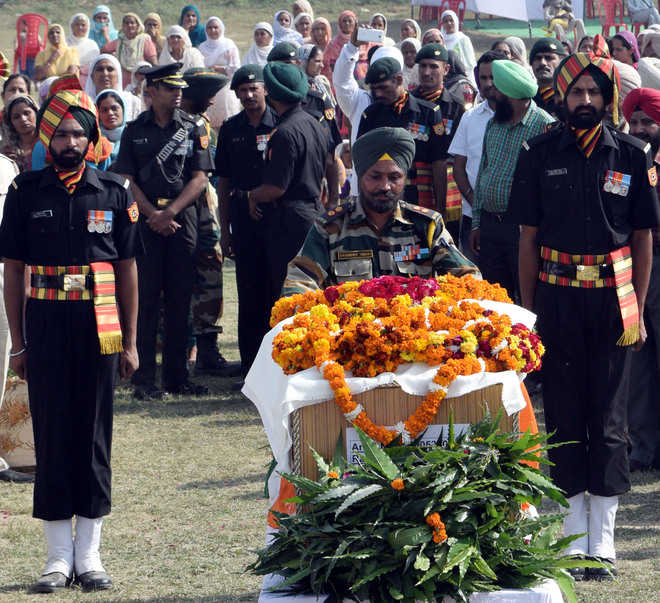
Rs 5-lakh ex gratia, govt job for family of martyr Gursewak

Rs 5-lakh ex gratia, govt job for family of martyr Gursewak
An Army officer pays tributes to martyr Gursewak Singh before his cremation in Tarn Taran’s Warana village on Monday. Tribune photo

Our Correspondent

Tarn Taran, November 7 Sepoy Gursewak Singh (24) of 22 Sikh, who was killed in Pakistani shelling in Jammu and Kashmir yesterday, was cremated today with state and military honours at his native village, Warana, in the district.Food and Civil Supply Minister Adaish Partap Singh Kairon, along with Army officers and officials of the district administration, was present. The Punjab Government announced ex gratia relief of Rs5 lakh for the family and a government job for Gursewak’s brother.He was to get married in February next year.The martyr’s body was brought to the village in an Army van. The pyre was lit by his father, Balwinder Singh. Nagoke village resident Gurmeet Kaur, who was engaged to Gursewak, attended the cremation.Col Subodh Gurung of the Mechanised Infantry, Deputy Commissioner BS Dhaliwal and SSP Manmohan Kumar Sharma were among those who laid wreaths on the body.Leaders of various political parties, including the SAD, the Congress, AAP and Aapna Punjab Party, also paid tributes to the martyr.


Pakistan wants de-escalation of tensions: Sartaj Aziz

Islamabad, October 10

Prime Minister Nawaz Sharif’s Adviser on Foreign Affairs, Sartaj Aziz, has said that Pakistan wants de-escalation of tensions with India for the collective good of the entire region.Radio Pakistan quoted Aziz as saying in an interview that no progress was visible in the Pakistan-Indian relations until Narendra Modi was in power in New Delhi. However, Pakistan did not desire escalation of the situation, he added.

(Follow The Tribune on Facebook; and Twitter @thetribunechd)

Pakistan would continue diplomatic efforts for improvement of ties with India, Aziz said.Asserting that Pakistan would never compromise on its principled stand on Kashmir, he said they would continue to extend political, moral and diplomatic support to the Kashmiris struggling to get their absolute right to self-determination.Speaking on Afghanistan, Aziz said Pakistan would continue its reconciliatory role for bringing peace in the neighboring country. ANI


Army finishes pipeline work in Ladakh despite Chinese opposition

Army finishes pipeline work in Ladakh despite Chinese opposition
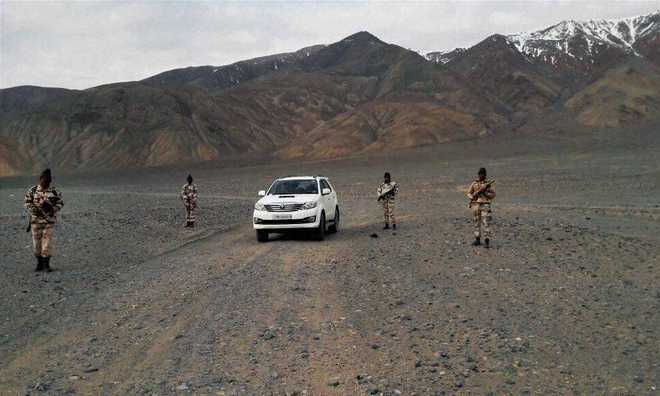
The face-off between the two sides continued for three days ending on Sunday evening. — Photo for representation only) Chinese and Indian troops were reported to have been locked in a stand off at the icy heights of Ladakh division. PTI file photo

Leh/New Delhi, November 6 Unfazed by the ‘sit-in’ by the Chinese border guards at Demchok in Ladakh that led to a face-off with Indian troops earlier this week, Army engineers have finished the work for laying a water pipeline for local villagers in Ladakh division.Chinese had pressed its People’s Armed Police Force (PAPF) personnel at the Line of Actual Control (LAC) in Demchok this time instead of usual PLA who came to erect a Fibre-Reinforced plastic (FRP) hut on Friday at the border but was not allowed by Army and Indo-Tibetan Border Police (ITBP) troops, official sources said.The sources said while the face-off between the two sides continued for three days ending yesterday evening, the Army engineers, ignored the warnings by PAPF personnel and continued laying pipeline for nearly a kilometre for irrigation purpose of the villagers in Demchok, located 250 km east of Leh.(Follow The Tribune on Facebook; and Twitter @thetribunechd)According to the sources, the formula of ‘active patrolling’ adopted by the ITBP and army ever since 2013 fortnight long stand-off near Daulat Beig Oldie has been reaping rich dividends and Chinese have been cautious in carrying out incursion especially in Ladakh sector.This time also, the sources said, army and ITBP personnel did not allow the PAPF guards to erect the hut and they were forced to take the material back to their base camp located a kilometre away at Demqog from the place of face-off.The fresh incident had erupted on November 2 when Chinese troops took positions on the LAC and demanded that work be stopped as either side needs to take permission from each other before undertaking any construction work, a claim disputed by India which says that as per the agreement between the two countries, information about construction needed to be shared only if it was meant for defence purposes.Both sides pulled out banners and have been stationed on the ground, the sources said, adding the Army and ITBP troopers were not allowing the Chinese “to move an inch” ahead despite the PLA claiming that the area belonged to China.The area had witnessed a similar incident in 2014 after it was decided to construct a small irrigation canal at Nilung Nalla under the MNREGA scheme which had been a sore point with the Chinese.The PLA had mobilised villagers from Tashigong to pitch Rebos (tents) at Charding-Ninglung Nallah (CNN) Track Junction to protest Indian action. — PTI


Slain soldier’s kin refuse to accept Rs 20 lakh

Bulandshahr (UP), August 8The family of a soldier, who was killed while thwarting an infiltration bid in Kashmir, has refused to accept Rs 20 lakh compensation offered by the Uttar Pradesh government.Vishal Chaudhry (28), a resident of Randa village here, was one of two soldiers killed in the Army operation in Naugam sector of Kashmir’s Kupwara district that also left two militants dead.The cheque was delivered here yesterday after his last rites were performed, the family said. They demanded that the amount be raised to Rs 50 lakh and a government job be given to one of the family members.They also said that a petrol pump or a cooking gas agency should be allotted to his widow. However, Additional District Magistrate Arvind Pandey claimed that the family had accepted the cheque after he assured them of conveying their demands to the state government


Capt seeks justice for soldier’s kin

CHANDIGARH: Punjab Congress chief Capt Amarinder Singh on Friday submitted a memorandum to governor VP Singh Badnore, seeking the Centre’s intervention for providing justice to the family of retired soldier Ram Kishan Grewal who killed himself in protest against an unequal pension policy for military veterans.

Alleging total breakdown of democratic system in the country, Amarinder urged Badnore to convey to the central government his party’s concern over the brutal handling of the situation in the wake of 70-year-old’s suicide and demanded exemplary action against those guilty of harassing, detaining and beating up his family members.He was leading a 20-member delegation of Punjab Congress leaders and ex-servicemen.


Mend, not build, fences

Sealing the entire 3,323-km border will be anything but easy

Mend, not build, fences
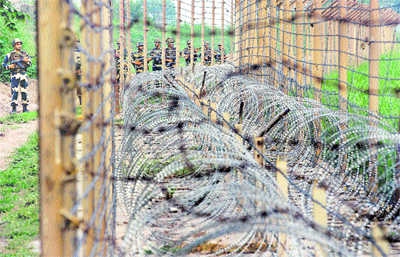
Walled in: Politically, this could be interpreted as an admission of defeat.

A NEW strategy toward Pakistan, it was supposed to be auguring — our strikes on the LoC 10 days ago. The doctrine of ‘jaw for tooth’ by a ‘New India’ was supposed to compel Pakistan to realise India has a ‘different leader’. But fundamental questions remain unasked.Is such a strategy viable against a nuclear country? So far, the only doctrine of military strategy and national security policy that has been taken seriously is based on the theory of deterrence, which Pakistan has embraced, which presumes that the use of nuclear weapons would cause the complete annihilation of both the attacker and the defender.The doctrine is based on a kind of ‘Nash equilibrium’ — India and Pakistan are both assumed to know the equilibrium strategies of each other, and neither has anything to gain by changing one’s strategy unilaterally. The Indian policy makers are acutely conscious of this stunning reality. Ten days after the surgical strikes — military analysts increasingly feel comfortable calling it ‘surgical raids’ — it is clear that the government does not have any new strategy toward Pakistan. Home Minister Rajnath Singh announced on Friday that the new strategy means fencing the entire India-Pakistan border. The fellow travellers of the establishment in our strategic community can stand down.Rajnath Singh was very clear-headed. He even christened the strategy as the Border Security Grid. The entire 3,323-km border will be ‘completely sealed’ by December 2018 — six months ahead of the next parliamentary poll due in 2019. A time-bound action plan will be prepared. The progress of the work will be properly monitored on a monthly basis to avoid shoddy performance.Of course, some confusion still remains, which is understandable, given the mammoth challenge of implementation. For example, what about the stretches of riverine or low-lying marshy areas in Gujarat where erection of physical barriers is not feasible? Digital India could, perhaps, deploy ‘technology solutions’ such as cameras, sensors, radars, lasers, etc. Conceivably, Israel could be sub-contracted so that there won’t be any breakdown in technology.Even at the peak of insurgency in the 1990s, we never thought of such an impractical idea. Politically, this is an admission of total defeat. The government obviously seems to resign itself to the conclusion that Pakistan will continue to wage the asymmetric war, and doesn’t care two hoots as to who is at the helm of affairs in India and no matter India’s formidable national security czarism. Not only that, we seem to apprehend that Pakistan will now expand the asymmetric war from the Kashmir theatre and wage it in the marshes of Gujarat and the deserts of Rajasthan as well, in a deliberate thrust at the heartland of the BJP. The International Border (IB) has been traditionally peaceful, except in times of war.However, Rajnath Singh did not seem to be aware that India and Pakistan’s conduct on the IB is guided by the mutually agreed Border Ground Rules (1960-1961), which, although not signed, has been largely observed. This is a matrix of the code of conduct, which specifies the kind of structures that can be built along the IB — how tall the watchtowers could be, how deep inside they should be from the border, and so on. Evidently, the government is either ignorant of the Border Ground Rules or abandoning the framework altogether. There will be consequences. The point is, in the downstream of the Border Ground Rules a welter of confidence-building measures also was created, which has its practical uses.What is possible is that the government can fill in the gaps in the IB fence that runs through the states. In Rajasthan, the fence in Thar Desert gets impaired by shifting sand dunes. Chief Minister Vasundhara Raje’s idea of erecting a spiritual line of defence, Rashtra raksha yagna —employing 21 ‘patriotic Brahmins’ to chant mantras ‘to protect troops from the enemy’ — will not work. Giving such religious symbolism to utterly worldly things can only confuse people that the government is utterly helpless and has no alternative but to seek divine blessings to ward off the evil that is Pakistan. (It is appropriate that Rajnath Singh failed to show up at the ceremony at Shri Mateshwari Tanot Rai temple in Jaisalmer.)The big question remains: Can Pakistan be reduced to a law and order problem? There is an international dimension to India-Pakistan relations. And that dimension causes serious worry. Despite the brouhaha over cancellation of the SAARC summit in Islamabad following the PM’s decision to boycott it, Pakistan is far from “isolated”. The period since Uri attack testifies to the reality that none of the big powers — the US, China, Russia or the EU — will pay heed to the Indian demarche to ‘isolate’ Pakistan or impose sanctions on it as a state sponsoring terrorism.It will be a reality check to acquaint ourselves with the ‘strategic dialogue’ that Pakistan last week held with the EU. The joint statement issued after the meet in Brussels on October 4 agreed to develop a medium-term Strategic Engagement Plan between the sides. The Joint Communique stated: ‘The EU acknowledged the significant efforts by the government of Pakistan and the sacrifices made in the fight against terrorism and reaffirmed EU’s continued support… They also agreed to strengthen dialogue on defence matters… The Pakistan side apprised the EU about recent developments in the region, including the current situation in Kashmir. Noting with concern the recent developments, the EU side underlined the need for resolving disputes through dialogue and constructive engagement.’The birds are coming to roost. The government’s self-centred attempts to turn the country’s foreign policies into an exercise of self-glorification for the Prime Minister are back-firing. We stare at a two-year chronicle of wasted time in Indian diplomacy. On Thursday, the US state department spokesman John Kirby added to the usual mantra about the crucial importance of India-Pakistan engagement a pointed reminder that terrorism is ‘a common threat, a common challenge in the region’ and a cooperative approach is needed in tackling it effectively.Referring to the Kashmir issue, Kirby underscored the importance of ‘meaningful dialogue’. The writing on the wall is unambiguous. The international community is getting restive as regards our strikes and it intends to have a say on how two nuclear powers should sort out their problems, because they also happen to be vitiating international security as a whole.Fencing is not the solution. It may supplement the ‘muscular’ grandstanding by the Modi government. But it is about time the country gets real. Life is real.The writer is a former ambassador


Worried India set to call back 8 officials from Pak

PAKISTANI MEDIA SHOWS PHOTOS OF THE INDIAN DIPLOMATS, DESCRIBES TWO AS SPIES; IDENTITY LEAKED AFTER MEHMOOD AKHTAR SPYING EPISODE

NEW DELHI/ISLAMABAD: Safety concerns could prompt India to bring back eight officials from its high commission in Islamabad after six members of the Pakistani mission in New Delhi left for home on Wednesday, taking ties to a fresh low amid heightened tensions.

The safety of the Indian diplomats was compromised as their identities were posted online and their photos flashed by Pakistani news channels. The Pakistani media described two of the officials as spies and quoted sources as saying that they were involved in espionage and “subversive activities”.

The standoff follows unrelenting Pakistani shelling in the border areas of Jammu and Kashmir over the past fortnight, resulting in heavy civilian fatalities. At least 20 people, including children, were killed as Pakistani troops pounded border areas with mortar shells.

Official sources in New Delhi said the identities of the Indian officials were leaked to Pakistani media shortly after a video emerged of the interrogation by Delhi Police of Mehmood Akhtar, a Pakistan high commission official arrested and expelled last week on charges of spying.

In the video, Akhtar is seen naming six more Pakistani officials as members of the spying ring. These six officials, including four of the rank of first secretary, were the ones who left India with their families on Wednesday.

The sources also questioned Delhi Police’s decision to release the video to the media. It is believed that this had resulted in tit-for-tat leaks to the Pakistani media.

Pakistani TV channels and news websites initially ran stories that described Indian commercial counselor Rajesh Agnihotri and press secretary Balbir Singh as intelligence agents. Later, names of six more Indian officials were made public.

Sources said the news reports had raised serious concerns about the safety of the eight Indian officials, especially as their photos were flashed on TV at a time of heightened tensions. This would make it easy for forces inimical to India to identify them in public, the sources added.

Though there was no official word, the sources said the officials would have to be called back as “there is a clear danger to their lives”

The Indian officials include a counselor, three first secretaries and four assistants. The external affairs ministry also summoned Pakistan’s deputy high commissioner Syed Haider Shah and protested against ceasefire violations on the frontiers in Kashmir. It also protested against the mutilation of the body of an Indian solider by a “terrorist” who crossed the Line of Control. Pakistani forces have targeted border villages and army posts since India’s elite forces conducted surgical strikes on militant hideouts in Pakistan-occupied Kashmir in September.No deaths were reported on Wednesday but many villagers living near the frontline have been evacuated to safe places.


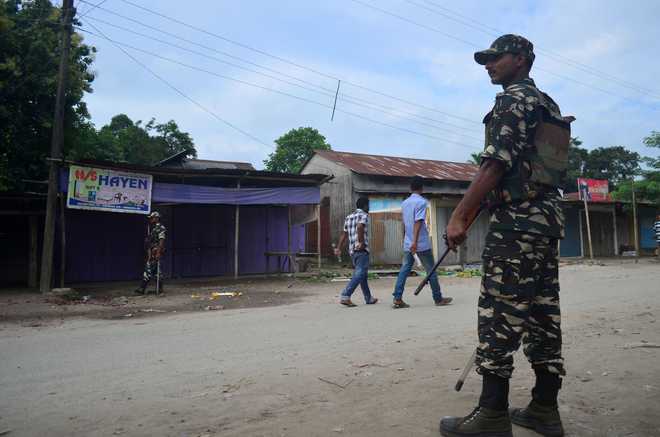
ASSAM TERROR ATTACK NIA team in Kokrajhar, massive combing operation on

Kokrajhar (Assam), August 6A National Investigation Agency (NIA) team on Saturday scoured the site and spoke to eyewitnesses of Friday’s terror attack here in which 14 people were killed while a massive combing operation is on to nab the militants of Bodo separatist outfit National Democratic Front of Bodoland (NDFB) (S) suspected to be involved in the strike.Assam Finance Minister Himanta Biswa Sarma, who visited the site, told reporters that the militant who was neutralised had been identified as Manjay Islari.“He is a self-styled area commander of 16th battalion of NDFB(S) faction. We will give the body to his parents,” he said.(Follow The Tribune on Facebook; and Twitter @thetribunechd) He said the combing operation in the area had been intensified to nab those who fled after carrying out the attack on Balajan Tiniali market, about 12 km from here, days before Independence Day.To a question, he said the militants were not part of any suicide squad. “Had they been part of a suicide squad they would not have fled.”An NIA team had reached the spot and was speaking to eyewitnesses, officials said.Combing operation by police, paramilitary and army is also on in neighbouring Chirang district to nab militants.Defence sources said specialised troops, tracker dogs and other equipment had been pressed into service. The Army was also carrying out extensive area domination operations in the district to ensure swift action, they said. The situation was described as tense but under control.Chief Minister Sarbananda Sonowal visited the seriously injured at Gauhati Medical College and Hospital and enquired about their condition. He spoke to doctors there on providing them advanced medical treatment, government sources in Guwahati said.The Kokrajhar deputy commissioner held a high-level security meeting with police, army and paramilitary forces to review the situation ahead of Independence Day, administration sources said.A strict vigil was being maintained along the Assam-Bengal inter-state border and international fronts with Bhutan to prevent the NDFB(S) militants from escaping there, sources said.Meanwhile, opposition Congress leaders, who visited Kokrajhar on Saturday, accused the ruling BJP government in the state of failing to take preventive measures despite the fact that militants regularly indulged in violent activities in the run-up to Independence Day and Republic Day.Armed militants dressed in army fatigues and belonging to the Bodo separatist outfit had opened fire and thrown grenades at the crowded weekly market killing 14 people.One of the attackers, who were believed to be five in number, was killed in retaliatory action by security forces, police had said.Assam Director General of Police (DGP) Mukesh Sahay had said that the attack was suspected to be the handiwork of NDFB (S). AK-56 and 47 series rifles along with grenades were also recovered from the spot.The DGP and Additional Chief Secretary TY Das also held a high-level security review meeting with the district administration where it was decided to continue with the security operations.