Sanjha Morcha

What’s New

Click the heading to open detailed news

Current Events :

web counter

Print Media Reproduced Defence Related News

HEADLINES “”12 MAY 2017

MAJ GEN SPS GREWAL TAKES OVER AS MD :: PESCO

TARGETING LOCALS: NEW-LOOK TERROR STRATEGY IN JAMMU AND KASHMIR BY LT GEN ATA HUSNAIN

GRIEVANCE REDRESSAL CAMP FOR EX-SERVICEMEN, WIDOWS

ARMY SEARCH OPS TO BE STANDARD PRACTICE IN SOUTH KASHMIR

Army officer’s killing raises fear of more violence

PERSON WHO COMMITS SUICIDE CANNOT BE A MARTYR: DELHI HC

A MODI SHOW THAT WASN’T SANDEEP DIKSHIT SOUTH ASIA SATELLITE — A CASE OF TOO LITTLE, TOO LATE

SOON, TRAVEL FROM DELHI TO CHANDIGARH AT 160 KMPH

E­FILING OF RETURNS SET TO GET SIMPLER; ALL ITR FORMS TO BE MADE AVAILABLE ONLINE FROM THIS YEAR 

CHINA ASKED TO TAKE NOTE OF INDIA GROWTH

THE JADHAV CASE IN ICJ CHANGES THE GOALPOSTS

ATTARI POST GETS MODERN SURVEILLANCE EQUIPMENT

HIZB KILLED KASHMIRI LIEUTENANT

DELHI MUST SEIZE WATERSHED MOMENT

CAN’T HAVE YOUR CAKE AND EAT IT TOO

‘HE WAS MY ONLY SON… WAS TO TURN 23 IN A FEW WEEKS’

PUNJAB LATEST NEWS:::12 MAY 2017

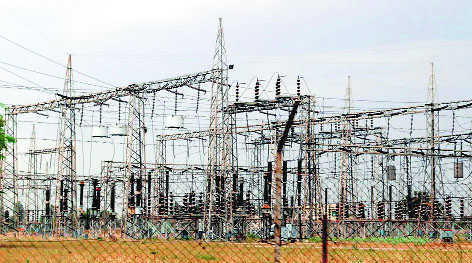
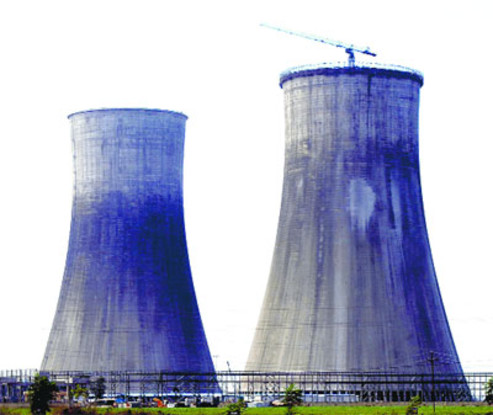
How Punjab can pack in a power punch
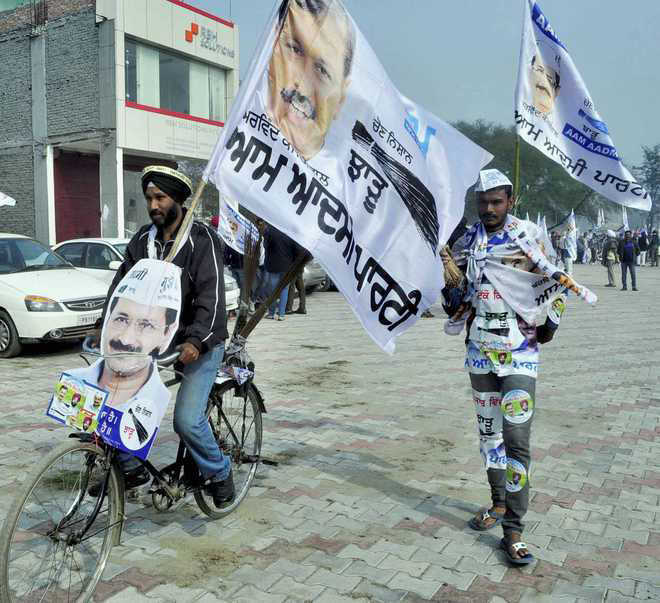
AAP’s Punjab predicament
Soon, Rs7-cr subsidy for border belt
HC: Behoves a minister?


PUNJAB LATEST NEWS:::12 MAY 2017

How Punjab can pack in a power punch

Bhupinder Singh

The government should immediately initiate a process for acquiring a thermal plant of super-critical technology by infusing equity. Money can be arranged by disposing of unviable generation assets. A revamp will bring long-term benefits to the state.

THE supply of electricity at affordable rates has assumed utmost importance for the government as well as consumers The average rate of electricity in Punjab, with the projected expenditure of Rs 3,2718 crore for the year 2017-18, shall be Rs 6.82 per unit. This comprises of Rs 3.74 towards power purchase, Rs1.11 towards employee expenses, 38 paise as fuel charges, 77 paise as interest burden, 25 paise as transmission charges,  and 57 paise towards operations and maintenance charges,  return on equity and depreciation cost. After adding government levies, the rate shall be around Rs 8 per unit.Therefore, the reduction of tariff so as to attract industrial investment in the state is a challenging task.

Comparison of rates

Last year, the per unit rate charged from the consumers is Rs 5.65 in UP, Rs 7.52 in Haryana, Rs 6.83 in Rajasthan, Rs 7.31 in Delhi and Rs 5.79 in Punjab. However, Punjab collects nearly Rs1.15 for each unit of electricity as the government levies against only 15 paise per unit in Haryana, 8 paise per unit in U.P and 60 paise per unit in Rajasthan. The final average cost of electricity to the consumers which is sum of government levies and tariff cost is around Rs 6.94 per unit in Punjab compared to Rs 7.67 for Haryana, Rs 5.73 for UP, Rs 7.49 for Rajasthan and Rs 7.68 for Delhi.The Centre has launched Ujjawal DISCOM Assurance Yojna scheme to enable state goverments to take over the outstanding debt of the distribution companies which stands at Rs 26,000 crore for Haryana, Rs 39,908 crore for UP, Rs 60,397 crore for Rajasthan and Rs 15,628 crore for Punjab — as on September 30, 2015. Haryana, U.P and Rajasthan have committed to take over debt in first three years of operation of the scheme. On the contrary, Punjab shall takeover debt only in the fifth year of the operation of the scheme, that is in 2020-21.The scheme also mandates tariff  hike of  5 per cent in 2016-17 and 9 per cent in 2017-18 to ensure financial sustainability of PSPCL. Contrary to this, tariff in Punjab was reduced by (-) 0.65 per cent last year.

Technical & commercial losses

Punjab is the only state in North India which has been able to control the theft of power and has achieved reduction of aggregate technical and commercial losses below 15 per cent. The pillar-box scheme, initiated by PSPCL engineers, worked as a game changer in bringing down the aggregate technical and commercial losses from around 22 per cent in 2010 to 14.63 per cent in 2016.However, there are many divisions where these losses are still high such as Bhikhiwind (40.54 per cent), Patti (35.10 per cent), Malout (37.90 per cent), Badal (29.67 per cent), Jalalabad (28.12 per cent), Amritsar (28.17 per cent) and Abohar (28 per cent). Punjab can achieve further reduction of losses by 3-4 per cent if pillar boxes are installed in these areas. This is possible only with strong government support.In comparison, the aggregate technical and commercial losses of Haryana are 28.05 per cent, Rajasthan 25 per cent and UP  32.36 per cent which indicate higher power theft levels in these states. Interestingly, the south distribution company of Gujarat with a similar agricultural base as Punjab has losses of more than 25 per cent. Punjab shall be paying the subsidy bill of Rs 8,000 crore this year. This includes Rs 5,807 crore for agricultural power (AP). Last year, Haryana paid  Rs 6,434 crore as AP subsidy for supplying  9,094 MUs of agriculture power at the rate of Rs 6.64 per unit. In contrast, Punjab  paid Rs 5,187 crore for supplying 1,1327 MUs of agricultural power at the rate of Rs 4.58 per unit. If Punjab pays subsidy on the Haryana pattern, then the tariff rate of other consumers can be reduced by 37 p/unit.Punjab has three thermal plants under the state sector — 460 MW at Guru Nanak Dev Thermal Plant (GNDTP), Bathinda, 1260 MW at Guru Gobind Singh Super Thermal Plant (GGSSTP), Ropar and 920 MW at Guru Hargobind Thermal Plant (GHTP,), Lehra Mohabbat and three thermal plants — 1400 MW at Rajpura, 1980 MW at Talwandi Sabo and 540 MW at Goindwal Sahib — have been added in the private sector. The share of state thermal plants in the energy availability has gone down from 38 per cent to 8 per cent in the last five years and share of hydel power hasreduced from 19 per cent to 12 per cent.New private sector plants built on super-critical technology are more efficient than the ageing state plants. The generation cost is lower in the case of these plants. However, it has resulted in non-utilisation of cheap and good quality coal available from the state-owned Pachhwara coal mine. If this is used, it can reduce generation cost by around 30 p/unit. The primary reason for this has been that Punjab does not own a thermal plant operating on super-critical technology. Surplus power and fixed chargesPower utilities arrange power from various sources to supply uninterrupted power to the consumers. The power is then supplied as per the demand of the system which has seasonal and daily variations. This results in the payment of some amount of fixed charges even for unutilised power to the central sector plants, state plants and private sector plants. Punjab has 25000 MU i.e. 30 per cent surplus power and even Delhi with 9745 MU has 30 per cent surplus power. The consumers have to bear fixed charges to avoid power cuts.There are no power cuts in Punjab even for the rural consumers and no regulatory measures for the industry.The government can ensure financial sustainability of the power companies as well as reduce the electricity tariff  by 40 p/unit if it takes over debt as per UDAY scheme, by Re1/unit by rationalising  govt levies and by 25 p/unit by installing pillar boxes in high theft areas. In this way, tariff can be reduced immediately by Rs 1.65 per unit. The government should immediately initiate process for acquiring a thermal plant of super-critical technology by infusing equity which can be arranged by disposing off unviable generation assets. Besides huge tangible and intangible long-term benefits to the state, it shall reduce generation cost by 65p/unit by saving of fixed and variable charges. Electricity is the driving force for all other sectors of economy. Its cost reduction can reap in huge dividends elsewhere. The writer is President, Punjab Power Engineers Association

AAP’s Punjab predicament

Need to carve out a distinctive personality

AAP’s Punjab predicament

FOR a party predicated on a limited but please-all agenda of cracking down on corruption and drugs, AAP’s denouement in Punjab was not hard to predict once it fell well short of the half-way mark in the assembly polls. After its near-total eclipse in the Delhi municipal corporation polls, it was natural for its Punjab leaders to snipe at each other in the scramble to bag the limited number of posts up for grabs or desert the party for better vistas. There are also indications that many state-level leaders who still remain, either because they are legislators or they have burnt their bridges with alternative political choices, are chafing with AAP’s Delhi durbar continuing to hold the reins.The churning within AAP in Punjab is not unique to it. Many political parties have experienced a loss of faith following a debilitating electoral loss. The departure of leaders like Gurpreet Ghuggi is to be expected where the spoils of office aren’t forthcoming. India’s first-past-the-post electoral system hardly gives any solace to the runner-up but AAP remains a beacon of hope in the believers of alternative politics. Its internal squabbles, too many to recount, have prevented it from reshaping itself as the principal opposition party in the state. One reason is that AAP leaders are largely reposing their faith in social media to send their messages across.The need of the hour for AAP is to put the electoral loss behind it. When it comes to introspection, AAP’s cause will be better served if it carves out a more consensual mechanism for stock-taking and charting out the future course of action. This was supposed to be a party which listened to the people. Given that Punjab’s society is multi-layered, AAP has to build a collegiate approach and pick and choose its target electorate and issues. The Punjab Government is currently riding its honeymoon phase. Space will soon open up for an issue-based Opposition. AAP should ready itself for that eventuality. The desertions will affect the top deck and the quarter of the electorate that opted for its candidates should not be let down.

Soon, Rs7-cr subsidy for border belt

Tribune News Service

Chandigarh, May 11

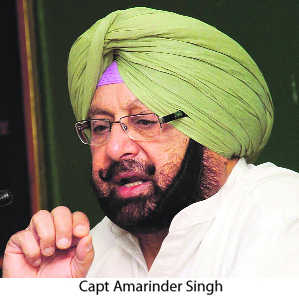
Chief Minister Captain Amarinder Singh today directed his Principal Secretary to expedite the release of pending subsidy to the tune of Rs 7 crore for the development of industry in the border areas of Tarn Taran and Amritsar.The directive followed a request for the release of the subsidy by a delegation of the PHD Chamber of Commerce and Industry (PHDCCI), which called on him to discuss steps to revive the state’s ailing industry.The Chief Minister assured the delegation of full infrastructural support by his government along with uninterrupted power at affordable rates for the industry.Amarinder said he had personally received stupendous response from the country’s top industry leaders during his visit to Mumbai to promote Punjab as an attractive investment destination recently.Observing that the state has surplus power, the CM said his government was studying options to sell surplus power to neighbouring countr

ies such as Pakistan and Nepal, and he had urged the PM to formulate a policy for the same.He informed the delegation that the Ambanis were ready to supply power to the state at Rs 5 per unit, which was much cheaper than the actual cost of generation in the state.

HC: Behoves a minister?

Rejects AG’s plea against PIL on Sidhu in ‘spicy comedy’

HC: Behoves a minister?
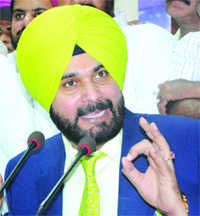
Navjot Singh Sidhu

Sanjeev Singh Bariana

Tribune News Service

Chandigarh, May 11

The Punjab and Haryana High Court today did not accept the plea of the Punjab Advocate General who questioned the “maintainability” of a public interest litigation (PIL) against propriety of Cabinet Minister Navjot Singh Sidhu appearing in a popular “spicy comedy” television series, “The Kapil Sharma Show”.“Lakhs follow the example set by ministers, and their public conduct is watched. In such a situation, can a minister resort to a conduct that is not in consonance with dignity and status of a Cabinet Minister?” a Division Bench of Justices SS Saron and Darshan Singh asked the AG.(Follow The Tribune on Facebook; and Twitter @thetribunechd)The observation came in response to a PIL by advocate HC Sharma, asking the Punjab Government “if it was appropriate for Tourism, Cultural Affairs and Local Bodies Minister Navjot Singh Sidhu to appear in a TV show?”The court heard arguments for two hours before adjourning proceedings till August 2.AG Atul Nanda said the PIL was not maintainable under the 2010 HC  guidelines. The AG said the code of conduct for ministers was not enforceable through courts.Unimpressed, the Bench observed that an issue of public importance had been raised.Petitioner Sharma said Sidhu was not only participating in “Kapil Sharma Show” but also appearing in an advertisement promoting a “magic machine” for learning spoken English. He quoted the 2004 judgment of the Supreme Court in Jayalalithaa’s case, wherein referring to enforceability of the code of conduct, the SC had observed that “morally speaking, can there be one law for small officials and another law for the CM?Is the code of conduct meant only to be kept as an ornamental relic in a museum, but not to be practised?” 

clip


PUNJAB NEWS –07 MAY 2017

Capt to take Dalits, Hindus, OBCs in expanded Cabinet

Capt to take Dalits, Hindus, OBCs in expanded Cabinet

Ruchika M Khanna

Tribune News Service

Chandigarh, May 6

To be expanded in the first week of June, the Punjab Cabinet will be a heady cocktail of caste, religion and region. Besides the inclusion of eight more ministers, the post of Deputy Speaker too fill be filled.Other than the CM, the Punjab Cabinet can have 17 ministers. The Capt Amarinder Singh-led Congress government already has nine ministers, two of them Ministers of State.At least two MLAs from the Dalit community, two from upper caste Hindus and one representing OBCs will join the Cabinet. The rest of the slots will go to Jat Sikhs. An MLA each from Ludhiana and Doaba and two from Amritsar will be allotted a berth.Of these new entrants, at least two will be young faces. The Congress high command in Delhi, during the swearing-in in March, had asked Amarinder Singh to “consider having younger faces in his team.” Having taken senior MLAs and women legislators in the ministry already, the CM is now expected to give representation to the youth brigade in the first Cabinet expansion. There is little doubt that the only person whose word will count in this exercise will be the CM himself. That is why most berth hopefuls are flocking to the CM rather than rushing to Delhi.Sources in the Punjab Government say the caste, religion and region dynamics have been worked out and the candidates are expected to be selected by the month-end. Among the hopefuls are Raj Kumar Verka, Surjit Singh Dhiman, OP Soni, Rakesh Panday, Vijay Inder Singla, Amarinder Singh Raja Warring, Randeep Singh Nabha, Sukhbinder Singh Sarkaria, Darshan Singh Brar, Rana Gurmeet Singh Sodhi, Sangat Singh Gilzian and Ajaib Singh Bhatti.The Cabinet expansion is to be done within a month, well before the Budget session. The government has decided to keep the appointment of 20 parliamentary secretaries and one chief parliamentary secretary on hold till then. The Punjab Chief Parliamentary Secretary and Parliamentary Secretary (Appointment, Salaries, Allowance Power, Privileges and Amenities) Bill is ready. But the government, wary of such appointments being challenged, is in no rush.

Among the hopefuls

  • Raj Kumar Verka, Surjit Singh Dhiman, OP Soni, Rakesh Panday, Vijay Inder Singla, Amarinder Singh Raja Warring, Randeep Singh Nabha, Sukhbinder Sarkaria, Darshan Singh Brar, Rana Gurmeet Sodhi, Sangat Singh Gilzian and Ajaib Singh Bhatti

Jakhar’s comeback

Punjab Congress head faces many challenges

Jakhar’s comeback
Tribune file photo

THE Congress high command has done rather well in naming Sunil Jakhar as head of the Punjab Congress, as Capt Amarinder Singh, on becoming Chief Minister, could not possibly continue to don the party hat as well. Jakhar, a three-term MLA, had lost from Abohar in the last Assembly elections, and the Cabinet that formed was thus deprived of a serious talent. Jakhar made a competent leader of the Congress Legislature Party in the last assembly and worked companionably with Capt Amarinder Singh once he took over as Punjab Congress chief. The party high command had, obviously, no problem in accepting the Chief Minister’s proposal that Jakhar take over the organisation’s burden. Jakhar is the right man for the job. Being a Hindu, he helps the party reburnish its secular credentials. An educated, approachable, veteran politician he may well be, but Jakhar faces some tough challenges. Although the party won handsomely in the elections, its organisational health is far from robust. Being in the wilderness for a decade, followed by an abrupt reversal of fortunes, makes it difficult to summon the discipline and diligence to tone up for the next challenge: the 2019 parliamentary elections. Jakhar had made a positive impact on both sides of the aisle as the Leader of the Opposition earlier. As state Congress chief, he can help the Chief Minister rein in MLAs and other functionaries, whose muscle-flexing has led to a spate of violent incidents in the past few weeks; even ministers have overstepped their brief. Apart from what Jakhar does, his very appointment has sent a clear message down the party chain in the state that it is Capt Amarinder Singh who shall have the last word on all party matters. His success will be critically dependent on his ability to resist the ancient rites of factionalism as also his willingness to hammer out a working relationship with the Chief Minister. If the Congress manages to give Punjab a modicum of coherent and purposeful governance, the impact will be felt beyond Punjab. Jakhar’s task is cut out for him.

Medical college head in spot over pvt practice

Medical college head in spot over pvt practice
A Vigilance Bureau team raids the residence of Government Medical College principal Dr BS Bal in Amritsar on Saturday. Tribune photo

PK Jaiswar

Tribune News Service

Amritsar, May 6

The Vigilance Bureau today nabbed Dr BS Bal, principal of Government Medical College, for allegedly indulging in private practice at his home in Amritsar.According to information, a vigilance team raided his residential complex at around 8.30 am. Navjot Singh, DSP (Vigilance), said it had received an anonymous complaint that Dr Bal was indulging in private practice. A trap was laid and he was caught. At the time, around 8-10 patients were at his residential clinic, he added. The vigilance took prescriptions slips from all patients as evidence.The DSP said a report would be sent to the Secretary, Medical Education, for necessary departmental action against him. However, no case had been registered by the vigilance against him, he added.A teacher said as per a Supreme Court order, the vigilance could not arrest a government doctor indulging in private practice. It can only write to the government and department concerned for action. Dr Bal termed the incident as politically motivated to remove him. Saying all patients were planted by the vigilance, he said he was leaving for the college when some people insisted that he check the patients and forcibly handed over money as fees. He said he had informed the higher authorities in this connection.

Residents felicitate MLA for accepting demands

Residents felicitate MLA for accepting demands
Office-bearers of various organisations felicitate MLA Surjit Singh Dhiman in Mandi Ahmedgarh on Saturday. Tribune photo

Tribune News Service

Mandi Ahmedgarh, May 6Office-bearers and activists of various social, commercial and religious organisations felicitated the legislator Surjit Singh Dhiman for the initiatives taken by him for welfare of the residents during a function at Gurdwara Singh Sabha at Railway road here today.Dhiman said getting the pending demands of the residents fulfilled was his duty. He said Chief Minister Caption Amarinder Singh had assured him to send the required grants for new projects and the completion of the pending works.“When residents have elected me to represent the segment, it becomes my duty to get all demands accepted,” said Dhiman.Earlier, office-bearers of the Vishwakarma Mandir Management Committee, Jassa Singh Welfare Society, Gurdwara Parbadhak Committee, Ahmedgarh Municipal Council, Vishwakarma Iron and Steel Implements Manufacturers’ Association, and Rotary Club felicitated Dhiman and his associates by presenting mementoes.

Patwari caught accepting Rs 30,000 as bribe

Tribune News Service

Ludhiana May 6

The Vigilance Bureau arrested a patwari red-handed while accepting a bribe of Rs 30,000.He has been identified as Ravinder Kumar and was employed in Daba area.The patwari was arrested after Neelam Rani, a resident of Daba, apprised the vigilance officials that the patwari was demanding bribe for the mutation of their land. Considering the complaint seriously, vigilance officials laid a trap and arrested the accused red-handed.SSP Vigilance Bureau Range Rupinder Singh said the complainant had filed an application in the office of the Tehsildar Central for the mutation of land and the accused patwari was creating hurdles in the completion of formalities. The SSP said the accused was demanding Rs 50,000 bribe, but the deal was finally struck at Rs 30,000, adding that accordingly the vigilance sleuths laid a trap to arrest the accused.The SSP appealed to the residents that if any government official demands bribe from them, they should inform the Vigilance Bureau. The incident took place in the presence of Divleen Kaur, SDA GLADA, and Pardeep Singh Tiwana, Agricultural Development Officer, Ludhiana. A case under Sections 7, 13(2) 88 of the PC Act was registered against the accused.

Loan waiver right, not enough: Cong

Loan waiver right, not enough: Cong
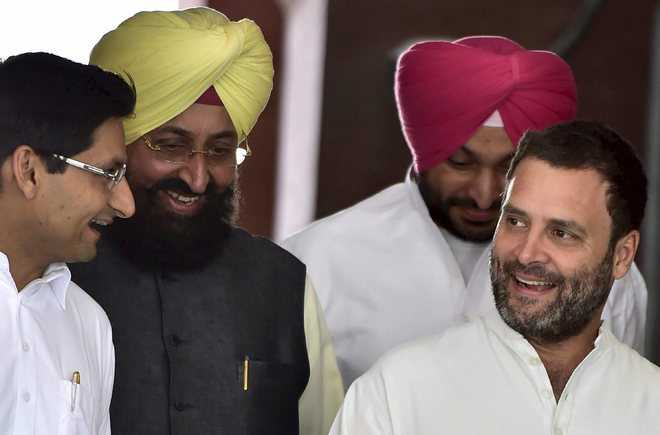
Congress vice-president Rahul Gandhi with party leaders in Parliament on Wednesday. PTI

Tribune News Service

New Delhi, April 5

A day after the Congress slammed the government for waiving off only part of the loans to be paid by Uttar Pradesh farmers, party vice-president Rahul Gandhi today said the development was a step in the right direction, but not enough.“The Congress supports loan waiver for farmers, but this is only a partial relief. The Centre Government must respond to ease distress of farmers across the country,” he said.He, however, qualified his remarks saying the loan waiver was a step in the right direction. Referring to the national farm loan waiver of over Rs 70,000 crore during the UPA regime, he said the Congress had always supported easing financial stress on farmers.“The Congress has always supported loan waivers for farmers in distress. I am happy the BJP has finally been forced to see reason. But let us not play politics with our farmers who are suffering across the country. The Centre must have a national response to the widespread distress and not discriminate against states,” he said asking for a pan-India waiver.


HEAD LINES –30 APR 2017

breakl line

EX-SOLDIERS AS GUARDIANS OF PUNJAB WELFARE SCHEMES: KNOW DETAILS, AND MEET THE GENERAL WHO WILL LEAD

ARMY INSTITUTE OF LAW CELEBRATES ANNUAL DAY

KUPWARA MARTYR CAPT YADAV CREMATED

AIR CHIEF MARSHAL VISITS AGRA IAF STATION

SHARIF SACKS TOP AIDE OVER INFO LEAK, ARMY ‘REJECTS’ IT DAWN REPORT SPOKE OF RIFT OVER PROXY WAR AGAINST INDIA

breakl line


PUNJAB NEWS

CLICK AT THE SCROLLING NEWS HEADING FOR DETAILS AT RIGHT COLUMN TOP::WHATS NEW

breakl line


INFIDELITY, MURDER, PATRIOTISM: A HOT MIX!

Bachi Karkaria’s In Hot Blood on the Nanavati Case, that continues to fascinate the nation, presents a colourful portrait of a bygone era

On 27 April 1959, a 36-year-old naval officer called Kawas Nanavati asked his young and pretty English wife, Sylvia, why she seemed so distant, even refusing to let her husband touch her. After sustained questioning, Sylvia confessed that she was in love with a Sindhi automobile dealer called Prem Ahuja and had been conducting an affair with him.

EXPRESS ARCHIVE PHOTONaval Commander KM Nanavati

Nanavati was probably incensed — judging by what followed – but at the time, he was content to have lunch with Sylvia and their children and to then drop them to Metro cinema for an afternoon show. After that, he went to his ship (docked in Bombay), signed out a Smith and Wesson revolver from the gunnery and went looking for Ahuja.

He reached Ahuja’s apartment, confronted him, shot him dead and then, as the building’s watchman tried to prevent him from leaving, waved him aside saying, “Don’t bother. I’m going to the police station myself.”

Which he did — after a fashion. Nanavati gave himself up to a senior officer of the naval police, saying, “I have shot a man because he seduced my wife.”

Open and shut? Well, it should have been. But the Nanavati case followed such a remarkable trajectory that it is hard to believe that, except for some minor inconvenience, Nanavati got away with the murder. He was reconciled with Sylvia (who would appear in court to give evidence on her husband’s behalf), was acquitted by a jury and by 1964 had got himself a job with the Tatas, and a visa to Canada where the family began a new life.

In Hot Blood (awkwardly sub-headed “The Nanavati Case That Shook India”), Bachi Karkaria captures the twists and turns of this incredible story and tries to put it in historical context. As she suggests, the events surrounding the case were so incredible that no novelist would have dared to invent such an outlandish plot.

These days, the media take the police at their word when an arrest is made and report only what the police say. But in Sixties Bombay many papers discounted the official version and made Nanavati out to be a hero. Sylvia was treated as an innocent beauty seduced by a lascivious car salesman. And Ahuja was portrayed as the embodiment of vulgar, nouveau-riche evil.

The country’s best lawyers appeared in the case at various stages: Rajni Patel, Ram Jethmalani (this is the matter that first brought him to public attention), Karl Khandalavala, Nani Palkhivala, YY Chandrachud, HM Seervai and SR Vakil. At the first trial, the jury acquitted Nanavati, a decision that eventually contributed to the abolition of the jury system in India.

It was often suggested (without any evidence) that Nanavati’s lawyer, Rajni Patel, had fixed the jury and newspapers reported that when the jury returned to deliver its verdict, a female jury member actually winked at Nanavati.

The jury’s decision was overturned by the judge but by then Nanavati had won even more public support. There were frenzied demonstrations in his favour outside the courtroom and incendiary editorials calling for his release.Blitz, then India’s largest-selling weekly, ran a campaign to have Nanavati declared innocent and the Commander became such a cult figure that hawkers would come up to cars at traffic lights, trying to sell toy pistols which they would describe admiringly as “Nanavati ki Pistol”.

It is a measure of how well Nanavati was treated that while the case was in progress, he was not required to go near a real prison or even a police lock-up.

Instead, he lived in relative comfort, in a naval detention centre with his own personal toilet (Western style, of course) and visits from the family dog. He kept his uniform on and was saluted by lower ranks. When the Courts tried to send him to jail, the Governor of Maharashtra intervened officially, on Nanavati’s behalf, to keep him out of prison.

What accounts for this extraordinary turn of events? Three factors were crucial.

One: Nanavati was a favourite of the then Defence Minister, VK Krishna Menon with whom he had served in the High Commission in London. Menon called Rajni Patel and asked him to take the case. He pushed RK Karanjia, the Editor of Blitz, into backing Nanavati. He forced the Governor to intervene on Nanavati’s behalf. And he encouraged the Chief of the Naval Staff to testify in Court in Nanavati’s defence.

Two: Karkaria suggests that it was a war of the elites. The Parsis were the old elite. Ahuja, a self-made Sindhi businessman represented a new entrepreneurial class which the old elite regarded as vulgar and undeserving of respect.

And three: the defence managed to turn the case into a matter of morality. Not only was Ahuja portrayed as a sexual predator but it was suggested that when the upright Commander confronted him and asked if his motives were honourable, Ahuja laughed and said, “I don’t have to marry every woman I sleep with.” (The cad!)

But there was also an armed forces vs civilians angle. Blitz made much of the fact that Nanavati was an officer who had defended our borders while his armchair critics were mere commentators who had never worn a uniform. (This defence may sound familiar to viewers of today news channels.) Plus, the navy threw its weight behind him. Even though the murder was entirely a civilian matter with no connection to his military role, Nanavati had the navy brass behind him. When the appeals process was finally exhausted and Nanavati was sentenced to life imprisonment he didn’t have to suffer jail for too long. Within three years, the government pardoned him and let him settle abroad. There was no outcry and the circumstances of the case passed into legend, forming the basis for much fiction and several films (Rustom was the most recent) where the Nanavati-figure was portrayed as the hero.

This is a fun book about an important case, full of interesting details though it is one-third longer than it needs to be and a good editor would have made it tighter and more readable by excising some of the stream-of-consciousness prose and the jarring leaps in tense. But still, a colourful portrait of a bygone era.


US seeks help for dismantling financial networks of terror groups’

‘US seeks help for dismantling financial networks of terror groups’
US Treasury Secretary Steven Mnuchin. File photo

Washington, April 22

The US has sought the help of the international community, in particular multilateral financial institutions, in targeting and dismantling financial networks of terrorist organisations.“Targeting and dismantling the financial networks of terrorist organisations is a top US priority, and improving anti-money laundering and counter-terrorist financing (AML/CFT) systems is critical to this goal,” US Treasury Secretary Steven Mnuchin said in his address to the IMF.The United States, he said, welcomes the IMF’s important work providing technical assistance to member countries to strengthen their regulatory and supervisory frameworks with respect to anti-money laundering and countering the financing of terrorism.“It is also imperative that the IMF be a leader in fighting corruption,” he said as the world’s finance ministers and governors of central banks gathered in the US capital to attend the Spring Meeting of the IMF and the World Bank.Noting that the global economy continued to exhibit large and persistent external imbalances, which contributed to the sentiment that the existing international monetary and trading system did not benefit all, Mnuchin said in this environment, the US called upon the IMF to more robustly fulfill its surveillance mandate in pursuit of strong, sustainable, balanced, and inclusive global growth.“This should include strong analysis of member exchange rates and external imbalances in both the External Sector Report and in Article IV surveillance. The IMF should also identify specific policy adjustments at the country level to achieve substantially improved balance in the overall system,” he said.The US looks to the IMF to highlight where surplus countries can more forcefully contribute to support symmetric adjustment in pursuit of a fairer global system.“Countries with large external surpluses and sound public finances have a particular responsibility for contributing to a more robust global economy by deploying fiscal policy aggressively to boost growth and help facilitate global rebalancing,” Mnuchin said.“In our view, excessively large trade surpluses, like excessively large trade deficits, are not conducive to supporting a free and fair trading system,” he said.“Fair and transparent currency practices are also a critical part of ensuring that the benefits of trade are shared equitably. Countries should abide by their exchange rate commitments, including commitments to refrain from competitive devaluation, to not use monetary policies to target exchange rates for competitive purposes and to consult closely on exchange rates,” Mnuchin said.The US economy, he said, continued to expand at a steady pace and forecasts suggested stronger growth this year and next.Nevertheless, the US economy continued to face challenges, with growth last year languishing below pre-crisis levels amid weak business investment, Mnuchin said, adding that the economy had gone through periods of disappointing performance before, however, and a continuation of this weak growth is not pre-ordained.“In response, the administration is undertaking an ambitious policy agenda that includes tax reform, deregulation and infrastructure investment to sustainably raise US economic output and employment,” he said.“In tandem with our domestic reforms we will continue to promote an expansion of trade with those partners committed to market-based competition, while more rigorously defending ourselves against unfair trade practices,” the Finance Secretary said.Outside the US, while the IMF and private analysts expect global growth to expand this year and next, there are questions about how sustainable and broad-based this growth will be, he added. Medium-term growth prospects remain muted due in part to the decline in total factor productivity, continued weak domestic demand, and banking-sector problems in some countries, he said. PTI


ITBP publishes health book for jawans, duty book for wives

ITBP publishes health book for jawans, duty book for wives
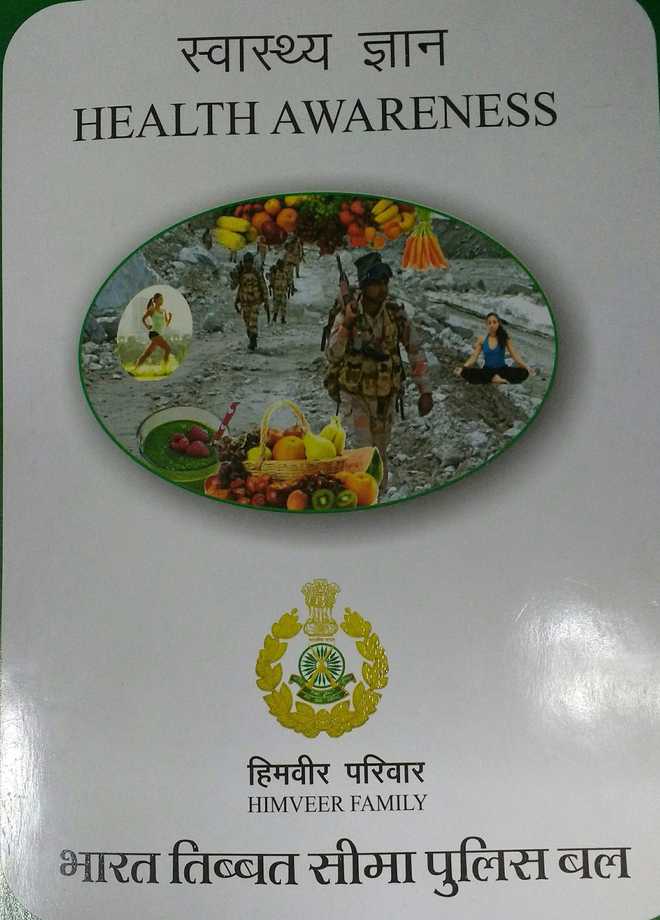
Cover of a book released by ITBP for its jawans and their wives. PTI

New Delhi, April 16

Do not allow your husband to tie the nuptial knot again while he is still married to you; be updated with the regimental number and rank of your husband.

These are some of the instructions that border guarding force ITBP has compiled in a unique booklet and distributed among the wives of its troops deployed in far-flung frontier areas and in the hinterlands.

(Follow The Tribune on Facebook; and Twitter @thetribunechd)

The Sino-India frontier force has undertaken a first-time initiative to make aware the wives of its troops about their “rights and duties”.

The booklet has been attached in another book that the paramilitary has prepared to educate its jawans and their families about issues of health and personal hygiene.

Over 85,000 copies of these two booklets have already been printed and dispatched to the field formations of the force.

ITBP Director-General Krishna Chaudhary, who has also written a foreword in the book, said that strict directions have been issued to all the formations to ensure that these books are handed over by the troops to their families when they visit them on leave.

“We got these booklets prepared by talking to experts and doctors of the force. The aim is to keep the troops and their families healthy and happy given the fact that they are deployed in hard areas where communication with the world is minimal,” the DG said.

The booklet for wives tells them that they should be updated and informed about the regimental number (force ID), rank, current pay, location of battalion or unit and even the number of official leaves their husbands are entitled to.

“Ensure that your name is included in his service book, your name has been entered as the next of kin in the service record and all bank accounts and life insurance policies,” the instructions state.

ITBP spokesperson Deputy Commandant Vivek K Pandey explains the rationale behind the initiative: “The duty charter of the force is such that troops are on duty and away from home for long and visit their homes only during the leave period and it is the wives who run the household in their absence.

“It was found that many jawans and their families were totally ignorant about their rights and their entitlements and hence the books were prepared to make them aware,” he said.

The booklet, prepared by the wives welfare association of the force, is an attempt to make sure that wives can make an informed choice and no one is able to mislead them in case of any eventuality, Pandey said.

The booklet for wives also speaks about the legal rights they have: “Do not give your husband the right to marry again while he is still married to you. If any force personnel remarries while his first wife is still alive and without her written consent, then according to ITBP rules he can be terminated from service.”

It also tells them in detail that a government servant demanding dowry is illegal and is a punishable offence and also about the grounds a wife can seek divorce.

However, divorce is the last resort, it states.

Woman can take help of family, friends and the commanding officer and the stress counsellor of her husband’s battalion.

The wives are also suggested to “understand” the service conditions of their husbands which are quite tough and that they should “cooperate” with them in this regard.

“Inform your husband’s seniors officers about any doubtful activities of your husband. Try to be self reliant and mentally strong to face any situation,” it said.

The health awareness guide book informs the jawans about various lifestyle diseases and ways to live healthy without indulging into alcohol or drugs abuse.

It also makes them understand various aspects of healthy living and the correct procedure for undertaking daily ablutions like brushing teeth and the benefits of doing regular exercises.

The health book also warns them about the drawbacks of having junk food and not adopting a healthy lifestyle and undertaking excessive stress.

A special mention has been made on health challenges faced on high-altitudes and mountains as the force is largely deployed in the Himalayan region along the China border.

The about 86,000 personnel strong force is tasked with securing the 3,488-km-long frontier apart from rendering a variety of duties in the internal security domain of the country including undertaking anti-Naxal operations. — PTI


Our Pakistan policy should be playing on front foot like Sehwag: Major Gaurav Arya

Since decades, our soil has been moistened by the blood of our soldiers. A terror state unleashes its wrath time and again and vows to bleed us with a thousand cuts. Thousand cuts, which have now run into millions. Countless soldiers lost, mothers left childless, wives left alone, and children who have had to grow up never knowing why their father was taken so early.

Here’s an interview with a soldier who shed his blood so we can sleep safe. A soldier who tells us what it might take to tame the beast.

I spoke to Major Gaurav Arya, who served with 17 Kumaon Regiment from 1994 to 1999. He was posted in Rajasthan, Punjab, Tibet border, and Jammu & Kashmir. In J&K he operated along the Line of Control and was also involved in anti-terror operations.

My questions are in bold, though it’s the answers that are actually bold:

It is said that every government comes to power thinking that they can solve the Kashmir issue and the Pakistan conundrum. And somehow, every government fails. Why do you think that is?

See, there are certain facts about Kashmir which people in the opposition don’t know about. And when they come to power and are properly briefed by the intel agencies, then they realise it is not so simple. Solving Kashmir requires using immense political capital in the country, and anybody who wants to solve the Kashmir problem will have to withstand a lot of international pressure and will have to project India as a strong power.

I was recently in Kashmir and almost for a week. I was in Srinagar and I spoke to people on the road. All of them, irrespective of whether they are happy with India or not, said they were not happy with the state of affairs. But the problem is that for a small problem like the roads in Srinagar, which is very much a state subject, people blame the central government because for everything they have been taught to blame the central government. “har cheez dilli ki saazish hai“.

Now coming back to your question, there should be an intent to take hard decisions. For example, the central government has to bypass the Hurriyat. Hurriyat is an umbrella body which was created under Pakistani guidance to unite the separatists. They have not been elected by anybody. The government also has to take hard action against stone-peltors. You must have seen videos of our jawans being beaten. I spoke to CRPF and it is very disheartening why this happens with the CRPF and not the Indian Army.

They tried stone pelting with the Indian Army in two operations. In one, Major Dahiya was martyred. They tried again. And the third time, the Indian Army shot three “protestors”. Now the Indian Army does its operations and nobody comes in between. Now as callous as it may sound, the problem is that the Kashmir problem and this stone pelting has been highly intellectualised by the left-leaning liberals. They peddle this entire narrative of victimhood which is imaginary. You ask a man in Kashmir, “azadi milegi to kya karoge” (what after aazaadi?), he doesnt know. It is just something which is now too big to be questioned and that is mainly because the successive governments in 30-40 years have not had a concrete policy.

Do you endorse the use of force then?

See, when you establish the writ of the state, you have to use force. All the 5 permanent members of the UNSC are not members who are known for their perfect human rights record. We might think human rights makes the world go round, but they don’t. What makes it go round is economy and military might. We can’t take of one Kulbhushan Yadav, we can’t declare Pakistan a terror state or take hard decisions in Kashmir and we want to be the 6th member of UNSC! Who will take you seriously? It takes iron in the soul.

You brought out a great disparity in the functioning of the CRPF and the Army. You mentioned how they pelt stones at the CRPF but the Army did what it had to do and now they conduct their operations without hindrance. Why do you think the CRPF is not given the same latitude as the Army considering the anti insurgency operations are the same?

Well, when the Army functions, it functions under AFSPA. Army has certain constitutional protections which the CRPF doesn’t. The CRPF functions with the state police. For example, if there is a problem in Kashmir and the Army is called, they are not answerable to the Chief Minister or any politician. It assesses the situation and takes necessary action.

Today you see videos of a soldier armed with an AK47 being slapped by a Kashmiri youth. That itself tells you that they are under immense pressure not to react. I spoke to a young Kashmiri in Srinagar and asked him “patthar kyu phenkte ho? Darr nahi lagta?” (Why do you pelt stones? Aren’t you afraid of the consequences?) He said “kya baat kar rahe hai sahab, CRPF ki himmat thodi hai kuch karne ki, hum to unke muh pe thuk ke chale jaate hai” (What are you saying!? CRPF doesn’t have the courage to do anything, we even spit at their face and come back). And this fellow will never try this with an Indian Army soldier.

The problem is with the leadership. The Indian Army is led by General Rawat. 30 years back, he was a second lieutenant in the Gorkha Rifles. He has seen the ground reality. He owes loyalty to that institution. The problem with CRPF is that most of their top management is imported. These are IPS officers. If you are senior enough, you can become DG of CRPF. They might not have seen one day of Kashmir or any sort of counter insurgency operations. And they lead a force that is heavily involved in counter insurgency and internal security operations.

So basically, CRPF is being used as fodder by our political dispensation?

No. They’re being used as a punching bag to absorb Kashmiri anger. On 5th of April, a CRPF column was moving and they were given a school to stay in without any facilities. That’s typically how CRPF is sent in any place. There is one assistant sub inspector (ASI) who was about to retire. This ASI, because of the lack of light and stair railings, he fell down and he died. Nobody knows about it. We know 8 stone pelters were killed. How many CRPF men were killed?

Now I’ll tell you something and I insist you include this in the interview:

Today CRPF and JK police cannot be treated at civil hospitals in Srinagar because as patients they are assaulted in OPDs and ICUs. Put this down and say Major Gaurav Arya said it. I will stand by it. So they come to an Indian Army run hospital. I’ve met them. I’ve spoken to them. Doctors refuse to treat them in Srinagar because they get threatened. This is happening and CRPF is taking all this. My only fear is someday a CRPF soldier will snap because how much humiliation can a soldier take?

I’m so shocked by what you have told me, I have almost forgotten my other questions. Because none of this ever comes up in research. None of this is ever spoken about by the Media.

Media doesn’t talk about this because they want a (sound)bite from SA Geelani. They practice Dal Lake journalism. They’ll go to Dal Lake, sit on a shikara exchange sher-o-shayari and talk about Human Rights.

I’m not saying there should be no Human rights. Any soldiers who crosses the line should be put in jail. But at the same time, soldiers have human rights too. Over 3500 soldiers (estimation) were in the hospital after Burhan Wani. But the media won’t talk about them. These people are expendable.

There was a Pakistan Senate Committee report which was basically a doctrine of alternate warfare. It went to the extent of shifting the blame of radicalisation in Kashmir to anything other than Pakistan. We see that in India too. From beef to Yogi Adityanath are blamed for it. How does the state deal with such 5th column information warfare?

The problem is people in India who end up forwarding this narrative view Kashmir from the eyes of Karan Johar. This radicalisation in Kashmir started in 1989-1990 with a terrorist group called JKLF. Then there were other groups, LeT, JeM, Hizbul Mujahideen, etc. All these names are Arabic. There isn’t one group with a Kashmiri name.

The identity of the Kashmir “struggle” is now not Kashmiri but Islamic. They will never raise the Kashmir flag. They’ll use either the Pakistan flag or ISIS flag.

Pakistan wants to twist India’s neck.

So what can India do to combat the information warfare? When the PM raised Balochistan from the ramparts of Red Fort, we had an entire section say “Balochistan is not our business. Let’s focus on Kashmir” without realising how important Balochistan is for India.

We need to have a narrative which is missing right now. We keep saying “Kashmir is an integral part of India”. Stop saying it. Of course it is. So is PoK. But what is the narrative? You see some Kashmiri websites that spread poison. And The Hindu, TOI, etc, some of their Srinagar correspondents write neutral pieces in their newspaper with a tilt towards separatists but in their own Facebook pages, what they write is absolute treason. They take an image of a child killed in Syria and present it as a child killed in Kashmir.

The Pakistan supporters need to realise. We use platoon level weapons. Pakistan uses F16 fighter jets on its own people in Waziristan. Kashmir banega Pakistan? Ye saare bill main ghus jayenge.

Captain Tushar Mahajan was martyred because he wanted to save hostages from terrorists. He went inside and got killed. If it was the American Army, they would have blown up the building. We lost Tushar. We lost Captain Pawan Kumar. They were kids. They don’t realise the lengths the Indian Army goes to in order to avoid collateral damage. We care because Kashmir is ours. Its people are ours.

When narrative building is so important, why is our army so opaque when it comes to interacting with civilians. I have tried to find books etc to educate myself, but could hardly find any. Why is there this disconnect? Why aren’t civilians communicated with about the ethics and operations of the Armed Forces like may be the USA?

Nehru and his cabinet, except for Vallabhbhai Patel, was of the opinion that we don’t need the armed forces after Independence. What we need is a police force. So, the budget was cut to a point where we suffered a debacle against China in 1962. So these people have continuously devalued and humiliated the army, which is why the Army is a very shy institution. Army psychology is ‘do your job and shut up’. The army is under the civilian dispensation. But serving officers can’t be shown on camera. So it’s people like me, Gen. Bakshi etc. who try our best to educate civilians.

You are right. There is very little literature available about the Army. And it needs to change.

Ok. So coming back to Kashmir, you also said we have to by-pass the Hurriyat. But successive governments have given them special privileges. Apparently, in 2013, Asiya Andrabi was flown to Delhi in a special flight to speak to Sartaz Aziz. Regardless of the ways in which the current dispensation is trying to bypass them, somehow, even this government hasn’t revoked their state privileges. Why do you think that is?

Nupur, the problem is these are imaginary fears in our mind. Because the Hurriyat since decades has been projecting itself as the true representative of the Kashmiris. So, it’s always a notion that we can’t offend the Hurriyat warna azaadi ke naare aur bhuland ho jayenge (if we offend Hurriyat, separatist demands will become stronger), which is not true. I don’t know what these think tanks are advising the government!

You have repeatedly said that the political class needs to give the Army 3 days with respect to Kashmir and Pakistan and the issue will be solved. But there is a section of people who think that any sort of military retaliation in heavy measure will lead to unprecedented escalation that in turn might result in a Nuclear winter because we are dealing with rogue state, Pakistan. How do you think we should deal with the escalation that might happen if Army is given a free hand?

Have you seen Sholay?

Yes

There is a character called Veeru who gets drunk on goes on the water tank saying “basanti se shaadi karwao warna main mar jaunga“. The Veeru effect is Pakistan’s schizophrenia.

We are also a nuclear power. They attacked us in Kargil. What happened? Nothing. They fund Kashmir unrest. What happened? Nothing. Because they know India won’t retaliate.

Similarly, we also know Pakistan wont retaliate. These are imaginary fears in our mind and Pakistan wants you to believe that there will be a Nuclear winter if India retaliates. These are called psychological ops. They want us to believe that they will strike even if we look at them. We did a surgical strike. What happened? The best Pakistan could do was say “janaab ye hua hi nahi“.

There are so many ways to militarily teach Pakistan a lesson.

There was an article in New York post on 31st March that spoke about how India may be rethinking its no-first-strike Nuclear policy. Is that true? And do you think that’s desirable?

See, when we say we have a no-first-use policy, it’s because we are looking at Nuclear weapons through the prism of Pakistan. This entire no-first-strike policy defies logic. Why should we tie our hands? Nobody will use Nuclear weapons but we must at least have an option on the table.

Okay. So how does the Cold Start Doctrine fit in if we throw the no-first-use Nuclear policy out of the window? After the Surgical strike, there were many reports in the Pakistani media of them hyperventilating about how India might be gearing up to put Cold Start Doctrine in motion. There were counterparts even in India spoke about it. Can you tell us what it’s about?

When the Indian Parliament was attacked, 9 of our bravehearts were martyred and we took exception to the fact that the fountain of our democracy was attacked. So India launched Operation Parakram. Almost 1 million armed personnel were mobilised to the border. Earlier the Army used to follow the Sundarjee doctrine. The holding and strike cores are based in 3 different locations. The cores are huge. When the time came for mobilisation to the border, these cores took more than 20 days to reach the border. By that time, Gen. Musharraf already went on television and regretted the attack. In war, you need to be quick. Indian Army delayed it and suddenly the justification for war was zero.

The Indian Army then went and started the process of learning. They analysed old battles and they wanted to reduce the time from 21/22 days to 2 days. They studied everything from Hitler’s blitzkrieg and specially the Israeli-Arab war of 1965. Then they came up with the Cold Start Doctrine, which can slingshot Indian army into high intensity war at blinding speed.

The basic idea of Cold Start was this : Pakistan has a nuclear threshold. A point after which they will deploy. Cold Start was designed in a way that before Pakistan thinks of deploying Nuclear weapons, the war will be over and we occupy 70-80 km of Pakistan territory. This hammer is with the government. It’s like the hammer of Thor. They have to understand when it should be deployed.

There was this news of Pakistan planning to declare Gilgit – Baltistan as its 5th province. What steps should India take to counter if Pakistan goes ahead and does it?

Gilgit-Baltistan is from where the CPEC (China–Pakistan Economic Corridor) enters Pakistan. China has apprehensions about investing in CPEC that starts from a place which is not even Pakistan’s. My view is, if Pakistan wants to declare Gilgit-Baltistan as its 5th province, they should go ahead. What India will do then is, abrogate article 370, get rid of the Kashmiri flag and we send the Indian Army to Srinagar. If they say Gilgit-Baltistan is a part of so called “Azaad Kashmir”, it has its own constitution and political establishment. So even the separatists in Srinagar should condemn this move. Now if they don’t do it, China, which can be compared to Shylock, will have a problem. It they do it, they will alienate the separatists and also invite Indian action. It’s all just Chinese pressure.

Now if we talk about South East Asia dynamics, there’s obvious camaraderie between Pakistan and China. But there is also increased camaraderie between India and Afghanistan and India and Balochistan. In this situation, what role do you see India playing in Afghanistan and Balochistan because both along with India is putting pressure on Pakistan?

I think it will get interesting once Chabahar port is fully operational; once India has access to Afghanistan. Our handle in Afghanistan is if we build something North West of Pakistan. We build friends. We arm those friends. And we invest in Afghanistan so we can pressure Pakistan.

Pakistan is always skeptical because Pakistan is a very narrow country and it does not have space to fight a war and hence it looks for strategic depth. So Pakistan creates groups like Jindolla for Iran, Tehrik-e-Taliban in Pakistan and Haqqani network for Afghanistan, and for India it tries its stunts in the Khalistan movement, Kashmir etc. So, since it does not have the land to fight a war with India or other enemies it seeks to build influence, fifth column and insurgency. Today Pakistan can say that if India plans to attack through Kashmir, they will meet with a lot of resistance and stone pelting, which may not be true because when the Army moves there is generally no resistance.

As far as Balochistan is concerned, it was an independent country even before India and Pakistan. It deserves to be free. And they are also a perfect counterpoint for us as far as Kashmir is concerned. But we most give political sanctity to Balochistan. Simply going on the ramparts of the Red Fort won’t help. On ground, Indian embassies and high commissions throughout the world should hold seminars on 27th March, the day Pakistan invaded Balochistan. We should also help them in infrastructure in various countries. For example, India can fund a small building in Washington that can be called the Balochistan House. Let people ask questions. Let it have the Balochistan flag.

So what you are saying is India needs to go beyond lip service and actually have political involvement in Balochistan?

Absolutely. Have a budget and in at least 15-25 main countries build Balochistan Houses which is manned by Balochistan people.

And give Mr. Bugti political asylum?

Yes. give Mr. Bugti citizenship, get him to Delhi, give him house and protection. India did it for the Dalai Lama. That time we were fighting against China and we weren’t the power we are today. If we could do it then, then why not now?

There were talks of whether India should send troops to Afghanistan. Can we discuss its implications and whether that would be in India’s best interest?

We can certainly discuss it. Finally, it has to be Iran that permits. If Iran permits we should have Indian troops in Afghanistan.

But then there was a lot of “aman ki asha” talks of how that is none of India’s business and we end up sending troops to Afghanistan then we can’t fault Pakistan and China for their aggression in Kashmir, Gilgit-Baltistan, etc.

True. But here’s the thing, whether you send troops to Afghanistan or not, Pakistan and China will continue their aggression. There was no talk of Balochistan or Afghanistan when 26/11 happened or when Kargil happened. So Pakistan and China will do what they have to do irrespective of all this.

So according to you, if Iran permits, India should definitely send troops to Afghanistan and also help Balochistan in their fight for liberation politically and militarily. Did I get that right?

100%. We should give artillery guns and aircrafts to Afghanistan. Afghanistan men are being trained in India but we should train more of them. The more we get involved with Afghanistan, the more loyalty and friendship will be built in the long run. Simply spending money is not enough. Everyone takes Chinese money but nobody is loyal to China because loyalty can’t be purchased. We are loved in Afghanistan.

So you endorse this?

Absolutely. I endorse a foreign policy that is on the front foot. We should bat like Virender Sehwag!

What if someone says that allying with Afghanistan or arming them could be a mistake like that committed by the USA. Especially when you agree that Kashmir problem is now more Islamic than Kashmir.

Allying with Afghanistan has got nothing to do with the Kashmir policy. Further, we are not helping Afghanistan in any “Jihad” like US did. We need access to Central Asia, which is why we should be investing in Afghanistan. Also, it is good for us that Pakistan feels pressure of a hostile regime from its North West. It is about cornering Pakistan.

So diplomatically, why do you think our current political dispensation, which has a declared hard stand against Pakistan, failed to cancel MFN status, abrogate IWT, send the Pakistani ambassador packing and reduce ties to a consular level?

Well, they are learning about international power pressure. And I think much of it is connected to domestic politics. They might fear offending Muslims if they take steps against Pakistan though I don’t think Muslims in India care about Pakistan.

But then there is the disparity. The government of the day has passed a harsh amendment law to the Enemy Property Act, so clearly they are not scared about offending minorities or any religious section.

Yes. They are doing it and doing it aggressively. But except for the English Media, there isn’t too much discussion on these things. As I said, most governments tend to get stuck in domestic agendas.

So you are saying these issues are being put on the back burner because of electoral politics?

No. Not because of electoral politics. But our priorities are different. Narendra Modi can only be at one place at one time. USA prioritises international issues. I do think what Narendra Modi is trying to do is extremely good for the nation.

Israel actually enacted a law that punishes stone pelters with 20 years in prison. Its the kind of law that India has never even considered. Do you think a law like that would help?

Sure. But we don’t even need to put them in Jail for 20 years. Imagine a stone pelter who is 17-18 years of age. Give him 1 year in a jail in Tamil Nadu or Nagaland. India is so vast. Put them in different jails for a year where nobody understands them, their language, their culture. They’ll freak out. Let them not be in Kashmir. Don’t harm them. Just put them in one jail in Manipur.

The whole situation that is being built with Kulbhushan Jadhav being handed out the death penalty, do you think it’s in response to India cracking down on ISI rings in India? That Pakistan wants to drag the Indian army and the state to their level in the international community?

Yes. It is a little of that. But also that for a very long time the Pakistani people have been told by the Pakistan army that every problem in Pakistan is sponsored by India. They don’t have any proof. Mr. Jadhav had a valid visa for Iran. He was captured by the local Taliban and handed over to the ISI. Now suddenly Pakistan had something to beat India with. They have handed the death penalty to Mr. Jadhav because they need something to show their own people as proof of India creating trouble in Pakistan. The Sunni jamaat kills Shias in Pakistan. The snakes they reared are killing each other. And all this is blamed on India but even their people had started asking questions.

This is why I asked, because the Pakistan PM has gone on record to equate Mr. Jadav’s capture to terrorism.

It doesn’t matter what he says. He probably spoke from the brief from Rawalpindi. They captured one guy from Iran, and beat him into giving a confession. Give me one Pakistani and he’ll confess to being a hologram from Russian satellite!

Final segment sir. At the end of your entire interview, once the aman ki asha gang has read it, their standard response will be that this is hyper-nationalism. What do you say to people who term your sentiments are hyper-nationalism and draw a distinction between nationalism and hyper nationalism?

They’re right. I am a proud hyper-nationalist. For me my country comes first irrespective of what happens. I am committed Hindu but when it comes to the nation, it is beyond religion. I am an ultra-nationalist. I have a belief. And for my belief I am willing to shed blood.

The liberals should tell me, what are they willing to do for their belief. I have picked up the gun and a pen for my belief. From violence to debating, I have done everything to uphold my belief because for me, my country is god.

Yes. I am a hyper nationalist and I am proud. This is my commitment. I can shed blood for my commitment.

And what do you say to the people who endorse and propagate views similar to yours but are told to pick up the gun and join the army if they are such nationalists. The sacrifice is done by the army, so civilians have no right to demand strong military action against Pakistan?

They’re wrong. It’s not just the nationalist civilians who say this. The army itself says there should be a strong military reaction. I as an Army person have been injured and have seen my brothers die. We want peace. But we want peace with honour.

The people who are on the path to martyrdom are saying they want a free hand to solve the Pakistan problem. The Army understands the consequences. Our ideology is India.

So the hyper-nationalists who don’t have the gumption or courage to pick up the gun, have the right to assert…

You are not allowed to pick up the gun. The army doesn’t have so many vacancies. The army is not a tourist spot. If tomorrow Nupur says she wants to go join the Army, she might not be accepted. Your talent may lie somewhere else. But it’s the civilian’s feeling that counts. You think the Army will allow your group of friends to go fight in Kashmir even if you want to? This is liberal silliness. The Indian Army is not Nainital.

They say if we go to war, the nation should be prepared to absorb the costs. Human and economical. Do you think it’s worth it?

Of course it’s worth it. Why do you have an Army then? But why are we talking of war? We are talking of war because there was a Pathankot, a Nagrota, a 26/11, a Yadav, a Uri. Ask these liberals, what do they want us to do? Ask these intellectuals if we should send another bouquet of flowers? If Pakistan’s question is military, shouldn’t our answer also be military? Mr. Vajpayee went with good intentions of friendships, behind his back they were climbing the peaks of Kargil. What did we do to invite that? What did we do to provoke a 26/11?

So you are saying it’s better to rip the bandaid off?

Absolutely. They are Alice in Wonderland. Even I want peace because I’m the first to die when there’s a war. But peace is the end result of war. War does not care whether we agree with it or not. I don’t want war, but Pakistan will not allow me to live in peace.

On that note sir, I would like to conclude this interview. I thank you. It was an honor and a privilege.

Major newspapers and publications refuse to publish articles by Major Gaurav Arya. They want him to tone down the truth which he refuses to do. I personally am honored to have had the opportunity to interview him. Jai Hind.



Pre-meditated murder if Jadhav killed, Pak warned

India won’t release dozen prisoners scheduled for repatriation

Pre-meditated murder if  Jadhav killed, Pak warned
In this March 2016 photograph, Pakistani journalists watch a video claiming K Jadhav to be a spy. AFP

Simran Sodhi

Tribune News Service

New Delhi, April 10

Tensions between India and Pakistan today escalated once again after Pakistan sentenced Indian national Kulbhushan Jadhav to death on charges of espionage and sabotage activities.Infuriated, India summoned Pakistan High Commissioner Abdul Basit, saying if Pakistan carried out the sentence, India would view it as a case of “pre-meditated murder”.India requested consular access to Jadhav 13 times between March 25, 2016, and March 31, 2017, but it was never granted. India has acknowledged Jadhav to be a retired Navy officer but refuted the allegations of him being a spy, pointing out that if that was the case, he would not be holding an Indian passport.India said if Pakistan went ahead with the sentence, the people and the government of India would regard this as a case of pre-meditated murder that had been “awarded without observing basic norms of law and justice”.(Follow The Tribune on Facebook; and Twitter @thetribunechd)Calling the proceedings against Jadhav “farcical”, the government, in a strongly worded demarche, said: “The proceedings that have led to the sentence against Jadhav are farcical in the absence of any credible evidence against him. It is significant that our High Commission was not even informed that Jadhav was being brought to trial.”Earlier in the day, a press release issued by the Pakistani military said Jadhav had been found guilty of “espionage and sabotage activities” and sentenced to death. The order was signed by Pakistan Army Chief General Qamar Javed Bajwa.Sources in the Home Ministry confirmed after today’s development, India decided not to release about a dozen Pakistani prisoners, who were to be repatriated on Wednesday.Amnesty International’s South Asia Director Biraj Patnaik said: “The death sentence shows yet again how Pakistan’s military court system rides roughshod over international standards… Amnesty opposes the death penalty at all times.”Sources said Jadhav was a businessman who carried cargo to and from Iranian ports bordering Pakistan and was subsequently kidnapped by Pakistan in March last year. Later, Pakistan released his alleged video confession and held it up as proof of India’s involvement in the Balochistan province.He’s no spy: Delhi


  • Kulbhushan Jadhav was ‘arrested’ in Balochistan’s Chaman, near Afghanistan border, on March 3, 2016
  • India acknowledges Jadhav is a retired Indian Navy officer, but not a spy
  • Pakistan claims he is a serving officer and works for India’s Research and Analysis Wing
  • It claims he holds an Indian passport under assumed name ‘Hussein Mubarak Patel’ and an Iranian visa


US air strikes say more about Putin-Trump ties Robert Fisk

Donald Trump feels he had no choice but to launch air strikes on Syria — but the balance of power on the ground has not changed

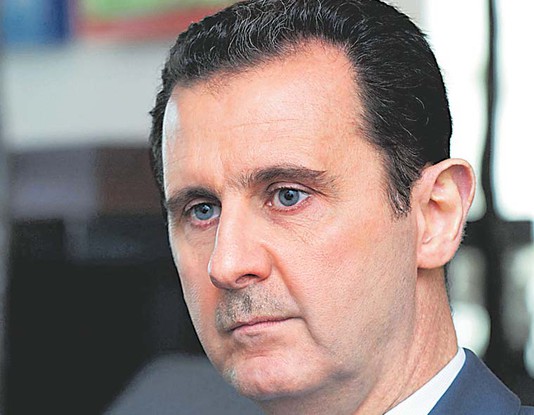
Syrian President Bashar al-Assad

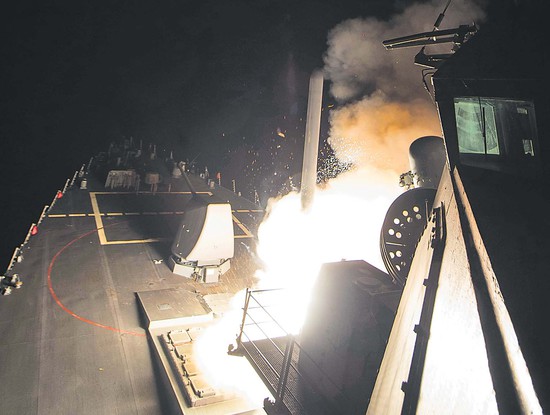
SO did Bashar al-As   sad use gas? The Russians must know. They are in the air bases, in the ministries, in the military headquarters. And if they say the Syrians did not use gas, then they had better be sure. The Russians had advance warning of Trump’s 59 Cruise missiles. Many hours of warning – not the one hour that Washington claims – and would have ensured that Syrian jets were way out of the air base. Russians are not to be killed in the Syrian war; their presence would have meant casualties.Did the Syrian army, a trifle arrogant, perhaps, after their capture of eastern Aleppo decide to try to bring the war to an end in a quick way? The question must be asked. In the past, villages in which army officers lived — and in which their families lived — have been gassed. The Syrians blamed the Turks for giving the gas to Jabhat al-Nusra, the Al-Qaida affiliate in Syria, and Isis. The Russians said earlier gas attacks on Damascus used chemical components shipped via Turkey to Syria from Libya. Ever since World War I, when gas made its appearance at Ypres — and in Gaza, when it was used by General Allenby’s forces on the Ottoman Turks — chemical weapons have exerted a horror which even Hitler did not dare visit upon the Allies. But what did Saddam do? He used chemical weapons upon the Kurds at Halabja; indeed, his voice could be heard describing it in the Baghdad court after he himself was hanged. But would Syrian troops use such weapons against their own people?The pictures seem to be decisive. Terrifying. Ghastly. But we must also remember the 250,000 civilians of eastern Aleppo, who became 150,000 and then 90,000. The Syrian war has become the most poorly reported conflict in the world. How many dead has it caused? 400,000? 450,000? Or 500,000, the latest figure. How do we complete the figures for death by gas? To believe the Syrian government? When the last gas attack in Damascus took place, the UN, in a brief paragraph in the middle of their subsequent report, said that the chemical shells had been “compromised” by being moved between different locations.But then we come to the Russians. They underwrote the Syrian removal of all gas weapons. They saved Obama’s pitch after he had threatened — and then withdrew — the warning of an air attack on Syrian chemical weapons. Now the Russians have seen what Trump will do when he believes (if he does believe) the use of gas attacks. And the Russians, so I’m told, knew all about the US raid – and long before it occurred. Would they really have left any Syrian aircraft on the airbase? Would they have left any such weapons at the runway? Or in hardened bunkers?In reality, the US attack on Syria says more about Trump-Putin relations than about America and the Middle East. That’s a problem for Rex Tillerson to work out. And Bashar al-Assad, of course. Be sure, the phone calls between Damascus and Moscow will last long into the night.

The Independent