Sanjha Morcha

What’s New

Click the heading to open detailed news

Current Events :

web counter

Print Media Reproduced Defence Related News

HEADLINES ::20 JUN 2017

breakl line

WHY INDIA, PAK DON’T TALK TO EACH OTHER BY MAJ GEN ASHOK K. MEHTA (RETD)

DAGSHAI SCHOOL BOY TOPS STATE IN NDA EXAM

LOCKHEED MARTIN SIGNS PACT WITH TATA TO MAKE F-16 PLANES IN INDIA

REVISE BIASED PROMOTION POLICY FOR MAJ GENS: AFT

WALKING WITH THE MARTYRS HARISH KHARE

OPINION: ARMY CHIEF BIPIN RAWAT SHOULD KNOW THAT INDIA IS NOT PREPARED FOR A TWO-FRONT WAR

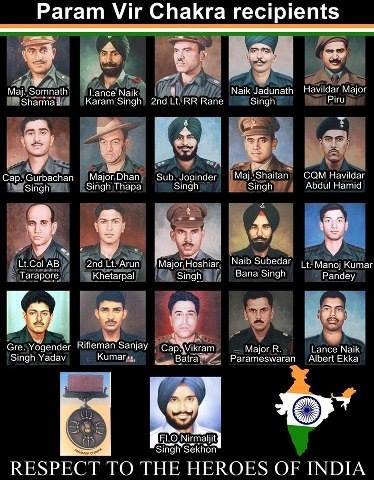
BATCHMATES REMEMBER OF IAF’S LONE PARAM VIR CHAKRA AWARDEE RECALL HIS VALOUR

breakl line

Cus4yNVUkAAdTFu

FAUJI CM OF PB CAPT AMARINDER SINGH HONORS HIS WORDS ,FARMERS LOAN WAVED WITHIN 100 DAYS :UNLIKE OROP 100 DAYS

  1. SMALL AND MARGINAL FARMERS WITH LOANS UP TO ₹2 LAKH BIGGEST BENEFICIARIES; PLAN DOESN’T COVER LOANS EXTENDED BY ARHTIYAS
  2. GIVE UP POWER SUBSIDY, CM TO RICH FARMERS
  3. EMPTY TREASURY WORRIES CAPT GOVT
  4. REVENUES MORTGAGED, PROPERTIES PLEDGED
  5. GROWTH BELOW ALL-INDIA AVERAGE
  6. Now, free education for girls from nursery to PhD
  7. GOVT CLEARS GST

OTHERS

  • Skills development university at Chamkaur Sahib, Ropar
  • Wellness mohalla/ward clinics, health insurance for all
  • Loan waiver up to Rs 50,000 for SCs/weaker sections
  • New industrial hubs to come up in Sangrur and Khanna
  • New Lokpal law to cover CM, ministers and bureaucrats
  • Free textbooks for nursery & LKG students in govt schools

Cong now blames Centre for Rs 31,000-crore ‘food scam’

breakl line


Contribution of Sikhs across US will always be admired: Pence

Contribution of Sikhs across US will always be admired: Pence
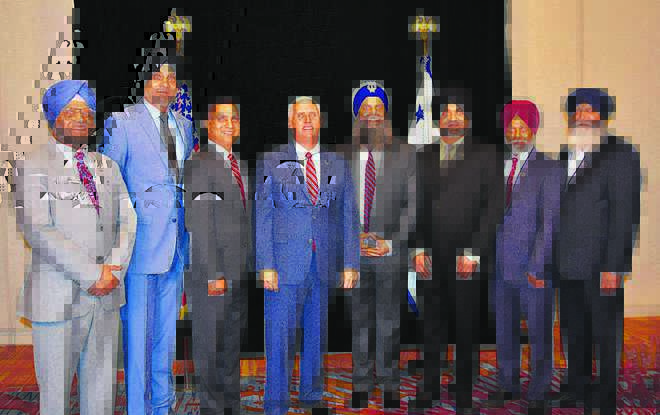
A Sikh delegation led by Gurinder Singh Khalsa with US Vice President Mike Pence in Indianapolis. PTI

Washington, June 18

US Vice President Mike Pence has lauded the Sikhs’ contribution, saying the community should continue to give back by serving in the military and public offices at local, state and federal levels.

Pence, 58, said the community’s “issues” were close to his heart and he was aware of them.

“Sikhs Community and its issues are always close to my heart and I always admire the contribution of Sikhs in Indiana and across the United States,” Pence told a Sikh delegation in Indianapolis.

“I am fully aware of Sikh awareness issues since me days as Governor,” Pence told Sikhs Political Action Committee (SikhsPAC) led by Gurinder Singh Khalsa.

Main topic of discussion with the delegation was Sikh awareness and introduction of Sikh History in public history curriculum through federal department of education.

During the meeting, Pence reaffirmed his commitment to Sikh community and encouraged it to continue to give back in the form of serving in the military and public offices at local, state and federal level, it said.

Early this week, Khalsa visited Washington DC and met about two dozen US Senator and Congressmen.

He also attended US Global Leadership Collision where about 500 world faith leaders, veterans and elected leaders participated to influence the American foreign aid policies.

Pence was the first sitting Governor who attended Sikh Parade and bestowed highest Civil award to a Sikh in 2015.

The US state of Indiana has passed a resolution recognising Sikhs’ “significant contributions” to America.

Hate-crime incidents against Sikhs have seen a spurt in in America recently.

A 39-year-old Sikh man was shot in the arm outside his home in Kent, Washington, in March by a partially-masked gunman who shouted “go back to your own country”.

Earlier, Indian-origin convenience store owner Harnish Patel, 43, of Lancaster in South Carolina was found dead of gunshot wounds in his yard in the same month. —PTI


Soldier dies in Pak firing

Soldier dies in Pak firing
Naik Bakhtawar Singh

Jammu/Rajouri, June 16

With Pakistan continuing to violate the ceasefire along the the Line of Control (LoC), another Army jawan, Naik Bakhtawar Singh, was today killed while guarding a forward post in Upper Kalsian, Nowshera sector.He received multiple splinter injuries when a mortar shell fired by the Pakistani army exploded near him. Bakhtawar Singh (34), who hailed from Hajipur village in Hoshiarpur district of Punjab, is survived by his wife Jasbir Kaur and three children — a son aged 11 years, a nine-year-old daughter and another 10-month-old son.He is the third soldier to have been killed at the LoC since May 1.“The Pakistan army initiated unprovoked firing at 5.15 am. The Indian Army retaliated strongly and effectively but in the exchange of fire, Naik Bakhtawar Singh was grievously injured. He succumbed to his injuries later,” said the Defence PRO. — TNS

clip


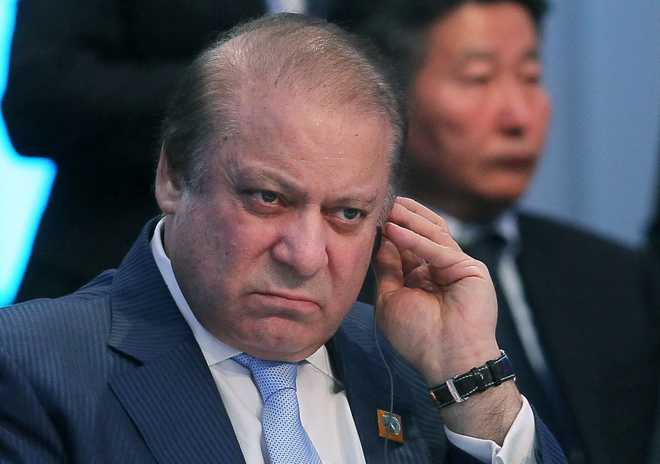
President Xi snubs Nawaz Sharif; skips meeting over murder of 2 Chinese

President Xi snubs Nawaz Sharif; skips meeting over murder of 2 Chinese
The IS claimed that it killed two abducted Chinese nationals in Pakistan. —AFP

Beijing, June 10

In a rare snub to all-weather ally Pakistan, Chinese President Xi Jinping skipped a customary meeting with Prime Minister Nawaz Sharif at the SCO summit in Astana after the murder of two Chinese teachers in Balochistan.Sharif returned from Astana after attending the Shanghai Cooperation Organisation (SCO) summit on the sidelines of which he met Presidents of Kazakhstan, Uzbekistan, Afghanistan and Russia.Also read: IS claims it killed two Chinese kidnapped from BalochistanConspicuously absent was a meeting with Xi.Chinese state-run media highlighted Xi’s meetings with Kazakh counterpart Nursultan Nazarbayev, Prime Minister Narendra Modi and Russian President Vladimir Putin.Xi’s unprecedented snub followed deep disappointment and grief among Chinese public over the slaying of the two Chinese citizens who were kidnapped last month from Quetta in Balochistan.The two were brutally murdered reportedly by Islamic State (IS) militants. The news of their murders was made public ahead of the SCO summit held on June 8-9 in which India and Pakistan were admitted as members.Yesterday, Chinese Foreign Ministry spokesperson Hua Chunying explained that the murders were no way connected to the US$ 50 billion China Pakistan Economic Corridor (CPEC), which was opposed by the Baloch nationalists.The CPEC is part of China’s ambitious multi-billion Belt and Road intuitive (BRI).”This incident will not have any necessary connection with the BRI,” nor with the summit of the Shanghai Cooperation Organisation, meeting being held in Astana, Hua had said.China has deployed hundreds of Chinese workers to work for the CPEC which connects Gwadar port in Balochistan with China’s Xinjiang through Pakistan-occupied Kashmir.Hua said Pakistan pays great attention to the protection of Chinese citizens in the institutions there and made great efforts for their security.”As per BRI we should be prepared for risks if want to go global. Since the three years after the BRI,” she had said.


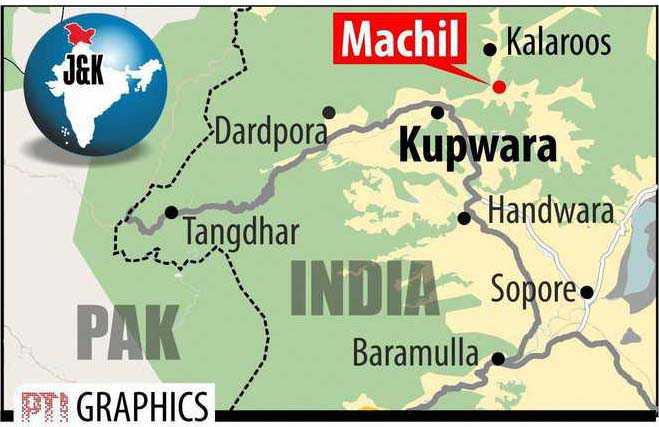
Infiltration bid in Machil, 3 militants gunned down

Infiltration bid in Machil, 3 militants gunned down

Azhar Qadri

Tribune News Service

Srinagar, June 7

Three unidentified militants were killed in a gunfight in the remote Machil sector, close to Line of Control in north Kashmir, on Wednesday as the Army foiled a major infiltration bid into the Kashmir valley.An Army official said three unidentified militants were killed after a fierce gun battle in the Sardari Nad forest area of the Machil sector in Kupwara district, nearly 140 km from here.“Three terrorists have been killed in Machil and three weapons have been recovered,” Defence spokesman Rajesh Kalia said, adding that the operation is still underway.The official said it was an infiltration bid and had been foiled.The firefight erupted when soldiers launched a cordon and search operation in the forest area and came under fire from the militants hiding in the area, police sources said. The militants are suspected to have infiltrated hours earlier before they were intercepted by soldiers, sources said.The Machil sector is a remote mountainous part of Kupwara district and a key infiltration route. Every year, the sector witnesses frequent and fierce firefights between infiltrating militants and soldiers, who defend the LoC in the region.The latest infiltration bid has been foiled at a time when there has been a sudden increase in the number of attempts by militants to cross over to the Kashmir valley.It is the third major infiltration attempt foiled by the Army in north Kashmir in the past fortnight.Eight infiltrating militants were killed in two separate gunfights on May 26 and 27 near the LoC in the Uri sector of north Kashmir. The security agencies estimate that 250 to 300 militants are operating in the Valley, a bulk of them in south Kashmir’s four districts where the local component of the militancy is dominant. In north Kashmir, where many of the infiltrating militants are frequently intercepted, foreign militants outnumber local militants.

Third intrusion attempt in 15 days

  • It is the third major infiltration attempt foiled by the Army in north Kashmir in the past fortnight
  • Eight infiltrating militants were killed in two separate gunfights on May 26 and 27 near the LoC in the Uri sector of north Kashmir
  • The security agencies estimate that 250 to 300 militants are operating in the Valley

Indian scientist’s bullet-proof vest for the army gets government nod

A bullet-proof jacket designed by Bengali scientist Professor Shantanu Bhowmick has finally received the government’s approval.

The empowered committee of the Ministry of Defence approved the jacket, which is made from indigenous ultra modern lightweight thermoplastic technology. It will be included in the Prime Minister’s ‘Make in India’ project. The task of manufacturing the jackets will begin after the PMO gives it the green-light.

A joint collaboration between the DRDO and defence ministry, this is the first time in 70 years that the Indian Army will have bullet-proof jacket manufactured completely through indigenous technology.

Currently, India spends Rs 1.5 lakh on a single jacket used by the military and para-military forces. These jackets are imported from America. Dr Bhowmick’s jacket will cost only Rs 50,000 per jacket. That means India will save Rs 20,000 crores every year.

The present bullet proof jackets being used by our jawans in the Army, BSF, CRPF and Police are heavy, weighing anywhere between 15-18 kgs. These new light weight jackets weigh 6-8 times less at just 1.5 kg. It has 20 layers and the carbon fiber in it will enable the jacket to work in 57 degrees Celsius also.

Professor Shantanu Bhowmick is the departmental head of aerospace engineering in Coimbatore’s Amrita University. He has high hopes for his new invention and expressed his happiness at getting the official nod for the project. He thanked former Deputy Chief of Army Staff Lt Gen Subrata Saha, who had taken the initiative and encouraged Bhowmick. The professor dedicated his invention to Netaji Subhas Chandra Bose.


Wildlife Board okays Andamans’ Rutland Island for DRDO’s Missile Testing Project

The country’s long-range missile test facility at South Andamans’ Rutland Island has finally secured the clearance of the National Board of Wildlife, which has been held up since 2012. The Standing Committee of the National Board of Wildlife in a meeting held on May 15 approved the project, “considering the strategic importance of the project for country’s defence”.

The proposal involves diversion of 49.978 acres forest of which 0.84 ha falls in the Mahatma Gandhi Marine National Park and 49.138 ha reserve forest within 10km of the Eco Sensitive Zone. The island is very rich in marine life and was once home to the indigenous Andamanese group ‘Jangil’ or Rutland Jarawa. DRDO has been struggling to get its long range missile test facility since 2012 when the proposal was moved across the government.

However, it has been consistently stalled due to objections by the environment ministry. The Proposal for Wildlife clearance for creation of Infrastructure Facilities for Strategic Surveillance System at Rutland Island had been moved by DRDO. Rutland Island is vital to DRDO’s long-term plans to have a comprehensive testing facility to identify and track long-range missile tests.

The island is located at an ideal distance from the mainland where tests are typically launched from. As of now, long-range missile tests are being carried out from the Odisha coast and are tracked by naval vessels on a trajectory into the Bay of Bengal. Most of the long-range tests for missiles like Agni IV and V have to be tracked over sea, with specialised vessels noting the ‘hit zone’ into the water.

DRDO requires a land-based test area as well to accurately track its longrange missiles, with the island in the Andamans being ideally located due to its distance from mainland. DRDO is also looking at setting up tracking stations along the Andaman Islands to track incoming test missiles. Besides, a special purpose vessel for tracking missile launches is currently under construction at the Vizag based Hindustan Shipyard Limited.

The state Chief Wildlife Warden has recommended the project with conditions such as preparation of a specific marine and terrestrial wildlife conservation plan and installation of essential deflectors and anti-radiation screens around satellite antennas to reduce the impact of radiation on biodiversity in the proposed area. It has also been specified that minimum number of vehicles should be used inside Rutland Island during constructional and operational phase of the project.

Vessels/boats used for construction should use the approved route for navigation with larger vessels to enter into the National Park only during high tide. The project authority has also been asked to take necessary permission from the Chief Wild Life Warden while entering into waters of Marine National Park while approaching Rutland Island.

No forest material of fire wood is to be collected from forest area and no effluent or domestic sewage (liquid or solid waste) shall be disposed into the sea or nearby forest area.


‘Haryana govt insulted family of jawan killed in Macchil’

MS Bitta says govt announced ₹50 lakh ex gratia that too was given after long delay when family completed many formalities

CHANDIGARH: All India Anti-Terrorist Front chairman MS Bitta on Friday alleged the Haryana government had insulted the family of army jawan Mandeep Singh, who was killed by terrorists in Macchil sector of Jammu and Kashmir, by delaying monetary compensation and mistreating his widow.

All India Anti­Terrorist Front chairman MS Bitta during a press conference at Press Club in Chandigarh on Friday. n KESHAV SINGH/HT

The body of Mandeep Singh was mutilated after he was killed by terrorists in October last year.

Bitta said the ex gratia promised to Mandeep’s family was given only in February and the cheque was given through the Red Cross.

Recently, Mandeep’s widow, Prerna, a constable at Haryana police posted in Kurukshetra, was suddenly taken off VIP duty when Union home minister Rajnath Singh visited there, he said.

“Chief minister Manohar Lal Khattar may be an honest man, Haryana may be corruption free, but the way the lower rungs in the state administration are insulting martyrs’ families, I have never seen this before,” Bitta said.

“The government announced ₹50 lakh ex gratia. The family did not ask for it, but that too was given in February.

But first, they were asked to complete several formalities,” he said.

“Prerna is constable in Haryana police. She is an MA. What stops the government from promoting her to the post of inspector or DSP. We have not come before the media to seek something, but only to highlight the insult which the family has faced,” Bitta said.

He also said, “When Union home minister Rajnath Singh was visiting Kurukshetra a few days back, Prerna was put on VIP duty, but suddenly it was ordered that she be withdrawn from the duty.”

“Then, she was asked to report to a police station in Kurukshetra, where she was confined all day till the minster left. She broke down into tears, she was depressed not knowing where her fault lies,” Bitta said.

Bitta also said, “To rub salt to the wounds, a paper came from the defence ministry where Prerna was asked to give an affidavit answering whether she has married again or not. Should such questions be asked at such a sensitive time


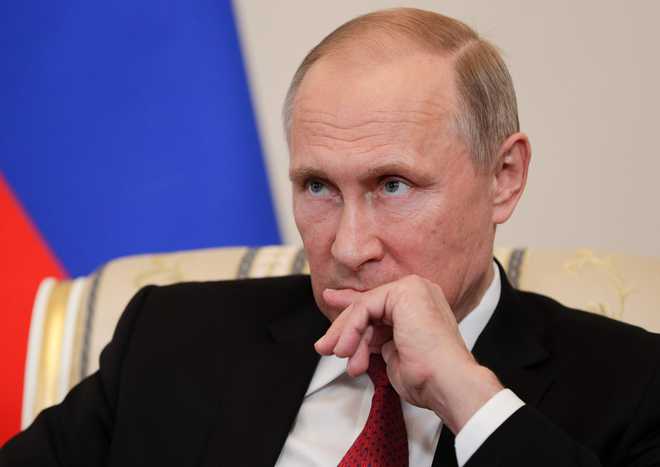
No ‘tight’ military ties with Pak, Indo-Russia ties cannot be diluted: Putin

No 'tight' military ties with Pak, Indo-Russia ties cannot be diluted: Putin
Russian President Vladimir Putin attends a meeting with Indian Prime Minister Narendra Modi in Saint Petersburg on June 1, 2017. AFP

St Petersburg (Russia), June 1President Vladimir Putin said on Thursday that Russia does not have any “tight” military relationship with Pakistan, and asserted that its close friendship with India cannot be diluted.During an interaction, Putin told PTI that there is no other country in the world that Russia has “deep cooperation” in delicate areas such as missiles, and it benefits from cooperation with India.But at the same time, Putin sidestepped a question on Kashmir, and said “it is up to you” to assess whether Pakistan is fuelling terrorism in the Indian state. “But no matter where the threat comes, it is unacceptable and we will always support India in its fight against terrorism,” he added.Putin further said just because Russia has a “special relationship” with India, it does not mean India should be restricted in having contacts with other “partnering countries. This is ridiculous.””We do not have any tight (military) relations with Pakistan. The US, do you have (close relations)?,” he said, speaking through an interpreter. “And for sure our relations with Pakistan have no impact on trade between India and Russia.”Sitting around a rectangular table with a select group of global news agency editors, the 64-year-old Russian leader took questions one by one on subjects related not only of interest to the editors’ countries but also of wider global concerns such as Syria, US President Donald Trump and the future of an emerging multi-polar world.”India is a huge country of more than 1 billion population. Russia is also a huge country. Both Russia and India have a lot of context and mutual interests. We are respectful toward all Indian interests,” he said, citing the deep defence relations between the two countries.“I don’t think we should push figures here in our military cooperation because it has an unprecedented level in its volume and quality. (But) there is no other country in the world that we have such deep cooperation in delicate areas such as missiles, and we benefit with cooperation with India.And this results from our trust-based relations with India,” he said.He did not elaborate, but this was a clear reference to the Russia’s long willingness to share high-end defence technology including missile technology with India, which most other countries restrict.On a question if Russia will use its influence to get Pakistan to stop terror attacks in Jammu and Kashmir, he said, “We will always support India in its fight against terrorism.I believe Pakistan is taking immense steps to stabilise the situation in the country.”He noted that India and Russia, as part of their summit, are “having a frank dialogue on all these threats. India for us is one of our closest friends. We not only understand each other but also support each other.”The interaction was held at the Konstantin Palace, a sprawling complex of grand buildings filled with 18th century paintings, porcelain, lawns, waterways and pavilions overlooking the Gulf of Finland. — PTI 

How nations defied them by Lt Gen Bhopinder Singh

The onus of ‘responsible’ international behaviour is realistically self-mandated on nations as the mechanisms for enforcement are weak.

Nations have unique foundational narratives, governing instincts and moral scruples that drive them to respond varyingly to internatio­nal verdicts and advisories. The verdicts, advisories or opinions of the International Court of Justice at Hague, which adjudicates over international legal disputes are a test of the intrinsic morality of the sovereign, as the same gets tested by the way the affected nations internalises, rationalises and honours the same.

As the judicial branch of the United Nations, all 193 UN-member nations automatically become party to the court’s statutes – though, the element of mutual consent to resolve disputes through the ICJ intervention, affords moral implications on complying with the ultimate verdict, irrespective of favourability.

The complexities, intrigues and unsettled positions of the Indo-Pakistan saga have ensured that the ICJ has been invoked four times (including, the recent Kulbhushan Jadhav case where India obtained a stay against the execution orders, by the questionable Military Martial Court in Pakistan). Interestingly, while India initiated the recent proceeding by invoking the Vienna Conventions of 1961, the previous three cases before the ICJ were initiated by Pakistan.

The first was in 1971 when Pakistan alleged that India had violated the International Civil Aviation Convention and the International Air Services Transit Agreement (India’s initial appeal that Organisation’s Council had no jurisdiction to decide was dismissed in Pakistan’s favour — though, the matter was mutually dropped in 1976 after the creation of Bangladesh, as the issue of overflight became irrelevant).

Similarly, the second case involving the fate of 195 Pakistani Prisoners-of-War was again mutually withdrawn with the signing of the bilateral New Delhi Agreement in 1973 that encompassed the issue. However, it was the 1999 shooting down of the Pakistani Navy patrol and reconnaissance Atlantique plane over the Indian airspace, with 16 people on board, that made Pakistan seek reparations of $60 million in the ICJ for compensation to the victims’ families.

Soli Sorabjee, India’s then attorney general, won the day with the essential plea that the International Court had no jurisdiction on disputes covered by multilateral treaties or by disputes between India and the Commonwealth countries, besides the fact that Pakistan had violated a 1991 bilateral treaty prohibiting the flying combat planes within 10 km of each other’s airspace, including Air Defence Identification Zone.

The thumping endorsement of the bench decision, with a score of 14-2, was in favour of India — the two dissenting jud­ges were Awn Shawkat Al-Khasaw­neh from Jordan and Justice Syed Sharifuddin Pirzada (who along with India’s former SC judge B P Jeevan Reddy, co-opted into the bench as ad-hoc judges).
Pakistan’s frustrations in its first three failed attempts at the ICJ were accentuated by the fourth debacle in the Kulbhushan Jadhav case. Unsurprisingly, a jarring note of disrespect emanated from the official spokesperson of Pakistani Foreign Office Nafees Zakaria, who unequivocally stated, “Pakistan doesn’t accept ICJ’s jurisdiction in Jadhav’s case”, after the negative verdict.

Now, a glaring contrast to the Pakistani response to the recent ICJ judgement is the India-Bangladesh dispute regarding the delimitation of the maritime boundary. This five- year-long arbitration case under the UN Convention on Law of Sea (UNCLOS) resulted in the tribunal awarding Bangladesh 19,467 sq km of 25,602 sq km sea area of Bay of Bengal.

However, the unambiguously negative verdict against India did not manifest in any nationalistic bravado or refusal, ins­tead the Indian external affairs ministry spokesperson stated, “We are committed to abiding by the outcome of that pro­cess.” Adhering and respecting the binding nature of the ICJ orders, given the voluntary acceptance of allowing the case to be tried in the ICJ, is a logical expression and expectation of any ‘moral state.’

Like Pakistan, its ‘all-weather-friend’ China exhibited a similar instinct to that of Pakistan’s, when it lost an arbitration case against Philippines in 2016, where the Permanent Court of Arbitration rejected China’s claim to historic rights on the region and its creative interpretation of territorial limits via the ‘nine-dash-line’ approach.

Chinese President Xi Jinping then stated, “China will never accept any claim or action based on those awards”, eerily reminiscent of the recent Pakistani intransigence. The question of a ‘moral state’ were poked by the US State Department spokesman John Kirby who said, “The world is watching to see if China is really the global power it professes itself to be, and the responsible power that it professes itself to be.”

Legislative escape-vents
The onus of ‘responsible’ international behaviour is realistically self-mandated on nations as the mechanism for enforcement are essentially weak and susceptible to the subsequent angularities of the five UN Permanent Security Council members, who can veto any proposal. However, even countries like the US are often guilty of dishonouring ICJ verdicts owing to technicalities and legislative escape-vents that belie the spirit of legality and morality.

The restive perceptions between the US and some Latin American co­untries can be explained by the US’ frequent unwillingness to submit to the plenary authority of the ICJ, especially when the verdict in a dispute is adverse to US positions. The US brazenly refused to participate in the proceedings in the merits of the case initiated by Nicaragua in 1984 and later withdrew from compulsory jurisdiction — the optics of such irresponsible sovereign behaviour militate against efforts towards international justice.

Islamabad has its own political compulsions and existential intrigues that routinely vitiate against the expected standards of a ‘moral state’. The often interchangeable terms like ‘rogue nations’ (currently the US considers North Korea, Iran, Sudan and Syria), ‘pariah states’, ‘states of concern’ or ‘state sponsor of terrorism’ are typified by a certain irresponsible sovereign behaviour towards international law, undemocratic internal frameworks and dubious intents towards other nations. Herein, disrespecting an international verdict of an independent court of law is a sure-sign of a ‘non-moral’ state.

Pakistan has an increasingly inglorious reputation of harbouring the ‘terror nurseries’ of the world, and the emerging optics of defiance to the ICJ verdict are worrisome pointers of a flawed national nar-
rative, aspiration and ultimately destiny.

(The writer is former Lt Governor of Anda­man & Nicobar Islands, and Puducherry)