



Sanjha Morcha

What’s New

Click the heading to open detailed news

Current Events :

web counter

Print Media Reproduced Defence Related News

A first: Tribunal awards injury pension for WW­II veteran

WAIT ENDS, FINALLY Petitioner had asked whether govt could deny war injury pension to World War II claiming that they were fighting for the British and not for Indian government

AMAR SINGH WAS A SEPOY IN THE BRITISH INDIAN ARMY AND WAS ATTACHED WITH THE KING GEORGE V’S 8TH LIGHT CAVALRY AND WAS INJURED DURING A GRENADE BLAST IN BURMA IN 1944

From page 01 CHANDIGARH : In a landmark order, the Chandigarh bench of the Armed Forces Tribunal (AFT) has granted relief to a 93-year-old World War II veteran by setting aside the ‘differential treatment’ meted out to soldiers injured in pre and post independence wars.

At present, the Centre extends war injury benefits only to those injured in post-independence wars.

The tribunal was hearing a petition filed by 93-year-old Amar Singh, a resident of Bhiwani, Haryana. Singh was a Sepoy in the British Indian Army.

He was attached with the King George V’s 8th Light Cavalry and was injured during a grenade blast in Burma (present day Myanmar) in 1944.

He lost three fingers of his right hand and suffered multiple shoulder injuries in the blast.

CENTRE MUST SHOW MAGNANIMITY

The AFT bench comprising justice Bansi Lal Bhat and Lt Gen Sanjiv Chachra (retd) held that such differential treatment by distinguishing between injuries suffered in different wars is uncalled for.

The bench also directed the Centre to show magnanimity and identify other such soldiers and release the benefits due to them without them being forced to approach the courts.

The concept of war injury pension to those injured in international wars was introduced only in January 1996, vide a letter issued in 2001 with retrospective effect.

However, since Singh retired before 1996, these benefits have not been extended to him. Furthermore, these pensions are applicable only to the injured in post-independence international wars.

Singh, through his lawyer, asked whether the government could deny war injury pension/ benefits to personnel injured in the World War II on the pretext that they were fighting for the British and not for an Indian government?

He added that the action of depriving war injury pensions to the veterans was faulty because World War II was a war of humanity against the Nazi and fascist forces and was not a war for or against a particular nation.

About 26 lakh personnel were recruited from India in the British Indian Army during the war.

CIVILIANS GET BENEFITS, SOLDIERS DON’T

Interestingly, civilian employees injured even in pre-independence international wars, including those of the Central Police Organisations (now known as the Central Armed Police Forces), especially those of the Crown Reserve Police, became eligible for war injury pension since January 1, 1996.

The petitioner argued that only a handful of World War II disabled survivors are alive today.

Furthermore, it seems odd that the government is continuing with such differential practices despite being fully aware that these veterans are extremely old.

The benefits due do not impose huge financial burden on the government, he said.

Heavy shelling in Rajouri, Poonch; soldier, 6-yr-old die Naik from Kashmir’s Tral killed; 16 schools shut indefinitely

Heavy shelling in Rajouri, Poonch; soldier, 6-yr-old die
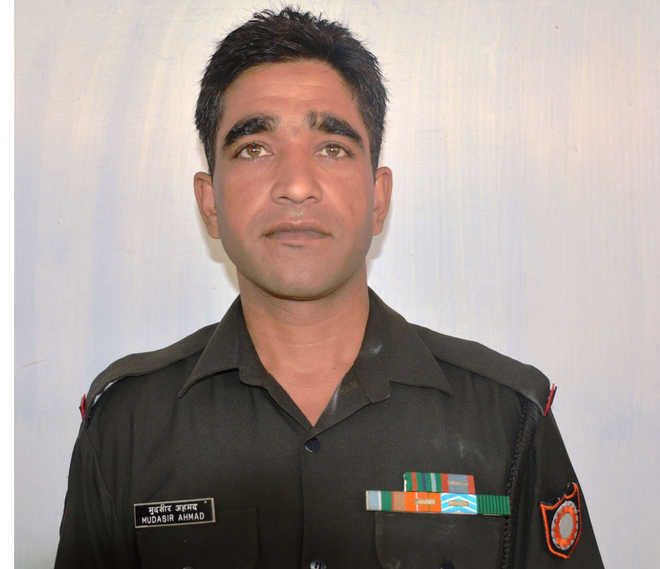
Naik Muddasar Ahmed

Amir Karim Tantray & Shyam Sood

Tribune News Service

Jammu/Rajouri, July 17

Pakistani troops today resorted to heavy shelling in Balakote and Mankote sectors of Poonch district and also targeted Tarkundi and Manjakote sectors in Rajouri. A soldier and a six-year-old girl were killed in Tarkundi sector. Naik Muddasar Ahmed  belonged to Duchoo village in Tral, Pulwama district, whereas the girl, Sajida Kafeel, was from Barooti Dadiana village in Rajouri district.In Manjakote, Muhammad Sharief and his wife Shah Begum of Panjgrain village were injured in heavy  shelling. Shah Begum’s condition was said to be critical. Defence spokesperson Lt Col Manish Mehta said the Pakistani troops opened unprovoked fire on Indian posts in Rajouri sector at 7.30 am. The Indian Army retaliated strongly and effectively. In the exchange of fire, Naik Muddasar Ahmed (37) was grievously injured when mortar shells landed on his bunker. He later succumbed to his injuries. He is survived by his wife Shaheena Muddasar and two children.(Follow The Tribune on Facebook; and Twitter @thetribunechd)“Naik Muddasar Ahmed was a brave soldier. He loved his job to the core. The nation will remain indebted to him for his supreme sacrifice and devotion to duty,” Lt Col Mehta said.Several villages have been affected by the heavy shelling. The district administration has had to shut at least 16 schools for an indefinite period. At least 120 students trapped inside a school in Panjgrain have been evacuated. Pakistani troops also violated the ceasefire agreement in Bhimber Gali sector of Poonch district. Rajouri DC Shahid Iqbal Choudhary held a meeting with locals at Panjgrain and briefed them on the arrangements made for setting up camps in case of evacuation, ration and medicine supplies.Pakistani troops also resorted to unprovoked firing at three villages in Kamalkote area of Uri in Baramulla later in the day, defence sources said. One soldier was injured. Media reports in Pakistan said four Pakistani soldiers were killed on Sunday when their jeep, hit by a shell, fell into a river.

Reserve right to retaliate: DGMO

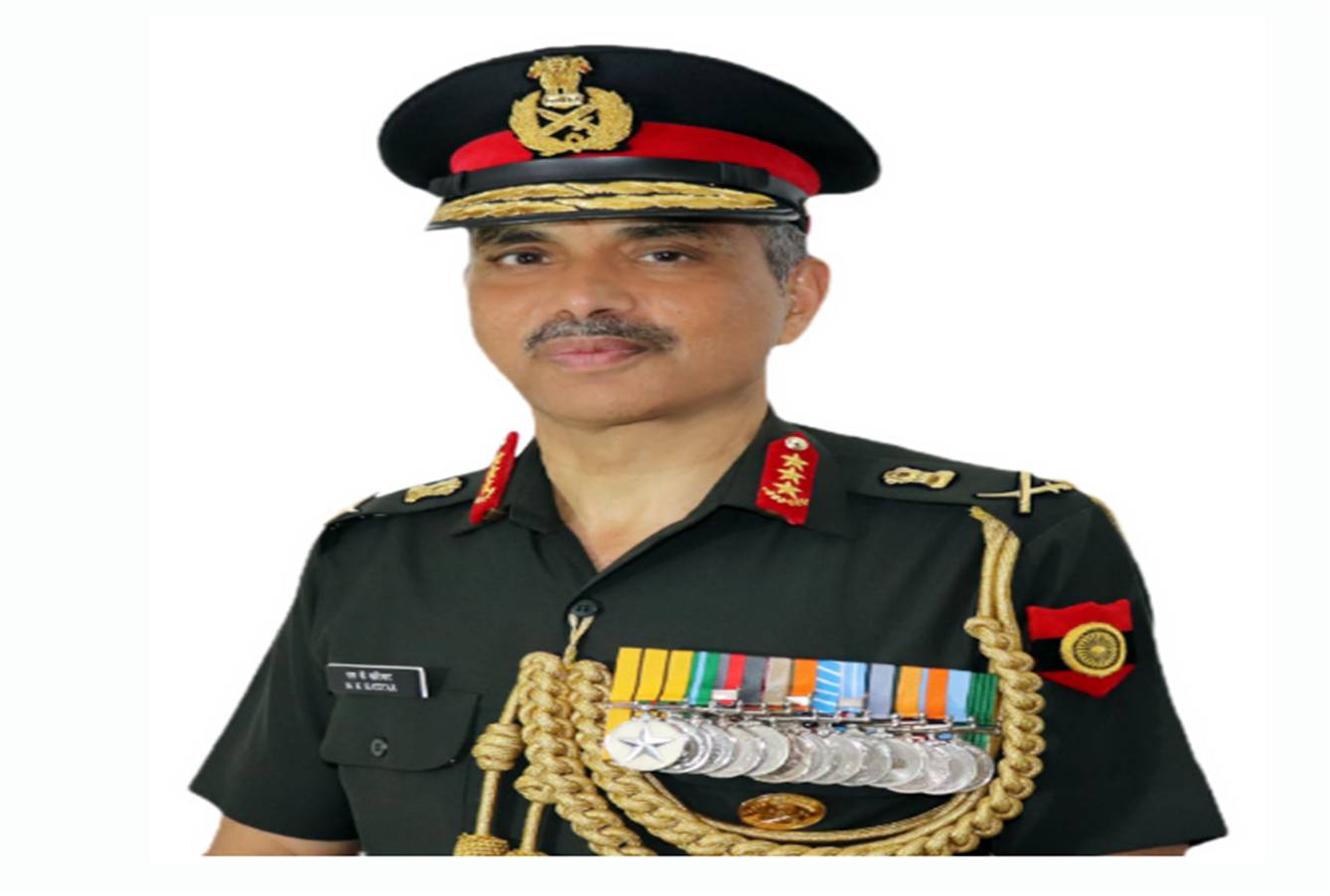
  • New Delhi: India’s Director General of Military Operations (DGMO) on Monday made it clear to his Pakistani counterpart that the Indian Army was sincere in maintaining peace along the Line of Control as long as Pakistan reciprocated. However, the Army will retaliate to any firing from across the LoC. DGMO Lt Gen AK Bhatt told Pakistani counterpart Maj Gen Sahir S Mirza over the hotline that the “Indian Army reserved the right to retaliate appropriately to any violation of ceasefire”. Army spokesperson Col Aman Anand said the DGMO pointed out that all violations of the 2003 ceasefire were initiated by the Pakistan army. The Pak DGMO said four soldiers had died in Indian firing in PoK opposite the Keran sector in Kupwara. TNS

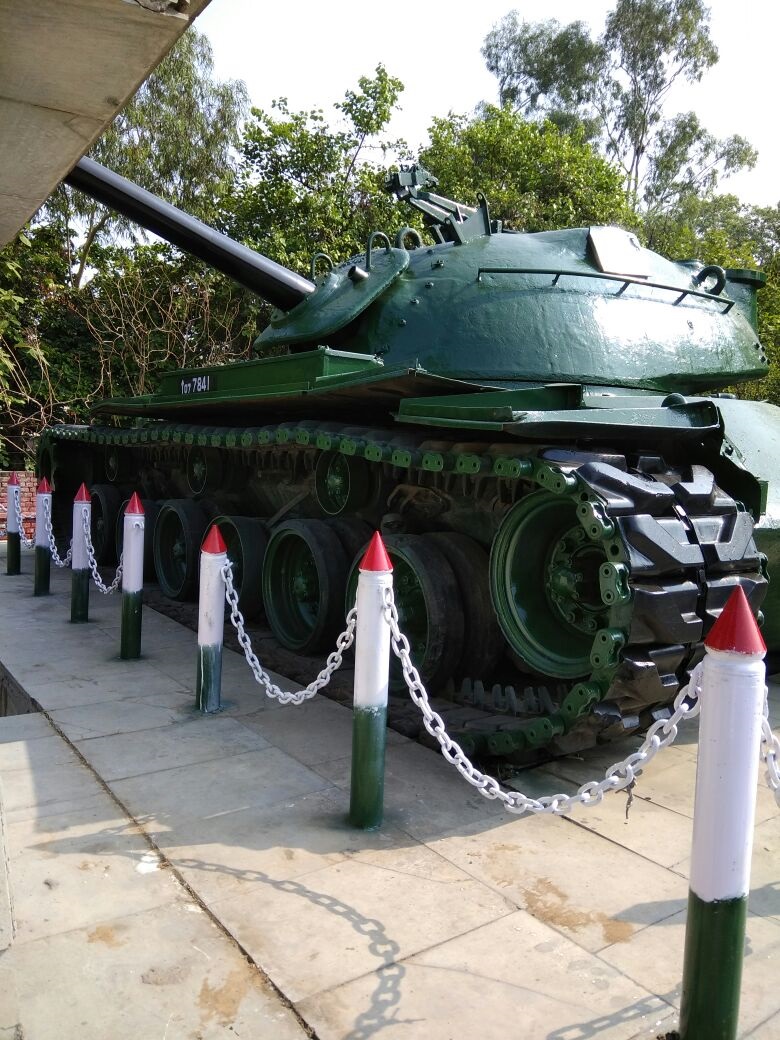
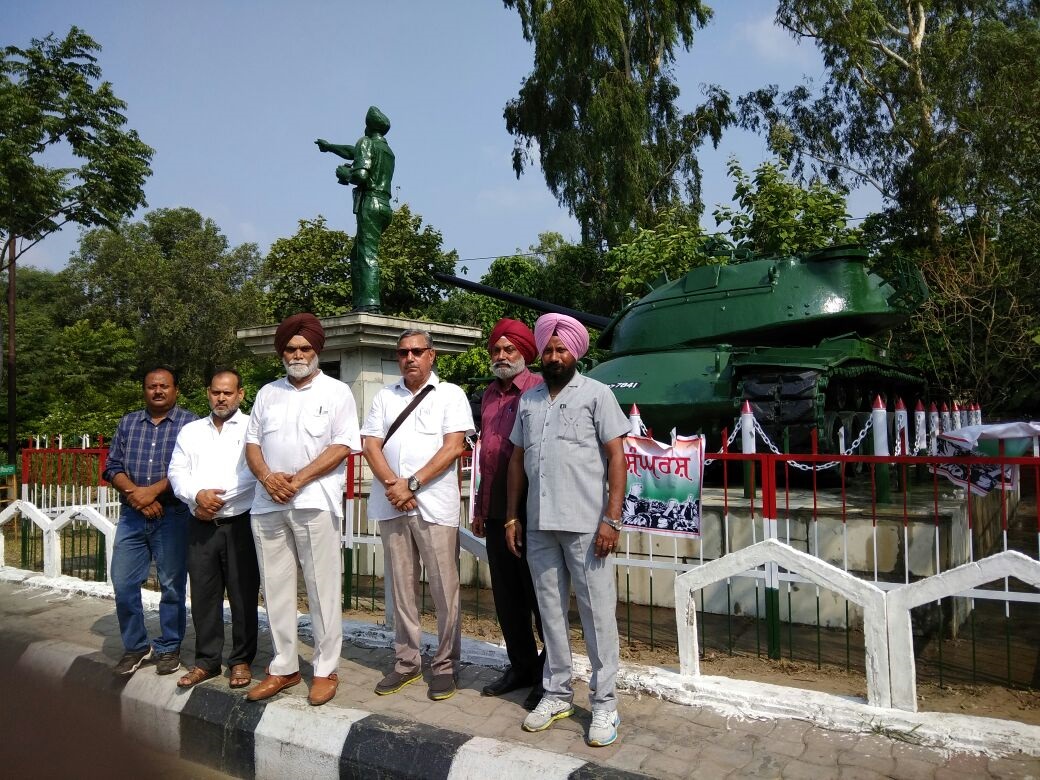
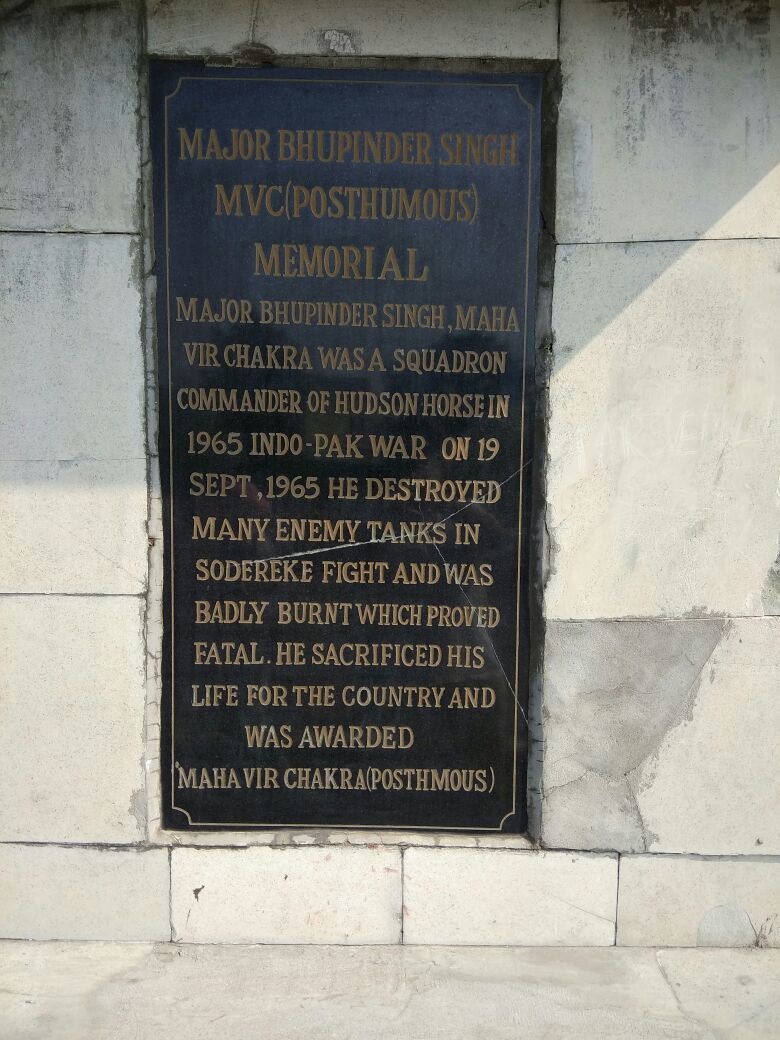
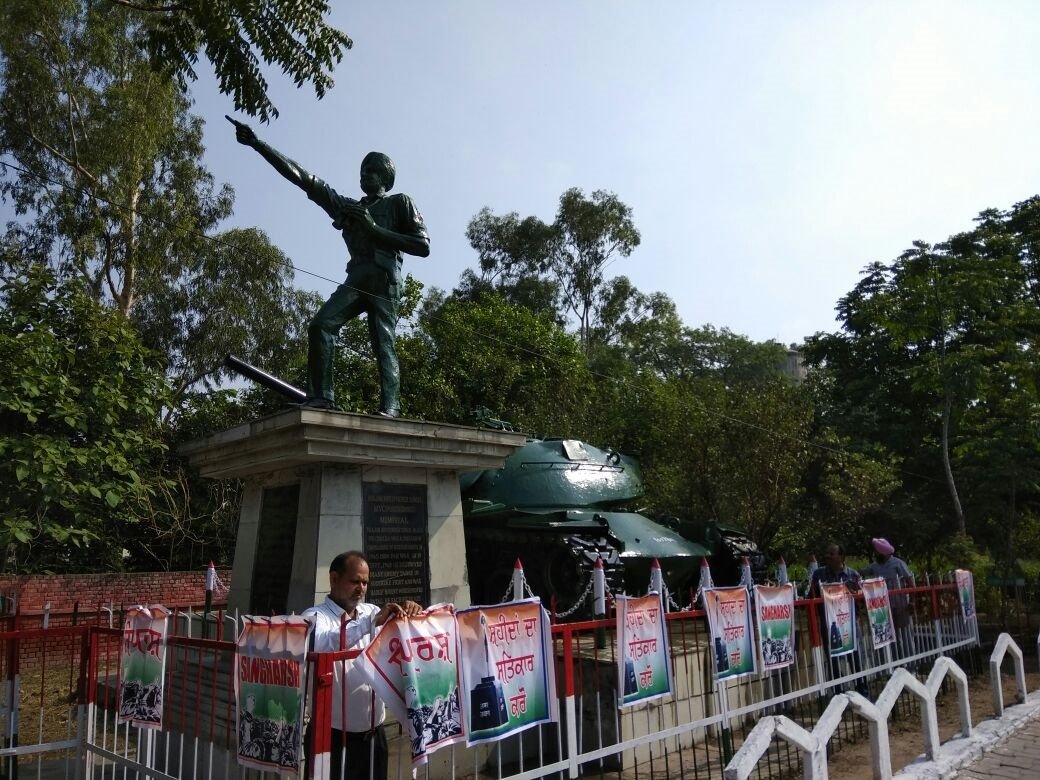
Ex-Servicemen takes initiative to clean and Paint Martyr Major Bhupinder SIngh MVC Memorial at Ludhiana

Mahavir Chakra Major Bhupinder Singh

In sept. 1965, Major Bhupinder Singh commanded the “B” squadron of the 4 Horse against Pakistani forces. On the 11th Sept 1965.He successfully led his forces in cutting of the enemy retreat along the Gadgor-Phillora road.

In the battle of Sadoke that followed, Major took over the command of the regiment after the commander was forced to abandon his tank. Inspired by this gallantary, the regiment fought valiantly and destroyed several enemy tanks. Nine days later the Major led his men in the battle of Sodreke.

His tank targeted by the enemy caught fire after it was struck several times. The Major continued fighting even when all but two of his tanks were disabled. However he sustained severe burns when he was finally compelled to abandon his burning vehicle and died soon after. He was posthumously honored with the Mahavira Chakra for his awe inspiring courage and gallantry.

Major Bhupinder Singh’’’, a son of Ludhiana, set an inspiring example of personal sacrifice and bravery in the best traditions of the Indian Army.

 With skillful deployment and bold action, his squadron was able to cause large-scale destruction of Pakistani tanks and other equipment. Although his tank was hit on several occasions, he continued to remain in effective command and, by several acts of personal gallantry, inspired his men to fight courageously. On September 19, 1965, in the battle of Sodreke his tank was hit and caught fire. While escaping from his flame engulfed tank. Burned severely Major Bhupinder Singh succumbed to his injuries.

COMMENTS

The Statue of Major Bhupinder Singh MVC  is Located at Ludhiana Bharat Nagar Chowk. The previous Govt has failed to maintain it or give due respectability by Civil Administration on any occasions. 

Now Col CM Lakahanpal and his social outfit has cleaned and painted and area around it cleaned of wild growth. The  Station Commander need to look into this responsibility as a moral responsibility 

WE Salute Col Lakhapal for such a wonderful initiative and a lead to all ESM of the Nation to ensure Martyrs Statue are Maintained  at all cost which will only earn respectability to us all. 

Col CJS Khera(Retd)

IMG-20170716-WA0031 IMG-20170716-WA0032 IMG-20170716-WA0033 IMG-20170716-WA0034


Shri Amarnath Yatra: Knowing, Organising And Securing The Legendary Pilgrimage

Shri Amarnath Yatra: Knowing, Organising And Securing The Legendary Pilgrimage 

SNAPSHOT

Gen SA Hasnain 1

Lieutenant General (retd) Syed Ata Hasnain has led the organisation of the arduous, long, but the sacred Amarnath yatra more than a few times. Here is his account of leading the devotees up to the hallowed cave.

In all my earlier years in Jammu and Kashmir (J&K), I remained uneducated about the cultural terrain of the state except for some odd visits to local shrines of different faiths. Yet, fate ordained that I would ultimately atone for it all by visiting, at least eight times, the Holy Cave, seat of Lord Shiva and Goddess (Maa) Parvati placed far into the confluence of the Great Himalayas and the Kishtwar Range. I not only visited and bowed my head there, but actually organised the fascinating pilgrimage, the Amarnath Yatra, several times. Later, while heading the Army in Kashmir, one had the benign pleasure of receiving multiple blessings at the holy cave. It was a pleasure to witness the surge of pilgrims from 98,000 in 1999 to 6,40,000 in 2011, the last time I was involved with the organisation of the yatra. That has been the record figure; never have more pilgrims visited the shrine and that blessing remains with me.

Here’s a little on the yatra to draw the natural interest of the religious-minded, who may have never visited it, but have nursed the idea for long.

It is an arduous journey for those who have never walked in the mountains and that too up to a height of 13,000 feet. Two routes take you to the shrine. First is the old and most frequented route, via Lidder valley to Pahalgam and Chandanwari, which is the roadhead (the road ends there). The walk cum climb starts here and one can find people in festive mood as they head for Sheshnag, Mahagunas Pass, Panjtarni and Sangam. It is a 48-kilometre trek on foot, or if you have the means, and not the health, then a palanquin borne by four strong-shouldered Gujjar Muslims will see you through the journey. You can also hire a pony and undergo a rather torturous ride with precipitous falls on the sides, where a suicidal pony may well decide to take a plunge.

The route to the shrine

It is your two feet that spell the best option. Depending on how good or bad the last winter was and how early the yatra has begun, there will be remnants of snow and ice all along the route, especially as you climb the Mahagunas Pass (see map), so sports shoes are passé and it’s a pair of good trekking shoes that’s a must. There are usually two staging camps (although there are other locations too) where a night halt is taken; Sheshnnag and Panjtarni. In between the two is the exhausting climb to, and descent from, the Mahagunas Pass. The army, police and the civil administration under the aegis of the Shri Amarnath Ji Shrine Board (SASB) provide tented camp facilities with beddings and toilets of a temporary nature, plus more importantly, medical assistance.

The bhandaras (from nonprofit organisations) from all over India take turns to set up stalls for food and other logistics every year. They provide some nutritious and extremely tasty fare in challenging logistics conditions. The difficulty can be imagined if one just remembers the need for rations, fuel, and cleaning facilities for the kind of numbers who dine there every day. No one is ever refused and many of the soldiers and policemen on duty themselves enjoy the wonderful fare dished out by the bhandaras.

It is the medical domain and that of hygiene and sanitation which spells an even greater challenge. Although many pilgrims are young, they are not used to mountain trekking and that too at heights of up to 13,000 feet. Besides sore feet, cuts and abrasions due to the hard rocky route, it is the problem of oxygen which causes most of the health related issues. Older people, in particular, find this extremely difficult. In 2011 alone there were as many as 108 deaths along the route.

Each year, the SASB attempts to learn lessons afresh, provide even better medical facilities and reduce fatalities and medical discomfort. Besides the camps, there are medical facilities with paramedics and doctors stationed at different points along the route. The Army’s doctors, more physically fit than others, function with medical patrols equipped with communication facilities so that they can respond to emergencies. Lifesaving evacuation is sometimes done by helicopters in cases where losing height restores the body’s balance.

Most reasonably fit pilgrims can reach the holy cave on the third day after they leave Chandanwari. There is a fairly long wait at the cave itself because of the narrow and winding path up to the shrine where the famous Lingam exists. While there are some temporary shops here, it is best advised to carry enough nourishment in backpacks for this wait. Most prefer to exit the pilgrimage via the Baltal route (see map), which is a 14-kilometre walk down via Sangam.

The Baltal-Sangam-Holy Cave route is an alternative, but shorter route for the ascent by the slightly bolder and fitter pilgrims. It commences from the Baltal camp, which is at the beginning of the Sind Valley and can be seen as a vast tented city from the Zojila road, which winds its way up to the pass into the Ladakh plateau. It is a narrow winding path only partially broadened from the mountain trail width, which meanders along a flat distance and then suddenly rises. The ascent is steep and hard on the knees although ponies are available here too. It is possible to drive to Baltal, spend the night by retiring early, commence journey well before dawn, perform darshan and be back by the early part of the night after dark. Some then prefer to proceed to Sonamarg and rest their limbs at the hotels there.

There is a third way of going up to the cave; by helicopter from Baltal or Pahalgam to Panjtarni where a heli-base has been established. From there it is 6-kilometre walk to the holy cave and then the wait for the darshan although some operators have a preferential queue for this. It is possible to also hire a full helicopter for five or six people from Srinagar to Panjtarni and do the 12-kilometre up and down trek from there by foot, pony or palanquin.

Atop a palanquin (Waseem Andrabi/Hindustan Times via Getty Images)

In 1996, unseasonal blizzards in late August of that year led to a tragedy that claimed the lives of 242 yatris; they died of exhaustion and exposure. The period is July-August but weather patterns at these heights are extremely unpredictable. Lessons are learnt every year and disaster relief measures are incorporated well in advance. I am aware that this year too, the Central Disaster Management Authority has done extensive recce and planning. Yet the yatris must always be prepared for the unexpected. Warm clothing and some survival rations must be on person at all times along with a bottle of water.

The thrill of the yatra can actually be felt only by absorbing the prevailing atmosphere, hearing shouts of ‘bum bum bhole’, chanting songs while walking, tasting the food of the bhandaras and feeling the exhaustion in your limbs when you wake up at the camps and realise you cannot take another step more. Many a pony wala or palanquin wala will be available close at hand for such a contingency knowing fully well that no pilgrim or devotee is going to return without a darshan.

The trek to the cave (Waseem Andrabi/Hindustan Times via Getty Images) 

What does it take to secure the yatra? Securing has many connotations. For me, the well-being of the pilgrims is a part of it. The administration and the Army spare no efforts to ensure the medical well-being of all to complete the darshan. The threat to the yatris and to the infrastructure, in the physical realm, arises from the fact that the yatra is such an iconic event in India’s religious calendar. An adversary upsetting the yatra by causing impediment and a few casualties will dent the confidence of the people and cause implications for the tenuous inter-faith relations all over India. A terror attack on a camp, sporadic firing on the route or targeting the yatri buses even before they reach Pahalgam or Baltal will, no doubt, be upsetting. That is why the government of India, the J&K state government and all other departments take no chances. There is enough deployment, and this year, there is an increase in surveillance by helicopters and drones.

For interest, it should be known that Pahalgam lies close to the Aru Meadow, where exists the setting of a true story from the famous book, The Meadow by Adrian Levy and Cathy Scott-Clark, on the kidnappings by the Al Firan of the five foreigners in 1995. It is good to do a little research of the landmarks of the Lidder Valley before traveling up to Pahalgam. Be assured that almost every mountain top you see in your journey by bus, car or foot, has either a military presence or has been patrolled and the routes to it dominated by invisible patrols of the Indian Army and the Border Security Force/Central Reserve Police Force. Portable communication facilities are almost entirely the responsibility of the Army’s Corps of Signals, and BSNL even moves deployable antennae for mobile communication.

Yet, it is not enough to know all this about the yatra. Unless you are well aware of the stories of how the pilgrimage started and the religious significance of the holy cave, your mission is going to be half complete. I have borrowed from the write-up of a website of a helicopter service provider, which I found was short and extremely factual. Otherwise there is unlimited literature available on the tradition of the yatra and the great story of Lord Shiva and Maa Parvati. Here is one of them.

Maa Parvati asked Lord Shiva to let her know why and when he started wearing the garland of heads (mund mala), to which Bhole Shankar replied, “Whenever you are born I add more heads to my garland”. Maa Parvati said, “I die again and again, but you are immortal. Please tell me the reason behind this”. Lord Shiva replied, “for this you will have to listen to the amar katha (the story of immortality)”.

Lord Shiva agreed to narrate the detailed story to Maa Parvati. He searched for a lonely place, where no living being could listen to the immortal secret and ultimately chose the Amarnath cave. In the rush, he left Nandi (the bull he rode) at Pahalgam. At Chandanwari, he released the moon (chand) from his hair (jata). At the banks of Lake Sheshnag, he released the snakes from around his neck. He decided to leave his son Ganesha at Mahagunas. At Panjtarni, he left the five elements behind (earth, water, air, fire, and sky), which give birth to life and of which he is the lord. After leaving behind all these, the great Lord Shiva entered the holy Amarnath cave along with Maa Parvati and took his samadhi. To ensure that no living being is able to hear the immortal tale, he created Kalagni (the flame of time) and ordered him to spread fire to eliminate every living thing in and around the holy cave.

Shri Amarnath (Wikimedia Commons) 

After this, he started narrating the secret of immortality to Maa Parvati. But as a matter of chance, a pair of pigeons overhead the story and became immortal. Many pilgrims report seeing the pair of pigeons at the holy shrine even today, and are amazed as to how these birds survive in such a cold and high altitude area. The legend has it that Maa Parvati went to sleep while listening to the story, which was also heard by the pigeons, and their cooing sounds made the Lord believe Maa Parvati was awake. When he discovered the pigeons, his anger knew no bounds but the pigeons convinced him that there would never exist a witness to the legend of the lord narrating the story of immortality. That is why the pigeons were spared, but they became immortal like Lord Shiva himself.

In the multi-faith tradition of India, it is important to know that the tradition of the yatra was lost during the a period in the Middle Ages and recommenced only with the rediscovery of the holy cave 150 years or so ago, by a shepherd from the Malik family of Batkut, a village in the Lidder Valley. The shepherd was a Muslim, the Maliks are Muslims. The planning and infrastructure is primarily by Muslims. The thrill of seeing a Muslim pony owner prostrate before Bholenath on the first sighting of the landmark on the journey from Chandanwari sends a rush of emotion through an observer. If you are sensitive enough, you then realise this is India, the land of diversity wedded by such great traditions as that of the Shri Amarnath Ji Yatra.https://swarajyamag.com/culture/shri-amarnath-yatra-knowing-organising-and-securing-the-legendary-pilgrimage


Army jawan found dead in Manipur’s Bishenpur dist

Army jawan found dead in Manipur’s Bishenpur dist
Photo for representational purpose only. Thinkstock

Imphal, July 10

An Army jawan was on Monday found dead with bullet injury in Bishenpur district, the police said.

The jawan was identified as 37-year-old Moirangthem Herachandra. His body was found in a canal located at the vicinity of Nachau and Kwaksiphai in Bishenpur district by the locals who informed the police.

The body had a bullet injury on the forehead, said a senior police officer.

The police said Herachandra was posted at Chandel district and was currently on leave. PTI


Doklam crisis: Simultaneous troop withdrawal only way out

Doklam crisis: Simultaneous troop withdrawal only way out
Indian and Chinese troops have prepared for long haul at Doklam. File

Ajay Banerjee

Tribune News Service

New Delhi, July 10

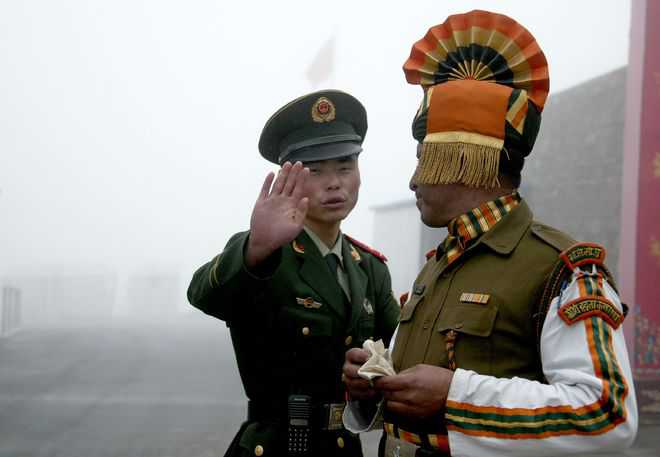
As Indian and Chinese troops dig in for a long haul at the 10,000-ft-high Doklam plateau in Bhutan, defence experts say the resolution of past such standoffs was possible only after forces of both sides carried out simultaneous withdrawal from disputed areas along the Line of Actual Control (LAC).An agreement to withdraw forces simultaneously from the disputed site was the only option left to defuse the crisis, said a top functionary. (Follow The Tribune on Facebook; and Twitter @thetribunechd)The area is disputed at the tri-junction of India, China and Bhutan and as per existing agreements, tri-junctions cannot be disturbed till all three parties agree. In 2013, 2014 and 2015, all three standoffs in Ladakh and the one in Anjaw (Arunachal Pradesh) were resolved through simultaneous withdrawal of troops. In the past three decades, peace treaties have kept sanity along the 3,488-km LAC. There have been a series of agreements that dictate the conduct of soldiers and also how a high-powered committee with members of both sides would sort out matters.Each year, troops of either side come face to face many times while patrolling along disputed areas. As per an agreement inked in 2005, troops are supposed to back off from the positions of patrolling. This is done after troops of either side show a banner asking the other to back off as per the “protocol on modalities for implementation of confidence-building measures in the military field along the LAC”. The mandate of the agreement is: “Throughout the face-to-face situation, neither side shall use force or threaten to use force against the other.” It also calls upon both the sides to stop their activities in the area and not advance any further. They have to return to their respective bases after the banner drill. It is only after this mechanism fails and troops don’t withdraw that the situation is called a standoff, as in the present case.


China carries out drill in Tibet amid Sikkim separation call

BEIJING: The Chinese military has carried out an exercise on the Tibet plateau, deploying tanks and conducting live firing at a height of 5,100 metres for the first time, amid the standoff with Indian forces near Nathu La in Sikkim sector that has taken bilateral ties to a new low.

At the same time, China’s official media, in a brazen editorial, called for Sikkim’s “independence” and separation from India, suggesting Beijing rally the world for the abolition of unfair treaties on sovereignty and defence that New Delhi has allegedly forced Bhutan to sign.

The military drill, which involved the testing of new equipment, was conducted to evaluate the battle-readiness of People’s Liberation Army (PLA) troops at altitudes of 15,000 feet and above, official Xinhua news agency reported.

The exercise assessed “battlefield environment analysis, combat operations, synergies that need to be developed during battle”, and also featured live fire shooting training and the testing of integration of military operations, the report in Chinese said.

The report said the hierarchy of the PLA, the world’s largest armed forces, wanted to test how personnel and equipment fared in freezing altitudes and “complex weather patterns”.

Meanwhile, the editorial in Global Times — affiliated to the Communist Party of China mouthpiece, the People’s Daily — suggested Beijing take a fresh look at Sikkim’s merger with India. The editorial said Beijing “should reconsider its stance over the Sikkim issue” even though China “recognised India’s annexation of Sikkim in 2003”.

The editorial suggested China could “readjust its stance on the matter”. “There are those in Sikkim that cherish its history as a separate state, and they are sensitive to how the outside world views the Sikkim issue. As long as there are voices in Chinese society supporting Sikkim’s independence, the voices will spread and fuel pro-independence appeals in Sikkim,” it said.

“With certain conditions, Bhutan and Sikkim will see strong anti-India movements, which will negatively affect India’s already turbulent northeast area,” the newspaper wrote.

The newspaper’s call for Sikkim’s independence and incite trouble in the northeastern states seems to match with what Indian agencies have claimed that Beijing encourages insurgent groups to spread unrest.


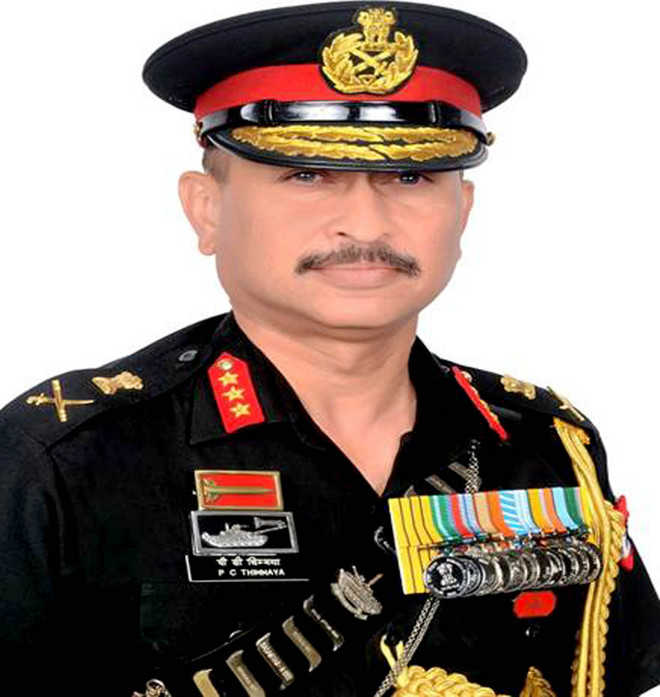
Lt Gen Thimmaya assumes charge of Chetak Corps

Lt Gen Thimmaya assumes charge of Chetak Corps
Lieutenant General PC Thimmaya

Bathinda, July 5

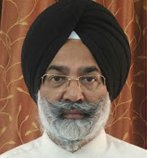
Lieutenant General PC Thimmaya took over the command of Chetak Corps from Lieutenant General Ashwani Kumar at a solemn military ceremony.A Mechanised Infantry Officer, commissioned in 1981, he has varied experiences at the Western and Eastern fronts. Besides commanding a Mechanised Infantry Brigade, he has commanded a strike RAPID division and has held important staff appointments at Integrated HQ of MoD (Army).He has also been a military observer with UN mission (Angola) and Defence Attache in Bangladesh.— TNS


Have better options than surgical strikes: Rawat

I’ll hold talks with a person who assures me that my convoy will not be hit (in Kashmir). The day that happens, I will personally hold a dialogue. BIPIN RAWAT, Army chief

NEW DELHI: India has more effective options than surgical strikes to deal with Pakistan, chief of army staff General Bipin Rawat told HT in an exclusive interview on Tuesday.

“Pakistan thinks it is fighting an easy war that’s paying them dividends, but we have options (other than surgical strikes) that are far more impactful and effective. Our army is not barbaric. I don’t want to (collect) heads because we are a disciplined force,” he said, referring to the decapitation and mutilation of two Indian soldiers on May 1.

The army chief was circumspect about the United States designating Hizbul Mujahideen chief Syed Salahuddin as a global terrorist. “I will wait and watch to see if Pakistan truly reins him in, because he was issuing a calendar of protests on the very day he was designated,” he said.

Rawat also alluded to the fact that while there was an official bounty on the head of Lashkar-eTaiba founder Hafiz Saeed, it did not lead to any crackdown on the militant leader or his outfit.
On holding peace talks with Kashmiri leaders, Rawat was categorical that “dialogue can happen only when there is peace”. “The army has a job to do. We have to ensure that peace returns. I’ll hold talks with a person who assures me that my convoy will not be hit. The day that happens, I will personally hold a dialogue,” he told HT, sitting at the army headquarters in Delhi.


India puts another ‘eye in the sky’ Military surveillance to get a boost as ISRO puts Cartosat, 30 other nano satellites into orbit

India puts another ‘eye in the sky’
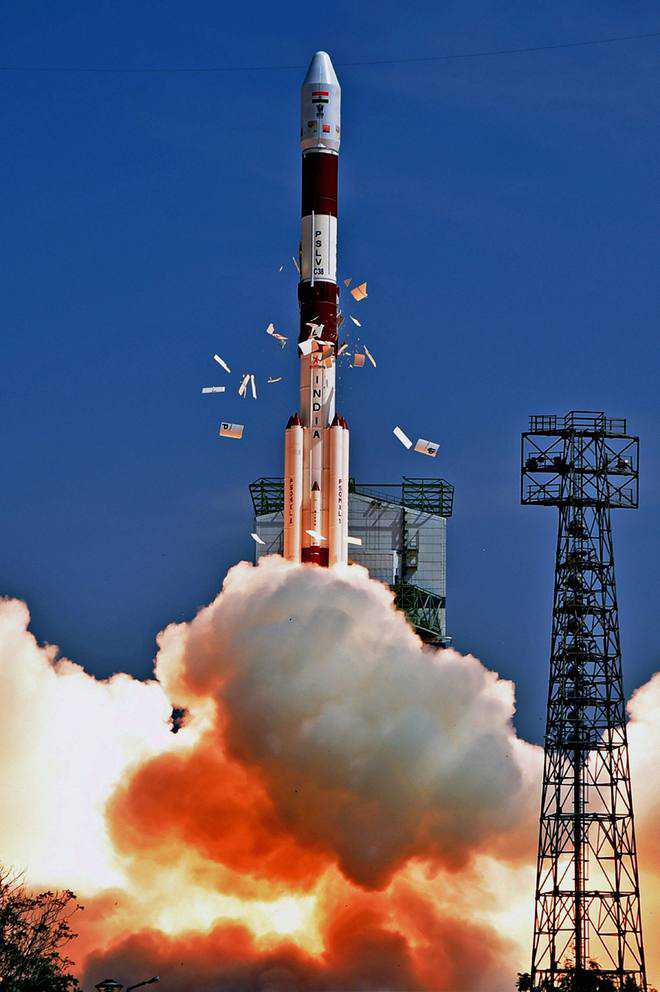
ISRO’s PSLV C38, carrying Cartosat-2 Series and 30 other satellites, lifts off Satish Dhawan Space Center in Sriharikota on Friday. PTI

Sriharikota (AP), June 23

India today successfully put into orbit a satellite that will boost its military surveillance capabilities along with 30 other tiny satellites — all but one of them foreign — from a single rocket in yet another milestone for its low-cost space programme.The Polar Satellite Launch Vehicle (PSLV-C38) of the Indian Space Research Organisation (ISRO) in its 40th flight lifted off the first launch pad at Satish Dhawan Space Centre at 9.29 am and injected the 31 satellites into orbit 27 minutes after lift-off, amid applause from scientists.Dubbed as a “smart eye in the sky”, the 712-kg Cartosat-2 series earth observation spacecraft launched by the 44.4 metre-tall rocket as its primary payload is an advanced remote sensing satellite that is expected to give defence surveillance a leg-up. The 31 satellites together weighed 955 kg.Today’s mission was the second highest number of satellites to be launched by the ISRO using a single rocket. On February 15, the PSLV-C37 mission scripted history by launching 104 satellites into orbit at one go. Of these, 101 satellites were from foreign countries.With the launch of the third spacecraft in the Cartosat-2 series, the images sent by the dedicated satellite for defence forces are expected to become sharper and wider. The previous satellite in the series had a resolution of up to 0.8 metres and the images it took over India’s neighbourhood had helped carry out surgical strikes on terror launch pads across the LoC last year, said ISRO sources. — PTI

The payload

  • At 712-kg, Cartosat-2 is an advanced remote sensing satellite with a resolution of up to 0.6 m. The previous satellite in the series had a resolution of up to 0.8 m and was used by defence forces during surgical strikes across the LoC last year
  • NIUSAT, a nano-satellite developed by Noorul Islam University in Tamil Nadu, will provide multi-spectral imagery for agricultural crop monitoring and disaster management support applications
  • The other 29 nano-satellites put into the orbit are from 14 countries, including France, Germany, Italy, Japan, the UK and the US