Sanjha Morcha

What’s New

Click the heading to open detailed news

Current Events :

web counter

Print Media Reproduced Defence Related News

The big Russia picture by MK Bhadrakumar

The big Russia picture

t’s mutual: Both India and Russia need each other. Reviving the old rupee-rouble clearing system in economic transactions is perhaps necessary.

MK Bhadrakumar
Former ambassador

Albert Einstein once said, ‘In the middle of difficulty lies opportunity.’ The difficulties that have been piled on India in the recent past, for no real fault of its own, by the US are turning out to be a wake-up call — especially the arrogant, intolerable American demands that Delhi must curb its friendly ties with Russia and Iran.

The grit to push ahead with the S-400 ABM deal with Russia became a celebrated case. India made its payments in roubles and sidestepped the dollar system, calling the American bluff. Meanwhile, new thinking appeared to revive the old rupee-rouble clearing system in economic transactions, characteristic of the Soviet era. Exploratory talks have begun. The two countries are rich with experience as regards the charms and inadequacies of barter trade. Accumulation of currencies was an embarrassing feature.

But then, conditions are vastly different today. Russia’s ‘Czarist instincts’ have reappeared with a vengeance and the great Russian barons of the 19th century are once again on the move, wading into the world market, scouting for business in far-flung regions — Germany, the Netherlands, Italy, China, Turkey, South Korea, Poland, Japan, Kazakhstan, Belarus, South Korea, US, etc. Washington felt the pressure to sanction Russia’s United Company RUSAL, the world’s largest aluminium company by primary production output. With foreign currency reserves of $460 billion, Russian business also has investible surplus in expanding operations in the world market. (Russia manages a budget surplus if oil price is in $50-$55 bpd range, whereas, the current price is around $75 a barrel Brent.)      

India, on the other hand, is in a period of high growth. The economy is luring foreign investment and is slated to be a big guzzler of energy. A case in point is the acquisition of Essar Oil by the Russian consortium led by oil major Rosneft in a deal worth $12.9 billion last year. According to reports, Essar is now considering approaching the Russian state-controlled Inter RAO, a diversified energy major with operations in generation, transmission and power trade, to become an investor in its 2×600 MW Mahan thermal power project in Madhya Pradesh. Similarly, the Russian financial group VTB is intent on investing in Essar Steel, the fourth largest steel producer in India and undergoing bankruptcy proceedings.

These are only tell-tale signs of a long-awaited breakthrough in India-Russia economic relations sailing into view, finally. Suffice to say, with the backlog of the experience and lessons out of the Soviet era, India and Russia will be wise to highlight investments in any rupee-rouble framework they may negotiate to counter the ‘weaponisation’ of dollar by Washington as a geopolitical tool. Arguably, the future of Indian-Russian economic relations lies in investments where there is tremendous complementarity. Such a panorama never really existed in the Soviet era. 

Take, for example, the energy sector. Apart from the upstream investments India is making in the Russian oilfields, there is vast scope for Russian investments in the downstream sector in India. Thus, Essar Oil owned a retail network of Essar-branded fuel stations, which were steadily increasing their share on the growing Indian market. Now, in the 12 months since Rosneft’s takeover in March last year, the number of Essar fuel stations expanded by 20 per cent to reach 4,200. Rosneft’s short-term plan is to expand Essar’s fuel-station network to 6,000.

Again, the Nayara Energy Refinery in Vadinar, Gujarat (Essar’s oil company which is now owned and operated by Rosneft), has docking facilities, including an SBM capable of handling vessels up to 3,50,000 DWT with a capacity of 25mtpa (million tons per annum), tankages with interconnecting pipelines of 20mtpa capacity, marine product dispatch capacity of 12mtpa and rail-car and truck-loading facilities. Trust Rosneft to multiply its investments in Essar. Rosneft’s plans stem from the ‘big picture’ — far-sighted visions of the immense potentials of the Indian energy market. Rosneft and the National Iranian Oil Company have signed a road map on the implementation of ‘strategic’ projects in Iran with total investments worth $30 billion.

In the Soviet era, we had a USSR-Iraq-India triangle operating in the ambit of the rupee-rouble trading system, which proved beneficial. Can we now create a Russia-Iran-India triangle with a similar ‘win-win’ potential? To be sure, the government has thoughtfully timed the trilateral meeting on the India-Iran-Russia International North South Transport Corridor (INSTC) on November 23 in Delhi. Commerce and Industry Minister Suresh Prabhu has been quoted as saying to a visiting Russian delegation for stepping up investments and business between the two countries that ‘all issues (relating to INSTC) may be resolved in order to operationalise the route as early as possible’. Prabhu pointedly stressed that the corridor is an important Indian-Russian-Iranian initiative. INSTC is the shortest multimodal transportation route linking the Indian Ocean and Persian Gulf via Iran to Russia and North Europe. The estimated capacity of the corridor is 20 to 30 million ton goods per year and will reduce time and cost by 30 to 40 per cent. Analysts are calling it the Suez Canal of the 21st century.

Free market theories disfavour the barter system, but these are extraordinary times, when a new payment system is necessary, not only to boost mutual trade and investments, but also to avoid being entrapped by self-serving US policies. Russia matters because it is a sheet anchor for India’s foreign policy. Equally, it is a balancer augmenting India’s strategic autonomy. Above all, it is intrinsically an economic partner with seamless potential. Smart geopolitics devolves upon geo-economics — or else, it becomes an esoteric affair bypassing India’s present stage of development. Giving primacy to job creation in the millions, in particular, ought to be the focus of our foreign policy.


Terror charges against Purohit, Pragya

Terror charges against Purohit, Pragya

Sadhvi Pragya

Shiv Kumar

Tribune News Service

Mumbai, October 30

A special court on Tuesday framed charges in the 2008 Malegaon blast case against former Military Intelligence officer Lt Col Shrikant Prasad Purohit, Sadhvi Pragya Singh Thakur and five others for terror activities, criminal conspiracy and murder, among others.Judge Vinod Padalkar, presiding over the special National Investigation Agency (NIA) court, said the Abhinav Bharat organisation with which the accused were associated was formed with the objective of carrying out terror attacks. He said a bomb containing RDX was planted on a motorcycle that left six dead and 101 injured.

All the accused have been charged under various sections of the IPC, Unlawful Activities Prevention Act and the Indian Explosives Substance Act. Appearing before the court, the accused said they did not plead guilty.Sadhvi Pragya said the NIA had first given her a clean chit but later framed charges against her. “I am not a member of Abhinav Bharat. I have said in the past also that I am in no way connected with this organisation. This is a kanoon ka khel happening here,” she said, adding that the terror allegations were being levelled against her at the behest of the Congress.

Lt Col Purohit’s lawyers pleaded for deferment of framing of charges as they were set to appeal in the apex court against Bombay High Court’s order refusing to stay the framing of charges.


Appoint senior-most officer as Army medical chief: SC Sets aside lateral posting of Air Force officer

Appoint senior-most officer as Army medical chief: SC

Tribune News Service
Chandigarh, October 29

Setting aside the lateral shifting of an Air Marshal to the post of Director General Medical Services (Army), the Supreme Court on Monday directed that the senior-most officer in line, Lt Gen Manomoy Ganguly, be appointed to the said post.

On August 10, the government posted Air Marshal Rajvir Singh then DGMS (Air Force) as the DGMS (Army) in the rank of Lieutenant General. Medical officers are rotated amongst the three services and don the uniform and ranks of the service they are posted to.

This was challenged by Lt Gen Ganguly, recently promoted from the rank of Major General after a court battle, on grounds of seniority and merit. The issue of the appointment of DGMS (Army) has seen several rounds of litigation in the Armed Forces Tribunal and the apex court that had also resulted in the appointment of another Lieutenant General being quashed earlier.

“We are of the opinion that the process undertaken by the respondents in taking decision to appoint Air Marshal Rajvir Singh as DGMS (Army) does not stand judicial scrutiny. We are constrained to set aside the appointment,” a Bench comprising Justice AK Sikri and Justice Ashok Bhushan ruled.

Pointing out that the first fundamental error occurred in lateral shifting of Air Marshal Rajvir and considering his candidature along with others, the Bench said it was contrary to guidelines that permitted lateral shifting only in exceptional circumstances, which did not exist in the instant case.

Remarking that it failed to understand why the methodology of Overall Average Performance (OAP) was thought of by the Army Chief to adjudge comparative merit of officers in the fray when, concededly ACR grading has never been used as a criteria for posting of a Lieutenant General officer earlier, the Bench said the OAP mechanism was foreign to the Army’s selection guidelines.

The case

  • On August 10, the government had posted Air Marshal Rajvir Singh, then DGMS (Air Force), as the DGMS (Army) in the rank of Lieutenant General
  • This was challenged by Lt Gen Manomoy Ganguly, recently promoted from the rank of Major General after a court battle, on grounds of seniority and merit.

Money gifted to Ambani, none for OROP: Rahul

New Delhi, October 27

Congress president Rahul Gandhi today met a delegation of ex-servicemen and promised them to implement One Rank, One Pension (OROP) if his party was elected to power. He attacked the PM for “giving a gift of Rs 30,000 crore to inexperienced Anil Ambani in the Rafale deal, but not giving Rs 8,300 crore that would be enough to implement the OROP”.

“All ex-servicemen said the BJP government has not implemented the OROP. They also spoke about the situation in J&K, the non-strategic approach of the government, the divisions created there and the cost being paid by our soldiers. They also discussed Rafale. And these are connected,” Rahul said. — TNS


810 GCs of IMA attend cross country run

Dehradun, October 19

As part of the training schedule of the Gentlemen Cadets of Autumn term-2018, a cross country run was held at the prestigious Indian Military Academy (IMA) here Friday.

The event, which tests the limits of physical endurance, determination and willpower of the Gentleman Cadets, was flagged off by Commandant, IMA, Lt Gen S K Jha. The most colourful and awaited event of the academy saw the participation of 810 Gentlemen Cadets of the second and third terms running a course of approximately 12 km, a statement issued by the IMA here said. Keren Company of the Bhagat Batallion attained the first position with 742 points, while Basantar Company of the same Batallion got the second position with 706 points, it said. Jessore Company of the Manekshaw Battalion came third on difference of average score with 706 points, the statement said.

Gentleman Cadet (GC) Shivkant Yadav of the Alamein Company with a timing of 38.16 minutes got the first position, while GC Himanshu Kashyap of the Dograi Company and GC Abhishek Rai of the Alamein Company came second and third. — PTI


4 Army men booked for raping colleague Divyang violated at military hospital

Pune (Maha), October 17

Four Army personnel have been booked for allegedly raping and molesting a 34-year-old speech and hearing-impaired woman employee of a military hospital here in Maharashtra in 2015, the police said Wednesday.

Besides the police, the Army too is conducting a court of inquiry against the four personnel, who also worked in the same military hospital at the time.

The alleged offence took place between January and June 2015 at the Military Hospital, Kirkee, in Pune’s Khadki suburb. The woman has been working at the facility since 2014.

“According to the woman’s complaint, she was on night duty (at the hospital) when she was allegedly raped by one of the accused, who at the time was posted at the hospital,” a senior police official said. When the survivor told another Army man about the incident, he initially told her that he would reprimand the “accused”. “But he too sought sexual favours from her by threatening her to make the message viral and allegedly raped her. After some days, two more personnel approached the woman and allegedly took advantage of her,” the police official said.

The woman, a Class IV employee at the hospital, had approached an NGO in Indore, Madhya Pradesh, earlier this year. The NGO subsequently approached the Indore police. On Tuesday night, the Indore police informed about the matter to their Pune counterparts, who have registered a case against the four personnel under IPC sections 376 (rape) and 354 (molestation), he said. — PTI


Half a century of mistrust Sidestepping the hidden traps in repairing Sino-Indian ties

Half a century of mistrust

THERE is much excitement over the fourth meeting between Chinese President Xi Jinping and PM this year on the sidelines of next month’s G20 meeting in Argentina. Frequent meetings by themselves indicate a desire of both sides to turn the page over past acrimony. And Sino-Indian ties are brimming with differences. But do meetings resolve the acute mismatch of national interests? In four years as PM, Modi has averaged about four meetings with Xi every year, the same as in previous years. The difference though is in the two-day Wuhan interaction between the two. Rarely do two principals set aside two full days to understand each other’s motives during a critical period of global changes and adjustment.

The results have been trickling in. China began providing hydrological information of the Brahmaputra thus quelling apprehensions of a downstream India being caught unawares by increased flows; India has started exporting basmati rice as partial attempt to close the trade gap; and, the first Joint India-China Training Programme for Afghan diplomats was held recently. These developments can hardly be rated as path-breaking. Clearly there is a major distance to travel.

There are bigger knots to untie such as China blocking India’s membership of the Nuclear Suppliers Group or New Delhi’s opposition to the Belt and Road Initiative. Their resolution could hold the key for resolving existentialist issues blocking normal Sino-Indian ties — the border dispute and Dalai Lama’s presence in India. But that is without accounting for China’s leaning towards Pakistan and India’s intensity of security ties with the US, both anathemas to the other country. Or, their competition for natural resources and market in third countries. This explains Modi and Xi’s partiality to a gradualist approach that assumes change will come slowly, which is why they have planned another Wuhan-type interaction in India next year. The medium-term approach seems to avoid big-ticket outcomes and instead focus on greater understanding of the other, as they try to emerge as positive factors in the balance of global power.


Congress delegation again meets CAG over Rafale; seeks forensic audit

Congress delegation again meets CAG over Rafale; seeks forensic audit

Photo for representation.

Tribune News Service
New Delhi, October 4

A high-level Congress delegation on Thursday petitioned the CAG for the second time in 15 days and sought forensic audit of the Rafale deal between India and France.

In a memorandum to CAG Rajiv Mehrishi, the Congress appealed to the central auditor to undertake “his constitutional duty” and expose the facts of Rafale to enable parliament to take a view on the issue.

The Congress is simultaneously demanding a joint parliamentary committee probe into the matter.

Repeating the allegations it has been making in the Rafale matter, the Congress said the 36 jet deal compromised national security by cutting down on the jet order and also removing the transfer of technology clause for HAL in the original negotiations which the Congress-led UPA had started.

“It is our clear understanding that all the contours of this conspiracy, corruption, endangering of national security and crony capitalism can be uncovered only thorough a probe by the Joint Parliamentary Committee (JPC). It is expected that the CAG which has a constitutional mandate and authority to scrutinise every document, in this case including original tender, understanding reached between Dassault and HAL and the arbitrary decision of the Prime Minister without any mandate from the Cabinet Committee on Security (CCS) will undertake a forensic audit,” the memorandum said.

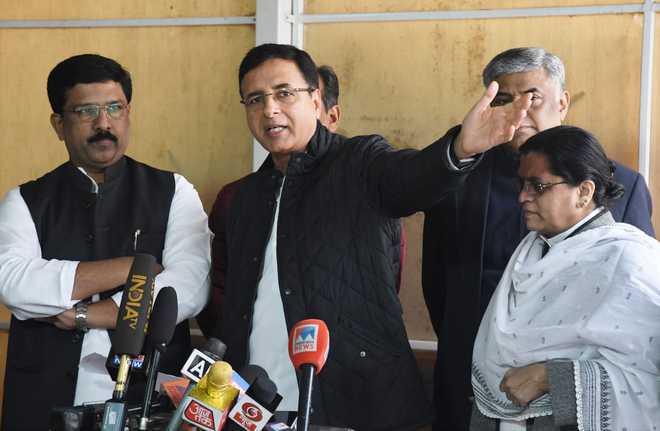
The delegation, comprising senior Congress leaders Ahmed Patel, Anand Sharma, Jairam Ramesh, RPN Singh and Randeep Surjewala, urged the CAG to “bring all facts on record to enable Parliament to fix accountability for the Rafale scam”.

The Congress had earlier met the CAG on this issue on September 19.


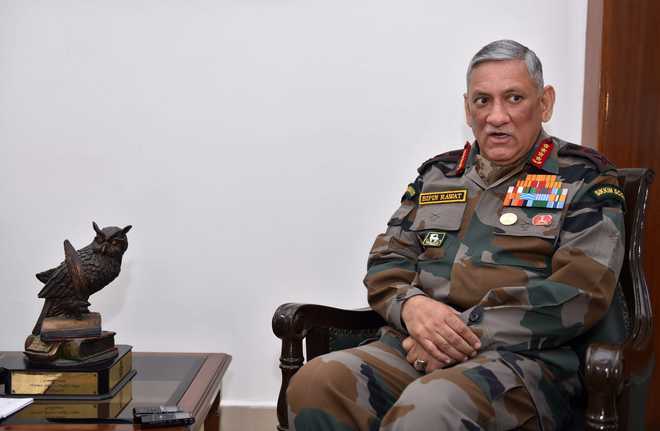
Surgical strike not the only option to tackle terrorism from Pakistan: Army Chief Gen Bipin Rawat

New Delhi: While reiterating that Pakistan-sponsored terrorism is the biggest challenge to the country, Army Chief General Bipin Rawat on Tuesday warned that the armed forces have several options open, including surgical strikes, to teach a firm lesson to the country’s enemy.

”Terrorism emanating from Pakistan is the biggest challenge to the country. But surgical strikes are not the only option we have. The armed forces have several other better options for tackling cross-border infiltration and terrorism,” Gen Bipin Rawat said.

Though Gen Rawat stopped short of disclosing what strategy the armed forces were planning to adopt in order to tackle cross-border terrorism, he threw enough indications of a major military action in future if the situation warranted.

In a stern warning to Pakistan, General Rawat warned that the country’s armed forces were fully prepared to deal with any eventuality as war can take place any time.

In view of the current situation in Jammu and Kashmir, the Army Chief admitted that there was a need for another surgical strike on terror launch pads across the Line of Control.

“I won’t deny this. But surgical strikes are not the only option with us. We keep reviewing the situation and prepare our strategy accordingly. We can’t disclose how and when, but we will certainly take a decisive action whenever needed,” he added.

General Rawat said this in an exclusive interview with Zee News Editor Sudhir Choudhary during which he spoke on a wide range of issues, including the change of guard in Pakistan, political atmosphere in the country, recent kidnapping and killing of jawans and civilians, alleged violation of human rights by the armed forces, the need for another surgical strikes on terror launch pads, the Rafale row and whether he harboured any political ambitions.

Expressing his views, Gen Rawat said peace and stability in the region can be established only if the civilian government in the neighbouring nation and its armed forces make an honest effort towards it.

”Peace can come, insurgency and cross-border terrorism can end if the Imran Khan government in Pakistan takes an honest effort in that direction. Till the time the civilian government in Pakistan remains under the clutches of its army (ISI) peace will remain a distant dream,” Gen Rawat said.

While revealing that he had never met his Pakistani counterpart Gen Qamar Javed Bajwa, Gen Rawat said that the former has the capability of ending the proxy war between the two countries, cross-border infiltration, terrorism and all turbulence along the India-Pakistan borders.

However, in view of Gen Bajwa’s reported provocative statements, Gen Rawat said that chances were grim that the bloodshed will end in J&K.

He said that Pakistan-back terrorists were utterly frustrated with Indian Amry’s counter-terror operations in which several top terrorists had been eliminated.

”Recent kidnappings and killing of armed forces personnel, civilians and J&K policemen indicate that they (Pakistan-backed terror outfits) are frustrated and losing ground, ” he said.

Gen Rawat, while praising the officers and jawans of the armed forces, said that the country is fully prepared to deal with any eventuality and to protect the national borders.

To those seeking evidence of the 2016 surgical strike, Gen Rawat urged ”please trust your armed forces and believe in what they do and say.” ”For Army, Operation is a priority, not taking evidence of a strike,” he added.

Gen Rawat, while pitching for the inclusion of latest technology in modern warfare, said continuous upgradation of the armed forces, weaponry, logistic support is needed to sharpen the combat capabilities of the armed forces.

The Army Chief also referred to the ongoing row over Rafale defence deal. He said that defence procurement should be done through Government-to-Government channels, which will eliminate the risk of middlemen and ensure transparency.

Interestingly, Gen Rawat had on Sunday said that surgical strike is a weapon of surprise and must remain so while hinting that the security forces will respond when the appropriate time comes.

”Surgical strike is a weapon of surprise. Let it remain a surprise,” General Rawat had said.

Rawat also backed the Narendra Modi government’s decision to cancel talks with Pakistan, asserting that talks and terror cannot go together.

Gen Rawat said that whichever party comes to power at the Centre, the Indian Armed forces will always remain ”apolitical.”

The Army Chief also said infiltration from across the border persists despite the call for a ceasefire by Pakistan and stressed that this cannot be allowed to continue and appropriate action has to be taken to deter terrorists from disrupting the peace in the Kashmir Valley.

”Infiltration from across the border persists despite the call for a ceasefire by Pakistan,” said Rawat stressing that ”this cannot be allowed to continue”.

”They have been carrying out barbaric acts and Pakistan Army is used to doing this. It is not the first time that they have done it,” the Army Chief said.

When asked if he harboured any political ambitions, Gen Rawat said, ”No.”

I an not cut out for that. I would like to be remembered as an Army officer who lived his dream, who led his side with pride, and the one who always admired and respected his olive green uniform.

The no-holds-barred interview with Army Chief came nearly a week after a BSF soldier was shot dead by Pakistani forces and his mutilated body was found later.

The Army had conducted a massive surgical strike on terror launch pads across the Line of Control on September 29, two years ago.

Meanwhile, the Defence Ministry has decided to observe ‘Parakram Parv’ commemorating the valour and sacrifice of the armed forces on the anniversary of the 2016 surgical strikes on terrorism launch pads along the LoC.

A three-day main event between September 28-30 will be organised at the India Gate lawns in the national Capital besides similar events at 53 locations in 51 cities across the country to “highlight the valour of the Indian armed forces in general and special forces in particular”.

Defence Minister Nirmala Sitharaman would inaugurate the event on September 28 at India Gate lawns.

“To showcase the courage, valour and sacrifice of the armed forces, `Parakram Parv`, which literally means a celebration of valour, is being observed,” Army spokesman Colonel Aman Anand said.

The Army conducted surgical strikes (on the intervening night of September 28-29, 2016) which had strategic ramifications and were aimed to “dissuade the inimical adversary from adopting the path of violence and to ensure an environment of peace for the nation”.


Naval officer to be rescued in 16 hours

Shubhadeep Choudhury

Tribune News Service

Kolkata, September 23

The ordeal of Abhilash Tomy, the injured Naval officer drifting in the south Indian Ocean in his damaged sailboat, may end by Monday.a tweet, Defence Minister Nirmala Sitharaman said, “Spoke to VCNS VAdm Ajit Kumar P, AVSM, VSM regarding the condition of injured navy officer @Abhilashtommy. The rescue mission is being coordinated with the Australian Navy. The injured officer shall be picked up in the next 16 hrs by a French vessel Osiris.”

From the French ship, Tommy is expected to be shifted to Australian Navy vessel HMAS Ballarat which is equipped with medical facilities. HMAS Ballarat has already sailed from Perth this morning.

Indian Navy frigate INS Satpura, which has been diverted towards Tomy’s location in the South Indian Ocean for rescue, will reach there by Friday, a Navy spokesman said.

Drifting in the high sea for about 48 hours now, the Navy officer, the only Indian participant in the Golden Globe Race (GGR), has complained of vomiting and chest burning. The race organisers tweeted his message sent to them via satellite.

“5 lugged cans of ice tea. Having that. Vomiting. Cont. chest burnin,” Tomy said in a message which was tweeted by the GGR this afternoon. According to GGR, Tomy has not drunk water since his boat was hit by a storm on September 21, leaving him injured and damaging his yacht.

The 39-year-old sailor, who has circumnavigated the globe once, had on July 1 embarked on the 30,000-mile journey through some of the world’s toughest seas aboard a non-motorised sailboat all alone.

A Navy plane tasked with locating Tomy has successfully spotted the yacht. Tomy heard the noise of the plane and got very excited. “Heard AC (aircraft). ETA Rescue? (expected time of arrival of rescue?),” Tomy asked the GGR organisers via satellite.

Navy officer asks ‘ETA Rescue?’ after hearing noise of plane

Navy officer asks ‘ETA Rescue?’ after hearing noise of plane

A picture of Abhilash Tomy’s boat taken from the Navy plane on Sunday morning.

Shubhadeep Choudhury

Tribune News Service

Kolkata, September 23

Drifting in the high seas for about 48 hours now, Abhilash Tomy, the daring Indian Navy officer who is the only Indian participant in the tough Golden Globe Race (GGR), has complained of vomiting and chest burning.

He has had some ice tea. Organisers of the race have tweeted Tomy’s message sent to them via satellite.

“5 lugged cans of ice tea. Having that. Vomiting. Cont. chest burnin”, Tomy said in a message which was tweeted by the GGR at around quarter past three this afternoon.

According to GGR, Tomy has not drunk water since his boat was hit by a storm on September 21 and left him severely injured besides causing major damage to his yacht.


The 39-year-old sailor, who has circumnavigated the globe once in the past, had on July 1 embarked on the 30,000-mile journey through some of the world’s toughest seas aboard a non-motorised sailboat all alone.

The Navy has deployed a frigate INS Satpura (with a Chetak helicopter on board) and tanker INS Jyoti for rescue of its intrepid officer who is a winner of the Keerti Chakra.

INS Satpura and INS Jyoti were operating in the Indian Ocean from where ships were diverted to the South Indian Ocean for the rescue operation.

A Navy plane tasked to locate Tomy has also successfully spotted the yacht. Tomy heard the noise of the plane and got very excited. “Heard AC (aircraft). ETA Rescue? (expected time of arrival of rescue?),” Tomy asked the GGR organisers via satellite.

Tomy’s location was initially tracked to approximately 1,900 nautical miles south west of Perth, Western Australia. The boat may have drifted further off from the coast by now.

According to GGR, a French fisheries patrol vessel arranged by the Australian marine rescue authorities to reach the scene has got delayed due to bad weather. Gregor McGuckin, a fellow GGR participant who is heading toward Tomy in his sailboat, has also slowed down because of the weather.

However, Australian warship HMAS Ballarat, which is tasked to provide medical assistance to Tomy after his rescue, has set off for the scene this morning.

In a press statement issued at 4.15 this evening, Indian Navy said its P-8I aircraft operating ex-Mauritius visually sighted the ‘SV Thuriya’ (Tomy’s yacht) at 0750 hrs this morning. Continuous watch over the boat is being maintained by Navy and RAAF aircraft till rescue is completed.

“The officer in his last text message has indicated that he is safe on the boat; however is immobile due to back injury,” stated the press release.