Sanjha Morcha

What’s New

Click the heading to open detailed news

Current Events :

web counter

Print Media Reproduced Defence Related News

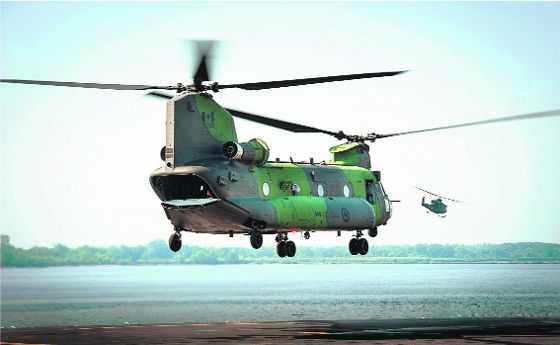
Chinook delivery to start in Feb After trials in Okhla, copters to be flown to permanent base Chandigarh

Chinook delivery to start in Feb

Vijay Mohan

Tribune News Service

Chandigarh, November 28

American defence major Boeing is expected to commence the delivery of CH-47 Chinook heavy-lift helicopter to the Indian Air Force in February next year, it is learnt.

“The helicopters would be shipped to India in a partially disassembled state and would be off-loaded at Okhla port in Gujarat,” an IAF officer said. The Americans are setting up facilities near Okhla to re-assemble and test-fly the helicopters before being handed over to the IAF, he added.

After acceptance trials, the helicopters will be flown to Chandigarh, which would be their permanent base. Two hangars and a maintenance bay along with associated technical and logistics facilities are to be set up here for the purpose.

India had signed a deal with the US in September 2015 for 15 Chinook helicopters, with an option for another four machines, and 22 AH-64 Apache attack helicopters that would be based elsewhere.

“The fact that the new machines are arriving by sea indicates that the entire fleet would be delivered in one or two consignments,” an officer said. “The other option was to have the choppers airlifted in heavy freighters like the AN-124, which would have taken multiple sorties spread over days or weeks,” he added. The first Chinook airframe manufactured for the IAF made its inaugural flight in the US in July this year. Last month, a team of IAF personnel comprising four pilots and four engineers proceeded to Delaware in the US for conversion training on Chinooks.

Chinooks have a payload capacity of about 10 tonne and will provide much-needed fillip to the IAF heavy-lift capability, a role earlier being fulfilled by Soviet origin Mi-26s, also based at Chandigarh. The IAF had four Mi-26, but now is left with just one serviceable machine. Chinooks will lift artillery, vehicles, road construction and engineer equipment as well as troops and supplies to mountainous sectors in North and North-East.

Chandigarh is no stranger to Chinook. Three of them belonging to British Royal Air Force had been airlifted here from the UK for onward journey to Nepal for flood relief operations in 2015. After being re-assembled and test-flown, these spent a few days here before being recalled home.


Paragliding World Cup gets Army support

The Army will provide communication, manpower, temporary toilets and even its helicopters for rescue mission in case of an accident

Dharamsala, October 27

The Army will provide the logistic support to the Indian Open 2018 Paragliding World Cup starting tomorrow.

Dah division of the 39 Corps has decided to provide all support. It has come as a big relief for them, said  SDM, Baijnath, Vikas Shukla, who is heading the organising committee for the event.

The SDM said the Army would provide communication, manpower, temporary toilets and even its

helicopters for rescue mission in case of an accident during the World Cup.

A number of pilots would participate. The registration was open till today. However, only 150 participants would be allowed in the competition.

Four pilots, three from the Samarth group in Rajasthan and one Manu Thakur from Himachal, presented hang-gliding show in Bir Billing to mark the start of the World Cup.

Meanwhile, all hotels are packed to their capacity in Bir. The small hamlet is buzzing with activity.


550TH BIRTH ANNIVERSARY CELEBRATIONS OF GURU NANAK BEGIN Ready to contribute for Kartarpur corridor: CM

Capt launches campaign to plant 550 trees in every village
Ready to contribute for Kartarpur corridor: CM

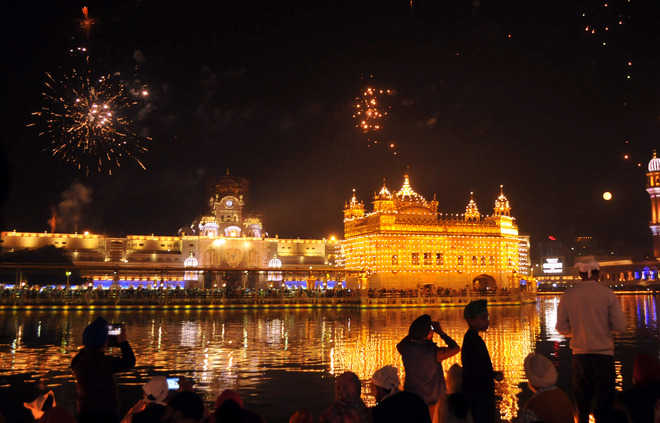
Fireworks at display at the Golden Temple in Amritsar on Friday. Tribune photo: Vishal Kumar

Deepkamal Kaur
Tribune News Service
Sultanpur Lodhi, November 23

Chief Minister Capt Amarinder Singh on Friday announced that his government was ready to contribute towards setting up the Kartarpur corridor.

The CM made the announcement during the launch of year-long celebrations to mark the 550th birth anniversary of Guru Nanak Dev here.

“A long-pending demand of Punjab will be on the verge of fulfillment on November 26, when I will join the President in laying the foundation stone for the corridor,” he said. He also thanked the Government of Pakistan for reciprocating on the issue.

Former Prime Minister Dr Manmohan Singh and Punjab Governor VP Singh Badnore joined Capt Amarinder in laying foundation stones for 26 development projects worth Rs 150 crore on Friday. The projects, initiated by him, include upgrade of infrastructure in three historic towns associated with the Guru — Sultanpur Lodhi, Dera Baba Nanak and Batala.

The CM said money would be no constraint for various development and welfare projects announced by him to ensure a befitting commemoration of the historic event. He also announced projects to the tune of Rs 3,312 crore to facilitate pilgrims. Release of 32 prisoners and remission of term for another 2,952 was also announced.

Launching a drive to plant 550 trees in every village, the CM also proposed to build a Sri Guru Nanak Dev Ji Marg, to be finalised by a group of experts. The foundation stones laid on the occasion are that of three bridges and two footover bridges (Rs 24 crore), a permanent bridge to replace pontoon bridge across Beas (Rs 13 crore), a new rest house (Rs 5 crore), widening of planned roads (Rs 42 crore) and repair of roads (Rs 38 crore). The CM said all these works would be completed by July 2019.

Capt Amarinder also announced Sarbat Sehat Bima Yojana, under which 43 lakh families would be brought under insurance cover of Rs 5 lakh at a cost of Rs 371 crore from January 1, 2019. An institute of inter-faith studies would be set up at Guru Nanak Dev University (GNDU), Amritsar (Rs 510 crore), while ‘Pind Babe Nanak Da’ museum would be established at Sultanpur Lodhi, said the CM. He also announced Bebe Nanki College for Girls in Mahablipur village, 5 km from Sultanpur Lodhi.

A government medical college and super-specialty hospital would be established at Kotli Nangal village in Gurdaspur for Rs 400 crore in PPP mode (to be completed by 2021), and Sri Guru Nanak Dev ji Centre for Invention, Innovation, Incubation and Training would be established as a hub on the main campus of Indra Kumar Gujral Punjab Technical University at Kapurthala, the CM said.

Stone to be laid near ‘darshan asthan’ at Dera Baba Nanak

NOV 26 EVENT State govt holds meeting to take stock of preparations for the President’s visit; minister Randhawa does not rule out making existing 1.7km passage from town to darshan asthan a part of corridor

AMRITSAR/BATALA: The foundation stone of the much-awaited corridor to Kartarpur Sahib will be laid near the ‘darshan asthan’, along the international border in Indian territory at Dera Baba Nanak, the state government said on Friday.

HT FILEA devotee paying obeisance by having a look at Gurdwara Kartarpur Sahib in Pakistan through a binocular at the Indo­Pak border in Dera Baba Nanak of Gurdaspur district in August this year.

WHILE THE SPOT FOR FOUNDATION STONE WAS FINALISED, REST OF THE PLAN WILL BE MADE BY UNION GOVT; A CENTRAL TEAM TO BE VISIT DERA BABA NANAK SOON

President Ram Nath Kovind is to lay the foundation stone, at the spot from where devotees watch the holy shrine from a binocular, on November 26.

The decision comes a day after India and Pakistan announced that they will build a corridor on their respective sides to let Sikh pilgrims visit the iconic Gurdwara Darbar Sahib in Kartarpur on the banks of the river Ravi in the neighbouring country. The three-km corridor has been a long-pending demand of the Sikh community.

Punjab jails minister Sukhjinder Singh Randhawa chaired a meeting on the arrangements with officials of the Gurdaspur administration, the Border Security Force (BSF) and the officials of the National Highways Authority of India (NHAI) on Friday. Gurdaspur deputy commissioner Vipul Ujjwal told HT, “The venue of the pandal and the spot for the foundation stone have been finalised and the rest of the plan will be made by the union government. A Central team will be visiting Dera Baba Nanak.”

Randhawa did not rule out the possibility of converting the existing passage from Dera Baba Nanak town to the ‘darshan sthal’ at the border, a distance of 1.7 km, as part of the corridor.

However, this will require both the countries to be in agreement. The existing passage is 22 foot wide.

“In case, this passage is converted to a part of the corridor, it would be widened to 56 foot and beautified,” the minister added. On the Shiromani Gurdwara Parbandhak Committee (SGPC) offering to construct the corridor on its own expense, Randhawa said, “No government will give such an assignment to any non-government body.”

On August 27, the Punjab assembly, led by chief minister Amarinder Singh, had unanimously passed a resolution asking the Central government to pursue with Pakistan the issue of opening of the Kartarpur Sahib corridor during the 550th birthday celebrations of the first Sikh master, Guru Nanak.




Malegaon blast: Court rejects Purohit’s plea challenging prosecution sanction

Malegaon blast: Court rejects Purohit’s plea challenging prosecution sanction

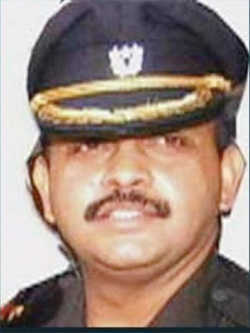
Lt Col Prasad Purohit.

Mumbai, October 20

A special NIA court here on Saturday rejected 2008 Malegaon blast case accused Lt Col Prasad Shrikant Purohit’s petition challenging the validity of the prosecution sanction for his trial under the Unlawful Activities Prevention Act (UAPA).

Special NIA court judge Vinod Padalkar rejected his petition after hearing the arguments of Purohit and other accused in the case.

The court has set October 26 as the next date of hearing in the case.

The Bombay High Court had last month rejected Purohit’s plea to restrain the trial court from framing charges against him and other accused in the case.

The NIA court was set to frame the charges against him and others, but it was deferred after the accused raised objections over the validity of the prosecution sanction.

A prior sanction for Purohit’s prosecution was required since he was a serving Army officer at the time.

The sanction was issued on January 17, 2009 by additional chief secretary of the Maharashtra Home department.

Six people were killed and nearly 100 injured when an explosive device strapped to a motorcycle went off near a mosque at Malegaon, a town in Maharashtra’s Nashik district, on September 29, 2008.

On December 27, 2017, the special NIA court dismissed the pleas filed by Purohit, his co-accused Sadhvi Pragya Singh Thakur, and six others seeking discharge from the case.

The court, however, gave them partial relief by dropping all charges against them under the stringent Maharashtra Control of Organised Crime Act (MCOCA). PTI


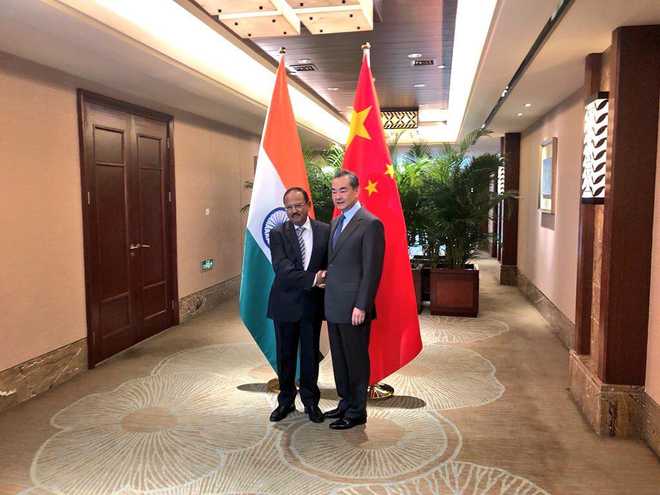
Ajit Doval, Chinese Foreign Minister hold India-China border talks

Ajit Doval, Chinese Foreign Minister hold India-China border talks

Doval and Wang are the designated special representatives for border talks between India and China.

Beijing, November 24

National Security Adviser Ajit Doval and Chinese Foreign Minister Wang Yi held the 21st round of border talks in China’s southwestern Sichuan province on Saturday, officials said.

Besides the border dispute, the two senior officials at the picturesque Dujiangyan city, would also review the progress made in bilateral ties since the Wuhan Summit between Prime Minister Narendra Modi and President Xi Jinping in April, officials said.

Doval and Wang are the designated special representatives for border talks between India and China. The talks were expected to be concluded later on Saturday.

This is the first round of talks for Wang after he succeeded State Councillor Yang Jiechi earlier this year. Wang has become the state councillor, a rank higher than the foreign minister in the Chinese government’s hierarchy.

Announcing the talks on November 21, Chinese Foreign Ministry spokesman Geng Shuang presented an upbeat picture of the bilateral ties saying, “We have properly managed the differences through dialogue and consultation. The border areas on the whole maintained stability.”

Officials maintain that this round of talks may focus more on reviewing the progress on trade and maintenance of peace at borders than movement towards a solution to the border dispute as India is headed for general elections next year.

Since the first-ever “informal summit” between Prime Minister Modi and President Xi in Wuhan, the two countries have launched a dialogue between trade officials to enhance India’s exports to China to address the over USD 51-billion trade deficit.

Since then, progress has been made towards increasing India’s export of rice, sugar and pharmaceuticals. This is expected to come under review at the talks, officials said.

Negotiations between the special representatives are regarded highly significant by both the countries as they cover all aspects of bilateral ties besides making efforts to resolve the vexed border dispute.

The India-China border dispute covers 3,488-km-long Line of Actual Control. China claims Arunachal Pradesh as part of southern Tibet.

The last round, held in New Delhi between Doval and Yang, took place in the backdrop of the 73-day standoff between the two militaries at Doklam over Chinese army’s plan to build a road close to India’s strategic “Chicken’s Neck” corridor connecting the north-eastern states.

The standoff ended after the People’s Liberation Army halted the plans to build the road.

Officials on both sides say a lot of spadework has been done to ensure peace and tranquillity at the border, though the solution to the border dispute is still elusive even after 20 rounds of talks.

Senior defence officials of India and China held the 9th India-China Annual Defence and Security Dialogue in Beijing on November 13 after a one-year gap due to the Doklam standoff. During the meeting, both sides agreed to enhance defence exchanges and interactions. PTI


Tracking Indian troops to trenches HD Girdwood was the first official WWI photographer of the UK

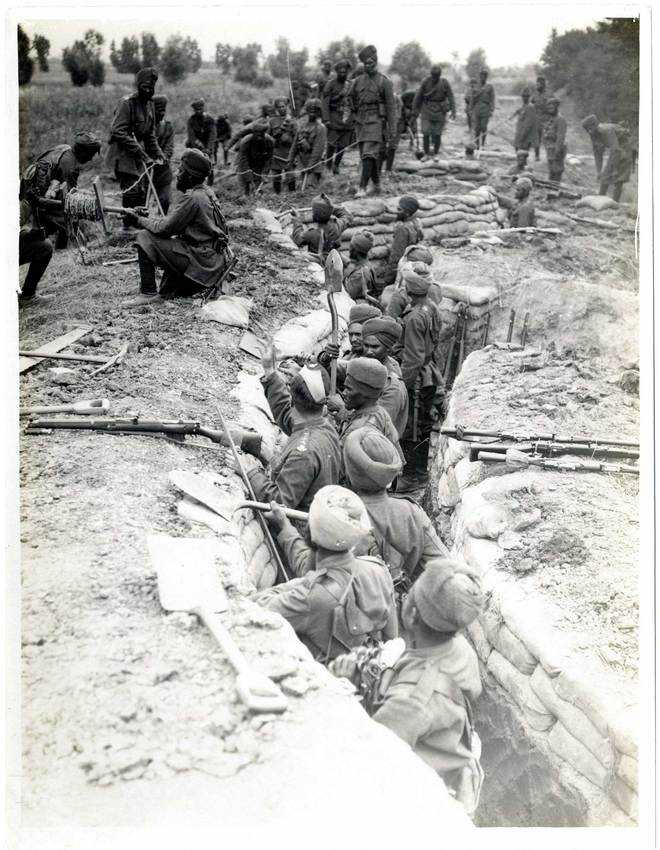
Indian infantry digging trenches at Fauquissart, France. Photo 24/(299) © The British Library Boar

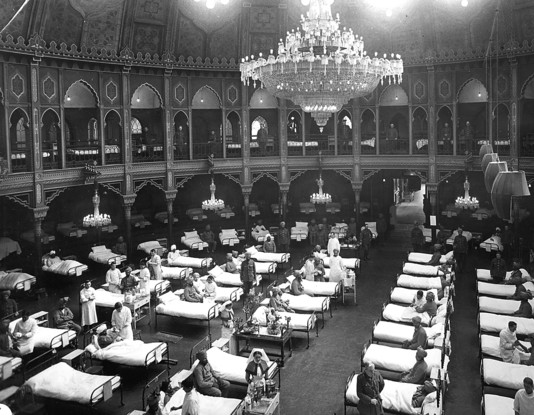
The Dome Hospital at Brighton. Photo 24(1).

The Sikh kitchen. Turning chappatis on the gas stoves, also at Brighton. Photo 24/(8)

Sarika Sharma

Anxious soldiers digging the trenches in Fauquissart, France
The seaside palace at Brighton turned into 689-bed hospital for Indian troops
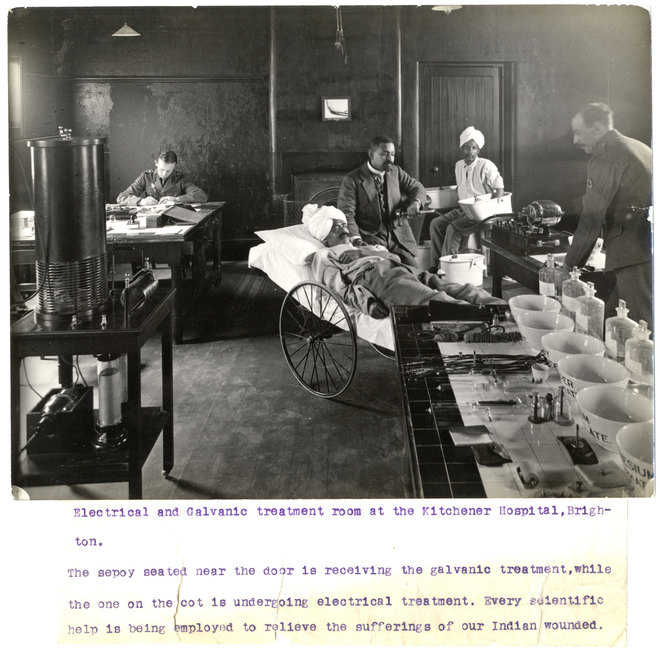
Indians receiving electrical and galvanic treatment at the Kitchener Hospital 

For all those who have followed World War I centenary commemorations for the last four years, these images have become a part of the memory. All thanks to one man, HD Girdwood, who started photographing the Indian troops in the battlefield and off it.

Girdwood was born in the era of stereoviews. After graduation, he moved to London from his birthplace in Ontario, Canada, and started working as a salesperson with a stereoview company named Underwood. He quickly moved up the ladder. Historian Ralph Reiley says he soon became an accomplished stereo photographer and photographed the Delhi Durbar — a major event of the British government — in 1903 and 1911. In between, he formed his own company, Realistic Travels, in 1908. These travels with the British royalty meant he spent a number of years in India. When the war began, Girdwood realised it was once-in-a-lifetime opportunity and expressed his interest in covering it, especially the Indian troops. He wished for an official position, which did not come his way. Undeterred, he pursued the War Office in London in September 1914 and, in April 1915, managed to get permission, which came with riders. Girdwood could only film and photograph the hospitals in England and these should be reflective of “the great care” being given to Indian soldiers.

Interestingly, this was a time of political awakening in India. Historian Nicholas Hiley has written that the Ghadar movement had begun to show its impact around the time and the General Headquarters (GHQ) of the British Army wanted to show patriotic films showing Indian troops in the field. The War Office was worried. Around this time, Girdwood had also renewed his efforts to go further closer to the scene of action. He was finally allowed a 14-day trip to France with the Indian Corps. Reiley says he was told not to photograph distressing pictures of wounded men. In four days, he covered 70 different locations. While Girdwood had problems with the War Office, he soon persuaded the India office to help him grant permission to click the way he wanted. Rules were relaxed and Girdwood’s subsequent photos are from the second or third line trenches. As Ghadar influence intensified and Indians began to believe that Indian troops were the ones in the front lines, the War Office felt the need to propagate that British were facing the brunt as much. So battle scenes were now staged for Girdwood with British soldiers wearing German soldiers’ uniforms. By the end of the war, he had a lot of photographs and a film, With the Empire’s Fighters. Reiley says Girdwood wrote a series of articles for Windsor magazine. The war propaganda had some factual and mostly fabricated stories, which he wrote with his photographs from 1915. He died in Michigan in 1964.

Reiley says First World War stereoviews by Realistic Travels were of the highest quality. “They were the sharpest and the clearest.” He also says that as we look at the stereoviews, we also must remember that they were a medium of entertainment rather than a medium for journalistic truth.

The Indian connect

His family remembers Girdwood as “a shrewd salesman who seemed to chase money where he could find it.” John Girdwood, to whom Girdwood was paternal great-grandfather’s half-brother, says he seems to have found some military officers in England (where he lived, worked, and sold for a time). “Those officials probably provisioned some work from him, causing him to go to India. I believe that around 1900-1905, he was a young salesman, eager to make money. That must have prompted him to go to India.” According to historian Ralph Reiley, it is also believed that he served as a Bombay mayor at some point of time. If that were to be the case, his photographic exploits in the area would be worth seeing.


Civilian injured as militants attack Army camp in J&K’s Kulgam

Civilian injured as militants attack Army camp in J&K’s Kulgam

A girl was caught in the crossfire in the Khudwani area when soldiers retaliated forcing the militants to withdraw.

Srinagar, November 22

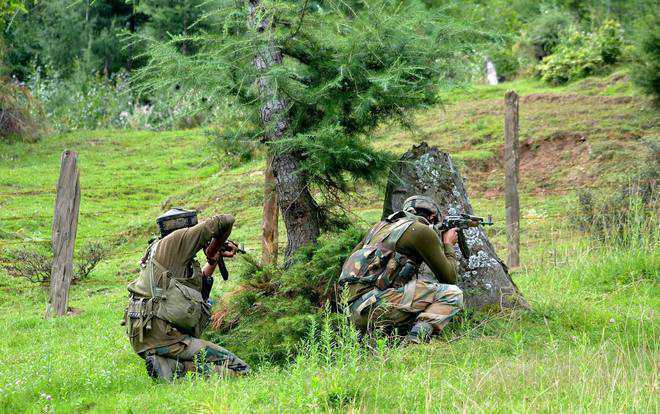
Militants on Thursday attacked an Army camp in Jammu and Kashmir’s Kulgam district during which a civilian was injured, police said.

A girl was caught in the crossfire in the Khudwani area when soldiers retaliated forcing the militants to withdraw.

The militants managed to escape and the injured was shifted to hospital, a police officer said. IANS


UN alarmed at India deporting seven Rohingya

UN alarmed at India deporting seven Rohingya

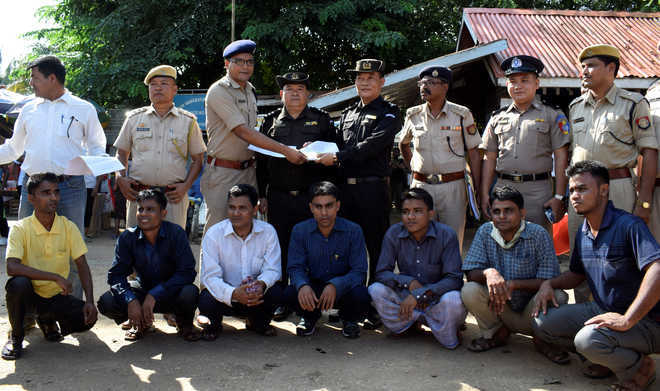
The seven Rohingya men to be deported sit as Indian and Myanmar security officials exchange documents before their deportation on India-Myanmar border at Moreh in the northeastern state of Manipur. Reuters

Geneva, October 5

The UN voiced alarm on Friday over India’s deportation of seven Rohingya men to Myanmar despite warnings they could face persecution in a country where the military is accused of genocide against the Muslim minority.

The UN refugee agency said it was “greatly concerned” for the safety and security of the men returned to Myanmar at a border crossing in Manipur.

The UN United Nations High Commissioner for Refugees said India had not responded to its request that they assess the men’s claims to international refugee protection in the country. — AFP


In Radical Restructuring Plan, Army Brigadiers, Major Generals To Have Same Rank, Pay

The Indian Army plans to implement several significant steps “to meet futuristic challenges keeping budgetary prudence in mind”.

In Radical Restructuring Plan, Army Brigadiers, Major Generals To Have Same Rank, Pay

NEW DELHI: 

HIGHLIGHTS

  1. Indian Army plans major restructuring of force over the next two years
  2. These steps will help army meet “futuristic challenges”, save resources
  3. Measures will be tested next year, sent to Defence Ministry for approval
  4. Within two years, the ranks of Brigadier and Major General in the Indian Army could be merged, a move that is part of the most comprehensive plan ever to re-organise the force. The plans would, however, need to be approved by the Defence Ministry before they can be implemented on the ground.

According to Army sources, “an officer commanding a brigade will be designated a Brigadier, but when that officer comes for a staff position, he will be designated a Major General and will not need to go through any Board.” A brigade in the Indian Army is composed of approximately three thousand men and women.

In other words, there will be no separate assessment (or ‘Board’) of an officer to be designated Major General, a rank which will be granted entirely on the roles and responsibilities that are assigned. “The Brigadier and Major General level will be merged. Financially, they will be in the same grade” said senior officers to NDTV. The merger of the two ranks will also give 80 more officers in every batch the opportunity to make it to the much sought-after position of Major General. Presently, the pyramidal system of promotions within the army mean that very few among even the most deserving candidates rise beyond the rank of Colonel.

There are other significant steps that the army plans to implement “to meet futuristic challenges keeping budgetary prudence in mind”. Army Headquarters in Delhi will now be primarily staffed by officers of the rank of Colonel and above while the majority of younger officers including Majors and Lieutenant Colonels will be posted out to increase the strength of field formations. In carrying out these changes, the authorised size of the Army Headquarters will come down from 1,450 to 1,250 officers. However, in an effort to draw on the best experience available, a hundred retired officers or specialists will be recruited as “re-employed officers.”

Some new posts will also be created to deal with emerging threats while some others may be removed. The army will now have a Lieutenant General heading up the post of Director General (Information Warfare) while various branches of the army looking at the training of officers and jawans will be rationalised. The Vice Chief of the army, and the Director General (Training) will no longer be involved in the training process. Instead, the Army Training Command (ARTRAC) will be looking after this function in its entirety. A Major General will now be appointed the head of the Army’s Vigilance Cell and will report directly to the Army Chief while the Lieutenant General who heads Financial Planning will report to the Vice Chief.

The changes being proposed in the army will be tested at select formations across the country through 2019 before a proposal is sent to the Defence Ministry to take a final call. Sources tell NDTV that the goal of the entire exercise is to “reduce duplication, ensure shorter decision making time, and work towards higher synergy in various verticals while ensuring greater accountability and more efficiency.”

Fresh details have also emerged on the army plans to base its operations around the concept of Integrated Battle Groups (IBG). Sources have indicated to NDTV, that each IBG will be bigger than a brigade (3,000 men and women) but smaller than a division (9,000-10,000 men and women). Each IBG will be designed in a manner that it can be quickly deployed in the event of tension on the borders. Each IBG will have integral infantry, armour, artillery, reconnaissance and support units. Presently, it takes the army several weeks to re-position, stock and deploy major fighting formations which are expected to battle Pakistan or China. IBGs are meant to be “lean and agile groupings with elements of all arms all of which are trained together.”

18 COMMENTS

Between 1975 and 2016, there have been 13 studies looking at reorganising the army. The changes being proposed now are based on four separates studies which are taking place concurrently. These include ‘Reorganisation and optimisation of the Indian Army,’ ‘Reorganisation of Army Headquarters, ‘Officer Cadre Review’ and ‘Terms of Engagement of Junior Commissioned Officers and Other Ranks including minimum service for pension.’ Each study is being supervised by a Lieutenant General.


China’s new combat aircraft makes debut flight

The new FTC-2000G is a fixed-wing, multi-role combat plane tasked mainly with airstrikes against ground targets. It can also be used as a fighter jet or trainer aircraft, Aviation Industry Corp of China said in a statement

china combat aircraft, China's new multilrole combat aircraft, Aviation Industry Corp of China, new AVIC fighter jet, China's FTC 2000G aircraft, China, World News, Indian Express

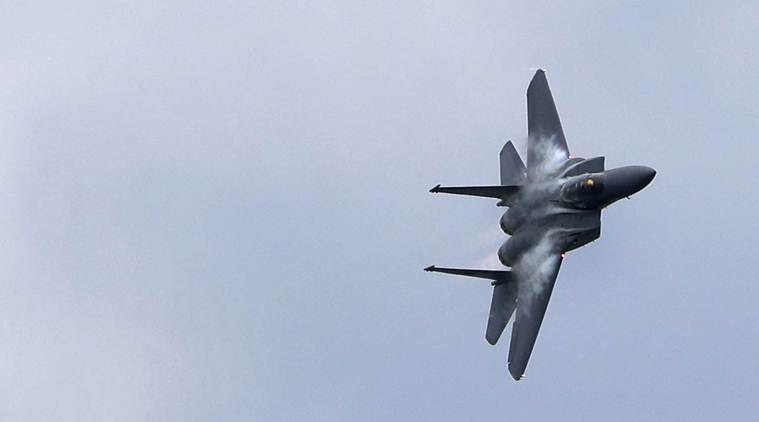
China’s indigenously-built new multi-role combat aircraft for exports has made its debut flight, the state-run media reported Saturday.

The FTC-2000G, a new multirole combat aircraft developed for export by the State-owned Aviation Industry Corp of China, (AVIC) made its debut flight on Friday in the southwest Guizhou province, state-run China Daily reported.

First F-35 fighter jets land on UK’s new aircraft carrier

F-35 Lightning jets have landed on a UK aircraft carrier for the first time, and it comes eight years since a fighter jet last touch-downed on a British carrier.

The FTC-2000G aircraft flew for about 16 minutes. More than 1,000 people, including AVIC executives and provincial leaders as well as ambassadors and military attaches from several nations, took part in the ceremony marking the debut flight, it said.

China in the recent past has developed a range of fighter jets including a stealth aircraft. It also jointly produces JF-Thunder aircraft with Pakistan.

However, China is yet to develop an engine of its own for the jets and mostly imports it from Russia.

According to AVIC, the aircraft is tasked mainly with air strikes against ground targets.

The FTC-2000G is a fixed-wing, multi-role combat plane tasked mainly with airstrikes against ground targets. It can also be used as a fighter jet or trainer aircraft, AVIC said in a statement.

Equipped with modern radar and fire-control systems, it is capable of staying airborne for three hours in a single operation and can carry as much as 3 tonnes of missiles, rockets or bombs, AVIC said, adding that it is equipped with air-to-surface weapons.

Hu Jianxing, chief designer of the FTC-2000G at Guizhou Aviation Industry, said the aircraft features high operational economy and can carry out tasks in all weather conditions and at night.

With the proper equipment, the aircraft will also be able to perform reconnaissance or electronic-warfare operations.

“The aircraft can fulfil a wide range of tasks, ranging from flight training and close-in air support to long-distance penetration airstrikes and air escorts,” he told the daily.

It took less than two years to develop the jet, the AVIC said, adding that the twin-seat plane is a modified version of a new type of advanced training jet that has been deployed by the Chinese Air Force and Navy.

The aircraft has a maximum speed of 1.2 Mach, or 1,470 kilometers per hour, a maximum take-off weight of 11 metric tons, a maximum flight range of 2,400 km and an operational flight ceiling of 15 km.

Though the FTC-2000G will face competition from South Korea’s FA-50 and Italy’s M346, it will enjoy a pricing advantage, another daily, Global Times, quoted experts as saying.

As a light-duty attack aircraft or fighter jet, it is a replacement for old models such as China’s J-7 and the former Soviet Union’s MiG-21.

China delivered six FTC-2000s, FTC-2000G’s predecessor, to Sudan in May, according to UK-based Jane’s Defence Weekly.