Sanjha Morcha

What’s New

Click the heading to open detailed news

Current Events :

web counter

Print Media Reproduced Defence Related News

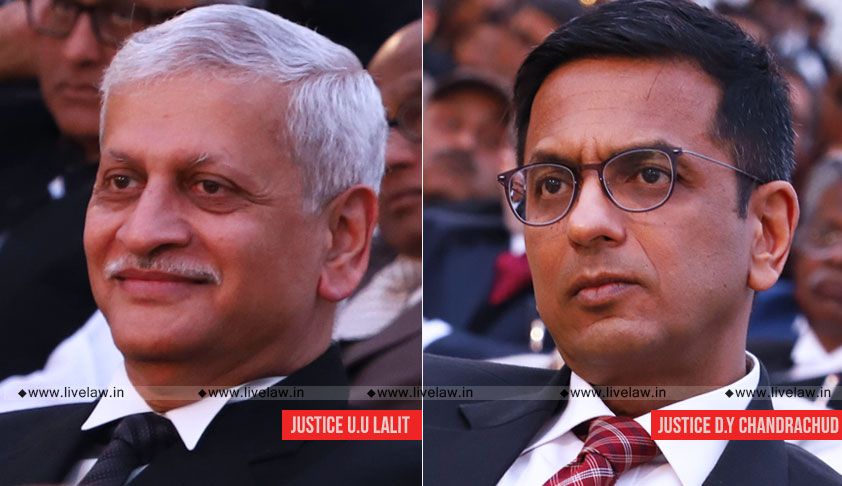
SC Relief To Ex-IAF Officer Who Had Married A Foreign National Without Requisite Permission

If an officer after his release or retirement could, therefore, validly contract the marriage with a foreign national and the spouse would therefore be entitled to all the benefits including medical or hospital facilities or club membership or cantee…

Read more at: https://www.livelaw.in/sc-relief-to-ex-iaf-officer-who-had-married-a-foreign-national-without-requisite-permission-read-judgment/


Mohali cadet bags bronze in IMA passing-out parade

Mohali cadet bags bronze in IMA passing-out parade

Tribune News Service

Chandigarh, December 8

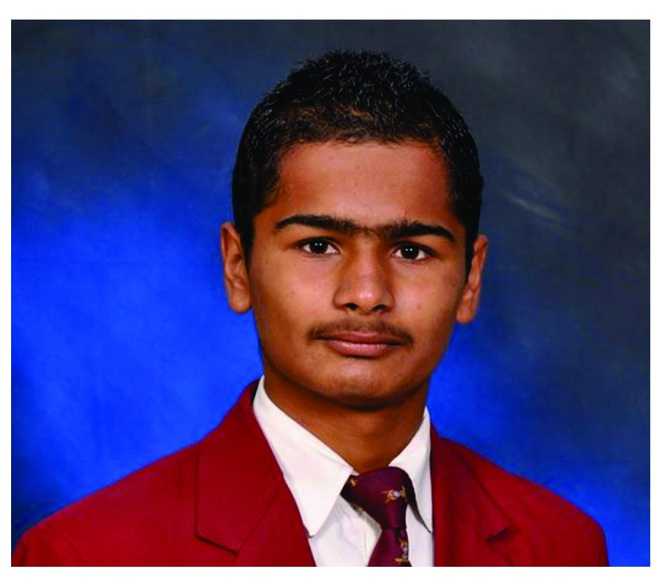
Senior under officer Gurvansh Singh Gosal was awarded a bronze for standing third in the overall order of merit of the Indian Military Academy’s 135th course that passed out today.

He is an alumnus of Maharaja Ranjit Singh Armed Forces Preparatory Institute (AFPI), Mohali, and had earlier stood first in the All-India merit list for entrance to the NDA.

Gurvansh has won three other medals for being first in tactics, academics and also in service subjects. He has been commissioned into the 4 Sikh Battalion of the Battle of Saragarhi fame.

Brijesh Pal Singh and Balpartap Singh, two other alumni of the AFPI, were also commissioned today.


Comic timing

War comics have had a late start in India and there still are tons of stories that need to be shared

Comic timing

Rishi Kumar

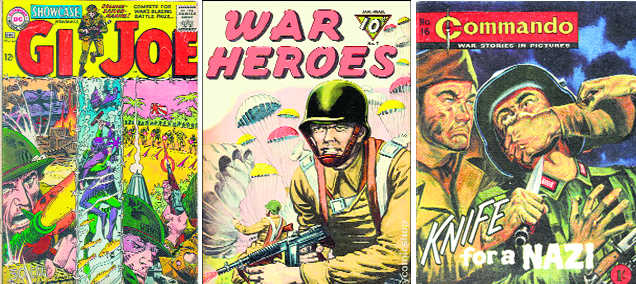
Wars and war heroes have been glorified by people of all races, colour and creed throughout the ages. The war stories of gods and mortals have been known to humanity since time immemorial. However, the method of telling war stories has kept on evolving. In the beginning of the 20th century the concept of visual narration became more popular. As books became more accessible to more audience worldwide, pictures and texts intermingled to narrate a story. Subsequently, pictures became a dominant form of storytelling. Early part of the 20th century witnessed the World War I, followed by World War II. These two major historical events led to the genesis and popularity of the British and American war comics. The British with their Commando Comics and the Americans with Marvel Comics churned out fictional war stories in substantial number.

Indian comic books, however, had a delayed start as till the early 1950s there was hardly any illustrated depiction of war and strife and border conflict. This was despite the fact that Amar Chitra Katha & Indrajal comics were household names during this decade. Though there were some “war” stories in ACK, these were mainly from the epics and mythology. The void in war comic space in India was filled largely by Commando Comics during this time. Despite being British, the Commando series did mild justice to Indian characters by portraying them in its WWI, WWII stories. But the depiction was secondary as Indian war heroes were never the focus of the story.

Despite the success of Indian comic book industry in the 1960s, there are hardly any comic books on the stories of Indian armed forces of post or pre-Independence era. In the late 1960s, there was an attempt by Indrajal Comics to showcase Indian war stories, though these were only fictional. These barely made an impact.

It will, thus, not be an exaggeration to claim that Indian war comics are a 21st century phenomenon. Technically, it was in 2008 that India’s first-ever comic book on a war hero was published. Based on the story of the legendary Captain Vikram Batra, it was published by Aditya Bakshi, son of Maj Gen G.D.Bakshi (retd). Then in 2012, a comic book depicting the Siachen conflict was published by AAN Comics. As many as 30 titles have been published so far in this series. Following the success of these two companies, comic-book giant Amar Chitra Katha, too, jumped onto the war comics bandwagon. It came out with a digest on 21 Param Vir Chakra awardees in 2015.

Another Indian publishing giant, Roli Books, has also come out with the Param Vir Chakra series and stories of 10 war heroes have been published since 2013. Roli Books has teamed up with Maj Gen Ian Cardozo (retd). Other major publishers like Bloomsbury also came out with comic books on World War I, in 2014 to commemorate the 100 years of the Great War (1914-1918). Companies like Campfire came out with WWI & WWII series in 2014-2016. They have partly focused on Indian characters with the limelight mostly on “the British”.

India has a huge repertoire of heroism of its officers and jawans and tons of stories are waiting to be told. Besides the untold stories from the five wars that the country has faced till now, the contribution of the Indian National Army heroes and heroes who fight domestic insurgency and terrorism need to be shared. ACK brought out a comic book on Netaji Subhash Chandra Bose based on WWII depicting the role of the INA and its founder. The rising popularity of war comics in the past few years has made the government come out with stories of ParamVir Chakra awardees published by the National Book Trust. The then Army Chief Gen Dalbir Singh Suhaag and Smriti Irani, HRD minster had launched the books. The action comics ‘fever’ has gripped CRPF as well as it came out with its own Veergatha in 2017.

One must note that though the war comic format in India is similar to the one adopted in Commando Comics, but there is a significant difference.  Commando Comics were based on real life events with fictional characters, but Indian war comics are based on real life characters and events. They are a part of our history. So, there is something to be proud of after all and the Indian war comics scene will keep moving towards better times.

The writer is founder Aan Comics


Indigenously built Aircraft Carrier INS Vikrant likely to be patrol the Eastern Seaboard

India’s first indigenous aircraft carrier, INS Vikrant, currently being built at the Cochin Shipyard Limited, is likely to be based at Visakhapatnam, the headquarters of the Eastern Naval Command to add to its effectiveness when it is commissioned, a top military commander said on Wednesday.

“In tandem with the growth of the Indian economy, I see the Eastern Fleet will be more capable. We should be having more capable assets. Hopefully, the Indigenous Aircraft Carrier (IAC) will be based in Visakhapatnam and it should be operating as part of the Eastern Fleet in 2023, if all goes well,” its Flag Officer Commanding (FOCEF), Rear Admiral Dinesh K Tripathi told reporters here.

The interaction aboard the indigenously-built INS Sumeda partol vessel took place as part of the ongoing Navy Week celebrations.

“We should take pride that India is one five countries (the others being the US, the UK, France and Russia) with the capability to design and build an aircraft carrier. Its construction is on course. We should start sea trials by 2020,” Tripathi said.

He said Indian Navy’s aim is to secure national interests, provide maritime, coastal and offshore security and also ensure safe and secured seas by assisting friendly countries in any contingency.

According to Tripathi, the Eastern Fleet has grown in strength and capability over the years and now operates some of the most modern warships, which include the Shivalik class stealth frigates and the Kamorta class anti-submarine corvettes.

Asked about the presence of the PLA Navy in the Indian Ocean Region and China’s military rise, he said: “Every country has got a right to do what is required for its national security. We respect all that what has been done by any countries to secure their national interest. We are monitoring the presence of all that what is happening in our area.”

INS Sumeda and the corvette INS Kirch are presently docked here as part of the ongoing Navy Day celebrations.


I gave my life to Army, in return I got taint, says MI officer acquitted of graft charges

mi-officer

Before joining the Military Intelligence wing (MI), which interprets satellite images, in January 2009, Colonel M.K. Chakraborty had a fantastic military career. As an officer of the Intelligence Corps, he had received commendation twice from the Army chief for his exemplary work. However, within months of joining joining the MI, he became a victim of alleged corporate rivalry. Complaints were raised against him for alleged corruption in procuring of Rs 200 crore worth of equipment to enhance Indian Army’s capability to use satellite images of enemy troop movements and assets. A court of inquiry found him guilty and put him under military arrest for 18 months.

On November 10, the general court martial acquitted him from all charges by calling the court of inquiry (CoI) proceedings a gross violation of Army rules.

“I am acquitted and released from the Army arrest. But who will return eight years of trauma and agony that I and my family had faced. I had given my life to Army, but in return, the Army has given me the taint,” Colonel Chakraborty, who retired last year, told THE WEEK.

It all began in 2009 when Colonel Chakraborty was heading 54 Imagery Interpretation Teams (IITs) in the Indian Army in the Military Intelligence Directorate, which is the nodal agency for processing satellite images and forwarding the same to various Army formations after analysis. MI also gets images from other agencies like the National Technical Research Organisation (NTRO) and the Defence Image Processing and Analysis Centre (DIPAC) to gather technical intelligence.

In order to upgrade the obsolete systems, the Military Intelligence floated the process of acquiring new photogrammetry and geographical information systems. These equipment were essential for getting better clarity from satellite images to track the movements across the border, including military exercises, training and military build-up by China and Pakistan.

During the course of procurement, three of Colonel Chakraborty’s colleagues complained against him on alleged misappropriation of funds in 2011.

As the matter was related to highly sensitive military intelligence unit, the Army headquarters promptly ordered an an internal inquiry into the matter. All complaints were investigated and the matter was closed in August 2011 at Vice Chief of Army Staff level, with remarks that complaints “lack substance” and were “devoid of merit”.

The matter did not end there, and several anonymous complaints were sent to various authorities, including the office of the then chief of Army General V.K. Singh and even the to Central Vigilance Commission. Subsequently, on May 2012, the then defence minister A.K. Antony ordered an enquiry by an Independent Expert Technical Committee (IETC) comprised of officials from ministry of science and technology and scientists from DRDO to look into the allegations. The IETC, after investigations, found the allegations as “lacking substance”.

But, months after change of guards in the Army headquarters—General Bikram Singh took over from V.K. Singh—a lady officer raked up the issue again by sending complaints to the Army chief’s office. The Director General of Military Intelligence wrote to Army chief’s office, informing him about the outcome of the earlier investigation into the matter. Despite suggestions from the DGMI, General Bikram Singh ordered a CoI against Colonel Chakraborty. General Bikram Singh also closed the secret intelligence unit, Technical Support Division, set by his predecessor V.K. Singh.

The then head of Military Intelligence Lt. Gen D.S. Thakur questioned the motive behind the CoI. Coming down heavily on the court of inquiry, he said, ” This court of inquiry is also likely to make a big dent into the morale and operational efficiency of the Military Intelligence Directorate. It has done what the Pakistan’s ISI would have loved to do to our Military Intelligence Directorate.”

Hinting at the internal rivalry in the Amy headquarters Thakur stated, “There is already a buzz in the corridors of the Army HQ and a section of the environment in the Army at large that, this CoI is possibly part of the games being played by the Army hierarchy at higher level at the cost of the junior officers.”

Finally, after four years of inquiry and subsequent court martial proceedings, the General Court Martial headed by Brigadier Anil Singh Chandel, in its order on November 10, acquitted Colonel Chakraborty of all the charges and ordered to release him from Army custody. It also questioned the convening order of the CoI and termed the order as violation. The court martial order also raised issue of documents being tampered, casting aspersions on the fairness of pre-trial procedure.

“The prosecution has failed to adequately counter the contentions of the defence. The court, after having examined the contentions of the defence, reply of the prosecution, legal position in the instant case and after deliberate examination of court of inquiry, hearing of charges and summery of evidence, is of the opinion that accused is entitled to the relief,” Brigadier Anil Singh Chandel said in his order.

Mohammand Mujib, advocate for Colonel Chakraborty claimed that he became scapegoat in the corporate rivalry as well the ego-tussle of top generals of the Army.

“In September 2015, the court of inquiry found eight officers blameworthy but recommended disciplinary proceedings against only Colonel Chakraborty. It clearly shows that entire CoI proceedings were motivated. It is a classic case of misuse of power by higher authorities,” said Mujib.

But, Chakraborty’s ordeal did not end there. Although the court martial ordered release of Chakraborty from the Army custody on November 10, he was released only on November 20, when he had moved the Armed Force Tribunal. Now, the Armed Forces Tribunal has issued a notice to the Army headquarters on the issue.



The mystery of Reliance subsidiaries receiving defence-manufacturing licences

Reliance Group’s exploration of business opportunities in the defence sector escalated exponentially after Modi’s announcement of the Rafale deal. 

SHAILENDRA BHOJAK/PTI

On 10 April 2015, during his first prime ministerial visit to France, Narendra Modi announced a government-to-government deal to purchase 36 Rafale jets that were to be manufactured by the French company Dassault Aviation, in “fly-away” condition. As per procedure, any foreign defence-manufacturer selling to India is required to reinvest part of the total cost of the deal into India—known as “offsets.” In September 2016, Manohar Parrikar, the defence minister at the time, and his French counterpart signed the Rafale deal. It was reported to be worth €7.87 billion—roughly Rs 59,000 crore—and Dassault was required to reinvest half that value in India.

In The Caravan’s September cover story, I reported how the Rafale deal ensured that Reliance Group, headed by the industrialist Anil Ambani, went from having almost no history in the defence sector to suddenly having aerospace businesses worth thousands of crores. Thirteen days before the deal was announced, the Reliance Group registered a new subsidiary named Reliance Defence Limited. Ten days after the agreement was signed, Reliance Aerostructure Limited—a subsidiary of Reliance Defence—and Dassault Aviation announced the creation of Dassault Reliance Aerospace Limited, a joint venture that is majority-owned by Reliance.

Reliance Group’s exploration of business opportunities in the defence sector escalated exponentially after Modi’s announcement of the Rafale deal. According to the 2016–17 annual return filed by Reliance Defence Limited, the company has 13 subsidiaries. All of these companies are involved in the manufacture of defence products. Nine of them were incorporated within three weeks of Modi’s announcement. Within a year of their incorporation, the Ministry of Commerce and Industry issued licences to seven of these nine companies, for the manufacture of defence products. But as of March this year, none of these companies had commenced any business.

According to Reliance Infrastructure’s annual report, 12 of the 13 subsidiaries of Reliance Defence Limited had not commenced business as of March 2018. Despite this, right-to-information documents reveal that on 22 February 2016, the department of industrial policy and promotion (DIPP), under the Ministry of Commerce and Infrastructure, issued defence-manufacturing licences to eight of these subsidiaries—seven of these were formed soon after Modi’s announcement.

On 10 April 2015, during his first prime ministerial visit to France, Narendra Modi announced a government-to-government deal to purchase 36 Rafale jets that were to be manufactured by the French company Dassault Aviation, in “fly-away” condition. As per procedure, any foreign defence-manufacturer selling to India is required to reinvest part of the total cost of the deal into India—known as “offsets.” In September 2016, Manohar Parrikar, the defence minister at the time, and his French counterpart signed the Rafale deal. It was reported to be worth €7.87 billion—roughly Rs 59,000 crore—and Dassault was required to reinvest half that value in India.

In The Caravan’s September cover story, I reported how the Rafale deal ensured that Reliance Group, headed by the industrialist Anil Ambani, went from having almost no history in the defence sector to suddenly having aerospace businesses worth thousands of crores. Thirteen days before the deal was announced, the Reliance Group registered a new subsidiary named Reliance Defence Limited. Ten days after the agreement was signed, Reliance Aerostructure Limited—a subsidiary of Reliance Defence—and Dassault Aviation announced the creation of Dassault Reliance Aerospace Limited, a joint venture that is majority-owned by Reliance.

Reliance Group’s exploration of business opportunities in the defence sector escalated exponentially after Modi’s announcement of the Rafale deal. According to the 2016–17 annual return filed by Reliance Defence Limited, the company has 13 subsidiaries. All of these companies are involved in the manufacture of defence products. Nine of them were incorporated within three weeks of Modi’s announcement. Within a year of their incorporation, the Ministry of Commerce and Industry issued licences to seven of these nine companies, for the manufacture of defence products. But as of March this year, none of these companies had commenced any business.

According to Reliance Infrastructure’s annual report, 12 of the 13 subsidiaries of Reliance Defence Limited had not commenced business as of March 2018. Despite this, right-to-information documents reveal that on 22 February 2016, the department of industrial policy and promotion (DIPP), under the Ministry of Commerce and Infrastructure, issued defence-manufacturing licences to eight of these subsidiaries—seven of these were formed soon after Modi’s announcement.

In response to an RTI application that I filed in March this year, the DIPP responded with details of 12 licences granted to nine defence companies of the Reliance Group. These included licences for the design, development and production of missiles and simulators for air and naval platforms, and for the manufacturing of helicopters, aircraft and all-terrain combat vehicles as well as weapon launchers for combat aircraft. It is mysterious that these companies were granted defence licences before they were even operational. Pertinently, Dassault’s reinvestment into India is governed by the Defence Procurement Policy of 2013, and the procurement of a defence licence is one of the criteria to qualify as an Indian offset partner.

On 26 November, I spoke to R Mythili, an under-secretary in the DIPP, about the routine procedure followed by the department before issuing defence licences and when companies become eligible to receive them. Mythili explained the comprehensive process undertaken before the DIPP issues any license, which included taking into consideration the comments from the defence ministry, the environment ministry and the home ministry. Their comments are then placed before an internal licensing committee, which makes its recommendation to the minister of commerce, who then decides whether to approve or reject the application for a licence. She added that a company applying for a licence must be registered under the Arms Act, employ a minimum number of people and have commenced its operations. Under the Industries (Development and Regulation) Act, she said, “a minimum staff strength is required, which means that the company has to be in operation.” While the number of employees of these companies is not publicly available, Reliance Infrastructure’s annual report expressly states that these subsidiaries have not commenced business.

The Industries (Development and Regulation) Act of 1951 and the Arms Act of 1959 prescribe a detailed procedure for granting licences. These laws regulate licensing for setting up an arms and ammunition unit as well as for the manufacture, sale, import, export and transportation of defence products. While these laws do not provide a fixed timeline for the issuance of a licence, each of them stipulate a rigorous process of vetting a company’s financial credibility, its experience and expertise, and internal affairs, among other things, before an application is approved.

The IDR Act exercises jurisdiction over any undertaking pertaining to one of the scheduled articles, which includes aircraft as well as arms and ammunition. In June 2014, the DIPP released a press note listing several defence items that require compliance with IDR Act—all the equipments for which the Reliance Group companies received licenses are mentioned in the list. The act enables the central government to appoint an officer to make a “full and complete investigation” of all applications for a licence under the act. The scope of this investigation is wide, including scrutinising details such as a fall in the production of the volume of a particular article being sought to be manufactured and a rise in the price or national importance of any such article. The act further states that a licensing authority may issue a license if it is “satisfied that the person by whom the licence is required has a good reason for obtaining the same.”

The Arms Act also mandates a police officer to conduct an inquiry into the application seeking a licence and submit her report stating whether the licence should be granted. In addition, the Arms Rules of 2016 prescribe an extensive application process that mandates any company applying for a manufacturing license to submit, among other things, “a declaration with proof thereof to the effect that it has acquired the land for setting up the manufacturing plant.” The company must also demonstrate proof that it has installed an electricity and water connection. Moreover, the rules mandate that the company “shall preferably be self-sufficient in areas of product design and development.”

In August 2015, the Maharashtra government allotted a land measuring 289 acres to Reliance Aerostructure. Two years later, Ambani and Eric Trappier, the CEO of Dassault Aviation, laid the foundation stone at the facility. However, it is unknown whether the Reliance Defence Limited subsidiaries complied with these procedural requirements. I emailed questions to Ramesh Abhishek, the secretary of the department of industrial policy and promotion, and Daljeet Singh, the president of Reliance Group’s corporate communications department, enquiring about the grant of these licenses. Neither Abhishek nor Singh had responded at the time this story was published.

On 24 July 2015, Indrajit Singh, then the minister of state for defence, informed the Lok Sabha that the government had relaxed several norms regarding the issuing of industrial licences. Singh further stated that several defence items were exempted from the requirement of licencing “to reduce the entry barriers for the industry, particularly small and medium segment.” Six days later, Parikkar, who was the defence minister at the time, stated before parliament that the central government had withdrawn the tender to buy 126 Rafale jets.

In February this year, Subhash Bhamre, the minister of state in the defence ministry, informed the Lok Sabha that as of November 2017, the central government had issued a total of 100 defence licences to 74 private companies in the previous three years. Bhamre further stated that as of December 2017, 69 companies having 112 licenses had commenced production. The Reliance Defence Limited subsidiaries, on the other hand, received defence manufacturing licenses despite not commencing any business.


Soldier’s dream of road to village to come true Lost legs in landmine blast in Srinagar while patrolling

Soldier’s dream of road to village to come true

Sanju Ram

Dipender Manta

Tribune News Service

Mandi, November 1

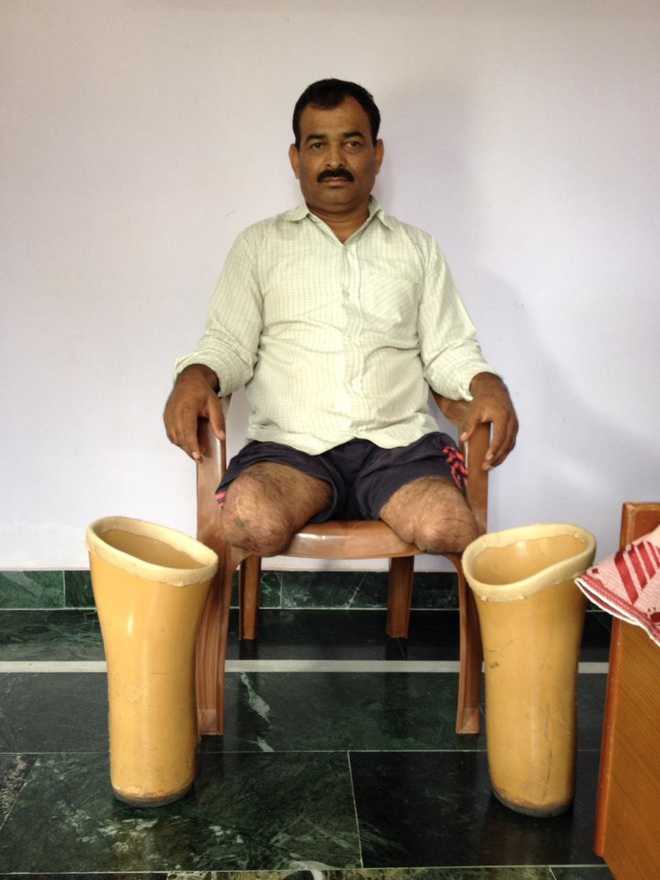
Dream of soldier Sanju Ram of Kadkuhi village in Jogindernagar, who had been demanding road to his village since 2012, will soon be a reality.

He lost his both legs in a landmine blast at Srinagar in 2012 while patrolling, making him dependent on his family. Whenever he had to go to a nearby hospital, his family and relatives had to carry him in a palanquin to cover around 2-km uneven path.

This made his life miserable. Finally, he decided to live in a rented house at Jogindernagar.

For long Sanju Ram’s demand remained unfulfilled. A project report was prepared by the PWD a few years back but there was no progress at the ground level.

Sanju Ram said, “I had requested to the government several times but to no avail. I am requesting again to construct a road, which will be of great help not only for me but also for people of the area”, he said.

Taking note of soldier’s demand, Mandi MP Ramswaroop Sharma has now asked officials to construct a road.

The MP said according to PWD officials construction work of road could not progress because of absence of clearance.

However, now a new report of Rs 3.40 crore had been prepared and construction work would begin soon.


KARTARPUR CORRIDOR Sidhu steals show in Pakistan Imran, his ministers hail ex-cricketer’s efforts for corridor project

Sidhu steals show in Pakistan

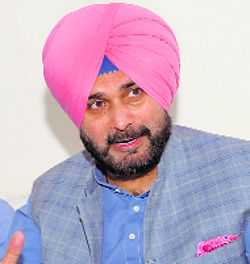
Navjot Singh Sidhu, Cabinet Minister

Kartarpur, November 28

Cricketer-turned-politician Navjot Singh Sidhu on Wednesday came in for wholesome praise from Pakistan Prime Minister Imran Khan and several other Pakistani leaders for his “persistent” efforts in pushing for the Katarpur corridor project.

Sidhu’s “contribution” for the project was even prominently mentioned in a short film on the Katarpur corridor, which was showed after the foundation-laying ceremony of the project here.

“Whatever I have seen since yesterday, I can tell you Sidhu, you will win elections here if you contest, particularly in Punjab,” Khan said jokingly, while hailing the former cricketer’s efforts to push for the corridor.

Khan said only leaders with determination can improve strained ties between the two countries. “I hope we do not have to wait till Sidhu becomes Wazir-e-Azam (prime minister),” Khan said. His comments drew laud applause from the audience.

Khan wondered why there was a hue and cry back home over the former Indian cricketer’s push for peace and brotherhood during his previous visit to the country around three months ago.

“I heard there was a lot of criticism of Sidhu when he went back. I don’t know why was he criticised? He was just talking about peace between two countries,” Khan said.

“It is foolish for anyone to think there can be war between two nuclear-armed countries as there is no winning for anyone. So, if there can be no war then what other way is there other than friendship?” he added.

Sidhu attended Khan’s swearing-in ceremony, and had hugged Pakistan Army chief Gen Qamar Javed Bajwa, drawing severe criticism in India.

General Bajwa had talked about Pakistan’s plan on Kartarpur corridor project after the hug.

In his address, Pakistan’s Religious Affairs Minister Nurul Haq Qadri said: “A number of problems between the two countries can be resolved if we have more such hugs.” A number of Sikh pilgrims from India also credited Sidhu for the corridor.

“Sidhu is the architect of the corridor project. We are indebted to him. His contribution must be hailed,” said Pooran Singh, a 65-year-old pilgrim from Amritsar.

In his address, Navjot Sidhu was effusive in his praise for PM Imran Khan.

“Khan’s name will be written in golden letters when the history of the Kartarpur corridor is written,” Sidhu said in his speech, which was interspersed with Punjabi couplet. “I am impressed by what Sidhu said. I didn’t know he knows so much about Sufi poetry,” said Khan. — PTI


Capt Amarinder pays homage to WW-I soldiers

Chandigarh: Chief Minister Capt Amarinder Singh on Tuesday visited the historic World War 1 Helles Memorial at Gallipoli (Turkey) to pay homage to the Commonwealth soldiers, including Indians, who laid down their lives in the Gallipoli campaign.

On the 100th anniversary of the culmination of the World War-I, the Chief Minister also visited the Turkish Memorial in memory of Seyit Ali Váabuk, First World War gunner in the Ottoman Army. He lauded the contribution of the Indian soldiers who were killed and buried in a distant land. The Helles Memorial has the names of Indian soldiers, including Sikhs, killed in the battle. TNS