



Sanjha Morcha

What’s New

Click the heading to open detailed news

Current Events :

web counter

Print Media Reproduced Defence Related News

From Kartarpur To Dhaka, South Asia Needs To Tear Down Its Walls And Fences To Become Prosperous

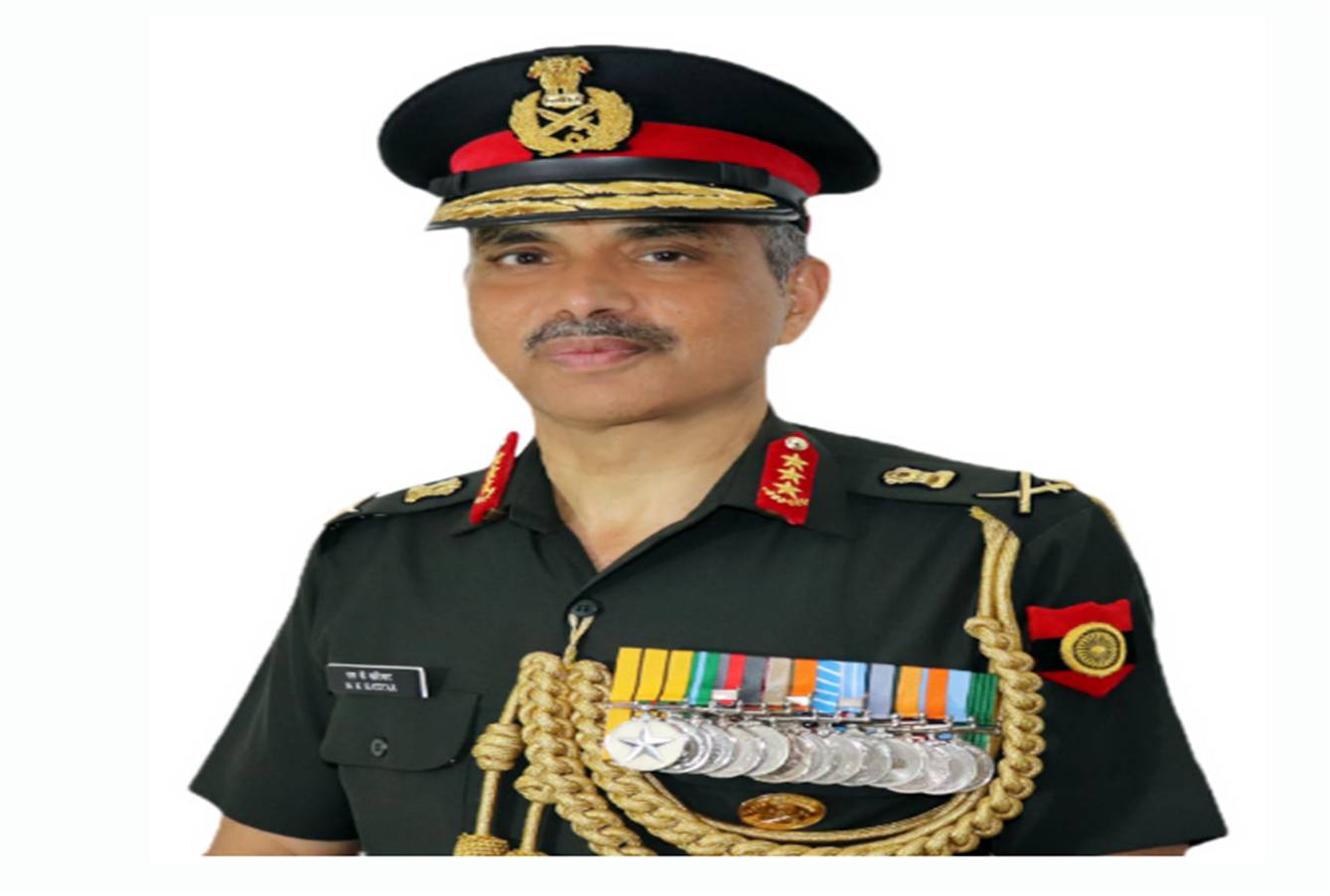
Image result for manish tewari

by Manish Tewari

Member of Parliament

Anandpur Sahib Constituency (Pb)

If South Asia has to become the powerhouse that would drive the Asian Century, it requires connectivity, infrastructure and an uplifting vision that seeks to unite people and not divide them.

From Kartarpur To Dhaka, South Asia Needs To Tear Down Its Walls And Fences To Become Prosperous

Sikh pilgrims visit the shrine of their spiritual leader Guru Nanak Dev, at Gurdwara Darbar Sahib in Kartarpur, Pakistan.

At 9 am on November 9, I arrived at the North-Western edge of India – the Immigration terminal at Dera Baba Nanak in Punjab to travel through the corridor built by the Government of Pakistan and pay obeisance at Gurdwara Sri Kartarpur Sahib in Narowal district of Pakistan.

Sri Kartarpur Sahib occupies a very special place in the hearts and minds of all Punjabis – Sikhs and non-Sikhs alike. This is where Guru Nanak Dev, the founder of Sikhism, spent the last 18 years of his life. This year marks Guru Nanak’s 550th birth anniversary.

When Cyril Radcliffe drew lines across the Indian sub-continent with a thick red felt pen, Sri Kartarpur Sahib fell to the lot of Pakistan. As bitterness between the two nations mounted and barriers, both physical and mental, kept growing, there was a yearning in the minds of Punjabis, especially the Sikhs, that they should have the freedom of “Khule Didar” (unrestricted worship) of all those shrines that have fallen victim to the “tyranny of Westphalia map making”. In fact, the yearning was immortalised in the ‘Ardas’ – the Sikh prayer and has become an eternal article of faith and a letter of creed.

Finally, after an interminable wait, we crossed the Indian border, walked across thirty meters of No Man’s Land and onto the Pakistani territory. I was on the first bus that headed towards the Pakistan immigration terminal where we were received by Mohammad Faisal, Spokesperson of the Foreign Ministry of Pakistan, whom I know from various Track-One and a half and twos that dot the India-Pakistan strategic landscape.

After clearing immigration and customs, I was again on the first bus as it wound its way to the Gurdwara. The journey was surreal. The sun was shining in all its intensity. The heat, however, was mitigated by a gentle breeze wafting softly across the landscape. The bus glided into the corridor – a newly built three to four-kilometer asphalt road with a high barbed wire fence on both sides. The fields were freshly ploughed over on either side of the fence to provide a clear and unobstructed view to the security personnel. Pakistani Ranger’s on horseback and foot, carrying heavy caliber personnel arms, patrolled the fields on either side of the fence. There were few mud houses with thatched roofs visible from a distance, a constant reminder of the grinding poverty that afflicts large parts of South Asia.

What struck me was the fence- an obtuse and ossified reminder of the corrosive zero-sum game that we have locked ourselves into in the sub-continent for the last many decades. Would the Kartarpur dynamic unleash a new reality that would enable the physical and mental barriers to be torn down? I began to muse. My reverie was soon interrupted as the bus arrived at the gates of the Gurdwara — an imposing marble structure that gleamed in the afternoon sun.

We disembarked and paid our respects at the Gurdwara Sahib before coming out into the open vista – a large expanse of gleaming white marble where a large crowd had congregated for the formal ceremony.

Soon I was mobbed by the Indian press contingent for TV bytes. They were there in full strength and most of them have become friends given that this is my 12th year as the spokesperson of the Indian National Congress. We mingled among the devotees. People had congregated from all parts of the world. I chatted with them, a lot of them Pakistanis, who were perhaps seeing an Indian in flesh and blood probably for the first time in their lives. A lot of people just stared at me with curiosity for the media attention had singled me out. A few came up to me and wanted to click selfies. Others just touched me to see if I was for real.

With nothing more to do after having bowed before the Lord and sought his blessings, we decided to go back after about an hour. The ceremonies had not yet commenced. Pakistan was gracious enough to organise a vehicle to drop us back to the immigration terminal. As we approached the gates, a young Pakistani Army officer in his mid-twenties, who was escorting us asked: “Sir, will we ever be able to come across?” The innocence in his question, the bewilderment on his face, and the inquisitiveness in his eyes struck a chord with me, choking me for a second, before I could manage to say Inshah Allah- God Willing. A veteran of many an acerbic joust’s with Pakistani establishment figures for over two decades now and fairly a hawk on Pakistan, I was surprised at my own feelings.

We shook hands at the gate and were across the Indian side in a jiffy where the Border Security Force personnel greeted us with almost a palpable sense of relief. We were the first to be back. The whole pilgrimage had taken two hours.

Three days later I found myself on the Eastern side of India’s border – Bangladesh, for Dhaka Global dialogue. Congested roads where traffic just doesn’t move, pollution that chokes, blaring horns that deafen, non-functional traffic lights, and rundown buildings with vehicles weaving in and out around each other to get ahead greet you here. This is the vivid reality of every Indian city or for that matter the sub-continent — crowded, chaotic, where anarchy is the order.

The words that the 21st Century would be the Asian Century kept resonating through the conference. This is the false triumphalism one hears at all such soirees. Thinking people in the sub-continent seem to suffer from self-created delusions, deliberately oblivious of the truth that most of the Indian sub-continent still lives a 19th century existence; completely insulated from the dignity that should be intrinsic to human subsistence.

The twenty-first century may well become the Asian century but it sure is going to give South Asia a hell of a miss if leaders and policy-makers in this part of the world just do not get real.

If South Asia has to become the powerhouse that would drive the Asian Century, it requires free movement of goods, people, ideas, cultures from the Western borders of Iran to the Eastern borders of Thailand. It requires connectivity, infrastructure,  and an uplifting vision that seeks to unite people and not divide them using templates of narrow bigotry. Is it possible? Yes, of course.

Look at Europe: over the past one hundred years across two world wars, they murdered and plundered each other as if there was no tomorrow. Destroyed and devastated in 1945, they pulled themselves out of the morass literally by the bootstraps to where they are today — united, peaceful, prosperous, of course with First World Problems.

That is the model we need to emulate and tear down the walls and the fences. Create a South Asian Union with all sincerity. This is what our generation owes to the ones that would come after us.

(Manish Tewari is a Lawyer and Member of Parliament. Views are personal)
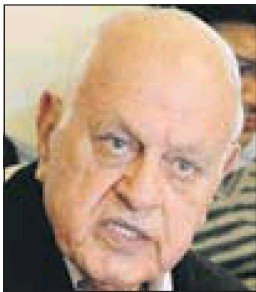

‘Armed forces can’t stop terrorism in J&K’

FAROOQ ADDS TO PoK REMARK CONTROVERSY
getimage
The only solution is talks (with Pakistan), but it will not happen because of terrorists, who may kill me for saying it but I am not afraid of death and will continue to say so.
FAROOQ ABDULLAH, National Conference president
AMMU: A day after drawing criticism for saying that Pakistanoccupied Kashmir (PoK) will remain with Pakistan, National Conference president Farooq Abdullah went a step further on Saturday to say that even if all of India’s armed forces were deployed in the state, they still could not stop terrorism.

Addressing a function here, the former Jammu and Kashmir chief minister said, “The only solution is talks (with Pakistan), but it will not happen because of terrorists, who may kill me for saying it but I am not afraid of death and will continue to say so.”
Abdullah recollected how terrorists tried to derail the peace process initiated by former Prime Minister Atal Bihari Vajpayee by killing 20 Hindus in Rajouri district a day before he was to embark on a bus trip to Lahore in 1999.
He said the real power in Pakistan was vested in its army and not Prime Minister Nawaz Sharif, who could be disposed of in minutes if the army so desired.
“The Pakistan army continues to tell its people that it alone could save them from Hindu India,” he added.
Abdullah also took the opportunity to defend his comment on PoK remaining with Pakistan.
“A lot has been made out of my remarks, saying it’s against the resolution made in the Parliament. How many UN resolutions have been made about J&K, what happened to them? Things cannot improve unless Pakistan realises and understands that it can’t take away this part (Indian part) of J&K,” he said.
The Bharatiya Janata Party (BJP), on the other hand, reacted sharply to his comment.

“He should not make such remarks and we demand that he take back his statement. PoK is a part of India and is in the illegal clutches of Pakistan… He is insulting India and the Parliament,” BJP spokesperson Shahnawaz Hussain said.

‘INDIA’S FAUJ CAN’T STOP TERROR’

The only solution is talks (with Pakistan), but it will not happen because of terrorists, who may kill me for saying it but I am not afraid of death and will continue to say so.
FAROOQ ABDULLAH, National Conference president

JAMMU: A day after drawing criticism for saying that Pakistanoccupied Kashmir (PoK) will remain with Pakistan, National Conference president Farooq Abdullah went a step further on Saturday to say that even if all of India’s armed forces were deployed in the state, they still could not stop terrorism.
Addressing a function here, the former Jammu and Kashmir chief minister said, “The only solution is talks (with Pakistan), but it will not happen because of terrorists, who may kill me for saying it but I am not afraid of death and will continue to say so.”
Abdullah recollected how terrorists tried to derail the peace process initiated by former Prime Minister Atal Bihari Vajpayee by killing 20 Hindus in Rajouri district a day before he was to embark on a bus trip to Lahore in 1999.
He said the real power in Pakistan was vested in its army and not Prime Minister Nawaz Sharif, who could be disposed of in minutes if the army so desired.
“The Pakistan army continues to tell its people that it alone could save them from Hindu India,” he added.
Abdullah also took the opportunity to defend his comment on PoK remaining with Pakistan.
“A lot has been made out of my remarks, saying it’s against the resolution made in the Parliament. How many UN resolutions have been made about J&K, what happened to them? Things cannot improve unless Pakistan realises and understands that it can’t take away this part (Indian part) of J&K,” he said.
The Bharatiya Janata Party (BJP), on the other hand, reacted sharply to his comment.

“He should not make such remarks and we demand that he take back his statement. PoK is a part of India and is in the illegal clutches of Pakistan… He is insulting India and the Parliament,” BJP spokesperson Shahnawaz Hussain said.


IAF to support HAL on 5th generation fighter aircraft

Indian Air Force (IAF) (Representative Image)

The IAF has shelved its plan of developing fifth-generation fighter aircraft in collaboration with Russia and importing more Pilatus basic trainer from Switzerland. Instead, the thrust is to handhold the HAL and DRDO in a big way on the AMCA (Advance…

Read more at: https://www.deccanherald.com/national/iaf-to-support-hal-on-5th-generation-fighter-aircraft-766380.html


NEW & ADVANCED WEAPONRY WILL BE DEPLOYED ALONG THE LOC ONCE TESTED: ARMY

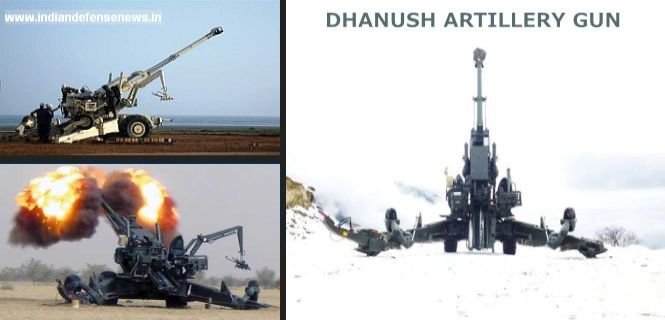
Dhanush_Artillery_Gun_IDN_1 (1)
JAMMU: New and advanced weaponry will be deployed along the Line of Control once they are tested, a senior Army commander today said here.

“At the moment, they (new and modern weapons) are in the nascent stage… there are various upgradation and whether you call them remotely controlled (guns) or you can say upgradation of various technologies, they are in the nascent stage.

“We are trying them and if they are successful we will deploy them,” General officer Commanding of the 16 corps of the army Lt Gen RR Nimbhorkar said during a function in Akhnoor today.

“See, on the LoC, we have to be always evolving. There is no one methodology and equipments we put on the LoC. (Whenever) We find it needs to be changed, (we change it). We do innovation and that is the ongoing process,” Lt Gen Nimbhorkar said.

He was replying to a question about the Army’s plan to deploy remote-controlled guns on the LoC to check infiltration from the Pakistani side.

“So, in this process, there are things which we have thought off– which we are practicing and when they are fully functional then we will deploy them,” he added.

He said that the militants were present in various training camps across the border and they were waiting for an opportunity to sneak in.

“There is no doubt that they are there. They are in various camps and obliviously if they are there, they are there to come to this side so they will try to infiltrate.

“Now, where will they infiltrate, that one cannot say. What is in our hand is to be alert and foil their plans for any infiltration,” he said.

Asked about the non-availability of the firing ranges for the army in Jammu and Kashmir, he said that it was an issue of concern for the army.

Lt Gen Nimbhorkar said that the need of the firing range “is there so we are facing problems”.

“However, this issue has been addressed by the civil government and they are quite helpful in their attitude towards us and I think this problem will be sorted out,” he said.

On the martyrdom of Col Santosh Mahadik who made the supreme sacrifice while fighting militants in the forests of Kupwara in North Kashmir, Lt Gen Nimbhorkar said that to lead from the front was the ethos of the army.

“I knew Col Santosh personally, he was one of the best officers I have ever seen, always willing to do anything for the motherland and he was very fond of his troops.

“I am quite certain that when he had gone and carried out the operation himself as Commanding Officer of the unit he led troops from the front and doing his duty he attained martyrdom,” he said.


SC verdict on pleas seeking Rafale judgment review on Thursday

SC verdict on pleas seeking Rafale judgment review on Thursday
A Bench, comprising Chief Justice Ranjan Gogoi and Justices SK Kaul and KM Joseph, is likely to pronounce verdicts on three review petitions. File photo

New Delhi, November 13

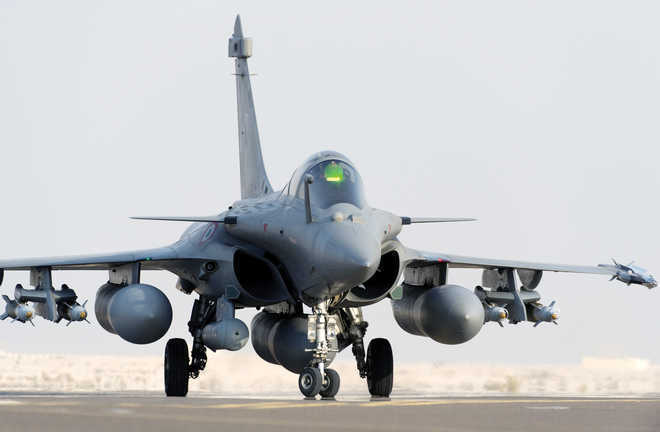
The Supreme Court is scheduled to pronounce on Thursday its verdict on petitions seeking a review of its judgment giving a clean chit to the Modi government in the Rafale fighter jet deal with French firm Dassault Aviation.

On May 10, the apex court had reserved the decision on the pleas, including one filed by former Union ministers Yashwant Sinha, Arun Shourie and activist lawyer Prashant Bhushan, seeking a re-examination of its findings that there was no occasion to doubt the decision-making process in the procurement of 36 Rafale fighter jets.

A Bench, comprising Chief Justice Ranjan Gogoi and Justices SK Kaul and KM Joseph, is likely to pronounce verdicts on three review petitions filed by the trio, lawyer Vineet Dhandha and Aam Aadmi Party lawmaker Sanjay Singh.

On December 14, 2018, the apex court dismissed the petitions seeking an investigation into the alleged irregularities in the Rs 58,000 crore deal. PTI


Memorials in sorry state, but govt plans new ones

Anirudh Gupta
Ferozepur, November 23
2015_11$largeimg24_Tuesday_2015_014910883
The existing memorials in this border town are in a sorry state even though Chief Minister Parkash Singh Badal is granting handsome grants to build new memorials.
Last week, the CM announced Rs 76 crore for Jang-e-Azadi memorial at Kartarpur in Jalandhar, War Memorial and Bhagwan Balmiki Memorial in Amritsar. Two days ago, the CM announced another Rs 25 crores for the construction of three memorials in Ferozepur, Fatehgarh Sahib and Kartarpur.
The move has not gone down well with the Congress party that alleges that the SAD is spending tax payers’ money to woo voters for the upcoming Assembly elections.
“Instead of focusing on the upkeep of the existing memorials, the government is planning to set up many more similar structures,” said Parminder Singh, Congress MLA.
Local residents alleged the government had also failed to develop various historical sites, including the National Martyrs Memorial, Hussaniwala, Anglo Sikh War Memorial, the secret hideout of Bhagat Singh, in the town.
A few months ago, the Chief Minister announced to release Rs 13.5 crore for the development of the Hussainiwala Memorial, but the project is stuck in red tape. Under the plan, the government was to build an auditorium and install a light and sound system.
Residents allege instead of allocating these funds, another museum had been announced in the memory of Bhai Mardana. Nearly 0.72 acres of prime commercial land had been allocated for the project.
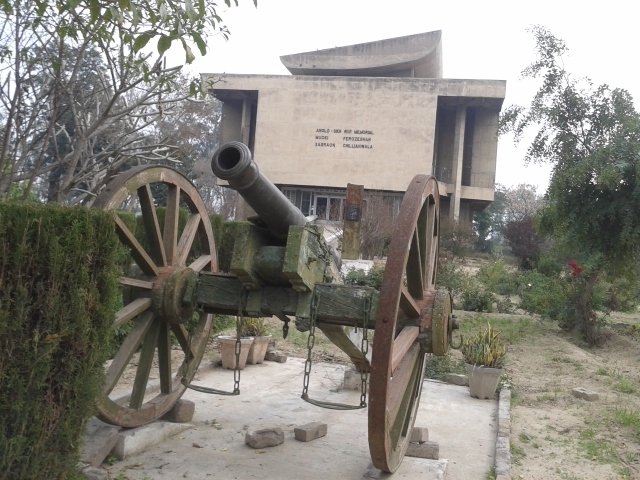
Even the historic Anglo-Sikh War Museum constructed in memory of valiant Sikh soldiers, who died during the Anglo-Sikh Wars of 1845-46 continues to remain neglected in the absence of adequate manpower and resources. This memorial is located on the banks of twin canals on NH-95, where the two Anglo-Sikh wars were fought in nearby villages of Sabraon, Mudki and Ferozeshah.
During her visit a few months ago, Union Minister Maneka Gandhi had also complained about the poor upkeep of this memorial which was dedicated to the nation by her late husband Sanjay Gandhi in 1976. The other Anglo-Sikh War memorials in Mudki, Ferozshah, Mishriwala and Sabraon are also dilapidated.
Moreover, the secret hideout of Shahid Bhagat Singh and his comrades in the city has not been granted heritage status so far. Residents demand that the structure be converted into a memorial.


Srinagar: Over 200 turn up after Army holds recruitment drive

Srinagar: Over 2000 turn up after Army holds recruitment drive

View image on TwitterView image on Twitter

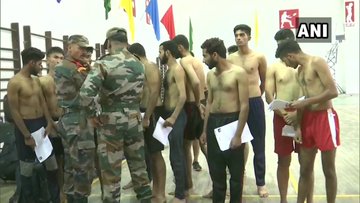
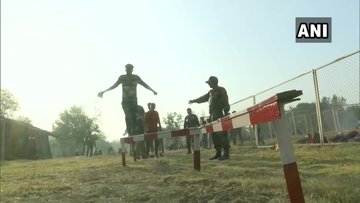
More than 200 youths from Jammu and Kashmir turned up in Srinagar fort the two-day recruitment rally by the Indian Army.

The recruitment rally commenced here on Thursday for inducting candidates into the Jammu and Kashmir Light Infantry (JKLI) regiment is being held at the JKLI Centre at Rangath in Srinagar.

“The recruitment rally is scheduled for October 3 and 4. This rally is part of the overall process to select 2780 recruits for the JKLI regiment,” SR Sharma, Commandant, JKLI regiment said.


Residents bid tearful adieu to Capt Ashwani

Tribune News Service
Patiala, November 14
2015_11$largeimg15_Sunday_2015_015143701
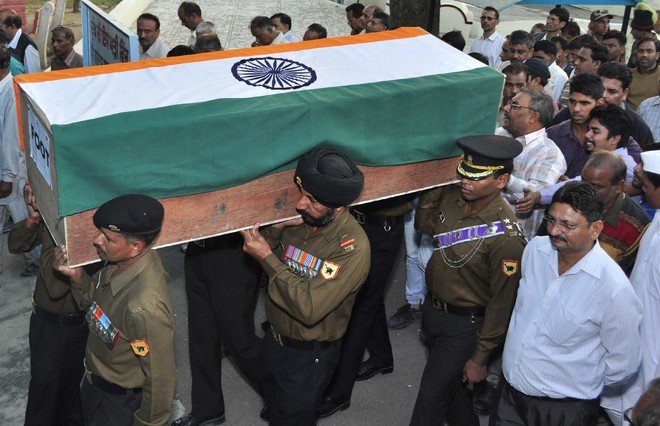
Local residents bid a tearful adieu to Captain Ashwani Kumar (26), who died in an avalanche on Siachen glacier yesterday. The body was brought to Ashwani’s residence in Shanti Nagar in Patiala today. People from all walks of life attended his funeral at the Veerji Cremation Ground. Army officials escorted Singh’s coffin to the ground and gave a rifle salute during the ceremony. The officer’s parents were inconsolable as they had also lost their eldest son to a disease a few years ago.
Born on August 27, 1989, Capt Ashwani Kumar did his MBBS from Government Medical College, Patiala, and was commissioned into the Army on January 6. He was serving with 3 Ladakh Scouts.
Col BS Virk, District Sainik Welfare Officer, Patiala, said the accident occurred when Captain Ashwani, along with his unit, was marching near Manjeet post.


Amarinder Singh unveils decades-old family ties with Imran Khan

http://

Chandigarh, November 11

Punjab Chief Minister Amarinder Singh on Saturday had a five-minute bus ride with Pakistan Prime Minister Imran Khan on way to Kartarpur Sahib Gurdwara during which the two discussed cricket and Singh recalled how Khan’s uncle played cricket for Patiala and India under his father’s captaincy in 1934-35.

Singh, who was part of the first ‘jatha’ that went to pay obeisance at historic Gurdwara, shared the five-minute bus ride with Khan after he was received by the Pakistan premier and his foreign minister at the Zero Point of the International Border of the Kartarpur corridor.

Kartarpur Corridor was the focal point of the connect between Imran Khan, who was also Pakistan cricket team’s captain once, and Amarinder Singh when they met on Saturday, said an official statement from the Punjab Chief Minister’s Office.

“But there was another, equally interesting, subject of common interest they discovered and talked about during the short bus ride from the Pak side of the Zero Line to Kartarpur Sahib gurdwara,” the statement added.

“Cricket, of course, is always a common thread between every Indian and Pakistani,” the statement said.

“It bonds as well as it fires passions between the two sides. But this bus ride was one of bonding, with Captain Amarinder Singh helping Imran (Khan) discover a special connect between their families, even though the two had not met before and did not know each other personally,” it said.

During the short journey, Singh told Khan that he had seen the Pakistani prime minister play in his cricketing days.

The cricketing connect, however, went deeper, the chief minister recalled.

“During his conversation with Imran, Captain Amarinder told the latter that his uncle, Jahangir Khan had played for Patiala, along with Mohd Nisar, Lala Amarnath, fast bowler Amar Singh and the two Ali batsmen (Wazir Ali and Amir Ali).

“These seven players were part of the team captained by Captain Amarinder’s father, Maharaja Yadvinder Singh (the ruler of the erstwhile Patiala state) in 1934-35, for India and for Patiala – a fascinating bit of information that Imran enjoyed hearing from the Chief Minister”.

Imran Khan’s uncle Jahangir Khan was married to Pakistan PM’s maternal aunt Mubarak and was a cricketer during the British era, the statement from the Chief Minister’s Office said, putting the historical links in perspective.

“The bus ride lasted less than five minutes, but, thanks to the cricket, it was enough to break the ice between Imran and Captain Amarinder,” it said.

Incidentally, Amarinder Singh shared the bus ride with Pakistan PM along with his bete-noire and former Cabinet colleague Navjot Singh Sidhu. Also present on the bus was Pakistan’s foreign minister.

Amarinder hoped “the journey through Kartarpur Corridor, which culminated for him in the realisation of a cherished dream, would continue in the future to build a stronger connect between the two countries – one that is as powerful as cricket,” which he hoped the two sides will try to play in the true spirit of the sport in future.

The Punjab chief minister was part of the first batch of over 550 Indian pilgrims who entered Pakistan through the Kartarpur corridor, which was thrown open days ahead of the 550th birth anniversary of Sikhism founder Guru Nanak Dev on November 12.

The corridor links Gurdwara Darbar Sahib in Pakistan, the final resting place of Guru Nanak Dev, to Dera Baba Nanak in Punjab’s Gurdaspur.

Prime Minister Narendra Modi on Saturday inaugurated the Indian section of the Kartarpur Corridor and flagged of the first group of pilgrims to Gurdwara Darbar Sahib.

The portion of the Corridor falling on the Pakistani side was thrown open by the neighbouring nation’s Prime Minister Imran Khan. PTI


Explained: India’s submarine story in deep waters, long way to go

submarine

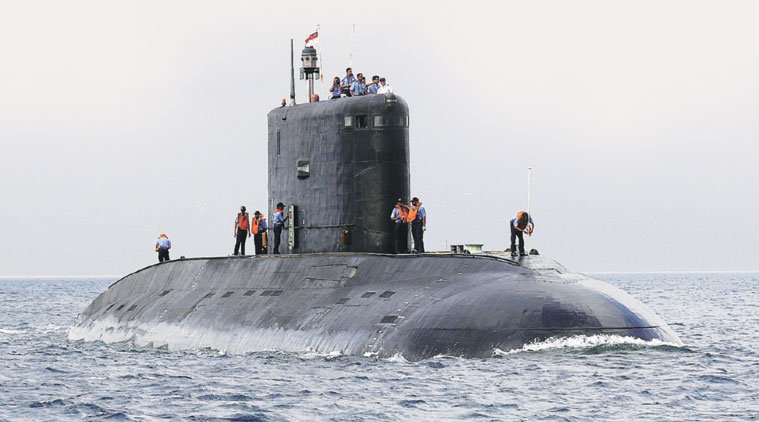
During his recent visit to Russia, Defence Minister Manohar Parrikar is reported to have discussed the lease of an Akula class nuclear submarine to India. Meanwhile, the Kalvari submarine started harbour trials in Mumbai this month. Suddenly, there seems to be a lot of movement on the submarine front.
Submarines are of two types: conventional and nuclear. Conventional submarines (SSK) use a diesel-electric engine as their power source, and have to surface daily to get oxygen for fuel combustion. Nuclear submarines are powered by a nuclear reactor, and they can continue to function submerged for months without having to surface.
submarine, submarine, submarine indian navy, indian navy, indian navy submarine, india news, latest news
The nuclear powered attack submarines (SSN) are different from those that carry ballistic missiles with nuclear warheads (SSBN) — the latter have a bigger size and more stealth features. Capable of staying underwater undetected for long periods, SSBNs are supposed to be the best guarantor of a second strike capability in a nuclear exchange.But the SSKs score over the SSNs and SSBNs in littoral waters where effectiveness in relatively shallow water is a critical requirement. SSKs are optimised for stealth, and their weapons and sensors provide for effective operations close to the shore, both in offensive and defensive roles. A navy thus needs a mix of SSKs, SSNs and SSBNs in its fleet. A force level of three to five SSBNs, six SSNs and 20 SSKs is required for the Indian Navy to fulfill its mandate of a blue water navy. The guiding principle of submarines is to have one on patrol, one on transit to patrol and one in harbour for maintenance. For adequate strategic deterrence, one SSBN should be underwater at any given time, needing a minimum of three SSBNs in the fleet. The three aircraft carrier battle groups, as envisaged for potent force projection and expeditionary capacity, will need two SSNs each. Assuming a 60 per cent operational availability, 12 out of 20 SSKs will be available for both the coasts, the minimum required for India to maintain a credible tactical and operational presence in the littoral. The Navy currently has no SSBNs — under construction INS Arihant is undergoing sea trials — and one SSN, a Russian Akula class submarine taken on lease in 2012 for 10 years. The Navy has only 13 SSKs: nine Sindhughosh class (Russian Kilo class) and four Shishumar class (German Type 209) submarines. The first eight Sindhughosh class SSKs were acquired from the Soviet Union between 1986 and 1991, while the ninth and tenth were acquired from Russia in 1999 and 2000 respectively. The tenth submarine, INS Sindhushastra was the first Indian submarine to be fitted with the Torpedo Tube launched anti-ship Klub missile. The ninth submarine, INS Sindhurakshak, was lost in an accident in Mumbai in 2013. The first two of the four Shishumar class submarines were acquired from HDW in Germany in 1986. The remaining two were built in India under licence at Mazagon Docks Ltd, Mumbai: INS Shalki in 1992 and INS Shankul in 1994. The saga of India’s submarine acquisition has been one of fits and starts, resulting in the waxing and waning of capability. In 1957, the Defence Minister requested Lord Mountbatten, then the First Sea Lord, to provide India a target submarine which could be the oldest and cheapest available. It didn’t materialize. In 1959, the Navy asked the UK for three operational submarines, but it refused the soft credit terms sought by India.

submarine-graph

The Navy’s submarine arm finally came into being on 8 December 1967 with the commissioning of INS Kalvari, a Foxtrot class (Type 641) submarine, at Riga in the Soviet Union. Eight submarines were acquired from the Soviet Union between 1967 and 1974 — four till 1969, which participated in the 1971 Indo-Pak war. All of them have been decommissioned now. The Navy first gained experience in operating technologically complex nuclear submarines when it leased a Charlie-I class SSN from the Soviet Union between 1988 and 1991. In 2006, India and Russia signed an MoU for the lease of two Akula class SSNs for a period of 10 years. India got the first one in 2012, and if Parrikar’s negotiations succeed, the second one could reach India by 2017. India’s indigenously built SSBN, INS Arihant is undergoing sea trials, following which it will be inducted into service. Two other SSBNs, S-3 and S-4, are under construction now, and plans for a much bigger S-5 submarine have also been approved. When it comes to conventional submarines, the Navy’s problems are not due to lack of a plan. A ‘30-Year Plan for Indigenous Submarine Construction’ was approved by the Cabinet Committee on Security in early 1999. This plan envisaged the development of two production lines on which six submarines apiece — christened Project 75 and Project 75 (I) — would be built in collaboration with two separate foreign submarine builders. The Navy would, in the meantime, develop an indigenous submarine design which would then produce 12 SSKs on these two production lines. By 2030, the Navy would then have about 24 modern SSKs. The six Scorpene submarines being made at MDL are under Project 75 — INS Kalvari which went for harbour trials recently is the first one, and will be inducted by 2017. The balance five will then be inducted by 2021. No contracts were issued under Project 75 (I), which was amended in 2010 by the DAC to allow two SSKs to be purchased on outright basis, and four to be made in India. This was done under pressure from the then Navy chief, considering the alarming state of SSKs. Late last year, the DAC chaired by Parrikar reverted to the original plan with all six 75(I) being produced under Make in India. A committee formed to examine the existing shipyards and shortlist them submitted its report in eight weeks but no decision has been taken so far. Furthermore, the 12 indigenous SSKs to be produced under the second phase of the 30 year plan have been amended to six SSKs and six SSNs in a decision taken this year by the DAC. With only 13 SSKs in its fleet, and 10 of them of pre-1990 vintage, the government has decided to go for a refit of four Sindhughosh and two Shishumar submarines to extend their life. Even with extended life, the SSKs will suffer from performance degradation during operations. India’s maritime neighbourhood has navies with increasing submarine and anti-submarine warfare capabilities. China currently has 5 SSNs, 4 SSBNs and 53 SSKs, while Pakistan is acquiring 8 submarines from China. – See more at: