



Sanjha Morcha

What’s New

Click the heading to open detailed news

Current Events :

web counter

Print Media Reproduced Defence Related News

CYMI #TheTribuneOpinion: India-Bangladesh relations at a crossroads

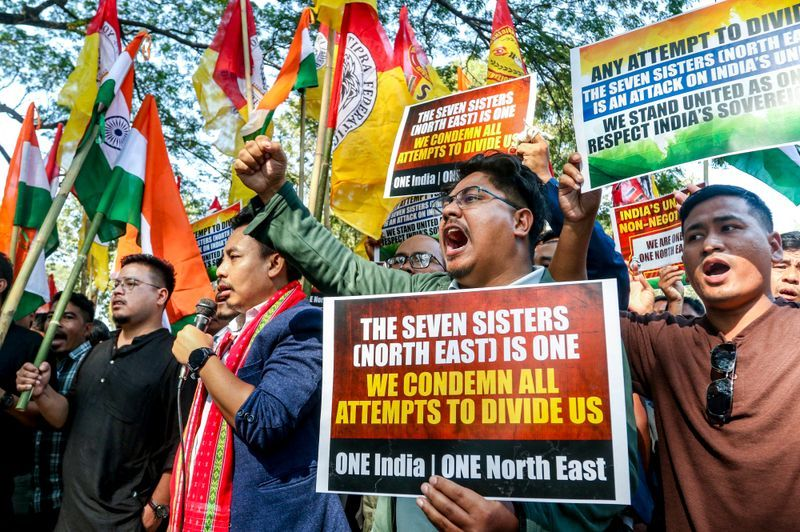
With four Hindu men killed in Bangladesh, the likelihood of internal insurgencies creeping up in our country has risen again, especially in the Northeast. Growing discontent, if not contained, can become a source of major instability in the region, writes former Manipur Governor and J&K ex-DGP Gurbachan Jagat Look to the NortheastThe linking of neighbouring Pakistan, Bangladesh, Myanmar and China is a fact and not a figment of the imagination, he writes. There is an unstable Myanmar; an erstwhile friend but a now hostile Bangladesh, and Pakistan, with the covert help of the Chinese, is with them providing men, material and moral support.

However, despite setbacks in the security arena this year, New Delhi did well on the geopolitical front, says ORF Distinguished Fellow Manoj Joshi in his Edit piece Terror keeps India on its toes. 2026 should be the year in which India must work out a new geopolitical orientation to replace the one lost with the US. Besides emphasising multi-polarity, it also needs to take steps to boost the country’s defence expenditure in keeping with trends around the world. America’s ties with Pakistan and China suggest abundant caution not to rely on the US too much, he writes.

As domain experts continue to rework the definition of the Aravallis, the goddess of Justice, although blindfolded, has demonstrated that it can both ‘see’ and ‘hear’ when it is under vehement, largely justified, attack, writes ex-Secretary, Environment, Forest & Climate Change Ashok Lavasa in his Op-Ed article Aravallis, like old parents, can’t be abandoned. Has the design of vested interests of turning a mountain into a molehill been defeated or have the saviours of the Aravallis succeeded in making a mountain of a molehill? he wonders. Cynics argue how could the court accept a definition without understanding its impact on the ground, both in terms of the extent of actual area covered by the definition and the effect of the permitted activities on the environment.

If the Aravallis are made to conform to the new definition, land degradation will only hasten, writes food and agriculture specialist Devinder Sharma in his Edit Aravallis are vital for food security. There is a dire need to protect the hills that serve as a green wall against desertification. The true economic cost of their ecological and environmental services has not been worked out. Once this cost is known, the nation will realise the economic necessity of keeping the hills intact, he argues.

Talking of Punjab, the Aam Aadmi Party (AAP) had stormed to power in 2022 riding the wave of disillusionment and got a massive mandate from an electorate desperately looking for an alternative. However, power’s intoxicating effect has changed AAP from what it promised to be — a different party, writes senior journalist Nirmal Sandhu in his Op-Ed article Tu Mann na Mann, Punjab is sinking deep in debt, writing exhaustively about what has gone wrong in Punjab’s political hotpot. Punjab has become the second most indebted state in the country after Arunachal Pradesh. Instead of debating this issue, special Vidhan Sabha sessions are called to discuss politically useful matters, he writes. And AAP’s contribution to the fiscal mess is no less significant. AAP had vowed to stop illegal mining and generate revenue, but the problem continues to persist after almost four years in power. Problems kept multiplying. Despite all shortcomings, the Bhagwant Mann-led AAP government has done some good work, but there is more over-projection than concrete results on the ground, he thinks.

From AAP to the BJP, though the BJP government has had two terms of majority rule and it has re-consolidated political power by winning many Assembly elections, it has not moved significantly towards building consensus on crucial issues, writes senior journalist R Jagannathan in his Op-Ed article Why BJP needs dialogue, not deadlock. It does not mean everything has to be done by consensus — the Budget and some economic policies, for example, can be exceptions — but in most other cases, the government should seek as wide a consensus as possible so that there is less internal heartburn.  The BJP has to look beyond mere electoral gains, it has to begin discussions with major opposition parties on everything — from electoral and economic reforms to delimitation of constituencies and sharing of resources between the Centre, states and local bodies.

The Higher Education Regulatory Bill, being projected by the government as a decisive break from the failures of the UGC, is being offered as a solution to many ills plaguing education in India. By separating funding, accreditation, regulation and academic oversight into distinct functions, the government claims to eliminate overlap, reduce arbitrariness and introduce transparency, writes ex-PU professor Shelley Walia in his article Illusion of reform in universities. But the Bill is detached from the complex social, caste-based and linguistic realities that shape academia. This contradiction is stark when read alongside the NEP’s commitment to creativity, critical thinking and multidisciplinary exploration, he writes.

Talking about the freedom of speech, The Tribune Editor-in-Chief Jyoti Malhotra writes in her weekly column The Great Game Free speech and media control that Article 19, a fundamental right in the Constitution that guarantees freedom of speech and expression, gives with one hand but takes away with the other. So, for example, while Article 19(1)(a) grants citizens the right to freely express their thoughts, opinions and ideas, “reasonable restrictions can be imposed on this right” in the interest of sovereignty and integrity of India, public order, decency, morality, etc. But the question is, who is to decide what is “public order”?

Northern Army commander takes part in motorcycle rally

Northern Army Commander Lieutenant General Pratik Sharma on Monday took part in the Dhruva motorcycle rally that started in Udhampur, to pay tribute to the sacrifices of India’s bravehearts and strengthen the Army’s commitment to veteran outreach and military-civil fusion.

Ahead of the 10th Veterans’ Day on January 14, the general officer commanding-in-chief (GOC-in-C) laid a solemn wreath at the Dhruva War Memorial in Udhampur to honour the supreme sacrifices made in the service of the nation.

The rally was ceremonially flagged off here by Param Vir Chakra awardee Honorary Captain Bana Singh and Chinta Devi, wife of Vir Chakra awardee late Naib Subedar Chunni Lal, a defence PRO said.

As an expression of solidarity with and tribute to veterans, Sharma, White Knight Corps GOC, and senior Army officers rode along with the bikers from Udhampur to Nagrota, covering the first phase of the rally, he said.

“Spanning approximately 740 kilometres, the Dhruva motorcycle rally is a deliberate outreach initiative designed to celebrate the unmatched contribution and supreme sacrifices of India’s bravehearts, while strengthening the Indian Army’s commitment to veteran outreach and military-civil fusion,” the PRO said.

The rally will traverse the scenic landscape of the Pir Panjal region in the White Knight Corps zone before culminating at the mega ex-servicemen’s rally on January 13 at Rajouri, he said.

Along its route, the motorcycle rally will conduct wreath-laying ceremonies at various war memorials. “It is accompanied by ‘Aarogya Rakshak’ medical teams, which will establish medical outreach camps to provide health screening, preventive care and essential medicines to ex-servicemen,” he added.

Blood pressure monitoring machines will be distributed to senior veterans, reinforcing the Army’s sustained focus on medical care.

The Dhruva motorcycle rally stands as a testimony to the Army’s ethos of ‘service beyond uniform’, honouring the past, engaging the present, and reaffirming an unbreakable bond with the veteran community, the PRO said.

“The initiative not only commemorates sacrifice but also celebrates the indomitable spirit, resilience and lifelong service of soldiers,” the officer added.

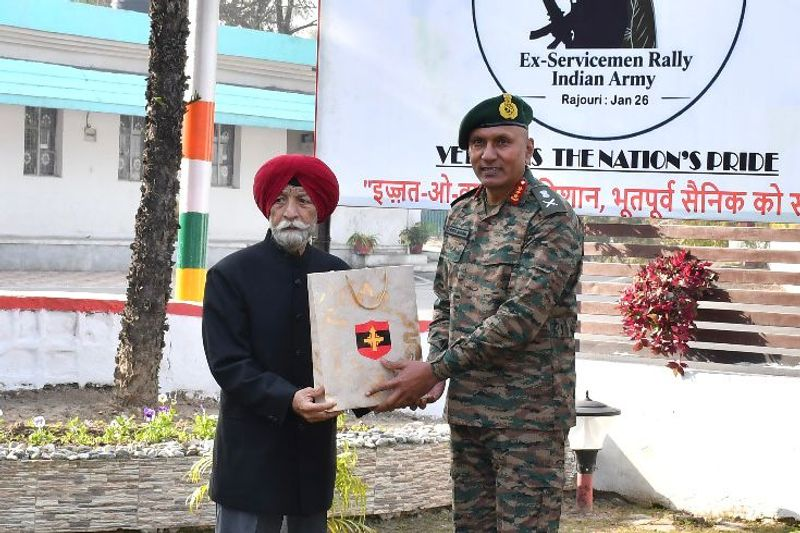
To commemorate their selfless service and sacrifices, the Northern Army commander felicitated Honorary Captain Bana Singh and Chinta Devi.


Stringent punitive measures necessary to maintain military order and integrity: AFT

In Army, discipline has a direct impact on its functional efficacy

Ruling that there is necessity of stringent punitive measures to maintain military order and integrity, the Armed Forces Tribunal (AFT) has upheld the demotion of a soldier held guilty for falsifying official records and tampering with documents.

The soldier, DK Singh, belonging to the Army Service Corps has tried by a summary court martial for tampering with the counterfoils of bank cheques issued to a trading firm and unauthorisedly signing railway warrants in lieu of a Lieutenant Colonel commanding the unit where he was posted.

The Trial, however, was set aside by the General Officer Commanding, Madhya Bharat Area on account of certain legal infirmities. Thereafter, based on legal advice, administrative action was initiated against him and a show cause notice was issued.

The soldier pleaded guilty to one charge and not guilty to the second. Based upon his reply, he was awarded the punishment of reduction of rank from Havildar to Naik. His representation before Army Headquarters against the punishment was rejected, following which he was discharged from service in 2018.

In his petition before the Tribunal, he contended that once the proceedings of the court martial were set aside, was relieved of all the consequences arising out of the trial and he ought not to be punished for the same offence through administrative action.

The army, on the other hand, contended before the Tribunal that since charges against the soldier had become time barred as the period of limitation had expired, therefore, in view of the same administrative action was initiated against him as he had committed an offence of moral turpitude of grave nature which cannot be dealt with leniently in Army where discipline has a direct impact on its functional efficacy.

The Tribunal’s Bench comprising Justice Suresh Kumar Gupta and Lt Gen Anil Puri ruled that the soldier had committed a grave offence, which cannot be dealt with leniently in the Army where discipline has a direct impact on its functional efficacy and leaving him scot-free after committing such a serious offence, for which he himself pleaded guilty, would have adverse effect on the overall discipline of the organisation like the Army.

Refusing to interfere in the matter, the Bench also observed that despite the serious nature of the offence, for which the maximum punishment is imprisonment up to 14 years, he had been leniently punished by reducing his rank only, keeping in view of his length of service so that he could get his due pension.


Col suspended, faces 12 charges under Army Act

Court held him blameworthy for acts of omission, commission

The Army has initiated disciplinary proceedings against a Colonel attached with the Rajputana Rifles Centre for various irregularities and professional misconduct and has been placed under suspension for three months.

The officer, who was earlier commanding an infantry unit based in Rajasthan, is facing 10 charges under Section 63 of the Army Act for acts prejudicial to good order and military discipline and two charges

A court of inquiry convened to probe the allegations had held him blameworthy for several acts of omission and commission, including interference in an ongoing probe against a jawan by the Military Police.

Subsequently, disciplinary action was ordered against the Colonel and he was attached to the regimental centre for further proceedings which included hearing of charge and recording of summary of evidence, a prelude to a possible trial by general court martial.

The officer, on his part, has averred irregularities in the proceedings and violations in compliance of mandatory provisions of law and has submitted a representation in this regard to Army HQ.


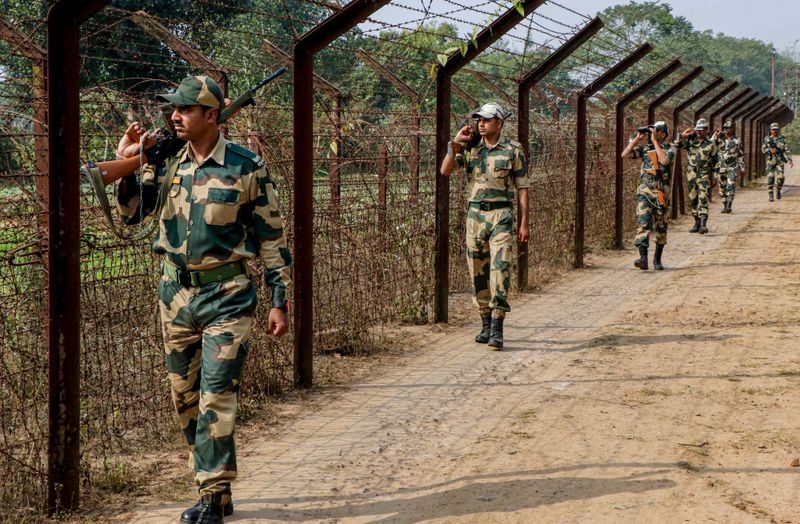
BSF secures Chicken’s Neck with new design fencing amid unrest in Bangladesh

Difficult to cut & climb 12-ft fence; backed by high-tech cameras, enhanced area domination plans

Amid high alert along the India-Bangladesh frontier, owing to the civil unrest in the neighbouring nation, the BSF has installed newly designed border fencing system in almost 75 per cent of the strategically significant Chicken’s Neck (also called the Siliguri corridor) region, according to highly placed sources.

The upgraded 12-feet-high new design fencing (NDF) has been erected in the sensitive region, backed with powerful cameras and enhanced area domination plans, the BSF officials said.

They said it takes several minutes to cut the new fence, while it was also difficult to climb, owing to its height. These measures would help in cutting down infiltration attempts and also incidents of cattle smuggling.

A top BSF official said lots of efforts were being made to secure the Chicken’s Neck region, which borders Bangladesh, and therefore the new design fencing (NDF) has been erected in 75 per cent of the region. As part of these efforts, pan-tilt-zoom (PTZ) cameras have been installed along the border, which provide live feeds for rapid response and support efforts to create a “smart border” with technology and manpower.

Additionally, domination plans have also undergone changes. As per the new plans, the BSF targets areas from where cattle are collected and brought near the border for smuggling. Officials said the BSF personnel even retreat several kilometres within the Indian territory to raid these areas so that cattle smuggling can be curbed.

The BSF has also started a new community-centred project aimed at discouraging Indian villagers from engaging in border crimes, in connivance with Bangladeshi touts and smugglers.

Personnel from the border guarding force visit homes of suspect smugglers and touts and try and make their families aware of the consequences of such actions. These confidence-building measures have played a major role in bringing down cattle smuggling and human trafficking incidents in the past one year, the BSF sources said.

Officials said that in the recent past, several Bangladeshis who entered India illegally, but inadvertently, were also handed back to the Border Guard Bangladesh (BGB), but only after a thorough background check. Their fingerprints and personal details were also shared with the authorities for verification of any criminal or anti-national records.

Since January 2025, the BSF has seized cattle, gold, silver, wildlife, arms, ammunition and other contraband worth around Rs 8.5 crore. A total of 440 Bangladeshis — including touts and smugglers — and 152 Indians, as well as 11 others, were apprehended. Of them, 187 Bangladeshis were handed over to BGB.


Coast Guard gets Samudra Pratap, largest ship in fleet

First indigenously designed pollution control vessel

Defence Minister Rajnath Singh commissioned the Indian Coast Guard Ship (ICGS) Samudra Pratap — the country’s first indigenously designed pollution control vessel and also the largest ship in its fleet — in Goa on Monday.

It is the first of two pollution control vessels built by Goa Shipyard Limited (GSL). According to the Ministry of Defence, “The ICGS Samudra Pratap is India’s first indigenously designed pollution control vessel and the largest ship in the ICG fleet till date. The ship has over 60 percent indigenous content.”

Singh described the vessel as an embodiment of India’s mature defence industrial ecosystem, which possesses the capability to handle complex manufacturing challenges effectively. He added that consistent efforts were being made to enhance the indigenous content in ships to 90 percent.

Rajnath Singh at the commissioning of Samudra Pratap in Goa. PTI

The minister said although the ICGS Samudra Pratap has been specially designed for pollution control, but its role is not limited to this alone. As multiple capabilities have been integrated into a single platform, the ship will prove to be effective in coastal patrol and strengthen maritime safety.

The ship is equipped with advanced pollution detection systems, dedicated pollution response boats, and modern firefighting capabilities. It also features a helicopter hangar and aviation support facilities.

The ship has a displacement of 4,170 tonnes, length of 114.5 meters and capacity to speeds exceeding 22 knots. It is powered by two 7,500 kW diesel engines and an endurance of 6,000 nautical miles.

It is equipped with state-of-the-art systems, including side-sweeping arms, floating booms, high-capacity skimmers, portable barges and a pollution control laboratory. Its armament includes a 30 mm CRN-91 gun and two 12.7 mm stabilised remote-controlled guns, supported by modern fire-control systems.


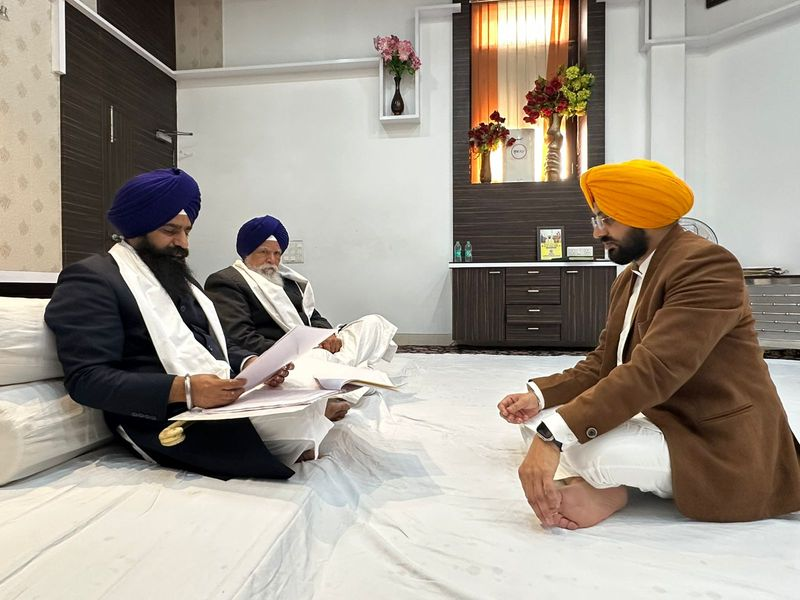
Akal Takht summons Punjab CM Bhagwant Mann for ‘insulting’ Sikh institutions

Will abide by directions, appear barefoot on Jan 15: Mann

Akal Takht officiating Jathedar Kuldip Singh Gargaj on Monday summoned Punjab Chief Minister Bhagwant Mann to appear before the Takht secretariat on January 15 to explain his alleged utterances against Sikh institutions and related issues.

Responding to the summons, Mann said he respected the directive and would comply with it. “I will appear before Akal Takht by walking barefoot like a humble Sikh, not as the Chief Minister,” Mann posted on X.

Addressing mediapersons in Amritsar, the Jathedar said the summons had been issued in view of the CM’s alleged repeated statements denigrating and insulting Sikh institutions, “which had hurt the sentiments of the community”. He said Mann had made “disparaging remarks against key Sikh principles, including Daswandh and Guru Ki Golak”.

“The action has also been initiated in view of a highly objectionable video of the CM that surfaced recently, in which he is seen indulging in extremely objectionable activity with the images of Sikh Gurus,” he said.

The Jathedar clarified that since Mann was not a ‘Sabat Surat Sikh’ (one embodying spiritual discipline), he could not appear before the Takht’s ‘fasil’ and had instead been summoned to the secretariat.

Gargaj also questioned the delay in delivering justice in the 2015 Bargari sacrilege and the 2017 Maur bomb attack cases in which seven persons, including five children, were killed. He asked when Bargari case accused Pradeep Kaler, who was arrested earlier, had “named Dera Sacha Sauda chief Gurmeet Ram Rahim Singh and his associate Honeypreet as perpetrators”, why no action was taken against them. He claimed the Maur blast case was also “linked to the dera”.

The Jathedar also accused the Aam Aadmi Party government of trying to draw political mileage from the Bargari issue. He said when AAP leaders had been repeatedly claiming that the Maur blast was carried out to prevent them from coming to power, why no action was taken in the case even after the party assumed power. Meanwhile, Punjab Tourism and Cultural Affairs Minister Tarunpreet Singh Sond visited Akal Takht barefoot and also appeared before the Jathedar. Sond assured the Jathedar of appointing in his department an official well-versed in Sikh history, culture and code of conduct to oversee government-run institutions connected to the religion.

Chief Khalsa Diwan president and AAP MLA Dr Inderbir Singh Nijjar, who also appeared before the Jathedar, assured him of complying with the constitution of a century-old Sikh educational body that allowed only Amritdhari (baptised) Sikhs as members.

Sond and Nijjar appeared before Gargaj following directions issued by the Sikh high priests on December 28.

Sond appeared to offer a clarification in person over a painting depicting Guru Gobind Singh wearing shoes while administering Amrit Sanchar to Bhai Jaita Ji at Bhai Jeevan Singh (Bhai Jaita Ji) Memorial in Anandpur Sahib. The Sikh high priests had termed it to be against Sikh principles and traditions.

Delegates of the Delhi Sikh Gurdwara Management Committee also appeared before the Jathedar in a separate case.


‘Unilateral military action on Venezuela sets dangerous precedent’: Pak as it implicitly rebukes US

Pakistan has voiced strong opposition to ‘unilateral military action’ in Venezuela, implicitly rebuking the United States for its recent strikes and the dramatic capture of President Nicolás Maduro.

Speaking at the emergency session of the UN Security Council, Pakistan’s Acting Permanent Representative to the UN, Ambassador Usman Jadoon, warned that such actions “contravene sacrosanct principles” of the UN Charter and threaten to erode the foundations of international law.

In his remarks, Jadoon said Pakistan viewed “the recent developments in Venezuela with profound concern”, cautioning that escalating tensions in the Caribbean “do not augur well for regional and international peace and security”.

Without naming the United States directly, the envoy said the UN Charter forbids “the threat or use of force against the territorial integrity or political independence of any state” and binds member countries to respect “sovereign equality and non-interference.”

“Unilateral military action contravenes these sacrosanct principles and the doctrine of sovereign immunity. Such actions set dangerous precedents that risk eroding the foundations of the global legal framework,” Jadoon told the Council.

An emergency meeting of the UN Security Council was held following the US-led operation that struck key Venezuelan military and infrastructure sites, leading to the capture of President Maduro and his wife, Cilia Flores. Both have since been flown to the United States, where they face drug trafficking charges — a move many nations, including Russia, China, and several Latin American states, have condemned as a violation of sovereignty.

Jadoon urged all sides to “exercise maximum restraint” and to pursue dialogue and diplomacy. “Durable solutions to political differences can only be found through peaceful means, with full respect for the will of the Venezuelan people, free from any external interference,” he said, adding that peace and stability of Venezuela and the welfare and prosperity of its people, with full ownership, must be the overriding objective of all efforts.


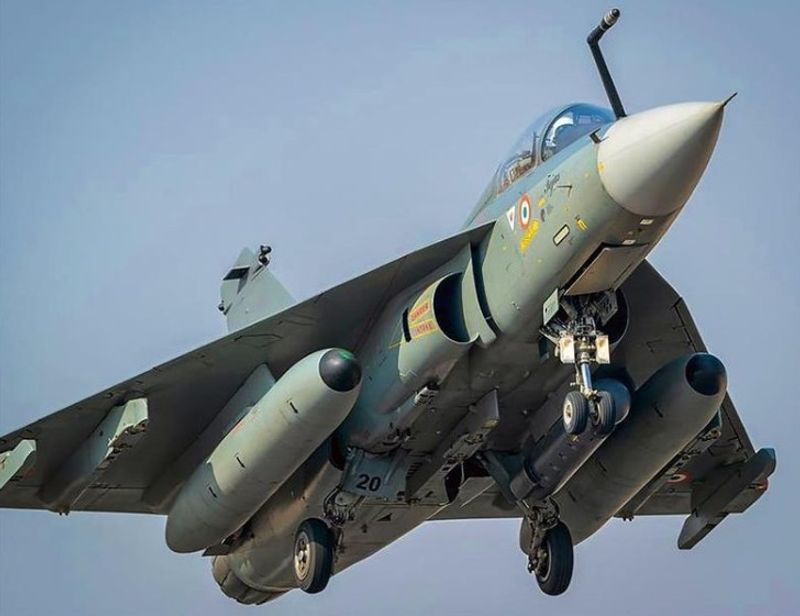
IAF moves to acquire six AWACS for boosting surveillance capability, issues RFI to industry

DRDO is also working on advanced versions of the Netra systems to further boost surveillance capabilities

article_Author
Vijay Mohan
Moving ahead with the process of enhancing aerial surveillance and airspace management capabilities, the Indian Air Force (IAF) has issued a request for information (RFI) to the industry for the procurement of six Airborne Early Warning and Control (AEW&C) aircraft along with associated ground segment equipment and facilities.

“The main purpose of the AEW&C is to provide long range radar detection. AEW&C is a system of systems consisting of radar, identification of friend and foe (IFF) system, electronic surveillance measures (ESM), communication support measure (CSM), command and control (C2), battle management system and networking through data links,” the RFI issued on January 5 states.

Though the RFI does not identify the platform to be used for the project, specifications laid down require the aircraft to have a minimum endurance of 10 hours or the capability for mid-air refuelling, a service ceiling of 45,000 feet above sea level and ability to operate from airfields located at altitudes of around 10,000 feet. Advanced mission suite capable of a full 360-degree scan to detect small slow moving targets to hypersonic vehicles, satellite based navigational and communication aids and protection measures are other requirements.

Among the possibilities for the aircraft are the Airbus A-320 passenger liners which were procured from Air India with the intent of modifying them for military use and the Embraer Legacy executive jets, three of which have been retrofitted as AEW&C indigenously by the Defence Research and Development Organisation (DRDO) and christened as Netra.

DRDO is also working on advanced versions of the Netra systems to further boost surveillance capabilities. The new mission suite will consist of about 15 aerial sub-systems and components in addition to several ground-based elements.

Last month, DRDO selected the Canadian Bombardier Global 6500 twin-engine business jets as the platform for its ongoing ISTAR (Intelligence, Surveillance, Target Acquisition and Reconnaissance) program.

At present, the IAF has five operational AEW&Cs, which include three Beriev A-50s, which are Russian IL-76 airframes equipped with Israeli sensors that were inducted about two decades ago, and two Netra aircraft. The third Netra is with DRDO’s Center for Airborne Systems.

Given its commitments along the northern and western frontiers, the IAF has projected a requirement for 12 AEW&Cs. “The IAF has already initiated two programmes of six AEW aircraft each and one for a special role aircraft,” a report tabled last year by Parliament’s Standing Committee on Defence stated.

The IAF’s present fleet of five AWACS is relatively small as compared to its two hostile neighbours. China has a fleet of 20 Shaanxi KJ-500 20, four Shaanxi KJ-200 and four KJ-2000, while Pakistan has four Chinese ZDK-03 Karakoram Eagle and eight Swedish Saab 2000 Erieye platforms, one of which was possibly knocked down by the IAF during Operation Sindoor.

Service


Violating ban order, around 1,100 found using VPN netwrk in Kashmir

J&K administration had last month imposed a blanket ban on the use of VPN services across the Valley

With police in the Kashmir Valley intensifying their crackdown on the use of Virtual Private Network (VPN) services in violation of prohibitory orders imposed by the administration, authorities have so far identified around 1,100 users across Kashmir, officials said.

Top Jammu and Kashmir Police sources told The Tribune that nearly 1,100 individuals have been identified over the past few days for using VPN services.

Last month, the Jammu and Kashmir administration imposed a blanket ban on the use of VPN services across the Valley. District administrations issued separate orders prohibiting the use of unauthorised VPNs for a period of two months with immediate effect.

Following the ban, police launched verification drives to identify violators. Sources said that so far around 1,100 people have been found using VPN services in violation of the orders.

Police sources said action against individuals depends on the nature of usage. “If they are found misusing the VPN, preventive action is initiated. If the usage is found to be innocuous, the individual is warned and advised accordingly,” a police source said.

Since the ban came into force, police in several districts have conducted verification exercises and initiated action. Videos circulated on social media showed police personnel checking mobile phones of individuals on the roads, a move that has drawn criticism from sections of the public in the Valley.

On Monday, police in central Kashmir’s Ganderbal district said that as part of ongoing efforts to ensure public safety, cyber security and maintenance of law and order, preventive action was taken against individuals found using VPN services unauthorisedly.

During verification, 11 persons were found using VPN services illegally within the jurisdiction of Police Station Ganderbal and Police Station Kangan, police said.

“The individuals were bound down under Section 26 of the Bharatiya Nagarik Suraksha Sanhita (BNSS) to maintain good behaviour,” the police statement said.

Police in Ganderbal warned that any violation of lawful orders would invite strict legal action and urged the public to cooperate with law-enforcement agencies to maintain peace and security.

Senior police officials said the drive would continue in the coming days. “This is an ongoing process. We will continue to identify violators and take action against those found misusing VPN services,” a police official said.

Advertisement