Sanjha Morcha

What’s New

Click the heading to open detailed news

Current Events :

web counter

Print Media Reproduced Defence Related News

YouTuber, student and security guard: 8 arrested from Punjab, Haryana and UP for spying for Pakistan

These arrests come after Pahalgam terror attack

Police have arrested eight people from Haryana, Punjab, and Uttar Pradesh for allegedly spying for Pakistan. These arrests happened after the terror attack in Pahalgam, which led to tighter security and more surveillance.

Below are the eight arrested 

Jyoti Malhotra (Hisar, Haryana)

A travel vlogger with a YouTube channel called Travel with JO.

Police say she shared military information with Pakistan and had visited the country twice.

She was reportedly in touch with someone from the Pakistan High Commission.

Davender Singh Dhillon (Punjab, arrested from Kaithal, Haryana)

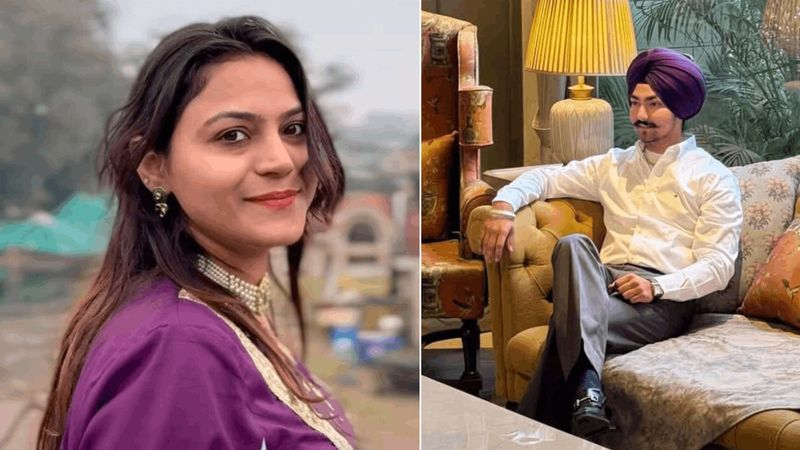
A 25-year-old college student from Khalsa College, Patiala, was arrested in Kaithal, Haryana.

He posted gun photos on Facebook.

During questioning, police found he had visited Pakistan and shared photos of an army area.

Nauman Ilahi (Panipat, Haryana; from UP)

Worked as a security guard.

Police say he gave information to a Pakistani spy and received money through his brother-in-law.

Arman (Nuh, Haryana)

Arrested based on a tip-off.

Accused of sending sensitive information to Pakistan.

Shahzad (Rampur, UP)

A businessman arrested by the Special Task Force.

He had visited Pakistan many times and is also accused of smuggling goods.

Mohammad Murtaza Ali (arrested in Punjab)

Caught by Gujarat Police in Jalandhar.

He allegedly shared information using a mobile app he created himself.

Gazala and Yamin Mohammad (Punjab)

Also, arrested for allegedly spying for Pakistan.


Army neutralises 42 shells in Poonch

The Army has safely destroyed 42 unexploded shells that had been fired by the Pakistani side in Poonch during the recent conflict between the two countries. Defence spokesperson Lieutenant Colonel Suneel Bartwal stated the Army, working in close coordination with…

The Army has safely destroyed 42 unexploded shells that had been fired by the Pakistani side in Poonch during the recent conflict between the two countries.

Defence spokesperson Lieutenant Colonel Suneel Bartwal stated the Army, working in close coordination with local police authorities, successfully conducted a controlled operation to safely dispose of the 42 unexploded shells in the border areas of Jhullas, Salotri, Dharati, and Salani in the Poonch district.

“These shells, remnants of recent cross-border shelling, posed a significant threat to the lives and safety of local residents,” the spokesperson explained.

“The operation was carried out with utmost precision, adhering to all standard safety protocols to prevent any risk to civilian life or property.”

Authorities in the border districts of Jammu and Kashmir have expressed concern and have issued warnings to residents to remain vigilant for any such objects. In several areas of Jammu along the International Border, residents had also been advised not to return to their homes until all unexploded shells were safely dealt with.

The spokesperson further noted that trained bomb disposal teams from the Indian Army, in conjunction with the police, ensured the complete neutralisation of all explosive remnants. “This proactive effort reflects the organisation’s ongoing commitment to safeguarding civilian populations in conflict-affected zones and restoring a sense of normalcy in vulnerable border communities,” he said.


Why did Pakistan rush to US for help after India hit Pindi and Sargoda air bases

#IndiaPakistanTensions #PindiAirBase #SargodhaAirBase #IndiaPakistanTensions, #PindiAirBase, #SargodhaAirBase, #PakistanUS, #IndianAirStrike, #DefenseNews, #Geopolitics, #BreakingNews Pakistan’s Prime Minister Shehbaz Sharif—in a surprising public statement–confirmed that Indian missiles hit several places inside Pakistan, including the Nur Khan Airbase near Islamabad. This happened early in the…


Why IAF air strikes were a tipping point in Pak conflict : Lt Gen Hooda

In this episode of TheTribune interview, The Tribune’s editor in chief Jyoti Malhotra spoke to former army commander of the Northern Command Lt Gen D S Hooda on the outcome of Operation Sindoor and the meaning of the Indo-Pak conflict..


ICYMI #Tribune Opinion: India resets the new normal; ceasefire against Pakistan just a pause if it doesn’t behave

As PM Modi gets tough post-Pahalgam attack, experts debate sustainability of treating terror as war and the risks of escalatory doctrine

article_Author
Chandni S Chandel Tribune News Service

Late last week, the India-Pakistan hostilities ceased after India hit Pakistan’s air bases, making the Pak DGMO beg for a ceasefire. Later, giving a clear message to Pakistan, Indian PM Narendra Modi warned that talks, trade and water will not be discussed till terror originating from Pakistani soil ends.

After decades of attempts at every possible approach to hold Pakistan accountable for acts of terrorism, India had reached a point where an aggressive shift in policy became inevitable. Now, a new normal has been established by PM Modi. As per this new normal, this ceasefire is not an end but a pause to Operation Sindoor and the terms and conditions have been laid down, writes Jawed Ashraf in his article ‘Not going back from the new normal’.

However, in her Op-Ed piece, ‘The hyphen stays between India and Pak’senior journalist Nirupama Subramanian brings to the fore that the ‘new normal’ of treating every terror attack as an ‘act of war’ is unsustainable in the long run. Next time, Delhi’s friends would want to see concrete evidence of Pak involvement before India retaliates. The danger is that we have handed the levers to trigger an India-Pakistan conflict to the adversary with the act of war pronouncement, she writes.

From India’s policy shift to the core contradictions in the West’s response to terror, Lt Gen SS Mehta (retd) writes in his Op-Ed piece To win the war before the war’ that when it hurts the West, it calls it terror but not otherwise. Now India has rewritten the rules of the game, which is to win the war before the war. This is the new norm in the escalatory ladder.

Meanwhile, super cop Julio Ribeiro complimented the prime minister in his article, PM Modi has come up trumps’ with the way he handled the situation after the Pahalgam attack. But he also had a word of advice for the PM — he would have to win the hearts of the locals, all of whom are not extremists — to end terrorism in J&K.

Unlike Ribeiro, in a critique, former Ambassador to Iran and UAE KC Singh has pointed out that if the dialogue process with Pakistan, based on the Gujral doctrine, failed, so has the post-2019 Modi doctrine. The Pahalgam attack meant that deterrence like the Balakot strikes, constitutional changes in J&K, et al failed. And Pakistan would often hint that terrorism would end if India ceded Kashmir. Now, India has a matching card—you will get Indus waters once terror ends.

Amongst all the discussions on the post-India-Pak flare-up, later in the week one good thing happened and that was the meeting of External Affair Minister S Jaishankar with Taliban Foreign Minister Amir Khan Muttaqi. And to top it all, India did that openly without unduly bothering about what the world would say. So, the story of how India won over the Taliban is perhaps the most fascinating of all, this week, writes The Tribune Editor-in-Chief Jyoti Malhotra in her weekly column The Great Game ‘Three morals and a Trump story’.

Shifting focus from the battleground to the digital frontlines, we saw the social media warriors armed with half-facts and half-lies during the standoff. Yashwant Deshmukh and Sutana Guru in their article ‘Social media warriors join ranks of useful idiots’,took the shameless social media warriors to task who blatantly trolled Foreign Secretary Vikram Misri while he was working round the clock handling the fallout of Operation Sindoor. Also bearing the brunt was Himanshi Narwal, all of 22, newly married and tragically widowed in the Pahalgam attack. All she had done was ask fellow Indians not to target an entire community in the aftermath of the Pahalgam attack. And immediately, Himanshi, who had been till then elevated by these social media warriors to the status of Mother India, had to face incessant abuse, and conspiracy theories were floated about how she had been indoctrinated during her days as a student in JNU.


BBMB allocates water as per demand of partner states

The Technical Committee of the Bhakra Beas Management Board (BBMB) has allocated water to Punjab, Haryana and Rajasthan from the Nangal Dam according to their demand. As per a decision taken at a meeting held on May 15, Punjab will…

article_Author
Ruchika Khanna Tribune News Service

The Technical Committee of the Bhakra Beas Management Board (BBMB) has allocated water to Punjab, Haryana and Rajasthan from the Nangal Dam according to their demand.

As per a decision taken at a meeting held on May 15, Punjab will get 17,000 cusecs of water, Rajasthan 12,400 cusecs and Haryana 10,300 cusecs.

There, however, lies a catch in case of Haryana. According to the minutes of the meeting accessed by The Tribune, Haryana has been allotted 10,300 cusecs for 10 days beginning from May 21, based on the “safe carrying capacity” of the Bhakra Main Line (BML) canal. The canal carries water to parts of both Punjab and Haryana.

Punjab has all along been claiming that the canal required maintenance work due to which it could not carry water “up to its optimum carrying capacity”.

The carrying capacity of the canal is 11,200 cusecs, against its design capacity of 12,500 cusecs. Punjab will also be using 3,000 cusecs from it, leaving only 8,200 cusecs that will flow into Haryana.

This is bound to leave Haryana with 2,100 cusecs less water than its demand.

In the meeting, Punjab had objected to the increase in water allocation to Haryana, saying the neighbouring state had 70 per cent share in the water flowing through the canal.

At the meeting, it was also decided that a committee, comprising members from partner states, Central Water Commission and the BBMB, would be constituted to address issues like accounting for the filling and depletion period of dams and losses and gains on actual basis instead of taking conventional values.

Punjab had also urged that the repair work on the third tunnel of Pong Dam not be carried out as the demand for water for irrigating paddy fields would increase from June onwards.

Rajasthan Government officials had also given their consent in this regard.

The Board has now decided not to go ahead with the maintenance work. As a result, the release from Pong Dam will be 4,000 cusecs, beginning May 21.


Our air defence system foiled Pakistan’s bid to target Golden Temple: Defence official

Says they anticipated that Pakistan would target India’s military installations besides the civilian targets, including religious places

Tribune News Service

Pakistan targeted the Golden Temple in Amritsar during the recent conflict with India. However, the attempt was foiled by the Indian air defence system.This was claimed by a senior defence official on Monday while demonstrating India’s air defence system, including indigenous Akash missiles and L-70 air defence guns, that intercepted the Pakistani drones and missiles.

“Following the Pahalgam terror attack, Operation Sindoor was launched and punitive strikes carried out on terror targets in Pakistan. Of the nine targets hit, seven were exclusively destroyed,” said the official.

He said the army was fully prepared to foil any misadventure by the Pakistan military. The defence system remained operative 24×7, and intercepted and neutralised all attacks targeted at military installations and religious places, he said.

“We anticipated that they would target our military installations besides the civilian targets, including religious places, said the official, adding, “Of these, the Golden Temple was the most prominent. We received credible intelligence that the Golden Temple was their target. We mobilised additional modern air defence assets to provide a holistic air defence umbrella cover to the shrine.”

He said that on May 8 morning, Pakistan carried out a massive air assault with drones and long-range missiles. “However, our alert air defence gunners foiled its attempts and shot down all drones and missiles targeted at the Golden Temple.”

Meanwhile, the SGPC refused to comment on the issue. When asked about the army claim, SGPC chief secretary Kulwant Mannan did not say anything.Amritsar MP Gurjit Aujla, meanwhile, thanked the army for foiling the attack.


Current social media & Political Leaders must Learn from little girl , respect for solidiers

The little girl who moved the soldiers! Today, this video is going viral. In it, Indian soldiers are standing at a metro station. Suddenly, a child runs up, falls at their feet and thanks them. The soldiers are also moved and pat the child. This is definitely a lesson for the current social media generation. Let’s appreciate the sacrifice and hard work of the soldiers…..


From Uniform to Circus:

How Retired Generals Are Tarnishing the Dignity of the Armed Forces
By Capt (IN) Navtej Singh, Retd

There was a time when the uniform symbolised discipline, silence in the face of noise, and dignity in the face of chaos.

Today, some of its former wearers are turning prime-time television into a theatre of the absurd. From loud, theatrical monologues to revealing sensitive military strategies, a group of retired Indian armed forces officers have taken to the screen in a manner that not only belittles their own legacy but also erodes the image of the Indian Armed Forces on national and global platforms.

The Hunger for Limelight

A growing number of retired officers have become household names—not because of their operational brilliance, but because of their over-the-top, jingoistic, and often crass performances on television debates.

Screaming matches, misplaced analogies, and war cries have replaced thoughtful analysis.

What drives this? A clear hunger to stay relevant, to be seen, to be heard—at any cost.

In this pursuit of celebrity, they behave less like veterans of disciplined institutions and more like out-of-work film extras auditioning for the next jingoistic drama.

Uniforms for Ratings

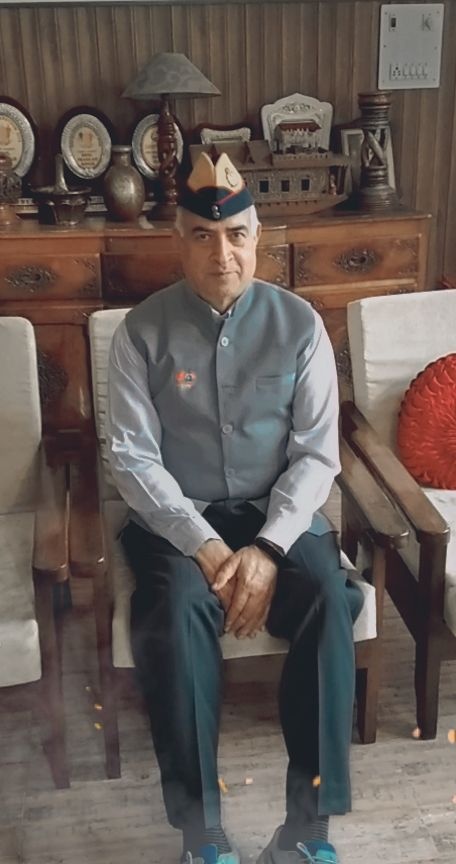
Many of these officers shamelessly flout the military’s laid-down guidelines, appearing on news channels wearing parts of their uniform—berets, medals, badges—despite explicit regulations prohibiting such behaviour post-retirement.

These props are used not as reminders of duty or sacrifice, but as tools of branding—meant to lend an air of legitimacy to their otherwise shallow, performative rhetoric.

This is not just undignified. It’s a breach of ethos. The uniform is not a costume.

Op Sindoor and the Misuse of Legacy

Take the recent debates around Operation Sindoor—a sensitive and classified operation, now suddenly the subject of reckless speculation on television panels.

Retired officers have taken to public platforms, “explaining” strategies, possible troop movements, weapon systems, and even policy rationale.

They forget that this isn’t a war game in a studio. These are real operations, with real lives and national interests at stake.

Such commentary not only compromises operational secrecy, but also sets a dangerous precedent where service veterans become liabilities instead of upholders of institutional sanctity.

No Longer the Voice of the Forces

Let this be clear: these individuals no longer speak for the Indian Army, Navy, or Air Force.

They are chasing relevance, not acting as emissaries of service ethos.

The armed forces speak through their actions, not through expletive-laden rants on news channels.

The constant need to posture, perform, and provoke has made some of these once-respected figures objects of ridicule even within military circles.

Ask any serving officer or veteran quietly watching from the sidelines—the respect is gone.

A New Breed of Media Mercenaries

Some of these officers now view themselves as public figures, influencers even—commenting on politics, film stars, and foreign policy with the confidence of someone who’s never been contradicted.

They crave the adulation, the reposts, the speaking engagements.

But with every shout and every insult, they are not raising the stature of the armed forces—they are dragging it into the gutters of television theatrics.

Silence is Sometimes the Loudest Honour

As a former officer myself, it pains me to write this. But it needs to be said.

Dignity is not in decibels. Credibility is not in costume. And the military legacy cannot be auctioned for television ratings.

It is time the Ministry of Defence, service headquarters, and even the media took a stand.

The uniform deserves silence, not spectacle.

And veterans must remember that fading from the spotlight with dignity is far more honourable than remaining in it through disgrace.

I had originally written the names of these officers in this article, but I chose to remove them before posting—as I feel that by naming them, I would, in some way, be placing myself in the same category I am criticising.

Capt (IN) Navtej Singh, Retd
Former Indian Navy Officer | Writer | Veteran


Indus Waters Treaty to remain suspended until Pak abjures support for cross-border terror: Jal Shakti Ministry

Brokered by the World Bank in 1960, the IWT governed the distribution and use of the Indus river and its tributaries between India and Pakistan

he Indus Waters Treaty (IWT) will remain suspended “until Pakistan credibly and irrevocably abjures its support for cross-border terrorism”, the Union Jal Shakti Ministry has conveyed to the Cabinet Secretary.



In its monthly report to Cabinet Secretary TV Somanathan on Tuesday, Debashree Mukherjee, secretary in the Department of Water Resources, River Development and Ganga Rejuvenation under the ministry, said the government announced that the treaty would be held in “abeyance” with immediate effect in the aftermath of the “Pakistan-sponsored” terror attack on civilians in Pahalgam.

“The key water-sharing treaty will remain suspended until Pakistan credibly and irrevocably abjures its support for cross-border terrorism,” Mukherjee said in her report.

Brokered by the World Bank in 1960, the IWT governed the distribution and use of the Indus river and its tributaries between India and Pakistan.

According to sources, Pakistan’s Water Resources Secretary Syed Ali Murtaza had expressed his government’s readiness to discuss specific objections raised by New Delhi.

However, the Indian Government remains firm on its decision to hold the accord in abeyance.

The river system comprises the Indus and its tributaries. The Ravi, Beas and the Sutlej are collectively referred to as the eastern rivers, while the Indus, Jhelum and the Chenab are known as the western rivers.

Water from this river system is crucial for both India and Pakistan.