Sanjha Morcha

What’s New

Click the heading to open detailed news

Current Events :

web counter

Print Media Reproduced Defence Related News

Postpaid mobile phone services to resume from Monday in Kashmir

http://

Srinagar, October 12

In a major step in easing the 69 days lockdown in the Kashmir Valley, the Jammu and Kashmir administration on Saturday announced restoration of all postpaid mobile phone services from Monday noon.

Government spokesman and senior IAS officer Rohit Kansal told reporters that all postpaid mobile phones will be resorted from October 14 noon.

The services were likely to be resumed on Saturday but a last minute technical hitch led to deferring of the resumption of services.

The subscribers will have to, however, wait for some more time for Internet services to resume in the Valley, they said.

The state administration has been examining various options with regard to suspension of mobile phone services which have come in for severe criticism for causing hardships to some seven million residents of the Valley.

At one point it was planned to open only BSNL services followed by allowing activating only incoming calls run by private telecom operators.

The move comes barely days after the Centre issued an advisory opening the Valley for tourists. Travel association bodies had approached the administration, saying that no tourist would like to come to the valley where no mobile phones working.

The mobile services in Jammu and Kashmir were shut down on August 5 after the Centre announced in New Delhi the abrogation of the special status guaranteed to the state under Article 370 of the Constitution.

Partial fixed line telephony was resumed in the valley on August 17, and by September 4 all landlines, numbering nearly 50,000, were declared operational.

In Jammu, the communication system was restored within days of the blockade and even mobile Internet was started around mid-August. However, after its misuse, the Internet facility on cellular phones was snapped on August 18. PTI


500 terrorists waiting at LoC camps to infiltrate: Northern Command chief

500 terrorists waiting at LoC camps to infiltrate: Northern Command chief

Bhaderwah/Jammu, October 11

Nearly 500 terrorists are waiting in various training camps along the Line of Control in Pak-occupied Kashmir, looking for opportunities to sneak into Jammu and Kashmir, a top Army officer said on Friday.

He also said 200 to 300 terrorists are operating in hinterland of J&K to keep the region in turmoil with Pakistan’s support.

“As far as militants operating within Jammu and Kashmir are concerned, 200 to 300 terrorists, who have come here, joined militants here,” Northern Command chief Lt Gen Ranbir Singh told reporters here.

Singh said this it in reply to questions about the number of militants operating in J&K and those in PoK ready to infiltrate into the country.

“Like this, nearly 500 terrorists are staged in terrorists’ training camps in PoK and are ready to infiltrate into J&K,” said Lt Gen Singh.

He said these figures keep changing as per their training schedule.

“Whatever be the number, we are capable to stop and eliminate them to ensure peace and normalcy in this region,” he added.

The Army commander said it is always their endeavour to ensure peace and normalcy in J&K.

“But Pakistan keeps trying to do some mischief to disturb the peace here. Even today terror infrastructure is being run within Pakistan (by its forces and agencies). These include training as launching pad for terrorists to infiltrate into the country,” he added.

He said Pakistan continues to keep terrorists armed to their teeth and provide all types of support to them.

He said deploying drones to arm terrorists is one of the new modus operandi of Pakistan, said Lt General Singh in reply to a question over the issue of dropping arms through drones in Punjab by Pakistan.

“But I want to ensure you that Indian Army is capable and determined to foil Pakistan’s any unholy design. Their designs will not be allowed to succeed,” he said. —PTI


Over 180 Cultural, Literary Persons Endorse Letter to PM by 49 Celebrities, Condemn FIR

Over 180 Cultural, Literary Persons Endorse

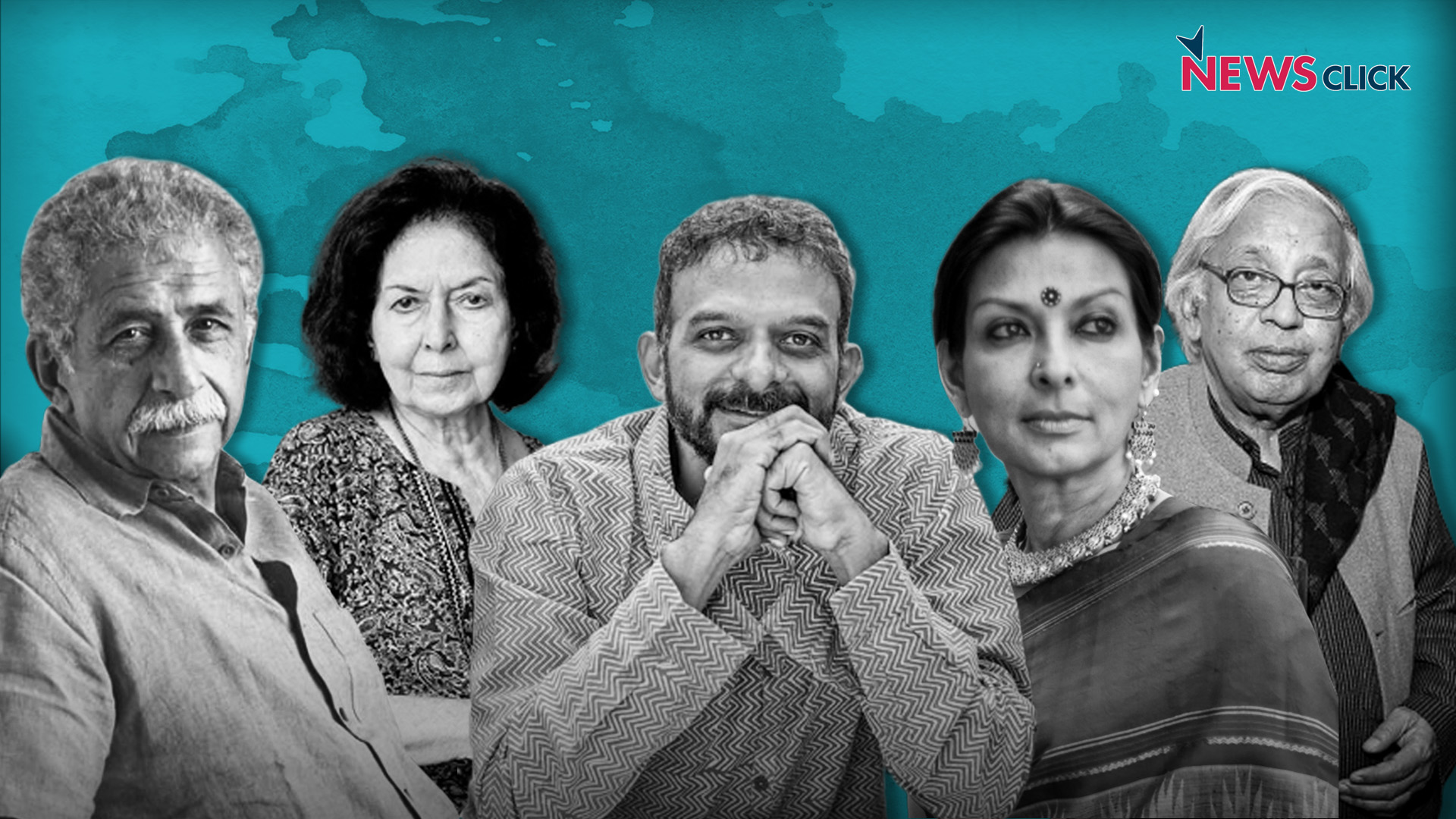
New Delhi: As many as 185 members of Cultural Community, including actor Naseeruddin Shah, dancer Mallika Sarabhai, authors Ashok Vajpeyi, Nayantara Sahgal and Shashi Deshpande, historian Romila Thapar, singer T.M. Krishna, and artist Vivan Sundaram, have endorsed an open letter to Prime Minister Narendra Modi by 49 eminent citizens against mob lynching, and have condemned the FIR against them in Muzaffarpur in Bihar, alleging “sedition” among other charges.

Read the full statement below:

An FIR has been lodged against forty-nine of our colleagues in the cultural community, simply because they performed their duty as respected members of civil society. They wrote an open letter to the Prime Minister, expressing concern about mob lynching in our country.

Can this be called an act of sedition? Or is harassment by misusing the courts a ploy to silence citizens’ voices?

All of us, as members of the Indian cultural community, as citizens of conscience, condemn such harassment. We do more: we endorse every word of the letter our colleagues wrote to the Prime Minister. This is why we share their letter here once again, and appeal to the cultural, academic and legal communities to do the same. This is why more of us will speak every day. Against mob lynching. Against the silencing of people’s voices. Against the misuse of courts to harass citizens.

A Mangai Ira Bhaskar Rajan Gurukkal
Aarti Sethi J Devika Rajashri Dasgupta
Abha Dev Habib Javed Malick Rajendra Chenni
Abhishek Kaicker Jawari Mal Parakh Rajendra Sharma
Abhishek Majumdar Jeet Thayil Rajesh Joshi
Achin Vanaik Jerry Pinto Ranbir Kaleka
Achyutanand Mishra Jyothi A Ranjit Hoskote
Ajitha GS Jyoti Punwani Ravikant
Akeel Bilgrami K Satchidanandan Rekha Awasthi
Amit Bhaduri K Srilata Renu Ramanath
Ammu Joseph Karthik Venkatesh Ritu Menon
Amrita Pande Kavery Nambisan Romila Thapar
Anand Pradhan KG Sankara Pillai Ruchi Chaturvedi
Anand Teltumbde KP Fabian Rukmini Bhaya Nair
Ananya Parikh KP Jayasankar S Raghunandana
Ania Loomba KP Ramanunni Saba Dewan
Anil Janvijay Krishnan Unni P Saba Hasan
Anitha Thampi KS Parthasarathy Sabeena Gadihoke
Anjali Monteiro Kunal Sen Saleem Peeradina
Arun Dev Leela Jacinto Salil Chaturvedi
Arundhati Dhuru MA Baby Salim Yusufji
Arundhati Ghosh Madhu Bhaduri Sandeep Pandey
Arunima Sehgal Madhusree Dutta Sandhya Taksale
Ashok Bhaumik Mallika Sarabhai Sanjeev Kumar
Ashok Vajpeyi Mangad Rathnakaran Saumya Chakrabarti
Ashutosh Kumar Mangalesh Dabral Savithri Rajeevan
Atamjit Singh Manishi Jani SG Vasudev
Ayesha Kidwai Maria Couto Shafey Kidwai
B Rajeevan Maya Rao Shamsul Islam
Badri Raina Merlin Moli Shamya Dasgupta
Bajrang Bihari MMP Singh Shantanu Ray Chaudhuri
Bali singh Moinak Biswas Shashi Deshpande
Balvant Kaur Moloyashree Hashmi Sherna Dastur
Bharat Tiwari Moolchandra Gautam Shoma A Chatterjji
Bhasha Singh MP Pratheesh Siddharth
Bodhisatv Mridula Garg Sonia Jabbar
BRP Bhaskar Mridula Koshy Sreyashi Dastidar
Chaman Lal MV Narayanan Subhasini Ali
Chanchal Chauhan Naina Dayal Subhasis Bandyopadhyay
Chandrakant Patil Nancy Adajania Subodh Varma
Civic Chandran Nandita Narain Sudeshna Sengupta
CK Meena Naseeruddin Shah Sudhanva Deshpande
Damodar Mauzo Natasha Badhwar Sudhir Chandra
Devaki Khanna Nayantara Sahgal Sumangala Damodaran
Devendra Choube Neelan Premji Sunil P Elayidom
Dilip Borkar Neelima Sharma Svati Joshi
EV Ramakrishnan Neeraj Malik Syantani Chatterjee
Faisal Khan Nilanjan Mukhopadhyay Syeda Hameed
Gauhar Raza Nilanjana Bhowmick TM Krishna
Gayatri Spivak NP Chekkutty Udaya Kumar
Geeta Kapur NS Madhavan Vaasanthi Sundaram
Geetanjali Shree Nupur Asher Valay Singh
Girdhar Rathi Pamela Philipose Venkitesh Ramakrishnan
Gita Jayaraj PK Parakkadavu Vibha Maurya
Githa Hariharan PK Pokker Vijay Prashad
Gyan Prakash PN Gopikrishnan Vijaya Venkataraman
Hansda Sowvendra Shekhar Poile Sengupta Vishnu Nagar
Harsh Mander Prabir Purkayastha Vivan Sundaram
Hemlata Mahishwar Pradeep Chakraverti Vivek Narayanan
Himanjali Sankar Pramod Ranjan Yousuf Saeed
Hiralal Rajasthani Purushottam Agrawal Zoya Hasan
Ina Puri Rahman Abbas

Text of open letter written to Prime Minister Modi on 23 July 2019 by 49 eminent citizens, including Aparna Sen, Adoor Gopalakrishnan, Shyam Benegal, Anurag Kashyap, Ashis Nandy and Ramachandra Guha:

We, as peace loving and proud Indians, are deeply concerned about a number of tragic events that have been happening in recent times in our beloved country.

Our Constitution describes India as a secular socialist democratic republic where citizens of all religions, ethnicities, gender and castes are equal. Hence, to ensure that every citizen enjoys the rights given to her/him by the Constitution, our submission is:

1. The lynching of Muslims, Dalits and other minorities must be stopped immediately. We were shocked to learn from the NCRB (National Crime Records Bureau) reports that there have been no less than 840 instances of atrocities against Dalits in the year 2016, and a definite decline in the percentage of convictions.

Further, 254 religious identity-based hate crimes were reported between January 1, 2009, and October 29, 2018, where at least 91 persons were killed and 579 were injured (FactChecker.in database, October 30, 2018). The Citizen’s Religious Hate-Crime Watch recorded that Muslims, (14% of India’s population) were the victims in 62% for cases, and Christians (2% of the population), in 14% cases. About 90% of these attacks were reported after May 2014, when your Government assumed power nationally.

You have criticized such lynchings in Parliament Mr. Prime Minister, but that is not enough! What action has actually been taken against the perpetrators? We strongly feel that such offences should be declared non-bailable, and that exemplary punishment should be meted out swiftly and surely. If life imprisonment without parole can be the sentence in cases of murder, why not for lynchings, which are even more heinous? No citizen should have to live in fear in his/her own country!

Regrettably “Jai Sri Ram” has become a provocative ‘war-cry’ today that leads to law and order problems, and many lynchings take place in its name. It is shocking to see so much violence perpetrated in the name of religion! These are not the Middle Ages! The name of Ram is sacred to many in the majority community of India. As the highest Executive of this country, you must put a stop to the name of Ram being defiled in this manner.

2. There is no democracy without dissent. People should not be branded ‘anti-national’ or ‘urban Naxal’ and incarcerated because of dissent against the Government. Article 19 of the Constitution of India protects freedom of speech and expression of which dissent is an integral part.

Criticising the ruling party does not imply criticising the nation. No ruling party is synonymous with the country where it is in power. It is only one of the political parties of that country. Hence anti-government stands cannot be equated with anti-national sentiments. An open environment where dissent is not crushed, only makes for a stronger nation.

We hope our suggestions will be taken in the spirit that they are meant – as Indians genuinely concerned with, and anxious about, the fate of our nation.



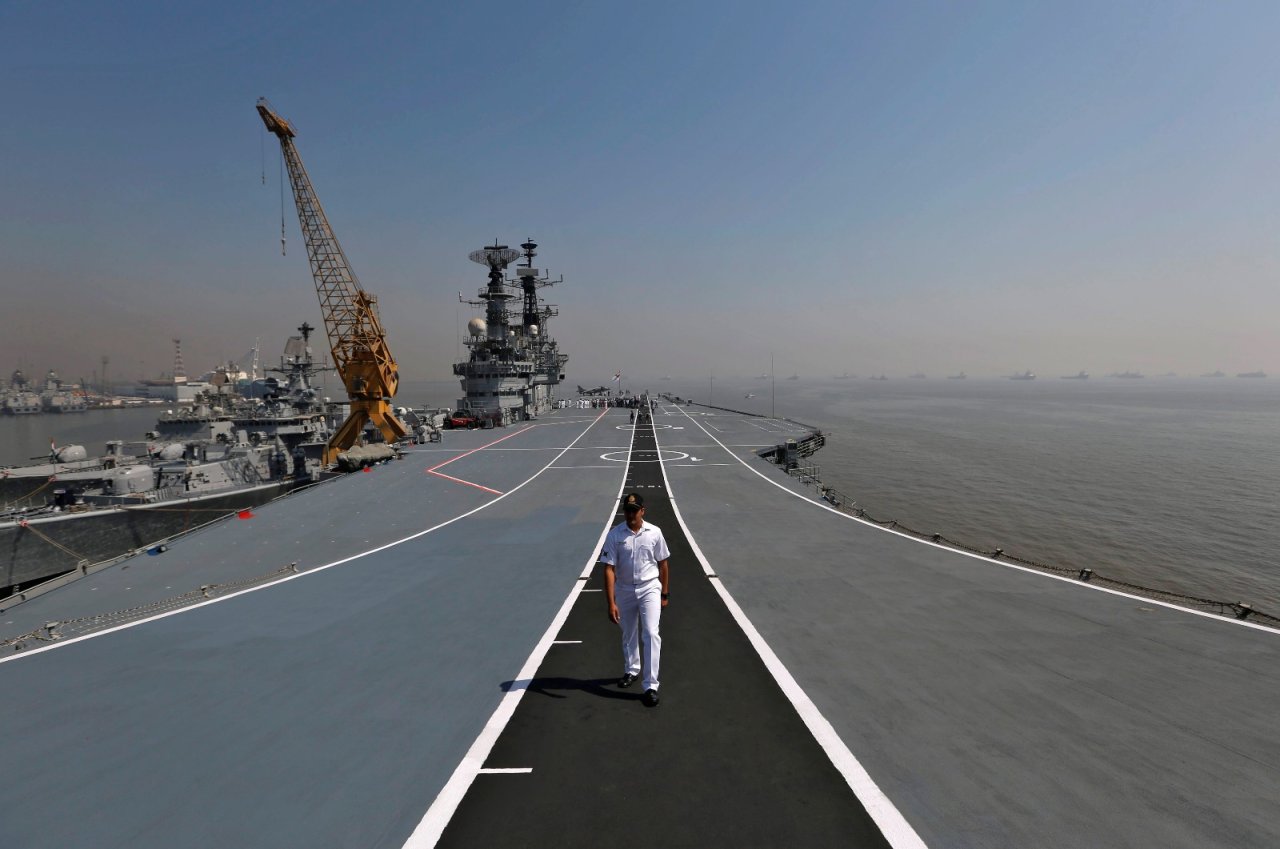
When India’s Aircraft Carrier Caught Fire, China Thought It Knew Why

Key point: Accidents happen to all militaries seeking to operate new equipment

India’s only aircraft carrier suffered a fire that left one sailor dead.

And China, which is India’s rival, says this is because Indians aren’t competent enough to operate advanced military equipment.

The fire broke out in the engine room of the carrier Vikramaditya as it entered the Indian naval base at Karwar on April 26.

The blaze was extinguished, but not before an Indian Navy lieutenant commander, who led the firefighting effort, was overcome by fumes and later died in hospital, according to Indian media. He had gotten married just a month earlier.

 Because of the implementation of the Gregorian calendar, this day is skipped in Italy, Poland, Portugal and Spain.
 The Global War on Terrorism initiates as a result of the September 11 attacks. The U.S. invasion of Afghanistan begins with an air assault and covert ops on the ground.

What Happened Today In History?

The Indian Navy reported that the fire had not seriously damaged the combat capabilities of the vessel, which is India’s only operational carrier. The 45,000-ton Vikramaditya – the ex-Soviet carrier Admiral Gorshkov — had just completed a deployment in the Arabian Sea, and was preparing to begin joint exercises with the French Navy’s only aircraft carrier, the Charles de Gaulle, off the Indian coast.

The cause of the fire has not yet been disclosed. But Chinese media quickly ran a story that suggested the fire was the result of Indian incompetence. Li Jie, a Chinese naval expert, told the state-owned Global Times newspaper “that the fire was more likely to be out of human error rather than mechanical problems. The fire and the extinguishing process suggested that they are unprofessional and unprepared to address such an emergency, he said.”

“India has been actively developing its military in recent years, but ‘its military culture is lax and it has loose regulations,’ which cannot effectively train soldiers to operate advanced military equipment, Li said.”

That criticism comes despite that fact that India has far more experience than China in operating aircraft carriers. India’s first carrier, the Vikrant, a former World War II British carrier, was commissioned in 1961. It performed combat duty in the 1971 India-Pakistan War. China’s first carrier, the Liaoning – the ex-Soviet carrier Varyag – wasn’t commissioned until 2012. It has yet to see action.

 Ironically, both India and China are in the midst of ramping up their carrier fleets. India is completing a new Vikrant, which will be the nation’s first domestically-produced carrier. It has also announced plans to build a 65,000-ton carrier, which might even be based on the Royal Navy’s Queen Elizabeth-class vessels.

China’s first indigenous-produced carrier, a Type 001A vessel, is scheduled to be launched in late 2019. Beijing appears to have far grander ambitions than India, with reports indicating that the People’s Liberation Army Navy may get as many as six new carriers by 2035.

 China’s contempt for Indian technical competence also seems misplaced. In 2003, all 70 sailors aboard the Chinese diesel submarine 361 died, probably because an engine malfunction suffocated them. China’s first nuclear-powered missile submarine was so bad that it only sailed once.

In fact, during the Cold War, it was China that relied on huge armies of infantry armed with old Soviet-designed weapons. India was able to use mechanized forces to win wars against Pakistan in 1965 and 1971. Shocked by the lethality of American smart weapons during the 1991 Persian Gulf War, China has since embraced high-tech warfare, from stealth fighters to hypersonic missiles, with all the zeal of a convert.

The Indian military certainly deserves its share of criticism. It has suffered numerous accidents over the past decade, including a corvette that sank after a collision with a merchant vessel in 2006. Development of new weapons, such as the Arjun tank and the Tejas fighter, has become notorious for delays, cost overruns and technical problems.

But it’s not as if America and Russia haven’t had plenty of naval disasters (the USS Fitzgerald and the submarine Kursk, anyone?), or spent billions on failed weapons. Accidents happen when warships go to sea. Sometimes for the dumbest of reasons, but they happen.

China and India are rivals. And underestimating your enemy is always a mistake.

Michael Peck is a contributing writer for the National Interest. He can be found on Twitter and Facebook. This first appeared in May 2019.


Quitting Army due to ‘harassment’, says jawan briefly captured by Pak

Quitting Army due to 'harassment', says jawan briefly captured by Pak

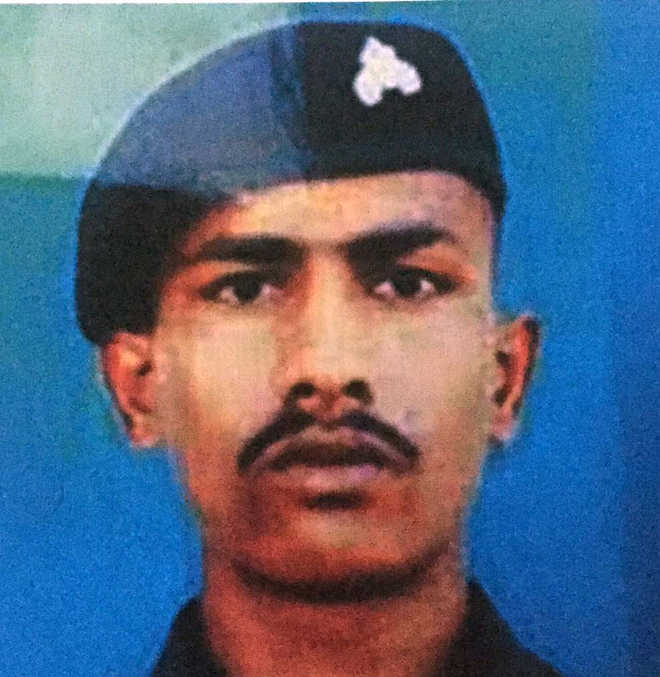
Soldier Chandu Chavan, who inadvertently crossed into Pakistan in 2016, has said he is quitting the Army due to incessant “harassment” in the force.

“Since I came back from Pakistan, I have been continuously harassed in the Army and am being looked at with suspicion, that is why I decided to quit,” he said.

Chavan has sent his resignation letter to his unit commander in Ahmednagar, sources close to him have said.

Chouhan was captured by Pakistan Rangers and for four months, was beaten, tortured and almost killed before being handed over to India.

Last month, he met with an accident and remained admitted in a hospital with deep injuries to his face and skull. Chavan’s four teeth broke and he also sustained abrasion below his eyebrow and left chin, as well as his upper lip.

The accident occurred when he was riding his two-wheeler without a helmet which bumped a pothole near his home town Bohrivir in Dhule district of Maharashtra. — PTI


Blasts reported around Indian Military ammunition depot along Pakistan border

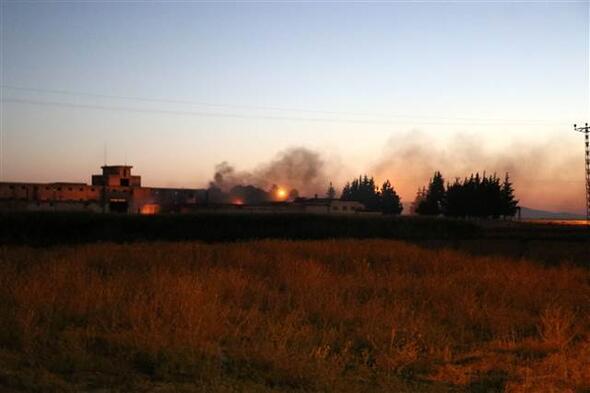
The panic was gripped across Rajasthan’s Jaisalmer district after loud explosions were heard as the Indian Army destroyed its old ordnance last evening.The Indian Army stated, “Old ordnance was being destroyed between 6.30 pm and 7.15 pm at Pokhran area of Thar desert, IANS reported.

Image result for Blasts reported around Indian Military ammunition depot along Pakistan border

The force said it is a routine affair and there was nothing unusual about it. As the sound of the blasts reached across the border, the Pakistan security forces were put on alert.

People in the vicinity came out of their homes in panic as the window panes rattled due to the impact of the five or more blasts.


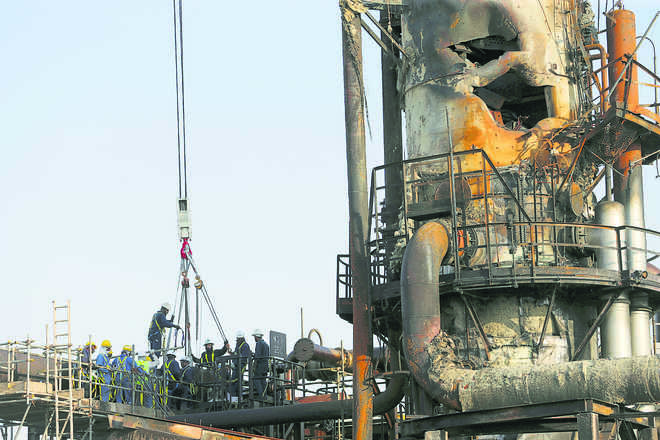
Strikes on oil facilities fuel Gulf tensions Maj Gen Ashok K Mehta (retd)

What are the lessons from the lethal strikes on Saudi oil facilities that were forecast and war-gamed in 2012? Sanctions alone will not alter the Iranian regime’s behaviour. The failure of a kinetic response in May/June has emboldened the Iranian Revolutionary Guard to step up the attacks.

Strikes on oil facilities fuel Gulf tensions

Vulnerable: The Saudi regime can’t defend itself despite a military budget of $68 bn.

Maj Gen Ashok K Mehta (retd)
Military commentator

ON September 14, I was in Muscat (Oman) when the Abqaiq refinery and the Khurais oilfield in Saudi Arabia were struck by drones/missiles that reduced Saudi Aramco’s daily oil production by half. One week later, I returned to Muscat to take stock of the devastating aerial strikes that sent oil prices soaring for major importers of Saudi light crude like Japan, South Korea, China and India and assess its strategic impact in the region. In February 2012, I had attended the annual strategic conference at the Interdisciplinary Centre, Herzliya (Israel), where a terrorist strike on oil facilities in Abqaiq was simulated and counter-measures recommended, which obviously went unheeded.

The geography of the region, viewed from Oman, is breathtaking: the Strait of Hormuz sits at the north-western edge of the Gulf of Oman as it enters the Persian Gulf that divides, rather sandwiches Saudi Arabia between Iran to the north and Yemen to the south. The United Arab Emirates, Qatar and Bahrain girdle the western reaches of the Persian Gulf. The rest of the Middle East — Iraq, Syria, Jordan and Israel — straddles the mighty Euphrates river and the Mediterranean Sea. The Hormuz Strait is a choke point for the movement of oil tankers and shipping in the Persian Gulf via the Gulf of Oman into the Arabian Sea, accounting for 20 per cent of the world’s oil.

Iran-backed Houthi rebels claimed the September 14 aerial strikes with a swarm of 17 missiles and drones that dodged the Saudi air defence network and knocked out 5 per cent of the world’s oil supply of 5.7 million barrels of crude a day. This was a big blow for Saudi Aramco just when  Prince Abdulaziz bin Salman, son of King Salman and older half-brother of Prince Mohammad bin Salman, had taken over as Energy Minister, the first time any royal had taken charge of the country’s crown jewels. Aramco claims it has restored half of the lost output and hopes for full restoration by October 14. The stunning success of the not-unexpected precision strikes has unnerved the Saudis, their US allies and other Gulf monarchies in the region. They have unanimously blamed Iran for an act of war, though President Trump has not named the country he despises the most. Saudi Foreign Minister Adel al Jubeir confirmed the source of the attack as ‘not from Yemen but from the north’. Meanwhile, Houthi rebels, in an act of magnanimity, announced a halt to all attacks — drones, missiles and other means — in Saudi Arabia as part of a peace initiative five years after capturing Yemen’s capital Sanaa.Mark Esper, US Defence Secretary, had immediately ordered additional deployment of US troops in Saudi Arabia, including defensive air and missile systems. Trump took to Twitter to declare (on September 14) that our response is “locked and loaded” but “under what terms we will proceed to protect the Saudis, we will have to work out,” adding that “we’d like to avoid war.” Trump’s last five words summed up the US policy on the aerial strikes and the limits to US power. The Trump doctrine, in essence, amounts to bluff and bluster. On May 4, there were four unclaimed attacks on tankers — two Saudi, one Norwegian and one Emirati — transiting the Strait of Hormuz. There was no US response despite noises in the White House that Iran was behind the attacks. Similarly, in June, two more oil tankers were attacked by suspected Iranian patrol boats. Also in June, a $130-million US drone, Global Hawk, was downed over Iran. In July, Iran seized a British ship when British marines tried to stop an Iranian oil tanker. The US was conspicuously inactive during these depredations except in ratcheting up sanctions against Iran and its leaders.

Meanwhile, after Tehran’s latest alleged act of war, Commander of the Iranian Revolutionary Guard (IRG), Gen Hossein Salami, warned that any country that attacks Iran will become the main battlefield. Tehran displayed remnants of the RQ4-Global Hawk drone that was downed in June, the RQ170 Sentinel drone captured intact in 2011 and the Khordad3 air defence battery which had shot down the RQ4. In addition to threats of retaliation and cyberattacks, the US upped the ante with still new sanctions on Iran and targeting a critical funding mechanism that Iran uses to finance its terrorists including the Qods force — its foreign operational arm. Tehran said US cumulative sanctions would block Iranian access to food and medicine and denied that the cyberattacks on September 14 had disrupted its oil flow.What are the lessons from the lethal strikes on Saudi oil facilities in 2019 that were forecast and war-gamed in 2012? That sanctions alone will not alter the Iranian regime’s behaviour. The failure of a kinetic response in May/June has emboldened the IRG to step up attacks. In case of US punitive strikes — once evidence is available that the source is Iran — Tehran will hit back at Saudi Arabia, Bahrain, the UAE and target US troops in Syria and Afghanistan. Clearly, the Saudi regime cannot defend itself despite a massive military budget of $68 billion (more than India’s) and the deployment of US Patriot3 and THAAD air defence systems. Ironically, Russia jumped in, offering its S400 ordered by Turkey, China and India.

On September 25, President Rouhani was unrepentant and defiant at the UN even as a US-led international group to protect navigation in the Gulf was revamped. Gen Joseph Dunford, Chief of Joint Chiefs of Staff, has said: “All options have been presented to Commander-in-Chief Trump,” adding that “it is a political judgement not for the military to decide.” Strategic choices are located between inaction and escalation. For Trump, in testing times, discretion seems to be the better part of valour.


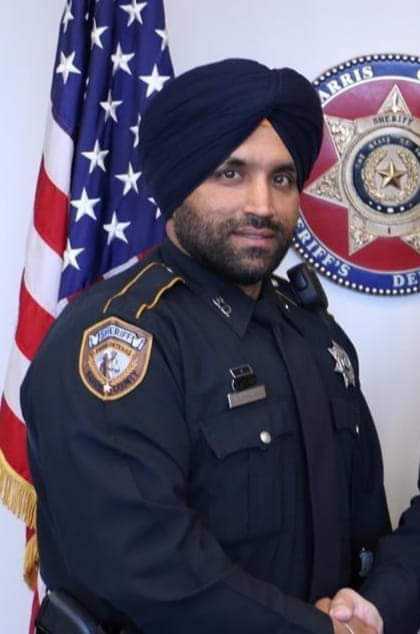
Sikh police officer killed in line of duty in Houston, US

Sikh police officer killed in line of duty in Houston, US

An Indian-American Sikh police officer died after being shot multiple times from behind in a “ruthless, cold-blooded way” during a traffic stop in the US state of Texas, a senior official said Saturday.

Sandeep Singh Dhaliwal, Harris County Sheriff’s deputy, was shot while conducting a traffic stop, Sheriff Ed Gonzalez said.

Dhaliwal, who was in his early 40s, was the first police officer in Texas to serve while keeping his Sikh articles of faith, including a turban and beard.Gonzalez said Dhaliwal, a 10-year veteran of the department, stopped a vehicle with a man and woman inside and one of them got out and shot him “ambush-style” at least twice in a “ruthless, cold-blooded way.”  The shooter was seen running to a shopping centre nearby, officials said.

Investigators were able to identify what the shooter looked like by watching Dhaliwal’s dashcam video.

“They immediately looked at his dashcam to see what the suspect looked like, they took a photo of the suspect on the scene with their phone and immediately got that out to our intel people,” Gonzalez said.

The vehicle the shooter was driving was found and is being investigated, officials said.

The gunman and the woman were taken into custody, they said.

Dhaliwal was married and a father of three children.

“Deputy Sandeep Dhaliwal was a trailblazer. He was an example for many. He represented his community with respect and pride,” said Commissioner Adrian Garcia.


“Deputy Dhaliwal is known to everybody as someone with a giving heart,” Gonzalez said.  “Post (Hurricane) Harvey, when we needed the help most, he brought an 18-wheeler of people that he gathered together, that came all the way from California to deliver goods to our community.”

Since 2015, Dhaliwal was the “history-making” police officer in Texas to serve while keeping his Sikh articles of faith. He was allowed to wear the turban and beard while patrolling the streets in order to bolster cultural diversity.

With this policy, one of the largest sheriff’s offices in the country had affirmed that a person does not have to choose between their faith and a career of service. Since 9/11, misperceptions about Sikhs’ religiously mandated turbans and beards have led to an increase in discrimination against the community.

Policy changes like that at the Harris County Sheriff Office and other law enforcement agencies across the country aim to combat this stigma while also giving qualified men and women a chance to serve the community.

Dhaliwal worked with United Sikhs, a global humanitarian relief and advocacy nonprofit, to help organize the donation of truckloads of supplies for first responders after Harvey. – PTI


Lockheed to begin supplying F-16 wings from Indian plant in 2020

Lockheed to begin supplying F-16 wings from Indian plant in 2020

NEW DELHI: Lockheed Martin will begin supplying wings for its F-16 combat jets from a facility in southern India from next year, a senior executive said on Thursday.

Lockheed is bidding for a contract, estimated at more than $15 billion, to supply the Indian Air Force with 114 combat planes and has offered to shift its F-16 production line from the United States to India. It plans to build an upgraded version of the aircraft which it calls F-21.

Read more at:
//economictimes.indiatimes.com/articleshow/71323403.cms?from=mdr&utm_source=contentofinterest&utm_medium=text&utm_campaign=cppst


PRESS RELEASE : 19 SEPTEMBER 2019 LT COL MP DESHPANDE FELICITATED


During the recently held ex – servicemen’s rally at Nagpur, Lt Col MP Deshpande (Retd) was felicitated by Shri Ashwin Mudgal IAS Collector and District Magistrate Nagpur for his contribution towards motivating and guiding the youth to join the armed forces of India. Since 2007, Lt Col MP Deshpande of ‘The Forces Foundation’ assisted by his wife Mrs Sphurti Deshpande are committed to train the armed forces aspirants and more than 250 candidates groomed by them have cleared various entrance exams and SSB Interviews for various military academies. During the rally held on 16 September 2019, Shri Ashwin Mudgal shared his memorable experiences while undergoing attachment training with the Army formations in Arunachal Pradesh and lauded the contributions of ex – servicemen towards the betterment of society