Sanjha Morcha

What’s New

Click the heading to open detailed news

Current Events :

web counter

Print Media Reproduced Defence Related News

IAF to focus on indigenous production of fifth-gen jets

http://

Ajay Banerjee
Tribune News Service
New Delhi, October 4

Indian Air Force Chief Air Chief Marshal Rakesh Kumar Singh Bhadauria on Thursday laid out a major indigenous plan to include quick induction of more versions of Tejas and backed a  fifth generation fighter jet of the DRDO, ruling out its import.

The new IAF Chief, who took over on September 30, said, “We are putting in all efforts on AMCA (Advanced Medium Combat Aircraft)”.

The AMCA is a fifth generation jet which the DRDO is making.

On whether the option of fifth generation jets like those with Russia or other countries was being explored, he said “no”.

He was addressing a media conference ahead of the Air Force Day on October 8.

The new IAF Chief, who was a Tejas test pilot during the days of sanctions imposed by the US in 1998, said the order for the 83 Tejas Mark 1A jets will be placed soon. These will carry a more powerful engine along with better weaponry than the Tejas Mark 1.

The cost negotiation committee will soon give its report, he said, adding that if the Tejas Mark 2, also known as the medium weight fighter, is ready in a few years, IAF will induct that.  The process for 114 fighter jets is on, he said while dismissing questions on 36 more Rafale being purchased.

“Indigenisation and modernisation will be the key pillars”, Air Chief Marshal Bhadauria said.

“We have to ensure that indigenous products remain the focus and we will work to reduce dependency on foreign equipment,” he said, adding the new air-to-air missile Astra and BrahMos on the list.

On the fighter fleet, he said steps have been initiated to add 21 more MiG 29.

The Sukhoi 30 will be upgraded as the IAF has initiated the process. The Mi17 and Mi17-IV class of helicopters is being upgraded.

On being asked about the Mi17 crash at Budgam on February 27, he said the court of inquiry has been completed.

Two officers will face disciplinary action. The victims will be treated as battle casualty. “It was big mistake. Necessary steps taken to ensure that it’s not repeated,” he said. The copter had been shot by own missile.

On the threat of drones dropping arms in Punjab, the IAF Chief said, “It’s a new threat and it’s serious. We have some procurement in pipeline to will deal with such drones”.
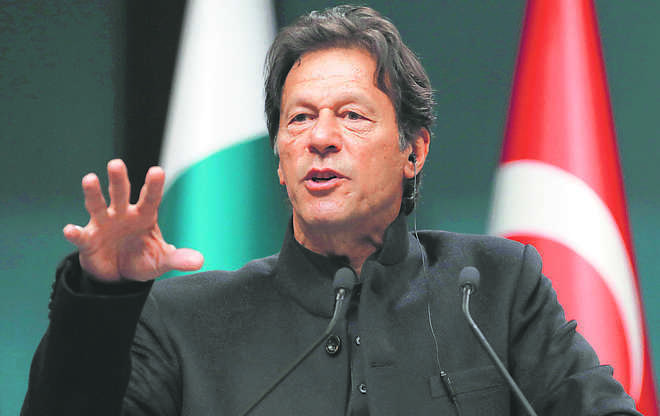
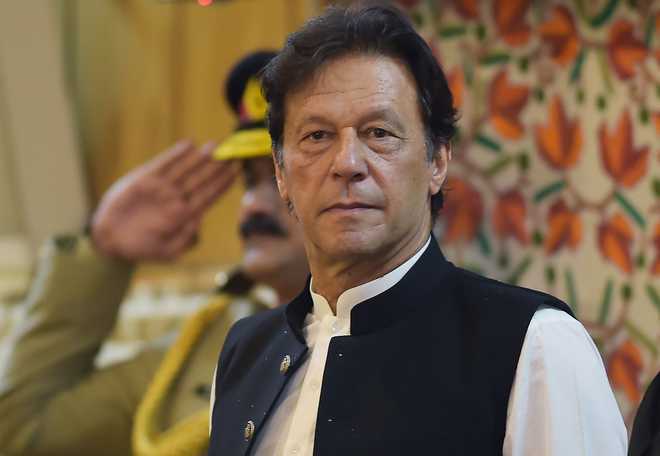
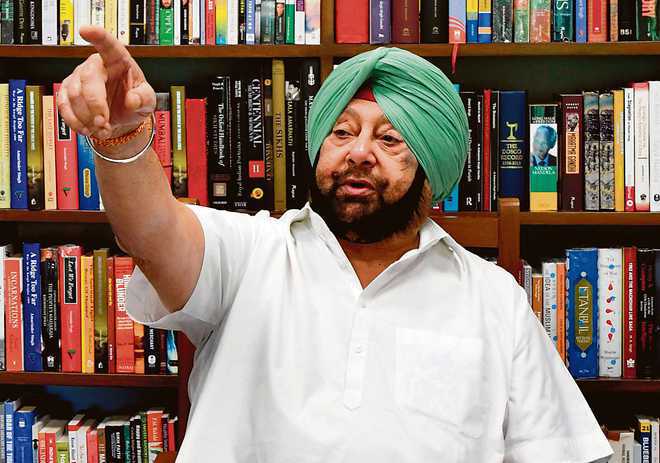
Unbecoming of office Imran Khan holds: India on Pak PM’s ‘jihad’ call

Unbecoming of office Imran Khan holds: India on Pak PM's 'jihad' call

File photo of Imran Khan.

New Delhi, October 4

India on Friday condemned the “provocative and irresponsible” statements against it by Pakistani Prime Minister Imran Khan over abrogation of provisions of Article 370 and said he is unaware of how international relations are conducted.

Ministry of External Affairs spokesperson Raveesh Kumar said the comments made by Khan do not behove the post he holds.

Kumar was responding to a question on the call for a march from Pakistan-occupied Kashmir to the Line of Control, which has been backed by Pakistan’s military, to protest India’s move.

Also read: India criticises Malaysia, Turkey for statements on Kashmir

Entire neighbourhood, minus one, has been a good story: Jaishankar

At a rally held last month, Khan said he knew that majority of the youth in PoK wanted to stage the march to the LoC. However, he asked them to defer it until he fought the case at the UN General Assembly.

“This is not the first time that such statements have come from Pakistan. Pakistan’s Prime Minister holds a high constitutional office. He has given such statements even before. You have heard his statements even in the UNGA… such provocative and irresponsible language he has used. We condemn this,” Kumar said.

In his maiden speech at the UNGA last month, Khan raised the Kashmir issue and demanded that India must lift the “inhuman curfew” in Kashmir and release all “political prisoners”.

Khan devoted half of his address to the Kashmir issue, warning that if there’s face-off between two nuclear-armed neighbours, the consequences would be far beyond their borders.

“I think he is not unaware of how international relations are conducted. On that basis, he gives such statements. He had given an open call for jihad against India. This is not a normal behaviour,” Kumar said.

“We have been saying that Pakistan and its leaders should behave like a normal neighbouring country. They usually do not do that. We don’t expect that but sometimes we do that since we are neighbours. As far as their call of violating some other country’s territorial integrity is concerned, it does not behove the office he holds,” he said.

On Pakistan’s claim of 58 nations backing it on Kashmir, Kumar said it has not been able to produce the list of the nations.

“Sometimes, they kind of make up the number, which they did. When people are asking them to show the list, they do not have it,” the spokesperson said.

Ties between India and Pakistan came under severe strain after New Delhi abrogated provisions of Article 370 of the Constitution on August 5 to withdraw Jammu and Kashmir’s special status, and bifurcated it into two union territories.

Pakistan reacted angrily to the move and expelled the Indian envoy. Since then, Pakistan has been trying to rally international support against India on the issue.

India also launched a diplomatic outreach to apprise major countries about its decisions on Jammu and Kashmir. PTI


Imran and the J-word J&K is merely a rant to keep the religious war going

Imran and the J-word

From being a heartthrob of millions of cricket-lovers across the Indian subcontinent, Imran Khan has overnight metamorphosed into a medieval mullah. Worse, his cry for jihad against India now puts him in the league of Osama bin Laden and Mullah Omar. For, after 9/11 no head of government or serious statesman has ever used the J-word so casually and callously as Imran Khan did on Sunday, after returning from his failed mission to rake muck at the United Nations General Assembly against India over the abrogation of Article 370 of the Indian Constitution. Strangely, while proclaiming a religious war against India, Imran elevated his third wife Bushra Bibi to the status of his nation, thanking both in the same breath for their fervent prayers when he was away in New York.

Imran seems to have lapsed into religion after his hysterical threats of a nuclear war elicited derisive laughter in the world capitals. Even Pakistan’s greatest ally China has merely gone through the motions without adding any substance to formal posturing. Only the United Kingdom, the original Pakistan patron, seems to have extended the hospitality of its capital city to hold anti-India rallies and to break the windowpanes of the Indian High Commission. This cannot be a source of consolation for Imran or his masters — the Pakistan deep state comprising the military-intelligence network.

Yet, it is of great import to understand the reasons behind the jihad cry. Was it Imran, nervous of losing the army’s support and scared of being made a scapegoat, appealing to the religious extremists within and without the army? Or, was he merely lip-synching the army prompters as he has done so far? If the latter is the case, the world should sit up and take note. India has been at the receiving end of an interminable jihad since Jinnah’s Direct Action day on August 16, 1946, when he declared that he would have ‘either a divided India or a destroyed India’. Jinnah’s successors want to divide and destroy India over and over again. J&K is a mere ruse; it’s a jihad Pakistan wants.


Amarinder condemns killing of Indian-American Sikh police officer in US

Amarinder condemns killing of Indian-American Sikh police officer in US

Chandigarh, September 28

Punjab Chief Minister Capt Amarinder Singh on Saturday condemned the killing of an Indian-American Sikh police officer in the US State of Texas.

Sandeep Singh Dhaliwal, who made headlines in the US when he was allowed to grow a beard and wear a turban on the job, was shot and killed in an “ambush-style” attack in a “ruthless, cold-blooded way”, a senior official of Harris County said on Saturday.

“Deeply anguished to learn the ruthless killing of Deputy Sheriff of Harris County, Sandeep Singh Dhaliwal. He represented the Sikh community with pride and was the first turbaned police officer of America. My condolences to his family. RIP,” the CM tweeted.

Dhaliwal, who was in his early 40s, was the first police officer in Texas to serve while keeping his Sikh articles of faith, including a turban and beard. PTI


At least 8 drone sorties target Jammu and Kashmir as Pak-based groups airdrop weapons

Some of the weapons dropped into India.

At least eight drone sorties, carrying a total of 80 kg of weapons (arms and ammunition), were sent across the border into Punjab by Pakistan-based Khalistani terror groups between September 9 and 16, officials in security agencies and the Punjab Police have confirmed on condition of anonymity.

The entire consignment, using the Khalistan Zindabad Force (KZF) network, was supported by Pakistan’s spy agency Inter Services Intelligence and orchestrated through Germany and Lahore; the ultimate aim — to fuel terror attacks in Jammu & Kashmir.

The details of these drops have emerged following investigations that led to and following the September 22 weapons seizure at Tarn Taran district; the eight payloads were dropped in Amritsar and Tarn Taran.

Police recover a half-burnt drone that was used for smuggling weapons into Punjab from Pakistan.

Police recover a half-burnt drone that was used for smuggling weapons into Punjab from Pakistan. ( Photo: Special arrangement )

Five people have so far been arrested by Punjab Police in connection with the drone drops, with one 22-year-old Subhdeep held on Tuesday. Investigators said he was from Amritsar district and was radicalised by the prime accused in the case, Mann Singh, and another accused, Akashdeep, in Amritsar jail. The other four people, suspected to belong to a terror module, were arrested from the outskirts of village Chohla Sahib in Tarn Taran on Sunday. They were using a white Maruti Swift with a Punjab registration number.

The investigation involved multiple agencies – the Punjab Police, central security agencies, the Border Security Force, the Indian Air Force – and prima facie found that multiple Chinese commercial drones with 10 kg payloads have been used in the weapons drop operations across the border. The drones, the investigation reveals, may have been launched from locations 2 km inside Pakistan and made to travel the distance of five kilometres at a height of 2,000 feet, and then dropped off the weapons after descending to 1200 ft. The payload was slung from the platform using Chinese mountaineering ropes.

With drone activity also being seen in Punjab’s Ferozepur district, the IAF and BSF have been asked by the Punjab police to intercept these unmanned aerial vehicles through low-level radars and destroy them. Officials fear that they could also be used to carry and drop off bombs.

The interrogation of those arrested has revealed that KZF’s Germany-based operative Gurmeet Singh Bagga in coordination with his Pakistan-based chief Ranjeet Singh aka Neeta have made deliveries of at least four weapons, grenades, electronics, and fake currency through drones. The deliveries were made on the intervening nights of September 6/7, 9/10 and the last one on 15/16. The last drone crashed at Rajoke Village, Khalra police station, in Tarn Taran, near a border drain which is 2km from the fencing on the international border with Pakistan. The entire operation came to light after the discovery of the burnt drone, whose eight Chinese batteries were stripped off by the accused on instructions from across the border. “ It has also been revealed that such deliveries took place on four different dates, mostly between 9.30 pm and 10.30 pm with the drone making two sorties within an hour,” said a senior Punjab Police official. As many as five AK-47 rifles, which weigh about four kilograms with magazine, four Chinese pistols , nine HE grenades, ₹10 lakh fake currency, 1000 rounds of ammunition and two electronic receivers were recovered by the police from the accused.

The main concern of Indian security agencies is the revelation that entire consignment was meant for Islamist groups in Kashmir. “ We are not very clear as to how many other consignment has made their way into Kashmir using similar modus operandi and with the help of Pakistan based Sikh terrorists,” said a senior security official.

clip


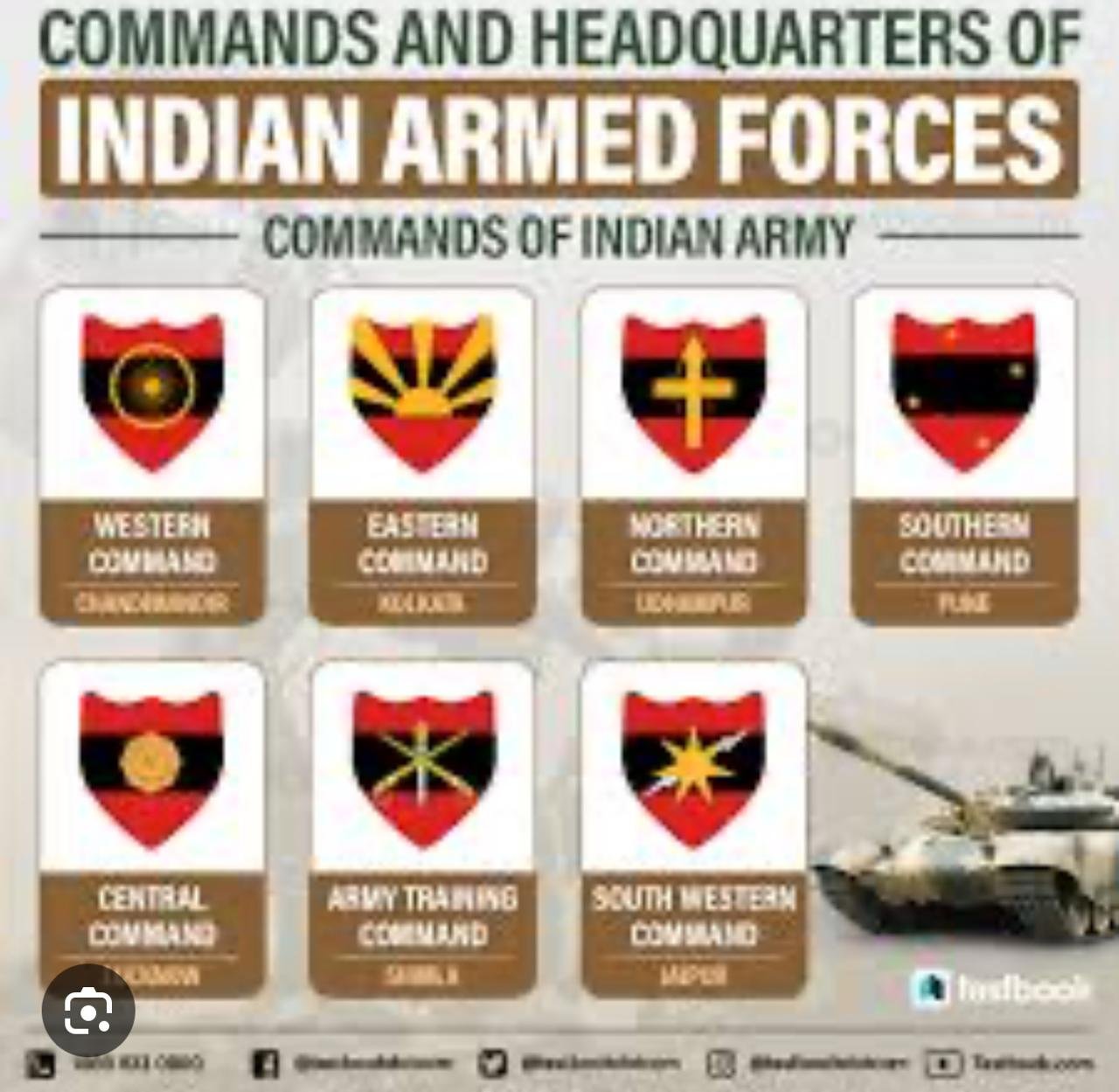
Northern Command chief visits Valley, reviews security situation

Northern Command chief visits Valley, reviews security situation

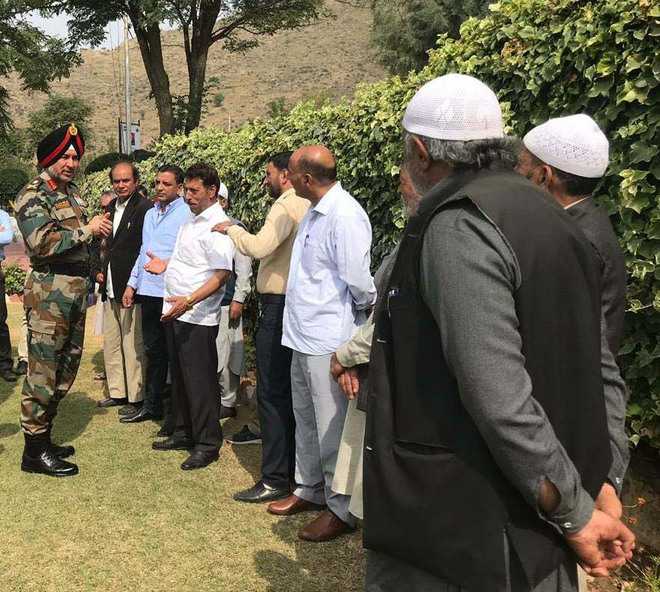
Lt-Gen Ranbir Singh, GOC-in-C, Northern Command, interacts with locals in Kashmir. Tribune photo

Our Correspondent

Jammu, September 20

To review the prevailing security situation, Lt-Gen Ranbir Singh, General Officer Commanding-in-Chief, Northern Command, visited the Kashmir valley on Friday.

The General was accompanied by Chinar Corps Commander, Lt Gen KJS Dhillon who visited formations and units in the hinterland and Line of Control (LoC). He was briefed on the counter-terrorist operations undertaken in the hinterland and the measures taken by the Commanders on ground to ensure safety and well-being of the people.

He was apprised of the atrocities being committed by the terrorists against innocent civilians. He also interacted with people from all walks of life and took a firsthand review of the prevailing situation in the valley and on the Line of Control.

The Army Commander was briefed by the Commanders on ground about the counter infiltration grid and the befitting response being given to the enemy on ceasefire violations. The Army commander lauded the alertness, bravery and motivation of the troops in discharging their duties.

He also commended the exemplary synergy among all security forces and the civil administration.He reinforced the need to be fully prepared to defeat the enemy designs.


War is won in the mind by Lt Gen Raj Kadyan (Retd)

Lt Gen Raj Kadyan (Retd)

I had developed a sore eye during the course of the war. After the ceasefire, I decided to consult a doctor. Since our medical facilities hadn’t yet been set up, I went to the Pakistani military hospital in Dacca on December 18, 1971.

The Registrar, a Punjabi Major, was genial and friendly. As I was waiting for the ophthalmologist to be free, he ordered tea and we engaged in general conversation. On learning that I too hailed from erstwhile Punjab (now Haryana), and that my father had a gallantry award land grant in Montgomery, Pakistan, he seemed to warm up even more. Our conversation covered the usual military topics: accommodation, schooling, salaries, etc. Conspicuously, there was no talk of the war. Assuming that he wanted to avoid the embarrassment of the vanquished, and conscious of the universal admiration the victorious Indian Army had since acquired, I too kept away from the subject.

When the ophthalmologist got free, the Registrar gave me a ‘see you later’ handshake and sent a staff member to guide me to the department. He had already told the doctor on telephone that he was sending a special case.The eye specialist was more serious. He was also a thorough professional. After peeping into my eye with a pencil beam and having made me read wall charts through different lens combinations, he luckily found nothing more serious than an infection. Handing me a bottle of eye drops, he said reassuringly that my eye would be perfectly fine. Just to lighten the atmosphere, I jokingly said, “Thank you doctor, whenever we fight next, I will be able to shoot better.” But the humour failed to elicit any change in his somewhat wooden demeanour.

The telephone connection to India had reportedly been established. On return to the Registrar’s office, I asked him to book a call to Delhi, which he promptly did. I waited and further conversation followed, now also covering a larger canvas about our respective countries. Still there was no talk of war.

Soon it was time for lunch. Their officers’ mess had closed and the food was to come from the ‘langar’ — the soldiers’ cook house. All other doctors also assembled in his office and the Registrar made introductions. They customarily thanked me for accepting their invitation to join them for lunch. The menu comprised large and thin roomali rotis and some delicious dal. The conversation flow was easy, with the Registrar being the lead talker.

It was now past 2:30 pm. There seemed no chance of the call materialising. The Registrar had enquired from the operator in the interim to learn that the call was still in queue. I thanked my hosts and got up to leave. It was then that the Registrar first spoke of war. There was no bitterness or rancour and the words seemed to come deep down from his heart.

“Major Sahib,” he said in a matter-of-fact manner without being squeamish, “we are doctors and none of us fought at the front. We, therefore, do not know who won and who lost.” He looked around at others, who nodded in agreement. “But seeing the behaviour of the Indian Army, I have no doubt that we have lost the war.”

He gave me a warm parting hug.

I was reminded of the truism — while battles are won or lost fighting through minefields and barbed wire entanglements, a war is won in the mind.


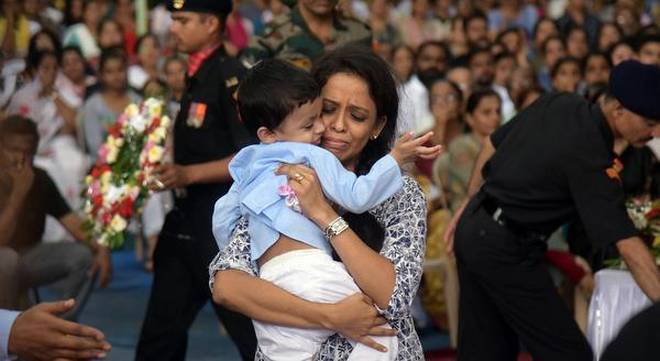
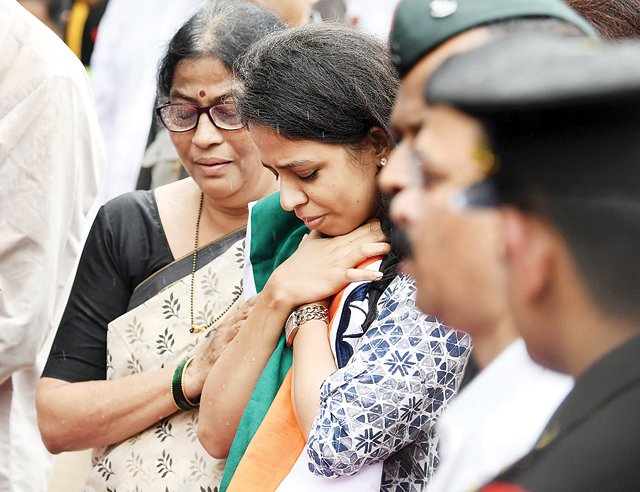
One Year After Her Husband Was Martyred, Kanika Rane Is Now Set To Join Indian Army

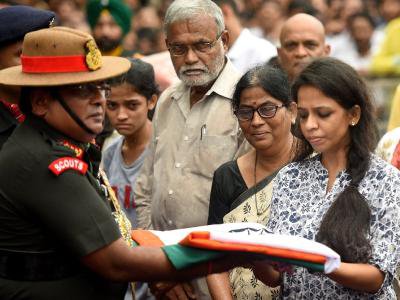
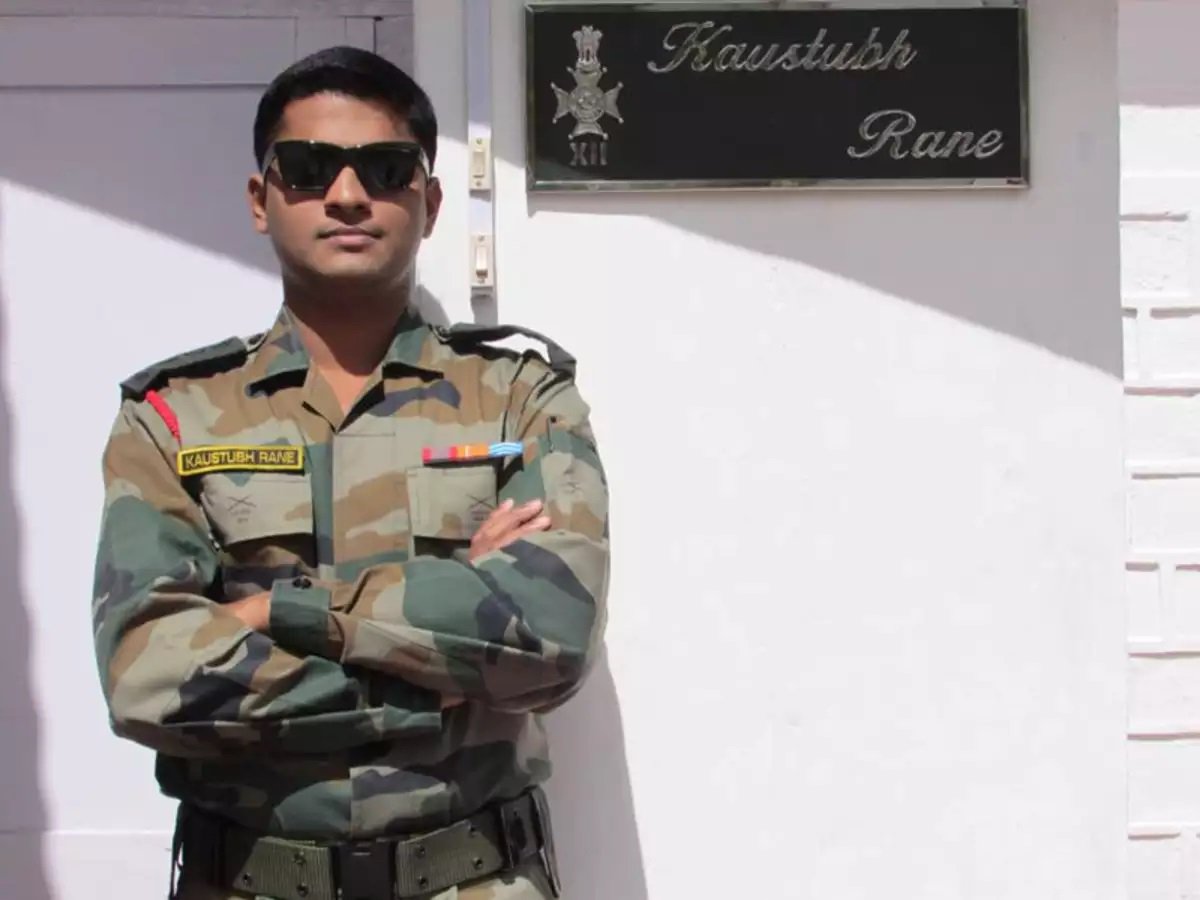
Major Kaustubh was one of the 4 soldiers who got martyred in an attack by the infiltrators in Kashmir’s Bandipora district last year.

While the infiltrators couldn’t implement what they had set out to do, 4 brave officers including Major Kaustubh lost their lives in the process of stopping them.

Source: Times of India

Showing great spirit, his wife Kanika has decided to join the Army and will begin training at the National Defence Academy (NDA) soon. She has already cleared the Service Selection Board exam and once her training period is over, she will be serving the nation exactly like her husband.

Source: The Hindu

Talking to Mirror Now, Kanika said that it was her husband who taught her to face life’s challenges boldly.

Kaustubh used to say that if life pushes you down, you always have the harness to pull yourself back.

Source: DNA

A project manager until few months ago, Kanika is ready to turn her life around and we salute her for that.


The costs of Narendra Modi’s morality governance paradigm

The policies for a nearly $3 trillion economy cannot be based on good versus evil storytelling

Don’t let people game the system, deal with tax evaders firmly” is what the finance minister, Nirmala Sitharaman, supposedly told the income tax department on July 25, soon after she presented the Union Budget in Parliament. The finance minister has set a lofty target of a 23.3% increase in income tax revenues for financial year 2020, compared to a meagre 7% growth in the current year. In other words, Sitharaman wants income tax revenues for the next year to grow three times faster than it did this year. Hence, the putative pep talk to income tax officers.

AFP■ The purported suicide note of VG Siddhartha is a grim reminder of the devastating impact that an aggressive tax revenue targeting policy can unleash on our economy and societyThe premise behind this policy goal is flawed, and disturbing. The tone and tenor of the finance minister’s budget this year is symptomatic of a larger and deeper malaise of a “morality governance” paradigm that is threatening to derail our society and economy, as seen in the recent tragic suicide of the founder of the successful Café Coffee Day business, VG Siddhartha.

There is a “good versus evil” framework that defines economic policymaking of the Narendra Modi government. The playbook seems to be to portray an “evil”, then position oneself or a policy as the “good”, to kill and triumph over this “evil”.

It started with the demonetisation policy in November 2016 that constructed a false narrative of an “evil” of millions of Indians, hoarding illegal cash in their homes, and under their

pillows. The PM’s demonetisation idea was supposed to be the “good” that will destroy and triumph over this “evil” of black money hoarders. It did not matter to the government that evidence pointed to the fact that hoarded black money was typically not stored in cash. It did not also matter that eliminating 86% of all currency was bound to impact hundreds of millions of innocent others who did not possess any black money. All that mattered was the popular narrative that the government was fighting a “good versus evil” battle.
Similarly, the fundamental economic idea behind the Goods and Services Tax (GST) was to ease bottlenecks for inter-state trade and boost commerce. Instead, the Modi government once again applied its morality governance paradigm, and turned GST into a narrative of the “good” (GST) that will destroy and triumph over the “evil” of informal businesses that remain outside the tax net. The GST initiative was recast as a policy aimed at demolishing the evil informal businesses that evaded taxes, and formalise them into the mainstream economy. Again, it did not matter to the government that economic history tells us that no major country has set out to explicitly formalise its economy as a stated goal, and formalisation is an inevitable outcome of economic development. The net result of this was a botched-up GST, with a messy structure and harassment of small businesses, portrayed as the villains. This crushed the economy, which is still reeling under these twin shocks of demonetisation and a messy GST.

The latest in this playbook is the underlying tone of the recent budget presented by Sitharaman. The prevalent notion that India has a vast population of tax evaders is unfounded and baseless. Individuals earning less than ₹5 lakh a year need not pay income tax, as per the latest income tax slabs and exemptions. Going by India’s income distribution, less than 10% earn more than ~5 lakh a year. In other words, 90% of Indians are anyway legally exempt from having to pay income tax. India’s income tax exemption limit for its level of per capita Gross Domestic Product is among the highest in the world, and it is one big reason why the percentage of Indians that pay income taxes is very low. While there surely are income tax evaders, it is not the case that a vast majority of Indians evade tax, and need to be dealt with “firmly”, as it is made out to be.

But in the morality governance paradigm of this government, there is this big “evil” of hundreds of millions of tax evaders, and the government is apparently fighting this evil through aggressive tax scrutiny and collections. Like demonetisation and GST, this belligerent tax collection policy is fundamentally flawed in its premise. At a time when business confidence is low, the finance minister’s license to the income tax department to go after imaginary tax evaders, and extort sacks of tax revenues, will paralyse business activity and destabilise the economy even further. The purported suicide note of Siddhartha, alluding to the pressure he faced from the income tax department, is a grim reminder of the devastating impact that an aggressive tax revenue targeting policy can unleash on our economy and society.

Ostensibly, commentators may argue that this morality governance paradigm of portraying the PM and his government as the “good” triumphing over the “evil” of the nation has reaped rich electoral dividends for the ruling party, regardless of its economic consequences. Electoral victories aside, I hope that the Modi government will also appreciate that economic policy for our nearly $3 trillion economy needs careful thought and analysis, and cannot be based on some whimsical “hero versus villain” or “good versus evil” morality storytelling.