









































Read More: https://www.ssbcrack.com/2025/05/ndas-first-batch-of-women-cadets-set-to-graduate-marking-historic-milestone-in-armed-forces.html


Current Events :







Read More: https://www.ssbcrack.com/2025/05/ndas-first-batch-of-women-cadets-set-to-graduate-marking-historic-milestone-in-armed-forces.html
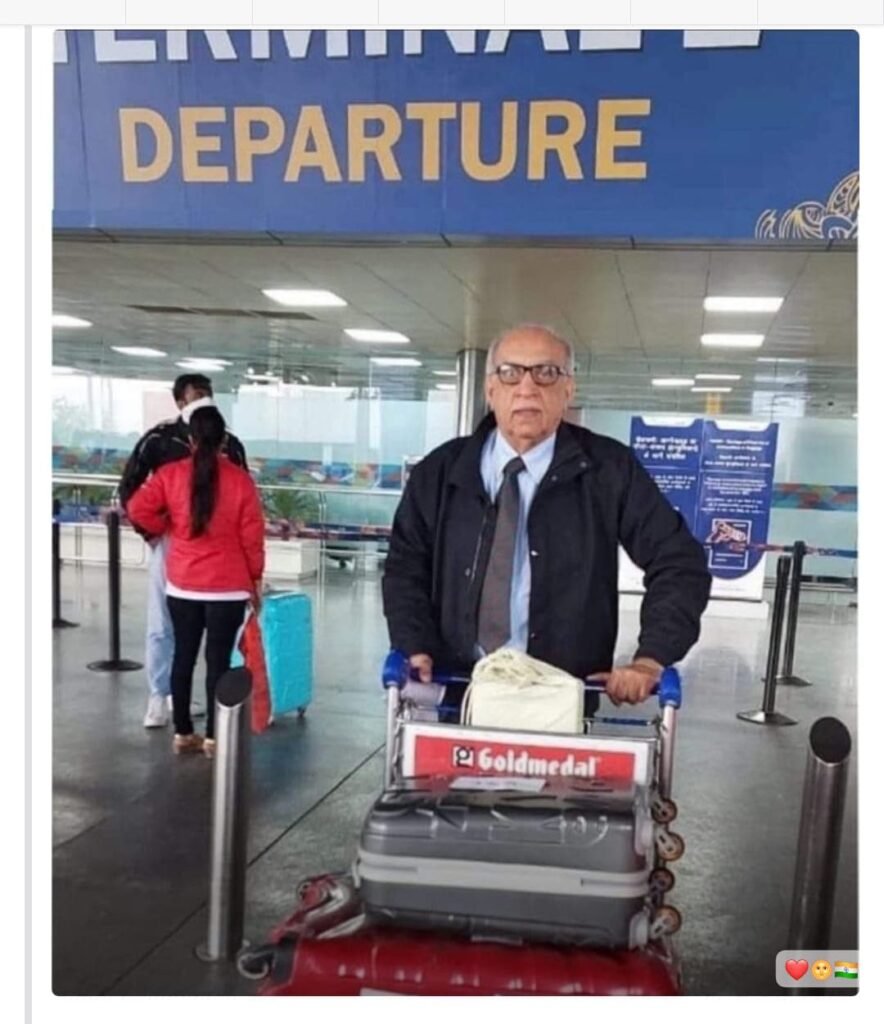
Every Year, He Walks Into the Land Where His Son Never Returned…
At IGI Airport, a humble figure waits quietly in line at the departure gate. Not for a vacation. Not for a business trip.But for an emotional pilgrimage.
Col. Virender Thapar is on his way to Drass, near Kargil — a journey he makes every single year.
It’s the final resting place of his 22-year-old son, Lt. Vijyant Thapar, who laid down his life during the 1999 Kargil War.Before his final mission, Lt. Vijyant wrote a heart-wrenching letter to his parents, asking his father to one day visit the place where he and his fellow soldiers stood their ground… and fell.
Col. Thapar has honoured that promise — every year, without fail.
No cameras. No headlines. Just a father keeping a promise to a son… and to his nation.This is not just a story of war.It’s a story of love, duty, and the unbreakable bond between a soldier and his family.
May we never forget their sacrifice. 🙏🏻
The Indian military leadership were together in an Army ops room-type facility in the South Block watching the strikes unfold live
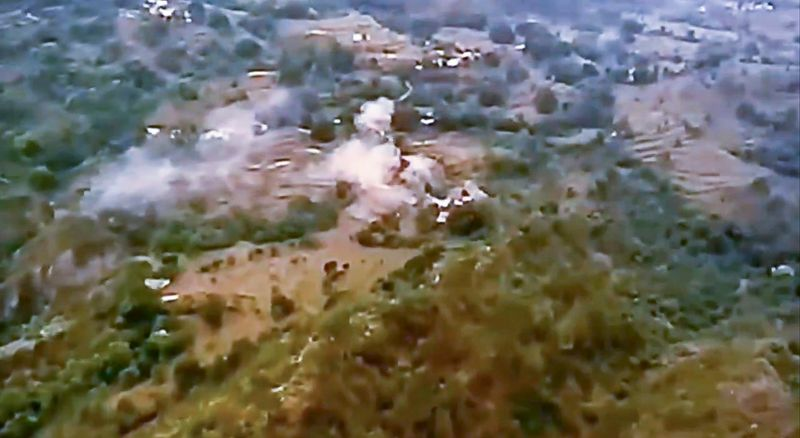
Indian Army’s internal newsletter has shared details of Operation Sindoor and how the operation was being monitored live by the three service chiefs as well as the Chief of Defence Staff General, Anil Chauhan.
The Indian military leadership were together in an Army ops room-type facility in the South Block watching the strikes unfold live. The latest edition of the Army’s newsletter ‘Baatcheet’ focuses on Operation Sindoor and has pictures of the senior military leadership watching the live-feed on giant TV screens in front of them.
Chief of Defence Staff Gen Anil Chauhan, Army chief Gen Upendra Dwivedi, IAF chief Air Chief Marshal AP Singh, Navy Chief Admiral Dinesh Tripathi, Army Vice Chief Lt Gen NS Raja Subramani and Director General Military Operations Lt Gen Rajiv Ghai were among those present.
The Army commanders of Northern Command, Western Command, South Western command and Southern Command joined in live through a secured data link.
The unique facility in South Block gets live transmission from multiple systems like satellites, drones and airborne sensors. Some of the missiles fired on May 7 at terror camps have the ability to relay back the video from its nose-tip during its flight.
The newsletter also mentioned that Army air defence had destroyed nearly 300 incoming Pakistani drones using L-70, ZU-23 guns, OSA-AK combat vehicles, and MRSAM (Medium-Range Surface-to-Air Missile) and Akash air defence systems.
The newsletter also names the creators of the Operation Sindoor logo — Lt Col Harish Gupta and Havildar Surinder Singh.
The Army newsletter stated that The Resistance Front (TRF) was a front of the Lashkar-e-Taiba (LeT) along with the ‘Kashmir Fight’ and the United Liberation Front Kashmir. It added that Kashmir Tigers and People’s Anti-Fascist Front are frontal organisations of the Jaish-e-Mohammad (JeM).
Advertisement
Also lauded the industry for developing products that demonstrated India’s defence preparedness during Op Sindoor

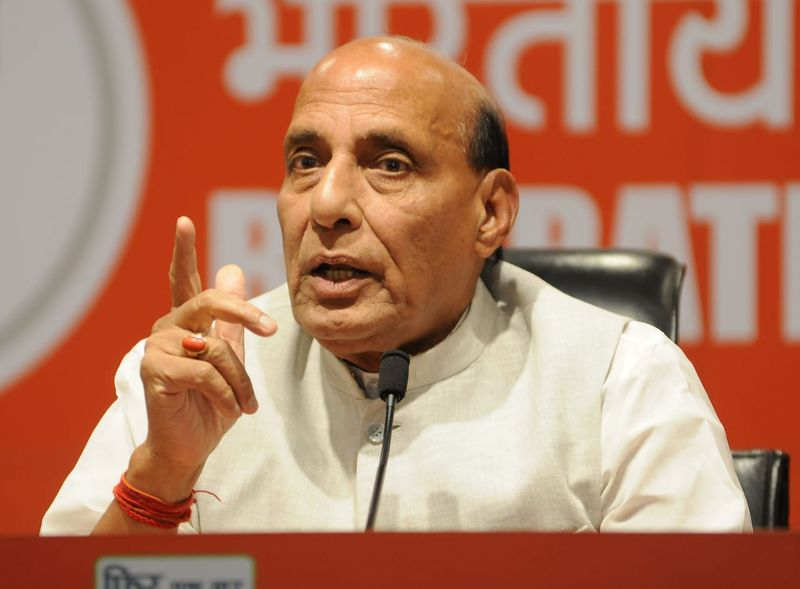
Defence Minister Rajnath Singh today conducted a review of the performance of eight public sector undertakings (PSUs) controlled by the Defence Ministry.
A statement of the ministry said that Singh, citing the prevailing geopolitical scenario and the recent developments with Pakistan, directed the PSU’s to enhance their production with latest technologies focusing more on research and development.
He lauded the industry for developing products that demonstrated India’s defence preparedness during Operation Sindoor.
d, “The government remains committed to strengthening the defence industrial base and enhancing the competitiveness of the defence public sector undertakings (DPSUs).”
At the meeting, Secretary Defence Production Sanjeev Kumar presented the growth statistics of the industry and the PSUs. The value of defence production is poised to be more than Rs 1,40,000 crore for Financial Year 2024-25 and out of this, around 78 per cent would be contributed by PSUs, he added.
The meeting was attended by Hindustan Aeronautics Limited (HAL), Mazagon Dock Shipbuilders Limited (MDL), Bharat Electronics Limited, Bharat Dynamics Limited, Mishra Dhatu Nigam Limited (MIDHANI), Garden Reach Shipbuilders and Engineers Limited (GRSE), Goa Shipyard Limited (GSL) and BEML Limited.
The companies also paid and interim dividend on equity shares held by the government for Rs 2,138 crore for the Financial Year 2024-25.
Maoist commander killed in Jharkhand
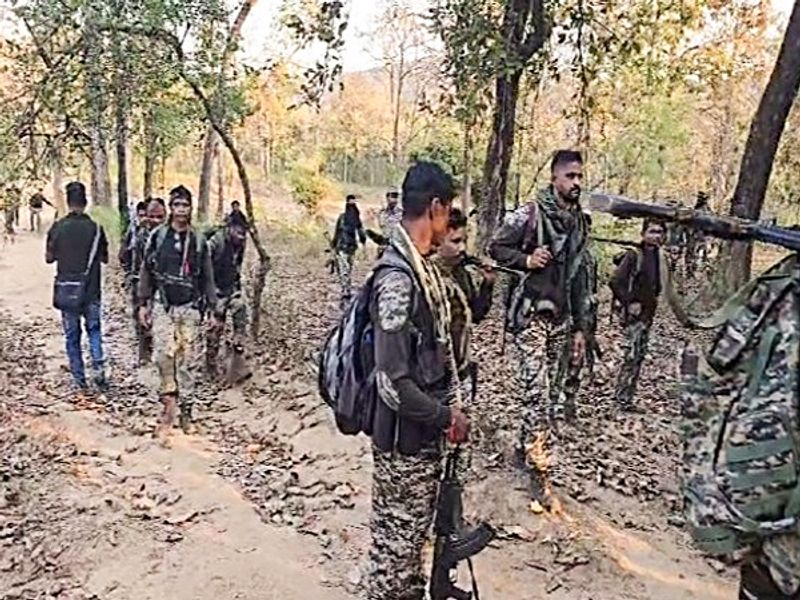
Days after Operation Black Forest and the Abujhmad encounter, where top Naxal commander Nambala Keshava Rao was killed, 18 Naxalites on Tuesday surrendered before the security forces in Chhattisgarh’s Sukma district.
The state police said of these, 10 carried a cumulative bounty of Rs 38 lakh. The cadres turned themselves in before the senior police and the CRPF officials, citing disappointment with “hollow” and “inhuman” Maoist ideology and atrocities by militants on local tribals, Sukma SP Kiran Chavan said during a media interaction.
They said they were also impressed by the state government’s ‘Niyad Nellanar’ (‘Your Good Village’) initiative, which is aimed at facilitating development works in remote villages and the new surrender and rehabilitation policy.
Chavan further said the surrendered Naxalites, Madkam Aayta (25), a platoon party committee member in Maoists’s PLGA battalion No. 1 and Bhaskar (alias Bhogam Lakhha) (26), a party member in the same battalion, carried a reward of Rs 8 lakh each.
Madkam Kamlu (25) and Laxman (alias Madvi Chhannu) (28), both area committee members of Maoists, carried a reward of Rs 5 lakh each, while six others had a bounty of Rs 2 lakh each.
The Naxalites, who have surrendered, were provided an assistance of Rs 50,000 each and would be further rehabilitated as per the government’s policy, the Sukma SP said further.
Last year, 792 Naxalites had surrendered in the Bastar region, which comprised seven districts, including Sukma. The development comes less than a week after the May 21 Abujhmad encounter, in which Basavaraju, the general secretary of the banned Communist Party of India (Maoist), was killed.
Earlier, during the three-week Operation Black Forest, the security forces killed 31 ultras, half of them women, after attacking their base on the Karreguttalu Hills in Chhattisgarh’s Bijapur district.
Meanwhile, a commander of the banned CPI (Maoist) was killed in a gunfight with security forces in Jharkhand’s Palamu district, a senior police official said on Tuesday.
Another red rebel, carrying a bounty of Rs 15 lakh, has also been injured in the encounter. Several weapons, including a self-loading rifle, were recovered during the search operation after the gunfight.
Farmer Mark Kappa was enjoying his first hot drink in three days as he waited patiently for his meal in front of a food truck run by a Sikh charity, after incessant rain in Australia’s southeast cut off towns and…
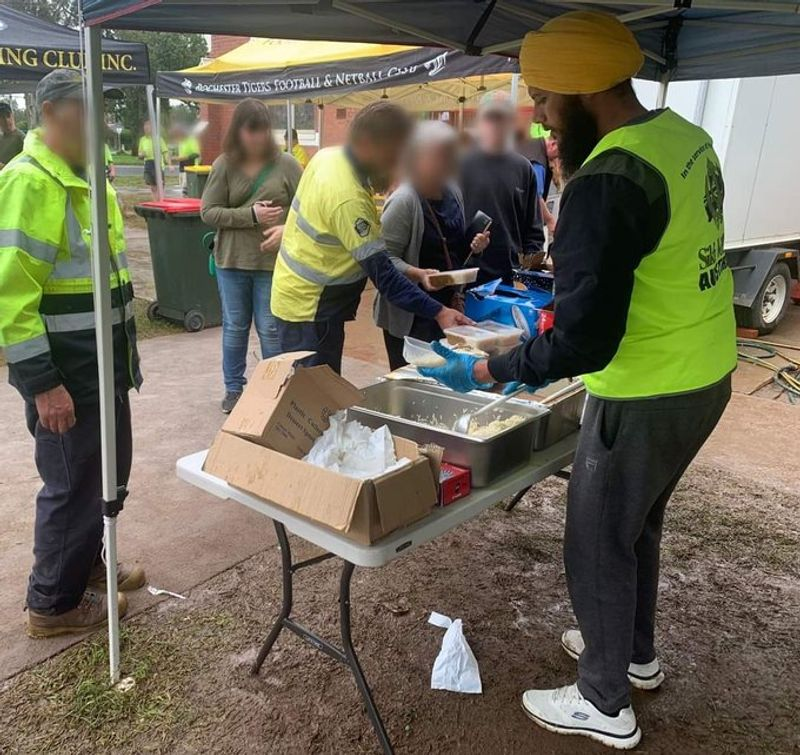
Farmer Mark Kappa was enjoying his first hot drink in three days as he waited patiently for his meal in front of a food truck run by a Sikh charity, after incessant rain in Australia’s southeast cut off towns and forced thousands to evacuate their homes.
Melbourne-based Sikh Volunteers Australia travelled nearly 1,200 km (746 miles) to the rural town of Taree in New South Wales, one of the worst-hit from last week’s floods in Australia’s most populous state, to set up their mobile kitchen in the parking area of a hardware store.
“They said about 20 minutes or so, I’ll tuck in then,” Kappa said as the volunteers prepared pasta, rice and vegetarian curry.
More than 50,000 people in the Hunter and Mid North coast regions of New South Wales, around 300 km (186 miles) north of Sydney, were isolated last week after fast-rising waters burst river banks, destroyed homes and washed away roads.
Five deaths have been linked to the floods.
“We’ve had no power for three days out at the farm. We lost our milk. We lost everything,” Kappa said.
After serving almost 3,000 fresh meals over the last three days, Sikh Volunteers Australia head Jaswinder Singh said: “In times of disasters, I’ve seen the spirit of the Australians come even better, closer to each other … so that’s a good thing. That has a very positive impact.”
Despite the small space available, the charity has been distributing food neatly packed in small boxes.
“To be able to know that you can turn up and just get some food is – it’s just heart-warming,” said Ashari Hudson, who was picking up food for a friend hit by floods.
The Sikh volunteers have provided free food since 2017 during several crises, including bush fires and floods. Australia has been hit with increasing extreme weather events that some experts say are the result of climate change. Following droughts and devastating bushfires at the end of last decade, frequent floods have wreaked havoc since early 2021.
Following the launch of Operation Sindoor after the killing of 26 people in Pahalgam, the Army has now intensified its search for terrorists suspected to be hiding deep within the forested areas of the Jammu division. The primary focus of…

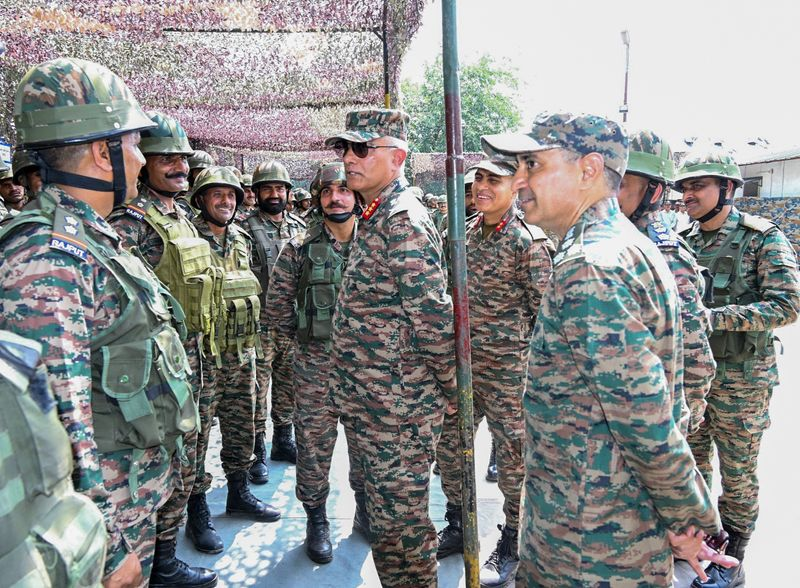
Following the launch of Operation Sindoor after the killing of 26 people in Pahalgam, the Army has now intensified its search for terrorists suspected to be hiding deep within the forested areas of the Jammu division.
The primary focus of the search is Kathua district, from where it is suspected that terrorists infiltrate from the International Border (IB) and then use traditional routes to reach Doda, Kishtwar, Udhampur and other parts of the region.
Notably, the Army has deployed two brigades and established a mobile network in the remote areas of the Billawar region in Kathua. This move is expected to not only provide enhanced security to the local population but also enable better surveillance and communication in far-flung areas through improved connectivity.
Union Minister Jitendra Singh, during his visit to Jammu, said that one brigade had been deployed at Sarthal, while another had been stationed in the Rampur township of Billawar. “This will not only provide round-the-clock Army surveillance in the area but the Army personnel will also maintain regular liaison with the civil administration, with the Brigadier and the District Magistrate concerned constantly being in touch with each other,” the Minister said.
The decision to bolster Army presence came after intelligence agencies revealed that terrorists were able to reach the mountainous areas via the dense forests of Kathua. Soldiers will now closely monitor these jungles, through which traditional infiltration routes meander.
Terrorists often take shelter in natural caves and ‘dhoks’ (temporary nomadic shelters), frequently shifting their locations to avoid detection.
On Sunday, the General Officer Commanding (GOC) of the Rising Star Corps also visited the border areas of Jammu to assess operational preparedness and interacted with troops of the Tiger Division.
Sources in the intelligence community have indicated that under the revised strategy, terrorists hiding in forest areas will be tracked and neutralised. “It is believed that there are multiple groups of Pakistani-trained ultras who are hiding in different districts of Jammu division. The estimates are that there might be 35-40 terrorists hiding in the forests and are being helped by Over Ground Workers (OGWs),” sources said.
Multiple intelligence sources further confirmed that efforts are underway to plug infiltration points along the IB, while also securing civilian populations in the hinterland. “Earlier, most of the attacks were limited to security forces, but it is now suspected that Pakistani terrorists might attempt attacks on civilians. This makes it essential to ensure the safety of areas, particularly those with Hindu populations,” said sources.
With terrorist movements detected in various areas of Kathua district, security forces are also focusing on safeguarding areas inhabited by significant Hindu communities. During the Pahalgam attack in Kashmir on April 22, tourists were reportedly targeted by terrorists after being asked about their religious identity.
In addition to the Army, the J&K Police have also deployed personnel from the Special Operations Group (SOG) in vulnerable areas.
Senior Superintendent of Police (SSP) Doda, Sandeep Mehta, visited the Bhaderwah area on Saturday to review the security situation. There have been inputs suggesting terrorist movement in the region over the past three to four days. Locals, during an interaction with the SSP, requested regular training to enhance their preparedness and response capabilities in the event of counter-insurgency operations.
Stresses on continued vigil and jointness to address the evolving threats
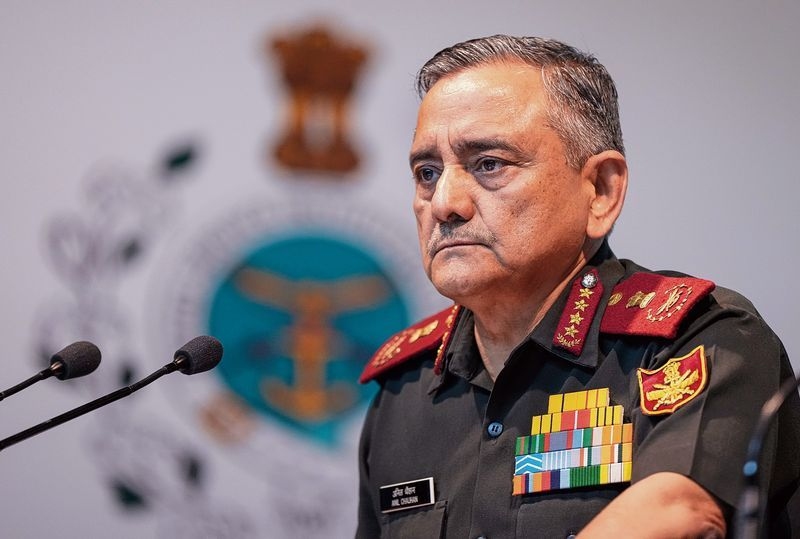
Chief of Defence Staff (CDS), General Anil Chauhan visited the Indian Army’s Northern and Western Commands on Sunday to conduct a strategic review and operational assessment post-‘Operation Sindoor’.
During his interaction with the senior officers of these two commands, who were actively involved in the planning and execution of the operation, the CDS stressed on continued vigil and jointness across the Services to address the evolving threats.
At the Headquarters Western Command in Chandimandir, he was given a comprehensive brief on the kinetic and non-kinetic punitive response during Operation Sindoor by the General Officer Commanding-in-Chief, Lt Gen Manoj Kumar Katiyar.
A detailed overview of the operational environment, defence preparedness and key outcomes of the operation were provided, while underscoring the prevailing security situation along the Western borders.
Inputs on technological infusion and enhanced logistics capability, contributing to high operational efficiency, real-time situational awareness, strengthening the military capability of the Western Army were also highlighted.
The CDS was also given an insight into veterans’ welfare and medicare facilities extended to serving and retired personnel.
At Udhampur, the CDS was briefed by the GOC-in-C, Northern Command, Lt Gen Pratik Sharma, on the success of the Northern Army in neutralising the terror network, adversary’s assets that supported terror and counter measures taken to protect own military assets and civil population during Operation Sindoor.
He was apprised about the efforts by the Northern Army in the rehabilitation of the civilians of the border areas who were targeted by the adversary.
The Northern Army Commander gave an update on the continued operational and logistics preparedness of the Northern Command and assured the CDS of its commitment in protecting the borders, while also launching an all-out effort to eradicate terrorism in Jammu and Kashmir.
General Chauhan acknowledged the operational excellence achieved by the field formations responsible for the Northern and Western borders in Jammu and Kashmir and Punjab, and commended the overall synergy and timely accomplishment of operational tasks under challenging conditions.
Chief of Defence Staff (CDS) General Anil Chauhan on Sunday visited the Army’s Northern Command at Udhampur, where he interacted with senior Army officers. He met the General Officer Commanding (GOC) of Northern Command, Lieutenant General Pratik Sharma, who was…
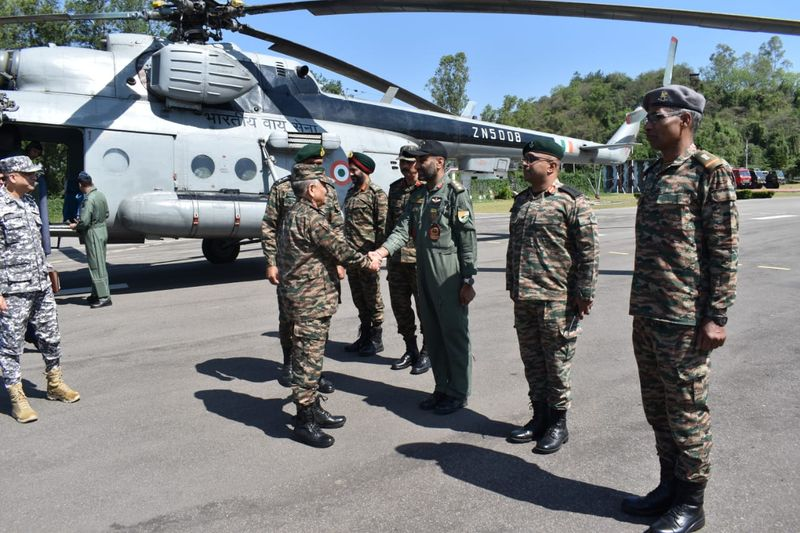
Chief of Defence Staff (CDS) General Anil Chauhan on Sunday visited the Army’s Northern Command at Udhampur, where he interacted with senior Army officers.
He met the General Officer Commanding (GOC) of Northern Command, Lieutenant General Pratik Sharma, who was actively involved in the planning and execution of Operation Sindoor.
He also visited Western Command at Chandimandir Military Station, Haryana. The CDS conducted a strategic review and operational assessment in the Northern and Western theatres during the visit.
At Udhampur, the CDS was briefed on the Northern Army’s success in neutralising the terror network, dismantling adversary’s assets that supported terrorism, and implementing counter measures to protect military’s assets and civil population during Operation Sindoor. He was also informed about the efforts by the Northern Army to rehabilitate civilians in border areas who were targeted by the adversary.
An official spokesperson said “The Northern Army Commander gave an update on the continued operational and logistics preparedness of the Northern Army and assured the CDS of its commitment in protecting the borders, while also launching an all-out effort to eradicate terrorism in J&K”.
General Anil Chauhan paid tribute to the bravehearts who made the supreme sacrifice in the line of duty during Operation Sindoor, lauding the valour, resolve, precision and discipline of all ranks. He acknowledged the operational excellence achieved by the field formations responsible for the Northern and Western borders in J&K and Punjab.
The CDS commended the overall synergy and timely execution of operational tasks under challenging conditions. He emphasised the importance of continued vigilance, jointness and synergy across the services to address evolving threats. He exhorted them to render a helping hand in the rehabilitation of the civilians who were targeted by the adversary.


























































