Sanjha Morcha

What’s New

Click the heading to open detailed news

Current Events :

web counter

Print Media Reproduced Defence Related News

No sudden changes in armed forces’ promotion policies: MoD

Vijay Mohan

Tribune News Service

Chandigarh, November 22

In an effort to cut litigation and heartburn arising out of sudden changes being brought about in the existing promotion policies, the Ministry of Defence (MoD) has decided to introduce a “sufficient” time lag between issuance of the new policy and its effective date of implementation.(Follow The Tribune on Facebook; and Twitter @thetribunechd)According to sources, suitable instructions may be issued for fixing a minimum intervening period in consultation with service headquarters in this regard.

Defence Minister Manohar Parrikar had approved some of the recommendations put forth by a committee instituted to suggest ways to reduce litigation in the armed forces and improve service conditions, sources said.The five-member committee had in its report observed that many controversies in promotion matters have arisen due to sudden changes in time-tested policies or promulgation of amendments without giving time to the environment to absorb such changes, thereby resulting in shifting of goalposts for affected officers. This has led not only led to litigation but also in discomfort amongst some cadres and a perception that the change may have been tailor-made to help out particular individuals or a section of officers.Citing judgments of the Supreme Court and the High Courts, the committee had observed that there would be personnel who would have worked towards their aspirations in a certain manner by taking career decisions based on a particular policy, but if the said policy is suddenly changed, then it would amount to shifting of goalposts, a situation that is not allowed as per the law

.Averring that many-a-time perceptional differences have crept into the interpretation of policies because of the services headquarters and the MoD not being on the same grid, the committee said the non-approval of certain important aspects of policy by the MoD had also led to greater litigation.Recommending that changes in the promotion policy of all services to only be brought about after a due analysis and scientific study and after seeking inputs of the environment, the committee had suggested that all major promotion related policies or changes thereon be endorsed by both the services headquarters as well as the MoD before implementation.

‘Time lag’ for smooth implementation

  • The Ministry of Defence has decided to introduce a “sufficient” time lag, which could be up to 18 months, between issuance of the new policy and its effective date of implementation
  • The time lag is aimed to check any undue advantage or disadvantage to officers in the immediate promotion zone and also give the environment time to absorb and understand changes

No, Generals Do Not Want To Corner Disability Claims; Here’s The Complete Picture

No, Generals Do Not Want To Corner Disability Claims; Here’s The Complete Picture 

SNAPSHOT

A letter written by a retired Director General of the Armed Forces Medical Services in 2014 is doing the rounds in media circles, and the insinuation is that retired Generals of the forces are wrongly claiming disability benefits.

That is blatantly wrong. Here’s the complete picture.

It was bewildering to see the circulation of a letter purportedly written in 2014 by the then Director General Armed Forces Medical Services (DGAFMS) to the Defence Secretary insinuating that Generals of the Army were wrongly claiming disability benefits for personal gain. Of course it got wide coverage, and amongst others, the following points were raised in the said communication:

  • Generals present themselves with disabilities at the fag end of their careers and doctors working in hospitals under their command find themselves constrained to oblige “these officers”.
  • The provision of post-discharge claims is being misused for claiming benefits for disabilities such as corns, eczema and hearing loss.
  • That Generals should be examined at a central place and not under establishments under their command.
  • That disability pension claims should be decided two years prior to retirement and tax benefits should be abrogated.
  • Concept of a disability arising in a peace area or field should be done away with and any disability occurring in any area should be taken as connected with service and entitling a person to disability benefits.

One by one, let me attempt to clear this muddle:

Generals presenting themselves with disabilities at the fag end of their careers and doctors obliging them

The DGAFMS should have known that medical science is not mathematics wherein disabilities can be controlled or planned. Generals retire at the age of 58 onwards and the likelihood of incurring certain disabilities is higher at such an age profile and merely because a person attains a higher rank cannot be considered a disqualification from flow of benefits entitled under the rules. The rules do not discriminate between a Sepoy or a General and even this author is personally aware of many instances wherein senior officers developed diseases towards retirement, including Coronary Heart Disease, Ischemic Heart Disease necessitating angioplasty and even open heart surgery, and also back problems.

So, is the DGAFMS implying that a senior rank shields a person from disease? It should be absolutely clear that unless it is shown that a person has feigned a disability (used to happen in the times of yore when diagnostic tools were not advanced- with hearing loss and backache being the most commonly faked disabilities which could not be objectively discerned), there is no question of discriminating a person based on rank. Interestingly much water has flown from the date this letter was written by the DGAFMS since this very issue had been deliberated upon by a Committee of Experts constituted on the directions of theRaksha Mantri, of which this author too was Member and which recorded its conclusion on this subject in the following words:

“…The Committee notes that the rank of a claimant is immaterial for claiming disability pension if admissible under the rules, however cases of feigning disabilities where none exist should be dealt with strongly and medical boards should also be extra careful in examining cases where individuals have reported with a medical condition just before retirement.”

Hence, instead of scandalizing the issue out of proportion, the DGAFMS could have simply written to all medical authorities to exercise due care. Moreover, if medical boards, in the opinion of the DGAFMS, were being pressurized by senior officers, then the fault lies with those medical boards which are under the overall command of the DGAFMS for being so fickle. Also, if the DGAFMS felt that officers were declaring themselves fit during the most part of their careers and disclosing their disabilities just before retirement, then it is again the fault of the annual and periodic medical boards for not being able to identify disabilities and lowering the medical categorization of officers at the correct time. It was an issue that could have been resolved in-house and the Defence Secretary had nothing to do with this malaise, if any. Also, it is none of the concerns of the DGAFMS about the relationship between career advancement of officers and their disabilities and the medical board cannot go beyond certifying the disability and its connection with service.

Post-discharge claims for corns, eczema and hearing loss

This is a surprising averment. Firstly, the rules provide for the system of post-discharge claims for both civilians as well as defence retirees. Secondly, merely submitting such a claim does not result in grant of benefits and a proper medical board is still held to confirm whether the disability was such that could have had a basis in service but fully manifested itself after retirement and whether it had a service-connection or not, and the said exercise is to be conducted by the office of the DGAFMS itself. Floating a claim by a General does not mean the automatic grant of such a benefit. Moreover, medical documents of the disability under consideration initiated during the course of service are always required to be produced for any such claim to be accepted.

Regarding eczema and corns, it seems that the two medical conditions have been mentioned in the letter just for effect, and I would be surprised if any person after retirement has been granted disability benefits for these two disabilities at all or the number would be negligible and if my hunch is correct then the argument of the then DGAFMS self-destructs.

However, to add, if such instances are true, I agree that disability benefits for such minor ailments giving rise to no functional problems should not be considered after retirement.

On the point of hearing loss, I think that the then DGAFMS should have been in a better position to understand that noise above 85-90 decibels is harmful to the ear and even a single gunshot over 140 decibels can damage the ear. The 5.56 shot of the standard issue infantry weapon produces a sound of over 150 decibel and there is no system of using hearing protection devices in the Indian Army. All troops of all ranks undertake regular firing practices all throughout their careers and hence cases of hearing loss should not have been broad-brushed in such a manner by the highest medical authority of the Armed Forces in such a casual manner unless there was diagnostic evidence to prove that a particular General had faked his disability. The office of the DGAFMS should restrict itself to commenting whether a disability exists or not and if a person is faking a disability, it should raise the red flag, nothing more, nothing less.

That Generals should be examined at a central place and not under hospitals under them

Wonderful idea that should be acceptable to all stakeholders since it would reflect objectivity in the entire process and offset any conflict of interest. The letter of the DGAFMS should have restricted itself to this aspect instead casting aspersions on senior ranks of the defence services. Going a step further, medical boards could be held at hospitals of other services. For example, if a Major General of the Army is being examined, the board could be held at an Air Force establishment and vice versa.

That disability pension claims should be decided two years prior to retirement and tax benefits should be abrogated

A suggestion ridiculous, to say the least, which unfortunately also shows the lack of knowledge of basic disability law by the highest medical authority. As per law, disability benefits are determined based upon Release and Invalidation Medical Boards at the time of release from service and the medical condition persisting at the time of severance from service and not earlier. Also, why should a General be held responsible only because a disability emerges at the later stages of his career? While calling for abrogation of tax benefits, the then DGAFMS has transgressed all limits of his jurisdiction. What is he? The Chairperson of the Central Board of Direct Taxes?

Concept of disability arising in a peace area or field should be done away with and any disability occurring in any area should be taken as connected with service entitling a person to disability benefits

Very pertinent suggestion and to support the DGAFMS I would forcefully state that this is already provided under the rules which prescribe that the incurring of a disability in a peace or field area has no implication on disability benefits. However, there is a twist to this. Despite this rule and various High Courts and the Supreme Court adversely commenting upon the peace/field distinction perpetrated by military medical boards, it is the same office of the DGAFMS which has illegally, and in contravention of rules, issued personal and Demi Official letters to medical establishments asking them not to consider cases of certain disabilities arising in peace areas. The same office of the DGAFMS has also illegally omitted to reproduce the beneficial disability rules to the said effect while compiling its “Guide to Medical Officers, Military Pensions”. It is therefore ironic that after issuing illegal communications to its lower formations and also issuing guidelines contrary to rules, the senior most authority of the same office makes a somersault and talks of something that his own office is responsible for. In fact, this suggestion, though very much relevant and correct, is contrary to the first part of the DGAFMS’s communication to the Defence Secretary. The DGAFMS therefore is suggesting that though all disabilities incurred in service should (rightly) qualify for disability benefits, if the disabled officer happens to shoulder a heavier brass, he or she should be disentitled. In any case, the issue has been decided in detail by the High Courts and the Supreme Court, and any aberration suggested would not just be unethical but also contemptuous. The entire length and breadth of the issue has already been deliberated upon in much detail in the Paragraph 2.2.1 of the ibid Committee of Experts which thrashed out the subject from all corners.

To conclude, I would only say that the issue of disability benefits to our soldiers of all ranks is much too sensitive to be discussed without due background or with little knowledge and such matters which involve precious rights of our troops concerning their health, irrespective of their rank, cannot be held hostage to a short three page note which turns the entire law and practical realities upside down. Also, assuming that there had been a few undeserving cases, which could anyway be counted on our fingertips where disabilities were supposedly faked, which is not quite an agreeable proposition, the responsibility of letting such disabilities pass rests squarely on the multiple medical boards which allowed the same to happen and then the medical authorities who approved them- all of whom function under the office of the DGAFMS.

The letter therefore clearly appears to have been written with a background, and dare I say it, with a foreground. It is yet another matter of concern that the subject that should have been addressed to the three Chiefs of the Defence Services was endorsed to the then Defence Secretary who had no role in the subject thereby providing a leverage to many elements within the system to inject further chaos in the matter.


Major Navdeep Singh is a practicing Advocate at the Punjab & Haryana High Court. He was the founding President of the Armed Forces Tribunal Bar Association at Chandigarh. He is Member of the International Society for Military Law and the Law of War at Brussels.


Northern Command chief, Guv discuss security issues

Northern Command chief, Guv discuss security issues
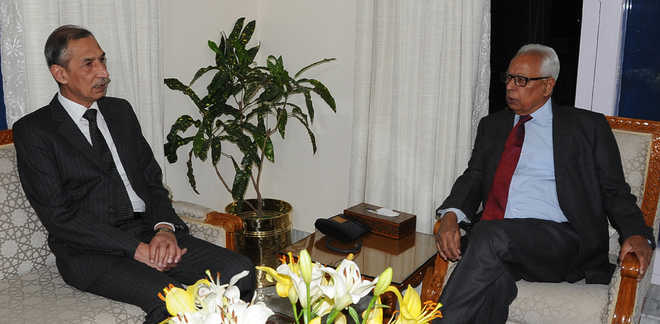
Northern Command chief Lt Gen DS Hooda calls on Governor NN Vohra at Raj Bhawan in Jammu on Sunday. Tribune Photo

Tribune News Service

Jammu, November 20

In view of ceasefire violations across the International Border and the Line of Control and other developments, Northern Command chief Lt Gen DS Hooda and Governor NN Vohra held extensive discussions here today.They also discussed the security challenges in the hinterland and the nature of action required to be taken by the security forces to enable restoration of complete normalcy in the state.


A strategy that marks a paradigm shift::::——– Maj Gen Raj Mehta (retd)

This is a moment in history where we have put Pakistan on the backfoot. India now needs to shift its centre of gravity to Pakistan’s troubled western borders and keep it engaged there in fire-fighting even as the ground lost in Kashmir is regained

A strategy that marks a paradigm shift
India quietly demonstrated that it can access ambiguous space under the “nuclear fence” as the Army protected the idea of India. PTI

SET the gushing words aside and you suddenly realise that not so much has happened that merits such euphoric recall. There have been similar operations in the past whose impact was felt but hardly spoken about. Yet — and this is key — enough has been done this time around to compel Pakistan to pause to re-strategise and recalibrate its future conduct of proxy war. Enough has been done to induce serious paralysis of the Pakistani decision-making (read Army) apparatus as they struggle with the reality that an India they presumed incapable has actually called their bluff. Posturing fuelled by the Chagai nuclear tests worked for them to limit the Kargil War. Yet again, in 2001 India mobilised post the terrorist attack on the Indian Parliament under Op Parakram but then failed to walk its talk.   This time around, the standard, brazen, implied “we-will-go-nuclear” threat has fallen flat. This, for Pakistan, is worrisome. More significantly, Pakistan, used to calling the shots, has been suddenly caught unprepared in a maze of uncertainty. It does not know how to handle the fallout of the Indian riposte in order to bolster its image domestically as well as internationally. This is evident in its current “did-not-happen” strategy with indignant bluff, not incontrovertible proof, as its main platform. The Northern Command’s surgical strikes negated Pakistan’s huge strategic advantage by taking out several trans-LoC terror launch pads astride Haji Pir in both 15 and 16 Corps zones. This had not happened before at this scale. Another major difference was the joint military and diplomatic declaration of the strikes. The Indian DGMO spoke in open-ended military syntax and the MEA spokesman used diplomatic finesse of a rare kind. Keeping the Pakistani DGMO informed (and announcing that too publicly) was another well- thought-through coup de main which Pakistan must have found galling. This happened because Pakistan had failed to upgrade Guevara 1.0 of 1987 and Guevara 2.0 of Kargil 1999. Pakistan’s proxy war of a 1000 cuts suddenly became irrelevant on the night of 28/29 September 2016. Complacence made Pakistan in Uri made Guevara dated and in need for ditching or serious review and Pakistan isn’t prepared to make the transition. The details are irrelevant. What is clear is the shallow insertions were not helicopter driven. The weapons do not matter either. What matters is that the mission was carried out by skilled, professionally tasked troops. What matters is that the targets had been assiduously studied over time; attacking troops had access to comparative photo cover. What mattered was what was delivered by troops sworn to win.Gains and areas of concernFirstly, India quietly demonstrated that it can also access ambiguous space under the “nuclear fence.” as skillfully as Pakistan. A subtle spin-off message is that PoK is Indian territory and entering it to impart “lessons” to terror-promoters is perfectly legitimate. Secondly, India has upgraded its response strategy to publicly owned retribution. Thirdly, Army’s professionalism has been subtly highlighted. Fourthly, the Indian Army has proved that the forces are programmed for unlimited liability to preserve and protect the “Idea of India”. Death has no place in this equation at all. It is just a hazard that the forces face with equanimity and calm acceptance. The implication is as blunt as the messaging. A time has come to put the grim war time Chief Gen Ved Malik’s signalling: “We will fight and win with what we have” to rest. Soldiers need weapons and unqualified support in pay, allowances, societal respect and attendant prestige to uphold India’s sovereignty against external threats, regardless of who the enemy is.

Afterword

The subcontinent’s immediate future does not look bright. Pakistan has to take a call on what it must do next. The easier decision here will be to conduct strikes to reclaim its lost “moral” ascendancy over India. The harder part will be to cope with the equally certain Indian response; this time of a higher order. This is a moment in history where, we have nevertheless put Pakistan on the back foot. India now needs to shift its centre of gravity to Pakistan’s troubled western borders and keep it engaged there in fire-fighting even as the lost ground in Kashmir is regained, Burhan Wani and his legacy must be put to rest by seriously addressing the problems of young that Kashmir is facing. This is a call Prime Minister Narendra Modi needs to take: Do a Vajpayee in Kashmir while Pakistan is kept sweating on its western borders. That is the Idea of India that people across party affiliation will unhesitatingly accept and the military cheerfully die defending — with unlimited liability.The writer commanded an LoC Division in North Kashmir


Navy inducts 4 types of sonars for surveillance

NEW DELHI: The Navy on Friday formally inducted four types of indigenously developed sonars that will boost its underwater surveillance capability.

The systems included Abhay – compact hull mounted sonar for shallow water crafts, Humsa UG – upgrade for the Humsa sonar system, NACS – Nearfield Acoustic Characterisation System, and AIDSS – Advanced Indigenous Distress sonar system for submarines.

Defence minister Manohar Parrikar, who handed over the sonars to Navy, praised the force along with DRDO, and said he expects more synergy in the coming days. The systems have been designed and developed by NPOL, a Kochi-based laboratory of DRDO

With the induction of these four systems, the underwater surveillance capability of the Indian Navy will get a boost, besides providing a fillip to the quest for self-reliance in this critical area of technology.

Abhay is an advanced activecum-passive integrated sonar system designed and developed for the smaller platforms such as shallow water crafts and coastal surveillance/patrol vessels. It is capable of detecting, localising, classifying and tracking sub-surface and surface targets in both its active and passive modes of operation.


Parrikar sends disability pension issue to anomalies committee

Parrikar sends disability pension issue to anomalies committee

Ajay Banerjee

Tribune News Sevice

New Delhi, October 13

Defence Minister Manohar Parrikar on Thursday put a lid on the raging controversy of military personnel getting lower disability pensions than civilians by referring the matter to an ‘anomaly committee’ of the 7th Central Pay Commission (CPC).Parrikar’s move means the controversial notification issued by the Ministry of Defence on September 30 — that resulted in lower disability pensions for non-battle injuries, has been kept in abeyance.A statement of the MoD said, “The representation of the Service Headquarters (official lingo for three armed forces) has been referred to the Anomaly Committee of 7th CPC for consideration.”The 7th CPC recommended a fixed slab-based system for determining the disability pension for Defence Forces, which was accepted by the government. A system that allowed a percentage of basic pay be paid for non-battle disabilities was followed in the 6th CPC. This was the case for Defence Forces as well as civilians.The armed forces have represented that the percentage based system should be continued for calculating disability pension for Defence Services as their civilian counterparts are getting the same benefit as was available under the 6th CPC.
Read more at http://www.tribuneindia.com/news/nation/parrikar-sends-disability-pension-issue-to-anomalies-committee/309013.html#Y7qKsJGiIsl4HzCJ.99


No power can stop Pak from supporting Kashmiris: Sharif

No power can stop Pak from supporting Kashmiris: Sharif

Islamabad, October 10

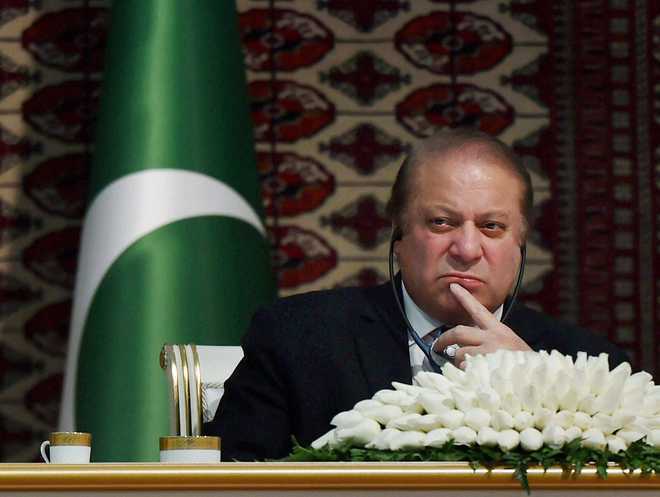
Pakistan Prime Minister Nawaz Sharif on Monday said no power in the world could stop Islamabad from supporting the struggle of Kashmiris.“India is mistaken if it considers that the freedom fight could be equated with terrorism,” Radio Pakistan quoted him as saying while chairing a central working committee meeting of the Pakistan Muslim League (N).He once again hailed slain terrorist Burhan Wani, who was the commander of Hizbul-Mujahideen terror group, as a freedom fighter and pride of Kashmiri people.

(Follow The Tribune on Facebook; and Twitter @thetribunechd)

Addressing the meeting, Sharif said those trying to paralyse the country through their negative politics would miserably fail in their designs.He said the government is striving hard to overcome all challenges, including terrorism and energy shortages, adding that the economy of the country had been strengthened as a result of effective policies. ANI


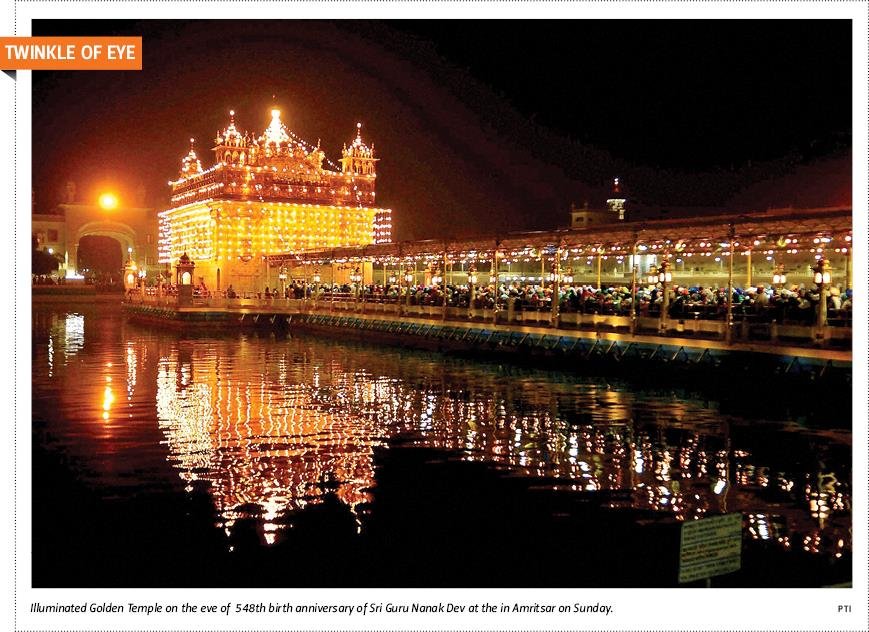
WISH ALL READERS A VERY HAPPY GURPURB

61606 IMG-20161113-WA0052 IMG-20161114-WA0007 IMG-20161114-WA0009 IMG-20161114-WA0012 IMG-20161114-WA0013


IMG-20161114-WA0036 IMG-20161114-WA0044 (2)


J&K Situation Dynamics: It’s Advantage India For Now

J&K Situation Dynamics: It’s Advantage
India For Now

Syed Ata Hasnain 
SNAPSHOT

Advantage India in the diplomatic domain, defeat of the deep state’s intent at the LoC and stabilisation of Kashmir’s streets will remain only a temporary achievement.

That advantage needs to be converted to victory in the domain which matters most, governance.

When events move fast in a hybrid conflict scenario, it is always good to do stock taking from time to time, especially after perceived situational success. The more important reason to do so is that we may delude ourselves in a celebratory environment and lose focus from the main task ahead. Before anything else it is important to remind everyone that the situation in Jammu and Kashmir (J&K) can never be viewed in a single dimension. It is always a sum of trends in diverse fields; military, political, human, social and economic; one could add a few more as peripherals.

Stating the bare bone truth, with regard to the strategic aims of India and Pakistan may be helpful in making a case for a change of focus by India in the current situation, if required. Pakistan’s aim is to bleed India through a series of actions with different levels of violence; create alienation in the state of J&K, particularly the Valley, and force the secession of the state through a combination of political, military and diplomatic measures. An essential element of the strategy is the control over escalation by keeping its multiple actions in diverse domains within a threshold of India’s ‘grudging tolerance’. India’s aim is to defeat the proxy war launched by Pakistan, overcome the alienation of the Kashmiri people and integrate or mainstream them with rest of India to deny Pakistan’s secessionist intent. India too is mindful of escalation and its own intent of pursuing high economic growth and betterment of its people in spite of provocations.

The centre of gravity revolves around the alienation of the people which is a common factor in both strategies. Pakistan wishes to promote alienation while India desires dilution of alienation and promotion of integration. Thus, the centre of gravity continues to be the Kashmiri people, in both cases.

India’s efforts at achieving integration are beset by some basic disadvantages. First is the fact that a new generation in Kashmir is yearning to take charge. It’s not a generation which has seen peace and tranquility in Kashmir. It has grown up used to the presence of the uniform and weapons; cases of parents perhaps humiliated, suffering the indignities of cordon and search operations and the rampant check point culture any one is subjected to in a conflict environment. Second, the compulsions of democratic politics, which strengthen the fabric of the rest of India have a near opposite effect on the population of a conflict zone. The real challenge of delivering the final blow to Pakistan’s aspirations by taking the next steps after conflict stabilisation in the military domain, through the socio-political route, has remained elusive. That is because of a lack of clarity. Whether it be the soft power route (including military soft power, which has a history of acceptance and credibility) or a flexible policy of weeding out anti-national elements and winning over the populace or even a more coercive route (for whatever it’s worth), the sheer lack of a strategy has disadvantaged India at different junctures. That has allowed Pakistan and its deep state to regain the initiative.

Pakistan seized the initiative once again in July 2016, in the wake of the killing of Burhan Wani, forcing serious turbulence in the streets for almost two and a half months. Fearing the flagging of the energy in the streets due to Indian peace efforts, a diluting stamina and economic problems of the people due to extended curfew, Pakistan chose to execute terror strikes against establishments of the India Army and police forces to convey messages of its full backing to the separatist elements. The Uri incident achieved for Pakistan success beyond expectations and gave it the opportunity to seek advantage in the diplomatic domain in the initial days after the incident.

However, India’s very focused military and diplomatic campaign surpassed the Pakistani campaign. While the campaign in the external dimension helped isolate Pakistan internationally and regionally, the trans-Line of Control (LoC) surgical strikes met the emotive needs of India’s domestic environment and after very long the projection of intent to execute retribution if pushed to the wall, now and hereafter. The combined effect of the surgical strikes, the countering of the terrorist action at Baramula and the elimination of seven terrorists in similar other operations have all contributed towards the Army regaining a temporarily lost self-esteem.

Clearly, it is advantage India at this moment. We have created apparent schisms within the Pakistan establishment, if current reports are true about the advisory given by the civilian government to the Pakistan Army. Pakistan stands deeply isolated. Even its staunchest friend China is having reported reservations of supporting Pakistan’s approach to terror; particularly the distinction between friendly and unfriendly terrorists, the support for Masood Azhar in the UN notwithstanding. However, hybrid conflict situations have a nasty way of springing surprises from domains from which focus has shifted. By continuing to focus on the LoC and directing its terror groups to launch sneak attempts more often Pakistan is clearly attempting to give the separatists the will and energy to continue the movement in the streets.

The Indian Army is now as robustly involved at the LoC, in the hinterland operations and in calming the streets in South Kashmir, as it ever was in the last 27 years. This is a negative for us and a positive for Pakistan. The Army’s move of two brigades into South Kashmir, the emerging return of confidence in the J&K Police, the arrest of some agitation leaders, opening of commercial establishments and the lifting of the apple crop from orchards and markets are a combination of trends which augur well for us.

The state government should also be finding itself far more confident after a very challenging period. It should look upon the situation as an opportunity to change the political and development narrative. That cannot happen if its attention remains rooted to the events at the LoC, other borders and in securing its institutions against renewed attempts at ‘fedayeen’ as was witnessed in 1999-2005. As soon as the situation permits the political community of Kashmir must endeavour to return to the people. The Army and the Police forces can enable this by creating locally secure conditions as and where required.

Perhaps since long the need for complete synergy between the state government and the Army has never been felt more than now. The chief minister’s confidence in the Unified Command will need to be progressively enhanced. She has hardly had the opportunity to discuss with the Unified Command issues other than those which plagued the immediate. Her father had achieved this to a great extent in 2002-05. There will be political compulsions, which are fully understandable, but through more interaction with the Army’s top officers there will be better understanding of the nature of conflict and a chance to debate the long-term strategy. The days of discussing winter and summer strategies are passé; long-term strategy should be the replacement.

The durbar will move in another three weeks, hopefully bringing a tumultuous period in Kashmir’s history to a close. The six-month hiatus when the seat of government will be at Jammu must be spent doing some important things. First, ensuring that Jammu receives its due attention. The Jammu populace and the BJP’s street have been remarkably quiet; that should never be taken for granted, and it must be compensated by paying due attention to the needs of the region. Two, winter offers an opportunity to bring comfort to the people if resources are planned and deployed in time. The Jammu-Srinagar road will close for two or three weeks bringing the annual misery in Kashmir in terms of shortages of everything. Let this be a year with a difference with special officers from concerned ministries of the state governments deputed and made accountable.

Advantage India in the diplomatic domain, defeat of the deep state’s intent at the LoC and stabilisation of Kashmir’s streets will remain only a temporary achievement. That advantage needs to be converted to victory in the domain which matters most, governance. Pakistan’s strategy of targeting peripherals to cause greater alienation and more enthusiasm in separatist ranks needs to be countered finally in the domain of governance and political outreach, both of which should be the joint effort of the central and state governments. Portends of that seem to be appearing; fingers remain crossed.

Uri,was designed by Pak to take the security focus away from the streets of Kashmir and motivate the youth to continue their agitation. India’s surgical strikes conveyed an adequate message of the will to respond in kind hereafter. However, none of this should take away our focus from the main task of ensuring Kashmir remains stable and on the path to normalcy. My analysis regarding this is in the latest piece in Swarajya.