Sanjha Morcha

What’s New

Click the heading to open detailed news

Current Events :

web counter

Print Media Reproduced Defence Related News

PUNJBA NEWS HEADLINES -08 APR 2017–CLICK HEADINGS TO OPEN DETAILED NEWS

Sidhu’s TV show: Court questions state on propriety

BJP leader’s son arrested for ‘running’ drug racket

Former Akali MLA’s nephew held for illegal sale of liquor

Welfare payments in 10 yrs under scanner: Dharamsot

Secys’ performance under CMO lens

Manpreet Badal visits MC office, officials unaware

Capt’s decisions hailed

DRIVE AGAINST ILLEGAL SAND MINING 10 trucks, six tractor-trailers seized; four arrested

clip

clip

LAW TAKEN FOR A RIDE CHANDIGARH POLICE


No lessons learnt History set to repeat itself in Punjab

IT may be a little too early for Congressmen to forget why the Akali Dal-BJP combine had lost the last election in Punjab and why they were chosen instead to run the state affairs despite AAP offering an aggressive alternative. The majority perhaps thought the financial condition that Punjab was in did not warrant an experiment with a team of novices and Punjabis reposed their trust in the leadership of Capt Amarinder Singh having past experience of running a government. However, the Captain they had trusted to steer them out of troubled waters is taking the state ship on the same ruinous path laden with icebergs. Among the most hated things the Badals did with disastrous consequences — for the state, the party and themselves — was the introduction of the halqa in-charge system. Media reports indicate the Congress government plans to revive the discredited practice without officially calling it so. Putting sons of serving Supreme Court judges on the government lawyers’ panel without their consent was embarrassing enough but could be explained away as a bad decision taken in a hurry, if not as a deliberate and crude attempt to court judges. But posting civil and police officers in consultation with the MLA of the area is no different from the Badals’ clever ploy to empower and enrich their local chieftains. It might still work if the legislators and officials do not hijack the law to target political opponents.There is, however, absolutely no justification for issuing an ordinance or bringing in a Bill to create posts of Chief Parliamentary Secretary and Parliamentary Secretary. The financial burden notwithstanding, the move will violate the constitutional cap on the size of ministry a state can have apart from last year’s ruling by the Punjab and Haryana High Court. If providing administrative training to MLAs is a motive, as Capt Amarinder Singh has stated in an interview, then that can be done without giving them the special post and minister-like pay and perks. Questions are already being raised over the army of advisers the Captain has raised. Is power already breeding arrogance and blurring judgement?


HEADLINES— 06 APR 2017

breakl line

MORE MOHALLA GET-TOGETHERS REQUIRED FOR CONNECTING PEOPLE: GEN MALIK

FOUR STEPS TO CORRECT SQUINTED VIEW OF KASHMIR BY ARUN JOSHI

YOGI KEEPS HIS PROMISE MAKES IT DIFFICULT FOR THE RAJA IN PUNJAB

Yogi’s farm loan waiver puts Capt under strain

BACK TO THE VALLEY BY G PARTHASARATHY

PROVOKING THE DRAGON ARE THERE ANY FALLBACK OPTIONS?

9 LIVES FOR CRPF’S CHEETAH, RECOVERS FROM 9 BULLET WOUNDS

PUNJAB HEADLINES –06 APR 2017

:::SEE WHAT’S NEW AT SCROLLING NEWS .CLICK SCROLLING HEADING FOR DETAILED NEWS 

breakl line


Headlines 05 Apr 2017

breakl line

PAK OPENS HEAVY FIRE ON FORWARD POSTS IN RAJOURI

Iran upset at Raheel Sharif heading Saudi military alliance

I SOUND STRONG BECAUSE THAT’S HOW MY SIKH PARENTS RAISED ME’

CAPTAIN TO PEN A BOOK ON PUNJAB’S TROUBLED PAST

AIRPORT ARREST: CUSTODY OF JAWAN GIVEN TO ARMY

MAJOR CALLED FOR QUESTIONING OVER RECOVERY OF GRENADES

UP WAIVES RS 36,000-CR FARM LOANS

STEPS TO REVIVE PUNJAB ECONOMY

INDIA SNUBS US ON J-K MEDIATION OFFER

PUNJAB HEADLINES 04 APR 2017

:::SEE WHAT’S NEW AT SCROLLING NEWS .CLICK SCROLLING HEADING FOR DETAILED NEWS 

breakl line


Chadoora, a new Kashmir tack Lt Gen (retd) Syed Ata Hasnain

The combined experience of the Army, police and paramilitary forces in handling volatile situations is effective in J&K.. However, political authority and a connect with people will also have to be a part of security strategy to counter separatists. The Chadoora encounter proves how the separatists have changed tack.

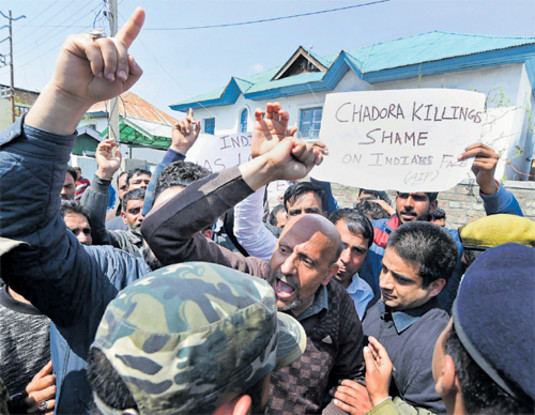
The police stop the Awami Itihaad Party (AIP) president and Independent MLA, Abdul Rashid Sheikh, and his supporters as they hold a protest in Srinagar against the killing of three civilians in the Chadoora-Budgam encounter.  PTI

IN the history of Jammu and Kashmir’s innumerable encounters, the one at Chadoora on March 28 will probably be just another among the statistics. It may also acquire the notoriety of being the trigger for the summer of 2017.  To save one or two terrorists, a mob of locals built up to disrupt the joint operations of the Army, CRPF and the J&K Police. Three civilians were killed in the crossfire, while almost 63 policemen were injured. The separatists immediately called for a lockdown. Attempts to break the curfew, if imposed, will lead to a couple of injuries to stone throwers and you have the return of the entire spectre of 2016 on the streets of the Valley. And this time even without the Darbar having yet returned to Srinagar. Is this cocking a snook at the Army Chief’s warning? Amateur minds will read it exactly as this, decry the Army’s inability to find a solution and urge that all involved in breaking the law should be systematically eliminated at the point of many guns. That is boorish, immature and irresponsible. The state still has a duty to control the law and order and calibrate its response. It is not so feeble. For those of us who have seen turbulence in our lifetimes and situations completely out of hand have lived to tell the tale of a few good men who took the challenge and resolved the problem but not without trials. Enough people have seen this happen repeatedly in Jammu and Kashmir itself;  perhaps, in not the exact circumstances, yet many akin to these.Intense emotions in the environment pander to extreme positions. Social media shows people on one side wishing the worst for the other — an unhappy commentary when maturity demands that middle ground be sought. To understand the nuances of how this form of confrontation has emerged, there is a need to look at both the professional and tactical demand of a hybrid conflict situation and the emotive desire of subnationalism. Any insurgent group will seek to progressively acquire the means to put the security forces on the defensive, cause casualties and endeavour to place them at a psychological disadvantage. The unthinking terrorist mind only contends the use of naked violence; bombs, rifles, rockets and IEDs. That does not get to the psyche of the people; it does not involve them to take ownership of their struggle.  Not many are aware of the degree of thinking which goes on within separatist ranks and we have students of conflict sitting across the LoC who are reading, analysing and scheming, providing the intellectual guidance so to say. Sponsored proxy wars are not about guns and explosives alone, they are as much about ideas, innovations and the involvement of people. The aspiration of those who are the guides and the ideologues is to force an out-of-proportion response from security forces so that the “martyr effect” is brought into play repeatedly, alienation spirals out of control and the movement receives impetus. For the first few years of the proxy war, it was more about the Army against the terrorist. The Army progressively improved its concept and strategy, neutralising terrorist strength. Then in 1997, the humanisation effect came into being with Sadbhavana. It remained a question of which side could garner the support of the people, large majority of whom sit on the fence for fear of the final outcome of conflict. The years 2007-8 were crucial. The effects of Mufti Sayeed’s “healing touch” (commenced in 2002) faded and Atal Bihari Vajpayee’s philosophical approach of Insaniyat, Jambooriyat and Kashmiriyat could not be taken to the next level through outreach and engagement, which were the pre-requisites. That is when the separatists changed tack. Seizing initiative, they brought the proxy war to the streets. Thereafter, it has been a combination of terrorist activities, street protests and psychological blending of the minds of the populace towards the movement. The gen next emerged in the forefront by an evolutionary process and not so much by design. In fact, the older generation was wary about allowing the youth to take the leadership; yet it happened. The security forces did well as far as their military-oriented operations were concerned. They limited infiltration and maximised the neutralisation of terrorists but the psychological element eluded them for the sheer want of continuity and inability to doctrinally conceptualise. The Army was brilliant at altering its tactics; intelligence improved exponentially, cooperation was of a higher order, flexibility in size of operations was exercised and counter-infiltration received a great fillip. However, the human aspect remained elusive not for any other reason than for a lack of understanding of the cultural terrain. That is where the separatists stole a march — bringing the emotional connect to the street. The years 2008-15 witnessed an ardent effort on the part of the separatists to intensify the street. In 2015, with south Kashmir in the throes of Burhan Wani’s locally dominated movement it tested the waters with greater turnout of mobs at the funerals of slain terrorists; surprisingly even Pakistani terrorists for whom the emotional surge was limited. It was experimentation with flash mobs more than emotions. Soon, the first flash mobs appeared at encounter sites. The security forces quickened the pace of response to counter the phenomenon but the mobs became emboldened, resulting in the recent encounter at Hajan leading to the Army Chief’s statement. It is now a phenomenon which I would classify as the culmination of an evolutionary process of refinement of methods to disrupt operations of the security forces. The combined experience of the Army, Jammu and Kashmir Police and CRPF in handling multifarious threats over a period of time holds them in good stead to find the counter to such disruptive tactics. In 2010, an attempt was made by the separatists with threats of marching to surround the Army camps. The situation was subtly handled with coordinated efforts. We have seen intense challenges in the Valley. Undeniably, alienation is extremely high but all is not lost. The nation must repose more trust in those who are in charge. Detractors against separatists are insufficiently courageous to raise their voice. What we need to appreciate is that the security forces by themselves cannot take on the separatists’ outreach. That is many years old and based on a time-tested structure. Without a joint strategy forged by the political authority and the security forces, the people’s dimension — which the separatists have stolen from the establishment — cannot be restored to the  state establishment. After all, the theme political-military integration in hybrid conflict is not for nothing.The writer, a former GOC of the Srinagar-based 15 Corps, is now associated with the Vivekanand International Foundation.


‘Ex-servicemen will require Aadhaar to avail pension benefits’

‘Ex-servicemen will require Aadhaar to avail pension benefits’
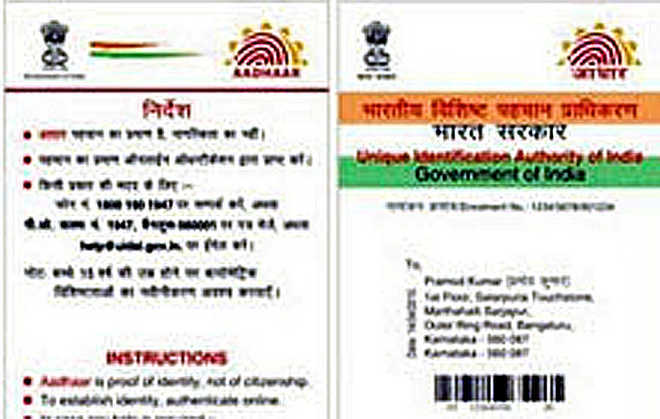
File photo for representation only.

New Delhi, March 31

Ex-servicemen will require Aadhaar number to avail pension benefits the government informed the Lok Sabha on Friday.In written response to a question in the Lok Sabha, Minister of State for Defence Subhash Bhamre said the Department of Ex-Servicemen Welfare, through a notification on March 3, has said that defence forces are required to furnish proof of possession of Aadhaar number or undergo Aadhaar authentication.“However, if an eligible individual entitled to receive pension benefits does not possess the Aadhaar number or is not yet enrolled for Aadhaar, but desirous to avail pension benefits is required to make Aadhaar enrolment by June 30, 2017.“The pension benefit shall be given to such individuals till Aadhaar is assigned to the beneficiaries, subject to the production of identification documents,” Bhamre said.In response to another question, Bhamre said the delay in construction of the six submarines under Project-75 at Mazgaon Dock Shipbuilders Ltd, Mumbai are due to infrastructure augmentation requirements and procurement of material from foreign vendors.Bhamre said the Indian Navy has hosted a global Request for Information (RFI) for Multi-Role Carrier Borne Fighter (MRCBF) Aircraft in January 2017.Responding to another question, Bhamre said India and Vietnam have agreed to take forward a proposal for training Vietnam Air Force personnel on Su-30 aircraft.The minister, in his response to another question, said the government has prepared a long-term roll on works plan for construction of 519 roads by the BRO in the border regions. — PTI


Bend it like Dhaka

The visit of Sheikh Hasina, the Bangladesh PM, to India next month is the time to re-calibrate Dhaka-New Delhi ties. While Hasina’s Awami League government bends over backwards to please India, the BJP has demonised Bangladeshis. It is high time that the party rose above electoral politics to look at strategic national interest instead.

Bend it like Dhaka
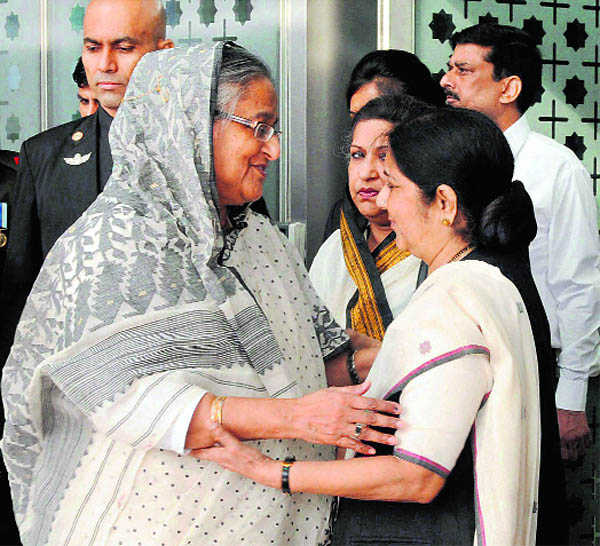
Sheikh Hasina, Prime Minister of Bangladesh, being received by the Union Minister for External Affairs and Overseas Indian Affairs, Sushma Swaraj during her viist to India in 2015. A file photograph.

THE Prime Minister of Bangladesh, Sheikh Hasina, will visit India from April 7 to 10. There is something terribly amiss in India-Bangladesh relations, although Hasina — who is in power since 2009 and faces crucial elections next year — has fully backed Prime Minister Narendra Modi’s moves to isolate Pakistan in South Asia. She has flushed out anti-India elements from her land, proactively partnered counter-terrorism operations and even extended transit facilities to New Delhi’s great relief. Yet her state visit had to be deferred twice in three months without any valid explanation, revealing that all’s not well between strategic allies. Bangladesh may be in our backyard but it can turn it into a minefield in no time. As we wait for Hasina, let’s not forget the darkest chapters in our bilateral ties like the killing of 16 BSF soldiers in 2001 or the expulsion of RAW’s B. B. Nandy from Dhaka. And in 2005, India’s deputy high commissioner Sarvajit Chakravarti’s wife was manhandled in Dhaka. Bangladeshi tycoon Shah Alam pulled Rupa Chakravarti out of a Mercedes with diplomatic number plate assigned to India and humiliated her in broad daylight; she was so traumatised that she needed psychiatric treatment. While India kept demanding Alam’s arrest, he got away scot-free because he enjoyed the backing of then PM Begum Khaleda Zia and Pakistan. Nobody can rule out the possibility of India’s prestige being punctured again, if we fail to stand by our real friends like Hasina who has often put India’s interests ahead of Bangladesh’s out of sheer gratitude for New Delhi’s role in liberating Bangladesh and the love and affection she received from leaders like Indira Gandhi and Pranab Mukherjee during her long asylum before her triumphant return to Bangladesh.In today’s scenario, the diplomatic and the security establishments of India and Bangladesh — headed by veterans like S. Jaishankar, Ajit Doval, Shahidul Haque and Tarique Ahmed — can iron out most sticking points like the pending Teesta River water-sharing treaty or Bangladesh’s growing ties with China which makes India uncomfortable. But these professionals are hamstrung by the ruling BJP’s ideological contempt for India’s Muslim neighbour. Hindutva policies and pronouncements are alienating Bangladesh, driving a wedge between the two countries and hurting India’s national interest.While Hasina’s Awami League government bends over backwards to please India, the BJP paints Bangladeshis as illegal immigrants, criminals and beef-eaters who torment Hindus in their country. Extreme anti-Bangladesh views seep out from the BJP’s 2014 general elections manifesto as well as manifestos for the 2015 Assam and West Bengal assembly polls. Narendra Modi, who will host Hasina in April, resorted to no-holds-barred, communally charged Bangladesh-bashing while campaigning. Discriminating between Muslim and Hindu Bangladeshi immigrants, Modi declared that those who worship goddess Durga are welcome but those who don’t must keep their “bags packed” for deportation if he captured power. He and other BJP campaigners repeatedly accused Bangladeshi Muslims of “destroying” India, virtually painting Bangladesh as an enemy nation. On the grounds of religion, the BJP categorises Muslim immigrants as “infiltrators” and Hindus as “refugees” or  “Mother India’s children” deserving asylum. After capturing power, one of the first tasks the Modi government assigned itself was to starve Bangladesh of beef by stopping India’s surplus, non-milk producing cattle from going to Bangladesh. Home Minister Rajnath Singh, who ordered the BSF to halt an informal trade determined by supply and demand that had been going on for decades, publicly boasted that the embargo had made beef so expensive in the Muslim country that its consumption had plummeted. Singh missed no opportunity to pat himself on the back for taking the BJP’s cow protection-cum-beef banning campaign to Bangladesh.    Attempts by the BJP government to rewrite citizenship laws to confer Indian nationality on Hindu Bangladeshis is another step which, besides being unconstitutional, indirectly accuses  the Bangladesh government of being so sectarian that its Hindu population is fleeing to India. On the one hand, New Delhi claims that its biggest foreign policy goal is to ensure that the Awami League is voted back to power in the forthcoming elections. But on the other, it is offering asylum and citizenship to Hindus who have a history of casting their vote in favour of the Awami League in countless constituencies, including Hasina’s Gopalganj seat where there are as many temples as mosques.  Such Hindutva-driven objectives like stopping cattle trade and making India a homeland for Hindus may serve the BJP’s narrow electoral interest but they are certainly not in the national interest as far as India-Bangladesh relations are concerned. Unless we show respect towards Bangladesh as a strategic ally instead of belittling and demonising it as a nation of Muslims, relations between India and Bangladesh will never achieve their full potential or become an example of good neighbourliness.    Instead of vilifying Bangladesh, we can learn how to implement sabka saath sabka vikas from Hasina’s Awami League government. In 2011, it repealed the Enemy Property Act to return properties seized from the Hindu minority under the1965 law implemented by the East Pakistan administration. The BJP captured power in Assam shouting itself hoarse about “demographic invasion” whereas Bangladesh’s Human Development Index is much better than Assam’s. Nothing exposes BJP’s lies more than Bangladesh’s per capita income which is 70 per cent more than Assam’s! And roughly half a million Indians live and work in Bangladesh, making them— according to the World Bank — the fifth biggest remitter of foreign exchange to India after the diaspora in United Arab Emirates, USA, Saudi Arabia and UK.Presumably taking their cue from the BJP, some members of the delegation accompanying then Defence Minister Manohar Parrikar to Dhaka last November spoke insultingly to their Bangladeshi counterparts, which according to Anand Bazar Patrika newspaper, compelled Hasina to postpone her December 18-20 India visit. I think India should have atoned for those insensitive remarks by inviting Hasina to be the Chief Guest at the Republic Day parade on January 26, 2017. But India plumped for the Crown Prince of Abu Dhabi Sheikh Mohamed bin Zayed Al Nahyan, who is not even a head of state, instead of a strategic ally like Hasina. There is something very reassuring and maternal about Sushma Swaraj. Fortunately, she is back in the hot seat. Another key player is Ram Madhav, the BJP foreign cell’s point man, who seems to have developed a keen interest in the neighbourhood. They must work in tandem ahead of Hasina’s long-overdue visit to take India-Bangladesh ties to a new level.  The writer is a senior, Kolkata-based journalist 


Islamic State claims responsibility for British parliament attack

Islamic State claims responsibility for British parliament attack
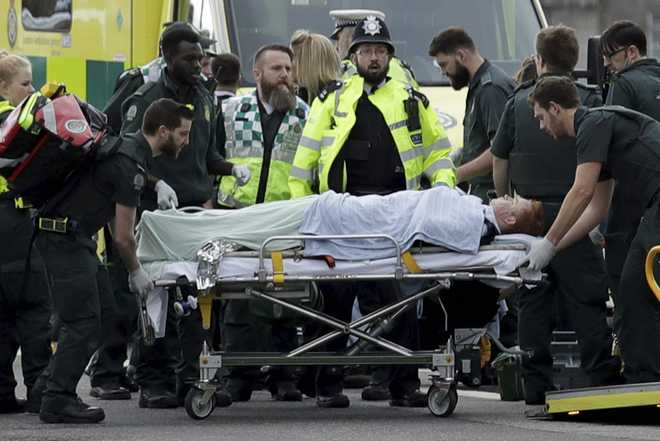
Medical attention being provided to an injured on the south side of Westminster Bridge, close to the Houses of Parliament in London, —PTI

London/Cairo, March 23

Islamic State was responsible for an attack outside Britain’s parliament which left four people dead, the group’s Amaq news agency said on Thursday, even as police arrested seven people in the investigation into a lone-wolf attacker who also injured 40.The attacker was shot dead by police near parliament in London, Britain’s most senior counter-terrorism officer said.

“The perpetrator of the attacks yesterday in front of the British parliament in London is an Islamic State soldier and he carried out the operation in response to calls to target citizens of the coalition,” the Amaq statement said.

Islamic State, which has controlled parts of Iraq and Syria in recent years, has lost territory this year to local forces in those countries supported by a US-led military coalition. (Follow The Tribune on Facebook; and Twitter @thetribunechd)

Mark Rowley, Britain’s most senior counter-terrorism officer, said there were four dead, including the attacker, and 29 people still being treated in hospital, seven of whom were in a critical condition. Police had said on Wednesday that the death toll was five in the worst such attack in Britain since 2005.

“We are not afraid…An act of terrorism tried to silence our democracy, but today we meet as normal,” Prime Minister Theresa May told the packed House of Commons which reopened today with a minute’s silence a day after the attack.“What I can confirm is that the man was British born and that – some years ago – he was once investigated in relation to concerns about violent extremism. He was a peripheral figure,” she told sombre-looking lawmakers.”It is still believed that this attacker acted alone, and the police have no reason to believe there are imminent further attacks on the public. His identity is known to the police and MI5, and when operational considerations allow, he will be publicly identified. Our working assumption is that the attacker was inspired by Islamist ideology,” May said.

The attacker sped across Westminster Bridge in a car, ramming pedestrians along the way, then ran through the gates of the nearby parliament building and stabbed a policeman before he was shot dead.

Authorities have described the attack as a “marauding terrorist incident” and said they were working on the assumption that it was Islamist-related.

Britons have been left shocked by the fact that the attacker was able to cause such mayhem equipped with nothing more sophisticated than a hired car and a knife.

Police believe they know the identity of the attacker but have not named him.

Rowley said police had searched six addresses in London, Birmingham and other parts of the country in their investigation.

“It is still our belief … that this attacker acted alone and was inspired by international terrorism. At this stage we have no specific information about further threats to the public,” Rowley said.

He said there was a mix of nationalities among the dead but gave no details. The victims were the policeman who was stabbed and two members of the public, a woman in her mid-40s and a man in his mid-50s. The fourth dead was the assailant.

Three French high-school students aged 15 or 16, who were on a school trip to London with fellow students from Brittany, were among the injured.

French Foreign Minister Jean-Marc Ayrault was expected to arrive in London to visit them at hospital, French media reported.

There were also five South Koreans among the injured, South Korea’s foreign ministry said in Seoul.


Leave.EU, a group that has campaigned for immigration to be severely restrained as part of Britain’s exit from the European Union, accused mainstream politicians of facilitating acts of terror by failing to secure borders.

“We are sick, tired but perhaps even more so we are angry that recent governments across Europe have enabled these attacks through grossly negligible policies that have left us vulnerable,” the group said in a statement.

In France, far-right presidential candidate Marine Le Pen also drew a link, saying that events in London highlighted the importance of protecting national borders and stepping up security measures. — Reuters


Farm debt: Capt calls on PM, presses for special package

CHANDIGARH:Punjab chief minister Amarinder Singh on Wednesday urged Prime Minister Narendra Modi for a special central government package to provide one-time loan waiver to the debtridden farmers of the state.

HT PHOTOPunjab chief minister Amarinder Singh with PM Narendra Modi in New Delhi on Wednesday.

Amarinder, who met Modi at his Parliament House office, said the meeting was a courtesy call, during which the issue of farm debt waiver was also discussed.

“I have sought financial assistance from the Centre, my government is committed to waiving farmers’ loans and we have already initiated a timebound process for the same,” he said.

The state cabinet had, in its maiden meeting, started the necessary steps to implement the Congress poll promise on farm debt waiver, he pointed out.

Expressing concern over the recent spate in farmer suicides in Punjab, the chief minister said he had requested Modi to announce a special package to pull out farmers out of the debt-trap. In a letter to the PM, Amarinder said the total farm debt in Punjab is more than ₹80,000 crore, including the crop loans of ₹12,500 in the cooperative sector. The average debt per farm household in Punjab works out to be ₹8 lakh (including crop loan).


NO DISCUSSION ON SYL

With the SYL Canal matter in the Supreme Court, the Punjab CM did not discuss the issue with the PM, said a senior official. “Since the matter is sub-judice, there was no point taking it up with the PM. The CM met senior lawyer Ram Jethmalani to discuss Punjab’s stand on the issue,” he said.


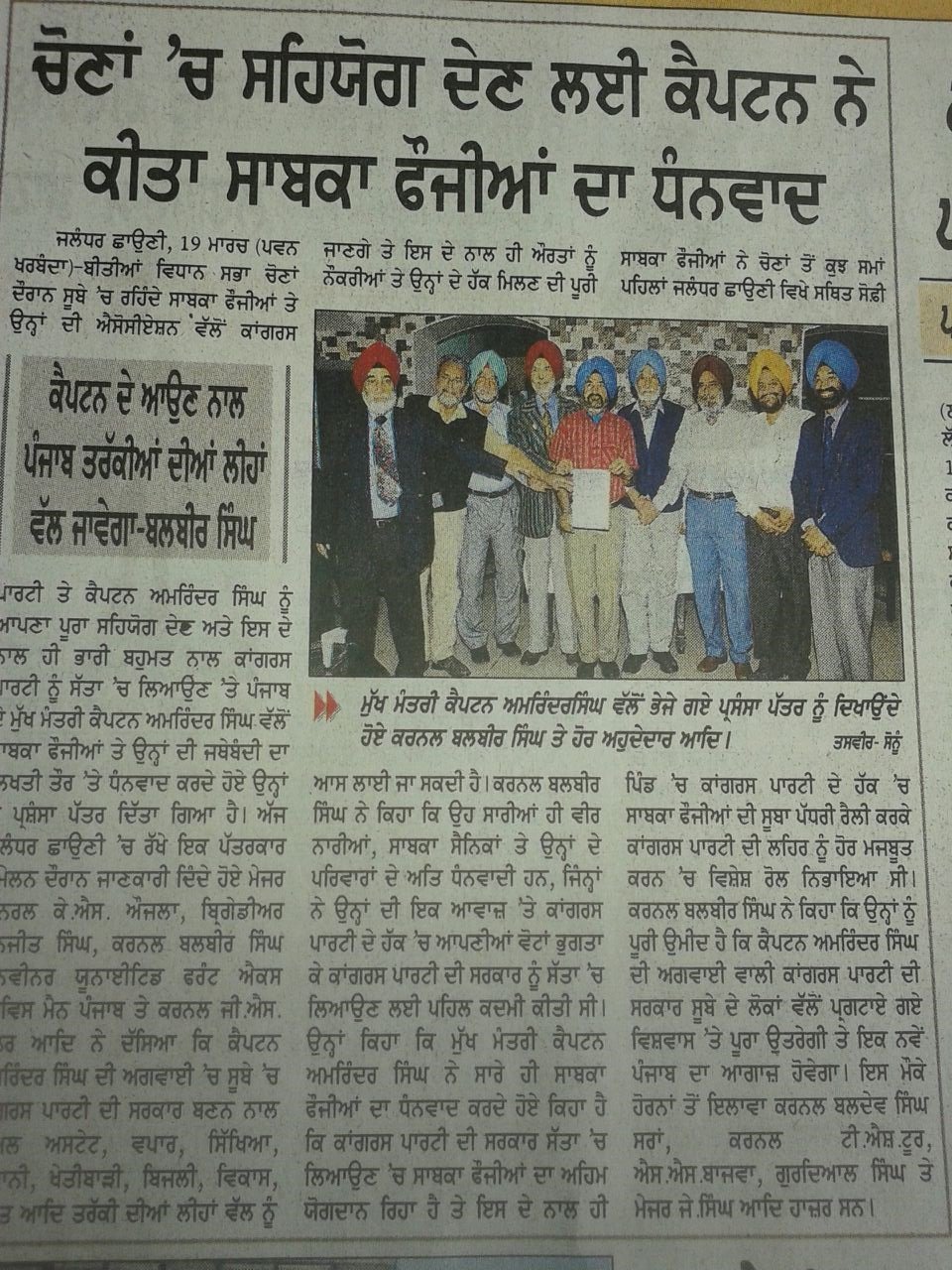
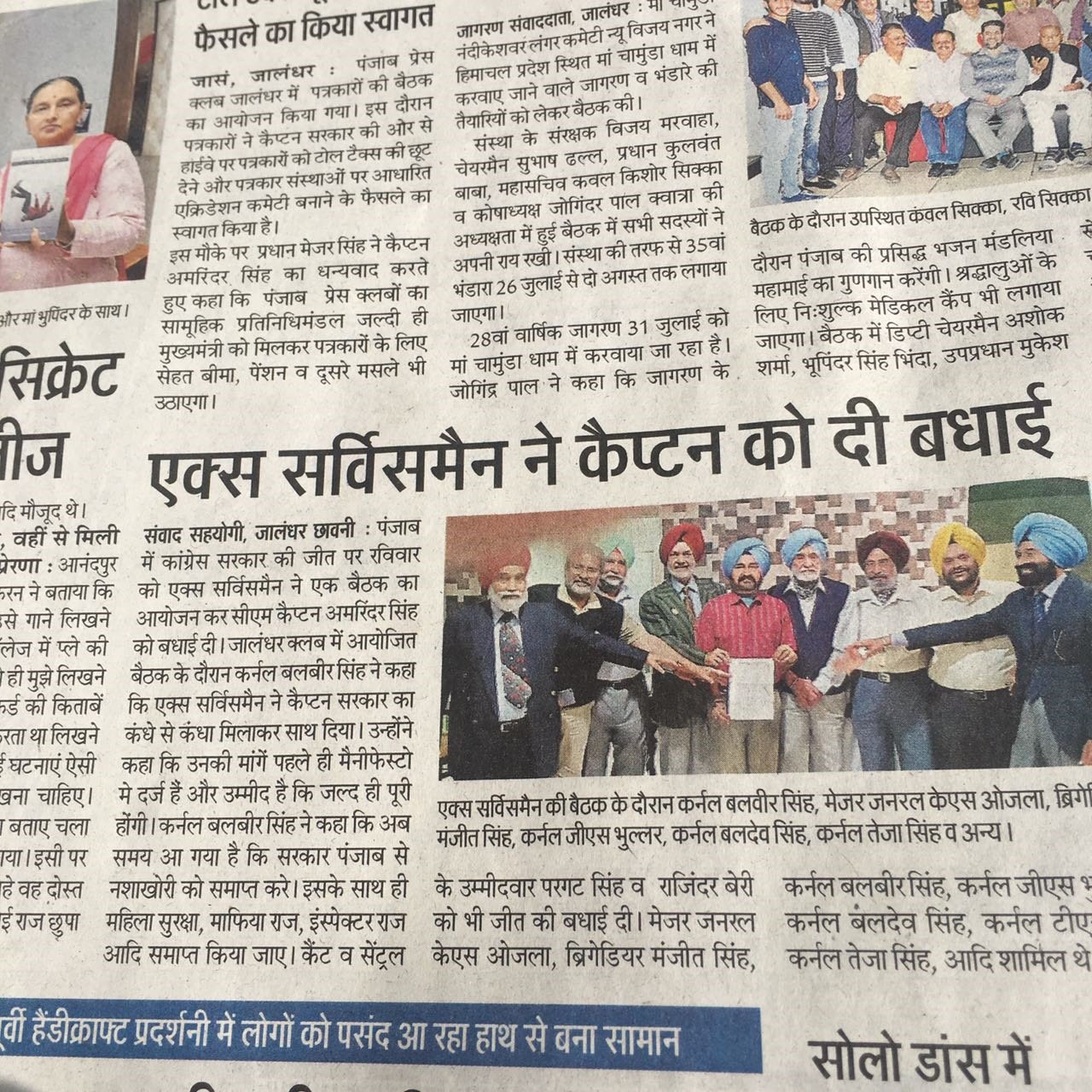
Ex-servicemen hail Capt, assure cooperation

Ex-servicemen hail Capt, assure cooperation
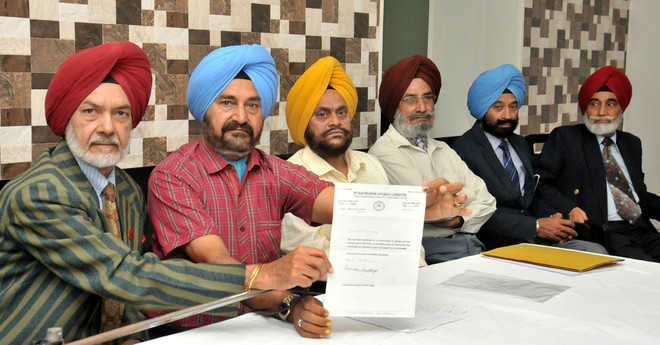
Representatives of  Ex-Servicemen show a thanks-giving letter they received from CM Captain Amarinder Singh. Photo: Sarabjit Singh

Tribune News Service

Jalandhar, March 20

Few days since the appointment of Capt Amarinder Singh as the Chief Minister of Punjab, ex-servicemen of the region have assured him of full cooperation to fulfill his dream of creating a ‘New Punjab’.Led by convener Col Balbir Singh, said that lakhs of families of retired Army personnel across the state had voted for the Congress. He said Capt Amarinder Singh had even acknowledged so by sending them a thanks-giving letter.Col Balbir Singh said the members were confident that the new CM would pay full attention to their demands, which he had even put up in the party’s poll manifesto. “This is further apparent from the first Cabinet meeting that Capt has held wherein he had passed certain historic decisions. He has committed to us the formation of an ex-servicemen cell for welfare activities of the families of the personnel,” he said.Others who assured full support at their event were Maj Gen KS Aujla, Brig Manjit Singh, Col GS Bhullar, Col Balbir Singh Saran, Col TS Toor, Col SS Bajwa, Col Teja Singh, Col Gurdial Singh and Major JS Aulakh (all retired).

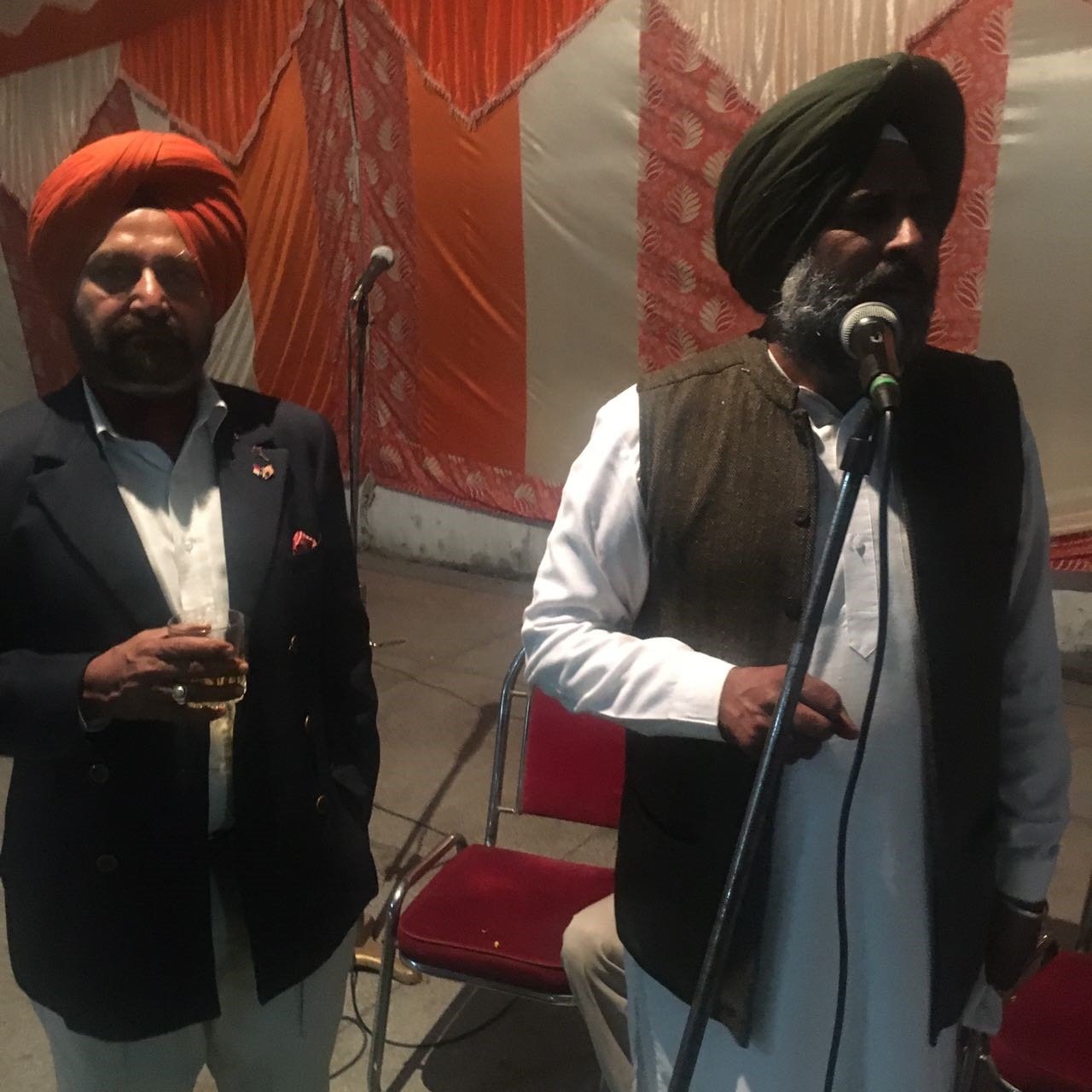
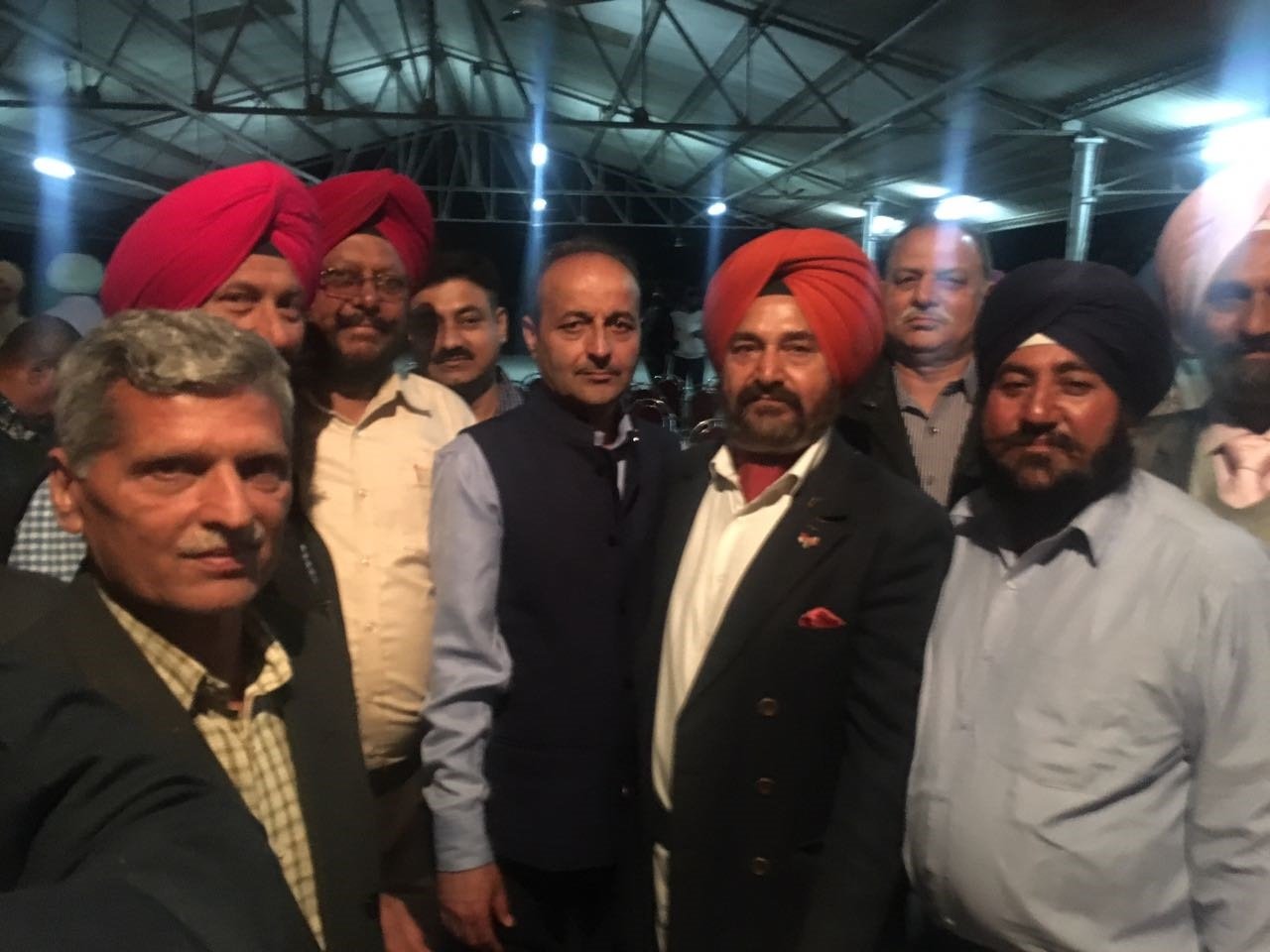
BARA KHANA FOR NEW ELECTED MLA’S

MLA S Pargat Singh and Rajinder Berry Ji in my associationBaraKhana(Dinner)
on 19 Mar in Vajra Sainik institute Jalandhar cantt.
Lt Col Balbir Singh

Displaying IMG-20170320-WA0055.jpg

Displaying IMG-20170320-WA0056.jpg

Displaying IMG-20170320-WA0057.jpg

IMG-20170320-WA0039 IMG-20170320-WA0051 IMG-20170320-WA0053 IMG-20170320-WA0054