Sanjha Morcha

What’s New

Click the heading to open detailed news

Current Events :

web counter

Print Media Reproduced Defence Related News

War powers must have no grey area

The US Constitution splits the prerogative to initiate armed hostilities between Congress and the President.

article_Author
Manish Tewari

LAST WEEK, the US Senate — by a 53-47 vote — decided not to bar the Trump administration from initiating further military action against Iran, turning down a war powers resolution introduced by Senator Tim Kaine.

The US Constitution splits the prerogative to initiate armed hostilities, colloquially referred to as war, between Congress and the President due to a twilight expanse of overlapping authority.

Article 1 of the US Constitution singularly vests in its Congress the power to initialise kinetic action, recruit, train and mobilise armed combatants and superintend their deployment. Oxymoronically, Article 2 of the Constitution titles the President as the commander-in-chief of the US armed forces.

The War Powers Resolution or the War Powers Act was enacted in 1973. The Vietnam War raging at that time. The relentless bombing of Cambodia and Laos was intensifying. Concurrently, domestic disenchantment was exacerbating against the Richard Nixon administration’s prosecution of the war.

Under such circumstances, the US House Foreign Affairs Committee observed that the dichotomy between the war-making functions of Congress and the President was a grey area of contemporaneous power, lacking precision on when the President can act independently vis-à-vis when congressional sanction becomes sacrosanct.

The War Powers Resolution was therefore approved with the resolve to reaffirm Congress’ role in deploying US armed forces for conflicts overseas. The resolution provided the President with just enough leverage to act with dispatch whenever imperative. It was done disregarding the veto of President Nixon. It laid down presidential reporting imperatives and Congressional processes predicated upon reaffirming the statutory responsibility of Congress in necessitating the deployment of US forces in armed conflict abroad.

Moving the said resolution in the context of President Donald Trump’s decision to bomb three nuclear sites in Iran, Tim Kaine said on the Senate floor, “Only Congress declares war.”

He pointed out that the founding fathers of the US Constitution, way back in 1787, were so circumspect of bestowing the control of opening hostilities on any individual that they deliberately chose not to even delegate this function to George Washington, the first commander-in-chief. The imprimaturs of the Constitution, therefore, ordained that the United States of America would not go to war without a Congressional vote.

Had the measure passed muster, it would have compelled the Trump administration to obtain Congress approval before launching further bombing and other forms of armed combat against Iran.

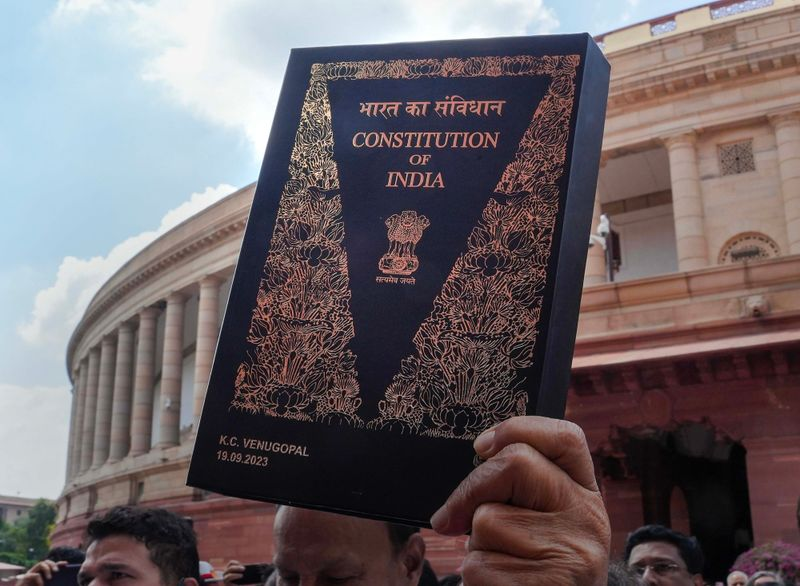
This raises an obvious question in India — from a constitutional standpoint, who has the power to declare war? Is it the President as the Supreme Commander of the Armed Forces on the Cabinet’s advice provided in writing or Parliament or none of these entities?

The answer seems to be “none”, for the Indian Constitution does not really contemplate resolving disputes through the force of arms. The question, therefore, remains: did we fight wars in 1947, 1965, 1971 and 1999 without a formal declaration of war? This seems to be the case.

On December 5, 1971, in a letter to US President Richard Nixon in the wake of a Pakistani air attack, Prime Minister Indira Gandhi wrote: “We are left with no other option but to put our country on a war footing. We have, therefore, declared an emergency for the defence of India…” She did not say India had declared war on Pakistan.

This anomalous situation perhaps has something to do with the peculiar context in which the Indian Constitution was conceptualised. India had just emerged from a unique non-violent and pacifist struggle, thanks to which it gained independence. Moreover, the world was still recovering from the ravages of World War II that had left 81 million people dead. The UN Charter had also just been adopted. Article 2(4) of the charter proscribed the “use of force” as a means of surmounting transnational disagreements. Under the UN framework, armed force may only be used in “self-defence” or when authorised by the Security Council under Chapter VII of the Charter. India’s Constitution, to a substantial extent, imbibed the spirit of this provision.

What then are the provisions of the Indian Constitution dealing with war? There seem to be none explicitly. Article 352 allows the proclamation of an emergency when a threat of war, external aggression or armed rebellion is imminent. It does not confer a power. It essentially lays down a procedure.

When there is an emergency because of “external aggression”, the President can make a proclamation, the condition precedent being a decision of the Council of Ministers communicated in writing. It also requires that Parliament ratify the proclamation within one month. The Constitution ordains that Parliament be summoned and requested to either ratify or reject it.

Then there is Entry 1& 2 of the Union List — Article 246, Seventh Schedule. Entry 1 delineates what the Union Government must do for the “defence of India” in times of war — from prosecution to demobilisation. “Defence of India” is the operative phrase here.

It, however, does not extend so far as to provide the legislative basis to the Union of India to declare war. Entry 2 only provides an exclusive field of legislation to the Union vis-a-vis the armed forces.

Article 51 in the Directive Principles of State Policy further mandates that the government undertake a peaceful approach to international relations.

In essence, the Union of India may initialise the full spectrum of options to counter a war, plan and train for a response to it, enact legislation to mobilise the materials and resources critical to its success, but constitutionally it is not authorised to initiate war as an exercise of sovereign will. It is a delicate but critical particularity. India, therefore, constitutionally is a defensive State not just in disposition, but in its very constitutional construction.

Given the rather ‘interesting’ times we live in, there must be a crisp and clear constitutional provision laying down precisely who has the power to declare war, why and under what circumstances? Is it the President on the aid and advice of the Council of Ministers or Parliament? It could also be a hybrid like Article 352, whereby the proclamation is issued by the executive but ratified by Parliament within a month.

Manish Tewari is lok Sabha MP and former I&B Minister.


Pak hockey team gets assent to play in India

he Centre has cleared the decks for the Pakistan hockey team to participate in both the Asia Cup and the Hockey Men’s Junior World Cup to be held in India.

The Asia Cup, which is a qualifying tournament for the 2026 World Cup, is scheduled to be held in Rajgir, Bihar, in August, while the Men’s Junior World Cup is to be held in November.

The participation of the Pakistan team in these tournaments was hanging in the balance amid the border tensions between the two neighbours after the Pahalgam attack on tourists.

However, on Thursday, sources in the Sports Ministry said the Pakistan team could travel to India for both the tournaments.

A Sports Ministry official said the decision was taken as these hockey tournaments were multi-nation events and stopping any country might invoke sanctions from the International Olympic Committee as it might be construed as a violation of the Olympic Charter.

“We should not stop any team from competing in multi-nation tournaments. If we stop Pakistan from participating in these tournaments, it may be seen as a violation of the Olympic Charter,” a source said.

The official confirmed that both the Ministry of Home Affairs and the Ministry of External Affairs were in agreement over the decision. “The Sports Ministry can only announce these decisions after getting an all clear from both the ministries,” he said.

Interestingly, Hockey India (HI) has said it has not been told by the Sports Ministry about the clearance. “We have only heard about the decision through mediapersons. We have not been officially informed about the Pakistan team’s participation in both the tournaments,” HI secretary general Bhola Nath Singh told The Tribune.


IAF to get more missiles that blunted Pak threats

MoD approves acquisition proposals worth Rs 1.05 lakh crore

article_Author
Ajay Banerjee Tribune News Service

Nearly two months after air defence missiles played a key role in thwarting threats from Pakistan during Operation Sindoor, the Ministry of Defence has approved the procurement of more such weapons along with 12 specialised warships that can lay mines undersea and even detect them.

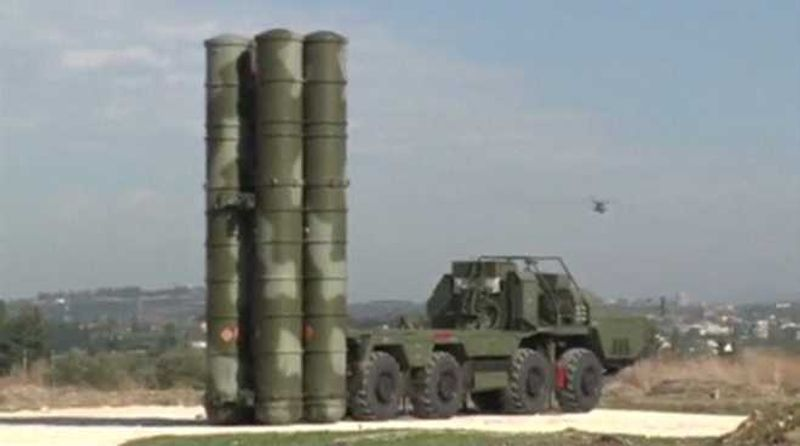
In military parlance, these are called surface-to-air missiles (SAMs) and are fired from the ground at airborne targets such as drones, planes and jets. The SAMs are mated with air defence radars that direct the missiles towards incoming targets.

During Operation Sindoor, Pakistan fired hundreds of drones and missiles at India, which were shot down by the layered air defence system that included the SAMs.

The SAMs are part of the acquisition proposals amounting to nearly Rs 1.05 lakh crore, a process to be undertaken through indigenous sourcing. The Defence Acquisition Council (DAC), the apex decision-making body on procurements in the MoD, chaired by Defence Minister Rajnath Singh, today accorded the acceptance of necessity (AoN) for the purchase of 10 separate equipment for the forces.

The MoD did not specify the count of SAMs to be procured, though sources said the stock used by the Air Force during the skirmishes with Pakistan would be replenished.

The DAC also approved the procurement of electronic warfare system, which is a specialised military technology used during combat to control the electromagnetic spectrum, including jamming, deceiving or spying, using radio waves and radar signals. An approval was also granted to buy a software called integrated common inventory management system, which will be used at joint logistics nodes created for the services. The 12 mine counter measure vessels were being demanded for long by the Navy.


Headlines : 30 Jun 2025

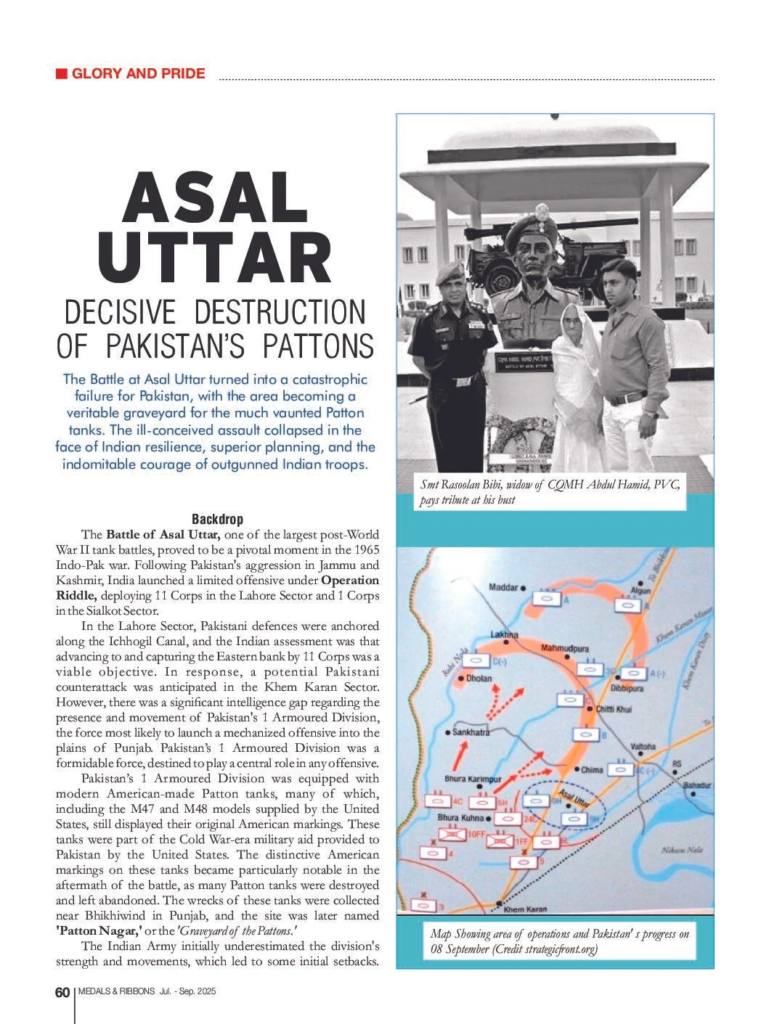
ADAL UTTAR :DESTRUCTION OF PAK TANKS BY MAJ GEN HARVIJAY ,PATRON SANJHA MORCHA

THE SECRETS OF SHUBHANSHU SHUKLA

Medals and Ribbons has focused on the 1965 Indo Pak War – Diamond Jubilee of that war.

program for the Indian Military’s seminar on Indigenisation of drones by HQ IDS on 16 July 2025 at Manekshaw Centre, Delhi.

Ambedkar gave Constitution that has kept India united in times of war and peace: CJI Gavai

Demolished by India in airstrikes, Pak rebuilding terror camps: Intel

India’s ban on ships carrying Pakistani cargo hits shipping costs, delays freight: Report

Row over Indian defence attache’s reported ‘lost jets during Operation Sindoor’ remark

Amarnath Yatra: BSF jawans, including women troops, step up security along IB


Medals and Ribbons has focused on the 1965 Indo Pak War – Diamond Jubilee of that war.

The July 25 issue of Medals and Ribbons has focused on the 1965 Indo Pak War – Diamond Jubilee of that war.

The magazine articles highlight the devious designs of Pakistan to wrest Kashmir, their perspective of the war, and the impact of the war on India Pakistan relations thereafter.

The historic victory at Haji Pir, the Battles of Chhamb, Phillora, Chawinda, Dograi, Khem Karan Asal Uttar) and OP Hill have been described. My article on Asal Uttar (Grave Yard of the Patton Tank) talks about one of the greatest tank battles fought by the Indian Army and a knockout blow to the Pak 1 Armd Div.

The issue also delves into the strategic fallout of Operation Sindoor, and looks at the Offensive air operation and the Air Defence success.
An interesting comparison between life in 1965 and today throws light on lifestyle changes and choices.

http://www.medalsandribbons.com


program for the Indian Military’s seminar on Indigenisation of drones by HQ IDS on 16 July 2025 at Manekshaw Centre, Delhi.

This is the confirmed program for the Indian Military’s seminar on Indigenisation of drones by HQ IDS on 16 July 2025 at Manekshaw Centre, Delhi. The detailed program schedule is attached

It’s absolutely free of cost to ensure maximum participation by Indian Drones & C-UAS companies & start-ups interested in complete Indigenisation. If you have 100% indegenised any component also or planning to do so, come & display it. If you are completely confident of your product’s Indigenisation, you can speak about it also

Please confirm your interest at the earliest

  1. Display stall
  2. Only attendance as delegate
  3. Speaking slot
  4. Give details of your Indigenisation component, complete product, software etc whether drones or C-UAS. Brouchure is preferable

the idea is 100% Indigenisation eventually

Warmest regards
Brigadier Anshuman Narang Retired

8437277128


Ambedkar gave Constitution that has kept India united in times of war and peace: CJI Gavai

Speaking at the inauguration of the Constitution Preamble Park at Nagpur, the CJI said Article 370 was introduced against Ambedkar’s ideology of one Constitution for united India

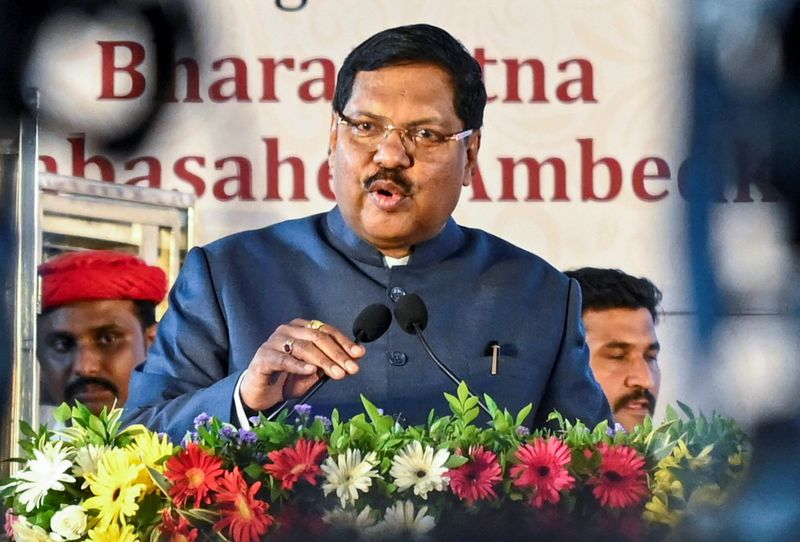
Chief Justice of India BR Gavai on Saturday said Dr BR Ambedkar gave a Constitution to India that has served the country well and kept it united in times of war and peace.

Speaking at the inauguration of the Constitution Preamble Park at Nagpur, the CJI said, “Babasaheb Ambedkar was criticised for our Constitution being too centralised… Babasaheb had replied to that criticism by saying… ‘We are giving the country a Constitution suitable for all challenges, and I can assure you that it will keep the country united in times of war and peace.’”

He said, “Today, we are seeing in our 75-year journey what is the situation around us… See the situation in the neighbouring countries, be it Pakistan, Bangladesh or Sri Lanka. Whenever our country has faced any crisis, it has remained united.”

The CJI’s comments assume significance in the wake of recent controversy over RSS General Secretary Dattatreya Hosabale’s statement questioning the rationale behind the words “socialist” and “secular” added to the Preamble of the Constitution by 42nd Amendment in1976 during the Emergency.

Speaking at a function to commemorate 50 years of the imposition of the Emergency, Hosabale had said, “The words socialist and secular were added to the Preamble. No attempt was made to remove them later. So, there should be a discussion on whether they should remain.” He had pointed out that Ambedkar’s Constitution did not have these two words in the Preamble.


Opposition parties, including Congress, have accused the RSS and BJP of being anti-Constitution.

In November 22024, the Supreme Court rejected petitions challenging insertion of “socialist” and “secular” in the Preamble.

A Bench led by the then CJI Sanjiv Khanna said it’s true that the Constituent Assembly had not agreed to include the words ‘socialist’ and ‘secular’ in the Preamble but the Constitution is a living document, with power given to the Parliament to amend it in terms of and in accordance with Article 368.

It said in 1949, the word ‘secular’ was considered imprecise, as some scholars and jurists had interpreted it as being opposed to religion. However, “Over time, India has developed its own interpretation of secularism, wherein the State neither supports any religion nor penalizes the profession and practice of any faith.”

The word ‘socialist’ denoted the State’s commitment to be a welfare State and its commitment to ensuring equality of opportunity, it said.

On Saturday, the CJI said Ambedkar envisioned one Constitution for the country to keep it united and never favoured the idea of a separate constitution for a state.

The Supreme Court drew inspiration from Dr Ambedkar’s vision of a united India under a single constitution while upholding the Centre’s decision to abrogate Article 370 that granted special status to Jammu and Kashmir, he said.

Justice Gavai was part of a five-judge Constitution Bench led by then CJI DY Chandrachud which unanimously upheld the Centre’s August 5, 2019 decision to abrogate Article 370 that gave special status to the erstwhile state of Jammu and Kashmir.

“When Article 370 was challenged, it came before us, and when the hearing was underway, I recalled Dr Babasaheb’s words that one Constitution is suited for a country… If we want to keep the country united, we need only one Constitution,” he said, addressing the gathering in Marathi.  With inputs from agency


Demolished by India in airstrikes, Pak rebuilding terror camps: Intel

article_Author
Ujwal Jalali Tribune News Service

Pakistan is scrambling to resurrect terror infrastructure that was decimated by the Indian armed forces during Operation Sindoor in May and the funding for it was being clandestinely funnelled by the neighbouring nation’s army and spy agency ISI, top intelligence sources said on Saturday.

Seven days after the Indian airstrikes on terror infrastructure, The Tribune had on May 14 exclusively reported about Pakistan Prime Minister Shehbaz Sharif’s announcement to rebuild all destroyed structures.

The latest intelligence inputs reveal that the Pakistan army was directly funding and coordinating the rebuilding of terror launchpads and training facilities once used by groups like Jaish-e-Mohammed (JeM) and Lashkar-e-Taiba (LeT). These camps, which were targeted by India following the Pahalgam terror attack that claimed 26 civilian lives, had long served as staging grounds for cross-border terrorism.

According to the sources, the renewed construction was being carried out in dense forested areas near the Line of Control (LoC) to evade Indian surveillance and airstrikes. The inputs also indicated a strategic shift: large camps were being broken into smaller, tech-equipped units to avoid concentrated targeting.

Pakistan army chief Gen Asim Munir is learnt to have recently set June 30 deadline to rebuild key facilities, including the Markaz Subhan Allah complex in Bahawalpur, which served as the JeM headquarters.

In a bold and calculated move, India had on May 7 launched Operation Sindoor, a series of precision airstrikes targeting nine terror camps across Pakistan and Pakistan-occupied Kashmir (PoK) in response to escalating cross-border terrorism and the Pahalgam terror attack.

What made Operation Sindoor significant was that India, for the first time, openly linked the Pakistan army to the functioning and protection of these terror camps.

Sources confirmed that the Indian intelligence had gathered “irrefutable evidence” of Pakistan army’s direct involvement– ranging from logistical and financial support to training and safe passage–for terror groups operating out of both PoK and parts of Punjab province.

Among the most damning revelations were satellite images and human intelligence reports that placed these camps within proximity of Pakistan army cantonments and known military installations. In several instances, terrorists were observed using army vehicles and gaining access to restricted zones.

Funded by ISI

The renewed construction was being carried out in dense forested areas near the LoC. Large camps were being broken into smaller, tech-equipped units to avoid concentrated targeting. The funding was being clandestinely funnelled by Pakistan army and spy agency ISI.