



Sanjha Morcha

What’s New

Click the heading to open detailed news

Current Events :

web counter

Print Media Reproduced Defence Related News

Strategic Chinese checkers by Lt Gen Bhopinder Singh

Kim’s sudden Beijing visit enhances the crucial role that China plays in maneuvering North Korea’s equations with the rest of the world.

Strategic Chinese checkers

On a pointed question pertaining to the strategic Chinese investments abroad for either long-term military platforms or controlling the local governments, the Chinese Foreign Ministry Spokesperson Hua Chunying quoted two Chinese sayings in its defense – first that ‘one’s mentality will determine how he perceives the world’ and second, ‘if one suspects his neighbour of stealing his axe, all behaviour of that innocent neighbour appears suspicious to him!’ Trying to allay specific fears about the Chinese intent on the increasingly-China-dependent states in Africa, Hua Chunying said, “China welcomes African countries aboard the express train of its development and is willing to make positive contributions to promoting the peace, security, development and rejuvenation of African countries.” Ironically, that very day of the Chinese statement, a heavily-armoured train actually chugged into Beijing, carrying the secretive entourage of the North Korean dictator, Kim Jong-un. Read This – Mamata’s unity efforts The ostensibly ‘unofficial visit’ was also the first international visit made by Kim Jong-un since he assumed power in 2011. While the suddenness, secrecy and the mode of conveyance has raised eyebrows across the world, the timing is not surprising given the impending meetings between Kim Jong-un and his South Korean counterpart President Moon Jae-in, which is to be followed by the unprecedented meeting of the North Korean strongman with the US President Donald Trump, around May. As North Korea’s biggest trading partner, military ally, and diplomatic vanguard, China is singularly responsible for the survival and sustenance of the North Korean regime. Since the bloody Korean War (1950-1953), when Kim Jong-un’s grandfather Kim Il-sung was supported by China’s Mao Zedong and the USSR – the North Koreans are perennially indebted to Beijing for the installation and perpetuation of the successive Kim-dynasts. Fittingly, Kim Jong-un’s toast to the Chinese President Xi Jinping during the recent visit was very servile: “It is appropriate that my first trip abroad is in China’s capital, and my responsibility to consider continuing NK-China relations as valuable as life!” Read This – Polyhouse: A versatile solution The strange sight of the 21-car armoured train in Bejing has reiterated the criticality of China in any possible future-solution to the dangerous theatrics and sabre-rattling unleashed by both the despot in Pyongyang and his equally colourful nemesis in Washington DC, US President Donald Trump. The obvious trust and equation between North Korea and China came to the forefront as Kim Jong-un felt safe enough to travel to China, without the pathological fear of a looming decapitation strike that haunts the North Korean establishment. The complexities and intrigues of the Sino-North Korean relationship belie the real instigator of the North Korean dictator’s sudden visit to China. Was it Kim Jong-un who wanted full Chinese alignment on the exact contours and extent of possible concessions with the South Koreans and the Americans, or was it the wary Chinese who wanted to secure a seat in any future discussions pertaining to the North Korean impasse? Most probably, it was a combination of both as the North Korean regime could implode and melt-away without the firing of a single-shot if the Chinese were to withdraw their beneficence, and likewise, an uninvolved China in the rapprochement process of North Korea could strip Beijing of a strategic pawn, military shield, and economic backyard for its wares. Importantly, both nations have signed a mutual defense treaty wherein they have stated that ‘in the event of one of the parties being subjected to armed attack by any state or several states together and thus being involved in a state of war, the other party shall immediately render military and other assistance by all means at its disposal’. This treaty was first signed by the governments in 1961, and subsequently renewed in 1981, 2001, and is now in effect until 2021. The stakes in the crucial meetings of Kim Jong-un with Moon and Trump are as high for Bejing as they are for Pyongyang. Potentially, the carefully plotted and positioned structures of Chinese assertion, dominance and geopolitical import are at risk in case of either any major concessions afforded by North Korea or escalations from the current structures in the North Korean narrative. The non-progress in talks could also license a military strike by the US, which could shoot-up tensions in the Chinese neighbourhood and bring rival forces to near its borders. Already, China is battling international opprobrium in the South China Sea and it could be doubly stretched in case the security situation worsens for Bejing in the Korean peninsula. Ideally the Chinese would want to bat for an incremental de-escalation via the ‘freeze-for-freeze’ methodology, which potentially kills two birds with one stone – the suspension of military drills and the possible withdrawal of the US military forces from the Korean peninsula, in exchange for North Korea suspending nuclear testing. This way, the Chinese manage to debar US presence in its vicinity, whilst also controlling the reckless bravado of the North Korean maverick. A possible thaw without altering the fundamentals of the sovereign-alignments or regime-changes would be in China’s best interest. Additionally, the optics of a successful peace-broker would enhance Beijing’s international prestige and prospects as it embarks on its quest for global super-powership and moral legitimacy. Inaction or non-intervention is not an option for the Chinese, as Mao Zedong had famously stated, ‘Passivity is fatal to us. Our goal is to make the enemy passive’; and, in this case, the enemy is the one that can upset the apple cart of the carefully charted coordinates of the Chinese dream, including the vassal states like North Korea under its strategic tutelage. Contrary to the publically declared position of a denuclearised Korean peninsula, China has tactically tolerated and even supported the nuclearisation program of North Korea. This existing arrangement of an anti-west, belligerent and roguish neighbour that is existentially beholden and completely dependent on the Chinese diktats and interests, works to Beijing’s advantage and it will not allow any major progressions or regression from the existing storyline in North Korea. The game plan, ‘red-lines’ and the absolute ‘no-go’ zones for the forthcoming discussions that North Korea would be partaking in would have been carefully discussed and agreed upon – between the two illiberal and mutually-aligned leaders. Lt General Bhopinder Singh (retd) is former Lt Governor of Andaman and Nicobar Islands & Puducherry. The views expressed are strictly personal

http://www.millenniumpost.in/opinion/strategic-chinese-checkers-291783

Indian troops are aggressive along border, says PLA

BOTH THE INDIAN ARMY AND ITBP COMMANDERS HAVE RUBBISHED THE ALLEGATION, SAYING THAT IT WAS THE PLA TROOPERS WHO WERE AGGRESSIVE

NEW DELHI: Despite India and China calling truce along the Line of Actual Control (LAC) after the Special Representative dialogue, the People’s Liberation Army (PLA) has virtually accused its Indian counterpart of being aggressive although no shot has been fired in 40 years.

The December 22 SR level meeting was the first after the 73-day standoff between India and Chinese PLA was resolved on August 28.

The PLA spokesperson’s statement on Thursday that India should “strictly control” its border troops stems from the August 15, 2017 fisticuffs between the Indian Army and its Chinese counterpart in the Pangong Tso sector.

Before going public, the PLA had made it known through diplomatic channels that its troops had sustained injuries during physical contact with Indian forces during LAC patrolling and claimed that Indian troops were showing undue aggression as if it was “the border with Pakistan”.

However, both the Indian Army and Indo Tibetan Border Police (ITBP) commanders have rubbished the allegation, saying it was PLA troopers who were aggressive and were found to be carrying iron rods and sticks during the Pangong Tso incident.

According to senior officials, Indian troops were sensitive to the requirements of LAC patrolling and were committed to maintaining peace and tranquillity on the border.

The PLA first raised this issue at a Track II dialogue at Chengdu this year, where a senior Chinese Army commander told the participating Indian delegation that New Delhi should not be posting troops “from Pakistan border” to the 3,488-km LAC as they “were found to be very aggressive”.

The commander said the PLA posted its troops to the LAC after sensitising them on the needs of the border with India. He hinted that aggressive troop posturing by Indian commanders could lead to a vertical escalation, which would be detrimental to bilateral relations.

While the PLA statement does not wash with the Indian Army or ITBP, Chinese State Councillor and CCP Politburo member Yang Jiechi was conciliatory with his Indian counterpart and National Security Adviser Ajit Doval during the SR level boundary talks.

According those privy to the talks, the Chinese plate was full with ongoing North Korean and South China Sea crisis and, hence, were all for maintaining peace and tranquillity along the border. The Indian side reciprocated the gesture even though the actual resolution of the India-China boundary is far away.

At the SR level talks, both sides emphasised on the need for the two countries to remain in touch with lines of communication open between the top leadership of India and China and ensure that a Doklam-like situation is not repeated.


India’s military base in Seychelles hits wall

India’s military base in Seychelles hits wall

Smita Sharma

Tribune News Service

New Delhi, March 28

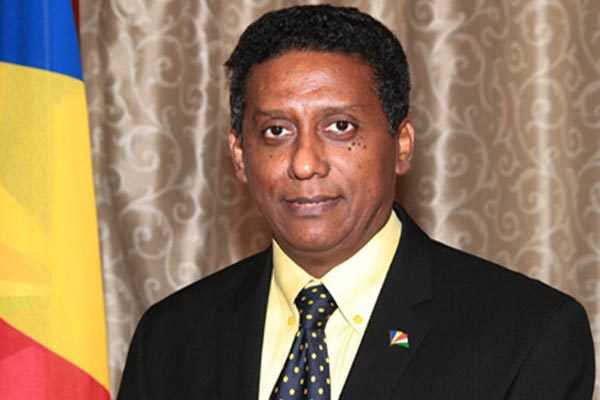
India’s ambition of setting up a joint military base in the remote coral Assumption (Assomption) Islands has suffered a major jolt. Giving in to Opposition protests, Seychelles President Danny Faure has reportedly shelved plans to present an amended agreement for ratification in parliament in April.Faure, who was recently in India at the inaugural summit of the International Solar Alliance, was quoted by local media as saying: “It is not proper for me to send the agreement to the Speaker when the Leader of the Opposition, who is in majority in the Assembly, has signalled he will not ratify it.”Under the agreement struck in 2015 during Prime Minister Narendra Modi’s visit, India is to invest $550 million in building the base to be shared by militaries of both countries for up to 30 years. New Delhi wants to ensure safety of its vessels in southern Indian Ocean and increase strategic presence in waters with an aggressive China expanding its maritime footprint. Seychelles government agreed the deal would help coastguards to patrol its 1.3 million square kilometres Exclusive Economic Zone (EEZ).Assumption has strategic importance for monitoring shipping of international vessels through Mozambique Channel. After consistent protests by locals, even some ruling party members and the political opposition on grounds of sovereignty and environmental concerns, the deal was revised this year to clarify issues such as prohibition of any nuclear use of the island as well as India not be allowed to use the base in war.Indian-origin leader of opposition Wavel Ramkalawan was invited in January to attend the Global PIO Parliamentary Conference in Delhi. Despite India’s attempts at engaging Ramkalawan, he was quoted as saying: “I hope I have made it clear that this is the end of the Assumption agreement and that I don’t expect to see it on any agenda between President Faure and the Opposition.”


Slain soldier’s family hails Army action against Pakistan

Slain soldier’s family hails Army action against Pakistan
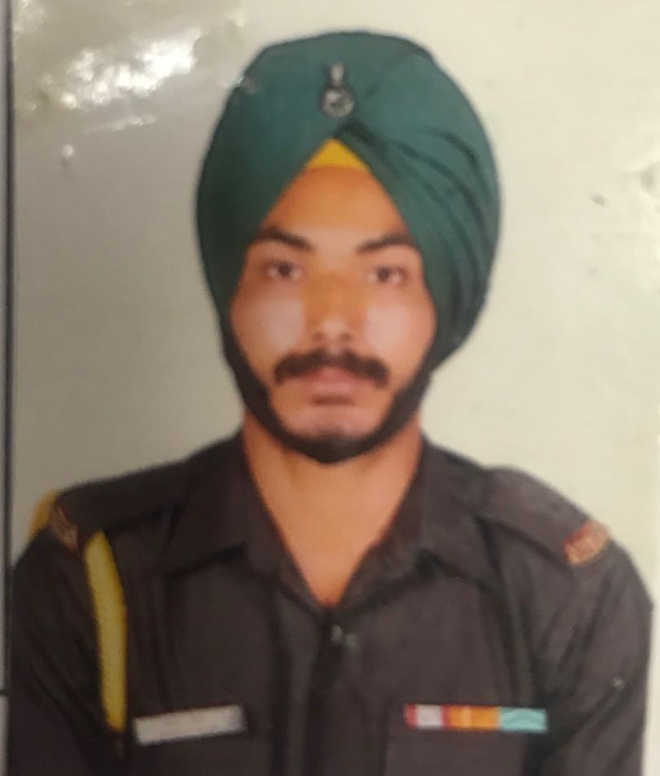
Sepoy Pargat Singh.

Parveen Arora

Tribune News Service

Karnal, December 26

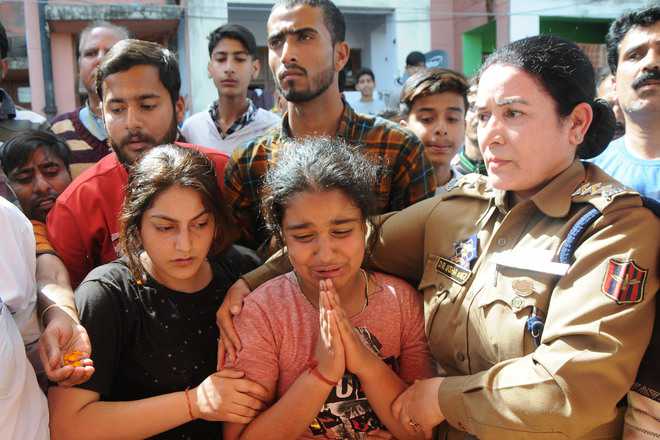
Family members of Sepoy Pargat Singh, who was killed on Saturday in a ceasefire violation in Keri sector in Rajouri district, have hailed the Indian Army action in which three soldiers of Pakistan Army have been killed.They urged the Indian Army and Union government to continue such kind of retaliation to take revenge of the supreme sacrifice of the Indian soldiers.“I have lost my son who had made supreme sacrifice for the country, but I do not want that mothers like me and wives like my daughter-in-law should suffer any more, so the Indian Army and the Union government should continue such retaliatory action till terrorism is uprooted,” said Sukhwinder Kaur, mother of Pargat Singh.Hailing the action taken by the Indian Army, she said, “I appreciate the reply by the Indian forces to Pakistan, but still there is a need of a stringent action.”“The action from our side should be continued. The government should give a free hand and should not stop the Indian Army from taking any kind of action against Pakistan,” she maintained.Raising anti-Pakistan slogans at his residence, Pargat’s son Yuvraj Singh showed his willingness to join Indian Army to take the revenge of his father. “I will join the Army and will take avenge my father’s killing,” said Yuvraj.Pargat Singh’s wife Ramanpreet Kaur said, “I appreciate the retaliation by my solider brothers as Pakistan deserves such kind of action. It understands the language of bullet and not love.”“I am proud of my husband’s sacrifice. He wanted to make Yuvraj a top official. I will send my son to the Army,” she said.


Floral tributes paid to 5 Kupwara martyrs

Tribune News Service

Srinagar, March 22

The Army and J&K Police paid floral tributes to the five security personnel killed in a fierce gunfight in the frontier Kupwara district on Wednesday.The Army held a solemn ceremony at Badamibagh cantonment, where Lt Gen AK Bhatt, Chinar Corps Commander, and all ranks paid homage to the three soldiers killed in the gunfight on behalf of the nation. “In a show of solidarity, representatives from other security agencies also joined in paying their last respects to the martyrs,” Srinagar-based defence spokesman Col Rajesh Kalia said.Havildar Jorabar Singh, Naik Ranjeet Khalkho and Naik Mohammad Ashraf Rather were killed in an anti-militancy operation in Halmatpora, Kupwara .Jorabar Singh, 45, had joined the Army in 1993 and hailed from Rait village in Kangra, Himachal Pradesh. He is survived by his wife and three children.Ranjeet Khalkho, 33, hailed from Dudhakhuti village in Ranchi, Jharkhand, and had joined the Army in 2001. He is survived by his parents, a brother and three sisters.Mohommad Ashraf Rather, 35, had joined the Army in 2004. He belonged to Reshigund village of Kralpora in Kupwara, Kashmir, and is survived by his wife and a daughter.Floral tributes were also paid to the two policemen — Senior Grade Constable Deepak Thusoo of Nagrota and Special Police Officer Mohammad Yousuf of Kachhama in Kupwara — killed in the Kupwara gunfight.Member of Parliament Fayaz Ahmad Mir led the police and security forces personnel in paying tributes to the two slain policemen in Kupwara. In Srinagar, Inspector General of Police Swayam Prakash Pani led the police and security forces officers in the wreath-laying ceremony for the two policemen.Deepak Thusoo is survived by his aged parents, wife, 12-year-old son, 7-year-old daughter and an unmarried sister, a police spokesman said.Mohammad Yousuf is survived by his aged parents, three sons and two minor daughters, the youngest being five years old.


Char Sahibzade to feature in NCERT history books DSGMC gen secy Sirsa had raised issue with Prime Minister

Char Sahibzade to feature in NCERT history books
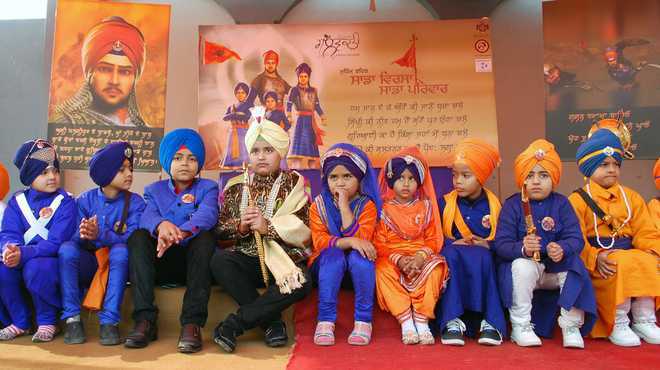
Children participate in a turban tying competition organised in remembrance of Char Sahibzade in Amritsar. — File photo

Syed Ali Ahmed

Tribune News Service

New Delhi, December 22

The National Council of Educational Research and Training (NCERT) has agreed to consider inclusion of a chapter on Char Sahibzade of 10th Sikh Master Guru Gobind Singh in its syllabi from next year.This was communicated to Manjinder Singh Sirsa, Delhi MLA and general secretary of the Delhi Sikh Gurdwara Management Committee (DSGMC) by the NCERT. Sirsa had raised the issue with Prime Minister Narendra Modi.In a communique written to Sirsa on the issue, Secretary of the NCERT Major Harsh Kumar stated that the Director, NCERT, had appreciated the concern of Sirsa regarding inclusion of a chapter on Char Sahibzade for their unparalleled valour and supreme sacrifice in the country.The secretary informed that new policy of education was in progress which would give direction for development of national curriculum framework, syllabi and curricular material for schools, Sirsa said.Harsh Kumar said Sirsa’s suggestion would be placed before the expert committee before finalising syllabi and curricular material for social science in general and history in particular.Sirsa said his mission was to get the next generation aware of the supreme sacrifice made by four Sahibzade for the nation and humanity. There was no parallel in the world of the sacrifice they made at such a tender age.Sirsa also urged all the education boards of different states to include chapters on history of the supreme sacrifice in their syllabi so that children studying in these states could get acquainted with these incidents of historical importance.


FDI in defence since 2014 mere Rs 1.17 cr

FDI in defence since 2014 mere  Rs 1.17 cr

Ajay Banerjee

TRibune News Service

New Delhi, March 7

In what reflects a ‘lack of interest’ by foreign companies in the Indian defence manufacturing sector, there has been a mere Rs 1.17 crore foreign direct investment (FDI) since May 2014. (Follow The Tribune on Facebook; and Twitter @thetribunechd)Touting FDI in defence as a major shift in policy, the Ministry of Defence (MoD) had okayed up to 49 per cent stake for foreign companies partnering Indian companies. As per the MoD figures given in Parliament, the defence industry received FDI worth Rs 1.17 crore from April 2014 to December 2017, a mere shadow of the overall FDI inflow into the country during 2016-17 fiscal which stands at Rs 3,86,885 crore. In 2016, a revised FDI policy on defence was announced, allowing FDI up to 49 per cent under the automatic route and beyond that through the government route, “wherever it was likely to result in access to modern technology or for other reasons to be recorded”.The government had also come out with a “Security Manual for Licensed Defence Industries”, prescribing guidelines on physical, information, documentation, cyber and personnel security aspects. The defence manufacturing sector needs significant capital investment and infusion of technology for which foreign investment can play a critical role. 


Spectrum, scandals & scams 2G verdict has massive political ramifications

Spectrum, scandals & scams

IN acquitting former Telecom minister, A Raja, Ms Kanimozhi and all other accused in the “2G scam”, the Special CBI court at Patiala House has introduced a spicy flavour to the national political curry. To the extent, 2G had become emblematic of a supposedly corrupt government and a broken down political economy, the Special CBI court verdict is bound to energise the discredited UPA crowd, as also take the bite out of PM Modi’s messianic proclamations against the corrupt. Coming close on the heels of an honourable electoral draw in Gujarat, the political equations are poised to be redefined. Suddenly, the sinners are looking less than sinners and the saints no longer come across so saintly.The CBI has done a shoddy job but it will find its institutional arm twisted to ensure that an appeal got filed against the Special Court’s judgment. Judge Saini’s magisterial dismissal of the prosecution case as nothing more than “rumour, gossip and speculation” goes to the very heart of the infirmities that have come to overload our public institutions. His elaboration that “public perception has no place in judicial proceedings” is a bracing slap across the face of many in superior judiciary who tend to work “national conscience” and similar perceptual constructs into their judicial reasoning.A war of words has predictably broken out between the UPA and the NDA partisans and practitioners over the verdict and its political ramifications. That war among politicians will continue and only intensify till 2019. But there are significant lessons for all those who preside over our institutions. The former CAG, Vinod Rai, ought to be the most chastened man in India. His twisted logic produced a figure of Rs 1.76 trillion loss to the national exchequer. This was only a notional loss but it lodged itself in the national imagination as an act of ethical wrong-doing on a gigantic scale. Arguably, the process was abused by the politician-bureaucratic axis, but Vinod Rai too did not play by the book. He subjected the polity to great convulsions; in the process, the nation got a bad name globally, resulting in huge — unquantifiable — losses in terms of businesses and investment withheld. Many more reputations and myths would come unravelling.


Thaw in ties? Pak yes to Delhi proposals

Thaw in ties? Pak yes to Delhi proposals
Pakistan has said yes to revival of the mechanism that looks into issues of fishermen and prisoners in each other’s custody. — PTI file

Smita Sharma

Tribune News Service

New Delhi March 7

Amidst continuing bloodshed along the Line of Control, India and Pakistan today acceded to humanitarian proposals. Islamabad accepted three humanitarian gestures proposed by India on the issue of civilian prisoners on both sides. In a formal statement, Pakistan said Foreign Minister Khawaja Asif has accepted proposals that include exchange of three categories of prisoners — women, mentally challenged or with special needs and those above 70 years of age. (Follow The Tribune on Facebook; and Twitter @thetribunechd)   Pakistan has also said yes to revival of the Joint Judicial Committee mechanism that looks into issues of fishermen and prisoners in each other’s custody. The panel last met in October 2013 in India. Also, the proposal to facilitate visit of medical experts from both sides to meet and examine the mentally-challenged prisoners for their repatriation, has been cleared by Islamabad. Foreign Minister Sushma Swaraj had discussed these proposals with Pakistani envoy Sohail Mahmood on October 17 last year. MEA spokesperson Raveesh Kumar said,“The officials on both sides would be working on the modalities to implement the understanding reached on the humanitarian issues.”Additionally, Pakistan has proposed the exchange of prisoners above 60 years and below 18 years of age, which is expected to be accepted soon by India, as per sources. “Through such initiatives, Pakistan and India would embark on the road to a comprehensive dialogue, and make a conscious effort to de-escalate the situation on the LoC,” said the Pakistan Foreign Ministry statement. The two neighbours have witnessed much hostility in ties over the past year after the meeting between Indian national Kulbhushan Jadhav lodged in Pakistani jail and his mother and wife in Islamabad on December 25 last year. 


No signs of formal talksAmid signs of thaw in India-Pakistan ties, there is no sign yet of formal talks, with India awaiting a response to the invitation to Muhammad Pervaiz Malik, Pakistan’s Commerce and Textile Minister, to attend an informal WTO (World Trade Organisation) ministerial meeting in Delhi on March19 and 20. TNS


MILITARY LITERATURE FESTIVAL The salience of military history

War books are not only a prominent source for understanding the world’s conflicts — past, present and future — but also a useful base material for sociologists and political scientists to forecast future societal trajectories

The salience of military history
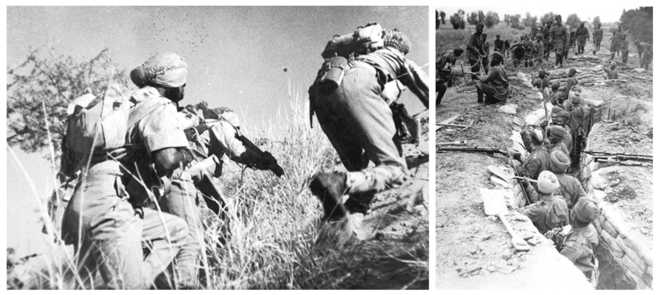
Wars we fought, but didn’t forget: (Left) Indian soldiers during the Battle of Longewala in the Western Sector during the 1971 War; in the trenches in World War I

Sandeep Dikshit

The written history of the world is largely a history of warfare — John KeeganHumans have always engaged in warfare. The earliest known evidence of intra-state conflict is a 3,500-year-old ivory knife handle that must have figured in one of the battles between the Egyptians and the Mesopotamians. Only 283 years since then have seen no recorded wars.The Westphalia concept of nation states in the West is also an outcome of a 30-year-long war in the seventeenth century.(Follow The Tribune on Facebook; and Twitter @thetribunechd)In the twentieth century, India’s impulses towards sovereignty and nationhood gathered steam after it contributed generously to the British effort in World War I. Among its neighbours, Russia became a Communist country after the same war while China turned one following wars between the Communists and the Nationalists, which were a result of the space provided by World War II. It may disappoint the creeping incursion theorists that 60 years later China’s borders have remained nearly the same. In fact, during its settlement with 12 countries, it actually gave away a lot of land it had claimed.This makes military history not only a prominent source for understanding the world’s conflicts — past, present and future — but also a useful base material for sociologists and political scientists to forecast future societal trajectories.It also gives a clue about the present militaristically aggressive behaviour of some nations such as the US, whose early leaders like Theodore Roosevelt and Abraham Lincoln were raised in the crucible of wars and actually led battles.From a tangible perspective, history’s usefulness is more difficult to identify than applied sciences such as medicine or engineering. However, there is no such confusion regarding military history. Cynics may point out the futility of researching centuries-old muscle-and brawn-dependent warfare in an era of armed drones, nuclear submarines and inter-continental missiles. But technology and military history need not be irreconcilable; neither is technology a Silver Bullet. Military history, at the end, is also about technological change and how well or badly military forces adapted themselves to the changes, especially in the kinetics of tactics and strategy; the preparedness in logistics and administration, finessing of military doctrine military and theory, the degree of military professionalism and the mental agility of its leadership.It is also about normative application of the lessons learnt from past wars even if a copy-paste approach will likely bring grief.Military history need not be about mega clashes of armour and men. It could also be about learning from previous anti-terrorism campaigns for instance and applying them in the present instances.There is a caveat though: for soldiers, a mastery over military history does not translate into professionalism and competence; it can add to, but, is not a substitute for practical experience. A simplistic and distorted understanding can have adverse implications as the Americans recently experienced twice: Military professionals had cited the blowback against the British and Soviets to argue against a military intervention in Afghanistan, but then National Security Advisor Condoleeza Rice had drawn a different conclusion: “The Soviets had never taken Kabul whereas the US will,” she said. The war is still on.It is true that military history alone is terribly inadequate in providing all the answers to all the issues confronting the politico-military policy makers of today. This is why an interdisciplinary approach is very important. At the same time, none can deny the lessons in capability of the political leadership, its synergy with the military brass and the military response and counter-response that come from studying past wars: the wars of 1962 and 1971 are studies in contrast while the 1965 battle would fall somewhere in between the two.In the end, every war ought to be a deliberate use of force to achieve political goals. In other words, in most cases, politicians flag off wars and the buck stops with them: win or lose. It is they who are answerable for a large number of critical components of a war: logistics infrastructure, expenditure on the military and the extent of indigenisation.The distilled lessons from military history thus become an integral part of a serving politician’s statecraft as also for tomorrow’s leaders, who are students today. For winning and avoiding wars, it becomes important to study military history in universities and schools as much as in military training institutes.