Sanjha Morcha

What’s New

Click the heading to open detailed news

Current Events :

web counter

Print Media Reproduced Defence Related News

Defence Procurement Board okays proposal to acquire 114 Rafale jets from Dassault

In a significant development to secure next-generation fighter jets, the Defence Procurement Board, headed by Defence Secretary Rajesh Kumar Singh, on Friday okayed the proposal to acquire 114 Rafale fighter jets from French plane-maker Dassault.Sources said the purchase proposal will now be taken up for clearance at the level of Defence Minister Rajnath Singh, when he chairs the next Defence Acquisition Council, the apex decision-making body of the Ministry of Defence. The Cabinet Committee on Security, chaired by Prime Minister Narendra Modi, is expected to give the final nod.

India and France are looking to seal the deal for the jets in February when a meeting is scheduled between Modi and French President Emmanuel Macron.

The Rafale deal will not impact India’s plans to make the Advanced Medium Combat Aircraft (AMCA) and the Light Combat Aircraft Tejas Mark-2, said sources.

The AMCA is a fifth-generation plane. The Tejas Mark-2 is planned to be multi-system upgrade over the existing order of 180 Tejas Mark-1A jets the Ministry of Defence has placed with the public sector plane-maker, Hindustan Aeronautics Limited. All indigenous jets, their timeline and budgeting have been planned separately from the 114 Rafales.

In September last year, the Indian Air Force had moved a formal proposal to the Ministry of Defence seeking 114 more Rafale fighter jets as part of its multi-pronged plan to add more number of jets.

The IAF based its choice on multiple reasons. First, it already flies 36 Rafale jets, while the Navy has ordered 26 marine‑variants of the same jet. Increasing numbers would reduce maintenance costs. A Rafale flight‑training and Maintenance, Repair, and Overhaul (MRO) facility is operational at the IAF base in Ambala. The IAF has the capacity – the space, spares, tooling and trained manpower — to immediately take in two squadrons (36-38 planes).

The jets will be acquired under a ‘Make in India’ scheme, with Dassault Aviation — the maker of the Rafale — partnering with an Indian firm. Last week, Dassault said it had increased its shareholding in Dassault Reliance Aerospace Limited (DRAL) from 49 per cent to 51 per cent, making the joint venture a majority-owned subsidiary of the French company. Anil Ambani-led Reliance Infrastructure is a partner in DRAL.

The French plane-maker will integrate Indian weapons, missiles and ammunition on all 114 jets and will also provide secure data links to allow digital integration of the jets with Indian radars and sensors sending imagery to ground-based controllers.

Also, the plane maker will provide transfer of technology (ToT) for making air frames. Its suppliers like engine maker Safran and avionics provider Thales will be part of the ToT. The indigenous content is expected to be between 55 per cent and 60 per cent once ToT for air frames, engines and avionics is done.


Why an Indian-origin Canadian Sikh left home to fight in Ukraine and made the ultimate sacrifice

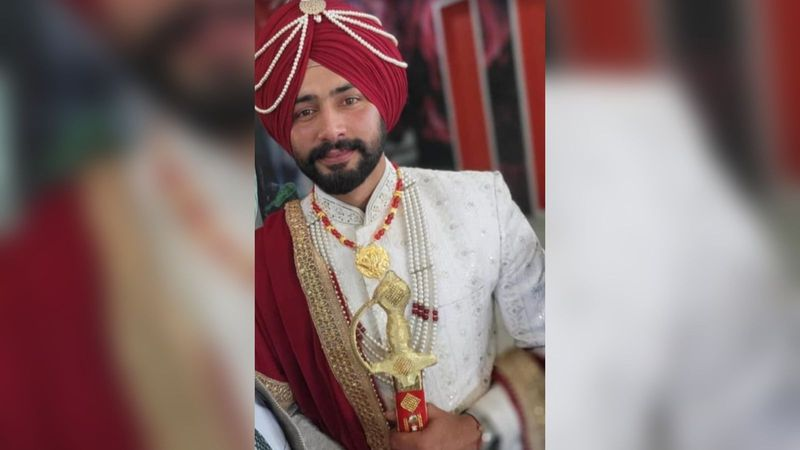
Mandeep Singh, a 30-year-old Indian-origin Canadian Sikh, left his home in Brampton, Ontario, to volunteer in Ukraine, driven by the Sikh principle of Sewa, or selfless service to humanity, and a desire to help people caught in the war.

He was posthumously awarded the Ukrainian Canadian Sacrifice Medal in December 2025, more than a year after he was killed in action on October 27, 2024.

According to a Kyiv Post report, Mandeep, who had no prior connection to Ukraine, was honoured in a ceremony in Toronto attended by the Ukrainian Consul General and members of the Ukrainian Canadian Congress and the Ukrainian War Veterans Association of Canada.

Mandeep answered an urgent call for help and made the ultimate sacrifice so the Ukrainian people could live in freedom,” Ukrainian Consul General Oleh Nikolenko wrote on Facebook, the report says.

He is the only Sikh Canadian among 14 recipients of the medal. “We owe them a debt that can never be repaid, and we will ensure that their sacrifice is remembered forever,” Taras Jackiw, chairperson of the Ukrainian Canadian Sacrifice Medal, said in a statement to Kyiv Post.

Born in Mumbai, Mandeep’s parents, Jaswinder Singh and Asha Kaur, moved to Brampton in 2004. The family described him as disciplined, humanitarian, and inspired by the Sikh principle of Sewa—selfless service to humanity without expectation of reward.

“He always said if his life could help someone, it would be satisfactory for him,” the report cited Mandeep’s mother as saying.

After high school, Mandeep trained in a detective course and served part-time in the Canadian Army. Motivated by discipline and humanitarian ideals, he decided in late 2023 to volunteer in Ukraine. He travelled through Poland before arriving in January 2024 and returned briefly to Canada in April before embarking on his final mission in October.

His parents received the devastating news of his death from a close friend on October 29, 2024, though he had died two days earlier after suffering a critical gunshot injury.

Mandeep’s remains were repatriated to Canada after months of administrative procedures, and his final rites were performed on April 13, 2025, coinciding with Vaisakhi.


Beyond its heavy focus on development of critical road infrastructure in the mountains along the country’s northern frontiers, the Border Roads Organisation (BRO) is upgrading some roads in the deserts of Rajasthan that would enhance connectivity along the western borders.

Army Chief General Upendra Dwivedi on Thursday announced that the years 2026 and 2027 will be used to strengthen ‘networking’ of the forces and make them more ‘data-driven’ for battles of the future.

General Dwivedi made the announcement at the Army Day Parade in Jaipur on Thursday, adding that this focus would further improve connectivity, information flow and coordination across the force, enabling timely and well-informed decisions.

The Army Chief also posted a message for the 1.2 million-strong force, stating that 2026 and 2027 have been declared as “years of networking and data-centricity to transform the Army into a data-driven, network-enabled and fully integrated Army with all other stakeholders, so as to win wars in a multi-domain environment.

The phrase ‘networking and data-centricity’ in Armed Forces refers to building a digitally connected military where data flows seamlessly across units, enabling faster decisions, resilient communication, and integrated operations.

Network centricity will alter results in future wars. The side that decides faster, will have the upper hand.

Data-centricity ensures informed decisions, as speed in decision-making requires data, images and satellite imagery to reach faster to commanders on the ground as well as at senior levels.

The two-year focus is part of the ‘decade of transformation’ announced by the Army in 2023. It looks at aligning the force with the changing character of war, cumulative presence of five generations of warfare, two-and-half-front security challenges and the predominant grey-zone warfare. The decade of transformation is progressed under five pillars.

At the parade in Jaipur, the Army Chief also mentioned the previous year –2025—and Operation Sindoor. He said “the bygone year called for sustained vigilance and decisive operational responses across the security spectrum in safeguarding our national sovereignty and interests as showcased during Operation Sindoor”.

This is the second major change announced by the Army Chief in the past two days. Earlier on January 13, General Dwivedi revealed that the government has approved a long-pending proposal for setting up Integrated Battle Groups (IBGs). The first such unit is planned to come up under the China-focused 17 Mountain Strike Corps.

This move is part of the reorganisation of the Army’s battle architecture following the 2020 border crisis with China and Operation Sindoor with Pakistan.

As per the plan, the two division-size formation of the Mountain Strike Corps will be converted into four IBGs to be headed by a Major General-rank officer, the Army Chief said.

The IBGs are envisioned as agile, brigade-sized combat formations having integrated elements of all arms depending on the operational terrain it is set up for.

In case of conflict, the IBGs will be capable of launching swift operations against the enemy. As per the earlier plan, each IBG will have a strength of around 5,000-plus personnel which would be larger than a brigade (3,000-3,500 troops) but smaller than a division (10,000-12,000 troops).

These IBGs will have elements from the infantry, artillery, armoured units, engineers, signals, air defence, and other arms and services, and can launch an operation within 48 hours when tasked.

Separately, the Army has restructured itself and set up Rudra Brigades for high-tempo multi-domain operations. Bhairav Battalions have also been raised, which are light commando battalions.

The Army is also in the process of raising Shaktibaan Regiments and Divyastra Batteries of artillery.  The ‘Shaktibaan’ regiment will use loitering ammunition and swarm drones and will be pre-positioned at specific locations along the western frontier with Pakistan and the northern front with China.

The Divyaastra batteries will carry long-range artillery guns, surveillance drones and anti-drone systems backed by AI-based fusion centres collating real-time data.


BRO’s strategic push: Upgrading desert roads in Rajasthan to boost border connectivity

Over 300 km of border roads in the Jaisalmer region are being widened and strengthened

Beyond its heavy focus on development of critical road infrastructure in the mountains along the country’s northern frontiers, the Border Roads Organisation (BRO) is upgrading some roads in the deserts of Rajasthan that would enhance connectivity along the western borders.

Over 300 km of border roads in the Jaisalmer region are being widened and strengthened. These include the 70-km long Ramdevra-Nachna stretch, the Lundet-Pithewals Mor (PTM) road, which is 125 km long and the Ramgarh-Asutar road that runs for about 110 km.

“Aligned with the operational requirements of the Indian Army, Project Chetak @BROindia is strengthening critical border infrastructure across the Thar Desert. Upgradation of key routes — Ramdevra-Nachna, Lundet-PTM and Ramgarh-Asutar — is boosting last-mile connectivity, operational mobility and regional development,” BRO has posted on its X handle.

These roads were Class 9 standard and are being brought up to National Highway Single Lane and National Highway Double Lane standards, BRO officials said. A Class 9 road is a narrow road having a carriageway about four meters wide and are designed for light traffic, serving as link roads and feeder routes for local access in the hinterland.

Besides accommodating heavier traffic and providing flexibility and convenience in the movement of military traffic, better roads would also benefit the local populace and provide greater access to tourists. Ramgarh, for example, is the site for Ramgarh Structure, a 160-million-year old 3.5 km diameter crater formed by a meteorite impact, which has been declared as India’s first national geo-heritage site.

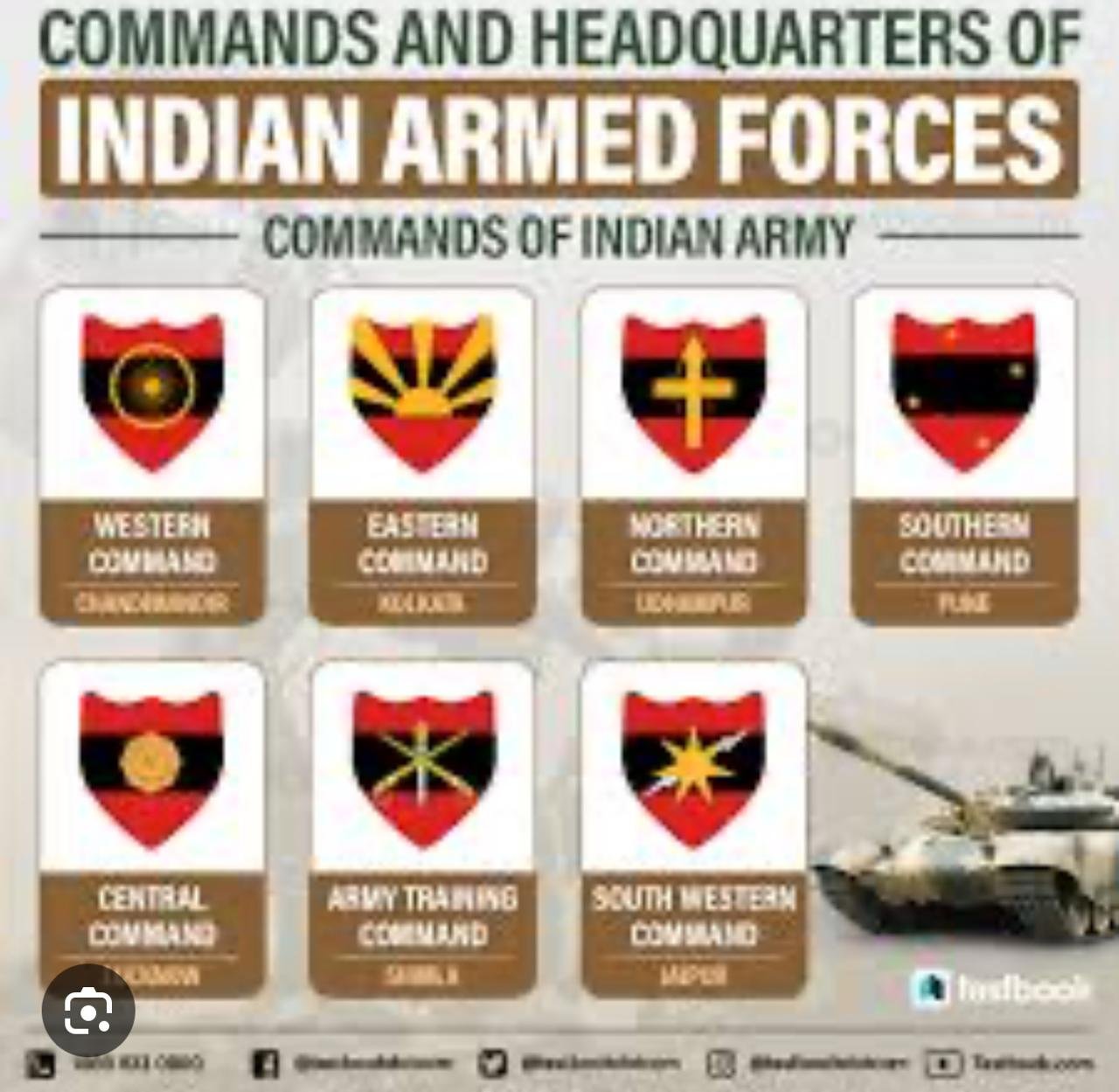
The ongoing works in Rajasthan are being executed by BRO’s Project Chetak headquartered at Bikaner. Geographically, it is the largest among BRO’s 18 projects, stretching across the states of Punjab, Rajasthan and Gujarat and maintains over 3,200 km of roads in the operation jurisdiction of the Army’s Western, South Western and Southern Commands.

This project is also responsible for the construction and maintenance of ditch-cum-bunds (DCBs) that form an important part of the defences along the India – Pakistan border in the Panjab and northern Rajasthan sectors. DCBs are structures comprising a shallow canal with a high earthen embankment embedded with bunkers running along its rear bank that act as an obstacle for enemy vehicles and troops.

Functioning fully under the Ministry of Defence, BRO has built over 64,100 km of roads, 1,179 bridges, 22 airfields and seven tunnels across India’s border areas in 11 states and three Union territories besides friendly neighbouring countries, including Bhutan, Myanmar, Afghanistan and Tajikistan since its inception in 1960.

In the 2024-25 financial year, BRO recorded the highest-ever annual expenditure of Rs 16,690 crore, with a target of Rs 17,900 crore for the current 2025–26 fiscal. In the two-year period from 2024 to 2025, BRO commissioned 356 infrastructure projects, marking a major milestone in strategic border development. Under BRO’s perspective plan, 470 roads covering about 27,300 km are planned in border areas.



Chance for India to bridge the Gulf

UNITED Arab Emirates President Sheikh Mohamed bin Zayed Al Nahyan, widely known as MbZ, made a flying visit to New Delhi on Monday. The absence of any prior indication about the visit implies that it concerned the rapidly changing geopolitical scenario in the Gulf and West Asia.

The UAE, a coalition of Trucial States formed after the British exit the region in 1971, traditionally followed a status quo-based non-confrontational foreign policy. In 2002, an Indian delegation visited the UAE, when I was the Ambassador, after the terror attack on the Indian Parliament. Then President Sheikh Zayed bin Sultan Al Nahyan, MbZ’s father, received the visitors.

When asked about the foreign military presence in the region, the late leader recounted an old Arab tale. A farmer was frequently losing his sheep to wolves. Someone advised him to keep dogs. He did so, only to discover that he had to kill sheep often to feed the dogs. Sheikh Zayed’s message was that foreign intervention did not benefit the region.

Now MbZ is an English-speaking former air force pilot and the Supreme Commander of the UAE armed forces. He has controlled foreign policy since his father’s death in 2004, even when his brother was President. According to his diplomatic adviser, Anwar Gargash, the UAE’s priorities are to counter extremism and promote regional security. This underscores its opposition to the Muslim Brotherhood, which is seen as an existential threat. The UAE and Saudi Arabia had resented the ouster of former Egyptian President Hosni Mubarak by the Arab Spring protestors in 2011, to which then US President Barack Obama had seemingly turned a blind eye. Both countries supported the Egyptian military to subsequently overthrow the Muslim Brotherhood government.

The Gulf and West Asia have been unstable since US President Trump’s first term. The confrontation between Qatar and its two powerful neighbours, the UAE and Saudi Arabia, began soon after Trump’s visit to Riyadh. Qatar was blockaded (2017-21) for supporting Islamist forces. Trump also abandoned the nuclear deal with Iran, approved by the Permanent-Five plus Germany.

The UAE and Saudi Arabia are the two largest economies in West Asia. MbZ helped Saudi Crown Prince Mohammed bin Salman, widely known as MbS, to consolidate power. When Saudi operatives murdered Saudi journalist Jamal Khashoggi in Turkey in 2018 on MbS’ alleged instructions, it was MbZ who handled the Americans. However, as the Saudis, the custodians of the Two Holy Mosques, consider themselves the apex of the Arab and Muslim world, Saudi-Emirati differences gradually developed and their geopolitical visions came into conflict. In diplomacy, friendship is transitory while interests are permanent.

The UAE broke the regional consensus by signing the Trump-devised Abraham Accords in 2020 and normalising relations with Israel, while the Palestinian issue remained unresolved. It began backing secessionist forces in Yemen, Somalia and Sudan, ostensibly to counter Islamist forces. These three nations lie along the Red Sea, facing Saudi Arabia and the Bab al-Mandab. The UAE’s interests converged with those of Israel and the US.

President Trump’s second term has exacerbated the regional churn, especially since the June 2025 Israel-US air attacks on Iranian nuclear facilities. On September 9, Israel attacked Hamas leaders’ facilities in Qatar. MbZ rushed to meet the Saudi Crown Prince after a noticeable gap marked by the absence of communication.

On September 15, the GCC met to review the situation. Two days later, Saudi Arabia and Pakistan signed the Strategic Mutual Defence Agreement, with a clause mirroring NATO’s Article 5, about an attack on one nation being considered as an attack on both.

Soon enough, Yemen became a flashpoint. Early on till 2019, the UAE had joined Saudi Arabia in military operations in Yemen, but later preferred to support Yemeni rebel factions; the Saudis continued to back government forces. Reportedly, Israeli intelligence was positioned on UAE-controlled Yemeni island Socotra. While in Africa, Israel recognised Somaliland, a breakaway part of Somalia — the Emiratis are developing a port there.

The Saudis retaliated strongly, telling the UAE to withdraw its forces from Yemen and bombing the military equipment sent by UAE. Egypt, the other big Arab power, began to speak in favour of the Saudis — both clearly wanted to restrict Israeli strategic expansion in the Red Sea region.

Essentially, the Saudi and Emirati visions are at odds. The Saudis favour state-to-state engagement to stabilise domestic or regional conflicts. The UAE likes to cultivate dissident and breakaway factions, like in Yemen, if it promotes stability and controls supply routes, minerals and energy.

So as the Saudis attempted to limit Emirati geopolitical play in the Arab world, MbZ made his first visit to Pakistan as President last month. The UAE Sheikhs and Pakistan have been close for decades, but Pakistan had meanwhile signed a defence deal with the Saudis. The Emiratis were seeking to restore a balance in ties with traditional friends against the backdrop of their exposed closeness to Israel and conflict with Saudis.

President Mohamed bin Zayed’s trip to India must be seen in this context. PM Modi’s government has invested heavily in his outreach to ruling families in the Gulf, especially those in Abu Dhabi. The Indian diaspora in the UAE numbers 3.5 million or 35 per cent of the population. As many as one-third are professionals.

The UAE is India’s third-largest trading partner and second-largest export destination. In 2024-25, Indian exports were $36.73 billion, while imports touched $63.64 billion. Despite its small population and the local market, the UAE is the favoured entrepôt for Indian exports to the Gulf, Iran, Central Asia and even Pakistan. The UAE’s cumulative FDI in India is $22.84 billion (2000-25), a mere speck in Abu Dhabi’s nearly $1 trillion sovereign fund. The two signed an economic partnership deal in 2022. Both are members of BRICS and I2U2, a forum that comprises India, Israel, UAE and the US.

Still, the path ahead is not easy. Pathbreaking deals like the 2023 India-Middle East-Europe Economic Corridor (IMEC), which will pass through the UAE, Saudi Arabia, Jordan and Israel, are stymied by the standoff between Iran and Israel-US as well as the Saudis and Emiratis. The competing visions for stability in the Gulf is split between US-Israel-UAE and Saudi Arabia-Egypt-Turkey. Pakistan is playing both sides.

In this fragmented world, here is the opportunity for PM Modi to leverage India’s traditional warmth with all sides and demonstrate that “Vishwaguru” is more than a phrase. India can start bridging some of the divides, beginning with Modi’s substantive relationship with Israeli PM Benjamin Netanyahu. With large-scale protests continuing in Iran and the US moving more ships and aircrafts into India’s extended neighbourhood, the situation remains fragile. President Mohamed bin Zayed’s short visit to India is indicative of the churn in the Gulf and the need for India to be more proactive.


All India Radio begins two-hour morning Gurbani broadcast from Golden Temple, Amritsar

AIR, Jalandhar, has been airing kirtan from the Golden Temple for three hours daily on MW, including a two-hour morning slot from 4 am to 6 am

All India Radio (AIR), Amritsar, has begun broadcasting full two-hour early morning Gurbani from the Golden Temple, a move widely welcomed by listeners.The service, initiated by Prasar Bharati from January 13, enables devotees in Amritsar, Tarn Taran and Gurdaspur districts, as well as listeners across the International Border in Pakistan, to listen to the sacred kirtan.

Since the launch of AIR, Amritsar, on September 24, 2018, the station had been broadcasting Gurbani from 5 am to 6 am.

The FM transmission gets relayed from AIR’s Gharinda village centre near Attari and is operated under the External Services Division of AIR. Besides Gurbani, the division also airs special Urdu and Saraiki programmes, which has audiences in Pakistan, too.

Meanwhile, AIR, Jalandhar, has been airing kirtan from the Golden Temple for three hours daily on MW (medium wave), including a two-hour morning slot from 4 am to 6 am.

Former engineer Harjap Singh Aujla, who had been spearheading the demand, said medium wave transmissions were often unclear in distant areas and had also lost relevance as the use of MW radio sets declined.

“FM transmission offers better sound quality and is free from signal shadow caused by high-rise buildings. Residents of four border districts of Amritsar, Tarn Taran, Gurdaspur and Pathankot will now be able to listen the full Gurbani (two hours) clearly on FM,” added Aujla

He expressed hope that AIR, Amritsar, would also start the evening Gurbani broadcast from 4.30 pm to 5.30 pm, on the lines of AIR, Jalandhar. Kulwant Singh Ankhi, patron of the Amritsar Vikas Manch, said many people still preferred listening to Gurbani on the radio. Even in Lahore, several listeners tuned into Gurbani rendered in classical ragas, including noted Punjabi poet Ustad Daman, who was known to listen to kirtan regularly, he said. Satnam Singh of Dhotian village said listening to the morning kirtan on the radio was like a daily act of worship for him.

The demand for Gurbani broadcast on radio dates back to the period of the Dharam Yudh Morcha in 1982. After Operation Bluestar in June 1984, AIR, Jalandhar, began relaying shabad kirtan from the Golden Temple for three hours daily.

Bhagwant Singh Dhangera, manager of the Golden Temple, said, “It is encouraging that devotees can now listen to Gurbani for two hours. Many people prefer radio over television for kirtan as Gurbani is considered more of an art to be heard than watched.”


Several detained; massive search op to hunt down terrorists enters day 3 in J-K’s Kishtwar

Several individuals were detained for questioning as a massive search operation to flush out terrorists entered the third day in the upper reaches of Jammu and Kashmir’s Kishtwar district on Tuesday, officials said.

The operation was launched in Sonnar village near Mandral-Singhpora in the Chatroo belt on Sunday, leading to a gunfight that left one paratrooper dead and seven others injured, primarily due to splinter injuries caused by a sudden grenade attack from the hiding terrorists.

The terrorists escaped deep into the forest area, but their well-fortified hideout, packed with a large quantity of winter stock, including eatables, blankets and utensils, was busted.

Senior officers, including Inspector General of Police, Jammu Zone, Bhim Sen Tuti and Inspector General of CRPF, Jammu, R Gopala Krishna Rao, also reached the encounter scene and are currently camping there along with several Army officers to supervise the operation.

Meanwhile, a solemn wreath-laying ceremony was held here to pay tributes to the slain Special Force Commando, Havildar Gajendra Singh, in Jammu on Tuesday morning.

The wreath-laying ceremony at Satwari was led by Brig Yudhvir Singh Sekhon, Officiating Chief of Staff, White Knight Corps, and later, the mortal remains of the deceased were dispatched to his hometown in Uttarakhand for the last rites, the officials said.TI

Deputy Inspector General of Police, Jammu-Kathua-Samba range, Shiv Kumar Sharma, Deputy Commissioner, Jammu, Rakesh Minhas and several police, CRPF and BSF officers also attended the wreath laying ceremony.

On Monday afternoon, several individuals were taken in for questioning in connection with the busting of the hideout, located at an altitude of over 12,000 feet, officials said.

Security forces are trying to identify the overground workers (OGWs) who assisted the terrorists in procuring and transporting large quantities of rations, pulses, utensils, and other supplies, which were enough to provide sustenance for at least four persons during the winter months.

In a post on X on Monday, the Army’s White Knight Corps said Operation Trashi-I continues in Chatroo.

“The cordon has been further tightened with search operations expanded. Troops of the corps, along with Police and CRPF, remain deployed to dominate the area,” the Army said.

The official further noted that multiple teams of the Army, police, and paramilitary forces, supported by drones and sniffer dogs, are combing the area despite challenging terrain marked by thick vegetation and steep slopes, limiting visibility and movement.

A group of two to three terrorists allegedly affiliated with the Pakistan-based Jaish-e-Mohammad (JeM) are believed to be trapped in the area, officials said.

Operations have been intensified across the Jammu region in the run-up to Republic Day to ensure peaceful celebrations, amid intelligence inputs about desperate attempts by Pakistan-based handlers to push more terrorists into the region, officials mentioned.

Advertisement


HEADLINES : 15 JAN 2026

Army Day is celebrated on 15 January every year in India, in recognition of Lieutenant General Kodandera M. Cariappa’s (later who became Field Marshal 

HAPPY INDIAN ARMY DAY

Happy Indian Army Day 2026: Heartfelt Wishes, Quotes, Messages And Slogans To Honour India’s Brave Soldiers

Patriotic Messages And Slogans For Indian Army Day 2026

Indian Sikh woman who married Pakistani man arrested, sent to shelter home

1965 Indo-Pak War: Courage, resolve and choosing peace over conques

India urges citizens to leave Iran immediately amid escalating unrest and violence

Security forces intensify search operation in J-K’s Kathua

Why Jammu is raising the separate state demand again?

169 missing Guru Granth Sahib ‘saroops’ traced, CM Mann vows to hand them over to SGPC

Trump says anything less than having Greenland in US hands ‘unacceptable’


SOLDIER ATTAIN MARTYDOM LEAVING BEHIND FAMILY: ALWAYS RESPECT THE SOLDIER WHEN IN UNIFORM OR RETIRED

If you ever feel your life is tough and you are going through a bad phase …think again!
This soldier has achieved Martyrdom, bidding him farewell is an 8 hours old daughter and a wife on stretcher after the surgery for delivering the baby


Army Day is celebrated on 15 January every year in India, in recognition of Lieutenant General Kodandera M. Cariappa’s (later who became Field Marshal )

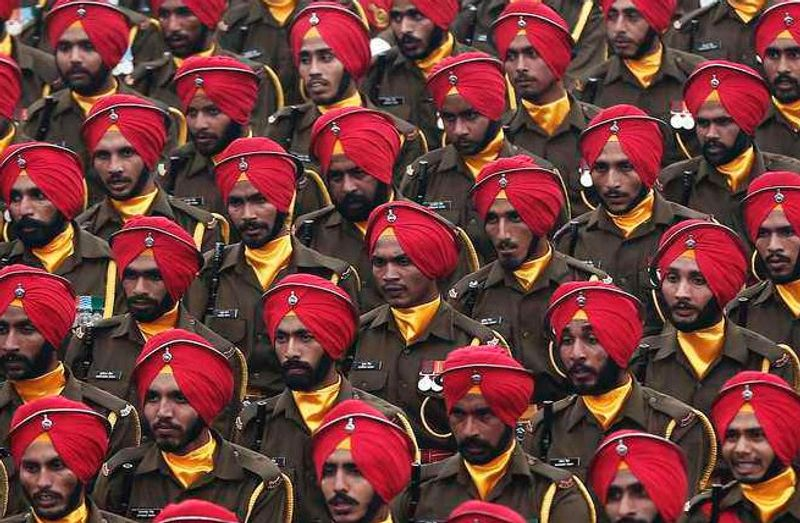
Army Day is celebrated on 15 January every year in India, in recognition of Lieutenant General Kodandera M. Cariappa‘s (later who became Field Marshal ) taking over as the first Commander-in-Chief of the Indian Army from General Francis Roy Bucher, the last British Commander-in-Chief of India, on 15 January 1949.[1][2] The day is celebrated in the form of parades and other military shows in the national capital New Delhi as well as in all headquarters.[3] On 15 January 2023, India celebrated its 75th Indian Army Day in Bengaluru.[4][5] Army Day marks a day to salute the valiant soldiers who sacrificed their lives to protect the country and its citizens.[6]

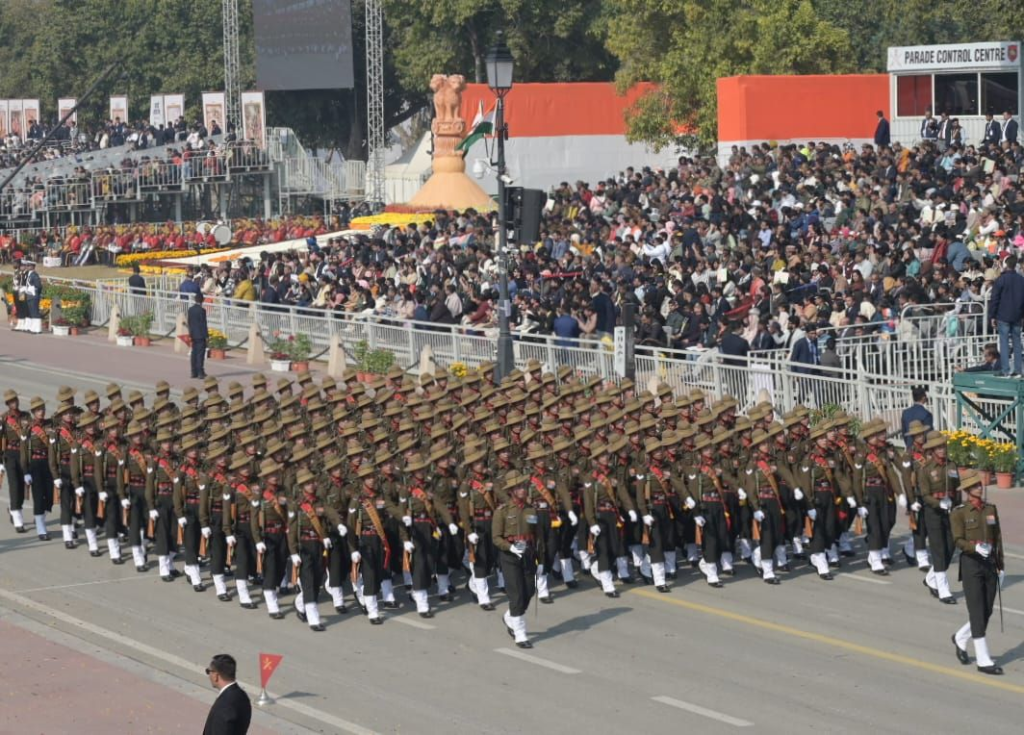
While celebrations take place across the country, the main Army Day parade is conducted in Cariappa Parade ground in Delhi cantonment.[7] Gallantry awards and Sena medals are also awarded on this day. In 2020, 15 soldiers were presented with bravery awards. Param Vir Chakra and Ashok Chakra awardees participate in the Army Day parade every year.[8][9] Military hardware, numerous contingents and a combat display are part of the parade.[8] In 2020, Captain Tania Shergill became the first female officer to command an Army Day parade.[10][11

Gallantry awards and Sena medals are also awarded on this day. In 2020, 15 soldiers were presented with bravery awards. Param Vir Chakra and Ashok Chakra awardees participate in the Army Day parade every year. Military hardware, numerous contingents and a combat display are part of the parade.

Captain Tania Shergill 

is the first Indian woman Parade Adjutant to lead an all-man contingent at an Army Day function in Indian ArmyRepublic Day (India) in 2020.[1][2]

Early life and education

She is a graduate of Officers Training Academy in Chennai. Shergill is serving at 1-Signal Training Centre in Jabalpur. She was commissioned into the Indian Army Corps of Signals in 2017.[3]

Family background

Shergill belongs to an Indian Army family background where her father served the 101 Medium Regiment (Artillery) and later in Central Reserve Police Force where he was awarded with a PPMG.[clarification needed] Shergill’s grandfather served in the 14th Armoured Regiment (Scinde Horse). Her great grandfather was in the Sikh Regiment. Shergill also led the Army’s contingent during the Republic Day parade in 2021.

Education

Shergill holds a B.Tech. degree in electronics and telecommunications from Nagpur University.[4]