












Sanjha Morcha

What’s New

Click the heading to open detailed news

Current Events :

web counter

Print Media Reproduced Defence Related News

Pak has more N-warheads than New Delhi, says think-tank

London, June 19

Pakistan continues to be ahead of India when it comes to possessing nuclear warheads, with China having double the quantity, according to a report by a leading Swedish think-tank.Pakistan is believed to have 140-150 nuclear warheads this year, 10 more than last year. In contrast, India is said to have 130-140 nuclear warheads, according to the annual nuclear forces data by Stockholm International Peace Research Institute (SIPRI).Russia and the US hold over 92 per cent of the total warheads, it said. SIPRI said nine countries — the US, Russia, Britain, France, China, India, Pakistan, Israel and North Korea — had 14,465 nuclear warheads at the beginning of 2018, of which 3,750 were actually deployed.At start of 2017, the total nuclear warhead count was 14,935, it said. The reduction is largely due to arms control commitments by the US and Russia in 2010 Treaty on Measures for the Further Reduction and Limitation of Strategic Offensive Arms. — PTI


SCO summit and thaw in Indo-Pak ties MK Bhadrakumar

Given Pakistan’s dependence on China, the Sino-Indian rapprochement impacts its thinking. Gen Bajwa’s overtures for better relations with India point towards a change of attitude. Delhi must reciprocate.

SCO summit and thaw in Indo-Pak ties

Qingdao summit of SCO presages a phenomenal change for the better in India”s external environment. Reuters

MK Bhadrakumar

A former ambassador

The three summit meetings that Prime Minister Narendra Modi took part during the past 10 weeks — at Wuhan with Chinese President Xi Jinping; at Sochi with Russian President Vladimir Putin; and, at the Qingdao summit of Shanghai Cooperation Organisation — are presaging a phenomenal change for the better in India’s external environment. The new foreign policy narrative focuses on India’s strategic autonomy, regionalism and its rejection of the US-led containment strategies against Russia and China. The leitmotif is a Sino-Indian rapprochement and a makeover of the time-tested India-Russian strategic partnership to inject more vitality in the contemporary world situation. India is positioning itself on the right side of history at a transformative period in the world order when multi-polarity is strengthening. The big question is: what is there in this narrative for India’s relations with its two key South Asian neighbours Nepal and Pakistan, where Indian and Chinese strategies have historically intersected? Most certainly, an improvement in the India-China relations reduces the scope for any country to play India and China each other. Having said that, as a rising world power, China has wide-ranging interests and concerns in the South Asian region and can be expected to be active in the region. But it is a fallacy to regard the Chinese regional policies as “India-centric” or to feel paranoid about them. In fact, we get a splendid view next week as to how far the “Wuhan spirit” is permeating China’s policies in South Asia. Nepal’s Prime Minister KP Sharma Oli begins a five-day official visit to China on June 19. The Chinese foreign ministry announcement described the two countries as “comprehensive cooperative partners with ever-lasting friendship” and said the two countries “support each other on issues concerning each other’s core interests.” Clearly, Nepal’s cooperation to plug the infiltration routes of Tibetan militants is top priority for China. But the thrust of Oli’s visit appears to be on the “practical cooperation” under the framework of the Belt and Road Initiative. Beijing says that Nepal’s “political transformation” provides “important opportunities” for the development of bilateral relations. The Chinese Foreign Minister and State Councilor Wang Yi recently revisited the idea that “supporting the development of Nepal should become the consensus of China and India.” But New Delhi has kept a studious silence. Isn’t it time for a rethink on the Chinese proposal for India-Nepal-China Economic Trilateral Cooperation (INCETC)? A fresh look will be consistent with PM’s call recently at the Shangri La Dialogue in Singapore for a “free, open, prosperous and inclusive” Indo-Pacific. Surely, what is good for the Indo-Pacific must be good for South Asia too?  India’s interests lie in creating synergy between the development agenda of Nepal and of Bihar and Uttar Pradesh. Perhaps, as is being done in the reset with China and Russia, Modi should bring in Dr Rajiv Kumar at the Niti Aayog into the India-Nepal-China equation under the rubric of INCETC. If we need electricity and if Nepal makes money by selling electricity to Bihar or UP, does it really matter that the electricity flows from power turbines made in China? Clearly, having signaled to Beijing a change in our approach to Tibet-related issues, China’s attitude to us in Nepal is also likely changing. The challenge is to be aware of it and tap into it. Similarly, Sino-Indian rapprochement could have positive fallouts on India’s troubled relationship with Pakistan as well. As a matter of fact, the remarks about India-Pakistan relations made by Foreign Minister Wang in the weekend following the Shanghai Cooperation Organisation (SCO) summit in Qingdao must be studied closely.  Wang told the media: “We know there are existing and historical, unresolved issues and conflicts between Pakistan and India. But I think after their joining of the SCO, maybe we can say that their relationship might be better as the grouping provides a better platform and opportunities for building the relations between them. Because, when joining the SCO, a series of agreements had to be signed and pledges had to be made. One of the key pillars (of joining the SCO) is to keep good and friendly relations and they should not see each other as opponents, much less enemies. Because they have signed these agreements, they shoulder a responsibility for implementing them. I feel that the SCO serves as a great vehicle for bettering the two nations’ relations. As a result, it will better safeguard the peace and stability of the region. We see although their relations have seen their ups and downs, if we look at the bigger picture, they are progressing nevertheless.”Of course, it is unthinkable that India will ever seek third party mediation to settle its differences with Pakistan. But beneath that threshold, what Wang’s carefully worded remarks underscore is that China is willing to promote India-Pakistan normalisation. Maybe, China is already playing a role, given its manifest keenness to expand and deepen its cooperation with India bilaterally and regionally where India-Pakistan tensions pose a serious contradiction. The Chinese Communist Party daily Global Times commented on Monday that the SCO provides “multilateral guarantee” for India’s connectivity with Central Asia via Pakistan and promotes cooperation on regional security. Such comments are also to be seen in the backdrop of the mellowing of the Indian opposition to the BRI. Indian Foreign Secretary Vijay Gokhale and his Chinese counterpart ensured that SCO’s support for the BRI didn’t become a sticking point in the Qingdao Declaration (which Modi signed.) A paradigm shift is under way and our analysts have catching up to do.  Meanwhile, given Pakistan’s heavy dependence on China, the Sino-Indian rapprochement profoundly impacts the thinking in Islamabad. Pakistani army chief Gen Qamar Bajwa’s recent overtures for better relations with India point towards a change of attitude. Delhi must reciprocate. The matrix that is shaping up is unprecedented. Timing is everything and therefore, the opportunity to normalise India-Pakistan relations must be explored. Modi broke the ice at Qingdao and exchanged pleasantries with Pakistan President Mamnoon Hussain on the sidelines of the SCO summit. The SCO military exercise in the Urals in Russia in August provides a historic occasion. Hopefully, Indian and Pakistani four-star generals will share a podium and even have a meaningful conversation. The Russian host will be only too happy to be a facilitator. The bottom line is that neither China nor Pakistan is seeking a conflagration over Kashmir. 


Dear Lt Gen Panag, Major Gogoi Is Innocent Till Proven Guilty

Every individual is innocent till proven guilty.

As we grow older, we become more fixated in our views. Despite all criticism, we seek to defend ourselves, even against rational thoughts and use every means to justify our beliefs. This is the background behind the latest article titled ‘A history of transgressions’ published in the Newslaundry this week by respected veteran, Lieutenant General HS Panag. The article is based on an earlier incident involving Major Gogoi and his recent saga in Srinagar.

Immediately after the incident of a civilian being tied to an army jeep in April last year, General Panag, possibly the only veteran against Major Leetul Gogoi then, had tweeted, “The image of an alleged stone pelter, tied in front of a vehicle as a human shield, will forever haunt the Indian army and the nation.”

It goes to his credit that he stuck to his views despite all criticism.

It is to prove that the junior officer in question has a negative streak that the latest article has been written.

The article traces both the incidents which have highlighted the career of Major Gogoi. The first was the tying incident and the second of his presence in Srinagar. General Panag’s assessment of Major Gogoi is based on his belief that what was done in the Valley earlier was wrong and should have been dealt with differently.

File Photo of Major Nitin Leetul Gogoi of the Rashtriya Rifles 53rd battalion.
(Photo: ANI) 

What irked him more was that Major Gogoi was commended by the army chief for his ‘out of the box’ approach in which, without firing a single round, in trying circumstances, he saved multiple lives. To justify his interpretation, Gen Panag has levelled multiple charges against the officer in the latest article, without even awaiting a verdict of ‘guilty or not guilty’ from the army inquiry.

Also Read: Major Gogoi is My FB Friend, Met Him of Own Accord: Kashmiri Woman

Between the Devil and the Deep Blue Sea

In fact, there are three incidents which have occurred in the Valley in the recent past, which need to be assessed for their differences in approach and ramifications. The first is the well-established case of Major Gogoi, who tied Farouq Ahmed Dar to his jeep, thus rescuing a polling team, facing a mob of stone-pelters, without firing a shot.

The second is the case of a team of Garhwal Rifles, which were surrounded by a mob, who were pelting stones and almost lynched the JCO leading the team. The column had to open fire, leading to civilian casualties.

The third is the recent case of a CRPF gypsy, after the government had announced NICO (Non-initiation of Combat Operations), surrounded and attacked by protestors, which had no option but to flee or else open fire in self-defence, which would have led to civilian deaths as also their own. Had it not fled, it could have possibly been set on fire or its occupants dragged out and killed. While fleeing, it ran over a youth and injured two more.

CRPF personnel frisk a civilian.
(Photo: AP/Altered by The Quint)

Also Read: Kashmir’s Vicious Cycle: Militant Ranks Swell With Every Encounter

In the first case, Gogoi was accused of violating human rights, as he did not fire. In the second case, an FIR was lodged against the army for opening fire, which was ultimately squashed by the Supreme Court. In the third case, an FIR has been lodged against the driver (for rash and negligent driving) and unknown stone pelters. The State Human Rights Commission has sought an explanation from the SSP of Srinagar on the incident, including the presence of the vehicle in the area.

Omar Abdullah also tweeted, ‘Earlier they tied people to the front of jeeps and paraded them, now they just drive their jeeps over them. Ceasefire means no guns, so use jeeps?’

Clearly, no matter what action security forces took, they were always blamed.

Maximum Risk, Minimum Gain

Gogoi was defended across the nation for his ingenuity, while the Garhwal unit was supported for its controlled firing. The recent Gypsy case has been most visible on social media and portrays the trauma being faced by those within. In every case, those involved acted in the best manner they could given the circumstances. They had seconds to act or there would have been a high number of fatal casualties.

In the case of the Garhwal battalion, outnumbered army men would have been lynched, whereas in the case of others, local youth would have been killed in firing as also some security forces. Hence, in every case there was massive national support, despite a few dissenting voices.

Also Read: New Cult of Suicide Stone Pelters in J&K Amid Political Breakdown 

Let There Be A Trial First

Moving to the present instance, where Major Gogoi was investigated for his presence in a hotel in Srinagar along with a lady. The investigation by the police has rightly concluded that there was nothing amiss, legally everything was in order and there was no reason for him to be detained. Hence, he was reverted to his unit.

The Chief, during his visit to the valley recently, was questioned on the incident. He stated that the army would investigate and if Gogoi was found guilty, he would be appropriately punished. This itself implies that army authorities are aware and capable of deciding what were the reasons for the officer to be present, sanctions, if any, were taken and the impact of his actions.

The responsibility for investigating rests with his superiors who are capable and knowledgeable.

Panag’s desire is to prove to the world that an individual, who, in his opinion, had earlier committed a crime, but was commended for it, would again do something wrong. For him, proving Gogoi guilty would be a blessing after facing public wrath on his earlier comments. In this article he has declared Gogoi guilty under multiple accounts of army law. He has even asked the army chief to consult his legal advisor on the subject.

Also Read: Court seeks status report in hotel matter involving Major Gogoi

A basic rule in law states than an individual is innocent unless proved guilty. The same rule would also apply to Gogoi, disregarding the fact whether he is a national figure or a criminal.

Judging the rules under which he is to be charged and seeking to declare him a criminal even before the army inquiry is complete, is akin to a media trial, which is incorrect. In case Gogoi is proved not guilty, will General Panag apologise for this media trial?

Also Read: Major Gogoi to face Court of Inquiry

(The author is a retired army officer based in Lucknow. He can be reached @kakar_harsha. This is a personal blog and the views expressed above are the author’s own. The Quintneither endorses nor is responsible for the same.)

(The Quint is now on WhatsApp. To receive handpicked stories on topics you care about, subscribe to our WhatsApp services. Just go to TheQuint.com/WhatsApp and hit the Subscribe button.)


The military and four years of Mr. Modi: Lost victories

In February 2014, in a characteristically cynical move, the Congress led UPA attempted to mollify the Ex Servicemen (ESM) community by granting the One Rank One Pension (OROP) demand that it had actively opposed for decades, just months before the General Elections. It even went to the extent of making a provision in the budget by setting aside a pittance in its efforts to show its sincerity, in hopes of being rewarded with their votes.

This was undoubtedly a pipe dream, given that they had foisted the Services with a horrendous and inefficient Raksha Mantri who single handedly degraded our military capabilities beyond redemption.

The situation had descended to such depths that It even forced a Naval Chief to resign in utter frustration taking responsibility for his inability to get a somnolent Raksha Mantri to approve the purchase of life threatening critical stores, like batteries, for submarines.
In this atmosphere of gloom and doom and simmering anger against a corrupt and venal political leadership, in stepped Mr. Modi, seemingly a knight in shining armour, who would pull the military out by its bootstraps from this morass of ineptitude and neglect that was holding it down.

He revitalized the military community, both serving and retired, with his masterful address to the ESM community at Rewari. It was his first public rally after being nominated as the BJP’s Prime Ministerial candidate, and it is here that he went on to promise that he would ensure the grant of OROP as soon as practicable. Taken for granted was the expectation that it would be carried out as per the recommendations of Koshiyari Committee that had been unanimously approved by Parliament.

Indeed, he could not put a foot wrong in those days as he decisively put in place a pro-active and robust foreign policy initiative that would undo the years of drift and timidity that had characterized his predecessors’ actions. He took on the Hurriyat in Kashmir while simultaneously forging an alliance to govern with the PDP.

His boldness and decisiveness at throwing aside protocol and process, in the interest of enhancing our Air Force’s dwindling strength and capabilities, by attempting to break the deadlock that was dogging the Rafale deal was commended by the military community, which saw in him a leader with a grand vision and an ability to get things done.

While there have been major achievements in various facets of governance that he can take credit for, it is in his dealings with the military, as we shall see, that he has been an unequivocal failure. We may think of the Battle of Waterloo as the defining battle in the defeat of Napoleon Bonaparte, but it was actually the bruising campaign in Russia in 1812 and is subsequent retreat that was the true beginning of his downfall.

There may be many different issues that may well bring down Mr. Modi in the next elections, but in truth he was derailed by OROP. In a manner of speaking OROP was a financial speed breaker that the government would have had to negotiate carefully to live up to its promises. However, the bureaucrats of the Defence and Finance Ministries, with assistance of their friends in the media, turned it into a brick wall with their less than honest financial projections the government crashed and burned.

Over the past few years there has been a barrage of figures suggesting the adverse impact granting of OROP would cause to our economy. For example, not so long back a leading daily boldly headlined a piece saying “Higher defence pension outgo may stress Centre’s finances.”

It went on to suggest “a steady increase in pensions to defence personnel over the years to nearly Rs 1.08 lakh Crore for 2018-19 from around Rs 45,500 Crore in 2013-14 is further expected to accentuate the stress on government’s finances……The increase in defence pensions is attributed to the one rank one pension scheme, which is the pension scheme for ex-servicemen announced by the government in 2015. Government officials said that they were concerned about the increasing allocation for defence pensions…..”

However, what the paper didn’t say was that in 2013-2014, before implementation of OROP, the expenditure on defence pensions on approximately 24 Lakh service/family pensioners was Rs 33,215 Crore or 73% of the total defence pension, with the remaining amount catering to approx. 5.62 Lakh civilian/family pensioners paid out of defence estimates. In simple terms a military/family pensioner received on average Rs 1.4 Lakh as pension while a civilian/family paid from the defence budget received an average of Rs 2.2 Lakh pension, a full Rs 80,000 higher than a soldier, annually.

The situation was further exacerbated by the fact that approximately 90% of soldiers retired before they reached the age of 40 years, while their civilian counterparts served till 60 years. Thus, the government spent double on the civilian employee for twenty years that he got to serve additionally, which in turn ensured that he received a higher pension, including the benefit of two Pay Commissions. Surely if the military’s job is to fight and win wars, then this was a clear case of putting the cart before the horse apart from being exploitation of the soldier of the worst kind.

One can take this argument further if one were to look at figures for FY2016-17 for which details are available. By this time the vast majority of the ESM had received some, if not most, of their dues from the implementation of OROP. Of the total pension bill on defence of Rs 87,826 Crore, the share of ESM pension was Rs 70,261 Crore or 80% and his average pension was Rs 2.9 Lakh while that of his civilian counterpart was an average of Rs 3.1 Lakh, a far more equitable situation.

While the overall pension bill went up by 90% in the five years between 2013-14 and 2016-17 chiefly due to OROP, the bill for the 2017-218 only went up by 8% while that of 2018-19 is expected to go up by 14% thanks to the 7th Pay Commission, benefits of which hardly impact ESM but help civilian pensioners. It is likely this will further accentuate the differences in pension.

In sum total, by not giving full OROP as well as not carrying out annual equalization, which is what the ESM protests are about, and with the horrendous treatment meted out to them by the Police, Mr. Modi damaged his own credibility and image as well as lost the trust of the military rank and file and that is undoubtedly bound to cost him dearly in the future.

What was worse was that with his ears full of skewed advice, he let his anger, at what he saw as being let down by an ungrateful ESM community, get the better of him. In a fit of vengefulness that does him little credit he launched an all- out war against his own military to bring them down a peg or two and teach them a lesson. He used every method available to degrade, insult and dishonor the forces, destroy their cohesion and politicize their leadership. In one word, reduce them to a militia.

He has been successful in his endeavours and has managed to demoralize them, damaged their credibility and reduced the Service Chiefs and the senior hierarchy to caricatures. That the Army Chief, who has never been short of words, has suddenly been struck dumb speaks volumes. His silence and that of other senior Generals, and their unwillingness to refute the public prevarications of the Raksha Mantri over the opening of the Cantonments and the lack of funds to procure weapons and equipment is utterly shameful and clearly reflects the moral degeneration of the military brass.

At the end of the day Mr. Modi has only managed a pyrrhic victory. By throwing the baby out with the bath water he now finds himself severely constrained, between a rock and a very hard place. The Pakistanis are cocking a snook; his kowtowing to the Chinese hasn’t helped much as they continue to occupy Doklam and start to creep into Arunachal Pradesh.

The Americans are back to their devious ways and are squeezing where it hurts the most. His posturing and illusory 56 inch chest has been seen through. In all of this, the funny thing is that for someone who had the opportunity to do so much, he did so little. He may well win the next elections, given the dismal choices we have, and may be even grant full OROP and reverse the decline of our Forces, but he will never again touch the sky nor connect with our military as he did that day on 15 September 2013 at Rewari. That is gone forever.

Comments from veterans

BJP is on double speed working for 2019 elections .:;WAKEUP CALL 
All its Ministers have one point agenda and that is to get back to power whatever it may cost.
Armed Forces are easy to brow beat since uniformed organisation. Not bothered even in thoughts what we are going thru in Valley ,loosing men every day and are being degraded in every possible manner every passing day
We must also accept a fact that our comrades in uniform cannot do much being in uniform but I am sure  they all must be feeling bad getting disrespected every day in one form or the other.
We as veterans must come together to help our people in uniform as under
1- Pb, Haryana, HP, Rajasthan, Eastern UP, Parts of Maharashtra, Eastern India have lot of people in Armed Forces and so are veterans. So let’s start a social campaign in all local languages to high light the high handed ness of BJP.Families of serving and Ex servicemen in these area can have good impact in voting in 2019
2-Also a campaign to have online casting of vote.if banking transactions can be safe and secure then voting can also be done with adequate firewalls and security set up. This will sort out most of the BJP candidates after all PM’s Digital India. The people in urban and semi urban areas don’t go for voting as they have to stand in line for a long time and if this 20% does the voting , Will break the backbone is all BJP Illusions.
3- All Armed Forces personnel in peace areas and field areas to cast their vote on the day of voting as it is a democratic right . Will sort out all local leaders and politicians will remain aligned to Services requirement including closure of roads.For votes they can do anything.The Election Commission sends EVMs to all remote locations so they can do that in field areas too. HAA can be left out.
BJP had and is using social media to showcase their achievements so let’s use their stick to sort them out with the same stick .Social Media Campaign to show BJP is anti Armed Forces.
4. – can also file a PIL in SC /AFT for online voting right of Services to make CEC wake up and permit right to vote on the day voting by services in peace locations and manageable Field areas.
5.  BJP is concentrating in rural area for rural population as they are the vote bank be it Jan Dhanraj Yogna, provision of Gas cylinders , teen Talaaq issue , toilets in rural india , farmers loan waivers , subsidies etc etc all thru tax payers money and nothing from its policies
Let’s all wake up and fight it out till the last

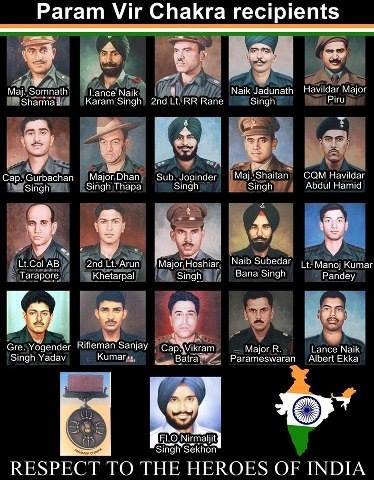
1971 Tripura hero finally gets memorial park

AGARTALA: Tripura Chief Minister Biplab Kumar Deb on Tuesday inaugurated a sprawling park named after 1971 war hero Lance Naik Albert Ekka, who along with his comrades saved the city from Pakistani aggression. Ekka, who was then 28, belonged to Gumla district of then undivided Bihar. The pitched battle of Hilli was among the most crucial in the 1971 India-Pakistan war. Pakistani resistance at Gangasagar in erstwhile East Pakistan collapsed through the exemplary valour of Ekka — at the cost of his life. IANS


Indigenous data recorders for IAF’s attack helicopters

Indigenous data recorders for IAF’s attack helicopters

Vijay Mohan

Tribune News Service

Chandigarh, May 31

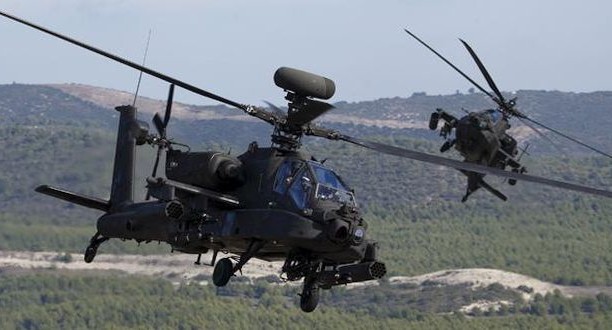
The IAF’s fleet of Mi-25/35 attack helicopters is to be upgraded with indigenously developed digital flight data recorders and video recorders that would replace the earlier analogue systems to provide better reliability, accuracy and ease of retrieving data.The project implies that the Soviet-origin Mi-35s are expected to carry on for at least another 15 years, sources said. About a decade ago, these machines had been upgraded with advanced avionics and weapons suite to enhance combat potential.The move to upgrade the Mi-35s comes in the wake of new attack helicopters being procured, which include the US-made AH-64 Apache as well as the locally produced Rudra, the armed variant of the Dhruv advanced light helicopter and the light combat helicopter. In addition, utility helicopters like the Mi-17, Chetak and Lancer are also capable of being retrofitted with rockets and missiles.Last year, the IAF launched a similar project for indigenous flight data recorders for the Mi-17 transport helicopters. The IAF employed two squadrons of the heavily armed Mi-25/35 gunships, the No 104 and No 125 Helicopter Units, to provide close air support to Army formations. Over the years, the number of this fleet has dwindled. Four such machines were gifted to Afghanistan recently.Sources said the IAF had projected a requirement of 25 sets of solid state flight data recorder and cockpit voice recorder that would also have integrated underwater locator beacons. These would replace the present systems where data is recorded on a photographic film. The present French analog video recorders, part of the Mi-35’s electro-optical night package system to display mission data in real time in the cockpit as well as records the data, will also be replaced with indigenous solid state digital systems.Mi-35s to get new lease of life 

  • Project to be taken up by No 3 Base Repair Depot, Chandigarh
  • At first, analog systems will be replaced by indigenous digital flight data and video recorders for better data retrieval
  • Aim is to upgrade Mi-35s — inducted in IAF in mid-eighties

SC maintains status quo on DGMS appointment

New Delhi, May 28The Supreme Court on Monday issued notice on a plea of the Centre challenging the Armed Forces Tribunal (AFT) order restraining it from filling the post of Director General Medical Services (Army).The AFT had quashed the appointment of a Lieutenant General as the Director General Medical Services (DGMS) holding that his selection as the DGMS (Army) was arbitrary and discriminatory. It had also set aside the findings of the Review Promotion Board of Major General Manomoy Ganguly in March 2017 which had not found him sufficiently high in merit for the rank of Lt General.A vacation Bench of Justices L Nageswara Rao and Mohan M Shantanagoudar took note of the appeal of the Ministry of Defence against the AFT order restraining it to fill the post of DGMS (Army) by the officer of its choice.“In the meanwhile, pleadings shall be completed. Status quo, existing as on today, shall remain in force until further orders. Since we are informed that Lt General UK Sharma of the Research and Referral Hospital is officiating as DGMS (Army), he shall continue till the next date of hearing.“Needless to say, in the event of dismissal of the appeal (of the Centre), the respondent (Ganguly) would be considered for appointment to the post of DGMS (Army), without insisting on minimum of one-year service,” the SC said.Attorney General KK Venugopal, appearing for the Ministry of Defence, assailed the AFT order and said the Army worked on “certain principles” and seniority alone cannot be the sole criteria for selection of an officer as the DGMS (Army).Seniority and suitability are to be considered at the time of appointment, Venugopal said, adding, “The post in question is of a nature where extensive experience is must, as the job is to ensure spontaneous medical facility on the war front. Someone without adequate experience cannot be considered.” Advocate Ranjit Kumar, appearing for Major General Manomoy Ganguly, said, “A person who is a junior to me has been appointed. As far as seniority is concerned, there was no dispute. My file was not even sent for consideration.”Earlier, Ganguly had moved the AFT alleging that rules had been flouted in the proceedings of the board and consequently, he had not been approved for the higher rank despite being eligible. He had averred in his petition before the AFT that his non-empanelment for the rank of Lieutenant General in his Review Special Promotion Board in the Army Medical Corps was due to low figurative assessment in the board. — PTI


Worries pile up for border farmers, paddy season on, but wheat not sold

Villagers distressed as harvested rabi crop lies dumped in deserted shelling-hit villages

Worries pile up for border farmers, paddy season on, but wheat not sold

People move to safer areas after heavy shelling at Jora Farm along the International Border in Jammu. Tribune Photo

Arteev Sharma

Tribune News Service

Arnia, May 24

The recurrent Pakistan shelling and firing on Indian villages along the 198-km-long International Border (IB) have left the entire farming community in despair as farmers have been not able to carry out normal agricultural activities in their fields.During the last one week, thousands of farmers from border villages have fled their homes and taken refuge at relief camps following intense shelling on the entire border belt from Paharpur on the Kathua-Punjab border to the Chicken’s Neck area of Akhnoor in Jammu district.The agricultural land within the radius of five kilometres from the IB, measuring about 1.25 lakh hectares, falls under the firing and shelling range.The rabi crops, especially wheat, have been lying unattended in deserted houses, even as the farmers’ concern about the next paddy crop is mounting. The villagers are unable to get their fields ready to raise seedlings prior to the transplantation of paddy.Another worry is the non-availability of labour from outside the state. Labourers, particularly from Bihar and Uttar Pradesh, are not ready to work in fields under the present hostile border conditions.“We had a bumper crop of wheat this year but it is now lying unattended at our homes in Treva, a village close to the IB which has been heavily shelled by Pakistan. The situation turned volatile on the border just after we harvested wheat crop. We did not get the time to sell our produce in the market. We don’t have any other source of income, how will we sustain our families?” asked Rattan Lal, a 58-year-old farmer staying at a relief camp in Government Higher Secondary School, Salehar, Jammu.Choudhary Dev Raj, president of the RS Pura Basmati Rice Growers Association, claimed that nearly 1 lakh to 1.25 lakh hectares in the border area, known for its world-class basmati, was directly affected by Pakistan shelling.“This is the most suitable time for border farmers to start the preparation for the paddy crop. A delay of even 15 days will lead to either a low yield or just no crop. Farmers do not want much from the government, all that they seek is peace on the border,” said Raj.The rice association president said: “We had been demanding a special budget for border farmers as they come in direct line of enemy shelling. They have been facing losses forthe last three years due to the shelling, but no compensation has been paid to them so far”.Ganshyam Sharma, president, Border Kissan Welfare Union, Kathua, said: “Farmers in our areas are totally dependent on rain as there is no irrigation facility. They have migrated to safer places without any source of livelihood and if this situation continues, our worries are what will they eat?”


Tinkering with tribunals will make them useless

Armed Forces Tribunal, Indian Army, Para SF, Indian Special forces

The Armed Forces Tribunal (AFT) was established as a military tribunal under the Armed Forces Tribunal Act in 2007. This was based on the Law Commission’s 169th report of 1999, which stated that disciplinary and service matters of military personnel required quick resolution and proposed a special tribunal for para-military and armed forces. The act was steered through Parliament by the defence ministry, leaving the para-military, Assam Rifles and Coast Guard out of its purview.

The principal bench of the AFT is based in Delhi and it has regional benches at Chandigarh, Lucknow, Kolkata, Guwahati, Chennai, Kochi, Mumbai and Jaipur. Except for Chandigarh and Lucknow, which have three benches each, all others have a single bench. Each bench comprises of a judicial member, who is a retired high court judge, and an administrative member, who is a retired member of the armed forces.

In a democracy, the judiciary by nature is lenient. However, the armed forces because of their role and tasks must follow a disciplined structure, without which they would fail. Hence, the armed forces are governed by their respective acts and rules which are the Army Act of 1950, Air Force Act of 1950, the Navy Act of 1957 and the Defence Services Regulations. Disciplinary punishments, granted under respective acts, are periodically challenged in AFTs. Unless the circumstances and specific regulations are clarified to the judge, leniency in judgement would impact military discipline.

Further, vagaries and conditions of service are vastly different from any Central government organization. Hence AFTs have been liberal in approving disability pensions, which an unrelenting bureaucracy challenges in the Supreme Court to no avail. To advice the judicial member on service-specific issues and apprise him of the conditions of service, an administrative member with decades of service experience is appointed.

Till June 2017, the AFTs functioned at near full strength and was effective. After the government issued unilateral notifications incorporating changes in its composition and functioning, presently under challenge in the Supreme Court, there has been no induction of fresh members, resulting in almost non-functional courts. Thus, the very reason for creating the AFT, speedy disposal of cases pertaining to the members of the armed forces, has been lost.

On 1 June 2017, the government amended the AFT Act, amongst 19 other existing laws, enhancing its powers pertaining to the appointment and removal of members of various tribunals. Amongst the major changes which affect the functioning of the AFT is the appointment of the administrative member.

The earlier rules had stated that the administrative member could be retired major generals and above. However, the new rules state any person, ‘of ability, integrity and standing having special knowledge of, and professional experience of not less than 20 years’ in multiple fields not connected with the armed forces but ‘in the opinion of the government is useful to the AFT’ could be appointed. Thus, knowledge of service conditions and military law is not essential, making such appointments redundant. It opens doors for appointing IAS and other Central government service members, who lack even basic military knowledge.

The chairperson of the AFT was appointed by the president, hence was difficult for the government to remove. The changed rules state that he would be appointed by the government in consultation with the chief justice, thereby denuding his appointment. Earlier rules stated only a retired High Court or Supreme Court judge could be the chairperson, whereas the amended rules state ‘any person who is qualified to be a judge of the Supreme Court’ could be appointed. Thus, an advocate with ten years’ experience can be nominated as a chairperson.

The appointment of the judicial and administrative members was amended so that they would be appointed by a search-cum-selection-committee which would comprise a Supreme Court judge, chairperson of AFT (appointed by the government), defence secretary and another member of the executive. Thus, majority power would be with the executive. The Supreme Court has disagreed stating it cannot be tilted towards the executive.

The new rules place the AFTs under the defence ministry, whereas earlier based on Supreme Court directions, they were placed under the law ministry. The power to remove members has also been diluted and the MoD can constitute a committee to recommend removal. These powers were earlier with the Supreme Court.

The new rules have reduced tenure of members from five to three years. It appears, when linked up with the other amendments, aimed at opening doors for ex-secretaries of the government, who retire at 62, to be nominated to the AFT, for which they would otherwise have been barred.

These amendments, which would alter the functioning of the AFT and make it useless for the task for which it was created, angered many veterans who practice in AFTs and they approached the Supreme Court. The court’s final determination is likely in July.

The bureaucracy, worried about a possible court rebuff, advertised for vacant posts based on its amended rules. It is now seeking the court’s permission to go ahead with the selection. If it succeeds, the AFTs would become just another example of the government’s apathy to serving and veteran military personnel.

A fallout of the case has been that unless court orders are finally issued, no fresh appointments can be made. Hence most AFTs are either non-functional or those with multiple benches have just one functional bench. This has impacted clearance of cases.

The sole reason for creating the AFT is now being lost. The government which has denied the forces various facilities is now seeking to make the AFTs redundant. It will require a concerted effort by all who support the military to pressurise the government against making a mockery of an institution created to speed up justice.

The writer is a retired Major-General of the Indian Army.

comments

Till June 2017, the AFTs functioned at near full strength and was effective. After the government issued unilateral notifications incorporating changes in its composition and functioning, presently under challenge in the Supreme Court, there has been no induction of fresh members, resulting in almost non-functional courts. Thus, the very reason for creating the AFT, speedy disposal of cases pertaining to the members of the armed forces, has been lost.
On 1 June 2017, the government amended the AFT Act, amongst 19 other existing laws, enhancing its powers pertaining to the appointment and removal of members of various tribunals. Amongst the major changes which affect the functioning of the AFT is the appointment of the administrative member.
The earlier rules had stated that the administrative member could be retired major generals and above. However, the new rules state any person, ‘of ability, integrity and standing having special knowledge of, and professional experience of not less than 20 years’ in multiple fields not connected with the armed forces but ‘in the opinion of the government is useful to the AFT’ could be appointed. Thus, knowledge of service conditions and military law is not essential, making such appointments redundant. It opens doors for appointing IAS and other Central government service members, who lack even basic military knowledge.
The chairperson of the AFT was appointed by the president, hence was difficult for the government to remove. The changed rules state that he would be appointed by the government in consultation with the chief justice, thereby denuding his appointment. Earlier rules stated only a retired High Court or Supreme Court judge could be the chairperson, whereas the amended rules state ‘any person who is qualified to be a judge of the Supreme Court’ could be appointed. Thus, an advocate with ten years’ experience can be nominated as a chairperson.
The appointment of the judicial and administrative members was amended so that they would be appointed by a search-cum-selection-committee which would comprise a Supreme Court judge, chairperson of AFT (appointed by the government), defence secretary and another member of the executive. Thus, majority power would be with the executive. The Supreme Court has disagreed stating it cannot be tilted towards the executive.
The new rules place the AFTs under the defence ministry, whereas earlier based on Supreme Court directions, they were placed under the law ministry. The power to remove members has also been diluted and the MoD can constitute a committee to recommend removal. These powers were earlier with the Supreme Court.
The new rules have reduced tenure of members from five to three years. It appears, when linked up with the other amendments, aimed at opening doors for ex-secretaries of the government, who retire at 62, to be nominated to the AFT, for which they would otherwise have been barred.
These amendments, which would alter the functioning of the AFT and make it useless for the task for which it was created, angered many veterans who practice in AFTs and they approached the Supreme Court. The court’s final determination is likely in July.
The bureaucracy, worried about a possible court rebuff, advertised for vacant posts based on its amended rules. It is now seeking the court’s permission to go ahead with the selection. If it succeeds, the AFTs would become just another example of the government’s apathy to serving and veteran military personnel.
A fallout of the case has been that unless court orders are finally issued, no fresh appointments can be made. Hence most AFTs are either non-functional or those with multiple benches have just one functional bench. This has impacted clearance of cases.
The sole reason for creating the AFT is now being lost. The government which has denied the forces various facilities is now seeking to make the AFTs redundant. It will require a concerted effort by all who support the military to pressurise the government against making a mockery of an institution created to speed up justice.

MoD caps ammo annual budget hike at 10%

Tells forces to plan within existing resources and not come up with proposals that cannot fructify

MoD caps ammo annual budget hike at 10%

Ajay Banerjee

Tribune News Service

New Delhi, May 17

Striking a balance between demand of modernising the armed forces and slow growing budget, the Ministry of Defence (MoD) has come out with instructions saying an annual hike of up to 10 per cent will be assured for capital expenses meant for new equipment, weapons, ammunition, etc.However, the forces will have to plan within the expected growth of “resources” and not come up with huge proposals that cannot fructify. The MoD has said the demands should be specifically based on needs for which the capability increase is sought.The high-powered defence planning council (DPC), at its first meeting on May 3 decided that the forces will list out immediate criticality of weapons and ammunition.The plan would be enforced from now till 2022, sources said. In the present fiscal ending March 31, 2019, the allocation for capital expenses is Rs 99,563 crore. This will see an year-on-year increase of 10 per cent, says the Ministry of Defence’s new financial guidelines.Also the revenue budget (used for day-to-day running costs, salaries etc.) will get an increase of 10.5 per cent for the first year followed by 8.5 per cent the year after and so forth. The existing revenue allocation is Rs 1,95,947 crore.The MoD clearly does not want to be seeing pruning down demands of forces that run into thousand of crores as then it gets adversely reflected in various parliamentary committee reports, giving a picture as if the government was not doing enough.In other words, the three armed forces—Army, Navy and the Air Force—will have to prune the demands at their own-end, according to their own needs and not leave it to the bureaucracy in the MoD.The MoD, otherwise, gets the lions share of the country budget, almost 12 per cent of the money in the country gets spent on military, running expenses and also new equipment like warships, guns, bullet-proof jackets, etc.Despite this, a report of the parliamentary standing committee in March this year quoted Lt Gen Sarath Chand, Vice-Chief of the Army,  that Budget 2018-19 has “dashed” all hopes of modernisation of the force which is saddled with equipment of which more than two-thirds are “vintage”.He added the marginal increase in the budgetary allocation barely accounts for inflation and the Army won’t be able to pay instalments of past purchases with the money it has received.