









Sanjha Morcha

What’s New

Click the heading to open detailed news

Current Events :

web counter

Print Media Reproduced Defence Related News

The Shanghai club by MK Bhadrakumar

Membership compels New Delhi to shed strategic ambivalence
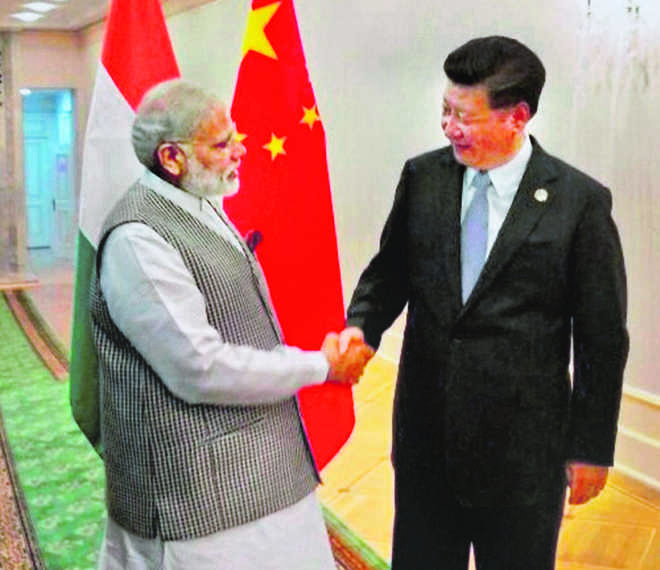
The Shanghai club
The catch: Does India really wish to sustain a strategic dialogue with China?

THIRTY-SEVEN days remain for India to be a full member of the Shanghai Cooperation Organisation (SCO). The meeting of the SCO Council of Foreign Ministers in Astana — on April 21 — brought to a successful conclusion the procedural formalities in regard of the admission of the grouping’s two new members from South Asia — India and Pakistan. However, there is no trace of momentous anticipation in the Indian capital. This is not really surprising.To borrow the famous passage from TS Eliot’s poem, The Hollow Men, “Between the idea/And the reality/ Between the motion/And the act/ Falls the Shadow.” Indeed, between India’s application for SCO membership in 2014 and the group’s forthcoming summit meeting on June 8-9, 2017, in Astana, some mysterious shadow has fallen. The shadow falls like an iron curtain to block the original intentions.Most certainly, the original intentions were thoughtful and purposive and were forged unhurried, incrementally and with great deliberation through almost half a decade by the previous UPA government. How far External Affairs Minister Sushma Swaraj was confident that Prime Minister Modi subscribed to those intentions, when she was called upon to formally submit India’s membership application at the Dushanbe summit of the group in 2014, we do not know. In all probability, she fulfilled her responsibility as India’s top diplomat.For, 18 days later, Modi visited the White House to hold his first meeting with the then US President Barack Obama. Future historians would chronicle that the four-month period from that point in end-September 2014 to end-January 2015, when Obama visited India, became a defining moment in India’s foreign policy trajectory, as it began careering away in a new direction historically. The January 2015 joint vision statement regarding the Asia-Pacific region proclaimed that India was willing to bandwagon with the US’ pivot to Asia. Since then, India-China relations have been on a downhill slope. Beijing now says that Indian policies caused “serious damage to China’s interests and China-India relations”.Meanwhile, New Delhi has been out of sync with the profound realignments unfolding in the Eurasian continent, triggered by the US-backed “regime change” in Ukraine in February 2014. An unprecedented level of coordination between Russia, China and Iran has appeared over time on issues affecting the future of the Eurasian continent, ranging from the threat posed by radical Islamist groups to energy cooperation and connectivity to China’s One-Belt One-Road initiative. It is against this tumultuous backdrop that Russia and China are keenly promoting Iran’s induction into the SCO.What emerges is that the trajectories of Indian foreign policies and leading trends in the Eurasian continent are sharply diverging. The nascent integration of Pakistan as a Eurasian partner highlights it. The China-Pakistan Economic Corridor is a game-changing project for the geopolitics of the Eurasian continent. China will most certainly bring the CPEC to the forefront of the SCO as a cornerstone of regional security and a locomotive of the multipolarity in politics. Russia and Iran will partake of it.India’s SCO membership cannot be delinked from this ongoing global rebalancing that appears simultaneously on different templates — New Cold War, Sino-American tensions, Russia-China entente, Russia-Pakistan “thaw”, and so on. Put plainly, SCO membership compels India to shed its strategic ambivalence. It is apparent that Washington and Moscow view differently the international order and its fundamental norms and rules and their own place in it. In this climate, where does India stand, which has turned its back on non-alignment and “strategic autonomy” as archaic concepts and entered into a quasi-alliance with the US?Last Wednesday at a Kremlin meeting, a top functionary from the Chinese Communist Party relayed the following message from Chinese President Xi Jinping to President Vladimir Putin: “Chinese-Russian relations are going through their best ever in our history. Today, our relations are deservedly called an example of relations between great powers, characterised by cooperation and mutual benefit. Today, our relations are very solid, mature, and are distinguished by strategic cooperation and a lasting nature…“Despite the serious changes in the international situation, we will continue to work with you unfailingly adhering to three constants, namely: regardless of the circumstances, we will not change our policy of deepening and developing our strategic partnership and cooperation; our policy, based on joint development and prosperity, will not change; and our joint efforts to defend peace and justice and promote cooperation in the world will not change.”Again, the Russia-led regional initiative on Afghanistan is in effect an enterprise comprising SCO member countries. Pakistan, which is a key player, is central to its success. India, on the other hand, feels comfortable with the US’ lead role in Afghanistan. The moment of truth arrives when India’s campaign on terrorism issues directed against Pakistan falls on deaf ears among other SCO members.The bottom line is: Does India really belong to the SCO? Unless there is a serious rethink on India’s foreign policy, it may end up as a passive onlooker within the SCO tent, or worse still, a drag on the grouping’s functioning. Of course, SCO can be a really useful platform since it provides a canopy under which India can repair the damage caused to the relations with China and impart predictability to its ties with Pakistan.Just look at the seamless possibilities of uninterruptible interaction with China and Pakistan at the level of the head of state, head of government, foreign minister, economic ministers, national security adviser, security agencies and so on annually. There have been a number of joint SCO military exercises, too, which bring together army chiefs. It doesn’t need much ingenuity to understand what a splendid opportunity these occasions provide for India to build trust and mutual confidence with China and Pakistan at the level of political leadership as well as at the military-to-military level and between spy agencies and diplomats.But then, is there serious will on the part of the Modi government to sustain a strategic dialogue with China and/or Pakistan? The opinion makers associated with the RSS-backed think tanks in Delhi are breathing fire and brimstone at China and Pakistan. Jingoism and communal polarisation enjoy primacy in the Sangh Parivar’s toolbox and tensions in India’s China-Pakistan ties easily feed into it. Therefore, it is in doubt whether the Modi government would revert to independent foreign policies even if it wants to. Paradoxically, although the US-Indian “defining partnership” is fast becoming an open cage in the Trump era, India seems to have lost the desire to head off into the wide blue yonder.The writer is a former ambassador


7TH CENTRAL PAY COMMISSION Panel submits report, suggests modifications in allowances

Tribune News Service

New Delhi, April 28

The Finance Secretary Ashok Lavasa-led committee on allowances has proposed modifications in the 7th Central Pay Commission (CPC) recommendations on some allowances applicable universally to all employees and also for those in specific categories, including railways, postal, scientists, defence, doctors and nurses among others.The panel, which was set up by the government on June 29 last year to examine the 7th pay panel recommendations on allowances, has submitted its report to Finance Minister Arun Jaitley.The report, now being examined in the Department of Expenditure, Ministry of Finance, will be placed before the Empowered Committee of Secretaries (E-CoS) set up to screen the 7th CPC recommendations and to firm up a proposal for approval of the Cabinet.While recommendations of the 7th CPC on pay and pension were implemented with the approval of the Cabinet, allowances continue to be paid at old rates. After consideration by the E-CoS, the proposal for implementation of the 7th CPC recommendations on allowances, after incorporating the modifications suggested by the committee, shall be placed before the Cabinet for approval.The decision to set up the panel was taken in view of significant changes recommended by the 7th CPC to the allowances structure and representations received in this regard from various staff associations as well as the apprehensions conveyed by various ministries and departments.Representations and demands for modifications were received in respect of 79 allowances which have been examined in detail by the committee. In doing so, the panel, which held 15 meetings, interacted with the members of the Standing Committee of National Council (Staff Side), Joint Consultative Machinery and representatives of various staff associations of railways, postal employees, doctors, nurses, and the Department of Atomic Energy. It also interacted with representatives of the Defence Forces, DGs of Central Armed Police Forces and Assam Rifles as also senior officers from the Intelligence Bureau and the Special Protection Group.The 7th CPC had recommended that of the 196 allowances, 52 be abolished altogether and 36 be abolished as separate identities by subsuming them in another allowance.


India, Pak spar over Jadhav, Taliban leader’s confession

VEXED ISSUE Islamabad says statements on 26/11 proves India’s involvement in terror activities, Delhi strongly rejects neighbour’s claim

NEW DELHI/ISLAMABAD: India and Pakistan engaged in a fresh war of words on Thursday over the purported confession of former Taliban spokesman Ehsanullah Ehsan, with New Delhi strongly rejecting Islamabad’s contention that it had “unveiled India’s nefarious designs”.

REUTERS FILEIndia has accused Pakistan of fomenting trouble through cross­border terrorism.

The two sides also traded charges over Kulbhushan Jadhav, a former Indian Navy officer sentenced to death by a Pakistani military court for alleged spying, and the 2008 Mumbai attacks, with India calling for the prosecution of the perpetrators.

At a weekly news briefing in Islamabad, Foreign Office spokesman Nafees Zakaria said the purported confessions of Ehsan and Jadhav “have proven that India has been involved in supporting terrorist activities in Pakistan” — a charge refuted by India.

“We know the value of such coerced ‘confessions’. All that they reflect is a mindset on the part of those who put out such coerced ‘confessions’, which believes that others in the world also do what they do,” external affairs ministry spokesperson Gopal Baglay said in New Delhi.

India has accused Pakistan of fomenting trouble through cross-border terrorism.

On Wednesday, the Pakistani military’s media arm released what it called the “confessional statement” of Ehsan, the former spokesman of the Tehreek-e-Taliban Pakistan (TTP) and Jamaatul-Ahrar (JuA).

Ehsan recently surrendered to the army. In his video statement that was prominently aired on all Pakistani TV channels, Ehsan claimed the Taliban and JuA had been coordinating with Indian and Afghan spy agencies to move freely in Afghanistan and that they were guided by the Research and Analysis Wing when infiltrating into Pakistan.

Zakaria described 13 Indians who were reportedly killed when the US dropped the Massive Ordinance Air Blast bomb on an Islamic State base in eastern Afghanistan as Indian spies. He said Pakistan will continue to raise India’s alleged interference at international forums.

Meanwhile, India sought from Pakistan a certificate on the health of Jadhav. “We haven’t seen, we haven’t met (Jadhav). He has been in Pakistan’s custody for more than a year. So the well-being and state of health of Jadhav is a matter of great concern,” Baglay said.

“We have asked Pakistani government earlier also, and yesterday, our high commissioner (Gautam Bambawale) made a request on providing a report on his medical condition. We await Pakistan’s response,” he said.

Zakaria said a decision on the issue will be taken on merit.


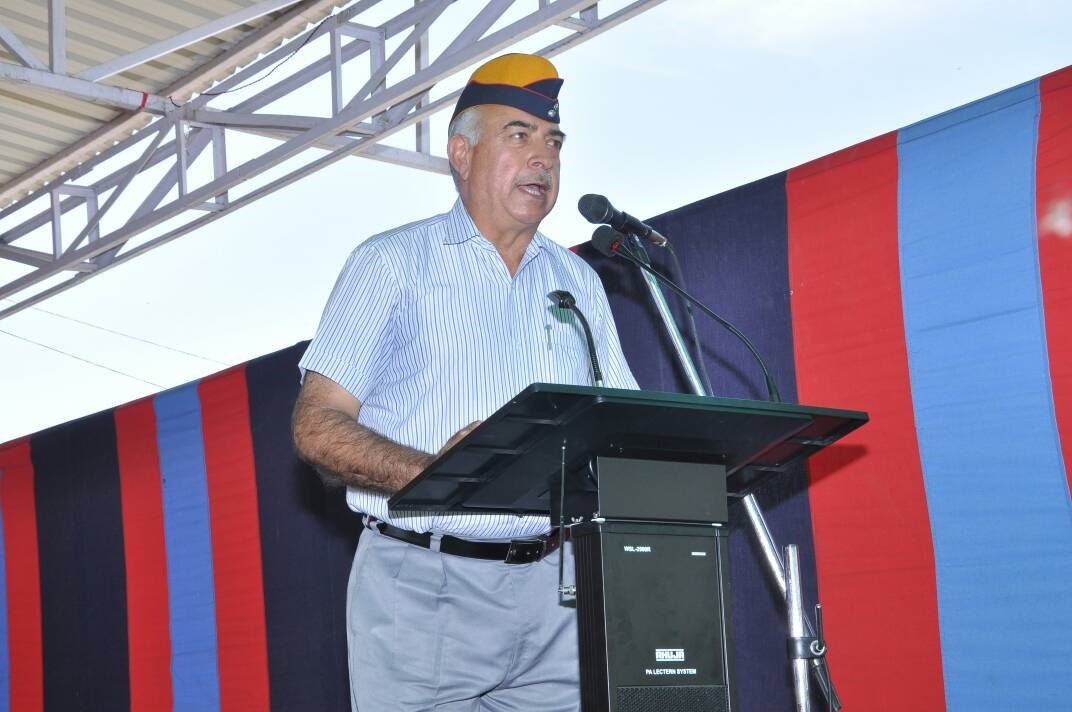
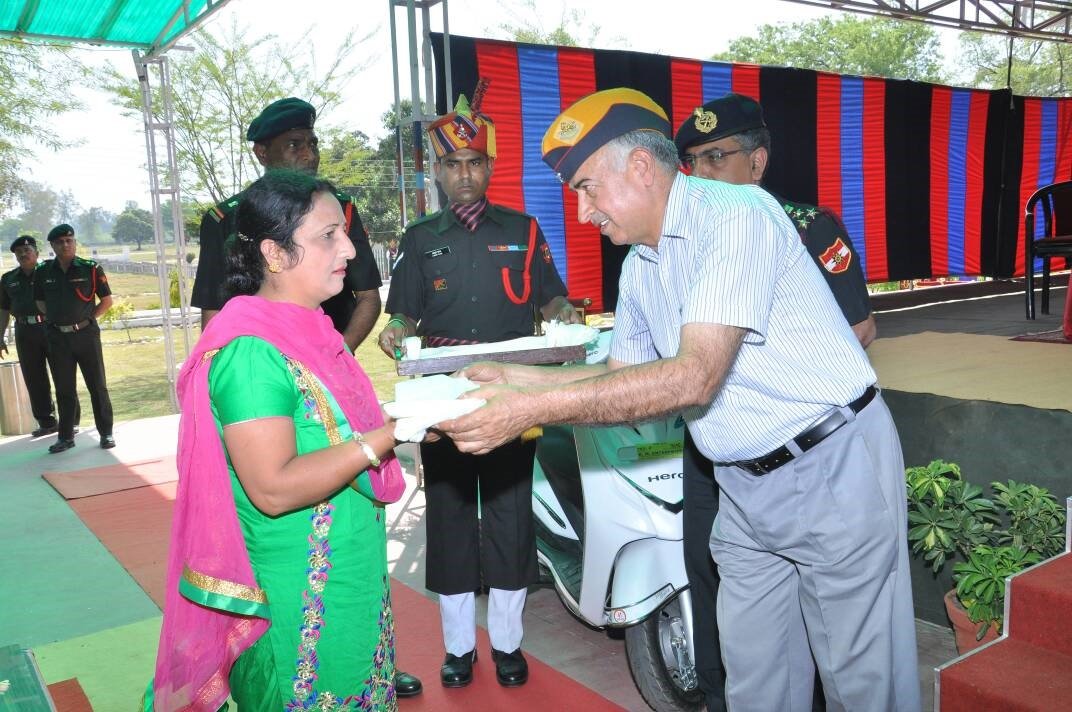
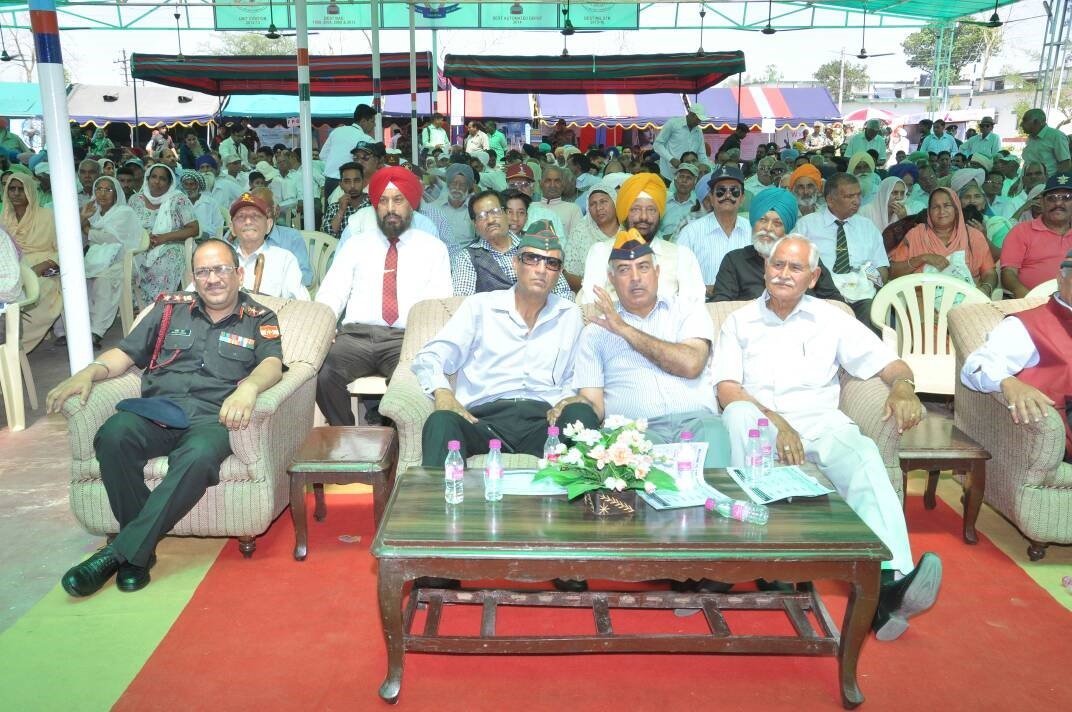
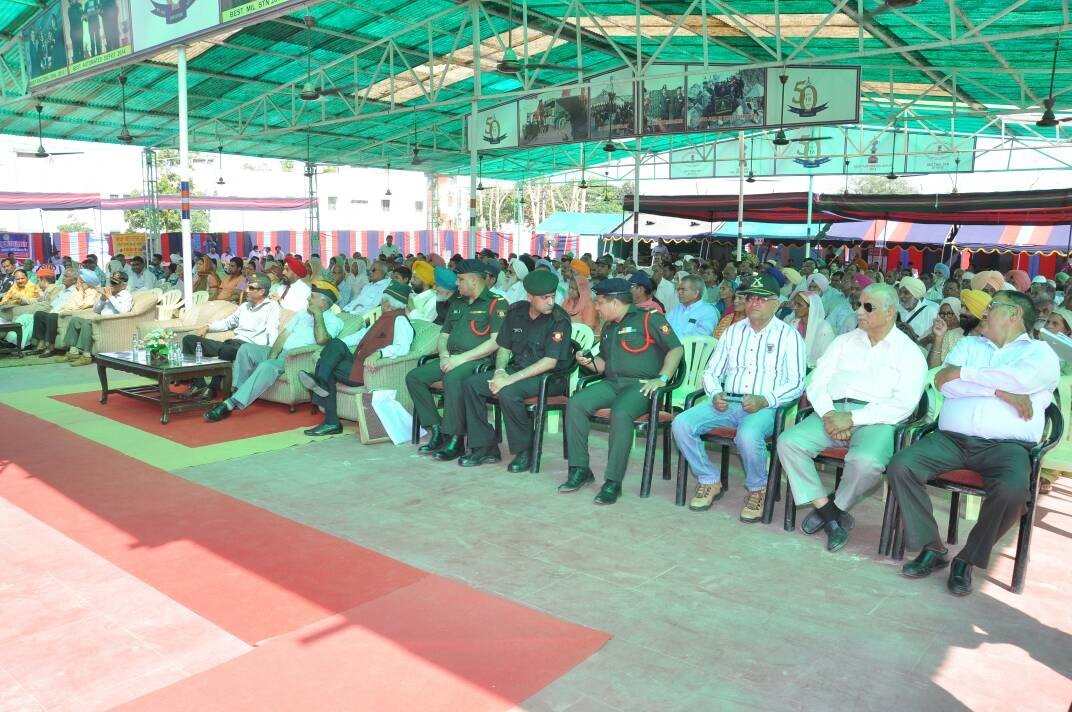
ESM RALLY ORGANISED BY UCHCHI BASSI STATION COMMANDER

IMG-20170419-WA0034
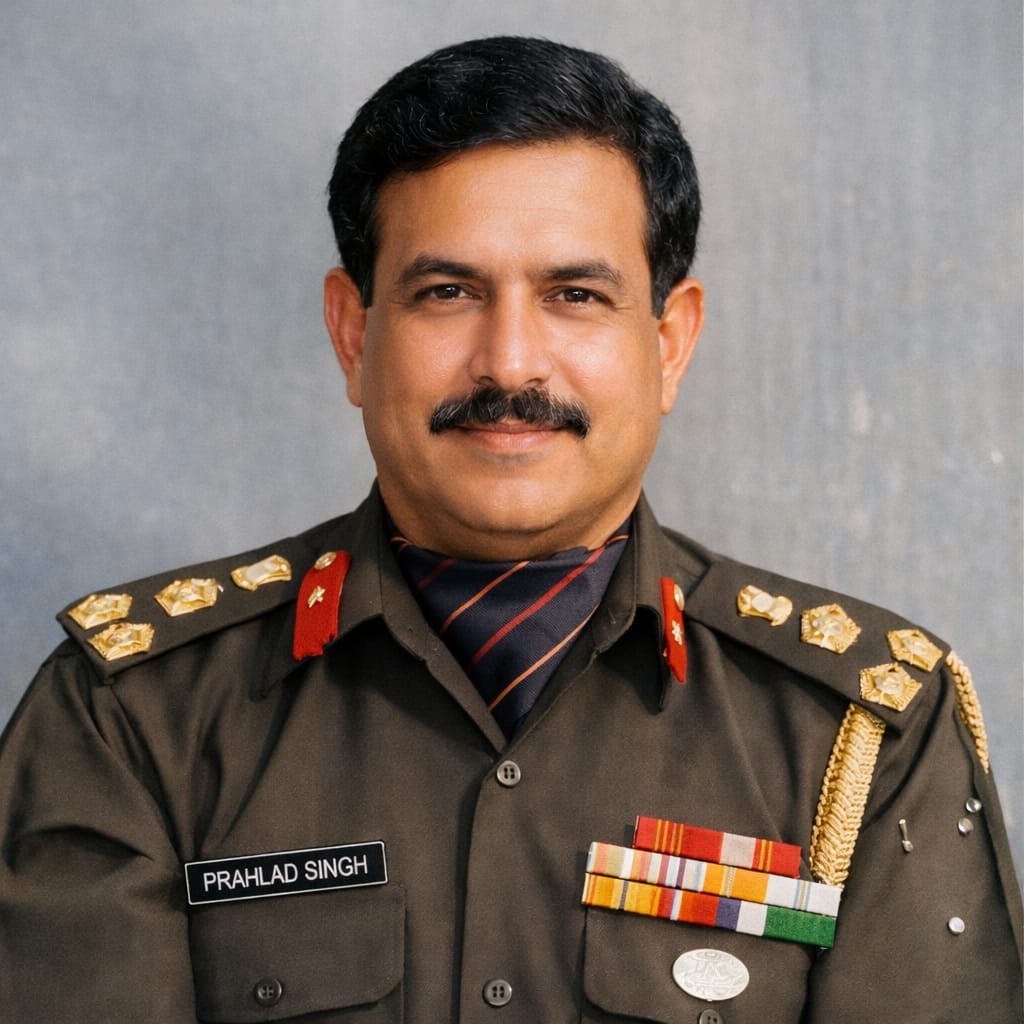
BRIG PRAHALAD SINGH ,CHAIRMAN SANJHA MORCHA DELIVERING SPEECH TO ESM

IMG-20170419-WA0035 IMG-20170419-WA0036

IMG-20170419-WA0037
Was organised  by UCHCHI BASSI Stn Cdr under the aegis of 21 Sub
Area .Veer naris,Gallantry  awards winner and disabled ESM of Hoshiar dist were facilitated.
Warm Regards
Brig Prahalad Singh

CBI may probe Army ‘excesses’ in Manipur, hints SC

Tribune News Service

New Delhi, April 18Slamming the Centre and the Manipur government for their inaction in alleged rape and extra-judicial killings in Manipur by security forces, the Supreme Court today hinted at handing over at least two of the cases to the CBI for investigation.A Bench headed by Justice Madan B Lokur asked the Centre to suggest names of CBI officers who have experience in working in the northeast for possibly assigning the probe to them in two cases.“You may have two alleged rapists. Why you have kept quiet?” the Bench asked Attorney General Mukul Rohatgi. “These are allegations only. The question is whether rape was committed by the Army personnel,” Rohatgi replied.In one case, the victim was allegedly raped and killed while the other victim committed suicide after being raped.The Bench asked the Army as to why it maintained silence despite the fact that a Commission of Enquiry pointed to rape/murder by its men. It also pulled up the Manipur government for its failure to take up these cases with the Army.During the hearing, a senior Army officer told the Bench that one of the women committed suicide after being frisked. It was made a case of molestation and then rape. But petitioner’s counsel Menaka Guruswamy questioned the Army’s version of the incident: “No one commits suicide for being frisked… it seems the Constitution has not reached Manipur.”The SC had last year passed a landmark verdict on extrajudicial killings in Manipur, limiting the powers of security forces under AFSPA. “The girl was subjected to rape. Did you close the case because you didn’t get help from Army? Is it your helplessness or a tacit understanding with the Army not to proceed?” the Bench asked.


Army jawan dies in accidental fire along LoC in Poonch

Army jawan dies in accidental fire along LoC in Poonch
Photo for representation. Thinkstock

Jammu, April 18

An Army Jawan posted along the Line of Control (LoC) in Poonch district in Jammu and Kashmir died in an accidental fire from his service weapon.

(Follow The Tribune on Facebook; and Twitter @thetribunechd)


A jawan deputed on a forward post along the LoC in Mendhar sector of Poonch district received bullet wounds due to accidental fire around 2150 hours last night, Defence spokesman Lt Col Manish Mehta said today.Sepoy Manmohan Budhani (23) later succumbed to injuries, he said.He was in the army for two years and is survived by mother Vidhya Bukhari. Budhani belonged to Awalakot Kota Bagh village in Nainital district of Uttarakhand.The Defence spokesman denied reports in a section of the media that the soldier died in Pakistani firing.He said there was no firing from the Pakistani side on Monday in Mendhar. — PTI


UN evades question on Kulbhushan Jadhav’s death sentence

UN evades question on Kulbhushan Jadhav’s death sentence
India has sent out a stern message to Pakistan with Parliament strongly condemning the Pakistan Military Court’s verdict sentencing Jadhav to death on charges of spying. File photo

Islamabad, April 13

The United Nations (UN) on Wednesday declined to comment on the death sentence awarded to alleged Indian spy Kulbhushan Jadhav, saying the world body was not in a position to judge the case.“We are not in a position to judge the process or to have a position on this particular case,” The Dawn quoted UN secretary general’s spokesperson Stephane Dujarric, as replying to a poser.“Overall in terms of relations between India and Pakistan, we underline and continue to underline the need for the parties to find a peaceful solution and to engage through engagement and dialogue,” he added.Earlier, Pakistan Defence Minister Khawaja Mohammad Asif ruled out any possibility of an immediate execution of Jadhav, citing three appellate forums were available for him under the law.India has sent out a stern message to Pakistan with Parliament strongly condemning the Pakistan Military Court’s verdict sentencing Jadhav to death on charges of spying.

(Follow The Tribune on Facebook; and Twitter @thetribunechd)

Replying to the issue in the Lok Sabha during Question Hour on April 11, Union Home Minister Rajnath Singh asserted that the government would do whatever is possible to give justice to Jadhav.Singh said India’s request for basic consular access to Jadhav was repeatedly denied.External Affairs Minister Sushma Swaraj, in a suo motu statement made in both Houses of Parliament, warned Islamabad of consequences in bilateral relations if the death sentence on Jadhav was carried out.She said if the decision of the Pakistani court was implemented, it would be a pre-meditated murder asserting that there was no evidence against Jadhav.There were also strong protests in front of the Pakistan High Commission in New Delhi.Jadhav, who was arrested in March last year by Pakistan and accused by the country of spying, was sentenced to death by a Pakistani military court on Monday triggering tension between India and Pakistan.Observers and experts on criminal or espionage-related laws in a majority of countries have suggested that the death sentence against Jadhav is a clear violation of Article 36 of the Vienna Convention that makes it mandatory for every government to provide consular access to an arrested foreign national by officials of his/her government. ANI


GOLDEN JUBILEE OF 11TH BATTALION OF THE GARHWAL RIFLES CM Rawat felicitates ex-servicemen

CM Rawat felicitates ex-servicemen
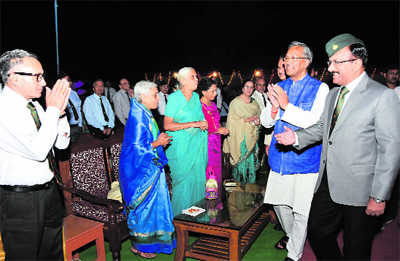
Chief Minister Trivendra Singh Rawat greets ex-servicemen and their families on the occasion of the golden jubilee of the 11th Battalion of the Garhwal Rifles in Dehradun on Saturday.

Tribune News service

Dehradun, April 9

Chief Minister Trivendra Singh Rawat participated in the golden jubilee celebrations of 11th Battalion of the Garhwal Rifles held here yesterday evening. Congratulating the ex-servicemen on the occasion, he said he was proud that he came from an Army family. His father served in the Indian Army.  He said each household in Uttarakhand was connected to the armed forces in one way or the other. He said the youth of the state aspired to serve in the armed forces and a majority of the youth were serving the nation. He wished the Garhwal Rifles good luck. He also met the ex-servicemen and their families present on the occasion.


The lure of past glory and an imaginary magnanimity

The British attitude towards its former colonies, and now Europe, is one of being inadequately rewarded. For the first time since Partition, Britain is in retreat. 70 years ago, it looked away from India, carrying its spoils and treasures to the extent it could, leaving behind borders and hatreds that still bleed today.

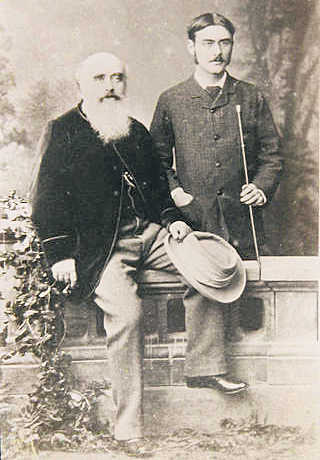
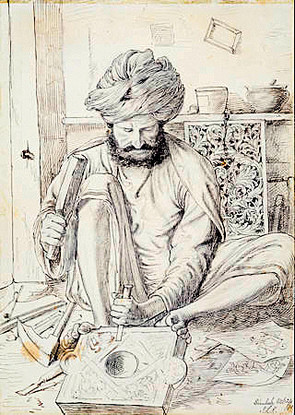
THAT the castles and museums of the United Kingdom are filled with the treasures of its former colonies is a fact well known to all. Upon entering Windsor Castle one sees the crown (among various others) of the kingdom of Togo. Also on display are other things from other kings: the finery of Maharaja Ranjit Singh stares from inside one glass case; a 500-year-old Persian carpet adorns the cordoned-off centre of another room. The Victoria and Albert Museum (V&A) houses one of Tipu Sultan’s swords and the infamous musical organ carved into a wooden sculpture of a tiger felling a British soldier. If the British feel any remorse about their plunder, it is not made explicit in the arrangement of such objects. Instead, how these artefacts are curated, presented and lit all seem to reiterate what the British very likely believe: the exemplary safekeeping and artful exhibition is a favour to those to whom these objects belong, who would have otherwise destroyed, smuggled or sold them off.One of the latest exhibitions mounted in the V&A follows a similar line. Comprised mostly of objects from the museum’s extensive collection, the exhibit titled “Lockwood Kipling: Arts and Crafts in the Punjab and London” commemorates the career of the man who was father to Rudyard Kipling and the force behind the Mayo School of Industrial Arts, now National College of Arts, in Lahore. It is a tale compellingly told through Kipling’s sketches of local craftsmen, intricately carved doors from Chiniot and beautiful silver inkwells. In one alcove, a movie about Lahore, its colours splashing and vibrant, plays on a loop. The courtyard of the Badshahi Mosque looms on the wall, its frescoes and motifs splayed with high-definition intensity before the visitors milling about.John Lockwood Kipling, of course, did not construct the Badshahi Mosque, and nothing in the exhibition makes any such explicit claim. At the same time, the arrangement of the objects, and the anointing of Lockwood Kipling as a curator, illustrator, architectural sculptor and visionary par excellence presents a very particular thesis regarding the British and their activities in India. Pages from The Journal of Indian Art, his crucial role in the establishment of art schools in Bombay and Lahore, his training of craftspeople, and his conversion of ordinary objects into objects of art all point to the larger premise that the British hold dear: without them there would be no Indian art, and definitely no appreciation of art.This, then, is the more pernicious thesis about empire, increasingly en vogue and cherished in post-Brexit Britain. The day I happened to walk through the exhibit was in fact Brexit Day, the official occasion when British Prime Minister Theresa May delivered the letter to her European Union counterparts. The year since the Brexit vote – and the months to come in which its details will be spelled out – has undoubtedly been one of great uncertainty for the British. Those who voted to leave allege they gave more than they got back, that being in the EU was a raw deal, not quite worth it. There had never been enough reciprocity, never enough gratitude, never much deference or appreciation. All of these premises are interesting to consider when walking through the Lockwood Kipling exhibit at the V&A and its effusive homage to a man who is feted as doing so much for Indian art. While Britain’s relationship with the rest of Europe was certainly not the exploitative one that defined its colonial enterprise, there are some commonalities of tone and tenor here that are worth noting. Chief among them is the premise that Britons generally give more than they receive. This precept is everywhere in the Lockwood exhibit, in the sketches that show how much the elder Kipling valued the craftspeople he met, and in the colleges he set up so that Indian craftsmanship would endure. It is, in sum, a message to fellow Britons: we have done much ‘good’ in the world, and the world has not paid us back.All of this is, of course, a lie. The British plundered India, used its natural resources, eviscerated its existing institutions and generally created a hierarchy that they dominated and that enabled them to cart away India’s treasures for the sort of “safekeeping” they still claim to be undertaking. The former colonies who suffered under them have long known these British claims to be untruths; they have also – in the hundreds of years since the British arrived and the 70 since they left – been forced to reckon with the aftermath, with the realisation that the lost glory of the past – whether it was Mughal or Ottoman or Rajput – cannot be the basis of the victories of the present. Perhaps, for the first time since Partition, Britain is once again in retreat. Seventy years ago, it looked away from India, carrying away its spoils and treasures to the extent it could, leaving behind borders and hatreds that still bleed today. Now, it turns away from Europe with the same sulky petulance, the same attitude of having been inadequately rewarded for its imaginary magnanimity. This second retreat, however, while different in character and circumstance, suggests an inwards gaze that the British have perhaps not seen since the colonial era. If the British Empire in retreat created revisionist histories that placed colonisers at the heart of the preservation of the subcontinent’s art and heritage, post-Brexit Britain will similarly create ones that suit the purposes of the present. In a supreme irony, the conquering British of the past can, in this sense, learn from those it once conquered—Pakistanis and Indians and others who are used to looking back, indeed, very far back — for consolation and confirmation of their own glory.By arrangement with the Dawn


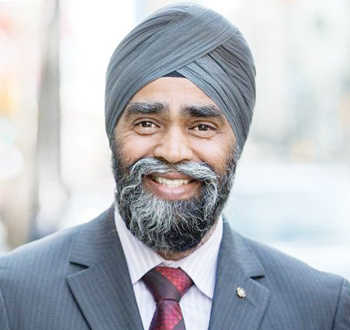
Sajjan on India visit this month

Sajjan on India visit this month
Harjit Sajjan, Canadian Defence Minister

KV Prasad

Tribune News Service

New Delhi, April 7

Taking forward the bilateral relations on to the next stage, Punjab-born Canadian Defence Minister Harjit Sajjan will be travelling to New Delhi and Punjab later this month.Sajjan is scheduled to arrive on April 17 for an interaction with Defence Minister Arun Jaitley as both countries look to increase engagement in the sector. India and Canada at present have agreed  to explore cooperation in cold climate warfare, peacekeeping, participation in Defence Staff College training, naval linkages and staff exchanges, as also in Defence Research and Development, specially security science and technology.(Follow The Tribune on Facebook; and Twitter @thetribunechd)“This  visit is about what can we do more… how can we expand… it is an exploratory visit to provide stimulus for defence sector cooperation,” Canadian High Commissioner Nadir Patel told the Indian Association of Foreign Affairs Correspondents here.On the concerns over radical groups, especially from Punjab remaining active in Canada, he said while the issue does come up during official interactions, a vast majority of Sikhs are making meaningful contribution to the Canadian society and were peace-loving. However, when any laws are broken, the authorities will act immediately and security agencies in Canada take these [violations] seriously, he said. India and Canada have two separate dialogues, a Joint Working Group on Counter Terrorism and a meeting between Deputy National Security Advisors. Among the 12 lakh Canadian-Indians, some five lakh are emigrants from Punjab while the Gujaratis at three lakh are the second largest.The High Commissioner said investment in India is now hovering around  Canadian $14-15 billion, in pension funds and large-scale infrastructure operations. There are some 1,000 Canadian companies doing business with India.Some 40 per cent of the pulses India consumes are imported from Canada with the two-way trade recording $8 billion. “Most Indians may not be aware that the potato finger chips they have are produced by Canadian company McCain while Bombardier supplies coaches for Metro.”Patel said there has been a 70 per cent rise in the number of students who preferred to pursue quality education at a lesser cost in Canada, while tourism grew at 16 per cent.