Sanjha Morcha

What’s New

Click the heading to open detailed news

Current Events :

web counter

Print Media Reproduced Defence Related News

Saga of Sada Kaur, the guiding force behind Ranjit Singh’s spread of dominion

SADA KAUR HAD THE FORESIGHT TO SEE THAT PUNJAB WAS UP FOR GRABS AND HER SON-IN-LAW COULD BE POSITIONED TO FILL THE VACUUM

CHANDIGARH : If there was one woman who played a key role in the spread of dominion by Maharaja Ranjit Singh (17801839), the founder of the Sikh Empire, it certainly had to be Sada Kaur (1762-1832), his mother-in-law and the matriarch of the Kanhaya misl.

For, she had the remarkable foresight to see that Punjab was up for grabs and her son-in-law could be positioned to fill the vacuum created by the decline of the Mughals and the Afghans.

The saga of this extraordinary woman is penned in detail by Boston-based author Sarbpreet Singh in his newly published book ‘The Camel Merchant of Philadelphia: Stories from the Court of Maharaja Ranjit Singh’ which has been received with great interest and curiosity by many at book readings and launches in cities.

“Chroniclers of Sikh history like Muhammad Latif and Khushwant Singh acknowledged in passing the role played by Sada Kaur in guiding Maharaja Ranjit Singh in taking on the Afghans and spreading his dominion over Punjab, including the conquest of Lahore,” Sarbpreet Singh told HT.

TRUTH STRANGER THAN FICTION

Sada Kaur was the wife of Gurbaksh Singh Kanhaiya who was killed by Ranjit Singh’s father Maha Singh. Sensing that Ranjit Singh was the rising star, she married off her daughter Mehtab Kaur to him.

When young Ranjit spoke to the Sikh chieftains at the Sarbat Khalsa to unite and unify Punjab, he was speaking the words of his motherin-law.

Sarbpreet adds, “Then Sada Kaur spoke with passion invoking the Sikh Gurus and reminding the assembly of their valour and rest is history. But Ranjit Singh’s marriage to the beautiful but haughty Mehtab was not a success as the she never forgot that her father was killed by her father-in-law. When Ranjit Singh married Raj Kaur and declared Kharak Singh his heir, Sada Kaur was devastated. The relationship grew bitter and ended on a sad note but it was Sada who rode with the Maharaja in the conquest of Lahore.”

COURTESAN MORAN

The other woman about whom the author has written in detail is the Maharaja’s beloved Moran, a 13-year-old nautch girl of Lahore who bewitched him with her “peacock-like dance and bewitching glances.

The Pul Kanjari (the prostitute’s bridge) was the meeting place for the two but obstacles arose when the Maharaja expressed his desire to marry her. The author remarks: “Moran’s father Mian Samdu, a leader of the Kanjar community, opposed the match because they were Muslims.

The hurdlewas that he would have to build a fire in his father-in-law’s kitchen with his own hands. Many thought that the Maharaja would never do the lowly task but he agreed without batting an eyelid.”

The orthodox Sikhs were not pleased and the Maharaja’s wives did not like it. The Akal Takht summoned Ranjit Singh for an apology which he offered with bowed head and folded hands.

Giving up her profession of a courtesan after marriage, Moran lived the life of a devout Muslim woman and was called Bibi Moran. The author says: “The Maharaja built her a mosque in the walled city of Lahore. The year of Moran’s death is not known but after the Maharaja passed away, she spent her time and money setting up schools for studying Persian and Punjabi.”

WHY NO GIRL CHILD?

Sarbpreet says that a question he is often asked by women readers and relatives is that how come the Maharaja never had a girl child. “My answer is that he may have had but his official biographer Sohanl Suri would not have dared to write about her and the European biographers had no access to the harem,” he says.
Gen Bipin Rawat Visits Drass Sector; Reviews Operational Preparedness

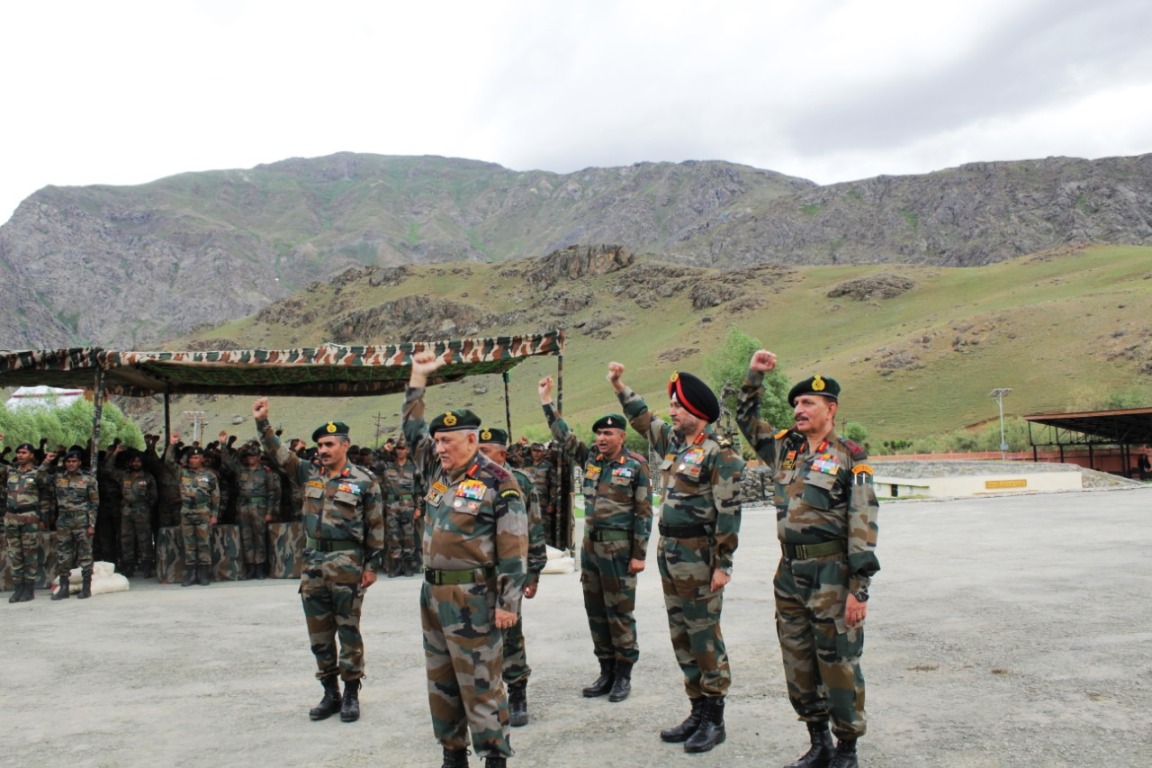
Chief of Army Staff, General Bipin Rawat, on Friday visited Drass sector. During the visit, he was briefed by the General Officer Commanding, ‘Fire & Fury’ Corps on the prevailing situation and operational preparedness in the Sector. General Bipin Rawat also interacted with army personnel deployed on the Line of Control (LC). The Army Chief was accompanied by the General Officer Commanding-in-Chief, Northern Command.

While interacting with the army men, the COAS appreciated the tenacity and resolve of the soldiers guarding the borders in the harsh terrain and extreme weather conditions. Recalling the valour and sacrifice of troops who fought in Operation VIJAY in this sector in 1999, he exhorted all ranks to execute their assigned tasks with the same vigour and responsibility. He also called upon all ranks of the ‘Fire & Fury’ Corps to re-dedicate themselves towards upholding the values that the Army stands for, an army spokesman said in a statement issued to media.


No acquittal, but big relief for India

No acquittal, but big relief for India

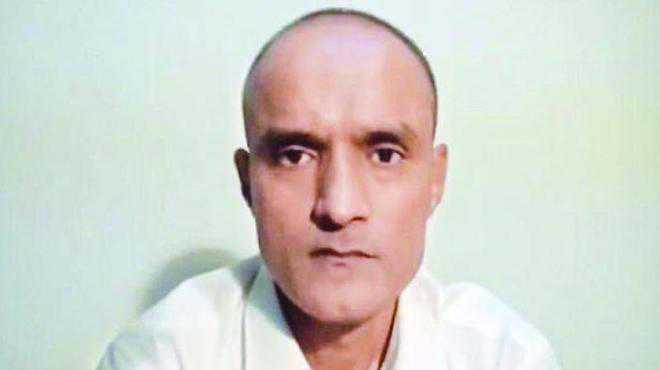
File photo of Kulbhushan Jadhav.

Sandeep Dikshit
Tribune News Service
New Delhi, July 17

The International Court of Justice’s verdict on the Kulbhushan Jadhav case was a partial victory for both sides with a tilt towards India, if the claims and submissions both sides are taken into consideration. But at the end of the day, a retrial and subsequent judgment by the Pakistan courts will again bring the case back to life.

At the ICJ, India won consular rights that it had pressed for and got Jadhav’s execution stayed. The ICJ also frowned on Pakistan failing to read Jadhav his rights and neither informing India immediately upon his arrest not permitting Indian officials to meet him. Pakistan has taken comfort in the fact that the ICJ did not acquit or release Jadhav, thus rejecting the main Indian prayer.

Though the ICJ found Pakistan guilty of breaching its obligations under the Vienna Convention, it did not grant the main relief sought by India of seeking Jadhav’s release and transfer to India as well as seeking a retrial by a civilian court.

Both countries had upped their stakes in the case as is evident that India had six diplomats at the court, including an Ambassador, an Additional Secretary and the Joint Secretary in charge of the Pakistan Desk. Pakistan, too, had pressed into service five diplomats, including an Ambassador and the Director General (South Asia).

The Indian side was helmed by Senior Advocate Harish Salve along with two Indian advocates, while Pakistan fielded its Attorney General besides a battery of local and foreign lawyers.

At the outset, the ICJ made it clear that Jadhav should have been given consular access because there is no reference to spies being excluded in the Vienna Convention. Pakistan had based its denial of access on the understanding that the convention precludes visiting rights to spies. Due to limitations of ICJ’s jurisdiction in such cases, it did not go through the evidence against Jadhav to determine his guilt or innocence.

The Indian plea stood on four pillars: (i) violation of Vienna Convention had rendered the sentence by the Pakistan military court infructuous; (ii) restoration to the original position; (iii) restrain Pakistan from convicting Jadhav, and (iv) trial before civilian courts after excluding Jadhav’s confession. Due to jurisdictional issues, the ICJ could only decide whether Pakistan had breached Article 36 of the Vienna Convention.



Defence Ministry sanctions land for Coast Guard Air Enclave

With the establishment of CG Air Enclave, the air assets of the force will be augmented.

Permission given for construction of hangars, apron and link taxi track’

Long wait for the Coast Guard officials in Visakhapatnam Headquarters have come to an end, as the CG Headquarters, New Delhi, has received the final sanction from Ministry of Defence towards setting up of Coast Guard Air Enclave in Visakhapatnam on July 8. The officials confirmed it in a release here on Wednesday.

According to release, sanction was given towards construction of hangars, apron and link taxi track in five acres of Airport Authority of India (AAI) land in the city. The construction process will commence as soon as formalities are completed between the AAI and the Coast Guard.

At present, one Pollution Control Vessel (PCV), two Off-shore Patrol Vessels (OPV), four Fast Patrol Vessels (FPV) and one Chetak helicopter is based inVisakhapatnam to ensure Pollution Control, Coastal Security and Search and Rescue in the region. With the establishment of CG Air Enclave at Visakhapatnam, the air assets of the force will be augmented to ensure enhanced surveillance, sea-air coordinated operations, safety of fishermen at sea and coastal security set-up, they said.

The officials also said that in future course of time, Coast Guard is planning to position Dhruv helicopters and Dornier aircraft at Visakhapatnam to increase its security dimension in view of the increasing economic activity in the Bay of Bengal.


A conspiracy that stirred a nation’s consciousness

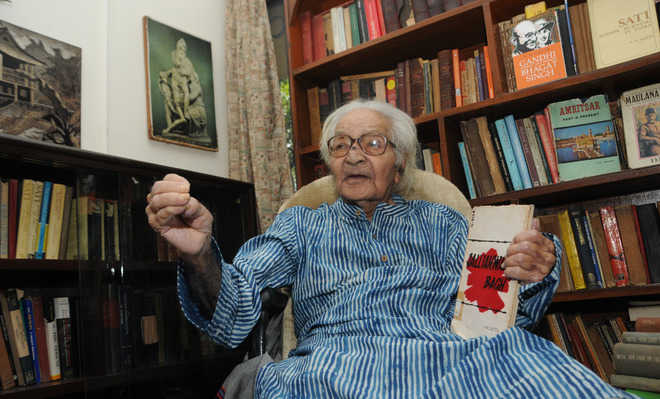
The Jallianwala Bagh massacre was the result of a well-planned conspiracy aimed at bringing together a crowd which could be killed by Dyer, says eminent historian VN Datta in conversation with Nonica Datta


Nonica Datta: You were born in Amritsar. What did you understand about the Jallianwala Bagh massacre as a child?

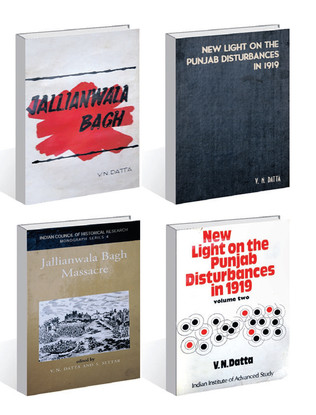
VN Datta: It was horrible… Our house was a 10-minute walk from Jallianwala Bagh at Katra Sher Singh in the walled city of Amritsar. My elder sister told me that she heard the bullets and that my mother began to beat her chest thinking that my father was dead. When I was about six years’ old, I used to walk in the Bagh and observe the bullet marks on the walls. Because of my family memory, I, too, became an indirect witness to the Jallianwala Bagh massacre. Later, I wrote extensively on the subject. My book, Jallianwala Bagh, appeared in 1969.

ND:Why do you think Brigadier General Reginald Dyer did what he did? 

VND: You have to think of the circumstances which led to Dyer’s action. After the victory in World War I, British confidence was at its peak. In addition, Punjab was ruled by the iron hand of Lieutenant Governor, Sir Michael O’Dwyer. He terrorised the troops and peasants. And then came the infamous Rowlatt Bills. There was political unrest in the province.

Dyer did not look upon Jallianwala Bagh massacre as an isolated event, but as an integral part of the Amritsar disturbances. Three days before, on the 10th, the city had been the scene of widespread violence following the arrest of local leaders from Punjab—Dr Saifuddin Kitchlew, Dr Satya Pal, Bugga and Ratto; five Europeans had been murdered; and a lady missionary, Miss Sherwood, had been assaulted. I would say that the assault on Miss Sherwood provided the context for Jallianwala Bagh incident to happen.

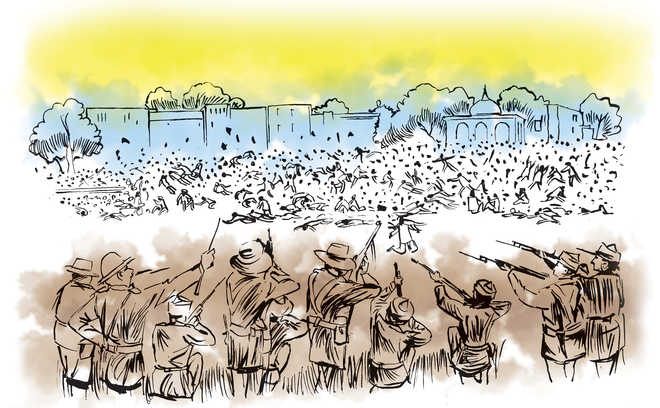
As a result, Dyer became furious and determined. He rushed from Jalandhar on 11 April. On 12 April, he moved around the city of Amritsar. On 13 April, from the Hathi Gate, he reached the narrow Jallianwala Bagh. He could not take the machine guns inside. With 50 troops on the platform—25 Gurkhas, 25 Baluchis—he shot about 1,650 bullets, and I calculated around 700 people died. He later told the Disorders Inquiry Committee that he realised his force was small and to hesitate might induce attack.

I believe Dyer’s decision in Jallianwala Bagh was partly influenced by his seeing Amritsar as a possible storm-centre of rebellion and partly by the circumstances of 10 April.

The Punjab Government feared that on the Baisakhi Day a large number of villagers would come to the city and their presence would make the situation sinister. On 12 and 13 April, Dyer issued two orders banning public meetings and processions in Amritsar city. When the massacre took place, martial law had not been introduced and the Brigadier General was not empowered to take charge of the city. But Dyer assumed full control of the situation and ignored the civilian officers. My argument is had he acted in concert with civilian officers, it is possible that the catastrophic episode might have been averted.

As soon as Dyer arrived in the Bagh, he stood on the raised platform and opened fire without warning. Not only this but, he fired continuously even when he could see that people were running for their lives. The Hunter Committee accused him of infringing the principle of minimum force, but failed to explain satisfactorily why he did so, maintaining that Dyer merely exceeded the bounds of his duty.

All these insights were possible because of my discovery of the volumes VI and VII of the Disorders Inquiry Committee (also known as the Hunter Committee) to which Dyer gave an account of his actions. I noticed that the previous volumes, I–V, did not contain the material that these two volumes possessed. These latter volumes included consolidated reports secretly maintained by the British government. I was the first to bring these volumes to the notice of scholars and able to discover hitherto unknown facts.

ND: It is evident that your pioneering work provides an altogether different historical perspective on 1919. Tell us how you would interpret the Jallianwala Bagh massacre? 

VND: I feel that the massacre was the result of a well-planned conspiracy aimed at bringing together a crowd which could be killed by Dyer. There was no martial law (in Amritsar and Lahore) till 15 April. There were no police present at Jallianwala Bagh. The Deputy Commissioner was absent from the scene. Dyer took no steps to prevent the meeting.

ND: Why do you call the massacre a conspiracy? 

VND: In order to understand the massacre, it is necessary to follow the movements of Hans Raj, the chief organiser of the Jallianwala Bagh meeting. At the time of the meeting, when some people began to move away, he urged the crowd to be seated and declared ‘the Government will never fire’. After a while, he waved his handkerchief and Dyer and his Indian troops appeared. When the shooting began, Hans Raj had already left. He was an agent provocateur. He was later spirited away to Mesopotamia and his house in Amritsar was burnt.

ND: Who was in the crowd? Who were the prominent leaders present in the Bagh? 

VND: Before the massacre, Jallianwala Bagh was a dumping ground of no political significance. In his testimony to the Disorders Inquiry Committee, Dyer said that the crowd was not innocent but hostile. He claimed it was a planned affair, with an organised mob assembled with the intent of defying authority.

But the crowd was an amorphous lot. Many had come to the city as part of a cattle fair on the Baisakhi festival and had wandered into the Bagh. There was no leader of importance present there. I talked to people who had survived the massacre. I interviewed Rattan Devi, Uttar Kaur and Uttam Devi, who rushed to the Bagh immediately after the firing. Their testimonies formed an essential part of my book, Jallianwala Bagh. I also had long conversations with Dr Kitchlew. Despite his failing health, he gave me valuable information. Hans Raj Mittal, a leading lawyer of Amritsar, told me that the Jallianwala Bagh episode was a conspiracy hatched by Hans Raj.

ND:  What is the legacy of the Jallianwala Bagh massacre? 

VND: After the massacre—as SK Datta, principal of Forman Christian College, Lahore, said—there was a parting of ways between the British and Indians. The massacre paved the way for the ultimate downfall of the British Empire and a new leadership by Gandhi appeared on the national scene.

In my works, I have tried to move away from a nationalist hagiography of the Jallianwala Bagh massacre. However, there is no doubt that it proved a great asset to the nationalist cause. 1919 changed the political complexion of Punjab, which could never recover from that military violence.

— This interview is one of a series of interviews with VN Datta conducted by Nonica Datta between July 2018 and April 2019 in New Delhi.


Army’s Super 30 students shine bright

Army’s Super 30 students shine bright

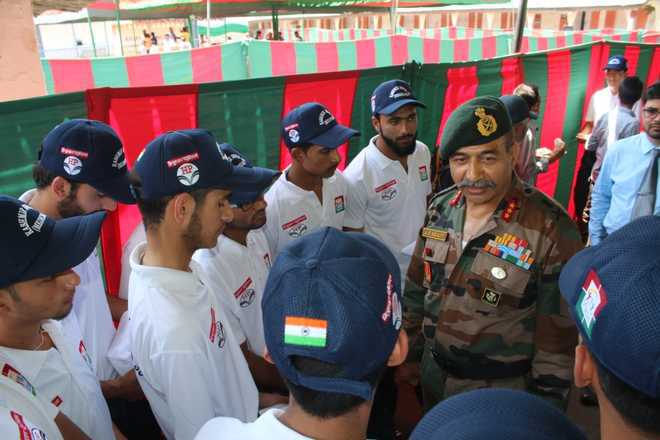
The Army’s Kashmir Super 30 (Medical) project has got a boost as 12 students who were provided coaching free of cost have made it to five medical colleges in the state.

In the first counselling, nine students have been offered MBBS seats and three considered for the BDS seats in government medical colleges of Srinagar, Baramulla, Anantnag, Jammu and Kathua, an Army statement said.

“The students of the pioneer batch of Kashmir Super 30 (Medical) have achieved phenomenal results wherein all 35 (including five reserve) students of the first batch are featuring in the open state merit list. The result of the first counselling has been declared and 12 students have made it to the prestigious MBBS and BDS list,” itsaid.An Army officer said more students would make to the medical colleges in the coming counselling sessions.

The Kashmir Super 30 (Medical) is a full-time residential programme and provides coaching to them for 12 months for entrance exams of various medical colleges.The programme is being executed by a Kanpur-based NGO, National Integrity & Educational Development Organisation, which provides the faculty. — TNS


A searing memory of horror lingers for victims’ families

AMRITSAR:It took place 100 years ago to the day. On April 13, 1919, soldiers of the British Indian Army, under the command of Colonel Reginald Dyer, fired bullets into a crowd of civilians who gathered peacefully in Jallianwalla Bagh, near the Golden Temple in Amritsar, to celebrate the harvest festival of Baisakhi and protest against the arrest and deportation of two national leaders, Satya Pal and Dr Saifuddin Kitchlew.

A hundred years later, the massacre still remains a searing memory for families of the victims who heard about it from survivors and relayed the narrative to subsequent generations.

Satpal Sharma, an 82-year-old retired head teacher, says his father’s brother Lal Chand, who was a survivor, narrated to him the story.

“My grandfather, Amin Chand Sharma, a hakim by profession, was getting ready for taking part in the Jallianwala Bagh protest. In the meantime, my uncle Lal Chand, who was only 12 years old then, started imploring my grandfather to take him along,” said Satpal .

His grandfather and uncle both left for the venue and joined the crowd, which was listening to the speeches of protest leaders when Dyer arrived at the scene accompanied by soldiers. “They took up positions and opened fire on the gathering without any warning. During the firing, among others, my grandfather was killed. My uncle somehow survived; he was taken out a day later from beneath a heap of bodies,” Sharma recalled.

“It was a brutal killing of innocent people and we can’t forget this. Even today, whenever I go to the Jallianwala Bagh, tears roll out of my eyes,” said Sharma, whose grandfather was recognized as a freedom fighter in 2010.

Mahesh Behal, 73, president of the Jallianwala Bagh Shaheed Parivar Samiti, heard the story of his own grandfather, lawyer Hari Ram Behal, from survivors. He was in Jallianwalla Bagh to address the crowd, but he was gunned down by Dyer’s troops before it was his turn to speak . Behal calls Dyer a “butcher”. “Before going to Jallianwala Bagh, my grandfather had told my grandmother, Rattan Kaur, to prepare kheer (rice pudding). My grandmother kept waiting with a bowl of kheer in her hand. Since then, we have not been cooking kheer in April,” Behal said.

The death toll in the massacre is still disputed. The colonial government put the number of deaths at 376, far fewer than the Indian National Congress’s claim that more than 1,000 perished.

Mahesh Behal says the families of some of the victims are in Pakistan. “We have contacts of only half-a-dozen families. No contacts of other families have been traced by the government even after the passage of 100 years,” he said.

Member of Parliament, Shwait Malik, who is one of the members of the Jallianwala Bagh National Memorial Trust, said, “The list of identification of the victims is being finalised by Amritsar administration. Till now, the administration has prepared a list of 501 victims. As soon as the list is completed, I will ask the Centre to announce the status of martyrs to those killed during the massacre.”

Ratan Devi, widow of Chhaju Bhagat, spent the night of Baisakhi in 1919 in Jallianwala Bagh by her husband’s body.

“After passing through that heap (of bodies), I found the body of my husband. The way towards it was full of blood and bodies…By this time, it was 8 o’clock and no one could stir out of her house because of a curfew order. I stood waiting. I could not go anywhere leaving the body of my husband… Amid hundreds of corpses, I passed my night…A number of them were poor, innocent children… What I experienced is known only to me and to God,” read her account preserved in the records of Jallianwala Bagh.

The Bengali keeper of Jallianwala’s memories of pain

 AMRITSAR: Sukumar Mukherjee, the third generation caretaker of the Jallianwala Bagh Memorial, says it deserves much more respect than what it gets from visitors. At the entrance of the memorial that was inaugurated in 1961, there is a gallery, full of words and photos on the massacre. The lines, “It’s a tragedy of national importance that cannot be allowed to be forgotten”, are a stark reminder of how India freed itself from colonial brutality.

SAMEER SEHGAL/ HT PHOTO■ Sukumar Mukherjee, secretary of the Jallianwala Bagh Memorial Trust in Amritsar on April 9. Mukherjee is the third generation caretaker of the memorial.For Mukherjee, secretary of the Jallianwala Bagh National Memorial Trust, this is both home and office – his residence is a short flight upstairs.

The 64-year-old with green eyes was born here, like his father Uttam Charan. The Mukherjees from the Hooghly district of West Bengal have been the caretakers of the Jallianwala memorial since its inception. Mukherjee’s grandfather Sashti Charan Mukherjee, a homeopath practising in Allahabad, was deputed by Congress leader Madan Mohan Malaviya to arrange a session in Amritsar in 1910. He never went back. Present at the bagh on the day of the 1919 massacre, Sashti Charan escaped death by hiding under the dais, and later moved a resolution for acquiring the site at the Congress session in Amritsar. This was followed by a nationwide appeal for fundraising by Mahatma Gandhi and a trust was set up with Malaviya as president and Sashti Charan as secretary. The British, it is said, wanted to obliterate the signs of the massacre by setting up a cloth market here but the Indians managed to acquire the land in 1920. Miffed, the authorities arrested Sashti Charan, who had the land deed, but he remained resolute.

Ever since, the Mukherjees have been the caretakers of the memorial. Sukumar, the youngest of three brothers, quit his bank job to take on the mantle from his father Uttam Charan when he died in 1988. “I was appointed by then PM Rajiv Gandhi,” says Mukherjee. “Most visitors treat it as a picnic spot, sometimes they don’t even care to read its history,” he rues.

Although the Trust is headed by the Prime Minister, managing the memorial is no cakewalk, says Mukherjee. In 2011, he had goons following him when the Punjab and Haryana high court ordered eviction of an illegal occupant from one of the Trust buildings.

During militancy in Punjab in the 1980s, a group of youngsters with swords apparently threatened to kill his father, saying they had seen people smoking in the bagh. “Papaji was very gutsy, he said, ‘kill me’ and they left,” Mukherjee recalls.

Living with a piece of history has its challenges. Kakoli, Sukumar’s wife who came here as a young bride in the 1980s when militancy had gripped the state, remembers the siege during Operation Bluestar. “We couldn’t step out for over a week, thankfully papaji (Uttam Charan) had a habit of storing ration.” It was due to the barter of onions and tomatoes that she came close to her neighbours during that period, Mukherjee says. “My daughters worry about my health and tell me ‘Papa, you’ve done enough sewa, come stay with us’, but I want to see the memorial through its 100th anniversary. Then, I will see,” Mukherjee says.

DYER OR DWYER: WHO IS TO BE HELD RESPONSIBLE FOR THE 1919 SHOOTING?

AMRITSAR: It’s widely believed that there would have been no Jallianwala Bagh massacre had it not been for one man who decided to teach Indians a lesson for being “wicked”. Ninety-one years after his death, Col Reginald Edward Harry Dyer — also called the butcher of Amritsar — remains an enigma, painted in either black or white.

But historians say though Col Dyer was the man on the spot, it was Sir Michael Francis O’Dwyer, the lieutenant governor of Punjab, who ordered the Jallianwala massacre. According to Indu Banga, a specialist in history of Punjab: “Dwyer was an arch imperialist who was responsible for this massacre. Dyer was merely following his orders.” Banga says even after his retirement, Dwyer continued to oppose any concessions for Indians.

Dwyer, says Banga, also raised money for a memorial to Dyer. Both men were born in 1864. While Dwyer was shot dead by Indian revolutionary Udham Singh in London’s Caxton Hall on March 13, 1940, Dyer died of cerebral haemorrhage and arteriosclerosis in 1927.

Few know that Dyer was born and raised in Punjab or that he was as wellversed in Hindustani as in English or that one of his favourite possessions was the photograph of an unnamed Sikh officer. What is well documented is his action at Jallianwala Bagh, which proved to be as much his undoing as that of the British Empire in India. Held guilty by the Hunter Commission, the moustachioed officer was forced to resign.

On April 13, 1919, Dyer, 55, was like a man possessed. Giving a first-hand account of the day in “Amritsar: The massacre that ended the Raj” by Alfred Draper, Dyer’s bodyguard Sergeant William Anderson recounted how the crowd seemed to “sink to the ground in a flurry of white garments”. When the soldiers had emptied their carbines, Dyer ordered them to reload and direct their fire where the crowd was the densest.


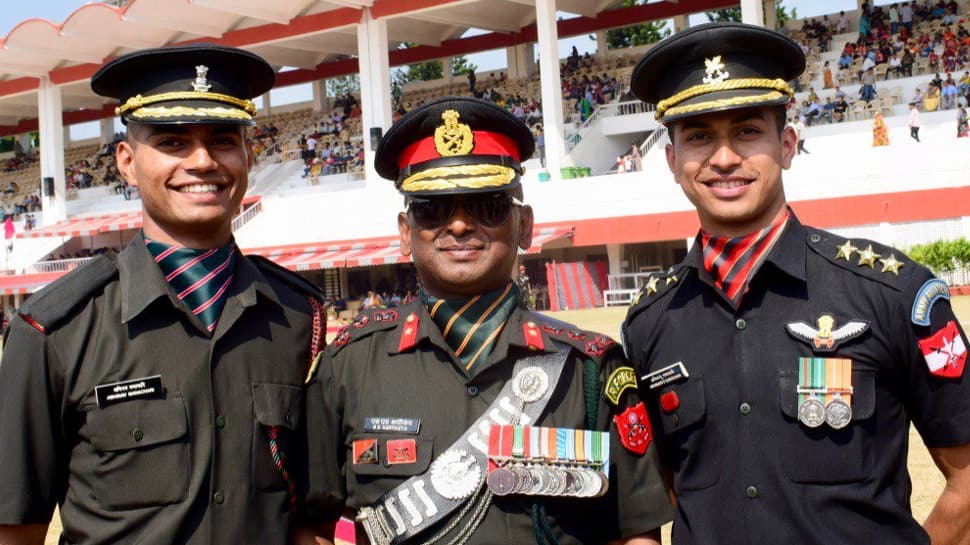
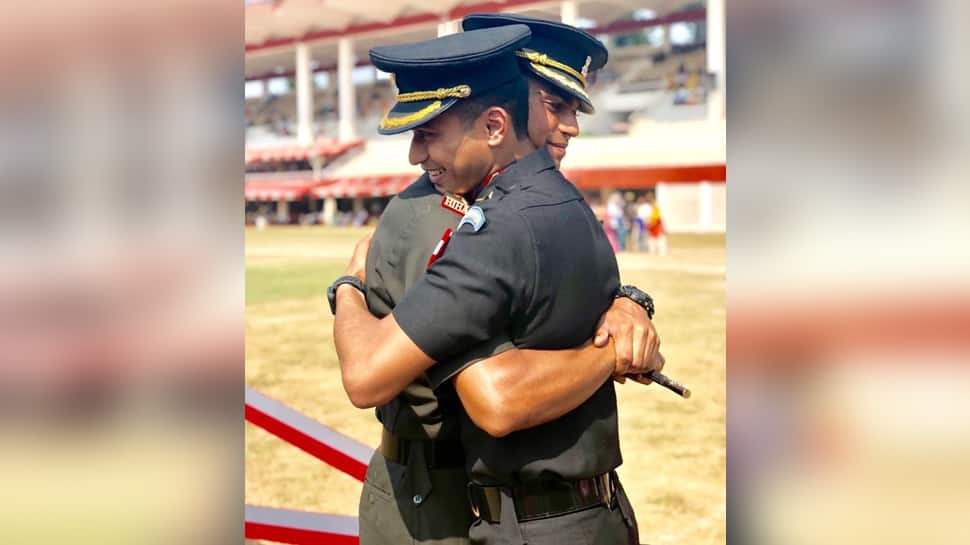
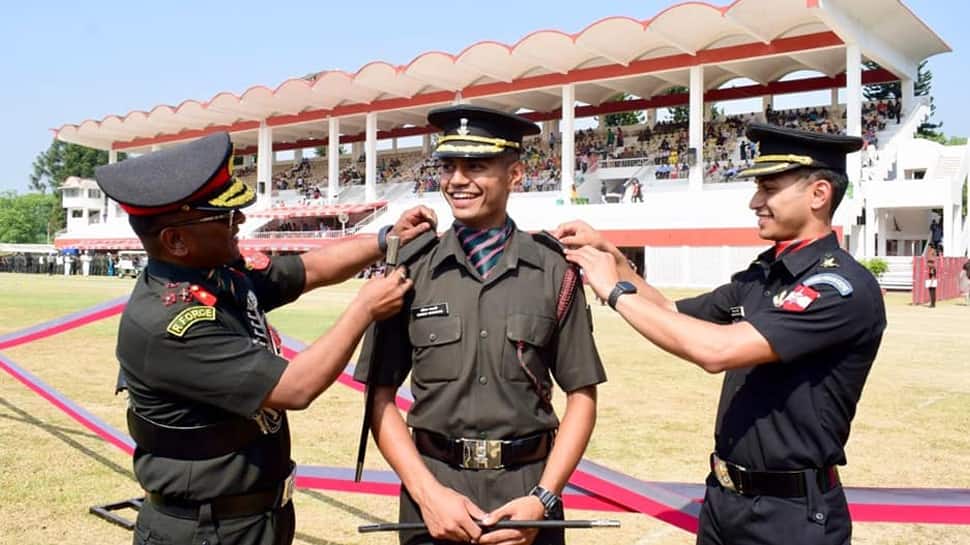
Indian Army Officers Abhimanyu and Abhinav Ganachari: How Brothers in Life became Brothers in Arms

Indian Army Officers Abhimanyu and Abhinav Ganachari: How Brothers in Life became Brothers in Arms

In a story stirring pride and inspiration, two brothers from an Army family fought great adversity and overcame numerous challenges to don the olive green uniform after passing out from the elite Indian Military Academy Dehradun. Abhimanyu Ganachari and his younger brother Abhinav grew up with the singular aim of becoming an officer in the Indian Army just like their father late Major G Ganachari of 5 Jammu and Kashmir Rifles (JAK RIF).But tragedy struck very early in life as Abhimanyu and Abhinav lost their father Major G Ganachari while they were just 10 and 7 years old respectively. But Major Ganachari had already inspired his sons for a life in the armed forces which his wife Sunanada Ganachari ensured that boys got the best.

The Indian Army posted the inspirational story of the Ganachari brothers on Instagram after the dream of Abhimanyu and Abhinav came true on June 8, 2019, when they stood among the 459 cheerful faces with stars on their shoulders during the pipping ceremony at IMA Dehradun.

From childhood they had seen their father in uniform, seeking inspiration, but tragedy struck when the officer died in 2003, leaving behind his wife, Sunanada with Abhimanyu and Abhinav still in school. After his death, things were not easy as his wife had to face financial challenges along with providing the best for her sons, read

A serving Brigadier, who was then a Major of 5 JAK RIF, stepped in to guide them through rough sails, helping them to find a secure job and settle pension claims. He stayed in touch with them through the years to help them realise their dream, said the Army.

The second tragedy struck when Sunanada died in June 2014. Abhimanyu was in his final term at IMA and Abhinav about to join an engineering college, but still very determined to join the Armed Forces.

Six months later, Abhimanyu got commissioned into the Corps of Engineers in December 2014. Meanwhile, Abhinav continued to resolutely pursue his dream, with the serving Brigadier, who had continued to look after their interests, arranging for his training and counselling.

His tenacity and perseverance came to fruition when he took commission into 18 BIHAR on June 8, 2019, fulfilling his mother’s dream and the brothers in life truly became ‘Brothers in Arms’.

“The success story of the Ganachari brothers truly reflects the steely resolve of Army families to develop even in the face of adversities, thanks to the environmental grooming and a very strong regimental ethos which continue to remain the backbone of Indian Army,” read the post.


Resurrection of Rafale Govt edgy as SC admits ‘stolen’ papers in review plea

Resurrection of Rafale

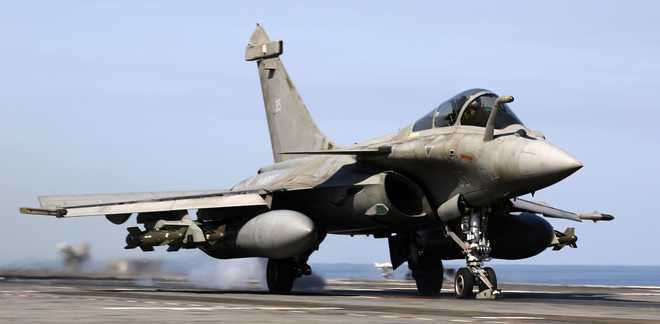
Just when the BJP thought it could breathe long and easy on the Rafale row, which has clung to it like the Bofors stuck to the Congress, the Supreme Court has dismissed the government’s objections against taking cognisance of ‘stolen’ documents while deciding a review petition. The highest court of the land will go ahead with it, despite national security concerns raised by the Ministry of Defence (MoD) that the review would tantamount to putting classified information in the public domain. Firm, the court declared that the test of admissibility of evidence lay in its relevance and there was no provision in the Official Secrets Act (OSA) or any other statute by which Parliament had vested power in the executive arm of the government to ‘restrain’ publication of papers marked as secret, or placing them before a court of law.

Earlier, in December, the SC had dismissed the petition, ruling out ‘commercial favouritism’. Irregularities had been alleged in the Rs 59,000-crore deal sealed by the NDA government in 2016 with France for buying 36 fighter jets. The revelation of three ‘missing’ documents, however, necessitated a review plea. These include an eight-page ‘dissent note’ by three members of the negotiating team and two MoD documents, alluding to ‘parallel negotiations’ by the PMO. The Attorney General’s contention that it was a ‘crime’ under the OSA drew the court’s rebuttal  that ‘a public authority is justified in allowing access to information if public interest in disclosure outweighs the harm sought to be protected’.

The SC is determined to get to the bottom of it. The government can no longer hide behind gossamer pretexts of privilege, immunity and violation of the secrets Act. Probity in defence deals is not optional. If there was, indeed, transparency, there should be no jitters over what may emerge. Getting hands on sensitive papers is no crime, especially if mala fide is not proven. If at all, it exposes the chinks in the ‘security’ network, in a fashion that makes it a class act of journalism.