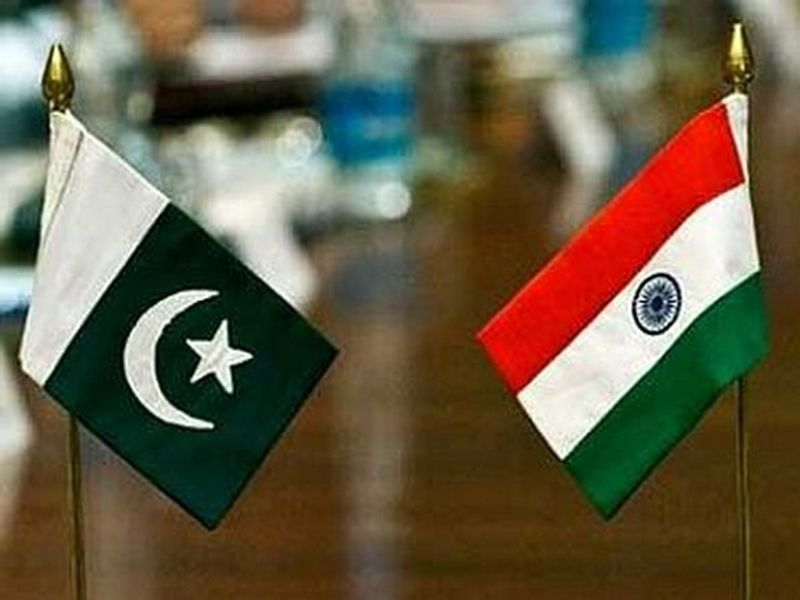
THE Indian subcontinent, with its shared histories and contrasting histrionics, has been a theatre of geopolitical turbulence for eons. The current India-Pakistan imbroglio, therefore, remains unresolved, to say the least.
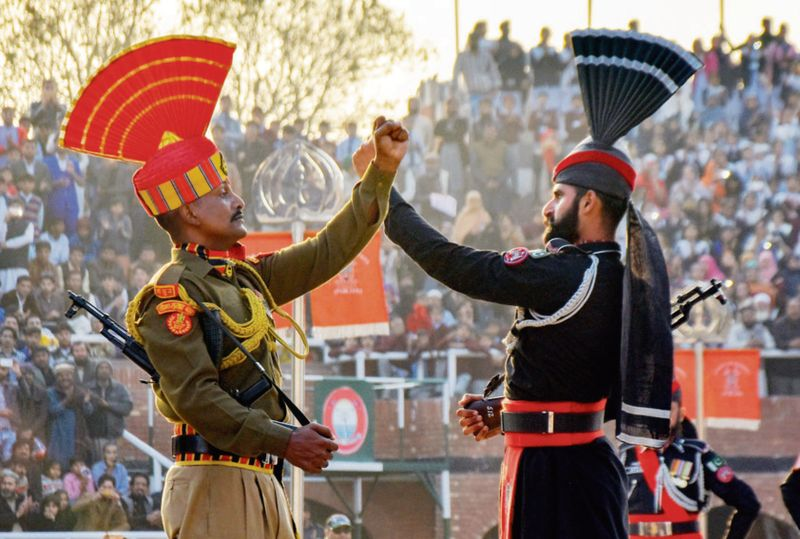
I have crossed the Wagah-Attari border as part of CII business delegations, SAARC events and on the invitation of the Lahore University of Management Sciences (LUMS) to chair a subcontinental water session. Each time, the warm hospitality of people bowled us over. The intellectual and spiritual experiences energised us, and the cuisine satiated our palate beyond compare.
And yet, the discourses on governance were careful, the presence of intelligence operatives in the shadows obvious, and the approach of our hosts, concerned with our wellbeing, watchful. But at no point did national political animosity ever surface to our discomfort. We found the neighbours to be able to laugh away their situations, those that contrasted with India’s growth story, in a self-deprecating yet light-hearted way.
During a visit to LUMS, we met Kamil Khan Mumtaz, an erudite scholar and conservation architect. He took us to construction sites, both restorative and new, which gave us an insight into the fascinating work he was doing. What was even more endearing was his admission that he drew inspiration from Bhai Ram Singh, who designed the monumental Khalsa College of Amritsar in 1892.
Most of the evidence of Sikh architecture, including that of Bhai Ram Singh, got left behind in “Lehenda Punjab” of Pakistan at the time of the Partition. Mumtaz shared masonry tips that we were able to implement in restoration work at the college. These interactions, and the varied cultural exchanges over the decades, saw festivals of Punjabi poetry and Sufi renditions, reminding the newer generations of the bonds that existed between the people. The commonalities are many, despite the politics that mars the synergy.
The Pahalgam tragedy and its aftermath have created deeper chasms. India did what was needed to be done. But one wonders what impact the pivotal change in India’s mood shall have. Will it have a sobering effect? Will Pak Generals become more aggressive? Or will they amend their policy of “a thousand cuts” to that of “ten thousand nicks.”
India is in a sweet spot economically, and a war is not what it aspires for — but it will not tolerate transgressions. However, it must resist the temptation of triumphalism. Strategic restraint and long-term vision are hallmarks of a mature power. Pakistan desperately needs to repair its faltering economy, rebuild international credibility and prioritise the welfare of its citizens, even though its leadership continues to carry the weight of historical grudges.
Peaceniks are not the flavour of the season, but ample warmongering has already been done. Living near the border in Punjab, a battleground state, one can only seek harmony rather than the destruction of life and property on both sides of the Radcliffe Line. Enough blood has been spilled. Give peace a chance!
PAKISTAN is a failed State. Pakistan should be declared a terrorist state. Pakistan’s economy is sinking. Pakistan has been internationally isolated. We have dehyphenated ourselves from Pakistan. Even Prabowo Subianto, President of Indonesia, the world’s largest Muslim-majority nation, delinked his visit to India from a trip to Pakistan. For a decade now, the Indian public has been fed this narrative. A leading New Delhi think tank even published a paper by one of its senior scholars, titled, ‘Jaishankar Makes it Clear: Pakistan is Now Just a Sideshow for India.’
What accounts for this hesitation on the part of the so-called ‘international community’ to call a spade a spade?
On June 4, less than a month after the two nations were engaged in hostilities focused on terrorist groups based in Pakistan, the United Nations Security Council named Pakistan as vice-chair of its Counter-Terrorism Committee. This comes on top of a series of minor and major diplomatic victories for Pakistan over the past month. It is time to pay greater attention to our relations with our neighbour and to how the world views Pakistan.
The first diplomatic shock came when on May 9, two days into the cross-border hostilities, the executive board of the International Monetary Fund (IMF) voted to extend an over $2-billion loan to Pakistan. India was the only member of the board that abstained. All others, including all members of the Group of Seven, voted to give Pakistan a breather. The only Indian official who publicly criticised the IMF board for this decision, Raksha Mantri Rajnath Singh, did so almost as an afterthought. The IMF decision was followed by financial support from the World Bank and the Asian Development Bank.
Then spoke US President Donald Trump. In the first of a dozen statements so far, he claimed credit for getting the warring neighbours to declare a ceasefire. He persisted with his claims even after India officially denied that the US had anything to do with the ceasefire. To rub salt into Indian diplomatic wounds, President Trump not only equated India and Pakistan as good friends of the US but claimed that both are important countries because they are nuclear powers and that they would now trade with each other and the US to avoid future conflict.
While many countries supported India in its battle against terrorism, only two — Israel and Afghanistan — named Pakistan as its sponsor. Within days, Beijing hosted a trilateral with Pakistan and Afghanistan and made the two make up. That left only Israel, accused today of conducting genocide against a hapless people, supporting India. Even Russia spoke with a forked tongue. Days after the Pahalgam terror attack, External Affairs Minister S Jaishankar mocked the European Union, saying that India was seeking “partners not preachers”. Sure, no one preached after that. However, few partnered.
Many in India are aghast. What accounts for this hesitation on the part of the so-called ‘international community’ to call a spade a spade? Why has there been no whole-hearted condemnation of Pakistan or at least a more genuine expression of solidarity with India? Why did Prime Minister Narendra Modi have to depute multi-party delegations of members of Parliament around the world to do the work of India’s ambassadors?
The point is that it was not always like this. The international community stood with India when in 1999 it repulsed Pakistani soldiers attired in mufti at Kargil. The global opinion on the status of Kashmir changed after that, with US President Bill Clinton giving his imprimatur to the Simla Agreement that sanctified the Line of Control as a virtual border. Clinton visited India for five days and Pakistan for five hours. He praised India and admonished Pakistan.
Again, in November 2008, after the terror attack in Mumbai, the entire world stood with India. Pakistan was shamed for its role on both occasions because its role was manifest and, equally importantly, the world gave Indian statements due regard. Statements made by the governments of Atal Bihari Vajpayee and Manmohan Singh were taken seriously in all major capitals of the world. Neither had to waste national resources to fly 50 parliamentarians around the world to convince them of our case. Professional diplomats did that job.
The Union Government’s inability to identify the nationality of the terrorists involved in the Pahalgam attack and clearly establish Pakistan’s culpability has handicapped Indian diplomacy this time. Equally, many countries are wondering whether Indian domestic politics has not played its part in weakening India’s case on cross-border terrorism. The Indian State was viewed as a secular and democratic state and the governments of Vajpayee and Singh as responsible governments that deserved international support. The Indian case in this regard has become weaker and international opinion less charitable.
The first task of national security and foreign policy management has to be the correct sizing up of one’s enemy. Second, to ensure adequate contact at different levels that facilitates an exchange of credible information. By shutting down all diplomatic, business and civil society engagement with Pakistan, India has deprived itself of the means to acquire a balanced assessment of its neighbour and the ability to influence opinion across the border.
While the economic gap between the two countries has certainly grown, Pakistan is not a basket case. It has a sizeable economy, a sizeable industrial and agricultural base, links with major economies and a competent military.
In a recent interview with The Print’s Swasti Rao, a European diplomat reminded Indians of the many strengths and capabilities of Pakistan’s air force. Apart from its hard power, Pakistan has always enjoyed the soft power of its elite. In a highly feudal and unequal society, Pakistan’s elites continue to be groomed to interact with confidence and class with their Western interlocutors. India’s new middle class that now populates its politics and diplomacy is no match.
Govt to revive battalions of border home guards in wake of Pahalgam terror attack
The drills, conducted on May 7 and again on May 31 under Operation Shield, exposed critical gaps in the country’s civil defence readiness, particularly in Punjab, Rajasthan, Gujarat and Jammu & Kashmir
n the wake of the Pahalgam terror attack, the Union Home Ministry is fast-tracking a proposal to revive and modernise Border Wing Home Guards Battalions in frontier states, aiming to strengthen India’s civil defence infrastructure.The battalions — originally created to serve as auxiliary forces to the Indian Army and the Border Security Force (BSF) during times of external aggression — have, over time, become largely defunct, barring Rajasthan. Officials say the units in several border states are now barely functional.
Highly placed sources informed The Tribune that the long-pending proposal had gained urgency following the April 22 terror strike in Pahalgam, in which 26 persons were killed, and India’s retaliatory military operation, Operation Sindoor, against Pakistan. It has also been spurred by concerns raised during recent national-level mock drills assessing preparedness for external aggression and natural disasters.
The drills, conducted on May 7 and again on May 31 under Operation Shield, exposed critical gaps in the country’s civil defence readiness, particularly in Punjab, Rajasthan, Gujarat and Jammu & Kashmir. The revived Home Guards plan is among the key remedial steps being expedited, officials confirmed.
According to official data, there are currently 15 Border Wing Home Guards Battalions — six in Punjab, four in Rajasthan, two in Gujarat and one each in Meghalaya, Tripura and West Bengal. These units are meant to assist the BSF in guarding international borders and coastal areas, preventing infiltration and protecting critical infrastructure during wartime.
The proposed overhaul includes fresh recruitment, modernised training modules and stricter deployment protocols, making the Home Guards a more effective civil defence backup.
Home Guards are raised under the Home Guards Act and Rules of the states/union territories, comprising citizens from diverse backgrounds who volunteer their time in service of community safety and national preparedness.
Manipur erupts again after top Meitei leader’s arrest
Fresh unrest has erupted in Manipur following the dramatic arrest of Meitei outfit Arambai Tenggol members and its leader Kanan Singh by the CBI, triggering widespread protests and violent clashes across the Imphal valley.
In response, the authorities have imposed curfew-like restrictions and suspended the Internet services across five key districts to prevent further escalation.
Kanan Singh, believed to be a prominent leader of the Arambai Tenggol, a Meiti activist group, was picked up from the Imphal airport in the early hours of June 8. CBI officials confirmed that he is a prime suspect in several cases related to the 2023 ethnic violence in Manipur and had been under surveillance for months.
“He was wanted in multiple cases, including the attack on the house of Additional SP Moirangthem Amit and the officer’s brief abduction in February 2024,” said a senior CBI officer. Kanan Singh, who served as a head constable with the Manipur Police commando unit before being suspended, was reportedly leading several armed vigilante actions in recent months.
Following his arrest, Kanan Singh was immediately flown to Guwahati, where violence-related cases from Manipur are being tried, in accordance with the Supreme Court orders shifting the venue outside the state for impartial proceedings.
The news of Kanan Singh’s arrest spread rapidly across Imphal, sparking a massive outcry among members the Meitei community. Within hours, protesters stormed the streets, blocking roads, burning tyres and even torching vehicles near the Raj Bhavan. Near Kangla Gate, barely 200 metres from the Governor’s residence, the protest turned volatile, forcing the security forces to fire multiple rounds of tear gas to disperse the crowd.
Several young men poured petrol on themselves, threatening self-immolation to demand Kanan Singh’s immediate release — a grim sign of the deepening anger within the community.
Fearing a breakdown of law and order, the Manipur administration quickly clamped prohibitory orders in Imphal West, Imphal East, Thoubal, Bishnupur and Kakching districts. Mobile Internet, broadband, VSAT and even VPN services have been suspended across these areas for the next 48 hours as a precautionary measure.
“The situation remains tense. The Internet suspension is necessary to prevent the spread of inflammatory content and rumours that may incite further violence,” a senior official from the Home Department said.
A delegation of Manipur MLAs met Governor Ajay Kumar Bhalla at the Raj Bhavan on Sunday, urging him to intervene and restore calm. The Governor assured the delegation that “all necessary steps” were being taken to maintain order and address the people’s grievances.
Later, the Governor convened a high-level security meeting with senior administrative, intelligence and police officials to take stock of the ground situation and evaluate response strategies.
The arrest of Kanan Singh has once again exposed the volatile political climate in Manipur, a state still reeling from the 2023 communal clashes that left over 200 dead and thousands displaced.
Lance Naik Banwar LaL Saran of 9th Raj rifle camp at Gulmarg in Baramulla district shot himself with his service rifle on Sunday night
A soldier allegedly committed suicide by shooting himself with his service rifle at a camp in Jammu and Kashmir’s Gulmarg, officials said on Monday.
Lance Naik Banwar LaL Saran of 9th Raj rifle camp at Gulmarg in Baramulla district shot himself with his service rifle on Sunday night, the officials said.
The jawan, hailing from Rajasthan, died on the spot, they said, adding the body was taken to Sub District Hospital Tangmarg for medico-legal formalities.
Once brick-kiln worker, Faridkot’s youth clears NDA exam
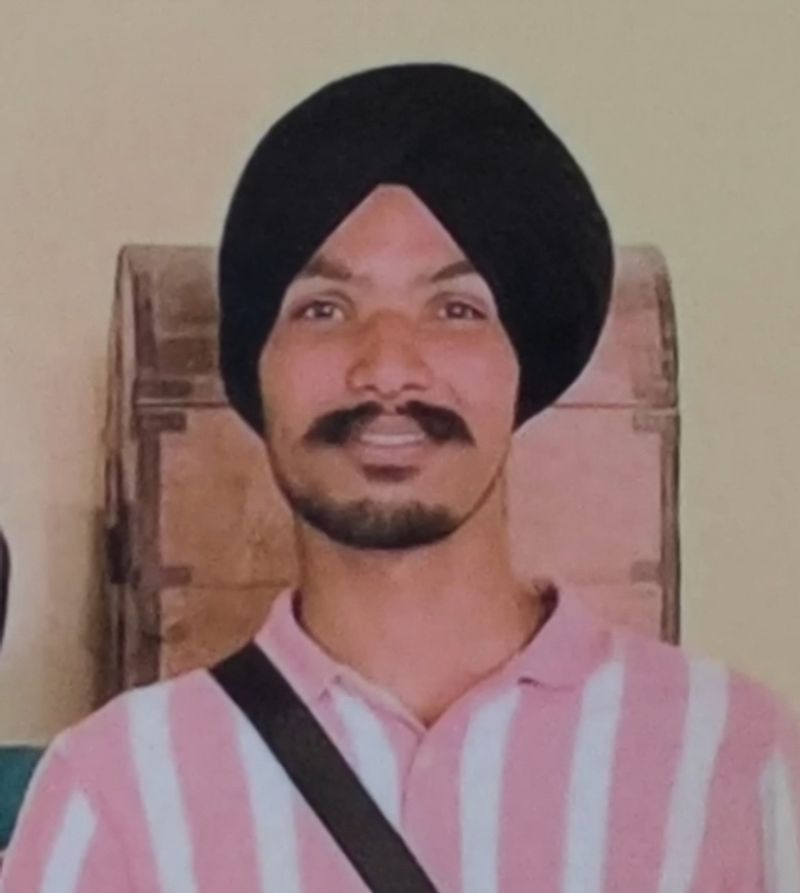
From working in paddy fields and brick kilns to clearing the National Defence Academy (NDA) exam, the journey of 24-year-old Akash Deep is nothing short of inspiration.
A resident of Kot Sukhia village near Kotkapura in Faridkot, Akash Deep recently cleared the exam. His achievement has brought pride not only to his family but also to the entire village.
Born into a family of daily wagers, life was never easy for Akash. His parents Hakam Singh and Kuldeep Kaur worked at several brick kilns in Faridkot and Moga districts. The family often lived in temporary labour quarters and struggled to make ends meet.
Akash’s efforts paid off when the NDA results were announced last month. However, the family initially kept the news private, thinking to let him first complete the training.
It only became public after Kotkapura MLA and Vidhan Sabha Speaker Kultar Singh Sandhwan visited the family to congratulate them two days ago.Speaking to The Tribune, Kuldeep Kaur said, “Akash did his Class X from the government senior secondary school in our village and Class XII from the government meritorious school in Mohali. He helped us by working in fields, brick kilns and grain markets. Despite financial hardships, he remained focused on his dream to become an officer.”
Joined IAF four years ago
Sharing more about his journey, she added, “Akash joined the Indian Air Force four years ago at an entry-level position but never stopped preparing for officer-level exam. During his leave, he would go straight to Chandigarh for preparation, spending little time at home. I am illiterate and don’t even exactly remember his rank in the Air Force. He is currently posted in Ahmedabad.”
She also shared a message for others in similar situations, saying, “We have lived a hard life, surviving on labour and hope, and we are so proud of Akash. May his story inspire other children from poor families to fulfil their dream.”
Emotional Kuldeep Kaur further said that after Akash joined the Air Force, both she and her husband stopped doing labour work.
“We have just two children. My daughter, the younger one, is pursuing BEd and wants to become a teacher,” she said.
Akash’s father Hakam Singh, said, “He always worked hard without ever complaining. We have seen difficult days, but today our son has made us proud. We are thankful to the almighty.”
The family is now waiting for their hero to come home on leave and give him a grand welcome.
Advertisement
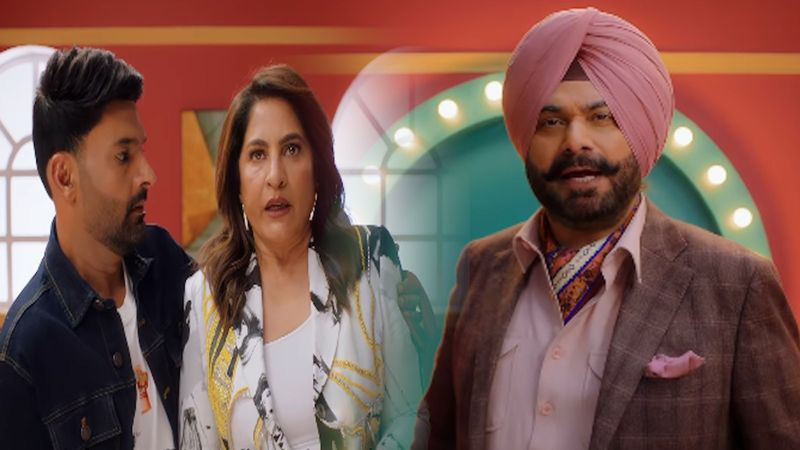
Navjot Singh Sidhu returns to ‘The Great Indian Kapil Show 3’: Feels like coming home again
Sidhu has served as a permanent guest on Kapil Sharma’s previous comedy shows
Former cricketer Navjot Singh Sidhu is set to make his comeback to Kapil Sharma’s comedy show with its third season, the makers announced on Monday.
Sidhu was a permanent guest at “Comedy Nights with Kapil” between 2013 and 2016. He also appeared in the first two seasons of “The Kapil Sharma Show” and “Family Time with Kapil Sharma”.
“The Great Indian Kapil Show 3” will stream on Netflix from June 21. The streaming platform shared the announcement with a video on its Instagram handle.
“Ek kursi paaji ke liye please. Har Funnyvaar Badhega Humara Parivaar with the comeback of Navjot Singh Sidhu & Archana Puran Singh. Watch them in the new season of The Great Indian Kapil Show, streaming from 21st June, at 8 PM only on Netflix,” the caption on the streamer’s X read.
Sidhu said returning to the show feels like coming back home. “Coming to ‘The Great Indian Kapil Show’ feels like I’m coming home again. It is a home run for me. We heard the voice of the people, so many fans and well-wishers who loved our interactions and wanted to see more,” he said in a statement.
“A smile doesn’t cost you a cent, but it is worth millions of dollars and ‘The Great Indian Kapil Show’ is an instrument of god’s goodwill to bring happiness to mankind – honoured to be part of it again,” he added.
Sharma said, “Humne promise kiya tha ki Har funnyvaar badhega Humaara parivaar and I’m so excited to have Sidhu paaji part of the family along with Archana ji to enjoy all the chutkules (jokes), the shayaris (poetry) and masti (fun). The mahaul (mood) is set, so stay tuned because this season jokes aur laughter dono ho gayein hain triple.” The upcoming season also features Sunil Grover, Krushna Abhishek and Kiku Sharda.
राष्ट्रपति ने सशस्त्र बलों के 92 कर्मियों को प्रदान किए विशिष्ट सेवा पुरस्कार, सेवानिवृत्त अधिकारी भी सम्मानित
Lieutenant Colonel Found In Hotel: सागर से लापता लेफ्टिनेंट कर्नल प्रदीप कुमार निगम ललितपुर में मिले हैं। वह होटल के एक कमरे में मिले हैं। एटीएम से ट्रांजैक्शन होने के बाद उनका सुराग मिला है।
Meet Lieutenant General Sadhna Saxena Nair: First Woman DG Medical Services (Army)
Ojit Singh is Army’s 1st Command Subedar Major, to advise Northern Command chief on JCO, OR matters
AFT remits dismissal of Colonel for having affair to two years’ loss of seniority
Adultery in armed forces: Why it remains a disciplinary offence
55 yrs after discharge, 80-yr-old ex-serviceman gets pension
Indian Navy set to commission first ASW-SWC ship ‘Arnala’ on June 18
IAF Apache helicopter makes ‘precautionary landing’ in UP’s Saharanpur
Pakistan writes three letters in a month for Indus Water Treaty revival
48 graduate from Army Cadet College
PM stopped Army out of fear of ‘big country’: West Bengal Minister Firhad
As the dust settles on the May 7 destruction, how long can a nation turn its back on those who stand at its edges, absorbing shocks of every geopolitical tremor?
There are places where you find your sense of belonging. For me, that place is Poonch —a living archive of loss, endurance and courage. From 1947 to 2025, it has been witness to wars, displacement and militancy. Yet, Poonch continues to be relegated to the footnotes of history and, despite its strategic location, remains absent from policy conversations.
In 1947, the region didn’t just lose territory; it lost people, identity and continuity. Families were divided across the Line of Control — between Poonch and Haveli, Sadhnoti, Bagh, Muzaffarabad and Mirpur. The pain endured by this remote region is neither fully understood by the wider world, nor by the journalists who reported from the area last month for the first time — most of them unfamiliar with its layered history and the harsh realities of life along the borders with Pakistan-occupied Jammu and Kashmir (PoJK).
The LoC is so close to the city that, on clear nights, the lights from homes in PoJK are visible. It is a daily reminder of how fragile and exposed this land is — both militarily and emotionally.
Poonch is a land of saints known for its beauty, its rivers, valleys, and mountains, but more importantly, for its pluralism and peaceful coexistence. It is where my mother was born and where my grandparents once lived before being displaced from their ancestral home in PoJK in 1947.
Through the toughest times in history, the people of Poonch and border areas of Jammu and Kashmir have held on to their land. Even after facing displacement and deep suffering, they remained as steadfast as the mountains that surround them.
All my life, I heard stories from my grandparents about the Partition and the tragic events that unfolded in Poonch, Mirpur and Muzaffarabad in 1947. They spoke of families forced to flee, homes abandoned overnight, lives torn apart by loss and separation. I never imagined that nearly eight decades later, I would witness a similar tragedy unfold.
On the night of May 7, as India launched Operation Sindoor, Pakistan retaliated by targeting the main city and civilians of Poonch. Artillery rained down on the towns and hamlets while people were asleep. The shelling claimed the lives of 14 civilians and forced nearly 10,000 persons to leave their homes.
The announcement of a ceasefire on May 10 brought a fragile sense of relief, but for many families, it marked the beginning of a long, painful journey back to broken houses, shattered rooftops.
Though the world has moved on, as it always does, for the people of Poonch — especially the women — life has been shattered in ways that may never fully heal. Perhaps, the greatest wound is not just the destruction, but how disconnected we are to the human cost of conflict.
A woman in Poonch returned home only to gather what was left. Photo courtesy: Nazim Ali Manhas
I went to meet families displaced from Poonch — families that had taken refuge at Gurdwara Chand Kaur Sahib in Jammu. While sharing a langar meal, I sat listening to a woman and her children from Mankote village recount their journey to Jammu. Her voice trembled with exhaustion and quiet strength: “For how long will the people of Poonch be uprooted like this? Will there ever be a place we can truly call home?” Her question lingers.
Many in her village chose to stay behind despite the danger and help each other. It was in that very village, Mankote, where Ruby Kaur lost her life to the shelling.
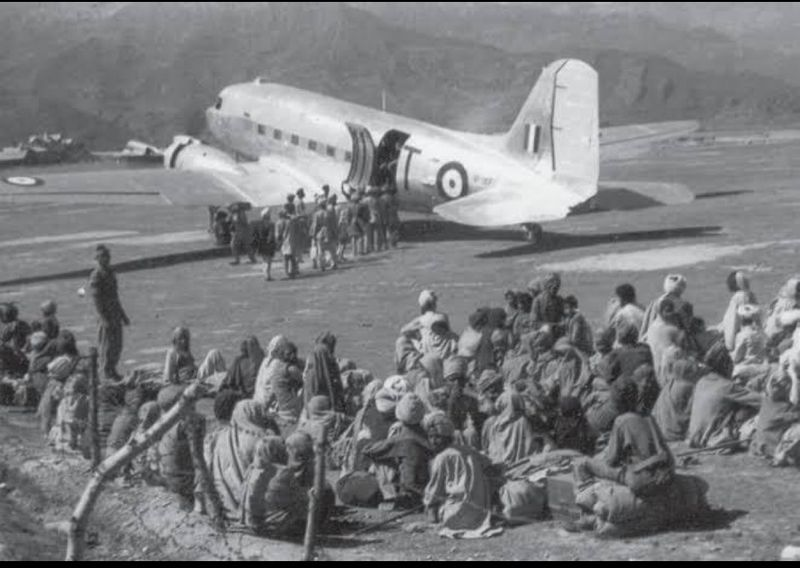
That moment evoked a powerful image from my grandfather’s memoirs of 1947 — refugees from Muzaffarabad, Bagh, Sadhnoti, Poonch and adjoining areas boarding Dakota planes at the Poonch airfield in 1947, leaving behind their land, their lives, their everything.
Days after the ceasefire was announced, families displaced from Poonch have begun to return. But what they’ve come back to is no longer home — only fragments of the lives they once knew. The walls are cracked, the roofs gone.
Lecturer Manjeet Singh and his wife, a government school teacher, were sitting in their living room when a shell hit their terrace. They narrowly escaped and fled to safety in the chaos. When Manjeet returned days later, he found part of his house reduced to rubble.
When lecturer Manjit Singh returned days later, he found part of his house reduced to rubble. Photo by the writer
Though a committee has been formed by Chief Minister Omar Abdullah to assess the damage, real relief may take months to reach. And time is something these families don’t have.
A painful photograph by Nazim Ali Manhas captures the quiet devastation: a woman sitting alone in the ruins of her kitchen — a place which once served food, warmth and love now charred and empty. Across Poonch, there are countless such stories — families who went to bed with a roof over their heads and woke up with nothing. And yet, they’ve returned. Not just to claim what’s left of their homes, but to reclaim their sense of dignity. According to preliminary reports, more than 500 homes have been fully or partially damaged. Soon, the headlines will fade, and attention will shift. But before that happens, I ask you to pause, hold space for these stories. Remember the children who will never grow up, and the mothers who now cradle memories instead of little ones.
The recent shelling has brutally laid bare the long-standing neglect of border communities in J&K.
One question bothers me: how could we overlook the obvious? Poonch, surrounded on three sides by PoJK, has always been a strategically sensitive zone. Any precise strike on terror camps across the border was bound to provoke retaliation. And yet, there was no warning and advisory issued for the public.
This wasn’t the first time Poonch has witnessed the fury of artillery fire — it happened during the 1971 and 1965 wars. In 2018, the Centre announced the construction of over 15,000 underground bunkers to protect civilians in border areas of J&K. Today, most of these exist only on paper.
The recent shelling has brutally laid bare the long-standing neglect of border communities in J&K. Hospitals are ill-equipped to handle emergencies, and the majority of those critically injured in the shelling were referred to Jammu.
Also, on the day when it mattered most, the administration was not prepared to deal with such a situation. People were left to fend for themselves. Civil society and local NGOs from Poonch came forward to provide shelter and food.
The displaced families sought refuge in a Gurdwara Sahib in Jammu. But as the city too was under attack, there was nowhere safe to go. Photo by the writer
The story of Poonch is of quiet courage — of people who have endured decades of loss with resilience that rarely finds a place in our national conscience. Their suffering is not just collateral damage; it is the lived reality of those who guard India’s frontiers not with weapons, but with willpower.
As the dust settles over shattered homes and silenced courtyards, we must ask: how long can a nation turn its back on those who stand at its edges, absorbing the shocks of every geopolitical tremor?
— The writer is a columnist from J&K
राष्ट्रपति ने सशस्त्र बलों के 92 कर्मियों को प्रदान किए विशिष्ट सेवा पुरस्कार, सेवानिवृत्त अधिकारी भी सम्मानित
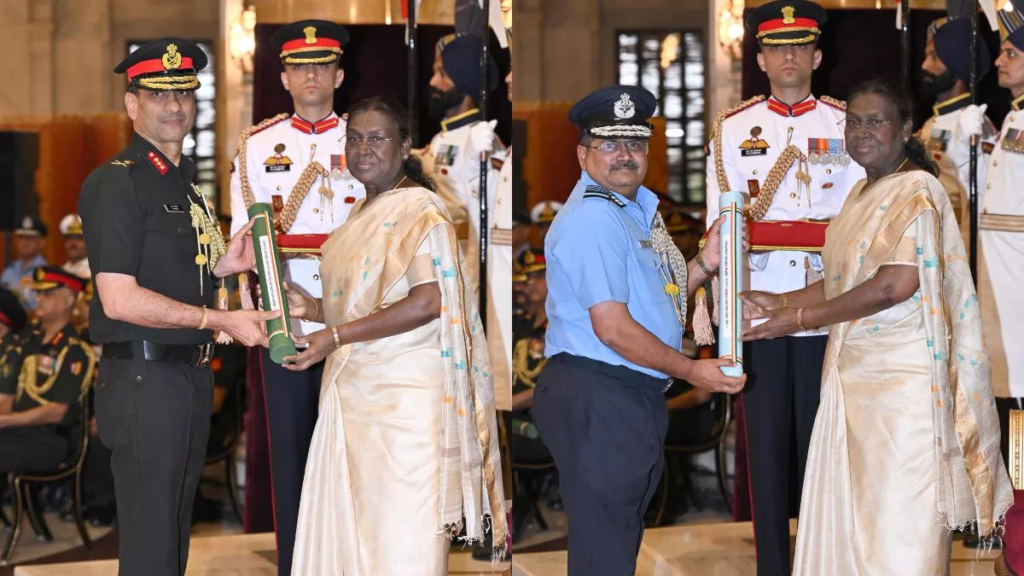
राष्ट्रपति द्रौपदी मुर्मु ने सशस्त्र बलों के 92 वरिष्ठ कर्मियों को विशिष्ट सेवा पुरस्कार प्रदान किए। इनमें परम विशिष्ट सेवा पदक उत्तम युद्ध सेवा पदक और अति विशिष्ट सेवा पदक शामिल हैं। पुरस्कार पाने वालों में तीनों सेनाओं के सेवारत और सेवानिवृत्त अधिकारी शामिल थे। उपराष्ट्रपति जगदीप धनखड़ और रक्षा मंत्री राजनाथ सिंह भी इस अवसर पर उपस्थित थे।
आईएएनएस, नई दिल्ली। राष्ट्रपति द्रौपदी मुर्मु ने बुधवार को राष्ट्रपति भवन में आयोजित रक्षा अलंकरण समारोह-द्वितीय में सशस्त्र बलों के 92 वरिष्ठ कर्मियों को विशिष्ट सेवा पुरस्कार प्रदान किए। पुरस्कार प्राप्त करने वालों में तीनों सेनाओं के सेवारत और सेवानिवृत्त अधिकारी शामिल थे, जिनमें 30 को शांति के समय विशिष्ट सेवा के लिए सर्वोच्च पुरस्कार परम विशिष्ट सेवा पदक (पीवीएसएम) और पांच को उत्तम युद्ध सेवा पदक (यूवाईएसएम) प्रदान किया गया, जो संघर्ष के दौरान विशिष्ट सेवा के लिए दूसरा सर्वोच्च पुरस्कार है।
शेष 57 को अति विशिष्ट सेवा पदक (एवीएसएम) से सम्मानित किया गया, जो शांति के समय में विशिष्ट सेवा के लिए दूसरा सर्वोच्च पुरस्कार है। इस अवसर पर उपराष्ट्रपति जगदीप धनखड़ और रक्षा मंत्री राजनाथ सिंह भी मौजूद थे।
कई लोगों को मिले विशिष्ट सेवा पदक
परम विशिष्ट सेवा पदक प्राप्तकर्ताओं में पश्चिमी कमान प्रमुख लेफ्टिनेंट जनरल मनोज कुमार कटियार, लेफ्टिनेंट जनरल धीरज सेठ, लेफ्टिनेंट जनरल अनिंद्य सेनगुप्ता, लेफ्टिनेंट जनरल देवेंद्र शर्मा, नवनियुक्त अंडमान और निकोबार कमान प्रमुख और पूर्व रक्षा खुफिया प्रमुख लेफ्टिनेंट जनरल दिनेश सिंह राणा, उत्तरी कमान प्रमुख लेफ्टिनेंट जनरल प्रतीक शर्मा, वाइस एडमिरल संजय जसजीत सिंह, वाइस एडमिरल सूरज बेरी, भारतीय वायुसेना के उप प्रमुख एयर मार्शल नर्मदेश्वर तिवारी, एयर मार्शल बालकृष्णन मणिकांतन और दक्षिण-पश्चिमी वायु कमान प्रमुख एयर मार्शल नागेश कपूर शामिल थे।
सैन्य संचालन महानिदेशक लेफ्टिनेंट जनरल राजीव घई, लेफ्टिनेंट जनरल जुबिन ए. मिनवाला, लेफ्टिनेंट जनरल हितेश भल्ला, एयर मार्शल सुजीत पुष्पाकर धारकर (सेवानिवृत्त) और एयर मार्शल पंकज मोहन सिन्हा (सेवानिवृत्त) को उत्तम युद्ध सेवा पदक से सम्मानित किया गया।
अति विशिष्ट सेवा पदक विजेताओं में लेफ्टिनेंट जनरल पुष्पेंद्र पाल सिंह, लेफ्टिनेंट जनरल विजय भास्करन नायर, लेफ्टिनेंट जनरल राहुल राघवेंद्र सिंह, लेफ्टिनेंट जनरल साधना एस. नायर, वीएसएम, लेफ्टिनेंट जनरल श्रृंजय प्रताप सिंह, लेफ्टिनेंट जनरल राजगोपाल चेलामणि श्रीकांत, लेफ्टिनेंट जनरल दिव्य गौरव मिश्रा, लेफ्टिनेंट जनरल शिविंदर सिंह, लेफ्टिनेंट जनरल देविंदर पाल सिंह, वाइस एडमिरल लोचन सिंह पठानिया, वाइस एडमिरल राजेश धनखड़, एयर मार्शल वेंकटरमण राजशेखर, मेजर जनरल हर्ष छिब्बर, मेजर जनरल एम. खालिद जकी, मेजर जनरल राजवंत सिंह, मेजर जनरल बलबीर सिंह, रियर एडमिरल संदीप मेहता, एयर वाइस मार्शल अजय कुमार पान, एयर वाइस मार्शल वेनिगल्ला श्रीनिवास चौधरी और एयर वाइस मार्शल मनीष सहदेव शामिल हैं।
State Stalwarts
DEFENCES FORCES RANKS
ARMY, NAVY, AIRFORCE RANKS
FORMATION SIGNS
FORMATION SIGNS
ALL HUMANS ARE ONE CREATED BY GOD
HINDUS,MUSLIMS,SIKHS.ISAI SAB HAI BHAI BHAI
CHIEF PATRON ALL INDIA SANJHA MORCHA
LT GEN JASBIR SINGH DHALIWAL, DOGRA
SENIOR PATRON ALL INDIA SANJHA MORCHA
MAJOR GEN HARVIJAY SINGH, SENA MEDAL ,corps of signals
.
.
PATRON ALL INDIA SANJHA MORCHA
MAJ GEN RAMINDER GORAYA , CORPS OF
sanjhamorcha303@gmail.com
PRESIDENT HARAYANA STATE CUM COORDINATOR ESM
BRIG DALJIT THUKRAL ,BENGAL SAPPERS
PRESIDENT TRICITY
COL B S BRAR (BHUPI BRAR)
PRESIDENT CHANDIGARH ZONE
COL SHANJIT SINGH BHULLAR
.
.
PRESIDENT PANCHKULA ZONE AND ZIRAKPUR
COL SWARAN SINGH
PRESIDENT SAS NAGAR (MOHALI)
COL BALBIR SINGH , ARTY
INDIAN DEFENCE FORCES
DEFENCE FORCES INTEGRATED LOGO
FORCES FLAGS
15 Th PRESIDENT OF INDIA SUPREME COMMANDER ARMED FORCES
Droupadi Murmu
DEFENCE MINISTER
Minister Rajnath Singh
CHIEF OF DEFENCE STAFF (2nd)
General Anil Chauhan PVSM UYSM AVSM SM VSM
INDIAN FORCES CHIEFS
CHIEF OF ARMY STAFF(29th)
General Upendra Dwivedi, PVSM, AVSM (30 Jun 2024 to Till Date)